Ground Blinds in Open Nebraska Country
Hunting in Nebraska's vast open country presents a unique set of challenges, especially when you're accustomed to the timber and dense cover found elsewhere. The sheer expanse of prairie, crop fields, and rolling Sandhills can make you feel incredibly exposed, often leading to deer, antelope, or even turkeys spotting you long before you ever get a shot. This guide will walk you through everything you need to know about effectively using ground blinds in these wide-open spaces, transforming that feeling of vulnerability into a tactical advantage.
The Unique Challenges of Open Nebraska Country
Nebraska is a state of stunning contrasts, but much of its hunting landscape, particularly for big game and certain upland species, is characterized by its wide-open nature. This isn't your typical eastern woodland hunt where a mature oak tree provides instant concealment. Out here, the wind whispers tales for miles, and every subtle movement can carry for an impressive distance.
Lack of Natural Cover and Exposed Sightlines
One of the most immediate frustrations for hunters in open Nebraska country is the distinct lack of vertical cover. Imagine standing in the middle of a sprawling cornfield after harvest, or on a gently rolling Sandhills pasture – there's nowhere to hide! This means traditional treestands, which are a staple in timbered areas, often aren't a viable option. Even if you find a sparse cedar clump, a lone cottonwood along a creek, or a small shelterbelt, the sightlines can be so expansive that you're practically silhouetted against the horizon.
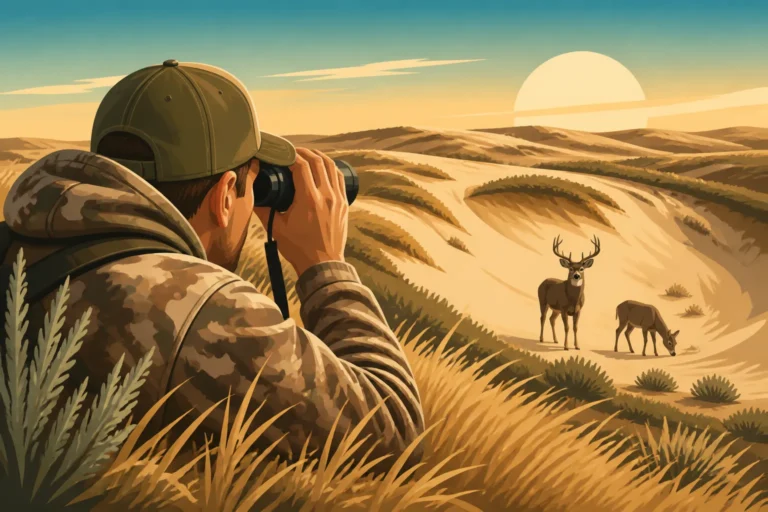
This constant exposure means that animals, particularly wary deer and antelope, have an uncanny ability to spot anything out of place from incredible distances. You might think you're well-hidden behind a small rise, only to realize a buck 800 yards away has already picked up on your outline against the sky. The challenge of closing the distance without being seen becomes a monumental task, and the feeling of being "sky-lined" or constantly watched can be incredibly disheartening. Hunters often spend hours glassing only to find their stalk thwarted before it even begins because of insufficient cover.
Relentless Wind and Weather Exposure
If you've spent any time at all in Nebraska, you know about the wind. It's a constant companion, often swirling, gusting, and seemingly always blowing right where you don't want it to. In open country, there's nothing to break its force, making even a moderate breeze feel like a gale. This isn't just a discomfort issue; it's a significant tactical problem. Controlling your scent becomes exponentially harder when the wind is erratic, carrying your human odor in unpredictable directions and to animals miles away.
Beyond the wind, open country hunting means you're utterly at the mercy of the elements. A surprise rain shower can drench you in minutes with no canopy to shelter under. The relentless summer sun can beat down mercilessly, dehydrating you and making long sits unbearable. Conversely, during late-season hunts, the bitter cold, combined with piercing winds, can cut right through layers of clothing, making it nearly impossible to stay warm and focused. Without adequate protection, your hunt can quickly devolve into a miserable test of endurance rather than a strategic pursuit.
Why Ground Blinds Are a Game-Changer Here
Given the challenges of sparse cover and incessant weather in Nebraska's open landscapes, it's easy to feel like you're fighting an uphill battle. However, ground blinds offer a robust, flexible, and surprisingly effective solution, turning perceived disadvantages into strategic opportunities. They provide what nature often doesn't: consistent, reliable concealment and protection.
Superior Concealment in Treeless Environments
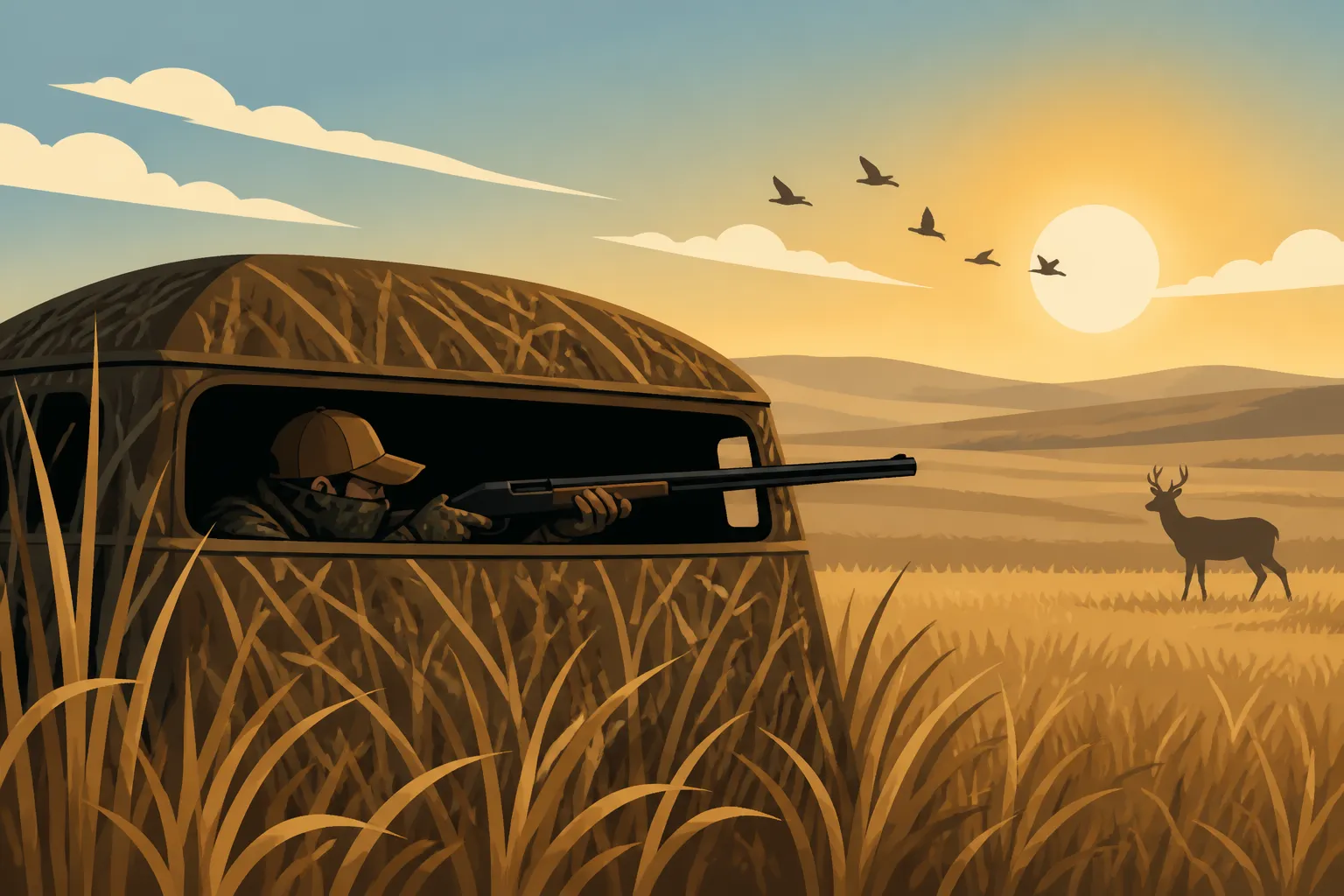
The primary advantage of a ground blind in open country is its ability to simply make you disappear. Unlike a small bush or a lone cedar, a ground blind offers a solid, dark, and often naturally camouflaged structure that completely breaks up the human outline. It creates what hunters often call a "black hole" effect inside, where your movements are hidden, and your form is completely obscured against the dark interior. This is invaluable when a deer, antelope, or turkey is approaching from a wide-open field or across a ridge.
This complete enclosure means you can scratch an itch, adjust your gear, or even stretch a bit without fear of being instantly detected. More importantly, for bowhunters, it allows for a silent, unhurried draw of your bow, ensuring that the animal doesn't catch the movement of your arm or the glint of your bow limb. In an environment where every flicker of movement can send game scattering, the ability to operate unseen within a blind provides a confidence boost and a significant edge. It allows you to become part of the landscape, rather than a foreign object sticking out.
Protection from the Elements
Beyond concealment, ground blinds offer a sanctuary from Nebraska's often harsh weather. That relentless wind that makes still-hunting or sitting exposed so miserable? A sturdy ground blind cuts through it, providing an immediate windbreak that makes a world of difference to your comfort and endurance. You can sit for hours without being buffeted by gusts, helping you stay focused on the hunt.
Furthermore, a blind provides much-needed shelter from precipitation. Whether it's a sudden summer thunderstorm or a biting late-season snow flurry, you'll stay dry, keeping your gear protected and your spirits high. During colder months, the enclosed space helps trap body heat, making your sit significantly warmer and more bearable. In the warmer early seasons, a blind provides shade from the scorching sun, preventing sunburn and heat fatigue. This elemental protection not only enhances your comfort but also extends your hunting hours, allowing you to stay in the field longer and increase your chances of success.
Strategic Placement for Open Country Blinds
Placing a ground blind effectively in open Nebraska country is an art form. It's not just about finding a spot to sit; it's about understanding animal movement, anticipating wind patterns, and blending seamlessly into the environment. A well-placed blind can be deadly, while a poorly placed one can be a neon sign warning game to steer clear.
Identifying Natural Funnels and Travel Corridors
In open country, animals tend to use the path of least resistance or the most secure routes between bedding, feeding, and watering areas. These often manifest as subtle terrain features that might not be obvious at first glance. Think about the gently rolling Sandhills: even a slight depression, a low ridge, or a winding dry creek bed can act as a natural funnel, channeling deer or antelope movement. Similarly, fencelines, even if just a single strand, can become travel corridors, especially if they offer some visual break. A terrace bench in a harvested field or a lone line of cedars can serve the same purpose.
The key is meticulous scouting, often before the season even begins. Look for tracks, droppings, and worn paths that indicate consistent animal travel. Use satellite imagery on mapping tools like GoHunt to identify these subtle elevation changes, isolated cover pockets, or pinch points between different habitat types. Knowing when and where animals are most likely to move through these areas is paramount. For example, a creek crossing in the Sandhills might be a daily commute route for a mule deer buck, while a corner of a pivot-irrigated field could be a feeding hotspot. Positioning your blind along such a funnel, even if it feels exposed to you, can place you directly in the path of your quarry.
Utilizing Existing Landscape Features
Once you've identified a promising travel corridor, the next step is to integrate your blind into the existing landscape features. Remember, the goal is for your blind to look like a natural part of the environment, not a sudden, man-made anomaly. Don't just plop it down in the middle of a field. Instead, look for a cluster of yucca plants, a small patch of plum thicket, a lone cedartree, or even a large boulder. These existing features can help break up the hard lines and artificial silhouette of your blind, making it less conspicuous to wary eyes.
Even a sparse stand of cattails or tall prairie grasses can provide enough background cover to make your blind blend in. The trick is to position the blind against or within these features, allowing them to provide a natural backdrop and additional camouflage. Think about how a deer might perceive the landscape; they're looking for anything out of place. If your blind visually merges with a natural element, it stands a much better chance of being ignored, giving you the time you need for a shot. This careful integration is often more important than the specific camo pattern of the blind itself.
Considering Sun and Wind Direction
Neglecting sun and wind direction when placing your blind can quickly sabotage your hunt. For sight-hunting, positioning your blind so the rising or setting sun is at your back is crucial. Nothing ruins a shot opportunity faster than being blinded by glare or having the sun illuminate your face and movements inside the blind. Pay attention to the sun's arc throughout the day and try to anticipate its impact on your visibility.
Even more critical, especially for animals like deer and antelope with an incredible sense of smell, is wind direction. You absolutely must position your blind downwind of where you expect game to approach or pass through. Nebraska's wind is notoriously shifty, so using a reliable weather app or even a simple wind checker is essential. Scouting a location and noting the prevailing winds for that time of year can guide your placement. Sometimes, this means having multiple blind locations for different wind scenarios, especially if you're hunting a high-value funnel. Additionally, wind can be your friend by helping to muffle sounds, allowing you to make small movements or call quietly without alerting nearby game. For a detailed look at this, check out our guide on Wind Direction on Open Nebraska Prairie Stands.
Brushing In and Blending Your Blind
Setting up a ground blind in open country is only half the battle; the real work begins when you start to "brush it in." Simply placing a store-bought blind, even one with a great camouflage pattern, in a wide-open field is almost an invitation for game to notice and avoid it. Animals in these environments are incredibly attuned to anything new or out of place.
The Art of Aggressive Naturalization
In a landscape where cover is at a premium, a ground blind is a very obvious foreign object if not properly disguised. This is where aggressive naturalization comes into play. It means going beyond simply throwing a few branches on top; it means making the blind disappear into its surroundings. Start by gathering local vegetation – tall prairie grasses, yucca stalks, cedar branches, tumbleweeds, or even crop stubble from nearby fields. Whatever grows naturally in the immediate vicinity is what you want to use.
Begin by breaking up the rigid, geometric lines of the blind, particularly the top and corners, which tend to silhouette against the sky. Weave branches and grasses into the blind's loops or tie them onto the frame. Don't be afraid to pile it on, especially on the backside and sides that will be exposed to approaching game. The goal is to make the blind look like a natural clump of brush or a pile of debris that has always been there. It should lose its "tent" appearance and take on an organic form that blends with the irregular textures of the prairie. For a more in-depth look, check out our piece on Brushing In a Blind on Open Range.
Creating a Natural Look, Not a Fortress
While aggressive naturalization is important, there's a fine line between blending in and building a solid, unnatural fortress. You want to break up the silhouette and add texture, but avoid creating a perfectly solid wall of brush that screams "something is hiding here." Think about how a natural clump of brush looks – it's often irregular, varied in density, and has gaps. Mimic this. Use different lengths and types of vegetation to create a varied, uneven surface.
Ensure you're not completely blocking your shooting lanes in the process. You'll need clear lines of sight and shooting windows, so brush around these areas carefully. Use lighter, sparser materials for critical shooting lanes that you can easily push aside or shoot through. The idea is for the blind to appear as if it's just another natural feature on the landscape, something that wildlife would walk past without a second thought. If it looks too perfect or too dense, it might actually draw more attention than less.
The Importance of Pre-Season Set-Up and Acclimation
This might be the most crucial step for success with ground blinds in open country: set them up early! If possible, deploy your blind weeks, or even months, before the season opens. This gives the local wildlife ample time to discover the blind, investigate it, and ultimately, grow accustomed to its presence. Deer, antelope, and turkeys are curious by nature, but they are also creatures of habit. If a new object suddenly appears in their familiar travel route, they will often avoid it for a period.
By setting your blind out early, it becomes part of the "furniture" in their world. They’ll get used to seeing it, smelling it (if it has a strong new-blind smell), and eventually, they’ll ignore it. I've seen countless hunts ruined because a hunter put out a brand-new blind the day before the season, and every animal within a mile gave it a wide berth. If early set-up isn't an option, or if you need to move the blind, try to do it subtly and incrementally over a few days, if possible, especially on highly pressured public ground. This acclimatization period makes a massive difference in how readily game will approach your setup.
Advanced Tactics and Gear for Open Country Blinds
Once you've mastered the basics of placement and concealment, it's time to delve into some advanced strategies and gear considerations that can further boost your success when hunting from a ground blind in open Nebraska country. It's about optimizing every detail for maximum effectiveness.
Blind Type and Camouflage Patterns
Not all ground blinds are created equal, especially when you factor in the relentless winds and exposed conditions of Nebraska. Hub-style blinds are generally preferred for their superior stability and ease of setup. Look for models with heavy-duty poles and fabric that can withstand sustained gusts. Some brands, like those often reviewed by hunting enthusiasts on GoHunt, offer specific features designed for durability in harsh environments. Consider the height of the blind as well; taller blinds might offer more comfort but can be harder to brush in and keep from silhouetting on flat terrain.
When it comes to camouflage patterns, resist the urge to buy a pattern designed for dense timber. In open country, you need patterns that mimic grasslands, harvested fields, or sparse brush. Earth tones, tans, browns, and muted greens that reflect the local vegetation are far more effective than dark, leafy patterns. Some blinds even come with loops specifically designed for weaving in natural vegetation, which is an invaluable feature. Remember, the goal is to break up your outline and blend into the specific micro-habitat where you’re hunting.
Managing Scent and Noise in Confined Spaces
Hunting from a ground blind, while offering great visual concealment, can concentrate your scent in a confined space. This is a significant challenge, as scent is often the first thing to bust you, especially in open, windy conditions. While a blind can protect you from direct wind gusts, air still circulates. Consider investing in activated carbon clothing, which helps absorb human odor. Using an ozone generator inside the blind can also help neutralize scent, although proper ventilation is still crucial to prevent carbon monoxide buildup and ensure fresh air.
Beyond gear, careful entry and exit routes are paramount. Approach your blind from a direction that keeps your scent blowing away from likely game travel paths. Try to get into your blind well before daylight and stay until well after dark to minimize being detected on the move. Once inside, be mindful of noise. The confined space can amplify sounds. Pack quiet gear, avoid crinkly food wrappers, and make all movements slow and deliberate. Even the rustle of clothing can be heard by wary animals if they are close. This attention to detail is critical for close-range opportunities.
Shooting Lanes and Window Management
One of the most common mistakes in ground blind hunting is failing to prepare your shooting lanes. It's not enough to just set up the blind; you need to envision exactly where and how game might approach and ensure you have clear, unobstructed shots. Before the season, or at least well in advance of your hunt, use pruning shears or a small saw to clear precise shooting lanes from your blind. This prevents last-minute fumbling and noise when an animal appears. Remember, in open country, you might have shots at various distances and angles, so prepare a few options.
Window management is also key to maintaining concealment and optimizing visibility. Often, it's best to keep all non-shooting windows closed, or at least mostly closed, to create that "black hole" effect inside and prevent light from silhouetting you. When an animal approaches, slowly open only the necessary shooting window. Some blinds have silent magnetic or zipper-less window systems which are fantastic for this. Practice drawing your bow or shouldering your rifle inside the blind with the windows open to ensure you have no obstructions. Understanding your blind's limitations and practicing from within it will make you much more effective when the moment of truth arrives.
Safety and Ethical Considerations
Hunting from a ground blind in open Nebraska country is incredibly effective, but it comes with its own set of safety and ethical responsibilities. As with any hunting method, prioritizing safety for yourself and others, and adhering to strict ethical guidelines, is paramount.
Orange Requirements and Visibility
Nebraska has specific blaze orange requirements, particularly during firearm seasons, and these rules can even extend to archers during overlapping periods. For example, during Orange Requirements for Archers in November, archers might be required to wear a certain amount of blaze orange. This is crucial for hunter safety, especially when hunting on public land where other hunters might be present. Even if you're in a blind, you need to ensure you're visible when entering or exiting, or if you need to move to recover an animal.
While a blind offers excellent camouflage, you might consider attaching a small piece of blaze orange fabric to the outside of your blind if you are hunting during a firearm season, ensuring it's visible from all directions. This doesn't compromise your concealment inside but drastically increases your visibility to other hunters. Always carry an orange vest or hat to wear when walking to and from your blind. The risk of not being seen by another hunter is far greater than the risk of spooking an animal by wearing orange outside your blind during a designated orange period. Always prioritize human safety over game animal detection.
Leave No Trace Principles
As ethical hunters, we are stewards of the land, whether we're on vast private ranches or utilizing Nebraska's valuable public ground. The "Leave No Trace" principle is especially important when using ground blinds, as they are temporary structures. When your hunt is over, or at the end of the season, make sure to pack out everything you brought in. This includes the blind itself, any natural vegetation you cut for brushing in, and certainly any trash, food wrappers, or spent cartridges.
Leaving a blind out indefinitely can not only be considered littering but can also deteriorate, becoming an eyesore and potentially harmful to wildlife. Check local regulations regarding how long blinds can remain on public land; some areas have strict time limits. Always strive to leave the area cleaner than you found it. This respect for the land ensures that future generations of hunters will have the same opportunities you did and maintains a positive image for the hunting community as a whole. Remember, every action we take in the field reflects on all hunters.
| Ground Blind Considerations for Open Country Hunting | Benefit | Challenge |
|---|---|---|
| Concealment | Breaks up human silhouette completely; allows movement inside. | Requires aggressive brushing-in to avoid looking unnatural. |
| Weather Protection | Excellent windbreak; shields from sun, rain, and snow. | Can feel stuffy without ventilation; can amplify scent if not managed. |
| Placement | Allows hunting in treeless areas; can be moved to adapt to changing conditions. | Requires extensive scouting to find subtle funnels; must consider sun/wind direction meticulously. |
| Blending | Makes blind appear natural; helps gain trust of wary animals. | Time-consuming pre-season work; needs to look "natural" not "fortress-like." |
| Scent/Noise Management | Allows contained movement. | Confined space can concentrate scent; interior noise can be amplified. |
| Visibility (Safety) | Can be safely used during firearm seasons with proper orange display. | Requires extra vigilance and orange display during overlapping seasons to avoid safety issues. |
| Portability | Most pop-up blinds are relatively light and easy to set up/take down. | Carrying a large blind and brushing materials can be cumbersome over long distances. |
| Cost | Accessible price point for most hunters. | Higher-quality, more durable blinds suitable for high wind can be a significant investment. |
Disclaimer
Always consult the Nebraska Game and Parks Commission's official hunting guide for the most current regulations, season dates, and permit requirements before heading afield. Hunting laws and land access rules can change, and it is every hunter's responsibility to know and follow them.