Ballistic Rangefinders for Long Shots
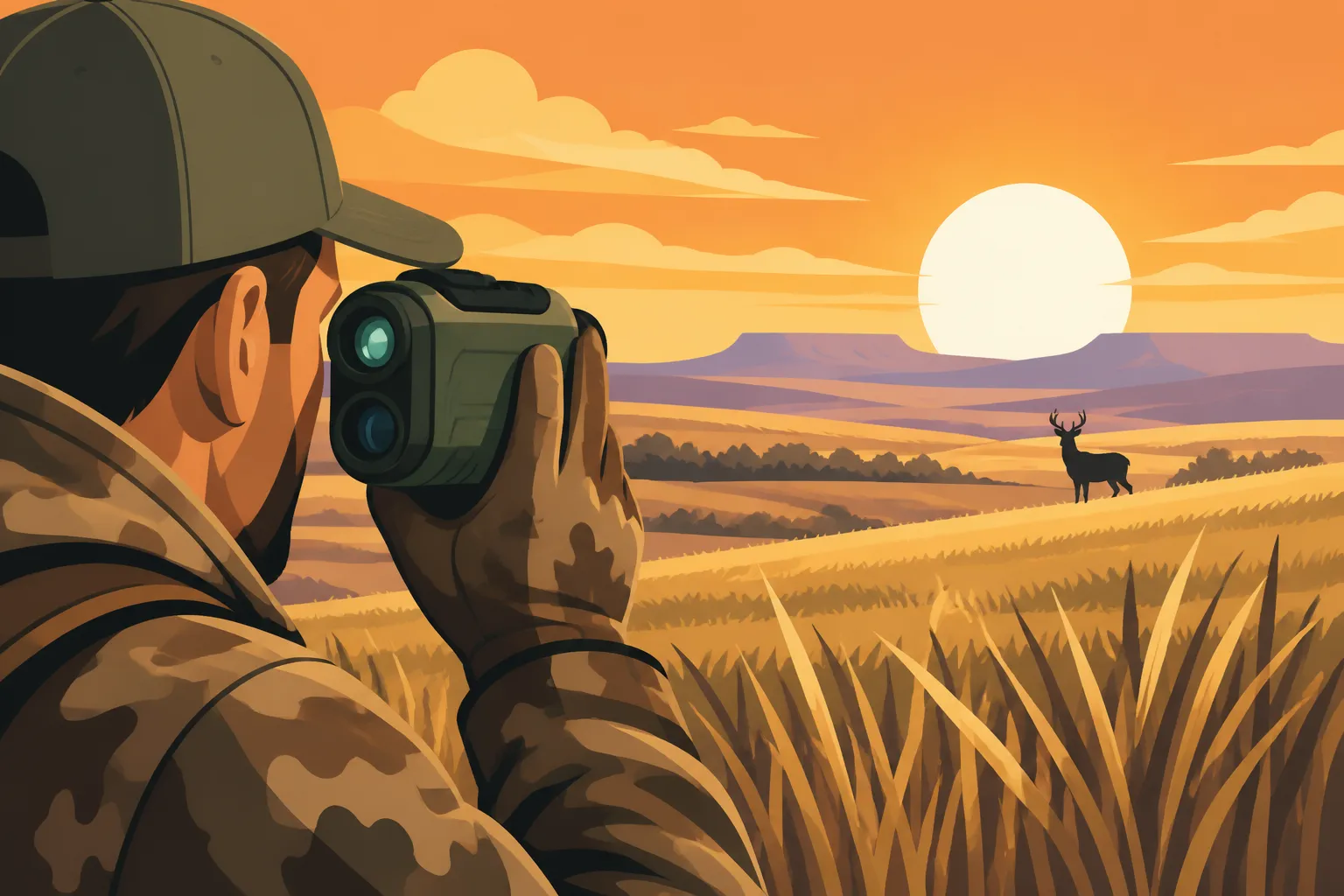
If you've spent any time hunting the expansive landscapes of Nebraska, you know the frustration of spotting a magnificent buck or a trophy pronghorn seemingly at a comfortable range, only to realize the shot is far longer than your eye estimated, or complicated by an unseen incline. When every yard matters, especially out past 200 or 300, a standard rangefinder just tells you how far the animal is. But that's often not enough when you're trying to make an ethical, clean shot. This guide is all about diving deep into ballistic rangefinders, exploring how these advanced tools can dramatically improve your long-range accuracy and confidence in Nebraska's diverse hunting environments.
The Challenge of Long Shots on the Nebraska Plains
Hunting in Nebraska presents a unique set of challenges and opportunities, particularly when it comes to shooting distances. Unlike dense timber states, our wide-open spaces often demand more from a hunter's optics and shooting skills.
Why Long Shots Are More Common Here
Nebraska’s landscape, from the vast, rolling Sandhills to the rugged Pine Ridge and the endless agricultural fields, inherently stretches engagement distances. You might be glassing a mule deer across a wide canyon in the Panhandle or spotting a pronghorn across an endless expanse of prairie grass. What looks like 200 yards through a quality binocular can easily turn into 350 or even 400 once you actually range it. Our terrain rarely offers the tight, close-quarters encounters typical of eastern forests. You simply don't have as much cover to close the distance, especially when you're pursuing a wary critter like a mature mule deer buck or a sharp-eyed antelope. This reality means hunters often face scenarios where a responsible shot might be at distances that push the capabilities of their rifle and their own judgment. It's not about forcing a long shot, but being prepared for when the conditions and the animal present one as the best, most ethical option. Spot-and-Stalk Mule Deer in the Nebraska Sandhills highlights just how much ground you might cover and how far you might see.
The Variables Beyond Just Distance
It's one thing to know the exact distance to your target; it's another to understand how your bullet will actually get there. The simple line-of-sight distance doesn't tell the whole story. Gravity is relentless, pulling your bullet down the instant it leaves the barrel, but other factors are at play too. Wind, that ever-present companion on the Nebraska plains, is a major culprit, pushing your bullet off course. Even a gentle 5-10 mph breeze can cause significant drift at extended ranges. Then there's the angle of the shot – an often-overlooked variable that can lead to a miss. Shooting uphill or downhill, while technically the same line-of-sight distance, changes the effect of gravity on the bullet. A steep uphill shot to a deer bedded on a ridge, or a sharp downhill shot into a creek bottom, will cause your bullet to impact higher than it would on flat ground at the same measured distance. Add in temperature and barometric pressure, which subtly affect air density, and you start to see just how many variables are trying to throw off your carefully aimed shot. These are the kinds of frustrations that make a hunter second-guess every squeeze of the trigger, especially when facing a trophy animal during Nebraska's Nine-Day November Firearm Deer Season.
What is a Ballistic Rangefinder and How Does It Work?
So, if simple distance isn't enough, what's the next step? That's where ballistic rangefinders come into play, taking the guesswork out of complex calculations in the heat of the moment.
Beyond Simple Line-of-Sight Ranging
At its core, a ballistic rangefinder still uses a laser to measure the line-of-sight distance to your target. It sends out a laser pulse, measures the time it takes for that pulse to return, and calculates the distance. This is the foundation of any rangefinder. However, a ballistic rangefinder goes several steps further. It incorporates sophisticated internal sensors that measure the angle of the shot (an inclinometer), and often atmospheric conditions like temperature and barometric pressure. But the real magic happens inside: a tiny computer equipped with complex ballistic algorithms. You, the hunter, input your specific rifle's data – the caliber, bullet weight, ballistic coefficient, muzzle velocity, and your chosen zero distance. When you range an animal, the ballistic rangefinder instantaneously takes that line-of-sight distance, combines it with the shot angle and environmental data, and then runs it through your custom ballistic profile. It then provides you with a "shoot-to" range, often referred to as an "equivalent horizontal range" or simply the "adjusted range" you should use for your holdover or turret adjustment. It's essentially telling you what distance your bullet thinks it's traveling on flat ground.
The Brains Behind the Shot: Ballistic Solutions
The most valuable output from a ballistic rangefinder isn't just a number; it's a solution. These devices are designed to give you actionable data that you can immediately apply to your shot. For hunters who use scopes with Bullet Drop Compensating (BDC) reticles, the rangefinder might tell you which specific hash mark to hold on. If you're using custom turret dials, it might tell you how many clicks to dial up to compensate for bullet drop. More advanced models can even display the exact elevation (MOA or Mils) and windage corrections right in the display. This real-time calculation is a game-changer for those shooting at longer ranges in Nebraska, where Rifle Ranges Realistic in Open Country often push past standard zero distances. Imagine glassing a distant whitetail in a river bottom, ranging it, and instantly knowing exactly how to adjust your scope. It removes the need for fumbling with printed drop charts or complex mental math, freeing you up to focus on windage and a clean trigger break. Many serious hunters, including those who meticulously plan their hunts using resources like GoHunt for mapping and scouting data, appreciate this integration of precise distance with immediate ballistic solutions. It allows for a seamless transition from identification to ethical shot placement, especially when combined with careful consideration of Bullet Weight for Windy Conditions and other environmental factors.
Key Features to Look for in a Nebraska Ballistic Rangefinder
When you're investing in a piece of gear this critical, you want to make sure it's up to the task of hunting Nebraska. Not all ballistic rangefinders are created equal, and some features are far more important than others for our specific hunting conditions.
Range and Accuracy for Our Terrain
First and foremost, you need a ballistic rangefinder that can reliably range targets at the distances you expect to shoot, and then some. For mule deer and pronghorn across the wide-open Sandhills or Panhandle, you're going to want a device that can accurately range out to 800-1000 yards on deer-sized game, even if you don't plan to shoot that far. This extended capability ensures that a 400-yard shot, which is common here, is well within the device's comfort zone for precision. Many manufacturers list maximum range capabilities for reflective targets (like a billboard), which is always higher than for non-reflective targets (like an animal). Pay attention to the "deer equivalent" or "tree equivalent" range. You also want consistent, repeatable accuracy. A rangefinder that gives you wildly different readings on the same target, even by a few yards, is going to undermine your confidence and your shot. Reliable ranging, even in less-than-ideal light conditions or through light mirage, is crucial for success when hunting the vastness of Nebraska.
Ballistic Profile Customization and Data Entry
The heart of a ballistic rangefinder lies in its ability to process your rifle's specific data. Look for units that allow you to create and store multiple custom ballistic profiles. Most Nebraska hunters have more than one rifle, or they might switch ammunition types for different hunts, so having the flexibility to store several profiles (e.g., one for your .270 hunting whitetails, another for your 6.5 Creedmoor mule deer rifle) is incredibly useful. You'll want to be able to easily input details like your bullet's ballistic coefficient, weight, and crucially, your rifle's actual muzzle velocity – which you'll get from a chronograph, not just the box. The more precise your input data, the more accurate the rangefinder's output. Some models have intuitive menus and even smartphone apps that connect via Bluetooth for easier data entry and profile management. Hunters who use scouting intelligence and planning tools like GoHunt, which helps them anticipate specific terrain and game behavior, will find that pre-loading and selecting the appropriate ballistic profile based on their planned hunt adds another layer of preparedness. Zeroing at 200 Yards is a common starting point, but your ballistic profile will extend that knowledge.
Environmental Sensors and Connectivity
An advanced ballistic rangefinder doesn't just know distance and trajectory; it also understands the environment. Look for devices with integrated sensors for temperature, barometric pressure, and inclination. These internal sensors provide real-time data to the ballistic engine, ensuring the most accurate "shoot-to" solution. Some high-end units even offer basic wind compensation, either through a manual input of wind speed and direction or, in a few cutting-edge models, through an integrated wind sensor. While no rangefinder can perfectly account for varying winds across a long bullet path, having an initial wind hold suggestion is a huge advantage when Reading Wind on the Nebraska Plains. Additionally, many modern ballistic rangefinders offer Bluetooth connectivity. This allows them to link with external devices like a Kestrel weather meter for highly accurate wind and atmospheric data, or with smartphone apps for even more sophisticated ballistic calculations. This connectivity ensures that your rangefinder isn't just a standalone tool but part of a comprehensive system, much like how many hunters use detailed mapping and public land information from platforms like GoHunt to inform their entire hunting strategy, optimizing their setup for conditions.
Integrating Ballistic Rangefinders into Your Nebraska Hunt
Having a ballistic rangefinder is one thing; effectively using it to tag a Nebraska trophy is another. It's about preparation, practice, and smart application in the field.
Pre-Hunt Preparation and Practice
Just like with your rifle, practice makes perfect with a ballistic rangefinder. Before you ever hit the field, you need to verify your rifle's actual ballistic data. Don't rely solely on ammunition box specs for muzzle velocity; invest in a chronograph to get real-world data from your specific rifle and load. This is the foundation of an accurate ballistic profile. Once your rangefinder is loaded with precise data, spend time at the range. Practice ranging targets at various distances and angles, and then apply the rangefinder's "shoot-to" solution. Confirm your bullet's point of impact at those adjusted ranges. This helps you build confidence in the device and understand its outputs. Simulating field conditions – ranging quickly, adjusting your scope, and making the shot – will prepare you for the unpredictable nature of a Nebraska hunt. It's not enough for the tool to be accurate; you need to be accurate with the tool. Consider how this preparation ties into your overall strategy, perhaps informed by detailed scouting on platforms that, like GoHunt, offer comprehensive land data to identify potential shooting lanes and ranges.
Field Application and Decision Making
Out in the field, a ballistic rangefinder truly shines. Imagine you've been still-hunting a snow-covered river bottom and spot a trophy whitetail buck moving across an open field at what appears to be a good distance. You quickly range the buck at 425 yards, but notice the ground slopes significantly uphill to its position. Your ballistic rangefinder, instantly factoring in the angle and your rifle's profile, tells you to shoot for 390 yards. This immediate, precise feedback allows you to confidently make the necessary holdover or dial the correct adjustment on your Rifle Scopes for Long Nebraska Shots. Without this tool, you'd be guessing, potentially holding too high and sending a shot over the animal. Communication is also key if you're hunting with a partner or a spotter; they can range targets and call out "shoot-to" distances, allowing you to focus on the shot. While the device provides the data, the ultimate decision on whether to take a shot still rests with you, the hunter. Always prioritize ethical shot placement and know your personal maximum effective range, even with the aid of technology.
Limitations and Considerations
While incredibly useful, ballistic rangefinders aren't a magic bullet (pun intended). They have limitations. Battery life, especially in bitter Nebraska winter conditions, can be a concern, so always carry spares. Line-of-sight is still crucial; thick brush, heavy fog, or even heat mirage can make ranging difficult or impossible. They are also tools, and like any tool, they require a solid understanding of fundamentals. They won't make a poor shooter accurate, nor will they compensate for poor wind judgment or an unstable shooting position. The cost can also be a significant factor, with advanced units commanding a higher price point. However, for serious big game hunters in Nebraska, the investment often pays dividends in increased confidence and ethical shot opportunities. For those who meticulously scout and plan using resources such as GoHunt to identify clear shooting lanes and anticipate environmental factors, a ballistic rangefinder becomes an indispensable part of a well-thought-out hunting strategy, helping to mitigate challenges that might arise even on public ground, like when Using a Ground Blind on Nebraska Public Ground where shots might present at unexpected distances.
Here's a quick comparison of basic vs. ballistic rangefinders to help clarify their differences:
| Feature | Basic Rangefinder | Ballistic Rangefinder |
|---|---|---|
| Primary Function | Measures line-of-sight distance | Measures line-of-sight, calculates "shoot-to" |
| Inclinometer (Angle) | No (or basic display) | Yes, integrates into calculation |
| Environmental Sensors | No | Often has temp, pressure sensors |
| Ballistic Profiles | None | Stores multiple custom rifle/ammo profiles |
| Output Data | Line-of-sight distance (e.g., 300 yards) | Adjusted range (e.g., 285 yards), holdover/clicks |
| Complexity | Simple point-and-shoot | Requires user input of ballistic data |
| Best Use | Short-to-medium range, flat ground | Long range, varied terrain, precise solutions |
Disclaimer
This article is for general informational purposes only and does not constitute professional advice. Laws, prices and regulations vary by location and change over time. Consult a qualified professional for guidance on your specific situation.