Are Cheap Binoculars Good Enough?
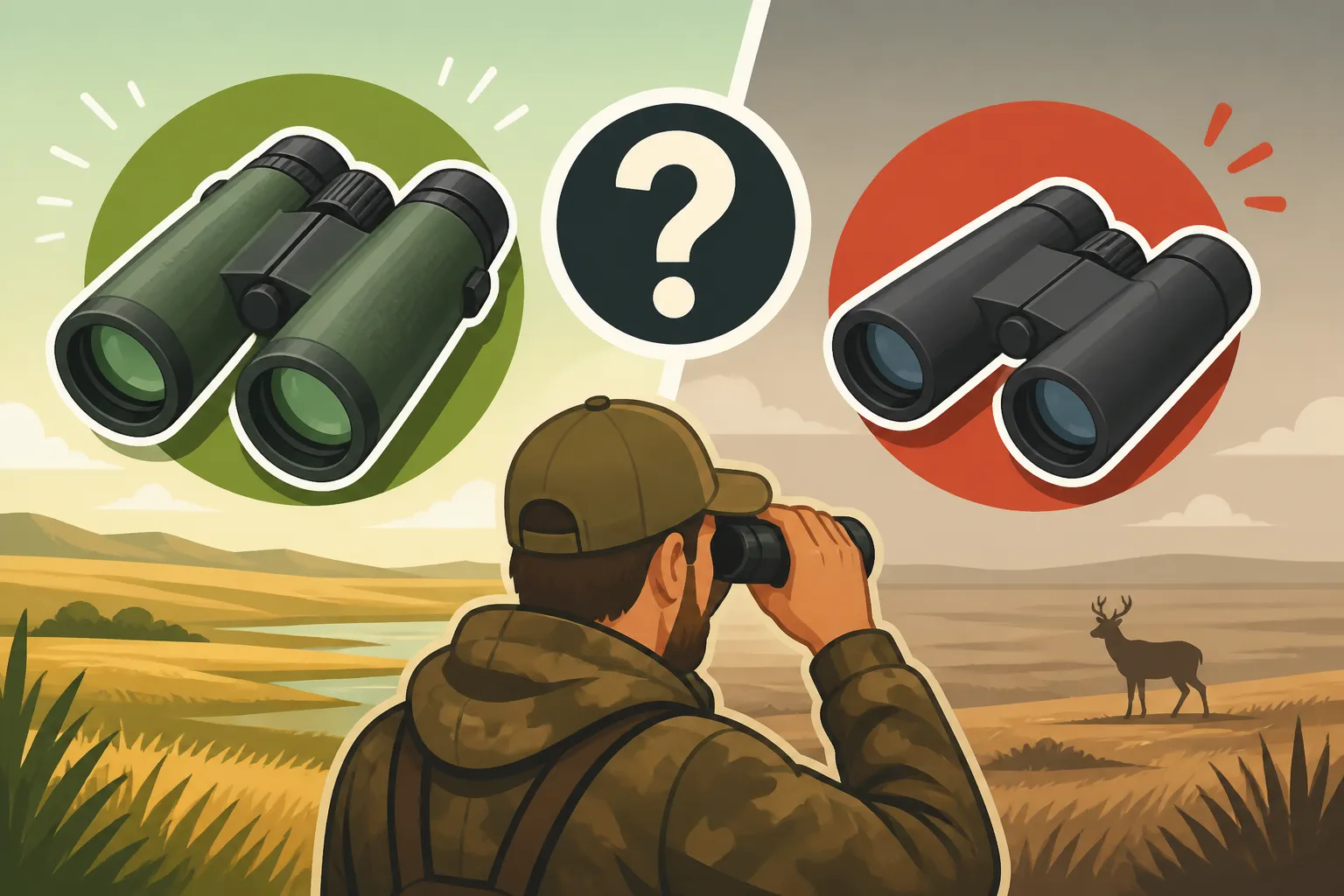
As a hunter in Nebraska, you've probably stood in the optics aisle, staring at a dizzying array of binoculars, from those that barely make a dent in your wallet to others that cost more than your first truck. It's a common frustration to wonder if those inexpensive binoculars are truly worth packing into the field or if you're just throwing money away. This guide will walk you through the real-world considerations of budget binoculars for Nebraska hunting, helping you decide where to invest your hard-earned cash.
The Real Cost of "Cheap" Binoculars: What You're Really Buying
It’s tempting to grab the cheapest pair of binoculars you see, especially when you’re trying to save money for other gear or permits. But "cheap" isn't just about the price tag; it's about the compromises made in manufacturing. Understanding these trade-offs is crucial before you commit.
Understanding Budget Optics: Price vs. Performance
When we talk about "cheap" binoculars, we're generally looking at options under a certain price point, but the exact number can fluctuate. What's more consistent is that manufacturers have to cut corners to hit those lower prices. This usually means using less expensive glass, simpler lens coatings, and less robust housing materials. The result? Performance that rarely stands up to the demands of serious hunting.
Think about it this way: you wouldn't expect a budget economy car to perform like a high-end luxury vehicle. The same principle applies to optics. While a basic pair of binoculars might offer some magnification, it's the quality of the image, its brightness, clarity, and durability that truly define its utility in the field. For instance, being able to resolve a deer's antler points at 400 yards in fading light is a world away from simply making out a blurry shape. That resolution and light-gathering capability come from superior glass and coatings, which inherently cost more to produce. It's not just about seeing something, but about seeing enough to make a sound decision.
Common Compromises in Inexpensive Glass
Manufacturers save money in several key areas when producing cheaper binoculars, and these compromises directly impact your hunting experience.
Firstly, the glass quality itself is often a major downgrade. High-end binoculars use Extra-Low Dispersion (ED) glass or even fluorite elements to minimize chromatic aberration (that colored fringing you sometimes see around objects). Cheaper optics use standard glass, which can lead to a less sharp image, especially at the edges, and noticeable color distortion. This might not matter if you're just birdwatching in your backyard, but when you're trying to distinguish between a branch and an antler tine in deep cover, it can be the difference between a successful hunt and a missed opportunity.
Secondly, lens coatings are critical. Quality binoculars feature multiple layers of anti-reflective coatings on all air-to-glass surfaces. These coatings dramatically increase light transmission, making the image brighter and clearer, particularly in low light. Cheaper models might have fewer coatings, or coatings that are less effective, leading to a dimmer image with more glare. Imagine glassing a distant mule deer buck right at sunrise; poor coatings will turn that beautiful golden hour into a struggle against reflections and dimness, hiding details you desperately need. Optics for Glassing the Nebraska Sandhills often requires serious light-gathering capability.
Finally, durability and construction are often sacrificed. Cheaper binoculars typically use less robust materials for their housing and internal components. This means they're more susceptible to impact damage, internal fogging, and water intrusion. Nebraska hunting can be tough on gear, with sudden rain showers, dusty fields, and accidental drops being common occurrences. A pair of binoculars that fogs up or falls apart after a bump isn't just frustrating; it's a piece of gear you can't rely on when it matters most.
Where Nebraska Hunting Demands Quality Optics
Nebraska's diverse landscapes, from the sprawling Sandhills to the dense river bottoms, present unique challenges that truly test the mettle of your optics. In many scenarios, simply "seeing" isn't enough; you need clarity, brightness, and durability to perform effectively.
Glassing Vast Open Spaces: Sandhills and Plains
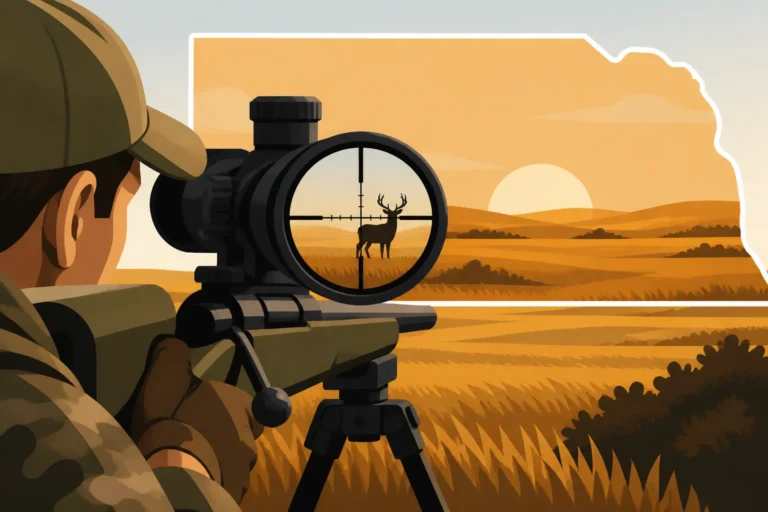
If you've ever hunted mule deer or pronghorn in the Nebraska Sandhills or out on the vast, rolling plains, you know that your binoculars are your primary scouting tool. This isn't timber hunting where deer might pop up at 50 yards; here, you're often scanning miles of terrain, looking for subtle movements or the tell-tale glint of an antler. Cheap binoculars, with their inherent lack of clarity and brightness, will quickly leave you frustrated in these conditions.
Imagine a crisp, clear morning in the Sandhills. You've climbed to a high point, ready to spend the first hour of light dissecting blowouts and distant tree lines. With a quality pair of binoculars, like a good 10×42, you can pick apart the landscape, identifying bedded deer or the faint outline of a pronghorn on a far ridge. A cheaper pair will offer a dimmer, hazier image, making those distant details disappear into a muddled mess. You'll strain your eyes, miss critical observations, and ultimately, lose confidence in your ability to spot game. This is where investing in good glass truly pays off, allowing you to effectively cover ground without actually walking it. Glassing Sandhills Blowouts for Mule Deer is an art, and it demands the right tools.
Low-Light Situations: Dawn, Dusk, and Timber
Many of Nebraska's prime hunting times happen during the "golden hours" of dawn and dusk, or in the low-light conditions of thick river bottom timber. This is where the light transmission capabilities of your binoculars become paramount. Game animals are most active during these periods, and your ability to identify them accurately is directly tied to how much light your optics can gather.
Cheaper binoculars often struggle immensely in low light. Their less sophisticated coatings and smaller objective lenses (the front lenses) simply don't let enough light through. What results is a dim, dull image that makes distinguishing features nearly impossible. Trying to identify whether that dark shape under a cedar tree is a legal buck or a doe as the light fades is a common scenario for whitetail hunters in Nebraska. With poor glass, that decision becomes a gamble. You might pass on a legal animal because you can't tell what it is, or worse, make a mistake. For hunters targeting whitetails in river corridors or thick shelterbelts, being able to pull enough light to resolve details in the shadows is absolutely critical. Grunt Calls in Thick River Timber might bring them in close, but you still need to see them well.
Durability Against Nebraska's Elements
Nebraska weather is notoriously unpredictable. One day it can be 80 degrees and sunny, and the next, a cold front rolls in bringing rain, snow, or biting wind. Your hunting gear, especially optics, needs to be able to withstand these shifts without failing. Durability isn't just about surviving a drop; it's about reliable performance in adverse conditions.
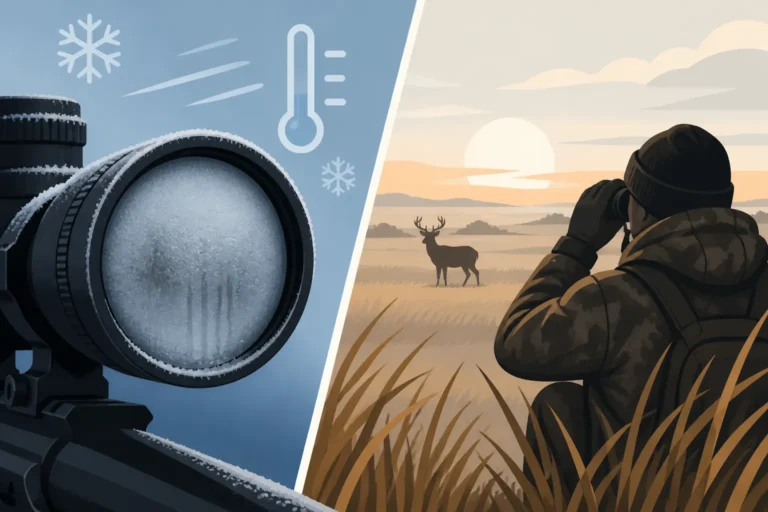
Cheap binoculars often lack the robust construction and sealing necessary to handle the elements. They might not be fully waterproof or fogproof, meaning a sudden rain shower could render them useless for the rest of your hunt, or the temperature swing from your warm truck to a cold morning stand could cause them to fog internally. Imagine trying to Track a Deer in Sandhills Grass after a light drizzle, only to find your binoculars are completely useless. Quality binoculars are typically nitrogen or argon purged and O-ring sealed to prevent internal fogging and water damage. This kind of weatherproofing is essential for hunting public lands where you might be out all day, far from your vehicle, regardless of what the sky decides to do. When you're spending good money on a permit, you want gear that can perform when you need it most.
When "Good Enough" Might Actually Be Enough
While quality optics are undeniably superior, there are specific hunting situations and hunter profiles where inexpensive binoculars might, surprisingly, be "good enough." It really boils down to your hunting style, the terrain, and your overall budget priorities.
Close-Range Hunting and Dense Cover
Not all Nebraska hunting involves vast, open landscapes. Many hunters target whitetails in dense timber, thick creek bottoms, or smaller, brushy shelterbelts where shot distances are short and visibility is limited. In these situations, your need for extreme magnification or superior low-light performance might be reduced.
If your primary hunting spots consist of thick river bottom habitat or small woodlots where most of your encounters are within 100 yards, a basic pair of binoculars might suffice. Here, you're often looking for movement or a quick glimpse of an animal breaking cover. You're not trying to identify tine length at 600 yards. A 8x or even 7x magnification in a less expensive pair could be adequate for confirming that "brown blob" is indeed a deer and not a stump, or for following a moving animal through the brush before you raise your firearm or bow. The demand on resolution and light gathering is less intense because the targets are closer and often presented in higher contrast situations against nearby cover. For example, if you're Setting Up Against a Cottonwood for spring turkeys, your binos are more for confirming a gobbler's identity at close range, rather than long-distance glassing.
The Occasional Hunter's Perspective
Let's be real: not everyone hunts 30 days a season or travels across the state for every species. Many people are occasional hunters, perhaps focusing on a single deer tag each year close to home, or only hitting the pheasant fields a few times. For these individuals, the significant investment in top-tier optics might not make economic sense.
If you only get out a few times a year, and your hunting style doesn't heavily rely on extensive glassing, a mid-range or even a quality budget pair of binoculars might be perfectly acceptable. You're not going to push them to their optical limits. The frustration of lesser performance might be outweighed by the satisfaction of having some magnification without breaking the bank. Just be mindful to select a pair that still offers decent ergonomics and some level of water resistance for basic field use. It’s about matching your gear to your commitment and specific hunting needs, not necessarily buying the absolute best if it’s overkill for your personal hunting habits.
Prioritizing Other Gear on a Budget
Hunting can be an expensive endeavor, and sometimes, you simply have to allocate your budget to other critical gear. For new hunters, or those working with limited funds, spending less on binoculars might free up money for essentials like a reliable firearm, proper hunting clothing, or quality boots.
It's a common dilemma: do you buy top-of-the-line binoculars and skimp on your Boots for Walking Nebraska Grass and Sand, or vice versa? For many, the choice might lean towards the gear that directly impacts safety, comfort, or the primary means of harvest. If you hunt mostly in thick cover and carry a reliable rifle, the immediate need for a $1,000 pair of binoculars might be less pressing than ensuring you have a safe, accurate rifle and comfortable, quiet clothing. It's a balancing act. If you choose to go with cheaper binoculars, understand their limitations and adapt your hunting strategy accordingly. You might need to move slower, get closer, and rely more on your bare eyes and hearing. Consider resources like GoHunt for reviews and comparisons that help hunters prioritize gear based on their specific needs and budget constraints. They often break down what's essential for different types of hunts.
Smart Spending: Getting the Best Binoculars for Your Buck
If you've determined that "cheap" isn't quite cutting it, but a top-tier pair is still out of reach, there's a sweet spot in the market for quality optics that don't require taking out a second mortgage. It’s all about informed decision-making and knowing what features truly matter for your Nebraska hunts.
Setting a Realistic Budget and Researching Options
Before you even start looking at specific models, establish a realistic budget. For most serious Nebraska hunters looking for reliable, mid-range performance, aiming for a price point significantly higher than the cheapest options but below the premium brands is a smart move. This typically puts you in a range where you can find binoculars with good glass, decent coatings, and solid construction.
Once you have a budget, dive into research. Don't just pick the first pair that looks good. Read reviews, compare specifications, and look for brands known for delivering value in their respective price points. Websites and forums dedicated to hunting and optics are goldmines of information. Pay attention to what other hunters are saying about performance in low light, clarity, and durability in various conditions. Consider brands that offer strong warranties, as this can be a good indicator of a manufacturer's confidence in their product. GoHunt also provides comprehensive gear guides and reviews that can help you sift through the myriad of options and identify binoculars that punch above their weight class.
Key Features to Look For (and Skip)
When shopping for binoculars that offer good value without breaking the bank, focus on these critical features and don't get sidetracked by unnecessary bells and whistles.
Must-Haves:
- Fully Multi-Coated Lenses: This is non-negotiable. "Fully multi-coated" means all air-to-glass surfaces have multiple layers of anti-reflective coatings, maximizing light transmission and image brightness. Don't settle for "coated" or "multi-coated" only on some surfaces.
- Phase-Corrected Prisms: If you're looking at roof prism binoculars (the straight-barrel kind, most common today), phase-corrected coatings are essential for maintaining image contrast and resolution. Without them, you'll get a noticeably fuzzier image.
- Waterproof and Fogproof: As discussed, Nebraska weather demands this. Look for nitrogen or argon purging and O-ring seals.
- Reputable Magnification/Objective Size: For general deer hunting in Nebraska, 8×42 or 10×42 are popular choices. An 8x offers a wider field of view and is easier to hold steady, while a 10x provides more magnification for open country. Binocular Magnification for the Sandhills can be a major factor in effectively spotting game.
Nice-to-Haves (but not critical for budget buys):
- ED (Extra-Low Dispersion) Glass: While great for reducing chromatic aberration, true ED glass often drives up the price. If you can find it within your budget, fantastic. If not, a good fully multi-coated, phase-corrected pair will still perform admirably.
- Open-Bridge Design: This makes binoculars lighter and easier to hold, but it's often a feature of higher-end models. A traditional closed-bridge design is perfectly functional.
What to Skip on a Budget:
- Massive Magnification: Avoid those inexpensive binoculars promising 16x or 20x magnification. High magnification without high-quality glass and stabilization leads to a shaky, dim, and practically unusable image. Stick to sensible magnifications like 8x or 10x.
- Integrated Rangefinders: While convenient, integrated rangefinders dramatically increase the cost. A separate, dedicated rangefinder is often more accurate and can be bought as a standalone piece of gear. Rangefinders in Open Nebraska Country are certainly useful, but they don't have to be part of your binoculars.
Testing Before You Buy
The absolute best way to know if a pair of binoculars will work for you is to test them in real-world conditions, or as close as you can get. If possible, visit a sporting goods store and spend some time looking through different models.
Take them outside (with permission from the store, of course). Look into shadows, at distant objects, and try to read small print from across the parking lot. Compare them side-by-side. Do they feel comfortable in your hands? Is the focus smooth? Do they cause eye strain? Don't be shy about spending 15-20 minutes with them. If you're buying online, make sure the retailer has a generous return policy so you can evaluate them at home. The goal is to ensure that the pair you choose not only fits your budget but also performs adequately for your specific hunting needs in Nebraska. Pay attention to how the light looks at the edges of the image, and whether there's any noticeable distortion. Sometimes, even a slightly more expensive pair from a different brand will offer a significantly better viewing experience for just a small jump in price.
| Feature | "Cheap" Binoculars (Under) | Mid-Range Binoculars (Better Value) | Premium Binoculars (Best Performance) |
|---|---|---|---|
| Glass Quality | Standard glass | Good optical glass, sometimes ED | ED or Fluorite glass, superior clarity |
| Lens Coatings | Partial, single-layer | Fully Multi-Coated (FMC) | Fully Multi-Coated (FMC) with advanced tech |
| Prism Type/Coating | Bak-7, no phase coating | Bak-4, Phase-corrected (Roof Prisms) | Bak-4, Phase-corrected, Dielectric Coatings |
| Light Transmission | Poor to fair | Good | Excellent |
| Clarity/Resolution | Fair, blurry edges | Good, sharp center, minor edge softness | Exceptional, edge-to-edge sharpness |
| Low-Light Perf. | Poor | Fair to good | Excellent |
| Durability/Build | Plastic, basic sealing | Rubber armored, waterproof/fogproof | Robust alloy, fully sealed, shockproof |
| Ergonomics | Often clunky | Comfortable, well-balanced | Superior, precision focus |
| Typical Use | Backyard, casual viewing | General hunting, wildlife observation | Professional hunting, demanding conditions |
Ultimately, the question isn't just "Are cheap binoculars good enough?" but rather, "Are they good enough for my Nebraska hunting needs?" By understanding the compromises, evaluating your specific hunting scenarios, and making smart choices within your budget, you can find optics that will enhance, rather than hinder, your time in the field. Don't be afraid to invest in decent glass – it's one of the few pieces of gear that directly impacts your ability to locate and identify game, and often lasts for many, many seasons.
Disclaimer
This article is for general informational purposes only and does not constitute professional advice. Laws, prices and regulations vary by location and change over time. Consult a qualified professional for guidance on your specific situation.