Climbing Sticks for Rough Bark
There's nothing quite like the excitement of finding that perfect pinch point, that rub line leading to a bedding area, or that creek crossing sign that screams "big buck," only to realize the prime tree for your stand has bark that looks like it's been through a woodchipper. It's a common frustration, especially when hunting some of Nebraska's older river bottom timber or mature farmstead shelterbelts. This guide is all about tackling that exact problem, helping you choose and use climbing sticks designed to grip those gnarly, rough-barked trees safely and effectively, transforming a potential headache into a secure, silent ascent.
The Challenge of Rough Bark in Nebraska's Deer Woods
Nebraska might be known for its wide-open prairies and vast agricultural fields, but tucked away in its river corridors and mature woodlots are some fantastic deer hunting opportunities. However, these areas often present a unique challenge: the trees themselves. Setting up a treestand effectively often hinges on having reliable climbing sticks, and rough, uneven bark can turn a simple ascent into a precarious ordeal.
Why Nebraska Bark is Different and Difficult
When we talk about "rough bark" in Nebraska, we're often looking at a few specific culprits. Think about the majestic, ancient cottonwoods that line the Platte, Loup, or Missouri Rivers. Their bark is deeply furrowed, craggy, and can sometimes be loose or sloughing off in plates. Then you have mature bur oaks, with their thick, blocky bark, or even hackberry trees, which have their own distinct warty or ridged texture. And let's not forget the gnarled, multi-trunked cedars in some of the more rugged draws, whose fibrous bark can be tricky to get a good purchase on.
These aren't your smooth, young hardwoods you might find in some other states. The texture of these Nebraska trees isn't uniform, which means the typical V-shaped stand-offs on many climbing sticks – those points that press against the tree – struggle to find consistent contact. Instead of a solid grip, they can slip into a crevice, or worse, slide off a slick, moss-covered patch or a shedding plate of bark. This isn't just an inconvenience; it's a real safety concern. It impacts the stability of your climb and can make the whole process noisy, alerting every deer within earshot.
Common Frustrations with Standard Climbing Sticks
Many standard climbing sticks are designed with a "one-size-fits-all" approach, which often means they're optimized for straighter, smoother trees. When you try to apply these to the rugged bark of a mature Nebraska oak or cottonwood, the frustrations quickly pile up.
Firstly, the stand-offs – those parts of the stick that actually touch the tree – are often too small or too narrow to bridge the deep furrows and irregular contours of rough bark. They might dig into one high point but leave large gaps elsewhere, reducing the overall contact area and increasing the likelihood of the stick shifting or twisting. Imagine trying to stand on a bowling ball with one foot; it's just not stable.
Secondly, the attachment straps themselves can be problematic. On slick or shedding bark, a standard nylon strap can sometimes creep, especially if it gets wet or freezes. Even cam buckles, while generally reliable, can lose their bite if the underlying stick is constantly trying to shift due to poor bark contact. The last thing you want is a stick slowly sagging as you put weight on it. This instability can lead to excessive noise as the stick grinds against the bark or as you try to readjust it, ruining any chance of a stealthy setup. It's enough to make you consider Ground Blinds in Open Nebraska Country as a primary hunting method, even when you prefer the elevated view.
Finally, there's the genuine safety issue. A stick that feels unstable at knee height is exponentially more dangerous when you're 15 or 20 feet up. The feeling of a stick twisting or shifting under your weight can send a jolt of fear through you, and for good reason. It also makes the entire process of Choosing a Treestand Site on Nebraska Farmland far more difficult if you're constantly evaluating the "climbability" of a tree rather than just its strategic location. We need gear that addresses these specific, rough-bark challenges head-on.
Key Features to Look for in Climbing Sticks for Rough Bark
Navigating the challenging bark of Nebraska's prime deer habitat requires more than just any set of climbing sticks. You need gear specifically designed to conquer those gnarled, uneven surfaces. It's about looking for features that enhance grip, security, and quiet operation.
Aggressive Bite: Stand-Off and Step Design
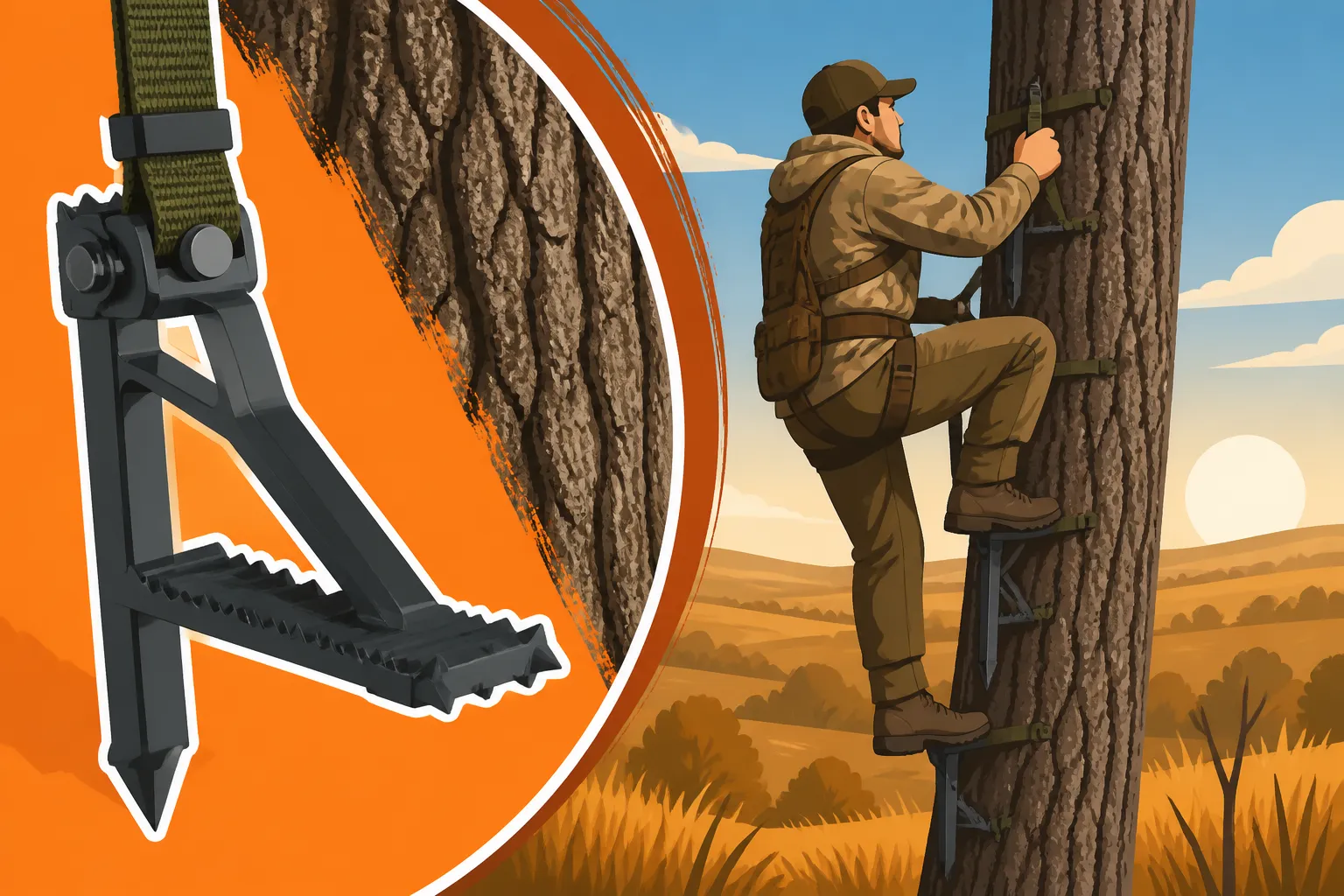
The most crucial element when tackling rough bark is how the stick interacts with the tree. You need an aggressive bite, and that starts with the stand-offs – those points on the stick that press against the tree trunk. Forget the small, simple V-shaped stand-offs found on many entry-level sticks. For rough bark, you want something with more surface area and a design that actively digs in or conforms to irregularities.
Look for stand-offs that are deeper, wider, or perhaps even multi-pointed, offering a greater purchase on the uneven bark. Some manufacturers integrate serrated edges, small teeth, or a textured, almost rubberized coating on these contact points to prevent slippage. Instead of just two small points of contact, these designs distribute the pressure over a larger, more varied area, allowing the stick to "grip" rather than just "rest" against the tree. Imagine the difference between pressing your fingertip against a rock versus pressing your whole palm – the latter offers far more stability. This aggressive design prevents the stick from twisting or sliding down those deep furrows, giving you a much more stable platform for your climb.
Furthermore, the steps themselves can play a role in stability. Sticks with wider, more robust steps can often provide secondary points of contact or leverage against the tree once your weight is applied, further locking the stick in place. The entire design should feel cohesive, working together to create a secure attachment to even the most ancient, rough-barked cottonwood.
Superior Strap Systems and Attachment Methods
A climbing stick is only as good as its attachment system. Even the most aggressively designed stand-offs won't matter if the strap can't hold them tightly against the tree. For rough bark, you need a strap system that excels in both grip and security.
Traditional cam buckles are common, but for challenging bark, consider models with thicker, wider straps. A wider strap distributes pressure more effectively, reducing the chance of it digging into a weak point on the bark or creeping down a slick surface. Some innovative designs incorporate a non-slip coating on the strap itself, or even small, integrated rubber pads that sit between the strap and the tree, adding an extra layer of friction.
Increasingly, hunters are turning to rope-based attachment systems, sometimes referred to as "Ropeman" or "Versa-Button" systems. These often use a small diameter rope, cinched tight with a specialized knot or mechanical device, which can conform better to irregular bark contours and achieve a truly rock-solid connection. The benefit here is often a more direct and stronger pulling force that can really suck the stick into the tree, minimizing any play or wobble. A good brand will pay attention to these details, ensuring their gear is up to the task. For instance, reputable hunting gear companies often highlight the robustness of their attachment systems to ensure maximum safety and quiet operation, aspects that GoHunt users often prioritize in their gear reviews.
The key is finding a system that allows for maximum tension, minimal stretch, and quiet operation. You want to be able to cinch it down tight without fighting it, and without making a racket that spooks every deer within a quarter-mile. This is especially important when you're trying to set up quietly during a Bowhunting Nebraska's Four-Month Archery Season hunt.
Durable Materials and Construction for Longevity
When you're dealing with rough bark, your climbing sticks are going to take a beating. They'll scrape, they'll bump, and they'll be subjected to the elements. This means the materials and overall construction are paramount not just for safety, but for the longevity of your investment.
Most climbing sticks are made from either aluminum or steel. Aluminum sticks are lighter, which is a huge advantage when you're packing them into a remote spot on Scouting Nebraska Public Ground Before Opening Day. However, not all aluminum is created equal. Look for high-grade aircraft aluminum, often with reinforced tubing or gussets at stress points like the stand-offs and step attachments. These reinforcements help prevent bending or fracturing when repeatedly subjected to the force of tightening against a gnarled trunk.
Steel sticks, while heavier, can offer superior durability and resistance to wear and tear. If you prioritize absolute toughness over weight, steel might be a consideration, especially for sticks you plan to leave out for longer durations, though this often comes with increased risk of rust if not properly maintained.
Pay close attention to the welds and pivot points. These are often the weakest links in any piece of gear. High-quality sticks will feature clean, robust welds and hardware that can withstand repeated use and exposure to Nebraska's diverse weather conditions, from scorching early-season heat to freezing December winds. A durable, corrosion-resistant finish, such as powder coating, is also important not only for weather protection but also to reduce noise when sticks inevitably rub against each other during transport or setup. You'll want to ensure your gear, including any components, is up to the task of handling the rigorous demands of Nebraska's varied hunting environments.
Techniques for Securely Deploying Sticks on Gnarly Trees
Having the right climbing sticks is half the battle; knowing how to use them effectively on rough-barked trees is the other. It’s not just about strapping them on; it’s about strategic placement, proper technique, and a relentless focus on safety.
Strategic Tree Selection and Pre-Scouting
Even with the best rough-bark-friendly climbing sticks, some trees are simply better choices than others. Effective tree selection often starts long before opening day. When you're Scouting Nebraska Public Ground Before Opening Day, don't just look for deer sign; evaluate the trees in potential stand locations.
Look for sections of a tree trunk that are as straight and uniform as possible. Even a massive, gnarled cottonwood will often have a section or two that's less chaotic than the rest. Avoid areas with large knots, significant leans, or places where the bark is actively shedding in large flakes. Sometimes, a slightly smaller diameter tree with smoother bark, if it offers the same vantage point, can be a safer and quieter option.
Consider the natural "ladder" points a tree might offer. Are there lower branches or natural crooks that could provide additional stability for the first stick or two? Can you use a slight curve in the trunk to your advantage, positioning your stand-offs on opposing sides of a ridge in the bark for a more secure grip? It’s all about finding the path of least resistance and maximizing the contact points for your sticks. If you're looking for an ideal location for Setting Up on a Nebraska Cornfield Edge, the best tree might not always be the biggest, but the one that offers the most secure climb.
Best Practices for Attaching and Securing Sticks
Once you've chosen your tree, the way you attach your sticks makes all the difference. This isn't a race; it's a careful, deliberate process that prioritizes safety and stability.
Start low. Attach your first stick at a comfortable height, ensuring it's level and tightly secured. The trick to maximum tension, especially with cam buckles, is to apply downward pressure on the stick as you cinch the strap. This leverages gravity to help pull the stick into the tree before the strap is fully tightened. With rope-based systems, understanding the knot or mechanism is crucial to getting it as tight as possible. Pull, push, and wiggle the stick to confirm it's rock solid before you ever put your full weight on it. You should feel absolutely no shift or wobble.
As you ascend, repeat this process for each stick. Each stick should be a stable platform from which to attach the next. For those exceptionally gnarly trees, sometimes angling a stick slightly, rather than trying to make it perfectly vertical, can help its stand-offs find better purchase on the bark. Don't be afraid to take an extra minute or two to ensure each attachment is secure. Your life literally depends on it. Remember that wearing a safety harness from the moment your feet leave the ground is non-negotiable, and it should be attached to the tree or a life-line as you climb. While Orange Requirements for Archers in November focus on visibility, safety on the stand begins long before you even draw your bow.
Managing Noise and Safety During Setup
One of the biggest downsides of rough bark isn't just the instability, but the noise. Every scrape, every bump, every creak can send an alert through the woods. Minimizing this noise is crucial, especially when you're trying to avoid detection by wary Nebraska whitetails.
Before you even leave your vehicle, consider adding quiet accessory attachments to your sticks. Small strips of felt, rubber washers, or even tightly wrapped bungee cords can prevent metal-on-metal clanking during transport and when placing sticks. When you're actually putting a stick on the tree, try to place it gently, guiding it into position rather than letting it bang against the trunk. With proper pre-scouting and tree selection, you can often find smoother channels in the bark that allow for quieter placement.
Practicing your stand setup at home or on an easy tree in your backyard can build muscle memory and allow you to refine your technique for quiet attachment. The more fluid and confident your movements, the less fumbling and noise you'll make in the field. And again, always wear a safety harness. Attach it to a safety line that goes up as you do, or to the tree itself, maintaining three points of contact at all times. This discipline is critical whether you're climbing a smooth utility pole or a monster cottonwood with bark like granite. Staying safe means you'll be around to hunt another day, and enjoy many more Nebraska Archery and Muzzleloader Deer Permits.
Integrating Rough Bark Sticks into Your Nebraska Hunting Strategy
Climbing sticks designed for rough bark aren't just a niche product; they're a strategic tool that can expand your hunting opportunities, especially in the challenging terrain of Nebraska. Understanding when and where to deploy them, and how to integrate them into a broader hunting strategy, can make all the difference.
When and Where These Sticks Shine
These specialized climbing sticks truly shine in environments where standard sticks falter. Think of the dense, mature timber that lines the major river systems like the Missouri or Platte, where River-Bottom Whitetail Hunting in Eastern Nebraska often takes place. The enormous, ancient cottonwoods and bur oaks in these areas are prime real estate for deer but a nightmare for conventional climbing gear. Rough-bark sticks provide the stability and confidence needed to access those otherwise impenetrable canopy lines.
They're also incredibly valuable in specific areas of the Nebraska Sandhills or Pine Ridge, where you might find mature cedars or isolated pockets of deciduous trees with equally challenging bark. On high-pressure public land, the "easy" trees – those with straight, smooth trunks – are often already used or are in less-than-ideal locations. Rough-bark sticks open up a whole new set of possibilities, allowing you to access overlooked trees that might offer a superior strategic advantage, such as a better view of a Scrape Lines Along a Fenceline or a hidden trail. This adaptability is key for hunters using the Nebraska Public Access Atlas to find new hunting grounds.
Finally, these sticks are perfect for run-and-gun bowhunters or those who value flexibility. If your hunting style involves frequent stand relocation to adapt to changing wind conditions or deer patterns, having sticks that can securely attach to almost any tree means you're not limited in your choices. This ability to set up quickly and securely on a variety of trees ensures you can respond dynamically to the movements of deer throughout the Nebraska's Four-Month Archery Deer Season.
Combining Sticks with Other Access Methods
While rough-bark climbing sticks are excellent on their own, they can also be part of a hybrid approach to treestand access, especially when paired with other gear like hang-on stands or tree saddles. For instance, you might use your rough-bark sticks for the initial 10-15 feet of ascent on a particularly difficult tree. Once you're past the most gnarled section, you could then switch to a set of lighter, more traditional sticks for the remaining height, or directly attach your hang-on stand if it has its own climbing aid.
Many hunters are also embracing tree saddles for their lightweight and adaptable nature. Combining saddle hunting, which inherently requires flexible climbing access, with rough-bark sticks can create the ultimate mobile hunting system. The sticks get you up the tree, and the saddle allows you to hunt 360 degrees around the trunk, using its natural cover. This setup gives you immense freedom to choose virtually any huntable tree, regardless of its bark texture or shape, opening up opportunities you might never have considered before. You can read more about options in Treestands and Saddles on Public Ground.
The key is to think strategically about your gear. Instead of a single, rigid system, consider a modular approach where different tools complement each other to solve specific challenges presented by the Nebraska landscape and its diverse tree species.
Maintenance and Storage for Longevity
Just like any other piece of critical hunting gear, your rough-bark climbing sticks require regular maintenance to ensure their reliability and longevity. Ignoring this can lead to equipment failure, which is not only frustrating but potentially dangerous.
After each hunt, especially if the weather was wet or muddy, take the time to clean your sticks. Remove any bark debris, mud, or moisture. Pay particular attention to the attachment straps and buckles or rope systems; dirt and grit can compromise their functionality. A simple brush-off and wipe-down will suffice. Inspect all components for wear and tear: check the welds for cracks, examine the stand-offs for any bending or excessive dulling of aggressive edges, and thoroughly inspect the straps or ropes for fraying, cuts, or stretching. If you use a brand like GoHunt, they'll often have guidance on maintaining their specific gear.
Proper storage is also crucial. Store your sticks in a dry environment to prevent rust on steel components or hardware, and to prevent mildew on straps. If your sticks nest together, ensure they do so cleanly to avoid unnecessary rubbing that could wear down finishes or structural integrity. By taking these simple steps, you'll ensure your rough-bark climbing sticks remain a safe, reliable, and quiet tool in your Nebraska hunting arsenal for many seasons to come, helping you access those hidden gems in the woods and hopefully, fill your freezer with venison.
Climbing Stick Features Comparison
When considering climbing sticks for rough bark, it's helpful to compare general features to those specifically designed for challenging trees. This table outlines some key differences to guide your selection.
| Feature | Standard Climbing Sticks | Rough Bark-Friendly Climbing Sticks |
|---|---|---|
| Stand-Offs (Tree Contact) | Smaller, V-shaped, often smooth | Deeper, wider, multi-point, serrated, or textured |
| Strap System | Basic nylon strap with cam buckle | Wider, non-slip straps; robust cam buckles or rope systems |
| Material & Build | Standard aluminum, simple welds | Reinforced aluminum or steel, robust welds, gussets |
| Noise Level (Setup) | Can be loud with bark scraping, metal clanking | Designed for quiet placement, dampening materials |
| Stability on Rough Bark | Prone to shifting, twisting, or slippage | Enhanced grip, minimized movement, secure attachment |
| Tree Compatibility | Best for smoother, straighter trunks | Excellent for gnarled, deeply furrowed, uneven bark |
Disclaimer
This article is for general informational purposes only and does not constitute professional advice. Laws, prices and regulations vary by location and change over time. Consult a qualified professional for guidance on your specific situation.