Treestands and Saddles on Public Ground
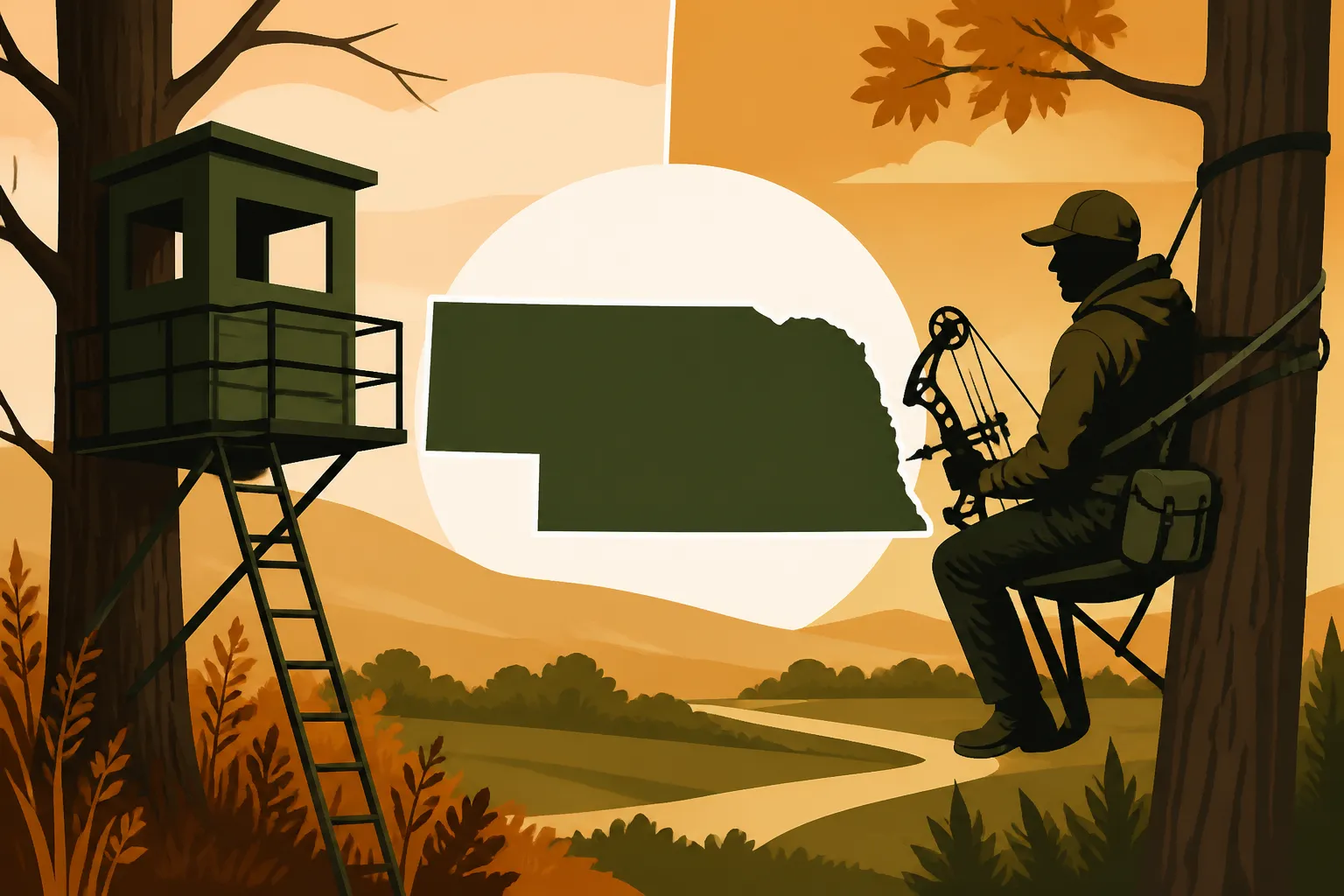
Hunting public land in Nebraska can feel like an uphill battle, especially when you're trying to gain an aerial advantage. The rules around using treestands and saddles can be confusing, varying from one public parcel to the next, leaving many hunters frustrated and unsure if their preferred setup is even allowed. This guide aims to clear up that confusion, offering a comprehensive look at how to effectively and legally use treestands and saddle systems to elevate your hunting game on Nebraska's diverse public ground.
Understanding Public Land Regulations for Elevated Hunting
Navigating the rules and regulations for elevated hunting on Nebraska's public lands is arguably the most crucial step before you even think about hanging a stand or strapping on a saddle. It's not a one-size-fits-all situation, and what's permissible in a Wildlife Management Area might be strictly prohibited in a National Forest, or vice-versa. Many hunters, especially those new to public land, make the mistake of assuming general hunting rules apply everywhere, only to find themselves in a bind. This oversight can lead to fines, confiscated gear, or even losing access to valuable hunting spots.
General Rules on WMAs and Open Fields and Waters
Nebraska's Wildlife Management Areas (WMAs) and Open Fields and Waters (OFW) tracts offer a significant amount of public access, and these areas often have specific guidelines regarding elevated hunting. Generally, you'll find that portable treestands and ground blinds are allowed, but the key word here is portable. This almost universally means that permanent stands – those requiring construction or leaving a lasting alteration to the environment – are a big no-no. We're talking about screw-in steps, platforms bolted to trees, or anything that can't be easily removed at the end of your hunt or season.
Another critical aspect for WMAs and OFW sites is the "temporary" nature of your setup. In most cases, treestands must be removed from the property daily. This is a significant consideration for hunters, especially if you're planning multiple hunts in the same spot. Leaving a stand overnight, even if it's a portable hang-on, can be considered abandonment or a violation. Always check the specific area's regulations, often found on information kiosks at the entrance or through the Nebraska Wildlife Management Area Rules online. This daily removal rule is a major factor in choosing between a lighter, more mobile saddle system or a heavier, potentially more comfortable hang-on stand that you'll need to haul in and out every single time. It's a common frustration to find the perfect tree, only to realize the effort of packing out a heavy stand each evening isn't feasible, prompting a shift in strategy.
Specifics for National Forests and Grasslands
When you venture into federal lands like the Oglala National Grassland or the Bessey Ranger District within the Nebraska National Forest, the rules for elevated hunting can differ yet again. These areas are managed by federal agencies, and while they generally align with the "no permanent structures" ethos, there might be subtle differences in how long a stand can remain in place or what constitutes a "temporary" setup. For instance, some federal lands might allow a portable stand to be left for a period of time, such as a week or two, as long as it's clearly marked with your name and contact information. However, this is not a universal truth for Nebraska's federal lands, and it's imperative to verify directly with the managing office for that specific parcel.
The type of trees available on these federal lands also plays a role. In areas like the Pine Ridge, you might find ample ponderosa pine suitable for climbing stands or saddles. However, on the vast, treeless expanses of the Oglala National Grassland, the concept of a "treestand" becomes almost entirely moot. Here, if you're looking for elevation, you're likely considering a ground blind or a topographical advantage. These subtle distinctions highlight why a blanket understanding of "public land" isn't enough; you need to dig into the specifics of the exact area you plan to hunt to avoid any potential issues.
The Importance of the Public Access Atlas and Local Regulations
The Nebraska Public Access Atlas is your absolute best friend when it comes to understanding where you can hunt and what rules apply. It's a goldmine of information, detailing WMA boundaries, Open Fields and Waters tracts, and even specific rules for certain parcels. Before heading out, always consult the current Atlas, either online or through The Nebraska Public Access Atlas Mobile App. This invaluable tool often outlines special restrictions, such as "walk-in only" areas where vehicles aren't permitted, which directly impacts how you transport your elevated hunting gear.
Beyond the Atlas, it’s wise to check directly with the Nebraska Game and Parks Commission website or call their local offices if you have specific questions about a particular area. County or local ordinances might also influence hunting, though less commonly for treestand use, but it's always worth being aware. Many hunters have been disappointed to find that their favorite stand setup, perfectly legal on state land, might be problematic on certain federal or even local public parcels. Using tools like GoHunt, which provides detailed property boundaries and land ownership layers, can complement the Atlas by ensuring you're always aware of where you are and what regulations might apply. This proactive approach saves a lot of headaches and ensures you're hunting ethically and legally. Remember, ignorance of the law is rarely an acceptable excuse.
Treestands for Nebraska Public Land
Treestands have been a cornerstone of elevated hunting for decades, offering hunters a perch above the ground, out of sight and often out of a deer's direct scent cone. On Nebraska's public lands, however, the choice and deployment of a treestand require careful consideration of portability, stealth, and strict adherence to regulations. It's not just about getting up in a tree; it's about doing so efficiently and responsibly.
Types of Treestands Suitable for Public Access
When it comes to public land in Nebraska, your treestand options are generally narrowed down to types that are easily portable and leave no permanent impact. The most common choices are climbing stands and hang-on stands. Climbing stands are a favorite for their all-in-one design, allowing you to ascend a tree using only the stand itself. They're ideal for straight, limbless trees, often found in mature timber stands along Nebraska's river bottoms or in larger WMA forests. The efficiency of a climber means you can get up and down relatively quickly, which is crucial for the "daily removal" rule common on many public tracts.
Hang-on stands, on the other hand, require a separate climbing method, typically climbing sticks or a rope-style ascender. While this adds a bit more gear, hang-ons offer unparalleled versatility in tree selection, as they can be used on crooked, limby, or even multi-trunked trees that a climber simply can't handle. This flexibility is a huge advantage in areas where perfectly straight trees are a rarity. Ladder stands, while comfortable and stable, are generally too bulky, heavy, and difficult to transport and set up daily on public land, making them impractical for most public hunting scenarios where you can't leave them unattended. Think about packing a ladder stand out of a dense cedar draw every evening – it's just not going to happen for most of us.
Portability, Security, and Stealth Considerations
For public land hunting, portability is paramount. Every ounce counts when you're packing your gear a mile or more into an Entry and Exit Routes on Flat Farm Ground or navigating thick river bottom timber. Look for stands made from lightweight aluminum, and consider minimalist designs. A comfortable seat is important, but a stand that weighs 30+ pounds will quickly lose its appeal on longer treks. Security is another often-overlooked factor. While you'll be taking your stand out daily in many areas, if you can leave it for a short period (always double-check regulations!), a good cable lock is essential to deter theft. Even during a lunch break, locking your stand can provide peace of mind.
Stealth, however, is where many stands fall short. Old, squeaky stands are notorious for giving away a hunter's position. Before hitting the woods, silence your stand. Lubricate pivot points, wrap metal-on-metal sections with stealth strips or tape, and ensure all straps and buckles are quiet. The noise of a stand clanking against climbing sticks or a tree during setup can alert every deer within earshot. Choose camouflage patterns that blend with the natural environment you'll be hunting, and practice setting up your stand in the dark or low light conditions to minimize noise and visual disturbance. A quiet, efficient setup is key to getting into your stand unnoticed, especially when hunting pressured public land.
Choosing Stand Locations and Setup Strategies
Selecting the right tree and location for your stand is arguably more important than the stand itself. On public land, you're looking for pinch points, funnels, and natural travel corridors that deer use to move between bedding and feeding areas. This might be a narrow strip of timber along a creek bank, a slight rise offering a view over a field, or a saddle in a ridge line. Pay close attention to prevailing winds, as scent control is critical. You always want the wind in your favor, blowing your scent away from where you expect deer to approach. Wind Direction on Open Nebraska Prairie Stands can be notoriously shifty, making strategic placement even more vital.
When setting up, aim to be at least 15-20 feet high, or even higher if the canopy allows and safety permits. This helps with scent dispersal and gets you above a deer's natural line of sight. Consider your shooting lanes before you ascend. Clear any branches that might impede an ethical shot, but do so judiciously and minimally, especially if the stand is removed daily, to avoid leaving excessive sign. Think about your approach and exit routes to the stand – can you get in and out without spooking deer? For example, when Hanging a Stand on a Cornfield Edge, consider the corn as natural cover for your entry and exit, especially before harvest. Every detail, from the exact tree to the path you take, contributes to the overall success of your elevated ambush.
Saddle Hunting on Nebraska Public Ground
Saddle hunting has surged in popularity among mobile hunters, and for good reason. It offers a unique blend of lightweight portability and 360-degree shooting capability that traditional treestands often struggle to match, making it an excellent option for Nebraska's public lands where mobility and stealth are paramount.
The Advantages of Saddle Hunting for Mobile Hunters
The primary appeal of saddle hunting on public ground lies in its incredible portability and adaptability. A complete saddle system – including the saddle, linesman's belt, and tree tether – often weighs significantly less than even the lightest portable treestand. This feather-light setup makes long hikes into remote public parcels much more manageable, allowing you to venture further from access points where hunting pressure is often lower. Imagine walking miles into a sprawling WMA to hunt a specific deer sign, the reduced weight making the journey feel less like a forced march and more like a pleasant stroll.
Beyond weight, saddle hunting offers unmatched maneuverability and a truly 360-degree shooting platform. Unlike a treestand where you're often limited to shooting in front or slightly to the sides, a saddle allows you to rotate around the tree, presenting ethical shots in any direction. This is a game-changer when deer approach from unexpected angles, a common occurrence on public land where deer movement can be less predictable. The low profile of a saddle hunter, hugging the tree, also provides exceptional concealment. You become part of the tree itself, making it much harder for wary deer to pick you out, especially in more open timber or areas with less dense canopy. This superior concealment and shot versatility give saddle hunters a distinct edge.
Essential Gear for a Saddle Hunting Setup
To embrace saddle hunting, you'll need a few key pieces of specialized gear. First and foremost is the saddle itself, which is essentially a padded harness worn around your waist and legs. It's designed to distribute your weight comfortably while you lean back into it, secured by a tree tether. Finding a saddle that fits well and is comfortable for extended sits is crucial; try different brands and models if possible. Next, you'll need a lineman's belt, which is used to secure you to the tree while you ascend, keeping your hands free for climbing sticks or ropes. Once at hunting height, a tree tether attaches your saddle to the tree, allowing you to lean out and maneuver.
The final piece of the puzzle is your climbing method. The most popular choice for saddle hunting on public land is lightweight climbing sticks. These attach to the tree in sections, allowing you to quickly and quietly ascend to your desired height. Some hunters prefer climbing ropes with ascenders or even specialized single-stick methods for ultimate speed and minimal gear. Many also use a small platform or a single climbing stick step at hunting height to provide a stable base for their feet, adding to comfort and allowing for easier rotation around the tree. Each piece of gear is designed for efficiency and safety, working in concert to create a highly mobile and adaptable hunting system.
Techniques and Best Practices for Saddle Use
Mastering saddle hunting requires practice and a strong understanding of its unique techniques. Ascending the tree with your climbing sticks and lineman's belt needs to be fluid and quiet. Start low, setting your first stick, attaching your lineman's belt, and then working your way up. As you go, you'll be resetting your lineman's belt and adding sticks until you reach your desired height. Once there, you'll attach your tree tether and transfer your weight into the saddle, adjusting for comfort. The goal is to be secure, stable, and ready to shoot with minimal movement.
Positioning yourself for the shot is where the saddle truly shines. You can subtly shift your body around the tree, using the trunk itself for concealment. When a deer approaches, you can rotate to face it, using the tree to break up your outline. Practice drawing your bow and shouldering your rifle from various angles while in the saddle, both leaning left and right, to understand your full range of motion. Pay close attention to your anchor points and how they change with different body positions. For hunters exploring dense river bottom timber in eastern Nebraska, the ability to pivot and shoot around thick cover is invaluable. Saddle Hunting in Cottonwood Timber often involves navigating numerous branches and tight windows, where the saddle's flexibility truly excels, allowing you to adjust your shot in ways a traditional stand might not. Always wear a safety harness and double-check all connections before lifting your feet off the ground.
Comparative Analysis: Treestands vs. Saddles
Deciding between a treestand and a saddle for public land hunting in Nebraska boils down to a hunter's personal preferences, the type of terrain they're tackling, and their hunting style. Both offer distinct advantages and drawbacks, and understanding these differences is key to making an informed choice that best suits your needs.
Weight, Portability, and Ease of Setup
When we talk about weight and portability, saddle hunting generally takes the crown. A full saddle setup, including climbing sticks, can often be 10-15 pounds lighter than a comparable portable treestand and climbing stick combination. This weight saving is a huge factor for hunters who routinely walk long distances on public land or carry heavy camera gear. For example, a hunter navigating the expansive Scouting Nebraska Public Ground Before Opening Day on a distant WMA would greatly appreciate shaving off those extra pounds. The compact nature of a saddle also means it's less cumbersome to carry through thick brush or tight spaces.
However, the ease of setup can be a bit more nuanced. A basic climbing treestand can be incredibly fast to set up on the right tree – a straight, limbless one. You just strap it on and climb. Hang-on stands, while offering more tree versatility, involve attaching multiple climbing sticks before hoisting the stand itself. Saddle setups, while lightweight, also require attaching several climbing sticks (or using a rope system) and then securing the saddle and tether. For new saddle hunters, the learning curve for an efficient and quiet setup can be steeper than with a traditional treestand. However, with practice, many saddle hunters become incredibly fast and efficient. For someone quickly needing to get into a tree on a new Hunting the Pre-Rut in Late October spot, a familiar setup technique, whether stand or saddle, makes all the difference.
Comfort, Safety, and Stability
Comfort is highly subjective and often depends on the individual and the duration of the hunt. Many traditional treestands, especially those with larger platforms and padded seats, can offer a comfortable sit for long hours, which is a major benefit during chilly late-season hunts when you're bundled up. The ability to shift weight, stretch, and even nap on a wide platform is a luxury. Saddles, by design, are more active. You're leaning into a harness, and while modern saddles are incredibly ergonomic, long sits can be more physically demanding for some. Many saddle hunters find themselves standing or leaning more often, which keeps them more engaged but might not be everyone's idea of comfort.
In terms of safety, both systems are inherently safe when used correctly and with a full-body harness. The critical element is always being tied to the tree, which is a fundamental rule for both. Modern treestands come with robust fall arrest systems, and the treestand itself provides a solid platform. Saddles are designed around being continuously tethered, offering a continuous connection to the tree. The perceived stability differs: a treestand offers a rigid platform underfoot, while a saddle hunter's feet might be on climbing sticks or a small platform. Some hunters might feel more secure on a solid stand, especially when drawing a bow or settling for a rifle shot. Ultimately, proper training, regular gear inspection, and adherence to safety protocols make both systems safe options.
Situational Effectiveness Across Nebraska Habitats
The optimal choice often depends on the specific Nebraska habitat you're hunting and your chosen hunting method. For static, long-term ambush sites in dense timber along eastern Nebraska river bottoms, where deer movement patterns are somewhat predictable, a larger, more comfortable hang-on treestand might be preferred if daily removal isn't too arduous. This provides a stable platform for long waits, especially during When the Whitetail Rut Peaks in Nebraska. The bigger platform and seat can be a real blessing when you're spending hours waiting for that trophy buck.
Conversely, for run-and-gun tactics in more open country, covering vast distances, or adapting to changing deer movement on pressured public land, a saddle shines. Imagine trying to cover ground in the Sandhills or in a mixed timber and field environment, adapting your setup based on fresh sign. The saddle's light weight and quick, versatile setup allow hunters to move more fluidly. When Still-Hunting Nebraska Cedar Draws or working the edges of crop fields, the ability to quickly ascend almost any tree and get a 360-degree shot is invaluable. In areas with fewer, less ideal trees, the saddle's ability to be used on a wider variety of tree shapes and sizes also gives it an edge.
| Feature | Portable Treestand (Climber/Hang-on) | Saddle Hunting System |
|---|---|---|
| Weight | Moderate to Heavy (15-30+ lbs) | Light to Moderate (8-20 lbs) |
| Portability | Good, but can be bulky | Excellent, very compact |
| Tree Versatility | Climber: Straight, limbless only; Hang-on: Good, but needs climbing sticks | Excellent, wide range of tree sizes/shapes |
| Setup Speed | Climber: Fast on ideal trees; Hang-on: Moderate | Moderate, requires practice |
| Comfort | Generally good for long sits, larger platform | Active, leaning sit; can be tiring for long durations |
| Shooting Angles | Limited (front/sides) | 360-degree, highly versatile |
| Concealment | Good, but hunter's profile can be wider | Excellent, low profile against tree |
| Ideal Use Case | Static ambushes, predictable deer movement, longer sits | Mobile hunting, run-and-gun, adapting to changing conditions |
| Public Land Fit | Good, if rules allow daily removal | Excellent, due to portability and stealth |
Maximizing Your Elevated Hunting Success on Public Land
Successful elevated hunting on Nebraska's public land isn't just about picking the right gear; it's about a holistic approach that combines thorough preparation, unwavering safety, and a keen understanding of the local environment. It's about stacking the odds in your favor in an inherently challenging hunting scenario.
Scouting and Pre-Season Preparation
The importance of diligent scouting cannot be overstated, especially on public land. Before the season even begins, dedicate time to physically explore the areas you plan to hunt. Look for deer sign – tracks, rubs, scrapes, and bedding areas. Identify natural funnels, pinch points, and transition zones where deer are likely to travel. Pay attention to changes in elevation, water sources, and prevailing wind patterns. Digital scouting tools like GoHunt or other mapping apps are invaluable for identifying property lines, access points, and potential stand locations from home, helping you plan your physical scouting trips more efficiently. These apps allow you to mark potential stand trees, identify likely deer trails, and even study historical aerial imagery for changes in habitat.
However, remember that digital maps are only a starting point. Boots-on-the-ground scouting is essential to confirm sign, assess tree suitability for your stand or saddle, and identify subtle features that might not be visible from above. Look for the actual trees you might use and assess their height, diameter, and limb structure. Consider your entry and exit routes, ensuring they are as quiet and scent-free as possible. For instance, on a tract that's mostly flat farmland with a few scattered timber patches, knowing Where Nebraska Whitetails Bed in Row-Crop Country will guide your stand placement to intercept them moving to and from feeding areas. Pre-season preparation also includes getting physically ready; carrying treestands or saddle gear can be demanding, so regular exercise will pay dividends when you're hauling gear deep into public ground.
Practicing Safety and Ethical Considerations
Safety should always be your top priority when hunting from an elevated position. This means consistently using a full-body harness, whether you're in a treestand or a saddle. Practice attaching your harness to the tree or your lifeline before your feet leave the ground. Inspect your gear – straps, ropes, buckles, and the stand itself – before each use for any signs of wear, fraying, or damage. Replace any compromised components immediately. Always inform someone of your hunting location and your expected return time, especially when hunting alone. Carry a cell phone, a whistle, and a basic first-aid kit. A common frustration for many hunters is not prioritizing safety, leading to preventable accidents.
Ethical considerations extend beyond personal safety. On public land, it's crucial to leave no trace. This means packing out everything you pack in, including any trash, spent shell casings, or food wrappers. When using screw-in steps or modifying trees, ensure you're within regulations, and always remove them after your hunt. Be mindful of other hunters; public land is a shared resource. Respect their space, avoid interfering with their hunts, and communicate if you encounter another hunter in your chosen area. Adhering to Tree Stand Rules on Nebraska Public Land is not just about avoiding a ticket; it's about respecting the resource and ensuring continued access for everyone. Leaving minimal impact helps preserve the hunting opportunities for future generations.
Adapting to Nebraska's Diverse Environments
Nebraska is a state of incredible diversity, and your elevated hunting strategy needs to adapt accordingly. The dense cottonwood bottoms of the Platte River present different challenges and opportunities than the scattered cedar draws of the central Sandhills or the ponderosa pine forests of the Pine Ridge. In eastern Nebraska's river corridors, where mature trees are abundant and whitetail density is high, you'll likely find ample opportunities for both treestands and saddles. Here, focusing on travel corridors along the river or creek banks, near food plots, or where deer cross open areas will be key. River-Bottom Whitetail Hunting in Eastern Nebraska often means navigating thick cover and understanding how water features funnel deer.
Moving west, into the Sandhills, suitable trees become scarcer. Here, if you find a cluster of mature trees in a creek bottom or around a spring, it can be a goldmine. However, ground blinds may become more prevalent, or hunters might rely on finding the rare, strategically placed tree. In the Pine Ridge, with its rugged terrain and abundant ponderosa pines, both climbing stands and saddles can be highly effective for mule deer and whitetails. The topography here often creates natural funnels, and understanding thermals and wind currents in the hills becomes paramount. The key is to avoid a rigid mindset; be flexible, assess the specific habitat, and choose the elevated hunting system that best suits that particular environment and the regulations governing it.
Disclaimer
This article is for general informational purposes only and does not constitute professional advice. Laws, prices and regulations vary by location and change over time. Consult a qualified professional for guidance on your specific situation.