Crossbows Under Nebraska Rules
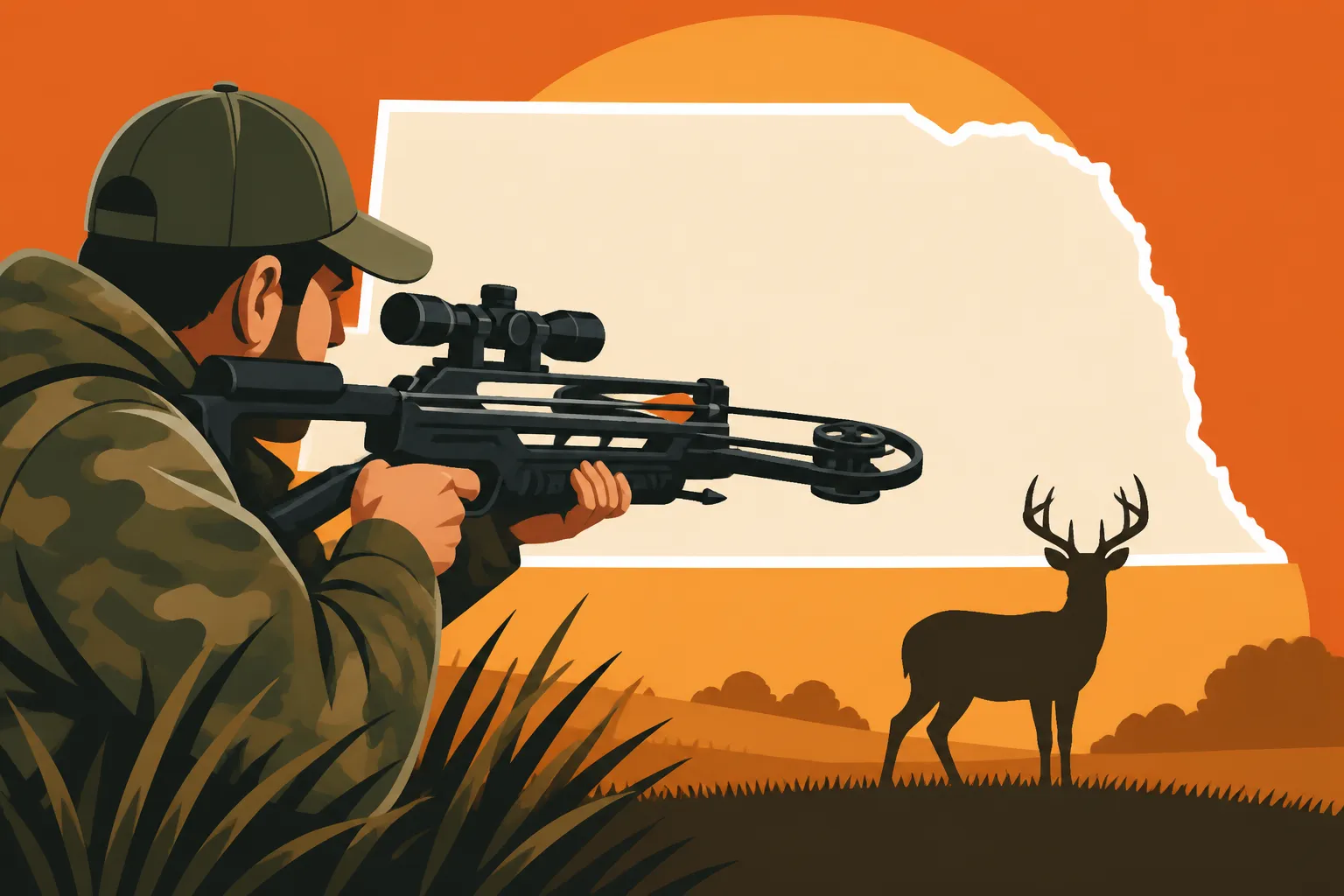
It’s a topic that stirs up a lot of conversation in the hunting community, and understandably so. For many years, crossbows were seen in a different light than traditional archery equipment, leading to a lot of confusion, especially here in Nebraska. But the landscape has shifted, and if you’ve been wondering if a crossbow can be a legitimate tool in your deer hunting arsenal, you’re in the right place. This guide is going to break down everything you need to know about crossbows under Nebraska rules, cutting through the myths and giving you the clear, practical information you need to head into the field with confidence.
The Evolution of Crossbows in Nebraska Hunting
For a long time, there was a real divide in the hunting world, especially among archers, about the place of crossbows. Some folks saw them as an unfair advantage, while others championed their ability to bring more people into the sport. Nebraska, like many other states, took its time to navigate these waters, and the rules have definitely changed over the years. It’s important to understand this history because it explains why some of the lingering misconceptions about crossbow legality persist.
When Crossbows Became Legal for All Hunters
If you've been around hunting in Nebraska for a while, you'll remember a time when crossbows were largely restricted. They were typically reserved for hunters with specific physical disabilities or those participating in mentored youth programs, often requiring a doctor's note or special permit. This created a situation where many hunters, though interested, felt excluded or unsure of the process. It also led to a lot of whispered conversations at deer camp about who "should" or "shouldn't" be using one.
However, the tide began to turn. The state recognized the growing popularity of crossbows nationwide and, more importantly, their potential to retain hunters and recruit new ones, particularly those who might struggle with the physical demands of traditional compound or recurve bows. After much discussion and consideration of biological impacts and hunter access, Nebraska made a significant change. Crossbows became fully legal for anyone holding an archery deer permit, opening up the entire archery season to crossbow users without the need for a special disability permit. This was a monumental shift, removing barriers and welcoming a broader demographic into the archery season. This change aligns Nebraska with many other states that have also broadened crossbow use, reflecting a national trend towards greater inclusivity in hunting.
Why the Change? Debunking Myths and Embracing Access
The decision to fully legalize crossbows for all archery hunters wasn't made lightly; it came after careful consideration of several factors. One of the biggest drivers was increasing hunter participation. Many older hunters find that drawing and holding a traditional vertical bow becomes too physically demanding as they age, forcing them out of the archery season entirely. Crossbows offer a way for these experienced hunters to continue participating in the sport they love, keeping their knowledge and passion in the field. Similarly, new hunters, especially adults, often find the learning curve for a vertical bow incredibly steep. Mastering shooting form and achieving consistent accuracy can take years. Crossbows, with their rifle-like mechanics and ability to be cocked and held, allow newcomers to achieve proficiency more quickly, making archery hunting more accessible.
There were, and still are, some persistent myths that needed to be addressed. One common misconception was that crossbows would lead to a dramatic increase in deer harvest or unfairly decimate deer populations. Wildlife agencies, including Nebraska Game and Parks, looked at data from other states that had already liberalized crossbow rules and generally found that while crossbow use increased, it didn't necessarily translate to a significant, unsustainable spike in overall deer harvest. The same fundamental hunting principles of scouting, shot placement, and ethical hunting still apply. Another myth was that crossbows extended the effective range far beyond traditional bows. In reality, while a crossbow can be very accurate, ethical hunting ranges remain similar to or only slightly beyond those for vertical bows, largely due to animal movement and the limitations of an individual hunter's skill. Ultimately, the change was about increasing opportunities for hunters while maintaining sound wildlife management principles, recognizing that access and tradition can coexist.
Nebraska's Crossbow Regulations Explained
Now that we've covered the "why," let's get into the nitty-gritty of the "how." Understanding the specific regulations is paramount to hunting legally and ethically with a crossbow in Nebraska. It's not enough to just know they're "legal"; you need to know the nuances of their use, particularly when it comes to seasons and equipment.
General Crossbow Hunting Seasons and Permits
The great news for crossbow enthusiasts in Nebraska is that if you hold a valid archery deer permit, you can use your crossbow throughout the entire archery deer season. This means you don't need a separate "crossbow permit" or any special designation beyond your standard archery tag. The archery season in Nebraska is wonderfully long, often spanning from September through December, with various breaks and segments. This long season offers incredible flexibility, allowing hunters to target different phases of the rut or take advantage of varying weather conditions. For example, you can be out during When Nebraska's Archery Deer Season Opens in the early fall, enjoying the mild weather, or stick it out into late November and December when the deer are still active after the firearm seasons.
It's crucial to remember that while the weapon is now broadly permitted, all other archery season rules still apply. This includes legal shooting hours, bag limits, unit-specific restrictions, and tagging requirements. You'll also need a valid Nebraska hunting permit and a habitat stamp, just like any other hunter. Keep in mind that certain antlerless-only permits might also be valid during the archery season, offering additional opportunities to fill your freezer. Always check the current Nebraska Big Game Guide for the most up-to-date information on season dates and specific permit details for the units you plan to hunt. Using resources like the official Game and Parks website or apps like GoHunt can help you stay current on regulations and avoid any unintended infractions.
Specific Restrictions and Equipment Considerations
While crossbows are widely legal, there are still some important details regarding equipment and how they can be used. These aren't meant to make things difficult, but rather to maintain fair chase principles and ensure hunter safety.
First off, when it comes to broadheads, Nebraska has clear regulations. Whether you're shooting a vertical bow or a crossbow, your broadheads must meet certain criteria. They need to have at least two fixed cutting edges with a minimum cutting diameter or width of 7/16 of an inch, or they can be a mechanical broadhead that deploys to a minimum cutting diameter of 7/16 of an inch. These rules are in place to ensure a clean, ethical harvest by creating a sufficient wound channel. You can dive deeper into these specifics with guides on Crossbow Bolt and Broadhead Rules.
Another important consideration is scope usage. Crossbows typically come equipped with magnified scopes, which is perfectly legal for hunting deer during the archery season in Nebraska. Unlike some other states or weapon types, there aren't specific restrictions on magnification levels for crossbow scopes during archery season. However, you cannot attach any artificial light source, night vision, or thermal imaging device to your crossbow when hunting deer. This aligns with the fair chase principles of archery hunting, ensuring that hunters rely on natural light and their own scouting abilities. The intent is to keep the playing field level and prevent technological advantages that might compromise the hunting experience for all. Always double-check these finer points in the annual hunting guide to ensure full compliance.
| Aspect | Nebraska Archery Season Rules for Crossbows |
|---|---|
| Permit Required | Any valid archery deer permit (e.g., Statewide Archery, Unit Archery, Antlerless-Only Archery). No separate "crossbow permit." |
| Season Dates | Crossbows are legal for the entire duration of the established archery deer season, typically September through December. |
| Broadhead Type | Must have at least two fixed cutting edges with a minimum 7/16" cutting diameter, OR a mechanical broadhead deploying to a minimum 7/16" cut. |
| Magnified Optics | Legal to use magnified scopes on crossbows. |
| Artificial Lights/NV | Illegal to use or attach any artificial light source, night vision device, or thermal imaging device to the crossbow for deer hunting. |
| Other Regulations | All other archery deer hunting regulations apply, including shooting hours, bag limits, tagging, and unit restrictions. |
Practical Considerations for Crossbow Hunters
Switching to a crossbow, or starting with one, brings its own set of practicalities that are worth diving into. It’s not just about pulling a trigger; there’s still skill involved, and preparation is key to success in the field.
Sighting In and Practice Regimens
Just like with any other hunting weapon, consistent accuracy with a crossbow doesn't happen by accident. You need to dedicate time to sighting it in and practicing regularly. The process is similar to sighting in a rifle, but with specific considerations for bolts and broadheads. Start at closer ranges, say 10-20 yards, to get your scope dialed in, then gradually move back to your maximum ethical shooting distance. Remember that different bolts, especially those with varying fletching or weights, can fly differently. It’s wise to practice with the exact setup you plan to hunt with.
One common mistake new crossbow hunters make is overestimating their effective range simply because the crossbow feels more "powerful" or "accurate" than a vertical bow. While mechanical accuracy might be high from a bench rest, real-world hunting scenarios involve adrenaline, varying terrain, and animal movement. It's paramount to establish your ethical shooting range, not just the crossbow's mechanical capability. Practice from different positions – standing, kneeling, sitting, and from a ground blind or treestand if that's how you'll hunt. Don't forget to practice with your hunting broadheads, as they can sometimes fly differently than field points. You can always check regulations on Crossbow Rules and Use in Nebraska for any further clarifications.
Choosing the Right Bolt and Broadhead
The bolt and broadhead combination is the business end of your crossbow setup, and making the right choices here can significantly impact your hunting success and ethical take. Bolts, often referred to as crossbow arrows, come in various lengths, weights, and spine stiffness. It’s crucial to match the bolt to your specific crossbow model. Most crossbow manufacturers will recommend a certain bolt weight range or length to optimize performance and ensure safety. Using bolts that are too light or too heavy, or the wrong length, can lead to poor accuracy, reduced kinetic energy, or even damage to your crossbow.
When it comes to broadheads, you have a choice between fixed-blade and mechanical (expandable) designs. Fixed-blade broadheads are known for their ruggedness and simplicity, creating a consistent wound channel upon impact. Mechanical broadheads, on the other hand, fly more like field points due to their collapsed blades, which then deploy upon impact. This can sometimes lead to better accuracy for some shooters, but they rely on proper deployment and sufficient kinetic energy for effective penetration. Regardless of your choice, ensure your broadheads are razor-sharp and meet Nebraska's legal requirements for cutting diameter. A good practice regimen with your chosen hunting broadheads will confirm their flight characteristics and help build confidence for when that moment of truth arrives.
Ethical Hunting with a Crossbow
The discussion around crossbows often includes strong opinions on ethics. While technology can make certain aspects of hunting easier, it never replaces the hunter's responsibility to pursue game ethically. Using a crossbow is no different; it requires a deep understanding of shot placement and a commitment to minimizing animal suffering.
Understanding Effective Range and Shot Placement
One of the most critical ethical considerations for any archery hunter, crossbow or vertical bow, is understanding and respecting your effective range. This isn't just about how far your crossbow can shoot accurately at a stationary target on a practice range; it's about how far you can consistently make a clean, lethal shot on a live animal under hunting conditions. Wind, animal movement, uneven terrain, and elevated positions all play a role in diminishing practical accuracy. For most crossbow hunters, an ethical range for deer is often between 30-50 yards, though highly proficient individuals might push that slightly further under ideal conditions. It's far better to limit yourself to a shorter, certain shot than to risk a longer, questionable one.
Shot placement is equally vital. The goal with any archery equipment is to hit the animal in the vitals (heart and lungs) for a quick, humane kill. This means understanding deer anatomy and waiting for the animal to be broadside or slightly quartering away. Unlike rifle hunting where bone can sometimes be overcome, a crossbow bolt needs to penetrate soft tissue to reach the vitals. Avoid shots that are quartering to, straight on, or straight away, as these significantly reduce your chances of a clean pass-through and can lead to gut shots or superficial wounds. Ethical hunting with a crossbow demands patience and discipline, waiting for the perfect angle and distance before releasing the bolt.
Minimizing Wounded Game and Maximizing Recovery
No hunter ever wants to wound an animal and not recover it, but it's an unfortunate reality in hunting. With a crossbow, just like with a vertical bow, every effort must be made to minimize this risk and maximize recovery rates. This starts with proper equipment maintenance and preparation. Ensure your broadheads are sharp, your fletching is intact, and your crossbow is sighted in perfectly. A dull broadhead or a poorly tuned bow greatly increases the chance of a non-lethal hit.
After the shot, patience is paramount. Do not rush to retrieve a deer immediately after shooting it with a crossbow. Even a well-placed shot needs time for the animal to expire and for internal bleeding to do its work. Depending on the shot placement, the animal's reaction, and weather conditions, it's often wise to wait anywhere from 30 minutes to several hours, or even longer if it's a questionable hit or getting dark. This gives the animal time to bed down and expire, making for a much easier and more ethical recovery. Blood trailing skills are incredibly important, and knowing how to read sparse or difficult trails can be the difference between a recovered animal and a lost one. Tools like the GoHunt app can even help you mark the last seen point and navigate the area during recovery. Always respect the animal by doing everything in your power to make a clean kill and recover your game. Blood Trailing After Dark in Nebraska is an essential skill to develop for these situations, especially as evenings shorten in the late season.
Advantages and Disadvantages of Crossbow Hunting
Like any hunting tool, crossbows come with their own set of pros and cons. Understanding these can help you decide if a crossbow is the right choice for your personal hunting style and physical capabilities. It's not about being "better" or "worse" than a traditional bow, but about being different and offering unique opportunities.
Accessibility and Longer Seasons
One of the most significant advantages of crossbows is their accessibility. For many individuals, drawing and holding a compound or recurve bow can be physically challenging due to age, injury, or lack of upper body strength. Crossbows eliminate this barrier, as they can be cocked mechanically and then held at full draw without continuous muscle exertion. This opens up the archery season to a much broader demographic, including older hunters, those with physical limitations, and even younger hunters who might not yet have the strength for a traditional bow but want to participate beyond the youth firearm season. This inclusivity is a huge win for hunter recruitment and retention, keeping passionate individuals in the field.
Furthermore, because crossbows are now fully legal during Nebraska's entire archery deer season, hunters gain access to a very long hunting window. This extended season, often stretching from early fall into December, provides numerous opportunities to hunt. You can chase deer during the early season, scout during the pre-rut Hunting the Pre-Rut in Late October, experience the excitement of When the Whitetail Rut Peaks in Nebraska, and even hunt during Bowhunting Through the November Firearm Season. This flexibility allows hunters to pick their preferred time to be in the woods, adapting to personal schedules, weather patterns, and deer behavior throughout the fall and early winter.
Portability and Learning Curve
While crossbows offer great advantages in accessibility, they do come with some trade-offs, particularly regarding portability and their initial learning curve for maintenance. Crossbows are generally bulkier and heavier than compound or recurve bows. This can make them more cumbersome to carry through thick brush, especially in dense river bottoms or cedar draws where you might be Still-Hunting Nebraska Cedar Draws. Maneuvering a crossbow in a compact treestand or ground blind can also be a challenge compared to a more slender vertical bow. Their width, especially limb to limb, often requires more thought when setting up your position in a blind or stand to ensure clear shooting lanes.
Another point to consider is the learning curve, not necessarily for shooting accuracy, but for proper maintenance and care. While getting accurate shots with a crossbow can sometimes feel more intuitive than with a vertical bow, they are complex mechanical devices. They require careful handling, regular lubrication of the rail and string, and periodic string and cable replacement. Improper maintenance can lead to mechanical failures, reduced accuracy, and even safety hazards. Hunters transitioning to crossbows should take the time to learn the specific care requirements for their model, ensuring longevity and reliable performance. This is a different type of "learning curve" than mastering archery form, but it's equally important for safe and effective hunting.
Finding Crossbow-Friendly Hunting Spots in Nebraska
Now that you're well-versed in the rules and practicalities of crossbow hunting, let's talk about where you can actually put these skills to use. Nebraska offers a diverse landscape, from the open Sandhills to the dense river bottoms, and knowing how to navigate public and private land access is key.
Public Lands and Open Fields and Waters
Nebraska boasts a surprising amount of public hunting land, and many of these areas are perfectly suited for crossbow hunting. Wildlife Management Areas (WMAs), for instance, often feature a mix of timber, brush, and open fields, providing ideal habitat for deer. When hunting these areas, remember that most WMAs have specific rules regarding vehicle access, blinds, and ethical hunting practices. You'll need to consult the Public Access Atlas, an invaluable tool that details all publicly accessible hunting lands, including WMAs, State Recreation Areas, and federal lands like the Oglala National Grassland. Using a mobile app like GoHunt can make navigating these public lands much easier, as it overlays property boundaries and public access points onto detailed maps.
Beyond traditional public lands, Nebraska's Open Fields and Waters (OFW) program is a game-changer for hunters seeking additional access. This program leases private land from landowners to open it up for public hunting and fishing, clearly marked with distinctive signs. Many of these OFW tracts offer fantastic deer hunting opportunities, often in areas with prime habitat like standing corn edges or thick shelterbelts. While these areas are publicly accessible, it's vital to respect the landowners' property and adhere to specific OFW rules, such as "walk-in only" restrictions on certain tracts. Crossbow hunters can benefit greatly from these areas, particularly when looking for less pressured spots or trying to Scouting Nebraska Public Ground Before Opening Day. Remember that Camping on an Open Fields Tract is generally not allowed, so plan your trips accordingly.
Private Land Permission and Considerations
While public and OFW lands offer great opportunities, securing private land permission remains a cornerstone of Nebraska hunting, especially in high-density deer areas. Many of the state's largest whitetail bucks are harvested on private agricultural ground or timbered river bottoms. Approaching landowners politely, well in advance of the season, and demonstrating respect for their property and wishes is the best way to gain access. For a crossbow hunter, private land can offer a more controlled environment, potentially with less hunting pressure than some public areas.
When hunting private land with a crossbow, communication with the landowner is crucial. Discuss where you plan to hunt, your entry and exit routes, and any specific concerns they might have. You might find great success setting up a ground blind on a cornfield edge or Hanging a Stand on a Cornfield Edge on a private woodlot. Remember that Nebraska has specific rules about Do You Need Written Permission in Nebraska? when hunting private land, so always err on the side of caution and get permission in writing if possible. Being a courteous and respectful hunter on private land not only helps you secure access but also fosters positive relationships that benefit the entire hunting community, potentially opening doors to future opportunities.
Disclaimer
This article is for general informational purposes only and does not constitute professional advice. Laws, prices and regulations vary by location and change over time. Consult a qualified professional for guidance on your specific situation.