Upland Vests With Water Capacity
There's nothing quite like the feeling of chasing pheasants through a sun-drenched milo field or walking vast tracts of open rangeland for grouse here in Nebraska. But whether you're trudging through thick cover in October or pushing a cattail slough in December, one thing becomes clear very quickly: you and your trusty hunting companion are going to get thirsty. Neglecting hydration on an upland hunt can turn a fantastic day afield into a miserable, and even dangerous, experience. This guide will walk you through the world of upland vests designed with water capacity in mind, ensuring you and your dog stay properly hydrated when you're out chasing birds across the Cornhusker State.
Why Hydration is Non-Negotiable on Nebraska Upland Hunts
It's easy to underestimate the physical demands of upland hunting, especially when the air has a crisp autumn chill. But don't let that fool you. Hours of walking, often through demanding terrain and thick cover, can quickly deplete your body's—and your dog's—water reserves. In Nebraska, where conditions can change rapidly from a cool morning to a warm afternoon, having easy access to water isn't just a convenience; it's a critical safety measure.
The Deceptive Nebraska Heat and Exertion
Think about it: you're walking sometimes miles, stopping and starting, pushing through dense switchgrass, climbing over terraces, or navigating the soft, sandy soil of the Sandhills. Your heart rate is up, you're wearing layers of clothing, and you're carrying a shotgun, shells, and perhaps even a bird or two. All of this activity generates heat, and your body's natural response is to sweat. That sweat, while cooling you down, also means you're losing fluids and electrolytes. Even on a 50-degree day, if the sun is out and there's no wind, you can quickly become overheated and dehydrated.
For your hunting dog, the risk is even greater. Dogs don't sweat like humans do; they primarily regulate their body temperature through panting. This process causes them to lose water at an accelerated rate, especially when working hard in the field. Their body temperature can rise dangerously fast, leading to heat exhaustion or heatstroke if not managed. A quick pheasant flush might get your blood pumping, but imagine how much exertion your dog is putting in, covering two or three times your ground, nose to the dirt, searching for scent. When considering Water and Heat Risk for Bird Dogs, it becomes abundantly clear that reliable water capacity in your vest is essential for their well-being.
Recognizing Dehydration Symptoms in You and Your Dog
One of the biggest mistakes hunters make is waiting until they feel thirsty to drink. By then, you're already starting down the road of dehydration. For hunters, early symptoms might include fatigue, dizziness, headache, or muscle cramps. Your urine might appear darker than usual. If you experience these, it's past time to hydrate.
For your dog, the signs can be more subtle but equally serious. Excessive panting, a dry nose and gums, sunken eyes, thick saliva, or a loss of skin elasticity (gently pinch a fold of skin on their neck; if it's slow to return, they're likely dehydrated) are all red flags. Lethargy, stumbling, or a refusal to retrieve are urgent indicators that your dog needs water and a cool-down immediately. Don't push a dog that's showing these signs. Giving your dog a few sips from a collapsible bowl every time you stop for a brief break is far better than reacting to a crisis. Preparing for situations like these often means having the right gear, and some hunters even use apps from companies like GoHunt to research and compare field-tested equipment.
Understanding Upland Vest Water Systems
When you start looking at upland vests, you'll quickly realize there are a few different approaches to carrying water. Each has its pros and cons, and the best choice for you really depends on your hunting style, the length of your hunts, and your personal preferences. The primary types involve either a hydration bladder or dedicated bottle pockets.
Bladder Systems vs. Bottle Pockets
Hydration Bladders:
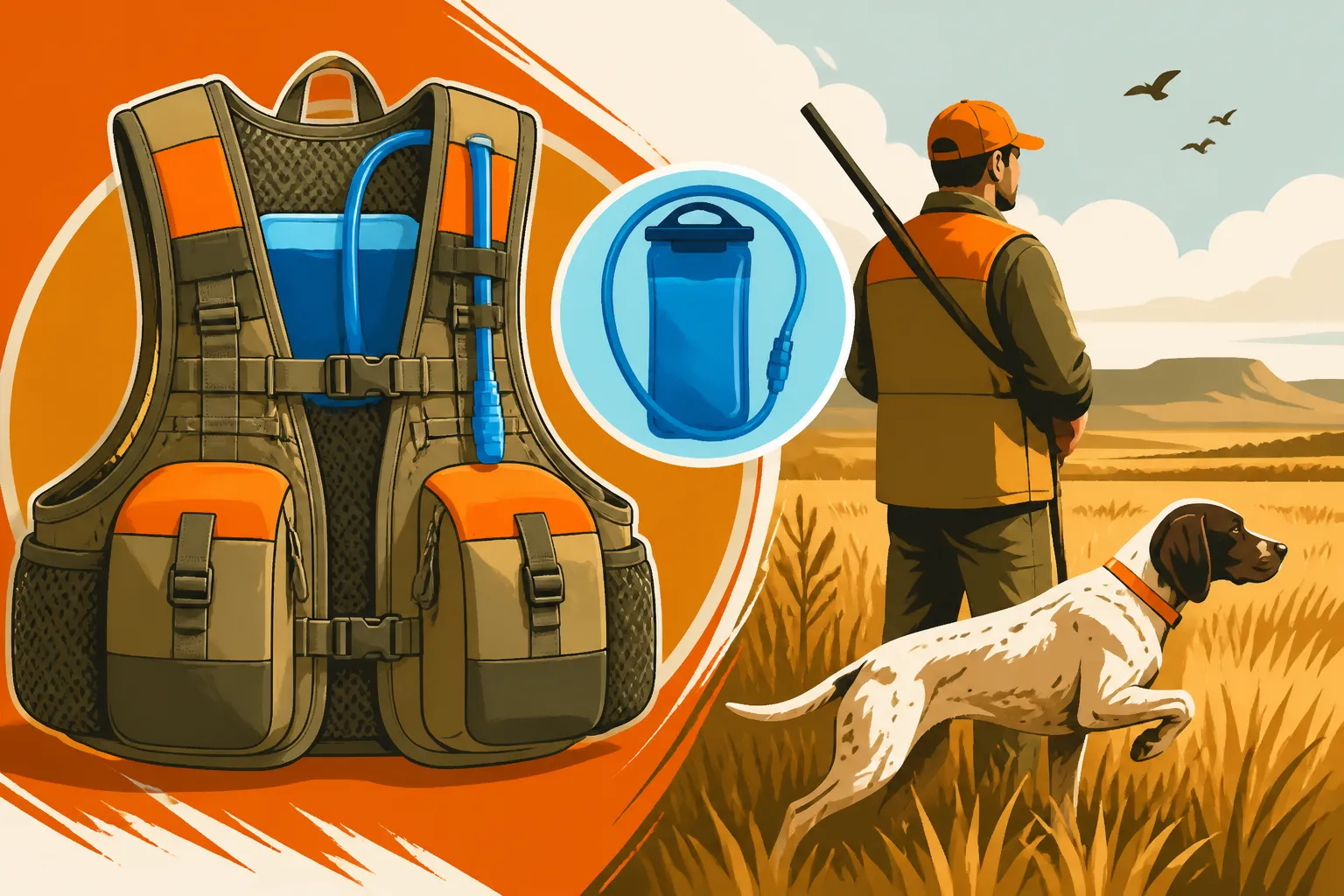
These systems typically involve a flexible reservoir, usually made of durable plastic or TPU, that fits into a dedicated compartment in the back of your vest. A tube runs from the bladder over your shoulder, usually clipping to a strap on the front, allowing you to sip water hands-free as you walk. Capacities generally range from 1 to 3 liters.
- Pros: Hands-free drinking is a huge advantage, especially when you're navigating rough terrain or keeping an eye on your dog. It encourages more consistent hydration because water is always accessible. The weight is distributed evenly across your back, which can feel more comfortable over long distances than bottles sloshing on your sides. Many come with insulated tubes to prevent water from freezing in colder weather, which can be a real plus during a Muzzleloader Deer Hunting in Nebraska in December trip.
- Cons: Cleaning can be a bit more involved, requiring special brushes and drying racks to prevent mold and mildew. If a bladder leaks, you could end up with a wet back and no water, which is a major concern miles from the truck. It can also be harder to gauge exactly how much water you have left without removing the bladder from the vest. Refilling in the field, if you happen to find a source, usually means taking off your vest and pulling out the bladder.
Bottle Pockets:
Many vests, especially traditional designs, feature external pockets designed to hold water bottles. These are usually on the sides or back of the vest.
- Pros: Easy to see your water level and know exactly how much you have left. Refilling is simple – just swap out an empty bottle for a full one. Cleaning bottles is a breeze. If one bottle leaks, you still have the others, and the leak is contained. You can also carry different liquids, like plain water in one and an electrolyte drink in another.
- Cons: Requires you to stop, reach for the bottle, unscrew the cap, drink, and replace it, breaking your rhythm. The weight of bottles can feel less balanced, sometimes causing a vest to sag or shift, especially if they're not cinched down tightly. Bottles can also bounce or make noise as you move.
Integrated Water vs. Add-On Solutions
Some upland vests are meticulously designed from the ground up with hydration as a core feature. These "integrated" designs usually have dedicated bladder sleeves, specific tube routing, and sometimes even insulated bottle pockets. Every element is considered to make water access seamless.
Other vests, often more traditional models, might have general-purpose pockets that can fit a water bottle, or they might allow for external attachments like molle systems where you can add bottle pouches or even small hydration packs.
- Integrated Solutions: These vests are often sleeker, more comfortable, and typically offer better weight distribution because the hydration components are built into the vest's structure. The materials are often chosen to complement the water system, for instance, with moisture-wicking fabric against your back. When you're comparing high-performance gear, resources like GoHunt can provide detailed reviews and comparisons of these purpose-built vests.
- Add-On Solutions: These offer flexibility. If you already have a favorite vest that you love for its storage and fit, but it lacks water capacity, an add-on pouch might be the answer. This approach allows you to customize your setup. However, it can sometimes feel less streamlined, potentially adding bulk or creating snag points, and the weight distribution might not be as optimal as a fully integrated design. You also need to ensure your existing vest can comfortably and securely carry the extra weight of water without compromising its primary function or your comfort.
Here's a quick comparison of these systems:
| Feature | Hydration Bladder System | Dedicated Bottle Pockets |
|---|---|---|
| Accessibility | Hands-free, continuous sipping | Stop to reach, unscrew, drink |
| Capacity | Usually 1-3+ liters, consolidated | Varies, often 1-2 bottles (0.5-1L each) |
| Weight Dist. | Evenly across back, generally stable | Can be less balanced, prone to shifting |
| Cleaning | Requires special tools, can be finicky | Easy to clean individual bottles |
| Refilling | Typically involves removing bladder | Quick and easy bottle swaps |
| Durability | Risk of single point failure (bladder leak) | Multiple points of failure (individual bottles) |
| Temperature | Insulated tubes/sleeves common | Bottles less insulated unless specialized |
| Comfort | Can be very comfortable if well-integrated | Less comfortable if bottles bounce or sag |
Key Features to Look for in a Hydration Upland Vest
Beyond just having a place for water, a great upland vest with water capacity needs to excel in several other areas. You're going to be wearing this thing for hours, potentially over miles of rugged Nebraska landscape. It needs to be comfortable, durable, and practical for carrying all your other essentials.
Capacity, Fit, and Comfort
First and foremost, think about the amount of water you actually need. A quick morning hunt in October might only require a liter, but a full day chasing pheasants in late November or a grueling walk for Prairie Grouse Hunting on Nebraska's Open Range could demand two to three liters, especially if your dog is working hard. Don't skimp on capacity; it's better to have too much than not enough.
Then, consider the fit. An ill-fitting vest, especially one loaded with water, will quickly become a source of misery. Look for vests with adjustable shoulder straps, waist belts, and even side adjustments. The goal is to distribute the weight evenly, keep the vest snug against your body without restricting movement, and prevent it from bouncing or chafing. Try it on, ideally with some weight in it, and simulate movements you'd make while hunting. Pay attention to how it feels when you mount your shotgun or bend over to help your dog through thick brush. A good fit means you almost forget you're wearing it, even with the added weight of water, shells, and birds.
Comfort is also tied to the materials. Look for vests with breathable mesh panels, especially on the back and shoulders, to help manage heat and sweat. Padded shoulder straps are crucial for carrying weight without digging into your shoulders.
Durability and Accessibility
Nebraska's upland cover can be brutal. From thorny locust trees in eastern Nebraska river bottoms to dense patches of plum thickets and sharp sandburrs in the Sandhills, your vest needs to be tough. Look for vests made from rugged, tear-resistant fabrics like Cordura nylon or heavy-duty canvas. Reinforced stitching at stress points, heavy-duty zippers, and robust buckles are all indicators of a vest that will stand up to years of abuse. You don't want your vest falling apart after just a couple of seasons of Walking Nebraska Pheasant Cover With a Dog.
Accessibility is key for both your water and your other gear.
- Water Access: If using a bladder system, ensure the bite valve is easy to reach and operate. If using bottles, make sure the pockets are positioned so you can grab and replace bottles without contorting yourself or taking off the vest.
- Gear Access: Beyond water, you'll need quick access to shotgun shells. Shell loops or easily accessible shell pockets are a must. You'll also want secure pockets for your phone, keys, dog training collar remote, and maybe a small first-aid kit. A blood-proof game bag, ideally accessible from the front or side, is crucial for carrying harvested birds without making a mess or attracting flies. Some vests even incorporate specialized compartments for a GPS unit or a map, which can be invaluable when navigating large tracts of public land. Before heading out, many hunters will review public land maps on tools like GoHunt to understand the terrain and plan their routes, making a well-organized vest even more vital.
Storage Beyond Water
While hydration is our main focus, an upland vest isn't just a fancy water carrier. It's your mobile command center for the day. You need enough space for everything else without feeling like you're carrying a backpacking pack.
Consider the following storage needs:
- Shells: Dedicated shell pockets or loops that hold a generous supply, easily accessible for quick reloading.
- Game Bag: A large, easily cleanable game bag that can comfortably hold several pheasants, grouse, or quail. A good game bag will allow air circulation to help cool birds, especially important on warmer days.
- Essentials: Pockets for keys, wallet, phone, GPS, compass, and maybe a multi-tool. Zippered pockets are best for valuable items.
- Dog Gear: Space for extra e-collar batteries, a small leash, dog treats, or even a compact first-aid kit for your canine companion.
- Emergency Supplies: A whistle, small flashlight, fire starter, and some emergency rations. You never know when a hunt might run longer than expected or take an unexpected turn.
The best vests strike a balance, offering ample storage without becoming overly bulky or heavy when fully loaded. It's about smart design that maximizes utility without sacrificing mobility. When researching options, looking at what other hunters are using in similar conditions, perhaps through hunting community forums often associated with platforms like GoHunt, can provide great insights into practical storage solutions.
Practical Tips for Hydrating While Hunting
Having a great hydration-equipped vest is only half the battle; you also need to use it effectively. Developing good hydration habits before and during your hunt can make a world of difference in your energy levels and overall enjoyment of the day.
Pre-Hydration and Consistent Intake
Don't wait until you're in the field to start drinking water. Begin hydrating the day before your hunt. Drink plenty of water throughout the day, and make sure you're well-hydrated when you wake up on hunting morning. This pre-hydration strategy gives your body a head start.
Once you're actually hunting, make a conscious effort to sip water regularly. If you have a bladder system, take a sip every 10-15 minutes, even if you don't feel thirsty. If you're using bottles, try to take a drink at every break or when you transition between different cover types. The goal is to stay ahead of thirst. Remember that by the time you feel thirsty, your body is already signaling dehydration. Incorporating electrolytes into your water, especially on hot days or during extended hunts, can also help replenish essential salts lost through sweat.
Dog Hydration Strategies
Your dog's well-being is paramount. Just like you, they need consistent access to water.
- Collapsible Bowl: Always carry a collapsible water bowl. They're lightweight and pack down small.
- Regular Breaks: Stop frequently, especially in warmer weather, to offer your dog water. Let them drink as much as they want.
- Watering Stations: If you're hunting with a group and have a vehicle nearby, consider setting up a "watering station" with a large jug of water where dogs can get a deep drink during breaks.
- Observe Your Dog: Pay close attention to your dog's behavior. If they're panting excessively, slowing down, or starting to lag, it's time for a water break and a rest in the shade. It’s important to prioritize their health over getting one more pheasant out of a draw. This is especially true when hunting in the plains during early season, as discussed in Water and Heat Risk for Bird Dogs.
Refilling on the Go
For truly extended hunts, or if you're covering vast amounts of ground on public access areas like those detailed in the Nebraska Public Access Atlas, you might need a plan for refilling your water supply.
- Extra Bottles: Carry extra sealed water bottles in your vehicle or with a designated "blocker" if you're hunting with a group.
- Known Water Sources: If you've scouted an area using aerial maps or a mapping tool like GoHunt and know there's a reliable, safe water source (like a spring or a well on private land with permission), you can plan to refill there. However, always filter or purify natural water sources to prevent illness.
- Camel Up: Before you leave the truck and head into the field, drink a good amount of water. Just like pre-hydrating the day before, this helps top off your internal reservoir.
By adopting these practices and utilizing a high-quality upland vest with ample water capacity, you'll be well-prepared to tackle whatever Nebraska's diverse hunting landscape throws at you, keeping both yourself and your loyal hunting dog happy, healthy, and ready for the next flush. Whether you're hunting Walking Milo and Corn Stubble for Pheasants or glassing for Sharp-Tailed Grouse Range in Nebraska, staying hydrated is the cornerstone of a successful and enjoyable day afield.
Disclaimer
This article is for general informational purposes only and does not constitute professional advice. Laws, prices and regulations vary by location and change over time. Consult a qualified professional for guidance on your specific situation.