6.5 Creedmoor for Prairie Deer
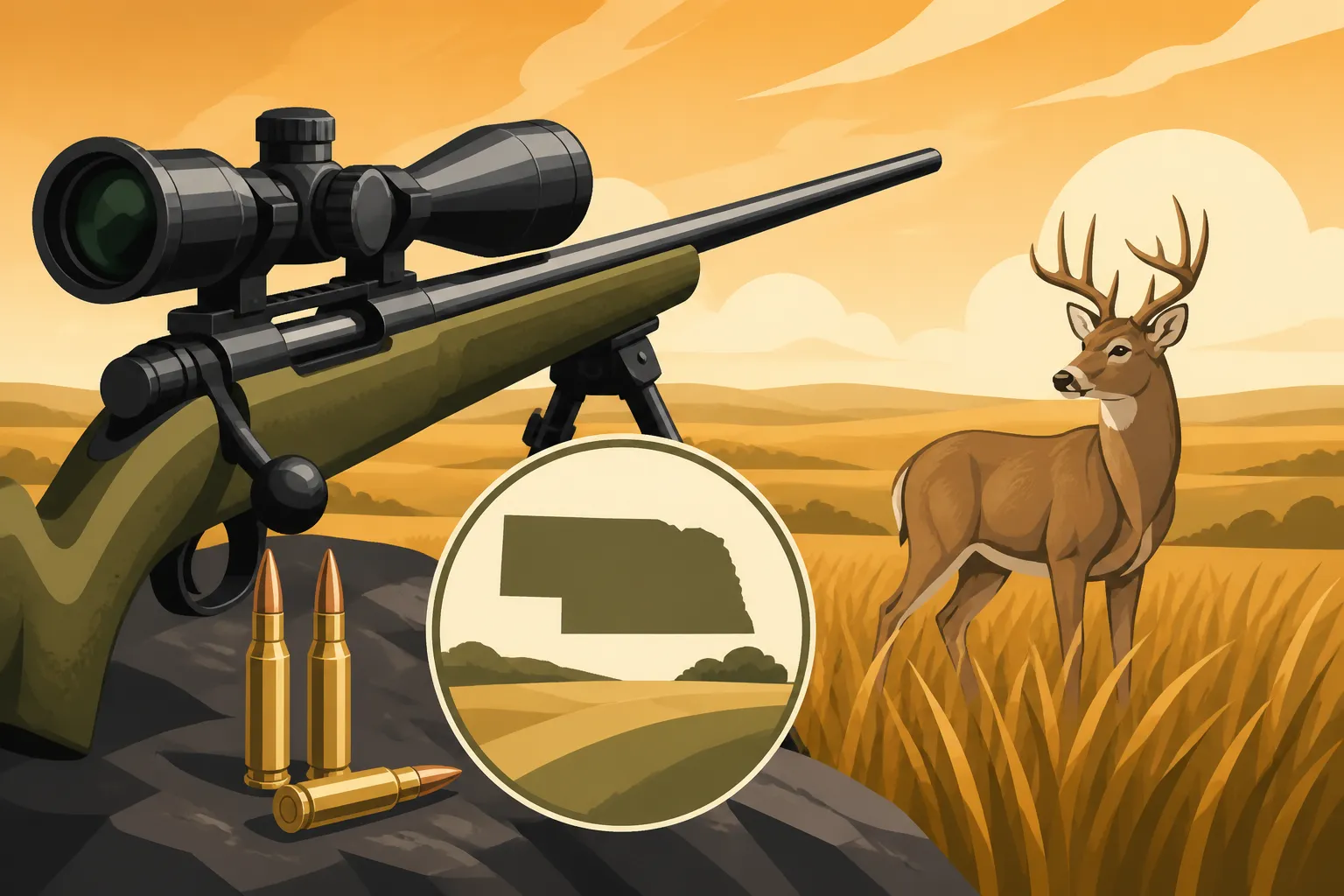
Hunting deer in Nebraska's wide-open spaces, especially in the Sandhills or across vast agricultural fields, often presents a unique challenge: long shooting distances and ever-present wind. You might find yourself staring at that trophy buck seemingly in the middle of nowhere, wondering if your current rifle setup is truly up to the task of making a clean, ethical shot. This guide is all about exploring why the 6.5 Creedmoor has become such a compelling choice for Nebraska deer hunters navigating these very specific conditions, offering insights into its performance, practical considerations, and how to maximize your success on the prairie.
Why the 6.5 Creedmoor Shines on Nebraska's Prairie
The 6.5 Creedmoor burst onto the scene and quickly garnered a reputation, not just as a competition cartridge, but as a surprisingly effective hunting round, particularly in environments like Nebraska where shots can stretch out. It wasn't designed to be the fastest or the hardest-hitting, but rather to be incredibly efficient and accurate, making it a favorite for those who prioritize precision at distance. For hunters in our great state, that means a rifle that works with you, not against you, when the conditions get tough.
Ballistics and Wind Resistance
One of the most significant advantages of the 6.5 Creedmoor for prairie hunting is its outstanding ballistic performance, especially regarding wind resistance. Nebraska is, after all, known for its consistent winds, whether it's a gentle breeze or a blustery gale. Many popular 6.5mm bullets are designed with a high ballistic coefficient (BC), meaning they are very aerodynamic and slice through the air with minimal drag. This translates directly into a flatter trajectory and, crucially, less wind drift over longer distances.
Imagine you're set up on a high knob overlooking a vast expanse of Nebraska Sandhills or a sprawling pivot-irrigated cornfield that's just been harvested. You spot a nice mule deer buck making its way towards a distant tree line. That shot might be 300, 400, or even 500 yards away. A slight crosswind, which is pretty much guaranteed here, can push your bullet off course significantly with a less aerodynamically efficient cartridge. The 6.5 Creedmoor, with its sleek projectiles, simply isn't pushed around as much, giving you a much greater chance of hitting your intended target accurately. This inherent stability gives hunters an undeniable edge, reducing the margin for error that the wind so often introduces.
Manageable Recoil for Precision Shooting
Let's be honest, nobody likes to get kicked by their rifle, especially when you're trying to make a precise shot. High recoil can lead to flinching, poor form, and a general lack of confidence, all of which are detrimental to accuracy, particularly at longer ranges. This is another area where the 6.5 Creedmoor truly excels; it offers a fantastic balance of downrange energy with surprisingly mild recoil.
Compared to many other popular deer hunting calibers, the 6.5 Creedmoor's recoil impulse is noticeably softer. This manageable recoil means several things for a Nebraska deer hunter. First, you're more likely to maintain proper shooting form, leading to more consistent shot placement. Second, it's easier to stay on target through the shot, allowing you to observe the impact and potentially make a quick follow-up if needed – a crucial advantage in situations where a deer might not react immediately to a well-placed shot. Third, for newer hunters, youth, or those who are recoil-sensitive, it makes practice much more enjoyable and effective, building confidence and proficiency faster. When you can comfortably send rounds downrange, you build the muscle memory and mental fortitude required for that high-pressure hunting shot.
Practical Considerations for Hunting Nebraska Deer with a 6.5 Creedmoor
Choosing a cartridge is only part of the equation; optimizing your setup and approach for the unique challenges of Nebraska hunting is paramount. The 6.5 Creedmoor might be a fantastic tool, but like any tool, it performs best when used correctly and paired with the right complementary elements. From the type of bullet you choose to the optics you mount, every decision can impact your success.
Ammunition Selection and Bullet Performance
The 6.5 Creedmoor is incredibly versatile when it comes to ammunition, with a wide array of bullet weights and designs available. For deer hunting in Nebraska, your primary goal is reliable expansion and penetration to ensure a quick, humane kill. Generally, bullets ranging from 120 to 143 grains are excellent choices for whitetails and mule deer.
You'll find various bullet constructions, including traditional cup-and-core designs, bonded core bullets, and monolithic (all-copper) projectiles. For open-country shots where impact velocities might be lower at extended ranges, a bullet designed for consistent expansion across a broad velocity spectrum is ideal. Bonded or monolithic bullets often perform very well in these scenarios, retaining weight and penetrating deeply. It’s crucial to select a bullet that you've tested extensively with your rifle to ensure accuracy and understand its performance. Don't just grab a box off the shelf the day before the season; spend time at the range, trying different loads to see what your rifle likes best. Understanding your chosen Bullet Weight for Windy Conditions is also important for trajectory calculations.
Effective Range and Ethical Shot Placement
While the 6.5 Creedmoor is capable of impressive accuracy at extended distances, it's vital to remember that a rifle's maximum mechanical range is not the same as a hunter's ethical range. In Nebraska's wide-open landscapes, it's easy to get caught up in the idea of taking very long shots. However, ethical hunting demands that you only take shots you are absolutely confident in making clean and humane. This means knowing your personal limitations, factoring in environmental conditions like wind, and ensuring precise shot placement.
A high-quality rangefinder is not optional; it's essential for hunting prairie deer with a 6.5 Creedmoor. Knowing the exact distance allows you to use your ballistic data accurately. Practice at various distances, including those longer shots you might encounter in the field, using shooting sticks, bipods, or whatever support you'll have available. Develop a solid understanding of your rifle's trajectory and how wind affects your chosen bullet. Remember, even with the best equipment, a poorly placed shot at any distance can lead to a wounded animal and a frustrating, often unsuccessful, recovery. For a deeper dive into what's realistic, check out Rifle Ranges Realistic on the Nebraska Prairie.
Pairing with the Right Optics
The best rifle and cartridge combination for long-range prairie hunting is only as good as the optics sitting atop it. In Nebraska, where you might be Glassing the Nebraska Sandhills for Mule Deer at dawn or dusk, clarity, light-gathering capability, and reliable adjustments are paramount. Don't skimp on your scope.
Look for a scope with excellent glass that provides a bright, clear image even in low light conditions. A variable power scope in the 3-15x or 4-16x range offers enough magnification for distant targets without being overkill for closer encounters. Features like dialing turrets, which allow you to adjust for bullet drop based on known distances, are incredibly beneficial. Illumination can also be a big plus in those twilight hours. Equally important is eye relief and a robust construction that can handle the bumps and scrapes of a long hunting season. A reliable scope will hold zero and track accurately, giving you the confidence that your bullet will go exactly where you aim. For more detailed advice, read our article on Rifle Scopes for Long Nebraska Shots. When using mapping applications like GoHunt, ensure your scope allows you to quickly adjust to changing terrain and distances that you might be tracking on your screen.
Beyond the Gear: Mastering the Elements for Prairie Success
Having the right rifle and optics is a massive step forward, but truly mastering deer hunting on the Nebraska prairie involves understanding and adapting to the unique environmental elements. The wind, the vastness of the landscape, and the elusive nature of the deer all require more than just good gear; they demand skilled woodsmanship and strategic thinking.
Reading the Wind
This cannot be overstated: wind is the single biggest factor affecting shot placement on the Nebraska prairie, often more so than bullet drop at common hunting distances. The 6.5 Creedmoor helps mitigate wind drift, but it doesn't eliminate it. Learning to accurately read the wind is a skill that takes practice and keen observation.
Look for visual cues: the way grass bends, the ripple on a distant puddle, the movement of leaves on a tree line. Carry a small wind checker or puff bottle to get a real-time reading at your location. Understand that wind direction and speed can vary significantly over a long distance, especially if there are draws, hills, or standing crops between you and your target. You might have a headwind at your position, but a crosswind further downrange. Learning to make accurate wind calls and corrections is an art. For comprehensive tips, check out Reading Wind on the Nebraska Plains. This skill, combined with your 6.5 Creedmoor, will dramatically increase your effective range and ethical shooting window.
Utilizing Terrain and Stalking Tactics
Even with a rifle capable of precise long-range shots, getting closer is almost always a better strategy. Nebraska's seemingly flat prairies often hide subtle terrain features that can be your best friend when stalking deer. Draws, washes, shelterbelts, and even changes in elevation around pivots or field edges can provide crucial cover. Using a mapping app like GoHunt to analyze topography and potential cover before you even step foot in the field can give you a significant advantage, helping you identify Entry and Exit Routes on Flat Farm Ground and potential stalking lanes.
For example, when hunting mule deer in the Sandhills, utilizing the rolling hills and deep canyons for concealment can allow you to close hundreds of yards without being seen. In eastern Nebraska, a hidden creek bottom or a meandering tree line might be just enough to get you within a more comfortable shooting distance. The goal isn't necessarily to always get to 100 yards, but to get to the closest ethical distance possible. This reduces the variables that can affect your shot, making success much more likely. Even when you're set up for a long shot, remember that Wind and Thermals in the Sandhills can shift quickly, requiring you to adapt your approach.
Comparing the 6.5 Creedmoor to Other Popular Deer Calibers in Nebraska
It's helpful to see how the 6.5 Creedmoor stacks up against some other beloved cartridges that Nebraska hunters frequently use. Each has its merits, but the 6.5 Creedmoor occupies a unique space, especially for the open country.
Here's a quick comparison of some common choices:
| Feature | 6.5 Creedmoor | .308 Winchester | .270 Winchester |
|---|---|---|---|
| Recoil | Light to Moderate | Moderate | Moderate to Heavy |
| Wind Drift | Excellent (High BC bullets) | Good (Medium BC bullets) | Very Good (Good BC bullets) |
| Trajectory | Very Flat | Flat | Very Flat |
| Bullet Weight | 120-143 grains (deer) | 150-180 grains (deer) | 130-150 grains (deer) |
| Energy (Long Range) | Sufficient for deer at extended range | Very good at all reasonable deer ranges | Excellent at all reasonable deer ranges |
| Availability | Excellent (popular) | Excellent (military/hunting standard) | Excellent (long-time favorite) |
| Ideal Use Case | Precision long-range, windy conditions | Versatile, medium-range, brush | Flat-shooting, general open country |
As you can see, while cartridges like the .308 Winchester are incredibly versatile and capable, and the .270 Winchester has a long history as a flat-shooting prairie round, the 6.5 Creedmoor truly distinguishes itself with its exceptional wind-bucking ability and mild recoil profile, making it a stellar choice for the specific challenges of deer hunting in Nebraska's wide-open environments. For those looking at Best Rifle Caliber for Nebraska Mule Deer or Best Rifle Caliber for Nebraska Whitetails, the 6.5 Creedmoor consistently ranks high due to these qualities.
Ultimately, the best rifle for you is the one you shoot most accurately and with the most confidence. The 6.5 Creedmoor, with its blend of accuracy, efficiency, and light recoil, empowers many Nebraska hunters to extend their ethical range and make clean, decisive shots even when the prairie wind tries its best to foil their plans.
Disclaimer
This article is for general informational purposes only and does not constitute professional advice. Laws, prices and regulations vary by location and change over time. Consult a qualified professional for guidance on your specific situation.