Nebraska’s June Big Game Draw Explained
If you've ever dreamt of chasing big game across Nebraska's diverse landscapes, from the Sandhills to the Missouri River breaks, you know that getting your hands on a coveted tag is often the first, and sometimes most challenging, hurdle. The Nebraska big game draw system can feel like a confusing labyrinth, especially for new hunters or those accustomed to different regulations in other states. This comprehensive guide will unravel the intricacies of Nebraska's June big game draw, helping you understand the process, navigate permit types, and boost your chances of drawing that dream tag.
Understanding the Nebraska Big Game Draw System
The Nebraska Game and Parks Commission (NGPC) employs a draw system for many of its most sought-after big game permits, primarily deer, antelope, and elk. Unlike some western states that rely heavily on complex, accumulating points systems for their primary draw, Nebraska's approach is a bit different, often described as a modified lottery. It’s critical to grasp these fundamentals before you even think about putting in an application.
The Lottery System Explained
At its heart, Nebraska's big game draw operates as a lottery for most permits. When you apply, your application essentially enters a pool for your chosen unit and permit type. The winners are then randomly selected from that pool. Now, there are nuances, of course. For instance, the system does incorporate a preference point system, but it doesn't guarantee you a tag in the same way a true bonus or preference point system might elsewhere. Instead, these points typically provide an advantage in subsequent draws for the same permit type within a specific unit, but they don't ensure you'll automatically draw a tag after a certain number of points. It's more like getting your name in the hat more times, rather than jumping the queue entirely. This can be a frustrating reality for hunters who accumulate several points only to miss out year after year, but it also means that a brand-new hunter has a shot at a great tag right out of the gate. For a deeper dive into the mechanics, check out our guide on How the Nebraska Big Game Lottery Works.
What this means for you, the hunter, is that while strategy helps, there's always an element of luck. You could draw a premium unit permit on your very first try, or you could accumulate a few preference points over the years before finally getting lucky. This random element keeps things exciting, but also requires a different mindset than states where drawing a tag is a near-certainty after a decade of applying. It reinforces the idea that every application is a new chance, regardless of past attempts.
The lottery system is primarily used for the initial distribution of limited permits, particularly for species like elk and antelope, and for desirable deer units. These are the permits that see high demand and limited availability. The goal is to provide a fair chance to all applicants, although as we'll discuss, some factors like residency and preference points do influence those chances. It’s not just a free-for-all; there’s a structure, but it leans heavily on chance, making the announcement of draw results a moment of genuine anticipation for many hunters across the state and beyond.
Resident vs. Nonresident Allocation
One of the most significant factors influencing your draw odds, especially for premium tags, is whether you're a Nebraska resident or a nonresident. Nebraska law mandates a specific allocation of permits: residents are given preferential treatment, with a vast majority of permits reserved for them. Specifically, the state allocates 85% of most big game permits to residents, leaving only 15% for nonresidents. This 85/15 split is crucial to understand. You can learn more about this in detail in our post on Nebraska's 85 Percent Resident Permit Split.
For nonresidents, this means that while you certainly have the opportunity to hunt Nebraska's diverse game, your draw odds for highly sought-after units and species like mule deer or antelope will inherently be lower due to the limited number of tags available. For instance, if a unit has 100 permits, only 15 of those will be available to nonresidents, even if there are hundreds of nonresident applicants. This makes drawing a non-resident tag a truly special achievement. It's not impossible, but it demands careful research and realistic expectations.
Conversely, for residents, this allocation offers significantly better odds, making many units quite accessible through the draw. This emphasis on resident hunters is a common practice among states, ensuring that local populations have primary access to their wildlife resources. So, if you're a nonresident with your heart set on a specific tag, be prepared for tougher competition and consider applying for units or permit types that might have slightly higher availability, or perhaps plan on accumulating preference points over a few years to improve your long-term chances.
Key Dates and Deadlines
The Nebraska big game draw primarily operates within a tight window in June, which is why it’s often referred to as the "June Draw." This period is when applications for most deer, antelope, and elk permits are accepted. Missing these deadlines means missing out on the primary opportunity to secure a permit through the draw system.
Historically, the application period for the big game draw opens in early June and closes towards the end of the month. The exact dates can shift slightly year to year, so it's absolutely vital to check the current year's Nebraska Game and Parks Commission (NGPC) regulations or website as soon as possible. Mark your calendar, set reminders on your phone, and even enlist a hunting buddy to double-check with you – seriously, it’s that important! You wouldn’t want to miss a chance at a great hunt simply because you forgot the deadline.
Once the application period closes, the NGPC processes all submissions, and the draw results are typically posted in July. This can be an agonizing wait, but the moment you get that email or log into your account to see you’ve drawn a tag is pure gold. It's like waiting for Christmas morning when you were a kid! Being aware of these key dates – application opening, application closing, and results posting – is the first step in successfully navigating the Nebraska big game draw.
Navigating Permit Types and Unit Choices
One of the areas that can cause the most confusion for hunters applying in Nebraska is understanding the various permit types and how they relate to specific Deer Management Units (DMUs). Making the right choices here is crucial, as it directly impacts your draw odds and the kind of hunting experience you'll have.
Common Deer Permit Types
Nebraska offers a range of deer permits designed to manage populations and provide diverse hunting opportunities. The most common types you’ll encounter in the draw include:
- Statewide Whitetail Buck Permits: As the name suggests, these permits allow you to harvest a white-tailed deer buck anywhere in the state, with certain unit-specific exceptions or restrictions for mule deer. These are highly sought after, especially for nonresidents, and often have challenging draw odds for the best units. Many hunters dream of pursuing a mature whitetail buck in the eastern river bottoms or the vast Sandhills, and this is the tag that makes it happen. Our article on Statewide Whitetail Buck Permits Explained delves deeper into these specific tags.
- Any Deer Permits: These permits are some of the most versatile, allowing the harvest of either a white-tailed or mule deer, antlered or antlerless, within a specific unit. These are often found in units where mule deer populations are healthy, such as the Sandhills or Panhandle regions. They offer incredible flexibility but also come with very competitive draw odds, especially for the antlered option. This is the tag many mule deer enthusiasts are after.
- Antlerless-Only Deer Permits: These permits are generally easier to draw and are crucial for herd management. They allow you to harvest an antlerless deer (doe or fawn) within a specified unit. While they don't offer the thrill of buck hunting, they provide excellent opportunities for meat hunting, introducing new hunters to the sport, and extending your time afield. They can often be acquired over-the-counter after the main draw or during later seasons, providing valuable second and third opportunities for hunters. These are great for filling the freezer and can be a good way to get familiar with a unit without the pressure of a buck tag.
Understanding the subtle differences and restrictions of each permit type is paramount. Some permits might have weapon restrictions, or be valid only during specific seasons (archery, firearm, muzzleloader). Always double-check the current regulations before applying to ensure the permit aligns with your hunting goals and preferred method.
Antelope and Elk Permit Specifics
While deer permits are numerous, antelope and elk permits in Nebraska are much rarer and thus significantly harder to draw. These are truly once-in-a-lifetime (or at least, once-in-a-very-long-time) opportunities, making the application process for them particularly intense.
- Antelope Permits: Nebraska's pronghorn antelope primarily inhabit the western half of the state, particularly the Panhandle and Sandhills. Permits are highly limited, with very few tags available each year. There are both archery and firearm antelope permits, with the firearm permits being exceptionally tough to draw. Many hunters will accumulate preference points for years in hopes of drawing one. If you’re a non-resident with your sights set on a speed goat, your odds will be incredibly slim, but not impossible. The experience of chasing antelope across the open plains is unparalleled, and drawing one of these tags is a genuine achievement. For more on these elusive animals and their specific seasons, check out Nebraska Antelope Permits and Seasons.
- Elk Permits: Nebraska's elk herds are small but growing, primarily concentrated in the Pine Ridge, Hat Creek, and Box Butte areas of the Panhandle. Elk permits are the most coveted and hardest to draw in Nebraska, and for a good reason – they offer the chance to hunt North America’s second-largest deer species right in your backyard. Crucially, Nebraska Elk Permits Are Residents Only. This means if you're a nonresident, unfortunately, you won't be able to apply for an elk tag. For residents, however, drawing an elk permit is the pinnacle of Nebraska big game hunting, often requiring many years of accumulated preference points and a significant amount of luck. The state manages these herds very carefully, balancing hunting opportunities with herd health and landowner tolerance.
Given their rarity, applying for antelope and especially elk requires a long-term strategy. Many hunters prioritize accumulating preference points for these species year after year, knowing that it might take a decade or more to finally draw a tag. Patience, more than anything, is key when dreaming of an antelope or elk hunt in Nebraska.
Understanding Deer Management Units (DMUs)
Nebraska is divided into various Deer Management Units (DMUs), and understanding these units is absolutely fundamental to the draw process. Every permit type is tied to a specific unit, and the boundaries of these units dictate where you can legally hunt with that particular tag.
Each DMU has specific harvest quotas and management objectives, which directly influence the number and type of permits available. For example, some units in eastern Nebraska might be heavily focused on whitetail management, offering ample whitetail permits, while western units might prioritize mule deer or "any deer" tags. The popularity and perceived quality of hunting in a particular unit will heavily influence its draw odds. A unit known for producing trophy bucks, like some within the Sandhills or the Pine Ridge, will naturally see far more applicants than available permits, making drawing a tag there much more challenging. You can find detailed information on these unit-specific permits in our guide on Nebraska Deer Management Unit Permits.
It’s not just about what species are present; it’s also about habitat, terrain, and population density. A unit with a lot of public access or prime habitat will typically have higher demand. Conversely, units with more restrictive access or lower deer densities might have easier draw odds. Before you apply, it's wise to thoroughly research the units that interest you. Look at past harvest data, talk to local hunters, and study maps to understand the terrain and public land opportunities. A great tool for this is the annual Nebraska Public Access Atlas, which maps out all public hunting land and Open Fields and Waters areas. This upfront research can make all the difference in making an informed choice for your application.
The Application Process: A Step-by-Step Walkthrough
Alright, you've done your research, you know what you're after – now it's time to actually apply! The application process itself is fairly straightforward, but there are a few critical steps you need to follow to ensure your application is valid and gives you the best chance.
Setting Up Your Account and Eligibility
Before you can even think about applying for a big game permit in Nebraska, you need to ensure you're eligible and have your basic hunting credentials in order. This starts with creating an account on the Nebraska Game and Parks Commission (NGPC) online portal. This portal is your one-stop shop for permits, draw applications, and harvest reporting.
First and foremost, you must have completed a certified Hunter Education course. This is a mandatory requirement for most hunters born after January 1, 1986. If you haven't taken it, you won't be able to purchase many permits, including those in the draw. There are exemptions, like the Apprentice Hunter Exemption, but generally, Hunter Ed is a must. Along with Hunter Education, you'll need a current Nebraska Annual Hunt Permit and a Nebraska Habitat Stamp. The Habitat Stamp is particularly important as it funds crucial conservation efforts across the state. These two items are prerequisites for applying for any big game draw permit. Many hunters overlook these fundamental steps, only to realize at the last minute they're not eligible. Don't be that hunter! Ensure you have these basic requirements locked down well before the June draw period. Our guide on Nebraska Habitat Stamp and Hunter Education provides all the details you’ll need here.
Once your basic eligibility is met, setting up or logging into your NGPC account is simple. You’ll provide personal details, and if you’re a returning applicant, your previous history will be linked. It's crucial to ensure all your information is accurate and up-to-date. Any discrepancies could cause issues with your application or, even worse, your permit if you're drawn. Take a few extra minutes to double-check everything, especially your residency status if it's borderline or has recently changed.
Making Your First and Second Choices
When you apply in the Nebraska big game draw, you’ll typically have the option to list a first and a second choice for your permit. This is a strategic opportunity, and how you use it can significantly impact your chances of drawing a tag.
Your first choice should be for the unit and permit type you most desire. This is where you put your dream tag – the unit with the big mule deer bucks you've been scouting, or the specific whitetail tag in a river bottom unit that sounds incredible. Understand that if this is a highly competitive unit, your odds might be low, but this is your primary goal. The draw process first attempts to fulfill all first choices. If successful, you get that permit. If not, your application moves to the second choice. When making your primary selection, consider factors like the species you want to hunt, the specific weapon season you prefer (archery, firearm, muzzleloader), and the general reputation and success rates of the unit. Websites like GoHunt (a popular resource for western draws) provide statistics and analysis that can help you gauge the difficulty of drawing certain units in Nebraska, giving you an edge in making informed decisions.
Your second choice acts as a backup plan. This is where you select a unit or permit type that you’d still be happy to hunt, but perhaps has slightly higher draw odds or is less competitive. It's important to choose a second option that genuinely interests you, as there's a good chance you might draw it if your first choice is unsuccessful. Don't just throw something random in there; think about an enjoyable hunt that still aligns with your capabilities and interests. For example, if your first choice was an "Any Deer" tag in the coveted Sandhills, your second choice might be a "Whitetail Buck" permit in a less pressured DMU in central Nebraska, or an antlerless tag in a nearby unit. Having a solid second choice means you won't walk away empty-handed from the primary draw, potentially guaranteeing you some time afield come hunting season.
Acquiring Preference Points
Nebraska's preference point system works a little differently than some other states, so it's important not to confuse it with a bonus point or true accumulating point system. In Nebraska, preference points are primarily used to break ties in the draw and give you a better chance in subsequent years for the same permit type within a specific unit. They don't guarantee you a tag, but they do increase your odds over time. You can also explicitly buy a preference point without applying for a permit, which is a common strategy for hunters who know they won't hunt that year but want to improve their future chances. For a detailed guide on this, see our article Buying a Nebraska Preference Point.
Here’s how it generally works: If you apply for a draw and are unsuccessful, you automatically receive a preference point for that species. Alternatively, during the application period, you can choose to purchase a preference point directly for a specific species (deer, antelope, or elk) without applying for a tag. This is a smart move if you're not planning to hunt that year but want to build points for a difficult-to-draw unit or species in the future. For example, many nonresident elk hunters will buy preference points for years, knowing the odds are incredibly long.
The value of preference points really shines for those highly competitive permits. When the draw is conducted, applicants with more preference points for a given permit type and unit typically have their applications considered first, or are given extra "chances" in the lottery. This means that while a new applicant can draw a premium tag, those with several preference points have a statistically better chance. It's a long-term strategy that requires patience and consistency, but it can pay off significantly for those determined to hunt the most coveted species or units in Nebraska. Remember to check the exact rules for how preference points are applied for each species, as there can be subtle variations.
Maximizing Your Draw Odds and Strategies
Let's be honest, we all want to draw that dream tag. While luck is undeniably a factor in Nebraska's lottery system, there are certainly strategies you can employ to tilt the odds in your favor. It's all about making informed decisions and understanding the nuances of the system.
Researching Unit Specifics and Past Odds
Knowledge truly is power when it comes to big game draws. Before you even think about submitting an application, you should be doing your homework on the Deer Management Units (DMUs) that interest you. This goes beyond just looking at a map; it involves diving into the data.
The Nebraska Game and Parks Commission (NGPC) publishes draw statistics each year, showing the number of applicants, the number of permits issued, and the resulting draw odds for both residents and nonresidents. This data is invaluable. Look for trends: Is a particular unit becoming more popular? Are the odds getting tougher for a specific permit type? For example, if you see that a certain "Any Deer" tag in the Panhandle had 1000 applicants for 50 tags last year, you know it's a long shot. Conversely, if an antlerless-only permit has 200 applicants for 150 tags, your odds are much better. Resources like the GoHunt Insider platform, while focused on western states, often compile and analyze Nebraska's draw data, providing excellent insights into historical draw odds and unit breakdowns. Leveraging such platforms can help you identify units where you might have a better chance, or to properly set expectations for highly coveted areas.
Beyond raw numbers, consider the practical aspects of hunting each unit. How much public land is available? What kind of terrain will you be hunting? Are there specific challenges like limited water sources or dense cover? For instance, the sprawling Sandhills offer vast landscapes and big mule deer, but they can be incredibly challenging to navigate, with few roads and even fewer landmarks. Conversely, a river-bottom unit in eastern Nebraska might have more private land and require more legwork to secure permission, but could offer exceptional whitetail hunting. By researching thoroughly, you can align your application choices not just with draw odds, but also with your hunting style and physical capabilities, setting yourself up for success even before you draw a tag.
Applying as a Party
For many hunters, the experience is best shared with friends or family. Nebraska's draw system does allow for party applications, which can be a great way to ensure you and your hunting buddies get to experience the season together. However, there are pros and cons to this approach that you need to consider carefully.
When applying as a party, all members of the party must list the exact same first and second choices. The applications are then grouped together and entered into the draw as a single unit. If the party’s application is drawn, all members receive a permit. If it’s not drawn, none of the members receive a permit. The key benefit here is obvious: if you draw, everyone in your group draws, guaranteeing a shared hunting experience. This is fantastic for planning trips, sharing camp duties, and simply enjoying the camaraderie of the hunt. It also means that even if only one person in your group has a lot of preference points, those points often apply to the entire party, increasing everyone's chances.
The major drawback, however, is that your party's draw odds are typically determined by the applicant in the group with the lowest preference point total. So, if one member has 5 preference points and another has 0, the party application might effectively be treated as if it has 0 points. This means that if you're a seasoned hunter with a high number of points, applying with a brand-new hunter might significantly reduce your personal odds of drawing a coveted tag. For nonresidents especially, where permits are already scarce, party applications can make drawing even harder. Therefore, you need to weigh the desire to hunt together against the impact on individual draw odds. For easier-to-draw permits or if all members have similar point totals, it can be a great option. For highly competitive tags, you might decide to apply individually to maximize personal chances, with the understanding that not everyone might draw the same permit.
Considering Antlerless-Only Permits and Later Seasons
While most hunters dream of drawing an antlered tag, don't overlook the strategic value and excellent opportunities presented by antlerless-only permits and tags available in later seasons. These permits often have significantly better draw odds, or are even available over-the-counter after the main draw, making them a fantastic "plan B" or even a primary target for certain hunting goals.
Antlerless-only permits are crucial for herd management and are typically issued in larger numbers. This translates to much higher draw success rates, especially for nonresidents who struggle to draw buck tags. These permits are perfect for filling the freezer with delicious venison, introducing new hunters to the sport with less pressure, or simply extending your time afield in a new unit. Many hunters who draw a primary buck tag will also pick up an antlerless permit for a later season to get more hunting days in. These tags are also great for scouting new areas without the pressure of having to find a trophy buck. You can learn more about these extra opportunities in Nebraska's Extra Antlerless Opportunities.
Additionally, Nebraska offers various hunting seasons, including early archery, a nine-day November firearm season, and a December muzzleloader season. Often, antlerless permits or even some buck permits might become available over-the-counter for specific units after the initial June draw, particularly for the late archery or muzzleloader seasons. These later seasons can offer unique hunting challenges, like tracking deer in snow or navigating colder temperatures, but they also often come with less hunting pressure and different deer behavior patterns. For instance, hunting during the December muzzleloader season can be a fantastic experience, especially if you enjoy the challenge of a primitive weapon. It's always worth checking the NGPC website after the main draw results are posted to see what leftover permits are available; you might be surprised by the opportunities that pop up! Our guide on Over-the-Counter Big Game Permits in July provides further details on these additional chances.
Post-Draw: What Happens Next?
The agony of waiting for draw results can be intense, but once they're posted, the next steps are crucial. Whether you drew a tag or not, there are actions to take that will set the stage for your upcoming hunting season or your strategy for next year.
Checking Your Results and Accepting Permits
The moment of truth arrives, typically in July, when the Nebraska Game and Parks Commission releases the big game draw results. You'll usually receive an email notification that results are available, prompting you to log into your NGPC online account.
Upon logging in, you'll see a clear indication of your draw success for each of your choices. If you were successful, congratulations! This is where the real planning begins. You'll usually have a specific timeframe to accept and purchase your drawn permit. It's incredibly important not to miss this acceptance window. Failing to accept your permit within the specified period will result in forfeiture of the tag, and it will be reallocated to another hunter or made available in subsequent sales. So, once you see that "successful" notification, don't delay! Go through the steps to finalize your purchase. If you applied as a party, all members must typically accept their permits to confirm the party’s successful draw. This acceptance process is critical because it officially converts your application into a valid hunting permit.
If you were unsuccessful in the draw, don't despair! While it's certainly disappointing, it's also a part of the draw game. Take this opportunity to note that you've accumulated a preference point for the species you applied for (unless you specifically opted not to). This point will roll over to next year, improving your odds for future draws. Use the disappointment as motivation to refine your strategy for the following year, or to look into leftover permits that might still be available.
Leftover Permits and Over-the-Counter Sales
Not all permits are allocated in the initial June draw. After the primary draw results are posted and successful applicants have accepted their tags, there are often leftover permits available, particularly for antlerless deer or certain less-demanded units. This presents a fantastic secondary opportunity for hunters who were unsuccessful in the draw or who simply want additional tags.
These leftover permits typically become available for over-the-counter (OTC) purchase, often starting in late July or early August, on a first-come, first-served basis. The NGPC will announce the specific dates and times when these permits go on sale. For popular units or specific permit types, these leftover tags can sell out very quickly, sometimes within minutes or hours of becoming available online. It's wise to be ready at your computer right when sales open, if there’s a particular leftover tag you’re targeting. This is a strategy many seasoned hunters employ, especially for filling additional doe tags or securing a permit in a unit they enjoy. Our guide on When Over-the-Counter Permits Go on Sale provides critical details on this.
The types of leftover permits vary widely year to year based on draw success rates and demand. You might find antlerless permits for nearly any unit, or even some buck permits in less popular areas. Nonresidents also have opportunities to purchase leftover permits, though the most desirable ones will likely be gone swiftly due to the 85/15 resident split. Always check the NGPC website regularly after the main draw results are out; you never know what gems might pop up. Securing a leftover tag can turn a disappointing draw season into a successful hunting year, providing valuable freezer meat or additional time in the field.
Understanding Refund and Transfer Policies
Life happens, and sometimes, even after successfully drawing and accepting a permit, circumstances might prevent you from making your hunt. It's important to understand Nebraska's policies regarding refunds and permit transfers in these situations.
Generally, big game permits in Nebraska are non-refundable and non-transferable. Once you’ve purchased that permit, it’s yours, and you can’t typically get your money back if your plans change. This policy is in place to maintain the integrity of the draw system and ensure permits are used by the individuals who drew them. There might be very limited exceptions for extreme circumstances, but these are rare and usually require direct communication with the NGPC, often with no guarantee of a refund. Therefore, it's crucial to be as certain as possible about your hunting plans before you finalize your permit purchase.
Similarly, transferring a drawn permit to another individual is generally not allowed. The permit is issued specifically to the successful applicant and is tied to their hunter identification. This prevents a secondary market for permits and ensures that the fair draw system is upheld. What this means for you is that if you draw a tag, it’s yours to use. If you can’t go, that opportunity is unfortunately lost for the season. This reinforces the importance of careful planning and being confident in your ability to hunt during the season for which you apply. While these policies might seem strict, they are standard in many states to manage limited wildlife resources fairly.
Common Pitfalls and How to Avoid Them
Even with all the information in the world, it's easy to make a mistake when dealing with draw systems. A simple oversight can cost you a valuable hunting opportunity. Let's look at some of the most common pitfalls and how to steer clear of them.
Missing Deadlines or Incorrect Information
This is perhaps the most heartbreaking mistake a hunter can make: missing the application deadline. The June big game draw period is relatively short, and if you don't submit your application within those few weeks, you're simply out of luck for the primary draw that year. There are no extensions, no exceptions for a forgotten calendar reminder. Set multiple alarms, tell your spouse or hunting partner to remind you, whatever it takes – just don't miss that deadline! We even have a specific post outlining Nebraska Draw Application Dates in June to help you keep track.
Equally as frustrating, and unfortunately common, is submitting an application with incorrect information. This could range from a typo in your hunter ID number, an outdated address, or incorrect residency information. If your application contains errors, it could be rejected, or even worse, your permit could be invalidated if you draw. Imagine the excitement of drawing a coveted mule deer tag, only to have it revoked because of a clerical error! Always double-check every field before you hit submit. Review your choices, ensure your personal details are accurate, and confirm your payment information. A few extra minutes of vigilance during the application process can save you immense heartache and a lost hunting season.
This vigilance also extends to the permit acceptance period after the draw. As mentioned, if you successfully draw, there's a window to accept and pay for your permit. Missing this window is just as bad as missing the application deadline – your permit will be forfeited. So, once results are posted, check them immediately and complete the acceptance process without delay.
Misunderstanding Permit Restrictions
Nebraska's permits, especially for deer, often come with specific restrictions that, if misunderstood, can lead to serious legal trouble and a ruined hunt. It's not enough to simply draw a permit; you must fully understand what that permit allows you to harvest and where.
One of the most common misunderstandings revolves around mule deer. While many units offer "Any Deer" permits, which allow for either a whitetail or a mule deer, some units (particularly in eastern Nebraska where mule deer populations are less common) might have a "Whitetail Buck Only" restriction on certain permits, even if a mule deer buck might occasionally roam through the area. Conversely, some western units known for mule deer might have "Mule Deer Restricted" permits, meaning you can only harvest a mule deer with a minimum antler size, typically 4 points on one side or a 15-inch outside spread. These restrictions are in place to help manage mule deer populations, which have faced challenges in recent years. Harvesting a mule deer without the correct permit or outside of the antler restrictions can result in heavy fines and loss of hunting privileges.
Similarly, be aware of weapon-specific restrictions. A permit might be valid only for archery, or only for the firearm season, or exclusively for muzzleloader season. You cannot interchange these unless the permit explicitly states it's valid for multiple seasons. For instance, you can't use your firearm permit during the archery-only season, even if you still have an unused tag. Before you even apply, and certainly before you head into the field, read the current Nebraska hunting guide cover to cover. It's your official source for all rules and regulations. Knowing these details is not just about avoiding a ticket; it's about being an ethical and responsible hunter.
Overlooking Hunter Education or Habitat Stamp Requirements
It sounds like a basic step, but it's a mistake that catches countless hunters every year: overlooking fundamental eligibility requirements like Hunter Education and the Nebraska Habitat Stamp. You cannot apply for a big game permit, nor legally hunt in Nebraska, without these prerequisites in place (unless specifically exempt, like a youth apprentice).
As a quick refresher, if you were born on or after January 1, 1986, you must have successfully completed a Nebraska-approved Hunter Education course. This isn't something you can do last minute; courses require time to complete. If you’re unsure about your status, verify it with the NGPC. Many out-of-state hunters will have completed a course in their home state, and often these are reciprocal, meaning they're accepted in Nebraska. Just ensure you have proof of completion readily available.
Secondly, every hunter pursuing game in Nebraska, regardless of age, must possess a current Nebraska Habitat Stamp. This stamp is an additional fee but is absolutely vital for funding land acquisition and habitat improvement projects across the state. Without it, your other permits are invalid. These stamps are usually purchased alongside your annual hunt permit. It’s a small price to pay for the incredible conservation work it supports, but neglecting to buy it can invalidate your entire hunt. Always double-check that your Habitat Stamp is current before you even think about applying for the draw, or heading out into the field with your hard-won tag. This due diligence ensures your hunt is not only exciting but also entirely legal and contributes to the future of hunting in Nebraska.
Planning Your Nebraska Hunt After the Draw
Congratulations, you've drawn your tag! Now the real fun (and hard work) begins: planning your actual hunt. A successful hunt is rarely an accident; it's the result of diligent preparation, scouting, and understanding your responsibilities as a hunter.
Scouting Your Unit
Drawing a permit for a particular unit is just the beginning. The next critical step is to scout that unit thoroughly. This preparation can dramatically increase your chances of success and make your hunt more enjoyable. Scouting should ideally begin months before the season opens, but even a few weeks of dedicated effort can make a huge difference.
Start with digital scouting from home. Utilize online mapping tools like Google Earth, OnX Hunt, or the Nebraska Public Access Atlas. The Nebraska Public Access Atlas is an invaluable resource that clearly delineates all public hunting lands, Open Fields and Waters (OFW) areas, and other accessible properties within your unit. Look for key features: water sources, bedding areas, travel corridors, food plots, and natural funnels. Pay attention to changes in elevation, timber pockets, and agricultural fields. These maps can help you identify potential access points, parking areas, and areas of high game activity.
Once you have some target areas identified on the map, it’s time for boots-on-the-ground scouting, if possible. If you're a nonresident, a dedicated scouting trip might be a significant investment, but it can pay dividends. Walk the areas you've identified, look for game trails, rubs, scrapes, and droppings. Identify potential stand locations if you're bowhunting, or good glassing points if you're rifle hunting open country. Pay attention to wind direction and thermals in different types of terrain. Even if you can't physically scout, utilize trail cameras strategically placed by landowners (if on private land) or consult with local contacts if you have them. Understanding the landscape firsthand, or as close to it as possible, is paramount to putting your permit to good use.
Gear Preparation and Logistical Planning
With your unit scouted and a tag in hand, it’s time to dial in your gear and logistics. A well-planned hunt minimizes stress and maximizes your time in the field. This goes beyond just packing your weapon; it involves considering everything from clothing to food.
Start with your weapon system. Whether it’s your trusty bow, a well-zeroed rifle, or your muzzleloader, ensure it's in perfect working order. Practice regularly at realistic hunting distances for the terrain you expect to encounter. For example, if you're hunting the open plains for mule deer, you'll need to be comfortable with longer shots and reading wind. Double-check your optics – binoculars, spotting scope, rangefinder – ensuring they are clean, clear, and functioning correctly. Having the right tools, like those you'd find reviewed on GoHunt for western hunts, can significantly enhance your ability to spot and judge game at a distance in Nebraska's expansive landscapes.
Next, consider your clothing. Nebraska weather can be notoriously unpredictable, especially during the fall. Layers are your best friend. Pack clothing that can handle everything from warm, sunny mornings to cold, windy afternoons, and even sudden snow squalls. Think about wind-blocking outer layers, waterproof rain gear, and insulated boots. Don't forget essentials like a good first-aid kit, navigation tools (GPS or phone app with downloaded maps), plenty of water, and high-energy snacks. If you’re planning to camp, ensure you have appropriate shelter and cooking gear. If you're traveling from out of state, plan your travel routes, accommodations, and how you’ll transport your weapon and, hopefully, your harvested game. Consider things like coolers and ice if you're hunting in warmer early seasons; our guide on Field Dressing and Cooling Game in Warm Weather is a must-read for this.
| Gear Category | Essential Items | Considerations for Nebraska Hunt |
|---|---|---|
| Weapon System | Rifle/Bow/Muzzleloader, ammunition/arrows, case, cleaning kit | Zero for open country, practice windage, legal calibers/broadheads |
| Optics | Binoculars, spotting scope, rangefinder | High magnification for Sandhills, tripod for stability, reliable range |
| Clothing | Layering system, windproof/waterproof outerwear, insulated boots, blaze orange | Unpredictable weather (warm to cold), brush pants, 400 sq. inches orange |
| Navigation | GPS device or phone app (OnX Hunt), downloaded maps, compass | Offline maps for no service areas, extra batteries/power bank |
| Safety/First Aid | Comprehensive first-aid kit, emergency shelter, fire starter, whistle | Remote public land, potential for injuries, exposure to elements |
| Game Care | Sharp knife, bone saw, game bags, cooler, ice (if warm) | Rapid field dressing, cooling meat quickly, transport regulations |
| Food & Water | High-energy snacks, ample water, water filter/purifier | Hydration in dry climates, emergency rations |
Understanding Tagging and Reporting Requirements
Successfully harvesting an animal is a momentous occasion, but your responsibilities don't end there. Nebraska has specific tagging and reporting requirements that must be followed precisely to remain legal.
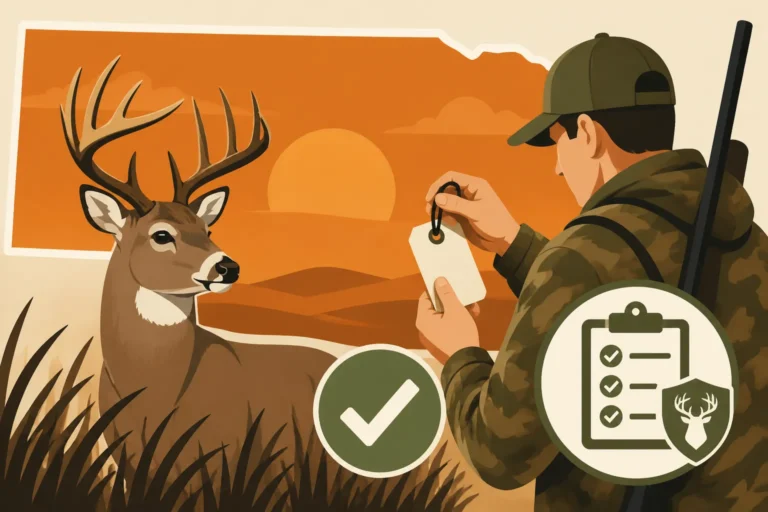
Immediately after you harvest an animal, you must validate and attach your permit tag to the animal. The specific instructions for this will be printed directly on your permit. Typically, this involves detaching the correct portion of the tag, filling in the date and time of kill, and securely attaching it to the carcass. This tag must remain with the carcass during transport and until it is processed. Failing to tag your animal correctly and immediately is a serious violation.
Beyond tagging, you are required to report your harvest to the Nebraska Game and Parks Commission. This is usually done online through your NGPC account within a specific timeframe (e.g., within 48 hours of harvest). The harvest reporting system collects crucial data that helps the NGPC manage wildlife populations and set future permit quotas. You’ll typically need to provide details like the species, sex, date of kill, county, and method of harvest. It’s a simple process that takes only a few minutes, but it's legally mandatory. If you fail to report your harvest, it’s akin to never having had a valid permit. Always double-check the exact regulations for tagging, transport, and reporting in the current year's hunting guide to ensure you're in full compliance. Being a responsible hunter means not just pursuing game ethically, but also adhering to all the administrative steps that contribute to sound wildlife management.
Disclaimer
Please remember that hunting regulations, dates, and permit availability can change. Always consult the official Nebraska Game and Parks Commission website and current year's hunting guide for the most up-to-date and accurate information before planning and executing your hunt. This guide is for informational purposes only and should not be considered a substitute for official regulations.