When the Snow Goose Conservation Order Runs
It's easy to feel overwhelmed when you're trying to figure out all the different hunting seasons and regulations here in Nebraska. Waterfowl hunting, especially, can feel like navigating a maze with all the special rules and zones. But if you've ever dreamt of being knee-deep in decoys with what feels like a blizzard of snow geese descending, you're likely curious about the Snow Goose Conservation Order. This guide is going to cut through the confusion and explain exactly when and why this unique hunting opportunity happens in our great state.
Understanding the Snow Goose Conservation Order
The Snow Goose Conservation Order isn't your typical hunting season, and it's easy for even seasoned hunters to get a little muddled by the distinctions. When you think of waterfowl hunting, you probably envision strict bag limits, plugged shotguns, and no electronic calls. But the conservation order throws most of those conventions out the window, and for a very good reason we'll dive into shortly. It’s a special management tool designed to address a critical ecological issue, and it offers some incredible, high-volume hunting opportunities that you just won't find during regular seasons.
What is the Conservation Order, Exactly?
At its core, the Snow Goose Conservation Order is an extended hunting period specifically for light geese (which include snow geese, blue geese, and Ross's geese) that operates under drastically liberalized rules. Unlike regular waterfowl seasons, which are primarily focused on recreational hunting and maintaining stable populations, the conservation order's main objective is population control. We're talking about a species whose numbers have exploded to unsustainable levels, particularly in their Arctic breeding grounds, and this special season is one of the primary tools wildlife managers use to try and bring those numbers back into balance. It means different dates, different equipment rules, and a completely different mindset when you head afield.
Key Differences from Regular Waterfowl Seasons
The differences between the conservation order and our traditional Nebraska duck and goose seasons are stark, and understanding them is crucial before you even think about heading out. First and foremost, you can use unplugged shotguns, meaning your firearm can hold its full capacity of shells, typically three or more. This is a huge departure from the three-shell limit in place for all other waterfowl hunting. Secondly, electronic calls are not only permitted but highly encouraged. These powerful sound devices, often broadcasting realistic goose chatter, are incredibly effective at pulling large flocks of snow geese into your decoy spread. Lastly, and perhaps most excitingly for hunters, there are no daily bag or possession limits. That's right—you can harvest as many snow geese as you can ethically shoot and process. This combination of factors transforms snow goose hunting into an intense, action-packed experience that is truly unique in the world of waterfowl. It’s a chance to experience sheer numbers of birds that most regular seasons just can't offer, and it’s a direct response to the massive populations causing environmental havoc.
The Federal Mandate Behind the Order
It might seem strange to have a hunting season with no limits and electronic calls, but this isn't just a free-for-all. The Snow Goose Conservation Order is authorized by the U.S. Fish and Wildlife Service, an agency that carefully monitors migratory bird populations. The scientific data has shown for decades that the Mid-Continent Population of Lesser Snow Geese and Ross’s Geese has grown far beyond what their fragile Arctic tundra breeding grounds can sustain. These birds are literally eating themselves out of house and home, destroying vegetation at an alarming rate, which in turn impacts other species that rely on the same habitat. Therefore, the federal government issues specific frameworks that states like Nebraska can adopt to implement these conservation orders. It's a critical, if somewhat unconventional, approach to wildlife management, giving hunters a vital role in protecting delicate ecosystems hundreds of miles away. It's truly a testament to the fact that conservation often requires thinking outside the traditional box.
Key Dates and Regulations for Nebraska's Snow Goose Season
When you're planning your spring snow goose hunt in Nebraska, knowing the exact dates and understanding the specific rules is paramount. There’s nothing worse than getting all geared up only to realize you’re either too early, too late, or unknowingly breaking a rule. The dates for the Snow Goose Conservation Order are typically set to coincide with the peak of the spring migration through the Central Flyway, giving hunters the best chance to intercept the massive flocks heading north.
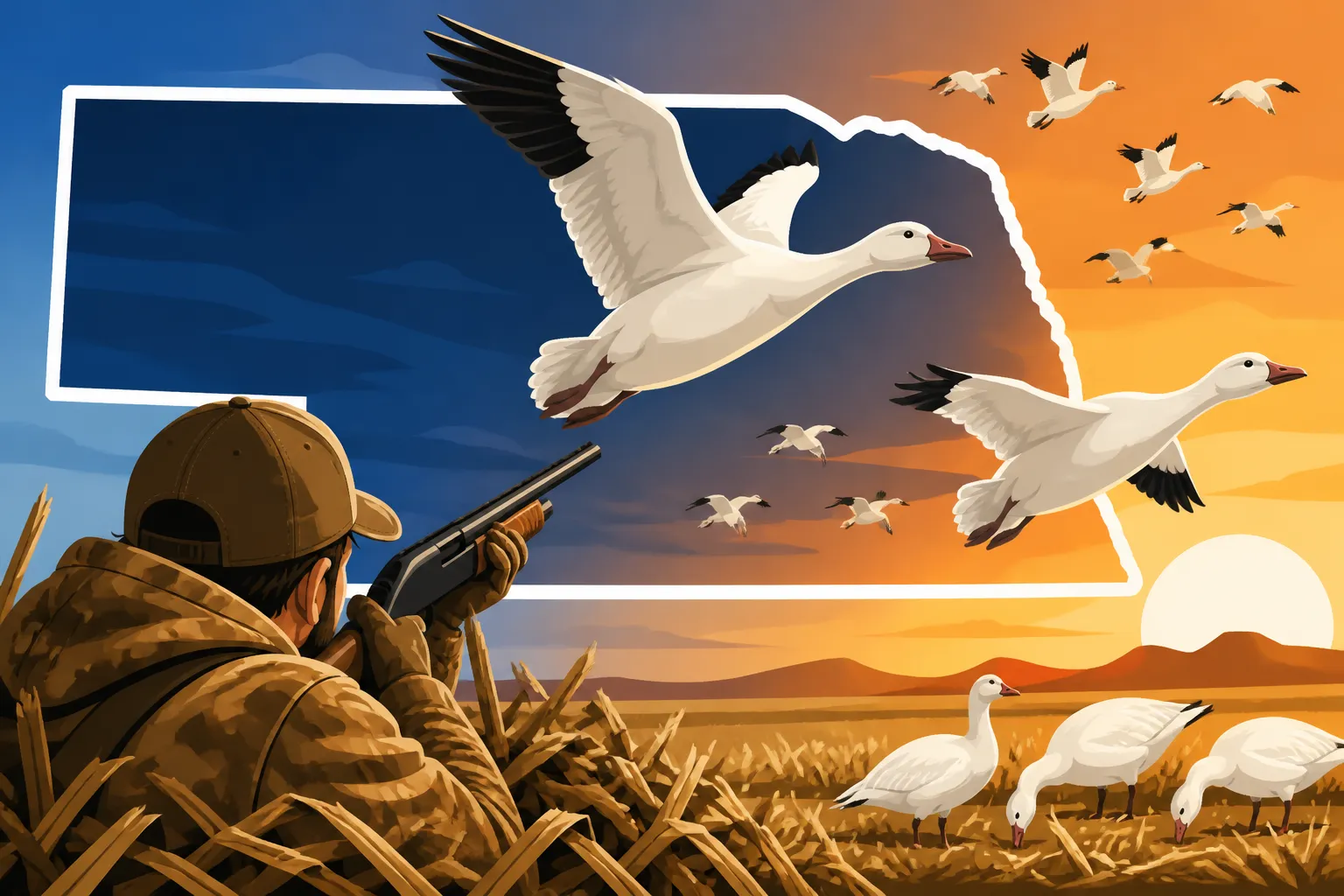
When the Snow Goose Conservation Order Runs
In Nebraska, the Snow Goose Conservation Order typically kicks off in early February and can run all the way through March or even into early April. This extended period is designed to encompass the bulk of the spring migration, allowing hunters ample opportunity to intercept birds as they push north. While the exact start and end dates can shift slightly year to year based on federal frameworks and state decisions, you can generally expect to find these liberalized hunting opportunities available for a good two months. It's a critical window, especially since the birds often move in waves, dictated by weather patterns and available food sources. For the most precise information, always double-check the current year's Nebraska Game and Parks regulations, as these dates are finalized and published annually. If you're using a planning tool, make sure it's up-to-date. Resources that offer access to the latest regulations, like those you might find through a platform like GoHunt, can be invaluable for staying current.
Unplugged Shotguns and Electronic Calls
This is where the conservation order really diverges from standard waterfowl hunting and frankly, it's what makes it so incredibly effective and exciting. During the Snow Goose Conservation Order, federal regulations allow for the use of unplugged shotguns. This means you can remove the plug from your shotgun's magazine, allowing it to hold its full capacity of shells – often five or more rounds, depending on your firearm. When you've got hundreds or even thousands of snow geese pitching into your spread, having those extra shells can make a huge difference in your success rate.
Equally transformative is the allowance of electronic calls. These devices, which can broadcast incredibly realistic recordings of snow goose vocalizations at high volumes, are absolute game-changers. Snow geese are extremely social birds, and these amplified calls can pull them in from incredible distances, even over the din of other hunters or highway traffic. Combine the non-stop cacophony of an e-caller with a massive spread of decoys, and you create an irresistible magnet for passing flocks. It's a completely different dynamic than calling with a mouth call, allowing you to replicate the sheer noise of a massive flock feeding and communicating. This rule, more than any other, is directly aimed at maximizing harvest efficiency to achieve the order's conservation goals. Want to learn more about the specifics? Check out our guide on Unplugged Guns Under Nebraska's Spring Goose Rules.
Daily and Possession Limits
Perhaps the most unique aspect of the Snow Goose Conservation Order is the complete absence of daily bag and possession limits. This can be a bit mind-boggling for hunters accustomed to strict limits on every other game species. During the conservation order, if you're lucky enough to have a massive flock commit to your spread, you can legally harvest as many birds as you can shoot and are willing to process. This isn't just about fun; it’s a direct reflection of the severity of the overpopulation problem. Every bird harvested contributes directly to the conservation effort.
However, while there are no legal limits, ethical hunters always impose their own. You should only shoot what you can realistically recover and utilize. Snow geese are delicious table fare, but processing dozens of birds is a significant undertaking. This lack of limits truly underscores the "conservation" aspect of the order; it's a call to arms for hunters to help manage a runaway population. Just remember, while there are no snow goose limits, all other hunting regulations for other species remain in effect, and you still need the proper permits and stamps, like the Nebraska Habitat Stamp, to participate.
Why the Conservation Order Exists
You might wonder why we have such a unique hunting season with rules that seem so out of the ordinary. It's not just to give hunters more opportunities, although that's a welcome byproduct. The Snow Goose Conservation Order is a direct response to an ecological crisis unfolding thousands of miles away in the Arctic. It’s a powerful example of how hunting can be a vital tool in wildlife management and habitat preservation.
The Overpopulation Crisis
The Mid-Continent Population of Lesser Snow Geese and Ross's Geese has experienced an unprecedented population boom over the last few decades, thanks in large part to changes in agricultural practices across their migratory route, including here in Nebraska. They now have abundant, high-energy food sources (like waste corn and rice) available during migration and wintering, allowing more birds to survive and return to the breeding grounds in healthier condition, leading to higher reproductive success. This has pushed their numbers far beyond the carrying capacity of their delicate Arctic breeding grounds. We’re talking about millions upon millions of birds—estimates often range from 5 to 7 million for the mid-continent population alone, a number that’s been steadily climbing. This isn't a healthy, balanced population; it's a ticking ecological time bomb.
Habitat Degradation and Ecological Impact
The impact of this snow goose overpopulation on the Arctic tundra is severe and, in many areas, irreversible. Snow geese are "grubbers," meaning they don't just graze; they pull up entire plants by the roots to get at the nutrient-rich rhizomes underground. Imagine millions of geese doing this across vast stretches of fragile tundra—it strips away vegetation, churns up soil, and turns lush sedge meadows into barren mudflats. This destruction eliminates nesting and feeding habitat not just for snow geese themselves, but for numerous other waterfowl and shorebird species that rely on the same delicate ecosystem, some of which are struggling to maintain stable populations. The damage extends to the entire food web, impacting insects, fish, and even Arctic predators. It's a sobering reminder that too much of a good thing can indeed be very bad for an ecosystem, and it’s why initiatives like the Snow Goose Numbers in Spring Migration are so vital to track these critical populations.
Management Goals of the Order
Given the scale of the problem, the primary goal of the Snow Goose Conservation Order is straightforward: significantly reduce the population of light geese to sustainable levels, thereby alleviating the destructive pressure on their Arctic breeding grounds. It's a proactive measure to prevent further ecological collapse and to allow the damaged habitat to recover. Wildlife managers aim to increase the annual harvest mortality of these geese, essentially shifting the population curve downwards.
While recreational opportunity is a fantastic bonus, the conservation imperative drives every rule change within the order. By allowing unplugged guns, electronic calls, and unlimited harvest, the framework maximizes the efficiency with which hunters can contribute to this large-scale management effort. It’s a testament to the fact that hunters play a critical, hands-on role in conservation, directly contributing to the health of an ecosystem thousands of miles away. It's a unique partnership between federal agencies, state wildlife departments like Nebraska Game and Parks, and the hunting community to address a serious environmental challenge.
Essential Gear and Tactics for Snow Goose Hunting
Snow goose hunting, particularly during the conservation order, isn't your average outing. It's often an all-encompassing, high-energy affair that demands specific gear and tactics to be truly successful. If you're going to commit to chasing these birds, you need to be prepared for the intense logistics and the sheer volume of birds you might encounter.
Decoy Spreads and E-Call Strategies
When it comes to snow goose hunting, bigger is almost always better for your decoy spread. We're talking hundreds, often thousands, of decoys to truly replicate the visual impact of a feeding flock. A typical spread might include a mix of full-body decoys, shell decoys, and windsocks, with a heavy emphasis on windsocks for their portability and lifelike movement in the Nebraska wind. Many hunters will place a "kill hole" or landing zone within their spread, often marked by white rags or fewer decoys, to encourage birds to land right in front of their blinds. Rotary machines, which simulate birds taking off or landing, are also incredibly effective at catching the eyes of distant geese.
Coupled with this visual spectacle is the auditory assault of electronic calls. These e-callers can run multiple speakers, broadcasting a cacophony of feeding, greeting, and high-pitched chatter at volumes that truly mimic a massive, active flock. The key is to make your spread look and sound as enticing as possible, convincing passing birds that this is the place to land and feed. Finding the right mix of call volume and specific sounds (feeding chuckles, contented clucks, excited honks) is an art form. If you're looking for tips on putting together an effective spread, our guide on Setting a Goose Spread in Harvested Corn offers some great foundational advice, which can easily be scaled up for snow geese. For more specific insights into these massive spreads, be sure to check out Decoy Spreads for Rainwater Basin Geese.
Blinds and Concealment for Open Fields
Unlike hunting timber for deer or cattail sloughs for ducks, snow goose hunting in Nebraska often takes place in vast, open agricultural fields. This means concealment is paramount, and layout blinds are the undisputed champions. These low-profile, coffin-like blinds allow hunters to lie down flat in the field, virtually disappearing into the stubble or cover. Modern layout blinds are incredibly comfortable and offer excellent protection from the elements, which is crucial during a potentially long, cold, and windy late-winter or early-spring hunt.
Beyond layout blinds, brushing in your setup is critical. This involves covering your blinds with natural vegetation from the surrounding field—corn stalks, milo stubble, or even grass—to break up their outline. Some hunters even go a step further, digging shallow pits to further reduce their profile, especially on heavily pressured birds. Remember, snow geese have incredible eyesight, and even a slight glint or unnatural shape can be enough to send them flaring. Every detail matters when you're trying to fool these wary birds in wide-open country.
Ammunition and Shotgun Considerations
Given the high-volume nature of snow goose hunting, your shotgun and ammunition choices are crucial. A reliable semi-automatic shotgun is almost a necessity, allowing for rapid follow-up shots on incoming or departing birds. You'll want a gun that can handle multiple rounds of powerful ammunition without jamming. When it comes to ammunition, heavy loads of nontoxic shot are the standard. Steel shot is the most common, but bismuth or tungsten-based alternatives can offer superior performance, especially at longer ranges, though they come with a higher price tag.
Shot size selection often revolves around BB or BBB for maximum knockdown power on these tough birds, but some hunters also use 2s or 1s. Since you’ll be shooting at large, often chaotic flocks, consistent patterning is more important than pinpoint accuracy with a single pellet. Many hunters prefer a modified or improved-cylinder choke to achieve a wider, more forgiving pattern. And remember, during the conservation order, you don't need a plug in your shotgun, so load it up! Make sure you’re carrying plenty of shells, as it’s not uncommon to go through several boxes on a good day.
Navigating Public and Private Land for Snow Geese
Finding good snow goose hunting ground in Nebraska can be a challenge, as these birds are constantly on the move, following feed and weather patterns. Whether you're targeting public lands or seeking private permission, a solid plan and diligent scouting are key to success.
Scouting for Success
Scouting is, without a doubt, the most important element of successful snow goose hunting. These birds are creatures of habit, often returning to the same feeding fields day after day until the food source is depleted or hunting pressure pushes them elsewhere. Your goal is to locate these primary feeding areas. This means spending time driving rural roads, glassing fields with good binoculars, and observing flight patterns as birds move between roosts and feeding grounds. You're looking for large concentrations of geese, visible white specs in a cornfield, or even tracks and droppings indicating recent use.
Many modern hunters leverage technology like satellite imagery and digital mapping apps, such as those found on platforms like GoHunt, to help identify potential roosting lakes or key agricultural fields. These tools can provide invaluable insights into land ownership, access points, and terrain features. Tracking weather patterns and recent migrations reports can also give you a leg up. Being on the ground, however, is irreplaceable. You need to identify the field where the birds want to be that day. Our guide on Reading Roost-to-Field Flight Lines can provide excellent insight into understanding goose movement patterns, which is absolutely critical for snow geese.
Public Land Opportunities
Nebraska offers some fantastic public land opportunities for snow goose hunting, particularly within the renowned Rainwater Basin. This region, dotted with numerous wetlands and federal waterfowl production areas, serves as a crucial staging ground for millions of migrating waterfowl, including snow geese. Many of these areas are open to public hunting and can provide incredible action, especially during peak migration. However, public land often means increased competition from other hunters, so being early, staying flexible, and being willing to walk a bit further than others can make a difference.
Other public access points might include Open Fields and Waters (OFW) tracts, which are private lands opened to public hunting through an agreement with the state. These can be gold mines, but require diligent checking of the Nebraska Public Access Atlas for current offerings. Hunting the Rainwater Basin wetlands themselves can be excellent, though they often require wading or boat access. For a deeper dive into these unique hunting grounds, check out Hunting Rainwater Basin Wetlands and Rainwater Basin Wetland Access. Always consult the specific regulations for each WMA or refuge, as some may have unique rules regarding blinds, vehicle access, or shooting hours.
Gaining Private Land Access
While public land can be great, many of the most productive snow goose fields are on private property. Gaining permission from landowners is often the key to consistent success. The approach here is similar to any other private land hunt: be respectful, be polite, and be prepared. Knock on doors well in advance, introduce yourself, explain what you're trying to hunt, and offer to share some of your harvest. Many farmers welcome snow goose hunters, as these birds can cause significant damage to newly sprouted crops in the spring.
It's also a good idea to bring references if you have them, and always leave the property cleaner than you found it. Offering to help with chores or sharing knowledge about goose movement can also go a long way in building a good relationship. Remember, securing private land access means respecting the landowner's wishes completely. This could mean restricted vehicle access, specific hunting times, or limitations on where you can set up. A good relationship with a landowner can secure you prime hunting spots for years to come.
Common Challenges and Troubleshooting for Snow Goose Hunters
Even with the best gear and scouting, snow goose hunting isn't without its challenges. These birds are wily, the weather is unpredictable, and the logistics can be daunting. Knowing what to expect and how to troubleshoot common issues can save you a lot of frustration and lead to more successful hunts.
Weather Woes and Migration Patterns
Nebraska weather in February and March can be incredibly fickle. One day it's unseasonably warm and sunny, the next you're battling a blizzard and frigid winds. These dramatic shifts directly impact snow goose migration patterns. Warm fronts can push birds north quickly, while cold fronts can stall them, or even push them back south. A sudden heavy snowstorm might send them scrambling for open water and exposed fields, while a prolonged mild spell could see them spread out widely, making them harder to concentrate.
Staying flexible is key. Keep a close eye on weather forecasts and historical migration data. If you planned to hunt a specific area but a major weather event has scattered the birds, be prepared to pack up and relocate. Sometimes, the best strategy is to be right in the middle of a major migration wave, which often coincides with these weather shifts. Unfortunately, sometimes it just means waiting out a spell of bad weather until the birds are moving again. This constant dance with the elements is part of the challenge and excitement of spring snow goose hunting.
Decoy Shyness and Pressure
Snow geese are intelligent birds, and they learn quickly. By the time they hit Nebraska in the spring, they've likely been shot at countless times on their journey north. This makes them incredibly "decoy shy" or "call shy." They'll often circle high, "hang up" just outside comfortable shooting range, or flare violently at the slightest hint of danger. What worked yesterday might not work today if the birds have been pressured.
To combat this, you need to constantly evaluate your setup. Is your spread natural? Is your concealment perfect? Sometimes, it means making adjustments on the fly – changing the position of your electronic calls, moving a rotary machine, or even making subtle tweaks to your decoy spread. Varying your calling sequence, from loud and aggressive to soft and subtle, can also help. On heavily pressured days, sometimes a smaller, ultra-realistic spread with impeccable concealment can be more effective than a massive, but obvious, one. It's a constant cat-and-mouse game, and staying adaptable is your best weapon.
Logistics of Large Spreads
Let's be real, setting up and taking down a snow goose spread is no small feat. Hauling hundreds, if not thousands, of decoys, multiple electronic callers, batteries, blinds, and shotguns can be physically demanding. Many hunters use trailers, ATVs, or even specialized decoy sleds to transport their gear into the fields. A full spread might take hours to set up in the pre-dawn darkness and just as long to retrieve after a hunt.
This is why having a good crew is often essential. More hands make light work, and a well-coordinated team can make the logistics much more manageable. Communication is key, both during setup and during the hunt itself. Assign roles, establish clear signals, and work together. While the idea of a solo snow goose hunt is romantic, the reality of managing a large spread solo is often overwhelming. Embrace the camaraderie, share the workload, and celebrate the successful harvests together. It makes the entire experience more enjoyable and sustainable year after year.
| Feature | Regular Goose Season (e.g., Canada Geese) | Snow Goose Conservation Order |
|---|---|---|
| Species | Canada Geese, White-fronted Geese | Snow Geese, Blue Geese, Ross's Geese |
| Season Dates | Fall/Winter (e.g., September-February) | Late Winter/Early Spring (e.g., February-April) |
| Shotgun Capacity | Plugged, 3-shell limit | Unplugged, full magazine capacity |
| Electronic Calls | Not Permitted | Permitted |
| Daily Bag Limit | Strict limits (e.g., 5-7 Canada Geese) | No daily bag limit |
| Possession Limit | Strict limits (e.g., 3x daily bag) | No possession limit |
| Primary Objective | Recreational hunting, population stability | Population reduction, habitat conservation |
| Required Permits | State Hunt Permit, Habitat Stamp, Federal Duck Stamp, HIP Registration | State Hunt Permit, Habitat Stamp, Federal Duck Stamp, HIP Registration |
| Decoy Spreads | Typically smaller, more realistic | Often hundreds to thousands of decoys |
Disclaimer
Please note: Hunting regulations can change frequently. Always consult the most current Nebraska Game and Parks Commission regulations before planning or undertaking any hunting activity. This guide is for informational purposes only and does not supersede official state or federal regulations.