Nebraska Antelope Permits and Seasons
Trying to understand the ins and outs of antelope permits and seasons in Nebraska can feel like trying to read a roadmap written in a foreign language. It's not always straightforward, especially with different permit types, draw systems, and specific dates that vary. This comprehensive guide is here to untangle all those complexities, walking you through everything you need to know about securing a permit and planning a successful pronghorn hunt in the Cornhusker State.
Understanding Nebraska's Antelope Landscape
Nebraska might not be the first state that springs to mind when you think of antelope hunting, but trust me, the opportunities here are real and incredibly rewarding. These magnificent creatures, often referred to as pronghorn, are a truly iconic part of the western Nebraska landscape. Hunting them offers a unique challenge that's distinct from chasing whitetails in a timbered creek bottom.
Where Pronghorn Roam in Nebraska
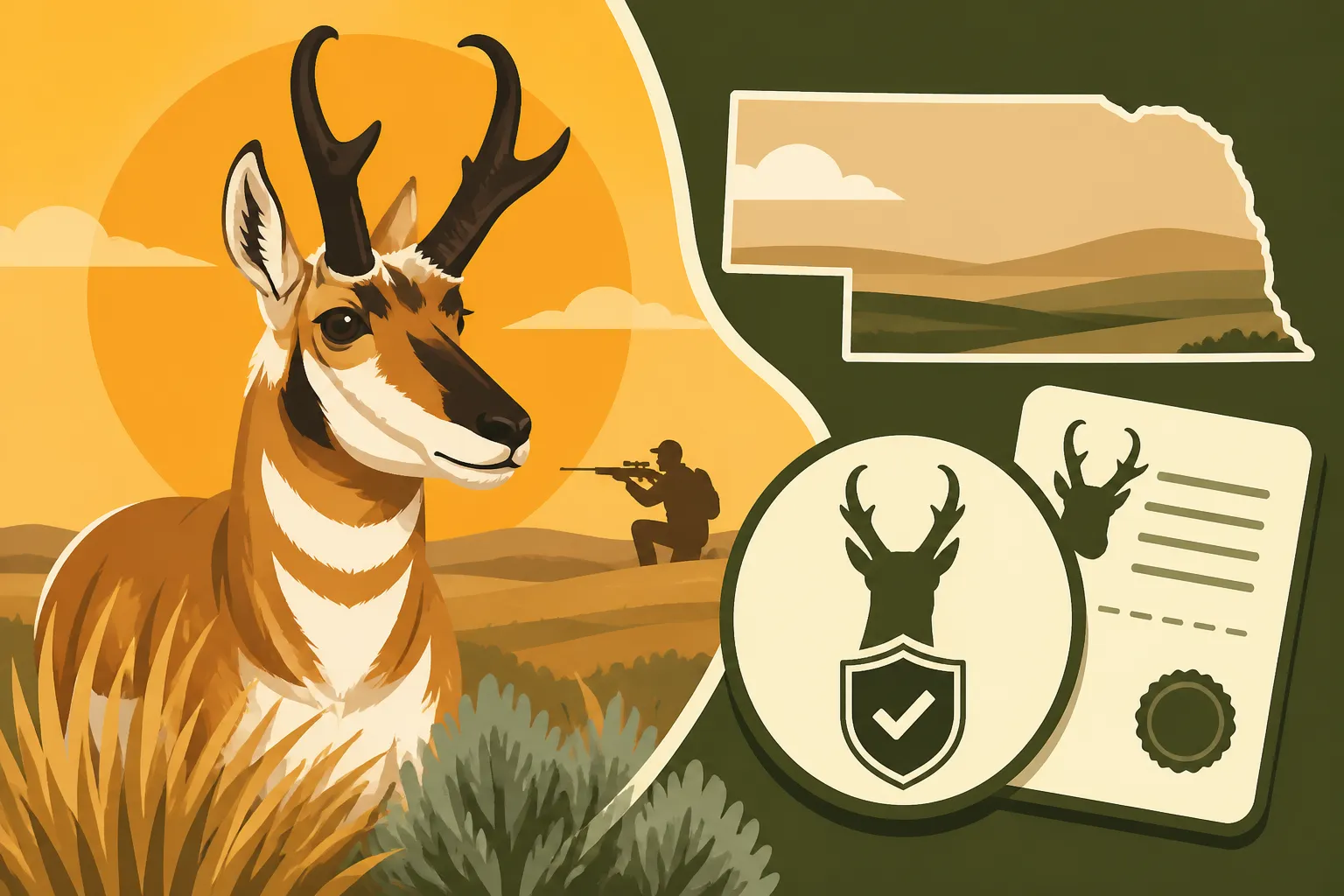
If you're picturing vast, open prairies stretching to the horizon, you're on the right track for Nebraska antelope country. Pronghorn are predominantly found in the western half of the state, particularly concentrated in the Panhandle and the sprawling Sandhills region. These areas provide the expansive, short-grass prairie and sagebrush flats that antelope thrive in, allowing them to utilize their incredible speed and keen eyesight to evade predators.
When you're out there, you'll notice they favor terrain where they can see for miles, which often includes gently rolling hills, open rangeland, and even agricultural fields bordering these habitats. Understanding Where Nebraska Antelope Concentrate is crucial for effective scouting and hunting. You won't typically find them in dense timber or brushy river bottoms like you would deer; instead, look to the high ground, the wide-open spaces, and areas with good visibility. Their distribution is a direct reflection of their evolutionary adaptations for survival in open country.
Why Antelope Hunting is Unique in the Cornhusker State
Hunting antelope in Nebraska isn't just another hunt; it's an experience tailor-made for those who love the challenge of wide-open spaces. Unlike deer hunting, where you might rely on thick cover and subtle movements, antelope hunting demands a different skill set entirely. Their eyesight is legendary—often compared to an 8x binocular—meaning they can spot you from an incredible distance. This makes closing the distance on foot a true test of stealth and patience.
The sheer openness of the terrain means successful hunts often hinge on expert glassing, long-range shooting capabilities for rifle hunters, or incredibly patient stalking for archers. The wind is almost always a factor, and the sun can be relentless, especially during the early archery season. It's a game of chess played across miles of prairie, where every move you make is potentially observed. This distinct challenge is precisely what draws many hunters to pursue pronghorn here, offering an adventure that feels truly wild and remote, even in a state known more for its agricultural prowess.
Navigating Nebraska Antelope Permit Types
Alright, let's talk permits. This is where things can get a little murky, but once you understand the system, it becomes much clearer. Nebraska offers different permit types for antelope, each with its own quirks regarding availability, season structure, and how you acquire them. It's not a one-size-fits-all situation, and your approach will largely depend on whether you prefer a bow or a rifle, and if you're a resident or non-resident. It's part of the broader system for Nebraska Big Game Permits and How to Get One.
Archery Antelope Permits
For many, the archery antelope season is a fantastic opportunity, often offering more flexibility and, at times, easier access to permits. Nebraska’s archery antelope permits are generally available over-the-counter (OTC) for both residents and non-residents, though you should always double-check the latest regulations from the Nebraska Game and Parks Commission (NGPC) as rules can change. This means you don't necessarily have to go through a draw process, which is a huge relief for hunters who dread the lottery system.
These permits allow you to hunt a broader range of units compared to firearm permits, giving archers more options. The archery season itself is quite generous, often starting in late August and running through the end of October, sometimes even into November. This long season provides ample opportunity, though hunting during the August and early September heat presents its own set of challenges, from antelope behavior to meat care.
Firearm Antelope Permits
Now, if you're a rifle hunter, things get a bit more competitive. Firearm antelope permits in Nebraska are highly limited and are typically allocated through a lottery draw system. These permits are unit-specific, meaning you apply for a permit in a particular Antelope Management Unit (AMU). The number of permits available in each unit is carefully managed by the NGPC to ensure sustainable harvest and quality hunting experiences.
Because of the limited supply and high demand, drawing a firearm antelope permit can be tough, especially for non-residents. Success often requires accumulating preference points (which we'll delve into shortly) or getting very lucky in the draw. These permits are almost exclusively "any antelope" tags, allowing you to harvest a buck or a doe. The firearm season is also much shorter than archery, usually just a few days in late September or early October, making scouting and preparation even more critical.
Landowner and Youth Antelope Opportunities
Nebraska recognizes the significant role landowners play in wildlife management, and as such, offers specific permit opportunities for qualifying landowners. These permits are designed to provide agricultural producers the opportunity to manage antelope on their property, sometimes outside of the general draw. Eligibility requirements are specific, usually tied to owning or leasing a certain acreage within an Antelope Management Unit. These permits often still require an application, but they provide an avenue that bypasses the general public draw.
Youth hunters also have fantastic opportunities to get into antelope hunting in Nebraska. There are often dedicated youth permits available, sometimes with more favorable draw odds or specific season dates. These mentored hunts are designed to introduce young hunters to the sport in a supportive environment. It’s a wonderful way to foster the next generation of hunters, giving them a taste of the unique excitement that comes with pursuing pronghorn on the prairie. Always check the NGPC regulations for the most current information on youth permit availability and requirements, as these can be incredibly valuable stepping stones for aspiring hunters.
The Nebraska Antelope Draw Explained
The "draw" process can be a source of significant anxiety for many big game hunters, and Nebraska's system for firearm antelope permits is no exception. It's a lottery, plain and simple, designed to fairly distribute a limited number of coveted tags. Understanding how it works is your first step toward navigating it successfully.
Application Process and Deadlines
The application period for Nebraska's big game draw, including firearm antelope permits, typically opens in June. This is a critical window you absolutely cannot miss. Missing the deadline means waiting another year, which is a frustration no hunter wants to endure. You'll apply online through the Nebraska Game and Parks Commission website. The process involves selecting your preferred Antelope Management Unit (AMU) and indicating whether you're applying for a resident or non-resident permit.
It's important to research the units carefully before applying. Look at past draw odds, antelope populations, and public land access within each unit. You usually get the option to select a first and second choice for your permit. The application fee, which includes the cost of the permit if you're successful, is charged at the time of application. Make sure all your information is correct before submitting, as errors can lead to disqualification. For specific timelines and instructions, the Nebraska Draw Application Dates in June page is an invaluable resource.
Understanding Preference Points for Antelope
This is where strategizing really comes into play, especially for those highly sought-after firearm antelope permits. Nebraska utilizes a preference point system to give loyal applicants a better chance in future draws. Essentially, for every year you apply for a permit and are unsuccessful, you accrue one preference point. These points then increase your odds of drawing a permit in subsequent years. You can also opt to purchase a preference point without applying for a permit, which is a smart move if you know you can't hunt a particular year but want to improve your chances for the future.
Preference points are unit-specific for antelope, meaning they are tied to a particular Antelope Management Unit. If you switch units, your points for the previous unit generally don't transfer. This requires a long-term strategy: commit to a unit, or be prepared for lower odds if you jump around. For non-residents, accumulating preference points is often the most realistic path to drawing a firearm antelope tag, given the competition. Think of it as investing in your future hunts. Learning more about Buying a Nebraska Preference Point can help you make informed decisions.
Drawing Results and Leftover Permits
The anticipation after applying for a big game permit can be excruciating. Fortunately, the wait isn't indefinite. Draw results for Nebraska's big game permits, including antelope, are typically posted in late June or early July. You'll usually receive an email notification, or you can check your application status directly on the NGPC website. Seeing "successful" in your status is a fantastic feeling! Knowing When Nebraska Draw Results Are Posted allows you to manage that pre-draw anxiety.
If you are unsuccessful in the draw, don't despair entirely. Sometimes, a limited number of leftover permits become available after the initial draw process, often in less popular units or for antlerless-only opportunities. These leftover permits are usually sold on a first-come, first-served basis, often starting in mid-to-late July. They go quickly, so if you're planning to hunt antelope and didn't draw, keep a close eye on the NGPC website for these opportunities. While they might not be for your dream unit, a leftover tag is still a fantastic way to experience a Nebraska antelope hunt.
Antelope Season Dates in Nebraska
Nebraska's antelope seasons are structured to offer different experiences for various hunting preferences, from the early challenges of archery to the fast-paced action of a short rifle season. Each season has its unique characteristics, influencing everything from antelope behavior to weather conditions.
Archery Season Specifics
The archery antelope season typically kicks off in late August and runs through October, often extending into November. This is a wonderfully long season that offers flexibility, but the early part of it, especially in August, can be incredibly challenging. Temperatures can soar, making it difficult to stalk quietly and keep scent under control. Plus, the heat impacts antelope behavior; they'll often be found near water sources during the hottest parts of the day. For those looking for an early-season adventure, Nebraska's August Archery Antelope Opener is a prime opportunity, but come prepared for the elements.
As the season progresses into September and October, the weather generally cools, and antelope behavior might shift slightly as the rut approaches. This offers different hunting scenarios, from ambushing them at waterholes to stalking them as they feed in fields. Archery hunting for antelope demands extreme patience, precise shot placement, and often, long crawls across open ground to get within bow range. It's a true test of a bowhunter's skill and resolve.
Firearm Season Window
In stark contrast to the lengthy archery season, Nebraska's firearm antelope season is a blink-and-you'll-miss-it affair. It's typically a very short window, often just a few days, usually falling in late September or early October. This brief season is precisely why firearm permits are so highly coveted and difficult to draw. With only a few days to hunt, success often hinges on meticulous pre-season scouting, intimate knowledge of the unit, and the ability to capitalize quickly on opportunities. Knowing When Nebraska's Antelope Rifle Season Opens is just the first step; being prepared to maximize those precious few days is the real challenge.
During the firearm season, you'll see hunters utilizing vehicles for glassing vast areas (where legal), then making long stalks on foot to get within rifle range. The advantage of a rifle's extended range is crucial here, but precision is still paramount. The weather during this time of year can be beautiful and crisp, but it can also turn quickly, bringing cold fronts or even early snow, adding another layer of challenge to an already demanding hunt.
Special Late Season Opportunities
While the primary archery and firearm seasons cover the bulk of antelope hunting, it's always worth checking the NGPC regulations for any special late-season opportunities. Occasionally, if specific units have unmet harvest objectives or management needs, there might be limited late-season antlerless-only tags available. These could be short-duration hunts, sometimes overlapping with other deer seasons, and they offer a chance to fill the freezer if you missed out on a buck tag or simply want more time in the field.
These late-season tags are rare for antelope but do happen. They're usually sold over-the-counter and are snapped up quickly. They also require adapting your tactics to potentially colder weather and different antelope behavior. As with all permits, the most up-to-date and accurate information will always come directly from the Nebraska Game and Parks Commission, so make sure their website is your first stop when planning any late-season pursuits.
Increasing Your Odds for a Nebraska Antelope Permit
Let's face it, drawing a coveted tag can feel like winning the lottery, but there are definitely strategies you can employ to stack the odds in your favor. It’s not just about luck; it’s about smart planning and understanding the system.
Researching Antelope Units and Draw Odds
This is perhaps the single most important step in improving your chances. Don't just pick a unit because it sounds good or because you know someone who hunted there once. Dive deep into the data. The Nebraska Game and Parks Commission publishes draw odds and harvest statistics for each Antelope Management Unit (AMU) annually. This information is gold. Look at resident and non-resident draw odds, success rates, and the number of permits offered per unit. Some units are simply harder to draw than others.
Tools like GoHunt can be incredibly helpful here. They aggregate data, provide filtering options, and often have detailed breakdowns that can save you hours of digging through government websites. They allow you to compare historical draw odds, analyze population trends, and even overlay public land maps with unit boundaries. This kind of platform can give you a significant edge in making an informed decision. For a comprehensive overview, specifically check the Nebraska Antelope Draw Odds reports to see where your chances are best, or where you'll need to commit to a long-term point strategy.
Strategic Use of Preference Points
We talked about preference points earlier, but it's worth reiterating their strategic importance. If you're serious about hunting antelope in Nebraska with a rifle, especially as a non-resident, accumulating preference points is almost a necessity. The most strategic approach involves consistently buying a preference point each year if you're not planning to apply for a permit, or if you apply and are unsuccessful. This builds your "points bank" over time.
For popular units, it might take several years to accumulate enough points to have a reasonable chance of drawing. You'll need to weigh the cost of points against the likelihood of drawing in your desired unit. Some hunters focus on drawing a tag every few years, while others simply build points until they're virtually guaranteed a permit in a top-tier unit. Your strategy will depend on your timeline and how frequently you want to hunt. It's a long game, but a rewarding one when that "successful" notification finally comes through.
Considering Non-Resident vs. Resident Chances
The reality for non-resident hunters in Nebraska is that drawing a firearm antelope permit is significantly tougher than it is for residents. This is due to regulations that ensure residents have priority access to their state's wildlife resources. Nebraska, like many states, has a permit split that heavily favors residents. You'll often see something like an 85% resident permit allocation, leaving only 15% for non-residents. This directly impacts your draw odds. Understanding How Nebraska Splits Resident and Nonresident Permits is essential for setting realistic expectations.
As a non-resident, your best bet is usually a long-term preference point strategy for firearm permits, or taking advantage of the generally more available archery permits. While it can be frustrating to face lower odds, many non-residents find the experience of hunting Nebraska's wide-open spaces worth the effort and the wait. Don't let the odds deter you entirely; instead, let them inform your strategy and commitment to the draw system.
Key Regulations and Considerations for Antelope Hunters
Hunting regulations are more than just rules; they're vital for conservation and ensuring safe, ethical hunting experiences for everyone. Before you even think about stepping into the field, you need to be intimately familiar with Nebraska's specific guidelines for antelope.
Legal Firearms and Archery Equipment
When it comes to firearms, Nebraska has specific rules. For antelope, you'll generally use centerfire rifles. There are also stipulations regarding minimum bullet diameter and energy. If you're looking at straight-wall cartridges, which are legal for deer in some seasons, ensure they also meet the criteria for antelope, though most common rifle calibers for antelope will exceed the minimum requirements. Always consult the current NGPC hunting guide for the precise legal firearms and ammunition specifications.
For archery hunters, the rules cover minimum draw weight, arrow length, and broadhead type. Broadheads must be fixed-blade or mechanical broadheads with a minimum cutting diameter. Crossbows typically have their own set of regulations and may require a special permit or be limited to specific circumstances. For instance, Archery Antelope Over Water in Nebraska might involve specific blind setups, but equipment rules remain constant. Make sure your bow, arrows, and broadheads comply with all current regulations to avoid any issues afield.
Carcass Transport and CWD Sampling
Chronic Wasting Disease (CWD) is a serious concern for wildlife managers, and Nebraska has robust regulations to monitor and control its spread. If you harvest an antelope, you'll be required to comply with carcass transport rules. This often means certain parts of the carcass (like the brain, spinal cord, and lymph nodes) cannot be transported out of the state or even between certain management units. This is to prevent the spread of CWD prions.
You may also be required to submit a CWD sample from your harvested animal, or at least be aware of voluntary sampling stations. These regulations are critical for public health and wildlife management. It’s absolutely essential to know Carcass Transport Rules Out of Nebraska if you’re a non-resident hunter, or even if you’re a resident traveling between different areas of the state, to ensure you don’t inadvertently violate any rules or contribute to disease spread. Always refer to the NGPC's latest CWD information.
Tagging and Reporting Your Harvest
Once you've successfully harvested an antelope, the legal work isn't over. Nebraska has strict tagging and reporting requirements that must be followed immediately. Typically, your permit will come with tags that must be physically attached to the animal's carcass, usually to the leg or horn, immediately after harvest and before moving the animal. This tag must remain with the carcass until it reaches its final destination or is processed.
Beyond physical tagging, you are almost always required to report your harvest to the Nebraska Game and Parks Commission. This can usually be done online or via a phone system within a specific timeframe (e.g., within 48 hours). This reporting is crucial for wildlife managers to gather data on harvest numbers, hunter success rates, and population estimates, which in turn helps them make informed decisions for future seasons. Failing to tag or report your harvest can result in fines and penalties, so don't overlook these important final steps of your hunt.
Planning Your Nebraska Antelope Hunt
A successful antelope hunt in Nebraska is rarely a stroke of luck; it's the culmination of meticulous planning, diligent scouting, and preparing for the unique challenges of the prairie. Whether you've drawn a tag or are planning an OTC archery hunt, these steps will put you in a better position for success.
Scouting and Pre-Season Prep
Scouting for antelope in Nebraska demands a different approach than deer. Since they live in such open country, pre-season scouting is heavily reliant on good optics and covering a lot of ground, often from a vehicle on public roads or by using mapping software. Look for prime habitat: wide-open grasslands, areas with diverse forage, and crucially, water sources. Antelope need to drink, especially in the warmer months, so identifying accessible water can be a game-changer.
Utilize tools like GoHunt's mapping system or the Nebraska Public Access Atlas to identify potential hunting areas, land ownership boundaries, and topographic features that might offer concealment for a stalk. Look for natural travel corridors or feeding areas. Even if you can't be on the ground, satellite imagery can reveal subtle terrain features that might concentrate animals. Understanding how to execute Stalking Pronghorn Across Open Nebraska Ground starts with knowing the lay of the land before you even step foot there. Pay attention to fence lines and other man-made obstacles, as pronghorn are known for going under fences rather than jumping them.
Accessing Hunting Land
Nebraska offers various public land opportunities, but they are not evenly distributed. The vast Oglala National Grassland in the Panhandle is a prime example of accessible public land where you can pursue antelope. These federal lands offer expansive areas to hunt, but they also require careful navigation and understanding of specific regulations. Beyond federal lands, the Nebraska Game and Parks Commission manages numerous Wildlife Management Areas (WMAs) and other public access sites, which can also hold antelope. Checking the Oglala National Grassland Hunting specific rules is a must.
For private land, gaining permission is paramount. Nebraska has strict trespass laws, and "posted" signs are common. Always seek explicit permission from landowners before entering private property. A good way to start is by knocking on doors well in advance of the season, being polite, and offering to share your harvest or help with land management tasks. The Nebraska Public Access Atlas is an excellent resource for identifying publicly accessible lands, including Open Fields and Waters (OFW) tracts, which provide walk-in hunting opportunities on private land enrolled in a state program. Always carry a copy of the atlas or have the app on your phone.
Gear Essentials for Antelope Hunting
Your gear can make or break an antelope hunt. Given the open terrain and often long distances, quality optics are non-negotiable. A good pair of 10x or 12x binoculars are essential for glassing, and a high-power spotting scope (20-60x or higher) on a tripod is invaluable for identifying and judging animals from a distance. A rangefinder is also a must-have for accurately gauging distances in terrain that can be deceptive. For more information, check out Optics for Glassing the Nebraska Sandhills.
Footwear is another critical consideration. You'll be doing a lot of walking, potentially across rough, uneven, and sandy terrain. Comfortable, durable, and broken-in boots are vital to prevent blisters and fatigue. Hydration is key, especially during early seasons when temperatures can be high, so carry plenty of water or a hydration pack. Sun protection, including a wide-brimmed hat, sunglasses, and sunscreen, is also crucial. For rifle hunters, shooting sticks or a bipod will be incredibly useful for stabilizing long-range shots in the absence of natural rests. For archers, quiet clothing and knee pads for crawling will be indispensable. Remember, the right gear doesn't guarantee success, but it certainly puts you in a much better position to achieve it.
| Permit Type | Eligibility | Availability | Typical Season Dates | Approximate Cost (Resident/Non-Resident) | Notes |
|---|---|---|---|---|---|
| Archery Antelope | Resident/Non-Res. | Over-the-Counter (OTC) | Late August – Early November | ~$68 / ~$190 | More flexible, longer season. |
| Firearm Antelope | Resident/Non-Res. | Lottery Draw (Unit-Specific) | Late September – Early October (few days) | ~$68 / ~$190 | Highly competitive, limited tags. Preference points crucial for non-residents. |
| Landowner Antelope | Qualifying Landowners | Application/Draw | Varies by season | Resident fees | Specific acreage requirements. Bypasses general public draw. |
| Youth Antelope | Resident/Non-Res. Youth | Varies (Draw/OTC) | Varies by season | Reduced fees | Designed for mentored young hunters. Permit types and availability can vary. |
Costs are approximate and subject to change; always check current NGPC regulations for exact figures.
Disclaimer
Please remember that hunting regulations, season dates, and permit availability can change annually. This guide is intended for informational purposes only. Always consult the official Nebraska Game and Parks Commission (NGPC) website or the latest hunting guide for the most accurate and up-to-date information before planning your hunt. It is your responsibility to know and follow all applicable laws and regulations.