Archery Antelope Over Water in Nebraska
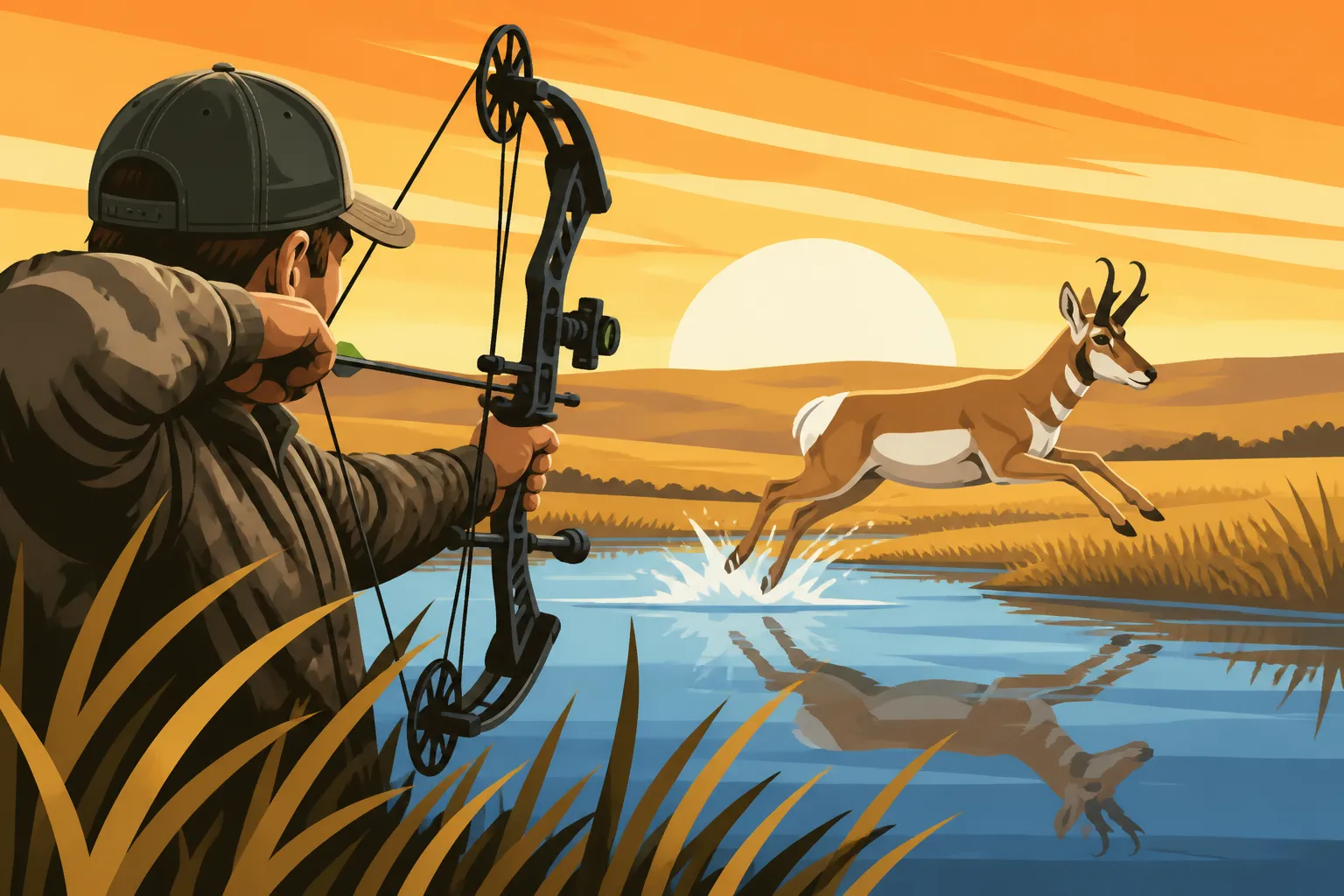
Hunting antelope in Nebraska, especially with a bow, can be one of the most physically and mentally demanding pursuits, often leaving hunters frustrated by endless stalks on wide-open plains. But what if there was a strategy that flipped the script, letting the antelope come to you? This guide dives deep into the effective, often overlooked, method of archery hunting pronghorn over water in Nebraska, transforming a grueling chase into a strategic ambush.
Understanding Nebraska's Pronghorn and Water Habits
Anyone who has spent time in Nebraska's expansive Sandhills or the western Panhandle knows that pronghorn are creatures of the open prairie, built for speed and possessing eyesight that rivals a 10x binocular. Trying to sneak up on them in their natural element often feels like trying to catch smoke. However, these magnificent animals also have a crucial vulnerability: their need for water, particularly in the arid landscapes they call home.
The Pronghorn's Unquenchable Thirst
Unlike deer, which can often get a good portion of their hydration from the plants they eat, pronghorn are generally more dependent on free-standing water sources. They are truly built for the dry, open country, but even their efficient bodies need a consistent intake of water to thrive, especially during the hot summer months. This reliance on water becomes a critical factor for archery hunters, as it funnels these otherwise elusive animals into predictable locations. Imagine trying to hunt something that lives in a vast, featureless ocean, but then you realize that every day it must visit a specific set of small islands. Those islands become your hunting grounds.
Their anatomy itself speaks to their adaptation to arid environments, but it doesn't eliminate their need for a drink. Their diet of forbs, grasses, and shrubs provides some moisture, but it's often not enough to sustain them through long, dry spells, which are common in much of Nebraska's antelope country. This makes waterholes, tanks, and even isolated puddles absolute magnets for them. Understanding this fundamental biological need is the first step in formulating a successful archery strategy.
Seasonal Water Use Patterns
The frequency and timing of pronghorn watering depend heavily on the time of year and prevailing weather conditions. During the scorching heat of late July, August, and early September – which often coincides perfectly with Nebraska's archery antelope opener – water sources become incredibly valuable. In these summer months, a buck might visit a waterhole multiple times a day. Their bodies are working hard, regulating temperature and supporting metabolism, which all requires consistent hydration. This period is prime for waterhole hunting. As the weather cools into late September and October, their need for water might decrease slightly, but they will still visit regularly, just perhaps not with the same urgency or frequency.
Consider the heat: a day with temperatures soaring into the 90s or even 100s will see pronghorn seeking water much more intensely than a cooler, overcast day. Rain can temporarily disrupt patterns, offering scattered puddles that draw antelope away from traditional waterholes. Therefore, monitoring weather forecasts is absolutely crucial. A good rule of thumb is that the hotter and drier it is, the better your chances are at a waterhole. This seasonal insight is key to successful Nebraska's August Archery Antelope Opener.
Identifying Pronghorn Travel Routes to Water
Even when committed to a water source, pronghorn rarely just appear. They typically follow established travel routes, often subtle trails worn into the prairie by generations of hooves. These routes are especially visible near fences where they might crawl under, or through low saddles and draws that offer a slight break from the flat landscape. Identifying these routes is paramount for blind placement, ensuring your setup is not only concealed from the waterhole but also along their natural approach.
Look for areas where multiple trails converge, or where terrain features naturally funnel animals. A well-placed trail camera on a faint path leading to a tank can reveal not just if antelope are watering, but how and when they are approaching. They are wary animals, and their approach to water is often slow, deliberate, and cautious, often pausing several times to survey their surroundings before committing to a drink. Understanding these behaviors allows you to anticipate their movements and set up for an ethical shot.
Scouting for the Perfect Waterhole
Scouting is where the real work begins and where the armchair detective in every hunter gets to shine. It’s not just about finding water; it’s about finding the right water, and then understanding every nuance of that specific location. In the vastness of Nebraska, this requires a methodical approach, combining modern technology with boots-on-the-ground investigation.
Evaluating Different Water Sources
Not all water sources are created equal for archery hunting. You're looking for predictable, consistent sources that offer limited visibility and natural concealment for a blind. Small stock tanks, windmills with overflow troughs, and isolated ponds are often excellent choices. Large lakes or wide rivers are generally too expansive, offering too many access points for antelope, making them less predictable. Conversely, a tiny puddle might dry up too quickly or attract less attention. The ideal waterhole is often somewhat isolated, maybe nestled in a slight depression or surrounded by a bit of taller grass or sagebrush, allowing for a more natural approach for the antelope and easier concealment for you.
When evaluating a waterhole, consider its long-term reliability. Has it been a consistent source of water throughout the summer, even during dry spells? Is it prone to drying up? A good tool like GoHunt can provide satellite imagery and topographic maps that help identify potential water sources remotely, allowing you to narrow down your options before you even put boots on the ground. You want to prioritize those locations that are proven magnets for pronghorn.
Reading Sign Around Waterholes
Once you’ve identified potential spots, it’s time to get out there and read the landscape. This is where old-school hunting skills come into play. Look for fresh tracks in the mud or soft soil around the water's edge. Pay attention to the size and freshness of the tracks – are they adult bucks, does, or fawns? Are there multiple sets, indicating frequent use? Also, look for droppings. Fresh, moist droppings are a strong indicator of recent activity. Well-worn trails leading to and from the waterhole are another crucial sign. The more sign you find, the more confident you can be in the spot.
Don't just focus on the immediate vicinity of the water. Expand your search to 100-200 yards out, looking for bedded areas or rub marks on small shrubs, which can indicate where antelope might linger before or after drinking. The presence of these signs tells a story of frequent and consistent use, validating your choice for a blind location. Remember, you're not just looking for any water; you're looking for their preferred water source.
Using Technology for Remote Scouting
In today's hunting world, technology is a game-changer for remote scouting. Mapping applications like GoHunt, OnX Hunt, or even Google Earth allow you to study terrain features, identify potential water sources, and pinpoint access routes without ever stepping foot on the property initially. You can mark waypoints for waterholes, possible blind locations, and even areas where you spot antelope from a distance. The ability to layer satellite imagery with property boundaries and topographic lines provides an unparalleled advantage.
Trail cameras are another invaluable tool. Deploy them at potential waterholes, camouflaged and out of sight. Set them to video mode to capture not only when antelope visit but also how they approach, how long they stay, and what direction they depart. This information is gold for precise blind placement and understanding patterns. Just be sure to check trail camera rules on public lands; they vary. For private land, they are a fantastic asset for patterning. This remote scouting helps confirm activity patterns, saving you precious time and minimizing disturbance in the field, crucial for wary antelope.
Setting Up Your Blind for Archery Success
Once you've found that perfect waterhole, the next critical step is setting up your ground blind. This isn't just about throwing up some fabric; it's an art form that blends concealment, shot opportunity, and careful consideration of the elements. A well-placed blind can mean the difference between punching your tag and watching a magnificent buck stare you down from 300 yards.
Blind Placement for Concealment and Shot Opportunity
The location of your blind is absolutely paramount. First and foremost, you need to be out of the antelope’s direct line of sight from their typical approach and drinking spots. Look for any natural depressions, tall grass, sagebrush clumps, or even small rises that can help break up the outline of your blind. Ideally, you want to set the blind up at least a week or two before your hunt, if possible, allowing the antelope to get accustomed to its presence. Even then, they are naturally curious and wary, so natural integration is key.
Regarding shot distance, aim to place your blind so that the edge of the water is within your comfortable archery range, typically 20-30 yards for most hunters. Pronghorn offer a small vital area, and adrenaline combined with a slight misjudgment of distance can quickly lead to a poor shot. Consider the angles; you want a clear shot path to the water and along their approach routes. Don't compromise concealment for a slightly closer shot. It's better to be a bit further out with good cover than exposed and busted close in. Think about a shooting window that gives you a clear view of the animal as it approaches, drinks, and turns to leave.
Blending Your Blind with the Landscape
Simply placing a camouflaged blind in the middle of a field is often not enough for the keen eyes of a pronghorn. You need to actively blend it into the environment. Use local vegetation like sagebrush, yucca, tumbleweeds, and even dirt to cover and soften the edges of your blind. Brush it in heavily, making it look like a natural part of the landscape. This process, often referred to as "brushing in a blind on open range," requires commitment. Cut local vegetation (ensure you have permission if on private land, and adhere to WMA rules if on public) and weave it into the blind's fabric loops.
Pay attention to light and shadow throughout the day. A blind that looks great at noon might stick out like a sore thumb in the low light of morning or evening. Consider the sun's position relative to your blind and the antelope's approach. If the sun is at your back, it can illuminate your blind, making it more visible. If it's in the antelope's eyes, it can work to your advantage. The goal is to make the blind disappear, becoming just another feature in the vast prairie.
Managing Wind Direction and Scent
Wind is a constant factor in Nebraska, and it's absolutely critical for waterhole hunting. Pronghorn might have incredible eyesight, but their nose is still a formidable defense. You must position your blind so that your scent blows away from the waterhole and any anticipated approach routes. This often means setting up downwind or crosswind. Always check the prevailing wind patterns for your hunting area. Early mornings often have calmer or different winds than mid-day or evenings.
Even with meticulous blind placement, a slight shift in wind can betray your presence. Utilize scent control sprays, carbon-lined clothing, and proper hygiene. Be extremely careful about how you approach and enter your blind to avoid leaving a scent trail. Many experienced hunters will only hunt a waterhole if the wind is absolutely perfect for their setup. If the wind shifts unexpectedly during your hunt, you might need to make the tough decision to pull out and try another day. This diligence with scent is key to avoiding an antelope smelling you at hundreds of yards, a common frustration on the plains. You can learn a lot more about Wind Direction on Open Nebraska Prairie Stands when planning your next hunt.
Strategies for the Shot and Recovery
The moment of truth in archery hunting, especially for an animal like a pronghorn, demands precision, calm, and a solid understanding of anatomy. Unlike a whitetail that might pause broadside in thick timber, a pronghorn offers a fleeting, often nervous target in a wide-open setting. After the shot, the challenges of warm weather and a potentially long track come into play.
Shot Placement on Pronghorn
Pronghorn vitals are smaller and positioned slightly differently than those of a deer. Their compact body often leads hunters to misjudge where the heart and lungs actually lie. The key is to aim for the crease behind the shoulder, slightly lower than you might for a deer, to catch the heart and bottom of the lungs. A quartering-away shot can also be very effective, aiming for the opposite shoulder to ensure a pass-through of the vitals. Avoid shoulder shots at all costs, as the shoulder bone can be surprisingly tough and lead to a wounded animal.
Practicing at known distances, especially 20-40 yards, is essential. Use a quality target that depicts pronghorn anatomy, or better yet, a 3D target. Understand that a pronghorn might not stand perfectly still for long. Be ready to draw your bow when the animal's head is down drinking or looking away, and be prepared to execute the shot quickly and smoothly once it offers a good angle. Adrenaline will be pumping, so a calm, practiced shot is crucial. Remember, the goal is a quick, ethical kill.
Patience and Follow-Up After the Shot
Once you've released an arrow, the real test of patience begins. Unlike deer that often react immediately to a shot, a pronghorn might sprint away, covering vast distances in seconds. Do not immediately jump out of your blind. Watch and listen carefully. Observe the animal's reaction to the shot. Did it mule kick? Did it flinch? Did it run off hunched? These are clues to shot placement. Give the animal at least 30 minutes, or even an hour, before beginning your track, especially if the shot wasn't perfect. This allows the animal to lay down and expire, rather than being pushed further.
When you do begin tracking, move slowly and deliberately. Look for blood, broken arrows, and any disturbances in the grass. A quality pair of binoculars can help you spot the animal from a distance if it goes down in the open. Remember that even a mortally wounded pronghorn can travel a surprising distance. If the blood trail peters out, expand your search in ever-widening circles. Consider marking your last known blood with a hat or flagging tape to keep your orientation. Blood Trailing After Dark in Nebraska presents a different set of challenges, so try to recover your animal in daylight if possible.
Dealing with Warm Weather and Meat Care
Nebraska's archery antelope season often coincides with some of the hottest weather of the year. This presents a significant challenge for meat care. Once you've recovered your pronghorn, the clock starts ticking immediately. Field dress the animal as quickly as possible to begin cooling the carcass. Remove all the entrails and open the chest cavity to allow air circulation. If possible, rinse the cavity with clean water (but only if you can thoroughly dry it afterward to prevent bacterial growth).
Get the animal to shade as soon as possible. If you have a vehicle nearby, place it on a tarp in the bed, not directly on a hot liner, and get it moving to create airflow. Even better, quarter the animal and place the meat into quality game bags, then into coolers packed with ice. This immediate cooling is essential to prevent spoilage and ensure delicious venison. Carrying adequate Coolers and Game Bags for a Nebraska Opener is non-negotiable. Don't underestimate the summer heat; a beautiful trophy means nothing if the meat is ruined.
Gear Considerations for Waterhole Antelope
Successfully hunting antelope over water requires not just strategy and patience, but also the right gear. Every piece of equipment, from your bow to your blind, plays a role in maximizing your chances of success and ensuring a comfortable, efficient hunt.
Bow and Arrow Setup for Open Country
For archery antelope, precision is paramount. A bow that you are highly proficient with, capable of consistent accuracy out to 40 yards, is essential. While many use their whitetail setup, consider minor adjustments for open-country hunting. A slightly heavier arrow can offer better stability in crosswinds that are common on the Nebraska plains. Fixed-blade broadheads are often preferred by many antelope hunters for their reliability and penetration, though mechanicals can also be effective if they have a strong track record of opening reliably.
Make sure your bow is perfectly tuned and your sights are dialed in. Practice shooting from a seated position, as you will likely be doing from your blind. This helps build muscle memory for the specific angles and movements. A good quality release aid and a consistent anchor point are critical. Don't skimp on practice; those vital organs are small, and the distances can be deceiving. The right Bow Draw Weight for Nebraska Whitetails is usually sufficient for antelope as well, but focus on the accuracy aspect.
Blind Types and Features for Nebraska
Your ground blind is your sanctuary and your ambush point. It needs to be durable enough to withstand Nebraska's often fierce winds and blend seamlessly into the environment. Hub-style blinds are popular for their quick setup and portability. Look for blinds with a low profile that can be easily brushed in. A dark interior is a must, as it helps conceal your silhouette from outside.
Consider blinds with multiple shooting windows and silent magnetic closures, allowing you to react quickly to an approaching antelope without making noise. Some blinds even have a "shoot-through" mesh material, which allows you to shoot without opening a window, further enhancing concealment. However, always test your broadheads with shoot-through mesh beforehand to ensure there's no deflection. For details on how to set up, you might want to look at our guide on Ground Blinds in Open Nebraska Country. Look for brands known for their quality, such as Primos, Ameristep, or Barronett Blinds, which often offer robust models suitable for the plains.
Optics and Rangefinders for Judging and Ranging
Given the expansive nature of antelope country, high-quality optics are not just a luxury; they are a necessity. A good pair of 10×42 or 12×50 binoculars will be indispensable for spotting antelope from a distance, watching their approach, and identifying potential trophy bucks. Look for optics with excellent low-light performance, as prime watering times are often at dawn and dusk. GoHunt can assist with identifying the best optics that are widely reviewed and tested for open country hunting.
A rangefinder is absolutely critical for archery hunting antelope. Distances on the flat prairie can be incredibly deceptive, making accurate ranging non-negotiable. Many antelope bucks have smaller horns than they appear at first glance. A good rangefinder will help you accurately gauge the distance to the waterhole and any potential shooting lanes, ensuring you know your exact yardage before you draw your bow. Some models also offer angle compensation, which can be useful if your blind is slightly elevated or in a depression. For more information, check out our guide on Rangefinders in Open Nebraska Country. Don't guess; confirm your yardage.
| Blind Type | Pros | Cons | Best Use Case |
|---|---|---|---|
| Hub-Style | Quick setup, spacious, multiple windows | Can be bulky, susceptible to strong winds without anchoring | General waterhole hunting, easy to relocate |
| Pop-Up | Lightweight, very portable, affordable | Less durable, smaller, less stable in wind | Quick setups, short hunts, easily moved between waterholes |
| Chair Blind | Extremely compact, integrated seat, very portable | Limited concealment, best for very specific situations | When cover is abundant and minimal profile is needed |
| Brush Blind | Fully customizable, blends perfectly, virtually free | Labor intensive, takes time to build, fixed location | Long-term setups, areas with abundant natural cover |
Common Challenges and Troubleshooting
Hunting antelope over water, while effective, isn't without its challenges. These animals are incredibly smart and wary, and the environment itself can throw curveballs. Anticipating these issues and having a plan to address them can save your hunt from frustration.
Dealing with Educated Pronghorn
Pronghorn are masters of survival, and if they've been pressured or had negative experiences with blinds, they can become incredibly "educated." They might approach a waterhole cautiously, circling it multiple times, standing off at 100 yards, or even just skirting the area altogether. If you notice this behavior, it's a sign they're aware of your presence or wary of the blind. The biggest frustration for hunters is being seen or smelled.
To troubleshoot this, ensure your blind is exceptionally well brushed in. The more it looks like a natural part of the landscape, the better. Consider placing it earlier and leaving it for weeks, letting the antelope get completely accustomed to it before you ever step foot inside. If a specific waterhole becomes too pressured, it might be time to move to an alternative, less-used spot that you've identified through scouting. Sometimes, moving to a new, fresh area is the only way to beat an educated buck.
Coping with Changing Weather Conditions
Nebraska weather is famously unpredictable. A beautiful, calm morning can quickly turn into a raging thunderstorm, or a stiff wind can shift 180 degrees. These changes can throw your entire waterhole strategy off course. Wind shifts are particularly problematic, as they can carry your scent directly to approaching antelope, ruining your chances. Our guide on Wind Direction on Open Nebraska Prairie Stands really highlights how vital this factor is.
Always check the forecast meticulously, but be prepared for rapid changes. If the wind shifts unfavorably, it's often best to pack up quietly and try another day or move to a different blind if you have multiple setups. Don't push a bad wind, as it will likely result in educating more animals. Rain can also provide temporary water sources across the prairie, dispersing the antelope and making them less reliant on traditional waterholes. If a significant rain event occurs, you might need to adapt your strategy, perhaps by scouting for new, temporary puddles.
Managing Distractions and Long Waits
Sitting in a ground blind, sometimes for 10-12 hours straight in the heat, can be incredibly taxing and lead to distractions. Pronghorn often water during the hottest parts of the day, demanding peak patience. It's easy to get antsy, check your phone, or fidget, all of which can lead to being spotted or making noise at the critical moment. The open nature of the prairie means animals can appear seemingly out of nowhere, or be spotted at incredible distances, requiring sustained focus.
To manage this, come prepared. Bring plenty of water and snacks. Keep your phone on silent and only check it minimally. Practice drawing your bow silently. Most importantly, mentally prepare yourself for the long haul. Bring a book or a podcast if allowed, but be ready to snap to attention at a moment's notice. Always scan the horizon with your binoculars, looking for movement. It might be tedious, but that one brief lapse in concentration could cost you the shot you've been waiting for all day.
Disclaimer
Hunting is an inherently dangerous activity. This guide provides information for educational purposes only. Always consult the most current Nebraska Game and Parks Commission regulations, secure all necessary permits, and prioritize safety. Ensure you have proper landowner permission for private land and understand all rules and restrictions for public access areas. Ethical hunting practices and responsible firearm/bow handling are paramount.