Hunting Nebraska’s Pine Ridge Escarpment
The Nebraska Pine Ridge Escarpment, with its rugged canyons, ponderosa pine forests, and dramatic elevation changes, presents a unique and often intimidating challenge for hunters accustomed to the state's flatter landscapes. Many find themselves overwhelmed by the steep terrain and dense cover, wondering how to effectively pursue game here. This guide will walk you through the distinct characteristics of the Pine Ridge and equip you with the knowledge and strategies needed to successfully hunt its diverse wildlife, turning those frustrations into rewarding experiences.
Understanding the Pine Ridge Ecosystem
The Pine Ridge isn't your typical Nebraska landscape. Forget the endless cornfields and rolling Sandhills; here, you're stepping into a different world entirely. This unique geological formation, often called Nebraska's "mountains," demands a completely different approach to scouting and hunting. It’s a place where you can find species and terrain you simply won't encounter anywhere else in the state, making it a truly special hunting destination.
Distinctive Geology and Habitats
The Pine Ridge Escarpment is a spectacular geological feature, a deeply dissected cuesta formed by millennia of erosion. Picture dramatic cliffs, deep canyons, and steep, broken ridges covered in dense stands of ponderosa pine, interspersed with pockets of juniper, bur oak, and various grasses. This isn't just a pretty backdrop; it's the very foundation of how game moves and where they live. The varied topography creates countless microhabitats, from sheltered creek bottoms and north-facing slopes that hold moisture and offer cool bedding areas, to sun-drenched, south-facing slopes perfect for winter sunning. Understanding these subtle shifts in habitat is crucial. For instance, mule deer often prefer the more open, broken terrain and higher ridges, while whitetails might stick to the thicker draws and creek bottoms. Elk, known for their adaptability, can be found in both, but often gravitate towards the more remote, rugged sections that offer both feed and security. The rocky outcrops and sheer faces are also home to the state's small, but growing, population of bighorn sheep. This mix of timber, grass, and rugged rock creates incredible biodiversity, but it also means hunters need to be exceptionally versatile and observant.
Microclimates and Their Impact
Due to its elevation and rugged topography, the Pine Ridge experiences highly variable weather and distinct microclimates. One ridge might be baking in the sun while a nearby canyon holds a pocket of cold air and even snow, long after it's melted elsewhere. Wind can swirl unpredictably through the canyons, making scent control and reading wind direction a constant challenge. Early season hunts can be surprisingly hot, with daytime temperatures soaring, only to plummet after sunset. Later in the season, heavy snow can accumulate quickly, making travel difficult and forcing game to move to lower elevations or south-facing slopes where snow melts faster and food is more accessible. Hunters need to be prepared for anything; layering is absolutely key, and having reliable rain and wind gear is non-negotiable. Don't underestimate the physical demands of this country either; a simple hike to a glassing point can feel like a mountain climb, especially if you're not acclimated. Checking detailed weather forecasts for specific elevations and being ready to adapt your plans based on current conditions is paramount.
Prime Big Game Species of the Pine Ridge
The Pine Ridge truly shines as a multi-species hunting destination, offering opportunities for several highly sought-after big game animals. Each species presents its own unique challenge and requires specific tactics, but the rewards of pursuing them in this incredible landscape are immense. For a broader overview of hunting opportunities in this region, check out our guide on Nebraska Panhandle and Pine Ridge Hunting.
Mule Deer and Whitetail Dynamics
The Pine Ridge is one of the few places in Nebraska where you can reliably pursue both mule deer and whitetails in the same general area, sometimes even on the same ridge. Mule deer, with their distinctive bounding gait and large ears, typically prefer the more open, broken terrain of the higher ridges, the scattered ponderosa stands, and the sagebrush flats found on plateaus. They often bed in exposed areas, relying on their eyesight to detect danger, and their tendency to "buck" or stop and look back makes them a classic Western big game animal to spot-and-stalk. When Glassing the Nebraska Sandhills for Mule Deer, many of the same principles apply here, just with more verticality and timber.
Whitetails, on the other hand, are masters of concealment. They gravitate towards the thicker, brushier draws, creek bottoms, and dense pockets of timber that offer excellent cover. They're more likely to slip away unnoticed, using the terrain to their advantage, often remaining hidden just out of sight. During the rut, however, both species become more active and less cautious, offering prime opportunities for patient hunters. Understanding their distinct habitat preferences and how they utilize the terrain is crucial for success. You might find yourself shifting tactics from long-range glassing for mule deer to still-hunting through thickets for a wary whitetail, sometimes all in the same day.
The Alluring Merriam's Turkey
If you've only ever hunted Eastern turkeys, the Merriam's turkeys of the Pine Ridge will offer a completely different experience. These birds, often lighter in coloration with white-tipped tail feathers, are found primarily in the ponderosa pine forests that define the region. They tend to roam much larger areas, often covering significant vertical distances in a day, moving between roosting sites in the tall pines to feeding areas on grassy slopes or canyon bottoms. Unlike their Eastern cousins who might respond aggressively to calls in thick timber, Merriam's can be more visual, requiring hunters to often get above them and call them uphill, or set up in open areas where they can see the decoys from a distance. Their propensity to travel in flocks, especially outside the peak breeding season, means that if you locate one bird, there are likely others nearby. Hunting Merriam's in the Pine Ridge often involves a lot of hiking, glassing, and patient setup, often described as more of a "Western" hunting style. For more specific tactics, explore our guide on Merriam's Turkeys in the Pine Ridge.
Nebraska's Elk and Bighorn Sheep
While permits are incredibly rare and highly sought after, the Pine Ridge is home to Nebraska's only populations of wild elk and bighorn sheep. Elk, which have made a remarkable comeback in the state, often inhabit the most remote and rugged sections of the Pine Ridge, particularly within the National Forests and larger private ranches that offer extensive cover and forage. They are notoriously elusive, and finding them requires immense scouting effort, keen observation, and the willingness to go deep into challenging country. Given their size and the potential for crop damage, managing these herds is a complex issue, as discussed in Elk Damage and Depredation in Nebraska.
Bighorn sheep are the true crown jewel of the Pine Ridge, a testament to conservation efforts. After being extirpated from the state, they were reintroduced and have slowly established a small, but viable, population within the most rugged, cliff-laden areas of the Pine Ridge. Access to hunt these animals is strictly controlled through a lottery system, and only a handful of permits are issued each year, with incredible odds. If you're fortunate enough to draw a tag, it's typically a once-in-a-lifetime opportunity to pursue an iconic species in an equally iconic landscape. For those interested in the history and ongoing efforts, read more about Bighorn Sheep Restoration in Nebraska. Both elk and bighorn hunting in the Pine Ridge require not just a permit, but exceptional physical fitness, top-tier optics, and often, the assistance of experienced guides who know the specific haunts of these majestic animals.
Mastering Hunting Tactics for Rugged Terrain
Hunting the Pine Ridge isn't like hunting the flatlands; it's a completely different game. The dramatic elevation changes, thick timber, and unpredictable winds mean you need a dynamic approach. You can't just sit in a treestand and wait; you have to become part of the landscape, adapting your movements and strategies to its unique challenges. This is where patience, physical fitness, and good judgment truly come into play.
Effective Spot-and-Stalk Techniques
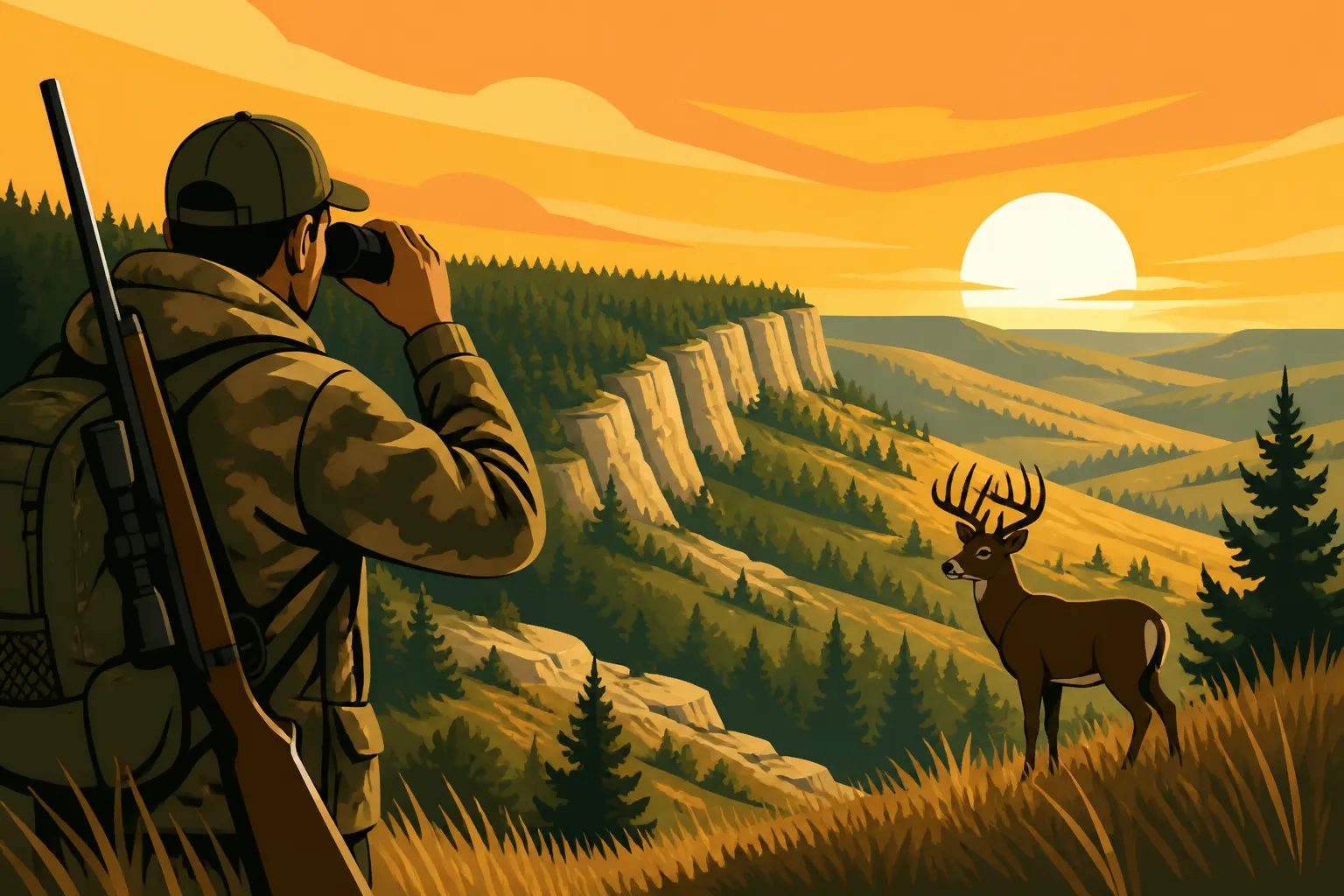
Spot-and-stalk is arguably the most effective method for hunting big game in the Pine Ridge, especially for mule deer and elk, but it can also be adapted for turkeys and even whitetails on the more open slopes. It requires a keen eye, quality optics, and a deep understanding of the terrain. The process starts with identifying high vantage points that offer expansive views of canyons, ridges, and basins. Spend significant time glassing – slowly and methodically – picking apart every patch of cover, looking for a flick of an ear, a patch of hide, or the distinct outline of an antler. Using a reliable mapping app like those available through GoHunt can help you identify these key glassing points and potential travel corridors from home.
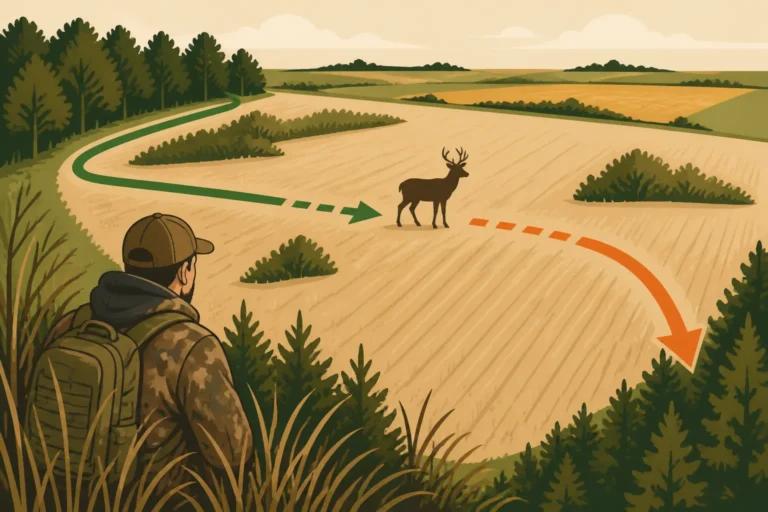
Once you spot an animal, the real work begins. The stalk is a chess game against the animal's senses and the terrain. Plan your route carefully, using topographical features like ridges, draws, and timber to conceal your approach. Always pay attention to the wind, as it can swirl unpredictably in the canyons, often betraying your position. Expect the stalk to take longer and be more physically demanding than you anticipate. You might need to backtrack, take detours, and crawl through dense brush. Remember to account for the animal's likely escape routes and plan to intercept it if it moves. Patience is critical; rushing a stalk is the quickest way to blow it. A good pair of binoculars and a spotting scope, mounted on a tripod, are invaluable tools for this type of hunting, allowing you to accurately judge animals from a distance and plan your move.
Still-Hunting and Ambush Strategies
While spot-and-stalk is key for open areas, the dense timber and thick draws of the Pine Ridge often call for still-hunting or setting up ambushes. Still-hunting involves moving very slowly and deliberately through the habitat, pausing frequently to observe, listen, and scan for game. The goal isn't to cover ground quickly, but to move quietly enough to surprise game that might be bedded or feeding nearby. Focus on known travel corridors, bedding areas, and feeding zones, particularly during the middle of the day when animals are less active. Pay close attention to wind direction and thermals, which can dictate where game beds and how they move. Moving uphill in the morning and downhill in the afternoon often aligns with rising and falling thermals, helping to carry your scent away from animals.
Ambush strategies involve identifying pinch points, saddles, creek crossings, or funnels that deer, elk, or turkeys are likely to use, and then setting up in a concealed position to wait for them. This might mean finding a natural blind along a well-used game trail, or even constructing a makeshift ground blind in a strategic location. Our article on Still-Hunting Nebraska Cedar Draws offers some principles that can be adapted for the Pine Ridge's unique timber and brush. Pre-season scouting is invaluable for identifying these key ambush locations. Use trail cameras (where legal) to pattern animal movement, especially around food sources or water in drier periods. When choosing a setup location, always consider your shooting lanes, backdrop, and exit strategy.
Leveraging Calls in the Pine Ridge
Calling can be a highly effective tactic in the Pine Ridge, especially for turkeys, elk, and during the deer rut. For Merriam's turkeys, a mix of realistic hen yelps, clucks, and purrs can be very enticing. Often, soft, persistent calling works best, especially if you're trying to pull a tom uphill or across a canyon. Locator calls like owl hoots or crow calls are excellent for getting gobblers to sound off at first light, helping you pinpoint their roost location. During the fall, flock calls can bring in groups of birds, making for exciting encounters.
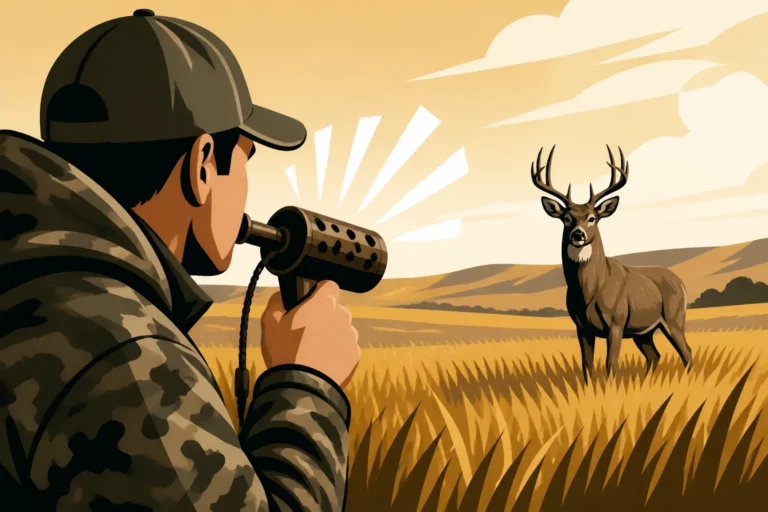
For deer, rattling antlers and grunt tubes can be deadly during the rut, particularly in late October and November. The Pine Ridge's broken terrain can carry sound surprisingly well, so adjust your calling volume accordingly. In open areas, a more aggressive rattling sequence might be effective, while in thick timber, softer, more subtle grunts and doe bleats might draw in a curious buck. Understanding Rattling and Grunting in Nebraska's Rut can give you an edge, even in this different environment. Elk calling, especially during the September archery season, is an adrenaline-pumping experience. Bugles, cow calls, and chuckles can be used to locate, challenge, and ultimately draw in a bull. The steep terrain and dense timber can make it challenging to pinpoint the exact location of a bugling bull, but it also provides excellent cover for a close-range setup. Practice your calls, understand the animal's vocalizations, and use them strategically to draw game into shooting range.
Accessing and Navigating Pine Ridge Public Lands
Finding quality hunting land can be one of the biggest frustrations for hunters, but the Pine Ridge offers significant public access, though it requires diligent research and careful navigation. Knowing where you can go and how to respect landowners is paramount to a successful and ethical hunt.
Key Public Hunting Areas
The Pine Ridge region is unique in Nebraska for having substantial blocks of public land, primarily managed by the U.S. Forest Service and the Nebraska Game and Parks Commission. The Nebraska National Forest at Halsey (Bessey Ranger District) and the Samuel R. McKelvie National Forest offer vast expanses of timber and grassland, though these are largely in the central Sandhills and not strictly within the Pine Ridge Escarpment itself. More specific to the Pine Ridge are areas like the Oglala National Grassland and specific tracts of the Nebraska National Forest (Pine Ridge Ranger District) near Chadron and Crawford. These areas comprise thousands of acres of rugged, breathtaking country where hunters can pursue deer, turkeys, and even elk. You'll also find numerous Wildlife Management Areas (WMAs) and Open Fields and Waters (OFW) tracts scattered throughout the region.
When planning your hunt, the Nebraska Public Access Atlas is your absolute best friend. This free resource, available online and in print, clearly delineates public hunting lands, OFW tracts, and specific regulations for each area. Many hunters use mapping apps like those from GoHunt or onX Hunt, which overlay public land boundaries onto satellite imagery, allowing for precise navigation and ensuring you stay on legal hunting ground. Be aware that public lands can be fragmented, with private land interspersed, so constant vigilance with your map and GPS is crucial to avoid trespassing. Remember that hunting pressure on easily accessible public land can be higher, so don't be afraid to put in the miles and explore deeper into the more remote sections.
Private Land Considerations and Respect
While public land offers great opportunities, a significant portion of the Pine Ridge is private property. Many of the large cattle ranches in the area can hold excellent game, especially elk and trophy deer. Gaining access to private land requires respect, good communication, and often, a little luck. Start by knocking on doors well in advance of the season, not just a day or two before. Introduce yourself, explain your intentions, and be prepared for rejection. Landowners often deal with numerous requests and may already have hunters or simply prefer not to allow access.
If granted permission, always clarify the exact boundaries you can hunt, where you can park, and any specific rules the landowner has (e.g., no vehicles off main trails, specific gates to close). A written permission slip can be a good idea for both parties, protecting everyone involved. Offer to help with chores, share some of your harvest, or simply send a thank-you card after the season. Building a good relationship can lead to future opportunities. Remember, gaining permission on private land is a privilege, not a right, and treating it with the utmost respect is essential to maintaining goodwill for all hunters. Familiarize yourself with Nebraska's posted-land and trespass rules before you go.
Specific Regulations to Know
Hunting in the Pine Ridge, like anywhere else in Nebraska, comes with specific regulations that hunters must adhere to. These can sometimes differ slightly from regulations in other parts of the state due to the unique wildlife populations and management goals. For instance, mule deer harvest in certain units of the Pine Ridge is restricted to antlered bucks with a specific antler point restriction (e.g., at least four points on one side, or a 20-inch spread). This is part of the strategy to manage Mule Deer Harvest Recovery in the state. Always consult the current Nebraska Game and Parks hunting guide for the most up-to-date information on season dates, bag limits, permit requirements, and antler point restrictions for the specific unit you plan to hunt.
For elk and bighorn sheep, permits are typically allocated through a lottery drawing, and the application periods are strict, usually in June. Non-resident hunter education and habitat stamp requirements also apply. Pay close attention to legal shooting hours, blaze orange requirements during certain seasons, and rules regarding baiting or the use of specific equipment. Remember, ignorance of the law is no excuse. A quick review of the regulations before each hunt can save you a lot of headaches and ensure a legal and ethical experience. The Public Access Atlas will also highlight any special regulations for specific public areas, such as weapon restrictions or non-toxic shot requirements in certain waterfowl-focused areas.
Essential Gear and Preparation for the Escarpment
The rugged and often remote nature of the Pine Ridge demands specific gear and a higher level of preparation than hunting the more forgiving landscapes of eastern Nebraska. Cutting corners on gear or physical fitness can quickly turn a challenging hunt into a dangerous one.
Optics and Rifle Considerations for Mountainous Terrain
In the vast, open, yet broken country of the Pine Ridge, quality optics are not a luxury; they are an absolute necessity. A good pair of 10×42 or 12×50 binoculars, preferably mounted on a tripod for steady glassing, will save your eyes and reveal game that would otherwise go unnoticed. A high-quality spotting scope (20-60x or similar) is invaluable for thoroughly picking apart distant slopes, confirming species, and judging the size of an animal before committing to a long, arduous stalk. A reliable rangefinder is also crucial for ethical shot placement in steep terrain, where distances can be deceptive. Many hunters also find a ballistic rangefinder or a rangefinding binocular extremely helpful for making precise calculations on angled shots.
For rifles, accuracy and reliable performance at extended ranges are key. While many calibers will work for deer, something that offers a flat trajectory and good energy retention, like a .270, .30-06, or a 6.5 Creedmoor, is a popular choice for the potential longer shots across canyons or open slopes. When considering your Rifle Setups for Nebraska's Open Country, remember that the Pine Ridge adds the element of elevation changes and variable wind. Ensure your rifle is zeroed correctly for the distances you anticipate shooting and practice shooting from various field positions, including prone with a bipod or using shooting sticks, which are often necessary on uneven terrain. A lightweight yet durable rifle with a good quality scope featuring clear glass and repeatable turrets will serve you well.
Footwear and Clothing for Variable Conditions
Your feet will take a pounding in the Pine Ridge, so investing in high-quality, comfortable, and supportive boots is critical. Look for boots that offer excellent ankle support, good traction on rocky and steep terrain, and waterproof capabilities. While our guide on Boots for Walking Nebraska Grass and Sand offers good advice, prioritize features for uneven, often loose, and sometimes muddy ground. Break your boots in well before your hunt to avoid painful blisters.
Layering is the name of the game for clothing in the Pine Ridge. The weather can change dramatically from morning to midday, and from the bottom of a canyon to the top of a ridge. Start with a good moisture-wicking base layer, add insulating mid-layers (fleece or down), and top it off with a waterproof and windproof outer shell. This allows you to adjust your clothing as your activity level changes or as the weather dictates. Even on mild days, carrying a lightweight puffy jacket or extra insulation can be a lifesaver if you get stuck waiting for an animal or encounter an unexpected cold front. For specific guidance on dealing with the elements, refer to Clothing for Nebraska Wind and Cold. Don't forget durable brush pants or gaiters to protect your legs from thorns and sharp rocks.
Navigation, Safety, and Emergency Planning
Given the remote and rugged nature of the Pine Ridge, proper navigation and safety planning are paramount. Always carry a reliable GPS unit or a smartphone with downloaded offline maps (such as those provided by GoHunt's app or onX Hunt). Do not rely solely on cellular service, as coverage is often spotty or nonexistent in many areas. A physical compass and paper map are excellent backups. Before you head out, tell someone exactly where you are going and when you expect to return.
Beyond navigation, a comprehensive first-aid kit is essential, equipped for everything from cuts and scrapes to more serious injuries. Carry enough water for the day, and then some, especially in warmer weather, and consider a water filter or purification tablets. Other critical safety items include a headlamp, fire-starting materials, a multi-tool, and an emergency shelter like a space blanket or lightweight tarp. If you're venturing deep into remote areas, a satellite messenger device can literally be a lifesaver for communicating in emergencies when cell service fails. Know your limits, both physically and in terms of daylight, and don't take unnecessary risks. The Pine Ridge is beautiful, but it demands respect and preparedness.
| Species | Preferred Habitat | Common Hunting Tactics | Key Gear Considerations |
|---|---|---|---|
| Mule Deer | Open ridges, ponderosa stands, broken terrain | Spot-and-stalk, still-hunting | High-power binoculars, spotting scope, flat-shooting rifle |
| Whitetail Deer | Thick draws, creek bottoms, dense timber | Still-hunting, ambushing, rattling | Good camouflage, grunt tube, patience |
| Merriam's Turkey | Ponderosa pine forests, grassy slopes | Locating calls, soft hen calls, decoys | Shotgun with tight choke, good hiking boots |
| Elk | Remote, rugged canyons, extensive timber | Spot-and-stalk, bugling, cow calling | Premium optics, powerful rifle, physical fitness |
| Bighorn Sheep | Steep, rocky cliffs and escarpments | Extensive glassing, careful stalking | Top-tier optics, accurate rifle, extreme fitness |
Disclaimer
Please remember that hunting regulations and conditions can change. Always consult the latest Nebraska Game and Parks Commission regulations and advisories before planning any hunt. This guide is for informational purposes only and does not substitute for official resources or personal scouting.