Hunting Ducks in a Nebraska High Plains Zone
Hunting ducks in the Nebraska High Plains Zone can be a truly unique experience, but it also comes with its own set of challenges, from understanding specific regulations to adapting to the vast, open landscapes. Many hunters get frustrated trying to figure out which rules apply where, or how to effectively hunt in areas that don't look like your typical marsh or river bottom. This comprehensive guide will walk you through everything you need to know to successfully pursue waterfowl in Nebraska's High Plains, ensuring you're prepared for the terrain, the weather, and the birds.
Understanding the Nebraska High Plains Waterfowl Zone
Nebraska is divided into distinct waterfowl zones, and knowing which one you're in is absolutely critical for staying legal and successful. The High Plains Zone, generally encompassing the western portion of the state, has specific season dates and bag limits that differ from the Central and Low Plains zones. Ignoring these differences can lead to missed opportunities or, worse, game violations.
Defining the High Plains Zone Boundaries
The Nebraska Game and Parks Commission (NGPC) clearly defines the boundaries for each waterfowl zone. The High Plains Zone typically covers the area west of a line beginning at the South Dakota border, running south along US Highway 183 to US Highway 20, then west to US Highway 283, south to Nebraska Highway 92, east to Nebraska Highway 2, and finally south along Nebraska Highway 2 to the Kansas border. This vast area includes the expansive Sandhills, the Panhandle, and a significant portion of the western agricultural lands. Unlike the more populated eastern zones, this region is characterized by its wide-open spaces, numerous stock ponds, sandhill lakes, and major rivers like the North Platte and the Niobrara. It’s a different world out here, with different hunting dynamics. You can always check the latest Public Access Atlas from the NGPC for precise boundaries and public hunting opportunities.
Season Dates and Bag Limits in the High Plains Zone
One of the primary reasons the zones exist is to manage waterfowl populations effectively and provide diverse hunting opportunities across the state. The High Plains Zone often has later opening dates for duck season compared to other zones, to coincide with the later arrival of migrating birds in these western reaches. Bag limits can also vary, sometimes including different restrictions on specific species of ducks. For example, pintails, canvasbacks, or scaup might have different daily limits based on current population assessments. Always, and I mean always, double-check the current year's Nebraska Waterfowl Seasons and Zones regulations before you head out. These dates can shift slightly year to year based on federal frameworks and state population data, so relying on memory from last season is a recipe for trouble. Understanding these nuances is crucial for any ethical and successful hunt.
Key Tactics for High Plains Duck Hunting
Hunting ducks in the High Plains isn't like hiding in a cattail marsh in the eastern part of the state. The open landscape, diverse water sources, and often challenging weather require a different approach. Success out here hinges on keen scouting, adaptable setups, and precise calling.
Scouting Remote Water Sources and Flight Paths
The vastness of the High Plains means that finding birds often comes down to covering a lot of ground and focusing on less obvious water sources. While larger reservoirs like Lake McConaughy certainly hold ducks, many of the best hunts happen on smaller, out-of-the-way places. Think cattle tanks, isolated sandhill lakes, irrigation pits, or small creek bends away from major roads. Ducks in these areas often see less pressure.
Start your scouting by looking at aerial maps, using resources like GoHunt's mapping tools, to identify potential water. Then, it's time for boots-on-the-ground recon. Drive county roads, use binoculars to scan distant ponds, and watch for bird activity at dawn and dusk. Look for birds feeding in stubble fields and try to determine their roost-to-field flight lines. Often, ducks will stage on a larger body of water and then fly out to feed in grain fields. Understanding these patterns is key to intercepting them. Pay attention to wind direction, as ducks almost always land into the wind, which will dictate your setup later. This methodical scouting effort before opening day is perhaps the most critical step, especially on public ground, where finding areas that see fewer hunters can make all the difference.
Decoy Spreads and Concealment in Open Country
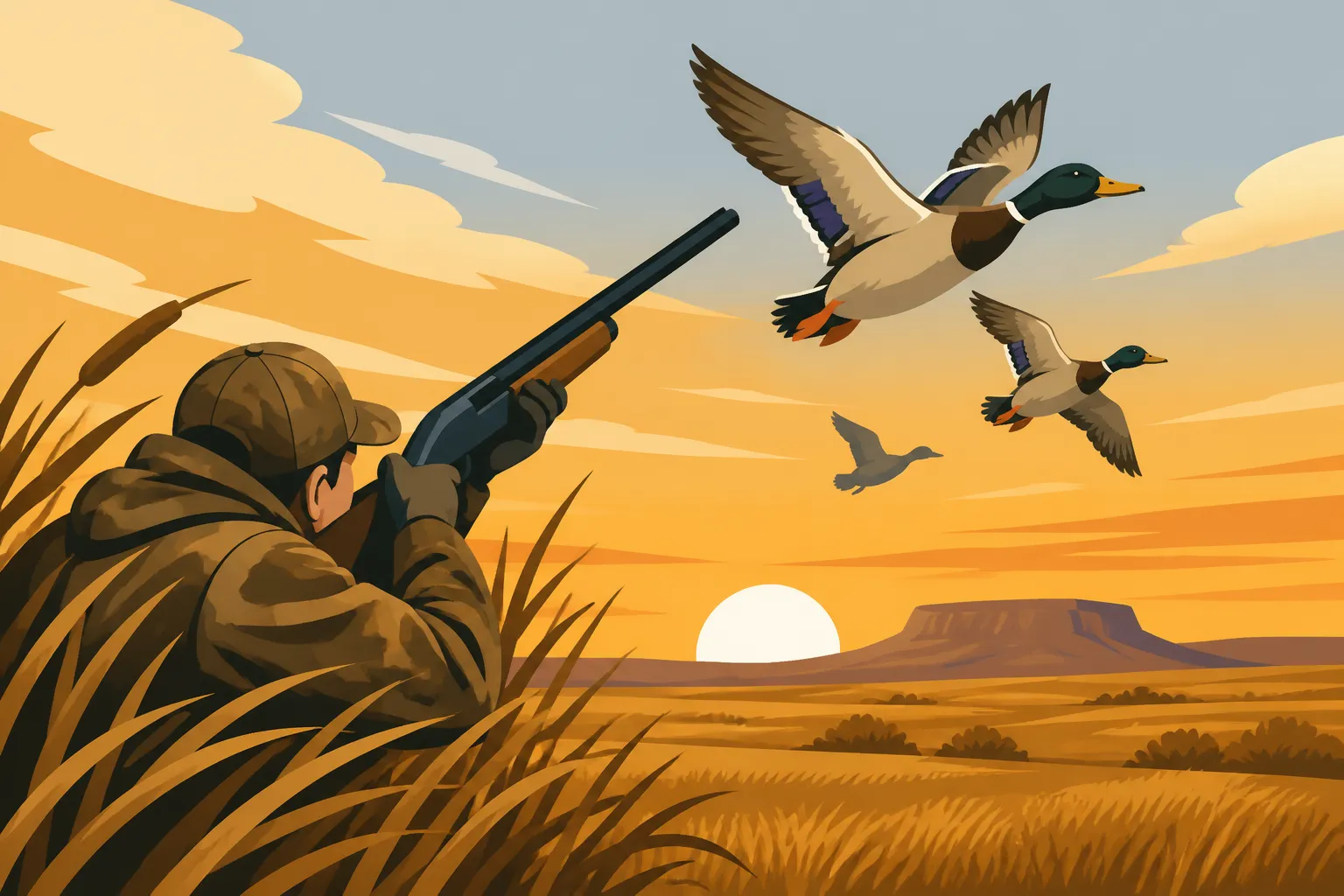
Once you've found where the ducks want to be, setting up effectively in the open High Plains terrain is your next challenge. Concealment is paramount, especially when hunting smaller, unblinded water sources. Layout blinds are your best friend here, especially if you're hunting harvested cornfields near a water source or on dry field edges. Brush them in meticulously with local vegetation – corn stalks, stubble, prairie grass – to blend into the surroundings. Remember, ducks have incredible eyesight, and a poorly brushed blind is a dead giveaway. For larger water bodies, you might utilize natural cover like cattails, brushy shorelines, or even portable panel blinds.
Your decoy spread should reflect the species you're targeting and the size of the water. For smaller ponds, a conservative spread of a dozen mallards and a few pintails or wigeon often works well. In larger water, you might need more, perhaps even a few full-body decoy spreads for geese if Canada geese are also in the area, to add drawing power. Motion decoys, like spinning-wing decoys, can be incredibly effective in the open, often attracting birds from long distances, but always check current regulations, as rules for their use can change or be restricted in certain areas. Remember that the Nebraska wind can be relentless, so ensure your decoys are well-anchored to prevent them from blowing away or bunching up unnaturally.
Effective Calling Strategies for High Plains Ducks
Calling in the High Plains is often different from calling in timber or river bottoms. Here, the sound travels far in the open air, and ducks might be more wary due to less natural cover. Your calling strategy needs to be adaptable. Start with confident, pleading hail calls to get their attention if birds are distant. As they approach, soften your calls. A series of soft quacks, contented feed chuckles, and maybe a low greeting call can be more effective than aggressive, high-volume calling, especially if the birds are already committed.
Focus on realism. Don't overcall. If the ducks are locked up and coming in, put the call down and let the decoys do their work. Overcalling can flare wary birds. Knowing when to call and, more importantly, when to be quiet, is a skill developed over time. Experiment with different calls – a good mallard call is essential, but adding a pintail whistle or a wigeon call can sometimes make your spread sound more inviting and natural, especially for the diverse waterfowl of the Central Flyway in Nebraska.
Gear Essentials for High Plains Duck Hunters
The gear you bring to the High Plains needs to stand up to the elements and fit the hunting style. From robust clothing to specific decoy setups, having the right equipment makes a significant difference in comfort and success.
Clothing for Variable Nebraska Weather
The High Plains are known for their extreme and often unpredictable weather. You can start a morning with calm, crisp air and end up battling a blizzard or high winds by afternoon. Layering is not just a suggestion; it’s a survival strategy. Start with a good moisture-wicking base layer, add insulating mid-layers like fleece or down, and top it off with a waterproof and windproof outer shell. Your outer layer should also be camouflaged or in natural tones to blend with the sparse landscape.
Warm, waterproof boots are non-negotiable, especially if you plan on wading into icy stock ponds or muddy margins. A good pair of insulated waders for Nebraska marsh hunting, even if it's just a shallow water setup, can save your hunt if temperatures drop or you need to retrieve a downed bird from deeper water. Don't forget a warm hat, gloves, and a face mask. The windchill out here, particularly after a cold front pushes through, can be brutal and quickly lead to hypothermia if you’re unprepared.
Decoy Rigs and Portable Blinds
As mentioned earlier, layout blinds are often key for concealment in the open High Plains. Look for models that are easy to brush in and can withstand the notorious Nebraska wind. Many hunters prefer a low-profile layout blind that allows them to lie flat and disappear into the landscape. For your decoys, investing in quality rigs that are easy to deploy and retrieve, and can stand up to repeated abuse, is wise. Texas rigs or short-line systems are popular for their tangle-free nature and ease of storage. Since you might be hunting various water depths, adjustable decoy lines can be very handy.
For jump shooting ducks on smaller streams or secluded ponds, you might opt for a lighter, more mobile setup. A simple ghillie suit or natural-patterned parka might be enough to break up your outline as you approach cover. The key is portability and efficiency, allowing you to move quickly if the birds aren't cooperating in one spot.
Firearms, Ammunition, and Electronics
For duck hunting, a reliable 12-gauge shotgun is the standard, though a 20-gauge can also be effective. Ensure your shotgun is choked appropriately for the range you expect to shoot. Modified or improved cylinder chokes are common for decoying birds. When it comes to ammunition, nontoxic shot is legally required for all waterfowl hunting throughout Nebraska, including on federal lands and many Wildlife Management Areas. Steel shot is the most common and affordable option, but bismuth or tungsten-iron blends offer better performance at longer ranges, though at a higher cost. Always match your shot size to the target species; larger shot (like #2 or BB) for big ducks like mallards, and smaller shot (like #3 or #4) for teal and smaller species.
In terms of electronics, a reliable GPS unit or a mapping app like GoHunt on your smartphone is incredibly useful for navigating public lands and ensuring you stay within legal boundaries. The Nebraska Public Access Atlas Mobile App is another invaluable resource. Battery packs are a must for keeping devices charged, especially in cold weather where batteries drain faster. A good headlamp with a red light setting for pre-dawn setups is also essential. Remember to purchase your Nebraska Federal Duck Stamp Cost and complete your Nebraska HIP Registration Requirement before you head afield.
Navigating Challenges and Maximizing Success
Hunting ducks in the High Plains Zone will inevitably present challenges. From adapting to changing weather patterns to dealing with hunting pressure, being prepared for these obstacles will improve your chances of success.
Adapting to Weather and Migration Patterns
The success of a High Plains duck hunt is often dictated by the weather. Cold fronts, strong winds, and snow can push new birds into the area, making hunting opportunities explode. Conversely, mild weather can keep birds spread out and less active. Pay close attention to long-range weather forecasts and migration reports. When a major cold front is predicted, that’s often the time to be in the blind.
Ducks migrating through Nebraska are driven by weather further north. Early season might see more local birds and early migrants like teal and pintails. As winter approaches, you’ll start seeing more mallards, gadwalls, and divers. Understanding these general migration patterns for Waterfowl of the Central Flyway in Nebraska can help you predict what species might be showing up in your area and adjust your tactics accordingly. Be ready for freezing temperatures; ice can shut down smaller ponds quickly, forcing birds onto larger, still-open waters.
Managing Hunting Pressure and Public Land Access
While the High Plains often feels vast and empty, popular public hunting areas, especially those around major reservoirs or known waterfowl magnets, can still see significant hunting pressure, particularly on opening weekends. Scouting is your best defense against crowded spots. Look for areas slightly off the beaten path, those that require a bit more walking, or less obvious water sources. Sometimes, simply walking a few hundred yards further from the parking area can put you into unpressured territory.
Utilizing the Nebraska Public Access Atlas and its digital counterpart to identify public lands, including Open Fields and Waters tracts, is vital. Remember that while these lands offer great opportunities, they also come with specific rules. Always verify regulations for each specific WMA or Open Fields tract you plan to hunt, as some may have unique restrictions on access, shooting hours, or even decoy types. For example, some areas might have specific rules for Hunting Ducks in a Nebraska High Plains Zone that differ slightly from a statewide regulation. Don't be afraid to try "less glamourous" hunting methods, like jump shooting the Platte River or smaller creeks, which can be surprisingly effective away from the main crowds.
Ethical Shot Placement and Game Recovery
Given the open nature of the High Plains, long shots can be tempting, especially when birds are circling high. However, ethical hunting demands that you only take shots within your effective range, ensuring a clean kill. For most duck hunters, this means shots within 30-40 yards. Practice your shooting before the season to know your limits and the pattern of your chosen ammunition.
Once a bird is downed, swift and efficient recovery is paramount. Ducks can glide a surprising distance, and in dense prairie grass or reeds, a lost bird is a tragedy. A good retrieving dog is invaluable in this terrain, but if you don't have one, mark the bird's fall precisely. Bring a pair of binoculars to watch where it lands, and then walk directly to that spot. If hunting over water, waders are crucial for ensuring you can retrieve your bird quickly before it drifts away or dives. Always err on the side of caution when considering a shot; a missed shot is far better than a wounded and lost bird.
Disclaimer
Hunting is an inherently dangerous activity. Always prioritize safety, including firearm safety, knowing your target and what lies beyond, and being aware of your surroundings. Regulations can change, so always consult the latest Nebraska Game and Parks Commission regulations before engaging in any hunting activity. This guide is for informational purposes only and does not supersede official state regulations.