Sandhills Unit Mule Deer Harvest
Hunting mule deer in Nebraska's vast Sandhills Unit is a challenge many hunters dream of, but the reality of this expansive, often unforgiving landscape can quickly temper expectations. It's easy to feel overwhelmed by the sheer scale, the unpredictable weather, and the elusive nature of these magnificent animals. This comprehensive guide will pull back the curtain on understanding mule deer harvest trends in the Sandhills, giving you the insights and strategies needed to increase your odds of success in this truly unique hunting environment.
Understanding the Sandhills Unit's Unique Challenges
The Sandhills Unit isn't just another hunting area; it's a world unto itself. Spanning hundreds of thousands of acres of rolling grasslands, interspersed with canyons, wet meadows, and occasional stands of trees, it presents a distinct set of challenges for anyone pursuing mule deer. Unlike whitetails in dense timber, these mule deer often live in plain sight, yet are incredibly difficult to approach.
The Vastness and Terrain
Imagine an ocean of grass, stretching to the horizon, dotted with thousands of small, sandy hills and depressions—that's the Nebraska Sandhills. It's easy to get turned around, and the terrain, while seemingly gentle, can quickly become grueling. You might walk a mile and only gain a few hundred yards of forward progress due to navigating the constant ups and downs. The sandy soil, while beautiful, saps energy quickly, making every step an effort. This vastness means deer can disappear over a ridge and travel a significant distance before you can relocate them, which can be a real frustration when you've finally spotted a nice buck. It demands a different kind of endurance and navigation skill than most other hunting environments.
Mule Deer Behavior in Open Country
Mule deer in the Sandhills are creatures of their environment, adapted to survive in open country where cover is minimal. Their primary defense is their incredible eyesight and their ability to use the undulating terrain to their advantage. They don't typically "hide" in dense thickets; instead, they often bed on the leeward side of a ridge, soaking up the sun and watching their backtrail. When spooked, they'll often "crater" – running a short distance, then stopping to look back, giving you a chance if you're quick and can utilize the terrain to cut the distance. Understanding this behavior is critical. You won't find them in the same river bottom thickets as a whitetail, making traditional tree stand tactics largely ineffective here. Instead, you'll be constantly Glassing the Nebraska Sandhills for Mule Deer and relying on stealth.
Weather and Environmental Factors
Nebraska weather, especially in the Sandhills, can be wildly unpredictable. A beautiful, calm morning can quickly turn into a howling gale by afternoon, or a scorching August day can plummet into a near-freezing evening. Wind is a constant companion on the plains, and it impacts everything from deer movement to your scent dispersal. Rain can turn sandy two-tracks into impassable quagmires, while prolonged drought can push deer to specific water sources, altering their usual patterns. Understanding Wind and Thermals in the Sandhills is not just important; it's absolutely essential for any successful stalk. These environmental factors aren't just nuisances; they actively dictate the deer's daily routines and, by extension, your hunting strategy.
Analyzing Sandhills Unit Mule Deer Harvest Trends
Looking at harvest data isn't just for statisticians; it's a powerful tool for hunters. It can reveal patterns, highlight good years, and help you understand the health of the herd. For the Sandhills Unit, these trends are particularly telling, offering clues to where you might focus your efforts and what to expect when you finally get out there.
Historical Harvest Data and Fluctuations
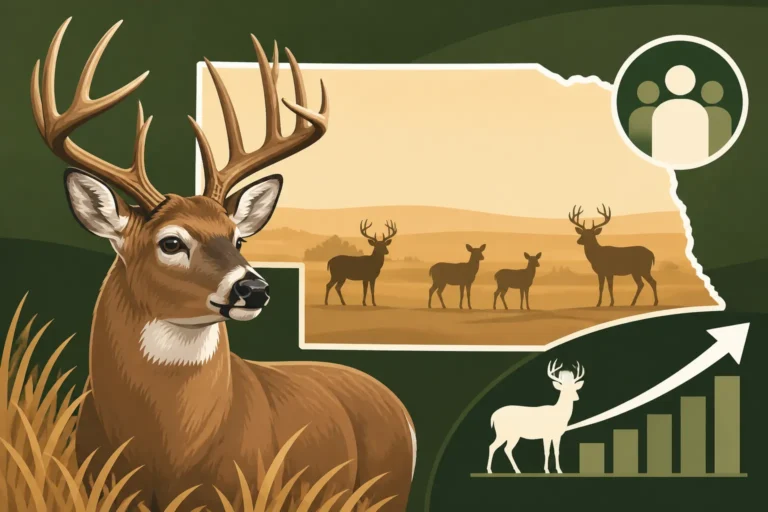
The Sandhills Unit has seen its share of ups and downs in mule deer harvest numbers over the years. Like any big game population, these numbers are influenced by a multitude of factors, from habitat conditions and winter severity to disease outbreaks and hunting pressure. Historically, the Sandhills has been a strong producer of quality mule deer, often requiring hunters to draw a coveted permit through the Nebraska Big Game Draw. When you look at the long-term charts, you'll notice years with significant dips, which might correspond to particularly harsh winters that increase fawn mortality, or widespread EHD (Epizootic Hemorrhagic Disease) outbreaks. Conversely, a string of mild winters and good moisture can lead to a boom in deer numbers and, consequently, higher harvest success. Services like GoHunt are fantastic for accessing and visualizing historical harvest data, allowing you to quickly spot these fluctuations.
Factors Influencing Harvest Success
Several key elements play into the Sandhills mule deer harvest success beyond just the number of deer on the landscape. Hunter effort, for one, is huge. This isn't a "drive around and shoot one" kind of place; it demands physical effort, patience, and skill. The weather during the season also matters immensely; a warm, dry fall might make deer patterns predictable around water, while an early snow could concentrate them in sheltered areas. Tag allocation and permit types also impact reported harvest numbers. For instance, the number of Nebraska Antlerless-Only Deer Permits issued in a unit can affect the overall harvest composition. Additionally, the increasing use of advanced optics and e-scouting tools might be allowing more hunters to be efficient in finding and harvesting deer, even if the overall population isn't dramatically increasing.
Here's a breakdown of common factors influencing harvest success:
| Factor | Impact on Harvest | Hunter Consideration |
|---|---|---|
| Weather Conditions | Extreme heat or cold, heavy wind, or snow can alter deer movement and hunter comfort/endurance. | Monitor forecasts; adapt tactics (e.g., focus on sheltered areas in wind, water sources in heat). |
| Habitat Quality | Availability of food, water, and cover directly impacts deer health and numbers. | Scout for prime habitat areas; look for changes due to drought or land use. |
| Disease Outbreaks | EHD or CWD can cause significant population declines, particularly in localized areas. | Be aware of current reports from Nebraska Game and Parks; adjust expectations if an area has been hit. |
| Hunting Pressure | High pressure can make deer more nocturnal or push them to less accessible areas. | Use The Nebraska Public Access Atlas Mobile App to find less-pressured public land; consider midweek hunts. |
| Hunter Skill & Effort | Glassing proficiency, stalking ability, and physical fitness are paramount in open country. | Practice shooting, improve physical conditioning, hone glassing techniques, study mule deer behavior. |
| Permit Availability | The number of permits issued directly correlates with the potential harvest. | Apply strategically; consider drawing a preference point to increase future odds. |
Interpreting Current Reports and Drawing Insights
When you look at the latest Sandhills Unit mule deer harvest reports from Nebraska Game and Parks, don't just glance at the raw numbers. Dig deeper. Look at the breakdown by weapon type (archery, firearm, muzzleloader) and sex (buck, doe). A consistent decline in buck harvest, for example, might suggest lower recruitment or higher pressure on mature animals. Conversely, a stable doe harvest might indicate a healthy breeding population. Pay attention to success rates – the percentage of hunters who fill their tag. A low success rate doesn't always mean fewer deer; it might mean tougher hunting conditions or a younger hunter base. Cross-reference these reports with your personal scouting notes or information gathered from online forums. Many hunters use sophisticated tools, like those offered by GoHunt, to not only view historical data but also to project draw odds and analyze unit trends, giving them a significant edge in planning their hunt.
Strategic Planning for a Successful Hunt
Hunting the Sandhills for mule deer isn't something you just "wing." It requires meticulous planning, a solid understanding of the terrain, and a commitment to adapting your strategy to the conditions. Every successful hunt starts long before you step foot in the field.
Pre-Season Scouting and E-Scouting
Given the sheer size of the Sandhills Unit, boots-on-the-ground scouting can be daunting, but it's invaluable. Focus on finding good glassing points, identifying natural funnels between hills, and locating potential bedding areas. Look for rubs and scrapes, though they might be less pronounced than in a whitetail woods. Pay close attention to water sources and any agricultural interfaces, as these can be key attractants for deer.
E-scouting has revolutionized planning for vast, open areas like the Sandhills. Using satellite imagery and topographical maps, you can identify potential travel corridors, secluded basins, and strategic ridges without ever leaving your home. Platforms like GoHunt, with their detailed maps and layers, can help you pinpoint public access areas and understand the nuances of the terrain. Look for areas with a mix of grass and some scattered brush or cedar draws; these often hold deer. Pay attention to how the wind will interact with the topography. While you won't find significant elevation changes, the subtle shifts in the Sandhills can create micro-thermals and wind currents that deer exploit daily.
For public land access, understanding Reading the Nebraska Public Access Atlas is absolutely critical. It will show you all the Open Fields and Waters tracts and Wildlife Management Areas where you can legally hunt.
Effective Hunting Tactics for Mule Deer
Once you're in the field, your tactics need to match the environment. Forget crashing through the woods; here, it's all about patience, glassing, and calculated moves.
- Spot-and-Stalk: This is the bread and butter of Sandhills mule deer hunting. Find a good vantage point, often a high ridge, and systematically glass the surrounding terrain. Take your time, letting your binoculars do the walking. Once you spot a deer, plan your approach carefully, using the contours of the land, any available brush, and the wind to remain undetected. Remember, Closing the Last Hundred Yards on Sand is often the trickiest part, as every rustle of your clothes or crunch of sand can carry far in the quiet prairie.
- Decoying: While more common for antelope, decoying a rutting mule deer buck can sometimes work, especially if you've already tried a stalk and he's hung up out of range. A realistic mule deer decoy, often used in conjunction with rattling, can sometimes draw a curious or territorial buck closer. This tactic requires patience and the right situation, but it can be incredibly exciting.
- Still-Hunting Edges: While the Sandhills are open, there are subtle "edges" where cover meets open feeding areas, or where different types of vegetation transition. Still-hunting these edges, moving slowly and deliberately, pausing to glass frequently, can be productive, especially during low light conditions when deer are moving to and from bedding areas. Consider Where Mule Deer Feed at First Light and plan your approach accordingly.
- Ground Blinds: In specific situations, such as near a reliable water source during dry conditions, or along a known travel corridor, a well-concealed ground blind can be effective. Ensure it's brushed in thoroughly and set up well in advance to allow deer to get used to its presence. These are particularly useful if you're trying Using a Ground Blind on Nebraska Public Ground.
Remember, Rifle Setups for Nebraska's Open Country will be geared towards accuracy at longer ranges, and your Optics for Glassing the Nebraska Sandhills will be your most important tool.
Post-Harvest Considerations in Remote Terrain
Harvesting a mule deer in the Sandhills is a significant accomplishment, but the work isn't over when the shot is fired. Often, you'll be miles from the nearest road, facing a long pack-out over challenging terrain.
- Field Dressing and Cooling: In warm weather, especially during early seasons, prompt field dressing and cooling are paramount to preserve the meat. The gutless method can be a lifesaver, allowing you to break down the animal into manageable pieces without moving the entire carcass. Having good game bags and a plan for ice are crucial. Consider the advice in Field Dressing and Cooling Game in Warm Weather if hunting during warmer periods.
- Packing Out: Invest in a good frame pack. Quartering the animal and making multiple trips is often the most realistic approach, especially if hunting solo. The sandy hills will test your stamina, so ensure you're physically prepared. Knowing how to use landmarks or GPS to mark your kill site and your vehicle is essential to avoid getting lost. This can be as challenging as Getting a Deer Out of a Nebraska Sandhills Basin.
- Navigating Public Access: If you're on public ground, respect the rules regarding vehicle use. Many tracts are walk-in only, meaning your pack-out will be entirely on foot. Even on private land with permission, vehicle access might be limited to main trails, making a long haul necessary. Always know your Entry and Exit Routes on Flat Farm Ground or, in this case, the Sandhills.
The Sandhills Unit offers some of the most challenging and rewarding mule deer hunting in Nebraska. By understanding its unique environment, analyzing harvest trends, and meticulously planning your hunt, you significantly increase your chances of bringing home one of these majestic prairie monarchs.
Disclaimer
This article is for general informational purposes only and does not constitute professional advice. Laws, prices and regulations vary by location and change over time. Consult a qualified professional for guidance on your specific situation.