Where Nebraska Quail Are Densest
Hunting quail in Nebraska can sometimes feel like chasing ghosts – you know they're out there, but finding a consistent covey can be a real challenge if you don't know where to focus your efforts. This guide aims to demystify the search, helping you pinpoint the areas in Nebraska where bobwhite quail populations tend to be densest, offering insights into the specific habitats they favor and practical advice for increasing your chances of a successful hunt.
Understanding Nebraska's Bobwhite Quail Strongholds
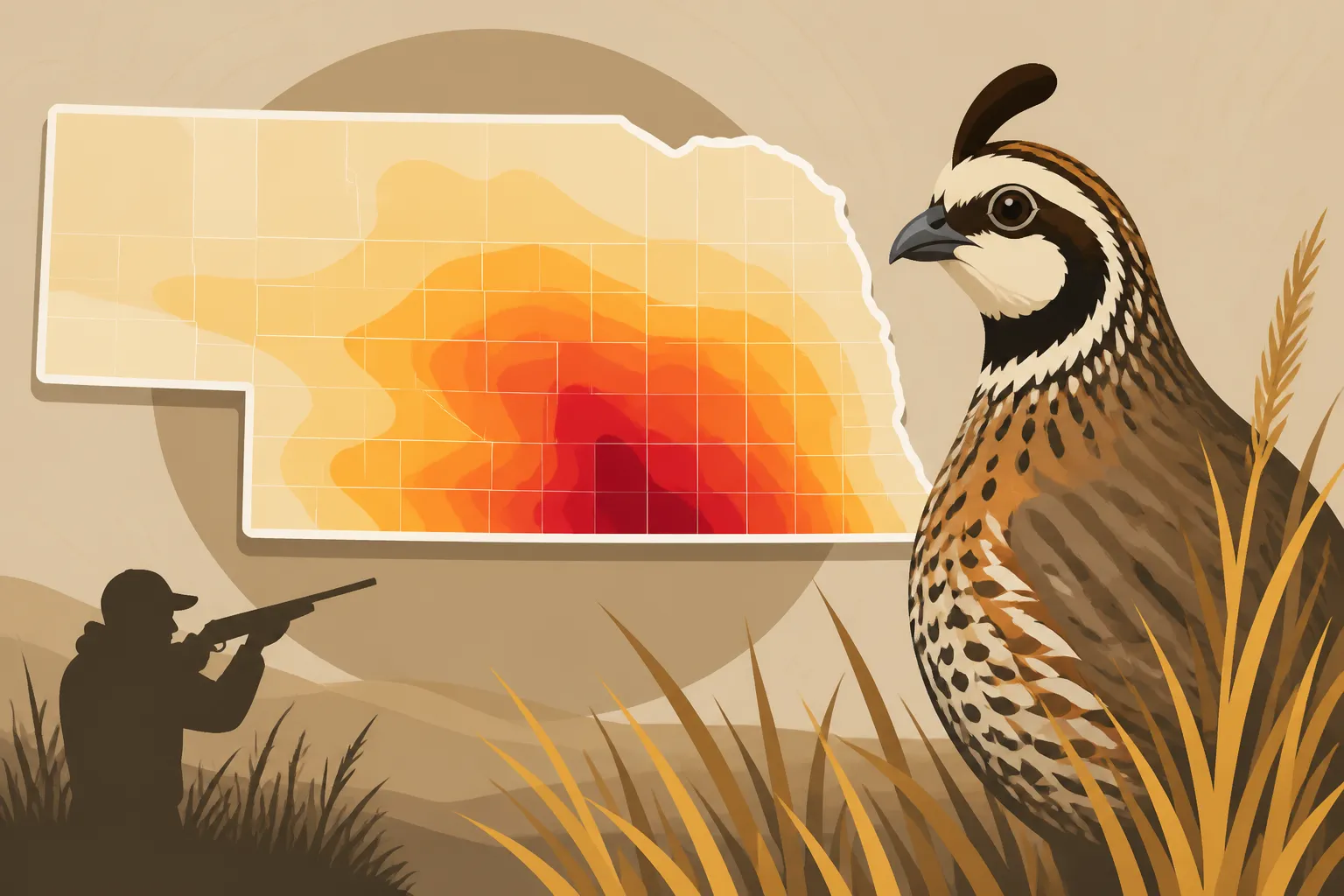
If you're looking for the sweet whistling call of a bobwhite quail, you'll want to point your truck east and south within Nebraska's borders. While quail populations can certainly be found in other parts of the state, especially where suitable habitat patches exist, the true strongholds for dense bobwhite numbers lie primarily in the southeastern and south-central portions of Nebraska. This isn't just a matter of historical distribution; it's a direct reflection of the land itself and how it's used.
Think of it this way: quail thrive in a specific blend of diverse, often messy, habitat. They aren't big fans of monoculture landscapes where one crop stretches for miles with little interruption. Instead, they need a mosaic of different cover types all within close proximity. That means a healthy mix of croplands for food, dense woody cover for protection from predators and harsh weather, and grassy areas for nesting and brooding. The southeastern part of the state, with its rolling hills, diverse farming practices, and extensive riparian corridors along smaller rivers and creeks, naturally offers more of this ideal mixed habitat than, say, the vast, open Sandhills or the intensively farmed irrigated regions.
The counties along the Missouri River in the southeast, and those stretching westward into the south-central region, consistently report the highest densities. This includes areas like Jefferson, Gage, Pawnee, Richardson, Nemaha, and Johnson counties, but also extending into places like Thayer, Fillmore, and Saline where pockets of excellent cover can be found. It’s not just a blanket coverage across these counties, but rather specific pockets within them that hold the birds. Knowing this general geographic tendency is your first step in narrowing down your search, whether you're looking at public access areas or seeking private land permission. Bobwhite Quail in Eastern Nebraska are a different beast than other upland birds found across the state, demanding a nuanced approach to scouting and hunting.
The Southeast Nebraska Advantage
The southeastern corner of Nebraska has historically been, and largely remains, the epicenter for robust bobwhite quail populations. This region benefits from a combination of factors that create near-perfect conditions for these small game birds. You'll find a higher prevalence of small woodlots, often comprising oak, hickory, and other hardwoods, intermixed with traditional row crops like corn and soybeans. More importantly, the prevalence of dense plum thickets, multiflora rose, and sumac provides critical escape cover that quail absolutely rely on. These thorny, tangled masses offer refuge from aerial predators like hawks and ground predators like coyotes, making them feel secure.
Beyond the woody cover, the agricultural practices here often leave more "edge" habitat – places where one type of cover transitions into another. Field edges aren't always cleaned up right to the fence row, allowing for weedy growth, shrubby strips, and old fencelines that serve as natural travel corridors and feeding areas. This patchwork quilt of habitat types is precisely what a quail covey needs within its home range, which might only be 10 to 40 acres. If you're driving through this region, look for those overgrown creek bottoms, abandoned farmsteads with dense cover, and neglected corners of fields; these are classic quail magnets.
South-Central Nebraska's Hidden Gems
While the southeast gets a lot of the spotlight, the south-central region of Nebraska, particularly areas bordering Kansas, also boasts significant quail numbers. This area, too, shares many of the habitat characteristics important to quail, albeit sometimes in a slightly different configuration. Here, you'll still find abundant agricultural lands, but often broken up by more extensive grass waterways, field borders, and CRP (Conservation Reserve Program) lands. These grassy areas, when managed with cover in mind, provide excellent nesting and brooding habitat.
The key here is often the presence of intermittent streams, small rivers, and their associated timbered or brushy drainages. These linear features cut through the agricultural landscape, creating vital travel corridors and offering that essential dense cover. Think about the tributaries feeding into larger rivers; these often have steep banks and tangled growth that tractors can’t easily navigate, leaving perfect pockets for quail. CRP Acres and Nebraska Bird Numbers have always had a significant impact, and quail are certainly beneficiaries when these lands are managed correctly. A tool like GoHunt can be incredibly helpful for identifying these types of features on a map, allowing you to narrow down potential hunting spots even before you step foot in the field.
The Habitat Components That Hold Bobwhites Tight
It’s one thing to know which region holds the most quail, but it’s another entirely to understand why those specific spots within the region are so good. Quail aren’t just randomly distributed; they are intensely tied to specific habitat requirements. If any one of these components is missing, or not in close enough proximity, the chances of finding a thriving covey diminish significantly. This means that even in a generally "good" quail county, you still need to be a savvy observer of the landscape to find the hot spots.
The Essential Mix: Food, Cover, and Water
At its core, a dense quail population relies on an accessible trifecta: food, cover, and water. These might seem obvious, but the type and arrangement of these elements are what truly matter.
- Food: Quail are primarily seed-eaters, with a preference for small grains, weed seeds, and insects (especially for chicks). This means agricultural fields, particularly those with corn, soybeans, or milo, are vital. However, it's the edges and unharvested portions of these fields, or the waste grain left behind, that are most important. Patches of ragweed, smartweed, and other common "weeds" are also powerhouse food sources.
- Cover: This is arguably the most crucial element. Quail need different types of cover for different purposes.
- Roosting Cover: Dense grasses or low, brushy areas where they can huddle together for warmth and protection at night.
- Escape Cover: Thorny, impenetrable thickets of plum, multiflora rose, osage orange, or dense red cedar where they can dive to escape predators. This cover needs to be within a short flight of feeding areas.
- Nesting and Brooding Cover: Taller, undisturbed grasses, often found in hayfields, pastures, or CRP lands, where hens can lay eggs and raise chicks.
- Water: While quail can get some moisture from dew and the food they eat, readily available surface water (like small puddles, creeks, or even heavy dew) is still important, particularly during dry spells or for young chicks.
The magic happens when these elements are all intertwined, like pieces of a puzzle. A fenceline lined with a plum thicket (escape cover) next to a harvested milo field (food) that borders a grassy ditch (roosting/nesting cover) is a textbook quail haven. It’s all about minimizing the distance a covey has to travel to meet its daily needs, thus reducing their exposure to predators.
The Importance of Edge Habitat and Weedy Field Borders
Many hunters overlook the humble field border, but for quail, it's prime real estate. Modern agriculture, with its massive fields and clean farming practices, often eliminates these vital transition zones. However, in those areas where landowners allow for a bit of "messiness" – a strip of unmowed grass, a line of volunteer sunflowers, or a brushy fenceline – quail will absolutely flock to it. These areas provide the perfect blend of cover and readily available weed seeds.
Consider a mature shelterbelt on a Nebraska farm. Quail Coveys in Nebraska Shelterbelts are a common sight, offering critical refuge. The edge where the trees meet the crops, often with some brushy undergrowth, is an ideal travel lane and feeding ground. This isn't just about protection; it's about accessibility. Quail don't like to expose themselves in wide-open spaces for long. They prefer to hug the edges, darting into fields to feed and then quickly retreating to the safety of dense cover. Learning to "read" these edges – identifying where different habitat types converge and overlap – is a skill that will dramatically improve your quail hunting success. Using aerial maps, like those available on platforms such as GoHunt, can help you spot these crucial transition zones from your computer before you even drive out there.
| Habitat Component | Ideal Characteristics for Quail | Importance |
|---|---|---|
| Woody Cover | Plum thickets, cedar, multiflora rose, sumac, brushy draws | Essential escape cover, predator protection, thermal regulation |
| Grassy Cover | Taller native grasses, CRP fields, hayfields, weedy ditches | Nesting, brooding, roosting, insect foraging |
| Food Sources | Waste grain (corn, milo, soybeans), ragweed, smartweed, insects | Primary energy source for survival and reproduction |
| Edge Habitat | Transition zones between crops, grass, and woody cover | Safe travel corridors, easy access to multiple resources |
| Water | Dew, small puddles, moist vegetation, seasonal creeks | Hydration, particularly for young birds and in dry periods |
Scouting for Success: Finding Those Elusive Coveys
Even armed with knowledge of prime regions and ideal habitat, the actual act of locating a covey of quail requires diligent scouting. Quail populations can fluctuate year to year based on weather, predation, and habitat changes, so what was a hot spot last season might be barren this year. This is where your boots-on-the-ground work, combined with modern tools, really pays off. Scouting Nebraska Public Ground Before Opening Day is crucial for any species, but especially for quail, which are so sensitive to habitat pockets.
Reading the Landscape and Interpreting Sign
Before hunting season even rolls around, spend time driving or walking potential areas. You're looking for the habitat components we just discussed. See a patch of gnarly plum thickets next to a cornfield with a grassy fenceline? That's a strong candidate. Notice a creek bottom choked with cedars and brush? Also a good sign. Don't just look for any cover; look for interconnected cover that allows birds to move safely.
Once you're on the ground, look for direct sign of quail. This can be subtle but is often present if birds are using an area.
- Droppings: Small, pellet-like droppings are a clear indicator. They're often found under roosting cover or near feeding areas.
- Feathers: Look for small, patterned feathers, especially around escape cover where birds might have molted or had a close call with a predator.
- Dusting Bowls: Quail, like many birds, create small depressions in soft dirt where they "dust bathe" to clean their feathers. These can often be found near the edge of cover.
- Tracks: While hard to spot in dense cover, small bird tracks in muddy or dusty areas can be a giveaway.
- Calls: If scouting pre-season, listen for the distinctive "bob-white!" call of the male. Hearing this is the ultimate sign of resident birds.
Walk slowly, pay attention to the details, and try to visualize how a covey would use the landscape to feed, water, and escape. This kind of nuanced observation will tell you more than any map alone.
Leveraging Technology and Local Knowledge
In today's world, you don't have to rely solely on driving dusty roads. Modern mapping applications are game-changers for quail hunters. Platforms like GoHunt allow you to overlay public and private land boundaries, view satellite imagery that highlights subtle habitat changes, and identify key features like timbered draws, waterways, and different crop types. You can mark potential hotspots, plan your routes, and even track your progress in the field. This can save you countless hours of aimless wandering, helping you to focus your efforts on the highest probability areas.
Beyond technology, local knowledge is invaluable. Talk to farmers, landowners, and even other hunters (if they're willing to share!). Farmers, in particular, spend countless hours on their land and often know exactly where the quail reside, which draws hold birds, or if a particular field has a strong population. Respectful interaction and asking for permission can open up some incredible opportunities, especially in areas where public land might be limited. Getting Private Land Permission in Nebraska is often the key to finding truly untouched quail ground. Remember, a good hunting dog is also a crucial "technology" for finding those coveys once the season opens; their nose will do more work than any app could.
Seasonal Considerations and Quail Hunting Tactics
Quail hunting in Nebraska isn't a static endeavor; conditions change throughout the season, and your tactics should adapt accordingly. The birds' behavior is heavily influenced by weather, hunting pressure, and the availability of food and cover. Understanding these shifts can help you stay on birds from opening day through the late season. Upland Season Dates and Bag Limits for Nebraska will give you the official framework, but the birds themselves dictate the best approach.
Early Season vs. Late Season Strategies
Early Season (October – November):
When the season first opens, often in late October, the weather is usually milder, and cover is still relatively dense. Birds are often spread out, and coveys might be smaller as young birds are still maturing and haven't fully clumped together for winter. During this time, quail will often be found along field edges, in grassy waterways, and in lighter brush, taking advantage of abundant insect life and easily accessible seeds. Your hunting strategy should focus on covering ground, working those "soft" edges, and allowing your dog to range a bit wider. Birds might hold tighter, giving you good flush opportunities.
Late Season (December – January):
As winter sets in, things change dramatically. Temperatures drop, snow can cover food sources, and deciduous cover loses its leaves, forcing birds into the densest available thermal and escape cover. Think thick plum thickets, stands of red cedar, and heavy brush in creek bottoms. Food sources become more limited, so quail will concentrate around waste grain in harvested fields, especially those near heavy cover. Quail Winter Kill in Hard Years is a real threat, so birds will seek maximum protection. Your tactics should shift to systematically working these dense, protective covers. Expect birds to hold incredibly tight, requiring a slow, deliberate pace and a dog with a powerful nose and a willingness to push through heavy brush. Flushes might be explosive and close-quarters, demanding quick reflexes.
The Role of Weather and Its Impact
Weather is a huge factor in quail hunting.
- Warm, Dry Weather: In early season, warm, dry conditions can make scenting difficult for dogs. Birds may also be less active during the heat of the day, preferring to feed in the cooler mornings and evenings. Focus your efforts during these prime times.
- Cold Weather: Cold temperatures, especially with snow, force quail to conserve energy and seek heavy cover. They'll often feed quickly and then huddle deep in thickets. This can make them harder to find but often leads to better covey flushes once located, as they are less likely to run or flush wild.
- Wind: High winds can make quail nervous and difficult to hear. It also makes it harder for dogs to pick up scent. Try to hunt on the downwind side of cover, or look for areas that offer some protection from the wind. Reading Cover After a Nebraska Wind applies to all upland birds and is a skill every hunter should cultivate.
Adapting to these conditions means adjusting your speed, the type of cover you focus on, and how you work your dog. There's no single perfect day for quail hunting, but every day offers a chance to learn and adapt to what the birds are doing.
Disclaimer
This article is for general informational purposes only and does not constitute professional advice. Laws, prices and regulations vary by location and change over time. Consult a qualified professional for guidance on your specific situation.