Where Whitetails and Mule Deer Overlap
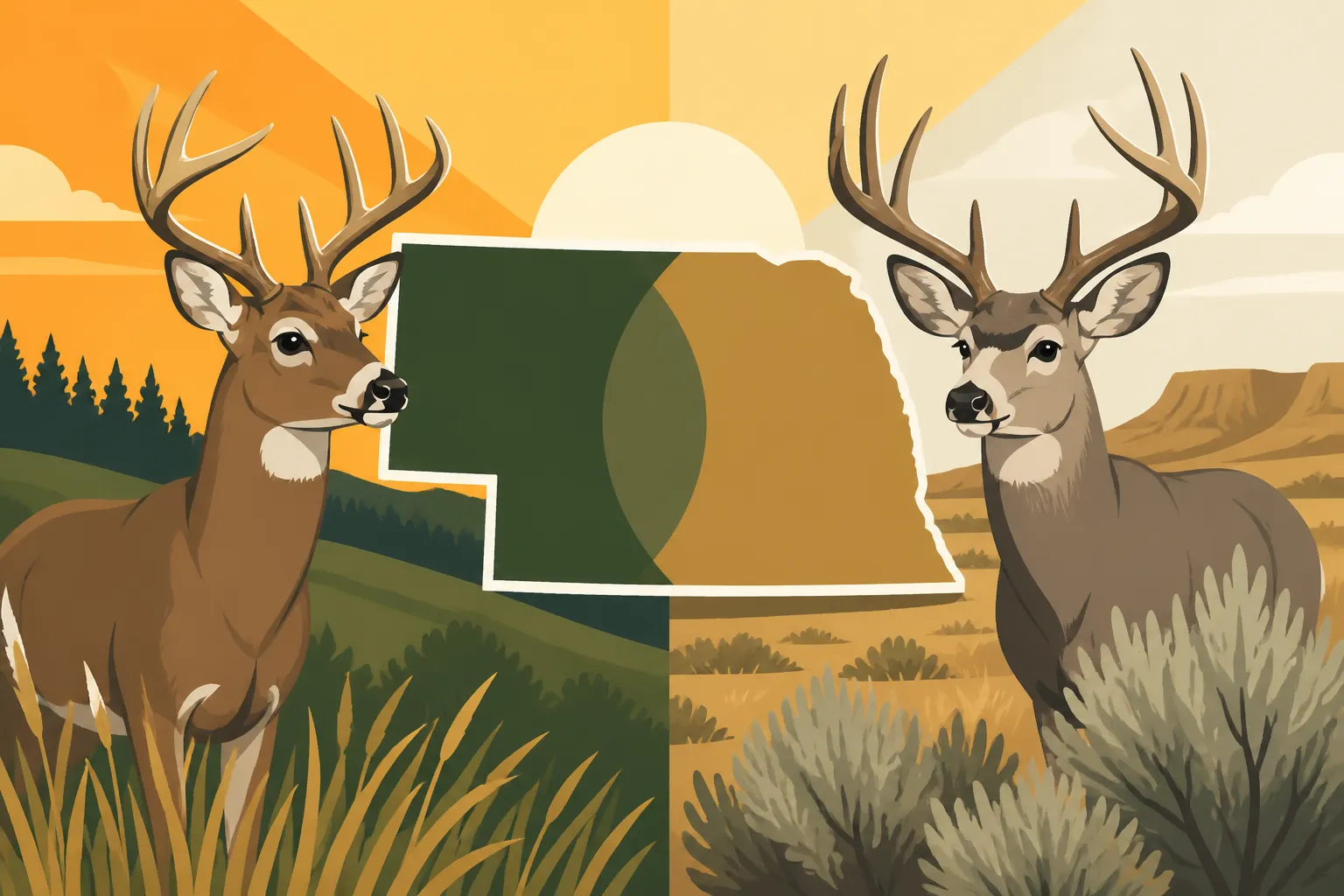
It’s a uniquely Nebraskan experience to be sitting in a treestand, patiently waiting, when a deer walks out that leaves you scratching your head. Is that a whitetail, or a mule deer? In many parts of the state, especially the transition zones, these two iconic big game species share the same ground, leading to both incredible hunting opportunities and sometimes a moment of uncertainty. This guide will help you understand where these populations converge, what to look for, and how to approach hunting in these fascinating overlap areas.
Understanding the Traditional Ranges
Before we dive into where these two incredible deer species meet, it helps to understand their typical haunts. Each has a preferred habitat that has shaped their physical characteristics and behaviors over countless generations. Knowing these natural tendencies provides a foundational understanding when you encounter them on the edge of their traditional domains.
Whitetail Strongholds in Eastern Nebraska
When most hunters think of whitetails in Nebraska, they picture the lush, timbered river bottoms and agricultural landscapes of the eastern half of the state. These deer thrive in areas with dense cover, abundant browse, and readily available water sources. They are masters of concealment, preferring to live out their lives within the thick security of a cedar patch or a cottonwood creek bottom.
You'll find massive populations of white-tailed deer along the Missouri River corridor, the Platte River, the Loup, the Elkhorn, and all the smaller tributaries that dissect the rolling farmlands. These areas offer everything a whitetail could ever want: tangled undergrowth for bedding, corn and soybean fields for feeding, and natural travel corridors that keep them hidden from prying eyes. They are incredibly adaptable and can even be found thriving in suburban fringes, proving their resilience. For a deeper dive, check out our piece on White-Tailed Deer Across Nebraska. Their ability to utilize fragmented habitats and blend into agricultural settings is truly remarkable, making them the dominant deer species in these eastern reaches.
Mule Deer Domain in Western Nebraska
Head west across the 100th meridian, and the landscape shifts dramatically, and with it, the dominant deer species. The vast, open expanses of the Sandhills, the rugged breaks of the Pine Ridge, and the high plains of the Panhandle are mule deer country. These majestic deer prefer wide-open spaces, broken terrain, and the cover provided by topographical features like draws, canyons, and buttes. They are creatures of the open, relying on their keen eyesight, hearing, and incredible endurance to survive in less dense environments.
The true essence of mule deer hunting in Nebraska often involves extensive glassing, covering vast tracts of land with high-powered optics, and patiently dissecting every fold and crease in the landscape. Their habitat choice reflects their reliance on distant observation and escape rather than close-quarters evasion. Whether it's the rolling dunes of the Sandhills or the rocky escarpments of the Wildcat Hills, mule deer utilize the elevation changes and sparse vegetation to their advantage. To learn more about these fascinating animals, read our article on Mule Deer in the Nebraska Sandhills and Panhandle. Their preference for higher, drier ground and their distinctive bounding gait are perfectly suited to the challenging, wide-open country they call home.
The Overlap Zones: A Hunter's Delight (and Dilemma)
This is where the fun really begins – and sometimes, the confusion. Nebraska offers a unique opportunity for hunters because these two distinct species don't respect invisible lines on a map. Instead, they gradually merge, creating exciting hunting grounds where you truly never know what might step out.
The Transition Zone Phenomenon
The Sandhills region, particularly where it meets agricultural valleys or major river drainages like the Niobrara or parts of the Platte, forms a prime transition zone. Here, the rolling, grassy dunes give way to pockets of timber, small creek bottoms, or irrigated crop fields. It’s in these areas that you'll find both whitetails pushing west from their traditional riverine habitats and mule deer extending east from their open-range strongholds. This blending of habitats allows both species to find what they need, often resulting in strong populations of each.
Imagine hunting a cedar draw that runs out of the Sandhills into a section of corn. You might jump a mule deer bedding on the grassy hillside within the draw, only to have a whitetail sneak out of the cedars further down toward the field edge. This kind of mixed-habitat hunting requires a flexible mindset and an understanding of both species' behaviors. Some of the central and western deer management units are classic examples of these overlap zones, where "any deer" permits truly mean any deer, adding an extra layer of excitement to the hunt. A tool like GoHunt can be incredibly useful here for analyzing specific unit data on harvest success and species distribution.
Habitat Features Attracting Both Species
Certain habitat features act as magnets, drawing both whitetails and mule deer into close proximity. Understanding these key areas can significantly increase your odds of encountering either species, or sometimes both, on the same hunt.
- Water Sources: In arid or semi-arid regions, water is life. Creek bottoms, spring-fed ponds, cattle tanks, and even isolated puddles become focal points. Both deer will travel significant distances to water, especially during drier periods, creating natural convergence points. A small, brushy creek meandering through open Sandhills can be a major travel corridor for both species.
- Shelterbelts, Cedar Draws, and Small Timber Pockets: While mule deer prefer open country, they absolutely utilize cover for bedding, especially during harsh weather or when they need to escape pressure. A dense cedar draw or a small timbered shelterbelt on the edge of mule deer range provides invaluable security cover. Whitetails, of course, are right at home in such cover, and these features can act as funnels or bedding areas for both. Learning to read these features is critical; our guide on Still-Hunting Nebraska Cedar Draws offers excellent insights.
- Agricultural Fields on the Fringe: As the Sandhills or Pine Ridge transition into row-crop country, agricultural fields become a powerful draw. Whitetails love corn, soybeans, and alfalfa, but mule deer will also readily feed in these fields, especially at night or during the low-light hours of dawn and dusk. A field sitting adjacent to good mule deer bedding cover, like a rugged break or a large Sandhills blowout, can be a prime hunting spot for both. Considering your Entry and Exit Routes on Flat Farm Ground becomes even more important in these mixed-species environments.
Field Identification: Telling Them Apart When It Matters
In an overlap zone, knowing the differences between a whitetail and a mule deer becomes crucial, especially if you have a species-specific tag or are simply trying to better understand the deer you're observing. It's not just about the antlers; there are subtle and not-so-subtle cues that can help you make a positive identification in the field.
Physical Characteristics Beyond Antlers
While antler configuration is often the most obvious differentiator – whitetails typically having tines that sprout from a main beam, and mule deer having a bifurcated (forking) antler structure – it’s not always reliable, particularly with young deer or broken antlers. Look for these other key physical traits:
- Ears: This is perhaps the most defining characteristic, giving the mule deer its name. Mule deer have significantly larger ears, often described as resembling a mule's ears, which are long and broad. Whitetail ears are noticeably smaller and narrower. Even at a distance, if the ears look disproportionately large for the head, you're likely looking at a mule deer.
- Tail Color and Shape: This is another major giveaway. A whitetail's tail is broad, typically reddish-brown on top, and pure white underneath. When alarmed, they raise it high, exposing the bright white underside – a distinct "flag." Mule deer have a narrow, rope-like tail that is usually white with a black tip. They rarely raise it high like a flag; instead, it tends to stay down or twitch slightly. Our post on Telling Mule Deer From Whitetails delves deeper into these visual cues.
- Body Size and Build: While there's overlap, mule deer generally appear stockier, with a more robust build and deeper chest, especially mature bucks. Whitetails tend to have a more streamlined, athletic appearance.
- Face Shape: While subtle, some hunters notice that whitetails often have a more pointed muzzle and a smaller, more delicate facial structure, while mule deer can have a broader, blunter face.
- Antler Growth: While exceptions exist, mule deer antlers tend to grow more vertically and spread wider, often with deeper forks. Whitetail antlers often extend forward more, with tines projecting upward from a more prominent main beam.
Behavioral Differences You'll Notice
Beyond their looks, whitetails and mule deer behave differently, especially when alarmed or navigating their environment. Observing these behaviors can provide critical clues.
- Gait and Movement: This is often the most telling behavioral difference. When a whitetail is spooked, its primary escape mechanism is to run, often at a frantic pace, with its tail flagging high. They typically bound or sprint with a fluid motion. Mule deer, on the other hand, are famous for their distinctive "stotting" or "bounding" gait. When alarmed, they leap with all four feet off the ground simultaneously, often covering significant distance in a single springy bound. This movement is an adaptation for traversing rough, open terrain while keeping their heads high to spot predators.
- Use of Cover: Whitetails are masters of evasion and concealment. When pressured, they will often try to sneak away through the densest cover available, using every bit of brush and timber to their advantage. They will often stop just inside cover to look back. Mule deer, while they use draws and cover for bedding, tend to flee into open areas when threatened, using distance and their bounding gait to escape, often stopping on a ridge to look back. Their strategy is often more about getting away and seeing the threat from a safe distance.
- Reaction to Pressure: Whitetails are notorious for "ghosting" – disappearing without a trace, often just a few yards from where you last saw them. They'll drop into a ditch, slip into a cattail slough, or melt into a cedar thicket. Mule deer are often more visible in their escape, bounding across open ground. This difference in reaction directly influences how you might pursue or track them. When glassing open country, mule deer are typically much more comfortable standing out in the open than whitetails, who are always looking for that next patch of cover. Using effective optics, like those discussed in Optics for Glassing the Nebraska Sandhills, can help you pick up these subtle differences.
| Characteristic | White-Tailed Deer | Mule Deer |
|---|---|---|
| Ears | Smaller, narrower | Very large, broad (like a mule's) |
| Tail | Broad, reddish-brown on top, pure white underneath; flags when alarmed | Narrow, rope-like, white with black tip; rarely flags |
| Gait (when spooked) | Runs, sprints, tail flags high | Stotts/bounds (all four feet off ground simultaneously) |
| Antlers | Tines typically rise from single main beam | Antlers typically bifurcated (fork) |
| Body Build | More slender, athletic | Stockier, more robust, deeper chest |
| Face | More pointed muzzle | Broader, blunter muzzle |
| Habitat Preference | Dense cover, timber, river bottoms, agriculture | Open country, broken terrain, draws, high plains |
Hunting Strategies for Overlap Areas
Hunting in areas where whitetails and mule deer overlap presents a fantastic challenge and a unique opportunity. You need to be adaptable, think critically about the terrain, and be prepared for either species to appear.
Adapt Your Approach to Mixed Habitat
The key to success in overlap zones is flexibility. You can't just hunt for one species; you need to hunt for deer, broadly, and be ready to adjust your tactics on the fly.
- Blend Tactics: This often means combining techniques. You might spend your mornings glassing distant ridges and draws for mule deer, then transition to still-hunting a timbered creek bottom or setting up a treestand near an agricultural field edge for whitetails in the afternoons. Our article on Glassing the Nebraska Sandhills for Mule Deer offers great tips for spotting mule deer, which you can then adapt to the hybrid environment. Conversely, understanding Choosing a Treestand Site on Nebraska Farmland is crucial for whitetail success.
- Consider Different Stand Setups: Depending on the specific micro-habitat, your stand choice might change. A sturdy treestand is excellent for a whitetail travel corridor in heavy timber, but in more open areas with pockets of cedars or brush, a well-placed ground blind might be more effective, offering concealment and better shot angles for a bounding mule deer. Remember, ground blinds need to be built to withstand the elements, so consider Ground Blinds in Open Nebraska Country.
- Scouting is Paramount: Pay close attention to sign from both species. Look for different tracks, rub lines, and scrapes. A whitetail rub will often be lower on a smaller sapling, while a mule deer rub might be higher on a larger tree or even a fence post in more open country. Use apps and scouting tools like GoHunt to analyze historical harvest data for your chosen unit, which can give you an edge in understanding species distribution. Also, consider how Wind and Thermals in the Sandhills will affect both species' movement, as these factors remain critical regardless of the deer type.
Permit Considerations in Overlap Zones
Navigating permits in overlap areas can be a bit tricky, and it's absolutely vital to understand what your tag allows. Nebraska has a variety of deer permits, and not all of them allow you to harvest any deer that steps out.
- "Any Deer" Permits: These are the golden tickets for overlap zones, allowing you to harvest either a whitetail or a mule deer. However, these permits are often limited in supply, especially for non-residents, and can be harder to draw or more expensive. They are primarily available in central and western Nebraska. Familiarize yourself with Nebraska Deer Management Unit Permits to understand specific unit restrictions.
- "Whitetail Only" Permits: Many permits, especially in eastern Nebraska and even some central units, are specific to whitetails. If you hold one of these and a trophy mule deer steps out, you're out of luck. This is where accurate field identification becomes critical. Ensure you know the difference before you pull the trigger.
- Mule Deer Restrictions: Some units have specific restrictions on mule deer harvest, such as "mule deer buck only" or specific areas where mule deer harvest is entirely prohibited to help manage populations. Always double-check the current regulations for your specific unit. It's often best to consult the Nebraska Game and Parks Commission's Public Access Atlas or hunting guide directly.
- Archery and Muzzleloader Permits: For those pursuing deer during the archery or muzzleloader seasons, the rules can sometimes be different regarding species type. Always refer to the most current regulations provided by the Nebraska Game and Parks Commission. For specifics on these seasons, you can read our posts on Nebraska Archery and Muzzleloader Deer Permits and Bowhunting Nebraska's Four-Month Archery Season. These permits often offer more flexibility, but the species restrictions can still apply.
Hunting where whitetails and mule deer overlap is a truly enriching experience that highlights the diverse beauty of Nebraska's landscape and wildlife. By understanding their ranges, identifying their unique characteristics, and adapting your hunting strategies, you'll be well-prepared for whatever antlered surprise the prairie or river bottom throws your way.
Disclaimer
This article is for general informational purposes only and does not constitute professional advice. Laws, prices and regulations vary by location and change over time. Consult a qualified professional for guidance on your specific situation.