Blocking and Driving a Nebraska Field
There's nothing quite as frustrating as knowing game is holding tight in a big, thick Nebraska field, but you just can't get them to budge for a shot. Many solo hunters or small groups face this dilemma, struggling to effectively work large tracts of cover. This comprehensive guide will walk you through the effective, time-honored technique of blocking and driving a Nebraska field, ensuring you can flush birds and push deer into strategic shooting lanes safely and successfully.
Understanding the Mechanics of a Field Drive
At its heart, a field drive, sometimes called a "push" or "block," is a coordinated hunting tactic where a group of hunters works together to move game from one area of cover to another, or towards a line of stationary "blockers" or "standers." It's a method that relies heavily on teamwork, communication, and a good understanding of animal behavior and the terrain you're working. It's not just for pheasants, though that's a classic application; deer hunters in certain scenarios use similar principles in smaller timber or dense CRP fields.
Distinguishing Roles: Drivers and Blockers
For a field drive to be successful, everyone needs to know their job, and those jobs are distinctly different. Think of it like a football play – each person has a role, and if one person misses their assignment, the whole play can fall apart.
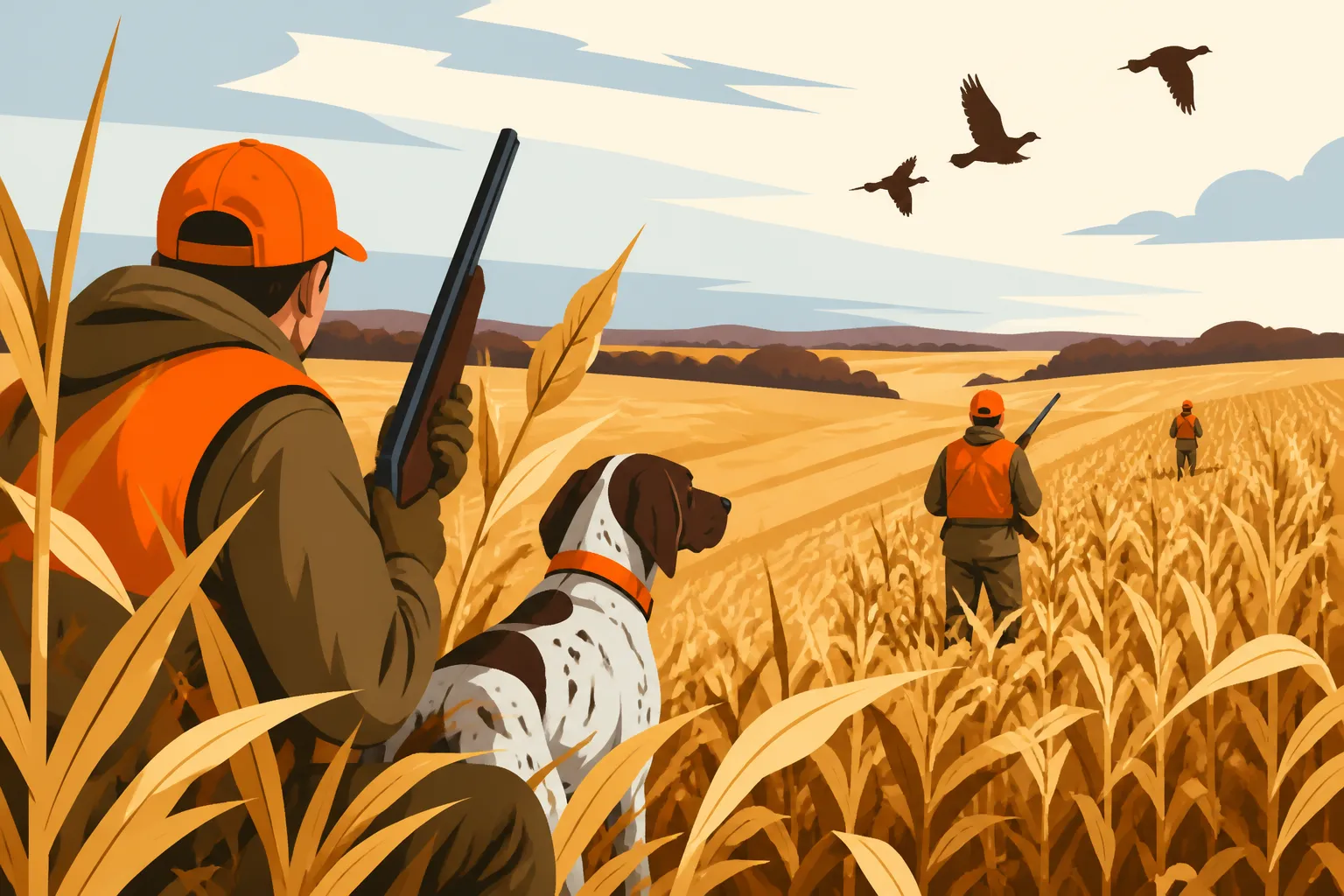
Drivers (or Pushers): These are the hunters who systematically walk through the cover, pushing game ahead of them. Their goal isn't necessarily to shoot at every bird that flushes or deer that bolts from their path. Instead, they are the ones creating the pressure, making the game move. A good driver maintains a steady pace, keeps their line, and stays aware of both their fellow drivers and the direction the game is moving. They're often calling out "bird!" or "deer!" to alert the blockers. This is hard work, especially in heavy cover or against the wind, and requires stamina. The density of drivers depends on the cover; in really thick standing corn or dense CRP, you might need them closer together, perhaps 20-30 yards apart.
Blockers (or Standers): These hunters position themselves strategically at the end or along the sides of the cover being driven. Their role is to intercept the game that the drivers are pushing out. This requires patience, stealth, and a keen eye. Blockers need to be in position well before the drive starts, ideally concealed, and remain absolutely still and quiet. Their job is often to take shots at flushing birds or moving deer, but always with safety paramount, ensuring they have a clear background and know exactly where the drivers are. Choosing the right blocking position is crucial – often at natural escape routes, fence lines, or topographical features that funnel game.
The Fundamental Principle: Funneling Game
The core idea behind blocking and driving is to create a funnel. You're taking a large, often impenetrable area of cover and narrowing the escape routes for the game within it. Game animals, especially birds like pheasants, will typically try to run ahead of the pressure as long as they can, preferring to sneak out rather than fly or burst. Deer will often do the same, using thick cover to avoid detection. Your job as a hunting party is to exploit this natural behavior. By pushing them towards a pre-determined escape point where blockers are waiting, you convert a large, unmanageable area into a controlled shooting scenario. This strategy shines in places like Nebraska's vast agricultural fields, whether it's standing milo, cut corn stubble, or dense CRP, where game can simply disappear without coordinated effort.
Why Field Drives are Effective in Nebraska's Landscape
Nebraska's diverse landscape, characterized by expansive agricultural fields, dense shelterbelts, and pockets of heavy cover, often makes traditional "walk-up" hunting challenging for pheasants and deer, especially for smaller groups. This is where blocking and driving really shines, turning what might seem like an overwhelming amount of ground into a manageable hunting opportunity.
Breaking Down Large, Dense Cover
Imagine trying to walk up pheasants in a 160-acre block of standing corn. It's almost impossible. The birds will run for hundreds of yards, slipping out the sides long before you ever get close. The same goes for deer tucked into a vast cattail slough or a sprawling CRP field. These areas, while prime habitat, are simply too big and dense for one or two hunters to effectively cover. This is where a well-executed drive comes into its own. By having a line of drivers steadily push through, you create a wall of human presence that forces the game to move. The sheer scale of cover in much of Nebraska, particularly in the prime pheasant country or along river bottoms for deer, makes these drives not just effective, but often necessary. Without this strategy, a lot of excellent hunting ground would remain unproductive.
Maximizing Success in Specific Habitat Types
Certain types of Nebraska habitat are practically begging for a field drive, offering the perfect combination of concealment for game and an advantage for hunters.
Standing Corn and Milo: After the harvest, especially if there's still some standing corn left, or in dense milo stubble, pheasants and deer can hunker down and be incredibly difficult to flush. A line of drivers can push through these fields, forcing the birds to take flight or deer to break cover. This is particularly effective in areas like the Walking Milo and Corn Stubble for Pheasants where birds will run ahead of a single hunter but will fly when confronted by a concerted push. The rustling of the stalks and the steady advance of hunters creates an undeniable pressure.
CRP and Tall Grass: Conservation Reserve Program (CRP) fields offer fantastic nesting and winter cover, but their sheer height and density can make hunting frustrating. Birds and deer will often run incredible distances in CRP, only flushing at the very edge, or simply sneaking out the back. Driving these fields, especially with a good crosswind, can push birds into the air or deer into open areas where blockers are waiting. It allows you to systematically cover ground that would otherwise be nearly impenetrable. This is where knowing What Changes in Nebraska After the Corn Comes Off and how birds utilize newly exposed cover can really pay off in a drive scenario.
Cattail Sloughs and Shelterbelts: These linear or island-like cover types are natural magnets for pheasants, quail, and often deer. A long, narrow cattail slough, a thick creek bottom, or a shelterbelt between fields is perfect for a drive. Drivers can enter one end, pushing game towards blockers positioned at the other end or along the sides. For example, Working a Cattail Slough in January often involves driving it from one end to the other, as the dense cover provides excellent protection but also limits escape routes, making it ideal for channeling game. Similarly, small timber blocks, which could be relevant for Two-Person Deer Drives on Small Timber, rely on the same funneling concept.
Safety and Hunter Numbers
Let's be real, safety is always the number one priority. A field drive inherently involves multiple hunters, and therefore demands heightened awareness. However, when properly organized, a drive can actually be safer than individual hunters blindly working through heavy cover.
Increased Visibility and Control: With a designated line of drivers and clearly marked blockers, everyone knows where everyone else is. This is especially true when all participants adhere to Nebraska's blaze orange requirements. The state's requirement for a minimum of 400 square inches of blaze orange during firearm deer season, and recommended during other seasons when firearm hunting occurs, is critical. This helps hunters comply with rules like those covered in Blaze Orange Caps and Vests in Nebraska. Communication, often through shouts or radios, further enhances this control, preventing accidental cross-firing or shooting into the line of drivers.
Effective Use of a Group: Sometimes you just need more boots on the ground. Maybe you've got family and friends together, and you want to ensure everyone gets a chance at some action. A field drive is a fantastic way to involve a larger group, giving everyone a distinct role and increasing the collective chances of success. It turns individual effort into a team sport, fostering camaraderie and making the hunt more enjoyable. Plus, with more eyes and ears, you're less likely to miss sign or movement, increasing the overall effectiveness of your hunt.
Planning Your Nebraska Field Drive
A successful field drive is rarely spontaneous. It's the result of careful planning, good scouting, and clear communication among all participants. Skipping these crucial steps can lead to confusion, inefficiency, and most importantly, safety hazards.
Pre-Scouting the Field and Game Movement
Before you even think about putting boots on the ground, you need to know what you're up against. This means thorough scouting, ideally several days or weeks before the hunt.
Identify Prime Holding Areas: Look for the densest cover within the field – areas where pheasants might roost, or where deer might bed down for the day. This could be a particularly thick patch of standing corn, a deep depression in a CRP field, or a tangled fenceline running through it. You're looking for where the animals feel safest and are most likely to hold tight. Knowing where the game prefers to bed or feed, as discussed in Where Nebraska Whitetails Bed in Row-Crop Country or Where Mule Deer Feed at First Light, can inform your drive path.
Map Escape Routes and Natural Funnels: This is critical for positioning your blockers. Animals, especially when pressured, will often take the path of least resistance. Look for:
- Drainages or Terraces: These can act as natural travel corridors. Setting Up on a Terrace Bench can be a prime blocking position.
- Fencelines: Animals often follow fencelines, particularly if there's cover adjacent to them. Scrape Lines Along a Fenceline are not just for bucks but also indicate travel routes.
- Field Edges: Where the field meets a road, a different crop, or timber.
- Topographical Features: Slight rises, draws, or changes in elevation can subtly direct game movement.
- Wind Direction: Crucial for birds. They typically flush and fly into the wind. If the wind is blowing across the field, they might be more inclined to flush out the side rather than run all the way to the end. This is where understanding Wind Direction on Open Nebraska Prairie Stands becomes important even for upland hunting.
Assess Field Size and Shape: A square quarter-section (160 acres) of milo stubble requires a different approach than a long, narrow strip of CRP next to a creek. Larger fields might need more drivers, or even multiple "mini-drives" within a single field. Understanding How Many Hunters a Nebraska Quarter Section Holds for a given drive will prevent overcrowding or too sparse a line.
Communication and Safety Briefing
This step cannot be overstated. Before anyone steps foot in the field, gather your entire hunting party for a clear, concise safety briefing and plan overview.
Designate a Hunt Leader: One person should be in charge. This person makes the final decisions, assigns roles, and ensures everyone understands the plan. They are the central point of contact.
Assign Roles and Positions: Clearly state who will be driving and who will be blocking. Point out specific blocking positions on a map or by using visible landmarks. For example, "Sarah, you'll be on the east end by the big cottonwood. John, you're covering the fence gap on the north side."
Review Safety Protocols:
- Shooting Lanes: Emphasize shooting away from the line of drivers. Blockers must have a clear view of their target and a safe background. Drivers should only shoot at birds flushing behind or away from the line, never forward.
- Known Locations: Everyone should know where the other members of the party are at all times. This is why blaze orange is mandatory for drivers and highly recommended for blockers.
- No Loaded Guns in Vehicles: Standard safety rule, but worth repeating.
- Communication Signals: Establish clear verbal commands ("Hunter!", "Bird!", "Deer!"), whistle blasts, or two-way radio frequencies. If you're using radios, make sure everyone knows the channel and how to use them. Brands like Motorola Talkabout or Midland GMRS radios are popular for their reliability and range in open country. GoHunt members often share tips on communication setups for larger group hunts.
- Boundary Awareness: Ensure everyone knows the boundaries of the property being hunted, especially if you're hunting Open Fields and Waters Tracts for Pheasants which have specific boundaries. Reviewing land maps from The Nebraska Public Access Atlas Mobile App or a similar mapping tool like onX Hunt is highly recommended.
Establish Movement Pace and Direction: Drivers need to move at a consistent pace. If one driver lags behind, a gap can form, allowing game to slip through. Decide on the direction of the drive, usually into the wind for birds to encourage flushing, or towards a natural funnel for deer. Discuss the "swing" – how drivers should adjust their line to keep even.
Using Mapping Tools for Coordination
In today's hunting world, digital mapping tools are invaluable for planning a field drive. They take the guesswork out of property lines and terrain features.
GoHunt Maps or onX Hunt: These applications allow you to mark specific points, draw lines for drive paths, and share those maps with your entire hunting party. You can pinpoint blocker locations, outline the driving zone, and even mark potential game escape routes. This visual aid clarifies the plan for everyone, especially those unfamiliar with the area. GoHunt, with its detailed public land layers, is particularly useful for planning drives on state or federal lands.
Satellite Imagery and Topo Maps: Use these to identify subtle elevation changes, drainages, or cover variations that might not be obvious from the ground. A slight rise could be a perfect blocking position, or a hidden ditch could be a natural escape route for deer.
GPS for Drivers: Having a GPS unit or a smartphone with a mapping app helps drivers maintain a straight line and know their position relative to the field boundaries and other drivers. This is especially useful in very dense cover where visibility is limited. It ensures your drive remains cohesive and doesn't get skewed, leaving gaps for game to slip through.
Executing the Field Drive Safely and Effectively
With a solid plan in place and roles assigned, it's time to put boots on the ground. However, execution is where the rubber meets the road. It requires discipline, constant awareness, and adherence to the pre-planned strategy.
Positioning Blockers and Setting Up
The success of your drive often hinges on the blockers' initial setup. This isn't just about finding a spot; it's about finding the right spot and being ready.
Early Arrival and Concealment: Blockers should get into position well before the drivers begin their push. This allows them to settle in, scout their immediate surroundings for shooting lanes, and become part of the landscape. Movement and noise at the start of the drive can spook game prematurely. Concealment is key – use natural cover like brush, tall grass, or the edge of a timberline. A portable ground blind, strategically brushed in on open Nebraska country, can also be very effective, as discussed in Brushing In a Blind on Open Range.
Identifying Shooting Lanes and Backstops: Each blocker must meticulously identify their safe shooting lanes. This means knowing exactly where the drivers are and where they will be throughout the drive, never aiming towards them. Look for clear views of potential game paths and, critically, a safe backstop (like a hill or thick timber) behind where you expect to shoot. In flat, open country, this requires extreme caution and often means taking shots only when the game is moving laterally or away from the drive line, and far enough from other hunters.
Remaining Still and Silent: Patience is a blocker's greatest virtue. Game animals have incredibly keen senses. Any movement, talking, or rustling can alert them, causing them to divert or hold tighter. Remain absolutely still, watch for subtle movements in the cover, and be prepared for a quick, decisive shot when the opportunity arises. Often, the game will try to sneak past, providing a fleeting window.
Driver Movement and Line Integrity
The drivers are the engine of the drive, and their collective movement dictates its effectiveness. A disciplined line is crucial.
Maintain a Steady Pace: All drivers should walk at a consistent, moderate pace. Too fast, and you might run past game or tire out too quickly. Too slow, and game might circle back behind the line. The goal is to apply steady, relentless pressure. Communication, whether verbal cues or using two-way radios, is vital to keep the line even. Drivers can call out "holding the line!" or "slow up!" to keep everyone in sync.
Keep the Line Even and Close Gaps: This is perhaps the most challenging aspect for drivers. As you navigate varying terrain, thickets, or fence lines, it's easy for the line to get skewed. Drivers on the outside flanks may need to move faster or slower to keep pace with those in the center, or vice-versa. Always glance left and right to maintain alignment with your fellow drivers. A gap in the line is an open invitation for game to slip back through, rendering the drive ineffective. If a gap forms, the drivers on either side should adjust to close it.
Varying Pressure and Noise: While a steady pace is important, sometimes varying the pressure can be beneficial. In very dense cover, some drivers might periodically stomp harder, rustle branches, or shout to encourage game to move. This can be particularly effective for flushing pheasants that are prone to running. For deer, a quieter, more consistent push might be better to keep them moving steadily towards the blockers rather than making them panic and break cover wildly in an unpredictable direction. Hunters walking Still-Hunting Nebraska Cedar Draws often combine silent movement with occasional deliberate noise to get deer moving.
Managing Game Movement and Shot Opportunities
As the drive progresses and game starts to move, decisions need to be made quickly and safely.
Recognizing Game Direction: Drivers should constantly be aware of where game is heading. If deer or pheasants are breaking out the sides, communicate that immediately to the blockers. Blockers, in turn, should adjust their focus to these unexpected escape routes if possible, without compromising safety. GoHunt maps can be useful here by having pre-marked escape corridors.
Safe Shooting Lanes for Drivers: While blockers are the primary shooters, drivers may get opportunities. A pheasant might flush directly behind a driver, or a deer might break out to the side, safely away from the forward line. Drivers must always confirm a clear shooting lane and, crucially, a safe background before raising their gun. Never, ever shoot forward into the line of other drivers. Your shot angle should always be away from the direction of the drive. The emphasis for drivers is on moving game, not necessarily shooting it.
Blocker Engagement and Follow-Up: When game approaches the blocking line, patience is still key. Let the game get into a safe, ethical shooting range. For birds, let them clear the cover. For deer, wait for a clear, broadside shot. After a shot, blockers should call out "shot!" or "down!" to alert others and help coordinate retrieval. If a bird is downed, a quick retrieval ensures it isn't lost. For deer, if it's hit but not immediately down, mark the spot and be prepared for Blood Trailing After Dark in Nebraska if necessary, which highlights the need for good tracking skills.
Overcoming Common Challenges in Field Drives
Even the best-laid plans can encounter snags. Nebraska's dynamic weather, varied terrain, and wily wildlife can throw curveballs. Anticipating these challenges and having strategies to overcome them is key to a successful and safe field drive.
Dealing with Strong Winds and Weather
Nebraska is renowned for its wind, and unpredictable weather can dramatically impact a drive.
Wind Direction and Game Behavior: As mentioned, pheasants prefer to flush and fly into the wind. If you're driving a field with a strong crosswind, birds might be more inclined to peel off to the side, flying into the wind, rather than continue straight ahead to the blockers. This requires blockers to be extra vigilant on the flanks. If the wind is at the drivers' backs, birds might flush earlier and travel further, but potentially straight at the blockers. Conversely, a headwind for drivers means birds are more likely to run ahead of the push. Adjusting the drive direction to put the wind with the blockers (meaning the drivers are pushing into the wind) can maximize flushing opportunities. For deer, wind is paramount for scent. Deer will typically move upwind or crosswind when pressured to use their nose. Blockers should position themselves downwind of predicted escape routes.
Rain, Snow, and Mud: A sudden downpour or an unexpected snowfall can reduce visibility, make footing treacherous, and dampen spirits. Muddy fields, especially in agricultural areas, can quickly exhaust drivers and make it difficult to maintain a steady pace. In these conditions, drivers need to slow down, communicate even more frequently, and adjust expectations. Wearing appropriate Rain Gear for a Prairie Storm and Insulated Boots for a Firearm Season Sit is vital for comfort and safety. Mud also makes tracking game more challenging but also easier to spot fresh tracks.
Extreme Cold: Winter field drives, especially for late-season pheasants or antlerless deer, can mean bitter cold. This impacts hunter performance, equipment, and even game behavior. Layering effectively, using Hand Warmers That Last a Full Sit, and taking regular breaks are crucial. Guns can also freeze up, so ensuring proper maintenance and lubrication for cold weather is important. Birds might hold tighter in dense cover during extreme cold to conserve energy, making the push even more vital.
Navigating Difficult Terrain and Cover
Not all fields are flat, uniform rectangles. Nebraska's terrain, from the gentle swells of the Sandhills to the rugged Pine Ridge, presents various challenges.
Thickets, Draws, and Fencelines: Drivers will inevitably encounter dense thickets, brushy draws, or barbed-wire fencelines. These can break up the line, create gaps, and slow progress. When approaching such obstacles, drivers need to communicate, decide if they will push through, go around, or if one section of the line should pause to allow others to catch up. For instance, when Reading a Cedar Draw for Deer Movement, drivers should pay extra attention to ensuring deer don't slip out the sides unnoticed.
Undulating Ground and Elevation Changes: Fields with rolling hills or deep depressions can make it difficult for drivers to maintain visual contact with each other. This is where GPS units or mapping apps become incredibly useful, allowing hunters to see their position relative to the line. Blockers at the end of a field with undulating terrain might need to choose higher ground to get a better vantage point, or multiple blockers might be needed to cover different sight lines.
Standing Water or Ice: In certain conditions, particularly in the Rainwater Basin region or along river bottoms, fields might have standing water or icy patches. These present obvious safety hazards. Hunters should avoid dangerous ice, and if water is present, ensure they have appropriate footwear like waders. If a significant portion of the field is impassable, the drive plan might need to be adjusted on the fly.
Managing Hunter Numbers and Group Dynamics
The effectiveness of a field drive is directly tied to the number of hunters and their ability to work together.
Too Few Hunters for the Field: Attempting to drive a very large field with only a handful of hunters is often futile. Gaps in the line will be too big, and game will easily slip through. In such cases, it's better to focus on smaller, more manageable sections of cover, or adapt the strategy (e.g., using fewer drivers and more blockers on flanks). Consider the advice in How Many Hunters a Nebraska Quarter Section Holds to gauge if your group is adequate for the area.
Lack of Communication or Discipline: This is a drive killer. If hunters aren't communicating, not staying in line, or not following instructions, the drive quickly devolves into chaos. The hunt leader needs to be firm and ensure everyone understands their role and sticks to the plan. Pre-drive briefings are critical for setting these expectations.
Dealing with "Blocker Fever" or "Driver Greed": Sometimes, a blocker might get antsy and move from their assigned spot, or a driver might break rank to chase a flushing bird. This undermines the entire strategy and can be a serious safety risk. Reinforce that the primary goal is a coordinated effort, not individual glory. Remind everyone that the best way for everyone to get opportunities is by sticking to the plan.
Post-Drive Considerations
A successful field drive doesn't end when the shooting stops. There are crucial steps to take afterward to ensure a responsible and enjoyable hunt for everyone involved.
Game Recovery and Ethical Retrieval
The most important ethical responsibility after a shot is to ensure any hit game is recovered quickly and humanely.
Marking the Spot: If a bird or deer is hit but not immediately dropped, every hunter should immediately mark the last spot they saw the animal. Use a hat, a piece of blaze orange, or a GPS waypoint. This provides a starting point for tracking. For pheasants, a good bird dog is invaluable here, but even without one, methodical searching is necessary.
Systematic Search: Gather the hunting party and conduct a systematic grid search around the marked spot. Look for feathers, blood, disturbed ground, or any other sign. Expand the search outward in concentric circles. For deer, even a small blood trail can be followed with patience. The process outlined in Blood Trailing After Dark in Nebraska provides good principles that apply even in daylight for tough retrieves.
Respect for Game: Even if the game is lost, the effort to find it is a testament to ethical hunting. Don't give up too quickly. It's frustrating, but it happens. Learn from it and strive to make better shots next time.
Safety Checks and Equipment Management
Once the drive is complete, take a moment for some crucial safety and equipment checks.
Unload Firearms: Before moving to a new location or getting into vehicles, all firearms should be safely unloaded. This is non-negotiable. Visually check chambers and magazines.
Account for All Hunters: Do a quick headcount to ensure everyone from the hunting party is accounted for. This is especially important in large fields or challenging terrain.
Clean Up: Pack out all trash, spent shotgun shells, and any other items you brought in. Leave the field cleaner than you found it. This respects the landowner (if hunting private land) and ensures continued access for everyone.
Gear Check: Take stock of your gear. Are there any damaged items? Did you lose anything? Proper care of your firearms and other equipment after a dusty or muddy day in the field, like Cleaning a Rifle in Sandhills Dust, is essential for longevity and reliable function.
Respecting the Land and Landowners
Whether you're hunting private land or public access areas like Nebraska's Open Fields and Waters Tracts for Pheasants, respect for the land is paramount.
Private Land Gratitude: If you were fortunate enough to hunt on private property, thank the landowner profusely. A small gesture, like a gift card or offering to help with a chore, goes a long way in maintaining good relationships and future access. Always adhere to the specific rules they set, such as not driving on certain areas or avoiding specific fields. Remember, getting Asking a Nebraska Farmer for Permission is a privilege, not a right.
Public Land Stewardship: On public lands, adhere to all specific regulations for that area, which can be found in the Nebraska Public Access Atlas. This includes rules about vehicle use, blind placement, and general conduct. Report any litter or damage you see. Your responsible behavior contributes to the overall perception of hunters and helps maintain public support for these invaluable access programs.
A well-executed field drive is a rewarding experience, combining teamwork, strategy, and the thrill of the hunt. By meticulously planning, prioritizing safety, and adapting to Nebraska's unique conditions, you can turn challenging cover into successful hunting opportunities, creating lasting memories with your hunting companions.
Disclaimer
Always consult the latest Nebraska Game and Parks Commission hunting regulations for specific season dates, bag limits, permit requirements, and legal hunting methods before planning any hunt. This guide is for informational purposes only and does not supersede official state regulations.