Rain Gear for a Prairie Storm
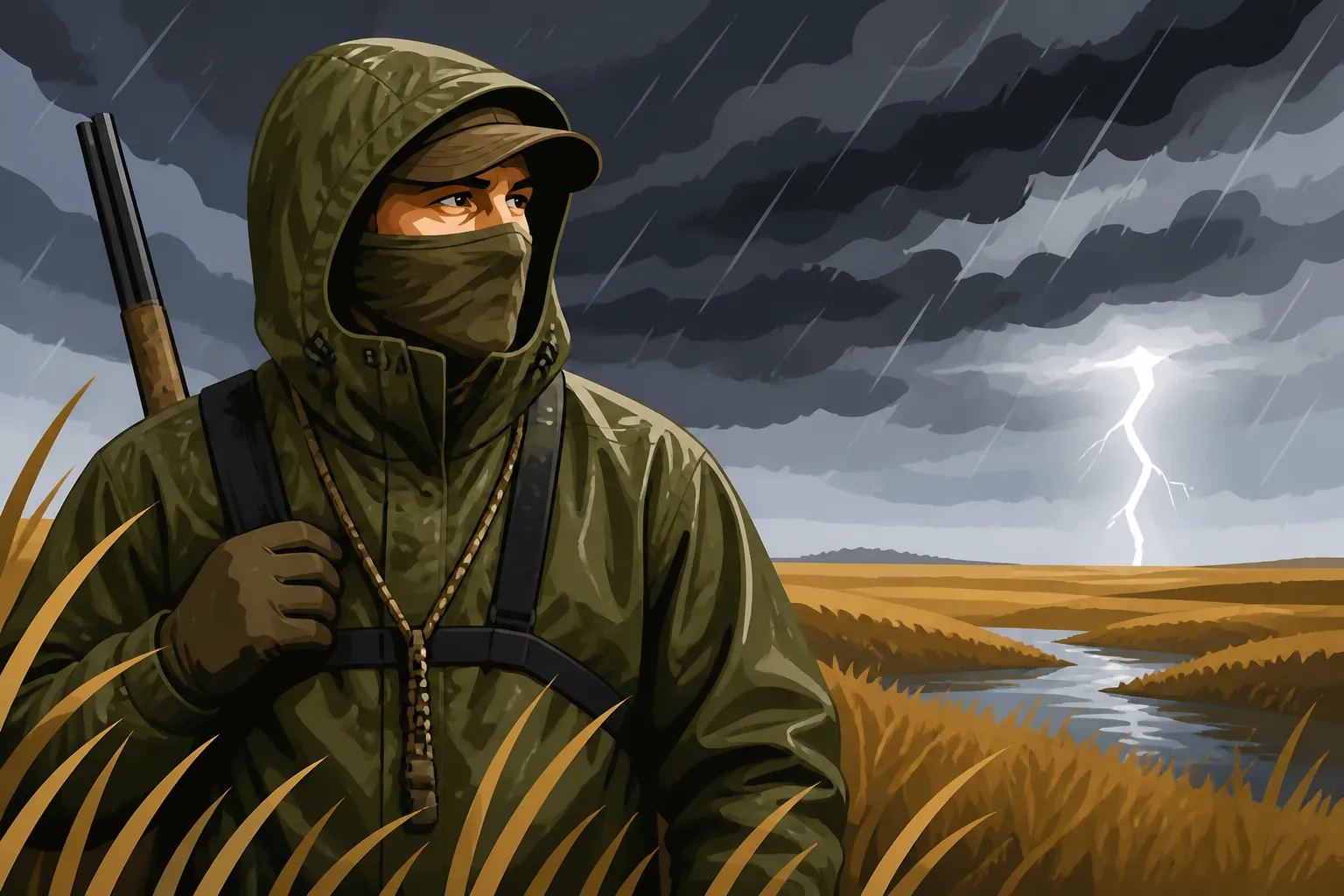
Getting caught unprepared in a prairie storm, especially while hunting in Nebraska, can quickly turn a memorable outing into a miserable, even dangerous, experience. Those sudden downpours, chilling winds, and relentless drizzles can penetrate even seemingly good outerwear, leaving you soaked to the bone and shivering. This guide will walk you through everything a Nebraska hunter needs to know about selecting and using effective rain gear to stay dry, comfortable, and safe, no matter what the unpredictable weather throws your way.
The Harsh Reality of Nebraska Weather: Why Rain Gear Isn't Optional
If you've spent any time hunting in Nebraska, you know that the weather rarely holds a single mood for long. One moment it can be crisp and clear, the next a wall of dark clouds rolls in, unleashing a torrent. This isn't just about getting a little wet; it's about being prepared for a dynamic environment where conditions can change radically in a matter of minutes. Trust me, I've been caught flat-footed more times than I care to admit, and it taught me some hard lessons.
The Unpredictable Nature of Prairie Storms
Nebraska's location in the heart of the Great Plains means it's a battleground for air masses. Cold fronts sweep down from the north, warm, moist air pushes up from the Gulf, and the collision can create some truly epic and sudden weather events. You might check your favorite weather app on GoHunt before heading out, and it shows a sunny day, only for a pop-up thunderstorm to materialize seemingly out of nowhere by midday. Summer and early fall bring these unpredictable convection storms, often intense but relatively brief. They can dump inches of rain in a short time, turning dry creek beds into raging torrents and muddying up two-tracks in an instant.
Then you get into the late fall and winter months, and things get even more complex. A gentle drizzle can turn into freezing rain, or a steady rain can be accompanied by a biting wind that cuts right through inadequate layers. The wind, in particular, is a constant companion on the prairie, and it amplifies the effects of any moisture. What might feel like a tolerable shower in calm conditions becomes a chilling, penetrating assault when driven by a 20-mph gust. This constant variability is precisely why reliable rain gear isn't a luxury; it's a fundamental part of your Nebraska hunting kit.
Beyond Just Getting Wet: The Dangers of Exposure
Many hunters think of rain gear primarily as a comfort item, a way to avoid that clammy feeling. While comfort is certainly a huge factor – no one enjoys hunting miserable – the stakes on the prairie are much higher. Getting soaked to the skin, especially in cooler temperatures, rapidly leads to a loss of body heat. This isn't just uncomfortable; it can lead to hypothermia, a serious medical condition where your body loses heat faster than it can produce it. Symptoms can range from shivering and clumsiness to confusion and slurred speech. You certainly don't want to be making critical decisions, like shot placement or navigating rugged terrain, when your brain is struggling with cold.
Beyond the personal danger, exposure can also impact your gear. Modern electronics, from rangefinders to GPS units to your phone, are vulnerable to water damage. A ruined phone means you can't check your Nebraska Public Access Atlas Mobile App for property boundaries or call for help if needed. Optics can fog or get water spots that impair visibility. Even your firearm can be affected, with moisture potentially impacting ammunition or causing malfunctions if not properly protected. Thinking rain gear is optional is akin to hunting without a first-aid kit; it underestimates the very real risks of the environment.
Understanding Your Options: Types of Rain Gear for Hunters
When it comes to rain gear, there isn't a one-size-fits-all solution for every Nebraska hunting scenario. What works perfectly for a quick bowhunt in early fall might be completely inadequate for a late-season waterfowl hunt in a blizzard. Understanding the different types available will help you make an informed choice that matches your specific hunting style and the conditions you expect to face.
Lightweight and Packable: The "Just in Case" Layer
For many hunters, especially those who primarily hunt during the warmer months or on days with a low chance of rain, a lightweight, packable rain suit is the go-to. These are designed to be compact and easy to stuff into a backpack or even a large coat pocket, making them ideal for those unexpected pop-up showers. Think of them as your insurance policy against a sudden downpour. They often feature thin, single-layer waterproof fabrics with minimal insulation, prioritizing weight and packability above all else. Materials can vary from simple coated nylon to more advanced ultralight membranes.
The biggest advantage here is their portability. You can carry them without feeling burdened, and they take up minimal space. This makes them excellent for Archery Antelope From a Water Blind in August heat, where you need to stay cool but might face an afternoon thunderstorm, or for Hunting Grouse in September Heat when you're covering a lot of ground on foot. However, their light construction means they're typically less durable than heavier options, more prone to snags and tears when pushing through thick brush, and might not offer adequate protection in a prolonged, heavy rain or cold, wind-driven wetness. Breathability can also be a trade-off; some cheaper options might make you sweat as much as they keep rain out.
Heavy-Duty and Durable: When You Expect the Worst
When the forecast is grim, or you know you'll be spending long hours exposed to the elements, heavy-duty rain gear is your best friend. These suits are built to withstand serious abuse and offer maximum protection against sustained rain, wind, and even snow. They typically feature thicker, multi-layer fabrics with robust waterproof/breathable membranes, reinforced stress points, and often more insulation. You'll find these in both jacket and pant (or bib) configurations, often with features like full-length leg zippers for easy on/off over boots and clothing.
This type of gear is essential for Field Hunting Geese in Nebraska's Rainwater Basin in November, sitting for hours in a layout blind during a relentless drizzle, or pushing through frozen cover while Walking Nebraska Pheasant Cover With a Dog in late December. The durability means you can crawl through stubble, lean against trees, or brush past thickets without constantly worrying about tearing your waterproof barrier. The trade-off, however, is weight and bulk. These suits are heavier, take up more space, and can feel more restrictive. They're also generally less breathable than their lighter counterparts, so they're not ideal for highly active pursuits in warmer weather where you might overheat quickly.
Hybrid Systems: Versatility for Varying Conditions
Many experienced Nebraska hunters opt for a hybrid approach, combining different pieces to create a versatile system. This often involves a high-quality, mid-weight waterproof/breathable shell jacket paired with a lighter, more packable rain pant. Alternatively, it could mean having a robust outer shell that also serves as your primary windbreaker, then adding or removing insulating layers underneath as needed. The idea is to build a system that can adapt to the constantly changing prairie conditions without over-equipping or under-preparing.
For example, you might wear a base layer, a fleece mid-layer, and then a waterproof shell that also acts as a Wind-Blocking Outerwear for the Plains. If the rain starts, you're already protected. If the sun comes out, you can shed the shell and keep the mid-layer for warmth. Rain pants with full-length side zippers are a game-changer here, allowing you to quickly pull them over your regular hunting pants and Boots for Walking Nebraska Grass and Sand without taking off your footwear. This layering concept is particularly effective for Nebraska's Nine-Day November Firearm Deer Season, where you might experience everything from warm drizzle to freezing sleet in a single hunt. The key is to think of your rain gear not as a single item, but as a crucial component of your overall clothing system.
What to Look for in Quality Hunting Rain Gear
Choosing rain gear that actually performs in Nebraska's often harsh conditions goes beyond just picking something that says "waterproof." You need to dig a little deeper into the materials, features, and overall design to ensure it stands up to the challenge. Don't let marketing hype fool you; understanding the core elements will guide you to a wise investment.
Material Matters: Waterproofing and Breathability Ratings
This is the absolute heart of effective rain gear. At a basic level, you need a fabric that prevents water from getting in. Many garments use a Durable Water Repellent (DWR) coating on the outer fabric. This is the first line of defense, causing water to bead up and roll off. However, DWR wears off over time and isn't enough on its own. True waterproofing comes from a membrane or coating beneath the outer fabric. High-quality rain gear uses waterproof/breathable membranes (like those found in various proprietary systems or known brands) that have microscopic pores too small for liquid water to pass through, but large enough for water vapor (sweat) to escape. This is crucial for preventing that clammy feeling that comes from your own perspiration building up inside the jacket.
When looking at specs, you'll often see two numbers: a waterproofing rating (e.g., 10,000mm, 20,000mm) and a breathability rating (e.g., 10,000g/m2, 20,000g/m2). The waterproofing rating indicates how tall a column of water the fabric can withstand before leaking. For active hunting in Nebraska, aim for at least 10,000mm, but 15,000mm or higher is better for heavy rain and prolonged exposure. The breathability rating measures how much water vapor can pass through a square meter of fabric in 24 hours. Higher numbers mean better breathability, which is vital for active hunters to prevent overheating and internal condensation. Anything below 10,000g/m2 might leave you feeling wet from sweat, even if no rain gets in. Remember, "water resistant" is NOT waterproof and won't cut it when a genuine prairie storm hits.
Fit, Features, and Functionality in the Field
Even the best waterproof material is useless if the gear doesn't function well in a hunting context. Start with the fit: it should be roomy enough to accommodate layers underneath but not so baggy that it hinders movement or snags on brush. Articulated elbows and knees are a plus, allowing for natural movement without binding. Pay attention to the hood design – it should be adjustable, provide good peripheral vision, and be able to cinch down securely to keep rain out of your face and off your neck without feeling restrictive or deafening you to sounds. Pit zips (zippers under the arms) are a fantastic feature for dumping excess heat quickly without having to take off your jacket, a real blessing when you're Still-Hunting Nebraska Cedar Draws in varying conditions.
Other critical features include waterproof zippers (or storm flaps over regular zippers) to prevent leakage, adjustable cuffs that can be tightened over gloves or around wrists to stop water creep, and strategically placed pockets that are accessible even when wearing a backpack or chest rig. For pants, full-length leg zippers are invaluable for quick on and off without removing boots. Finally, consider the noise factor. Some waterproof fabrics can be notoriously crinkly or noisy, which is a major drawback when you're trying to move silently while Hunting the Pre-Rut in Late October. Look for quieter fabrics, especially for deer hunting. Some brands like GoHunt offer detailed gear reviews that often touch on these practical aspects.
Camo vs. Solid: Staying Concealed or Safe (Blaze Orange)
The color and pattern of your rain gear are another important consideration, dictated primarily by the type of hunting you're doing and the season. For archery season, especially when Bowhunting Nebraska's Four-Month Archery Season and trying to stay hidden from sharp deer eyes, a camouflage pattern is often preferred. You want your rain gear to blend seamlessly with your other layers and the environment. Many hunting-specific rain suits come in various popular camo patterns.
However, during Nebraska's firearm seasons, particularly the nine-day November season, safety rules come into play. Nebraska has specific Nebraska Blaze Orange Square Inches requirements, mandating a certain amount of blaze orange on your outer clothing. This means your rain jacket, or at least a significant portion of it, will need to be blaze orange. Many companies offer waterproof jackets in solid blaze orange, or you can opt for a high-quality waterproof shell in a neutral or camo color and wear a blaze orange vest over it. The critical thing is to ensure you meet the legal requirements for visibility and safety. For waterfowl hunting, solid earth tones or specific waterfowl camo patterns are generally appropriate, as blaze orange isn't required but concealment is paramount. Always double-check the current Blaze Orange Caps and Vests in Nebraska regulations for your specific hunt dates and location.
Real-World Scenarios and Practical Tips for Nebraska Hunters
Now that we've covered the what and the why, let's talk about how to apply this knowledge to common Nebraska hunting scenarios. Every type of hunt presents its own unique challenges when it comes to staying dry, and tailoring your rain gear strategy can make all the difference.
Hunting Whitetails in a November Drizzle
Imagine yourself in a stand along a creek bottom in eastern Nebraska, late in the firearm season. It's not a downpour, just a persistent, cold drizzle, and the wind is starting to pick up. This is a classic Nebraska scenario where inadequate rain gear quickly turns a decent sit into a miserable one. For this, you need more than just a light shell. Your primary concern will be maintaining core body temperature and staying quiet.
A mid-to-heavyweight, breathable rain jacket and pants (or bibs) are ideal. Look for quiet fabrics that won't crinkle every time you shift in your stand, essential when trying to spot a whitetail that might be Reading a Cedar Draw for Deer Movement. Layering underneath is key; start with moisture-wicking base layers, add a warm fleece or synthetic insulation layer, then top it with your waterproof shell. The rain pants should be durable enough to sit on a wet log or muddy ground without soaking through. Ensure your hood is adjustable so you can keep rain off your neck and face without obstructing your hearing or vision. And, of course, during the firearm season, make sure your outer layer, including your rain jacket, meets the blaze orange requirements. This setup ensures you can remain focused on the hunt, not on shivering or the thought of a wet ride home. You can also integrate your rain gear when setting up on a Hanging a Stand on a Cornfield Edge, ensuring you're protected from the elements from the moment you climb up.
Upland Bird Hunting in a Summer Gush
Early season upland bird hunting for pheasants or quail can often mean dealing with hot, humid conditions that quickly turn into torrential downpours. You're covering a lot of ground, often through tall, wet grass or heavy cover, and staying dry from the outside while not getting drenched from sweat on the inside is a delicate balance. Breathability is paramount here.
For this type of hunt, a very lightweight, highly breathable waterproof jacket is a must. You don't need heavy insulation, but you do need something that can shed water while allowing your body heat and sweat to escape. Look for jackets with good ventilation, especially large pit zips, which you can open to regulate temperature while Walking Milo and Corn Stubble for Pheasants. Rain pants are also a good idea, as you'll be pushing through wet vegetation that will soak standard pants quickly. Consider a pair that's also lightweight and has full-length side zips for easy on and off. Protecting your phone, GPS, and other electronics in waterproof pouches within your pockets is also critical, as they're particularly vulnerable in this type of weather. Your bird dog's comfort matters too, so plan for Water and Heat Risk for Bird Dogs during these warmer, potentially rainy days.
Preparing for the Unexpected in the Sandhills
The Nebraska Sandhills are beautiful, but they are also vast and unforgiving, and weather can change dramatically across its rolling terrain. What starts as a sunny morning Glassing the Nebraska Sandhills for Mule Deer can quickly become a driving rainstorm, especially given the rapid shifts in Wind and Thermals in the Sandhills. When you're miles from your vehicle, you need gear that can handle anything.
For Sandhills hunting, a durable, packable rain suit is essential. You want something that can withstand the abrasive nature of sand and prairie brush if you're Stalking Pronghorn Across Open Nebraska Ground. Even if the forecast is clear, always, always carry lightweight rain gear in your pack. A full rain suit, both jacket and pants, will offer the best protection when you're exposed on open ground with little shelter. Consider gear with reinforced areas in high-wear spots. Beyond just your rain gear, remember other essentials: a fully charged GPS or a reliable mapping app like those from GoHunt (download offline maps!), extra layers, and plenty of water. Getting caught in a severe storm here without adequate protection is not just uncomfortable; it can be genuinely dangerous due to the vast distances and often remote nature of the hunting grounds.
| Rain Gear Type | Best Use Case | Key Features | Pros | Cons |
|---|---|---|---|---|
| Ultralight Emergency Poncho | Unexpected summer shower, short duration | Very compact, disposable options | Extremely light, very cheap | Tears easily, poor breathability, limited coverage, noisy |
| Lightweight Packable Suit | Early season archery, active hunts, "just in case" | Minimal bulk, moderate waterproofing | Easy to carry, good for layering | Less durable, can wet out in prolonged heavy rain, may be noisy |
| Mid-Weight Performance Suit | Versatile, active hunts in moderate rain/cold | Good balance of durability, waterproofing, breathability | Decent protection, good for variable conditions | Can be noisy, may be too warm for summer, moderate bulk |
| Heavy-Duty Shells & Bibs | Late season, prolonged downpours, stationary hunts | Maximum waterproofing, durable fabrics | Extreme protection, highly durable | Bulky, heavy, can be expensive, often noisy, less breathable |
Disclaimer
This article is for general informational purposes only and does not constitute professional advice. Laws, prices and regulations vary by location and change over time. Consult a qualified professional for guidance on your specific situation.