Are There Wolves in Nebraska?
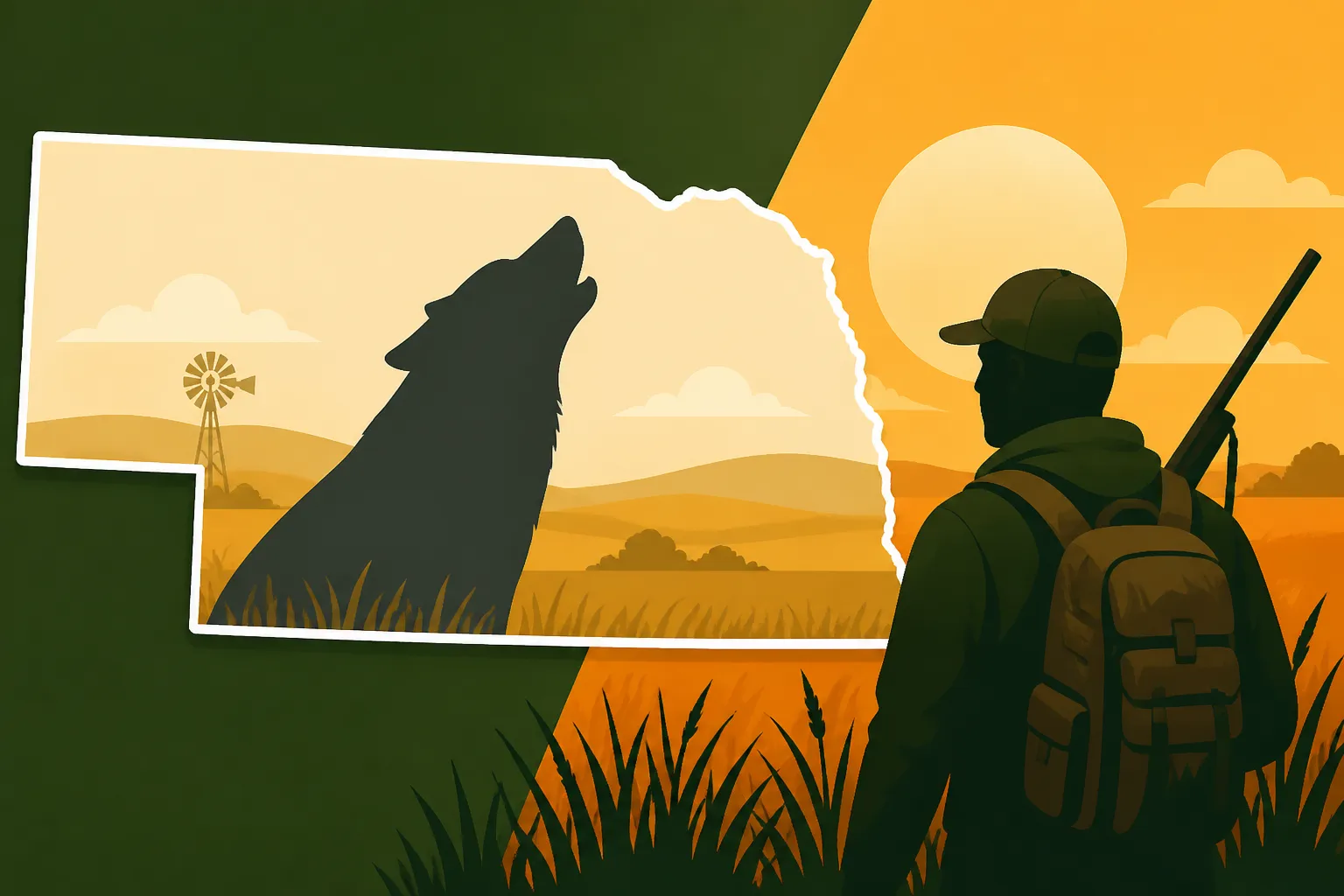
It's a question that stirs a mix of intrigue and concern for many of us who spend time exploring Nebraska's wilder corners: "Are there wolves in Nebraska?" With tales of reintroductions and growing populations in states not too far off, it’s natural to wonder if these iconic canids have quietly made their way back to the Cornhusker State. This guide will delve deep into the history, current status, and future possibilities of wolves in Nebraska, addressing the common misconceptions and providing clarity on what hunters and outdoor enthusiasts might actually encounter.
The Historical Presence of Wolves in Nebraska
For generations, the howl of the wolf was a common sound across the North American landscape, and Nebraska was no exception. These magnificent predators played a vital role in the ecosystem for millennia, shaping the very nature of the wild places we cherish today.
Native Wolves and Their Disappearance
Historically, Nebraska was part of the vast native range of the gray wolf (Canis lupus). Imagine wandering through the sprawling tallgrass prairies or the dense river bottoms hundreds of years ago – you very well might have heard their distant calls echoing across the plains. These wolves were an integral part of the ecological balance, preying on bison, deer, elk, and other large herbivores, helping to keep their populations healthy and strong.
However, with the expansion of European settlement across the Great Plains in the 19th and early 20th centuries, this ancient balance was dramatically disrupted. The arrival of extensive agriculture, livestock ranching, and a widespread fear of predators led to intensive eradication efforts. Wolves were hunted, trapped, and poisoned relentlessly, driven to the brink of extinction in many areas. By the early 1900s, gray wolves were effectively extirpated from Nebraska, along with much of the contiguous United States. It was a dark chapter in wildlife management, driven by economic interests and a misunderstanding of predators' ecological importance. The silence that followed was a testament to the effectiveness, and tragedy, of these campaigns, leaving a void that the landscape has yet to truly fill.
Eastern Wolves and Red Wolves (Brief Historical Context)
While the gray wolf was the primary species historically present across much of Nebraska, it's worth a brief mention that in the eastern parts of the state, there could have been some overlap or genetic influence from what are sometimes referred to as Eastern wolves (Canis lycaon), or even the now critically endangered red wolf (Canis rufus) in their historic, southeastern ranges. These distinctions are complex and subject to ongoing scientific debate about taxonomy and historical range. However, for the practical purposes of understanding Nebraska's canid history and its present, the focus overwhelmingly falls back to the gray wolf, as it was the widespread dominant species on the Great Plains before its extirpation. Any historical presence of these other types would have been on the fringes and is not relevant to current discussions of potential wolf presence.
Current Status: Are Wolves Established in Nebraska Today?
This is the big question everyone wants answered, and it's where we need to be very clear. The idea of wolves roaming Nebraska again is certainly compelling, but the reality is more nuanced.
The Official Stance and Evidence
Let's cut right to the chase: Officially, the state of Nebraska does not have an established, breeding population of gray wolves. What does "established, breeding population" mean? It means there aren't multiple wolves living, reproducing, and sustaining themselves as a group within Nebraska's borders. The Nebraska Game and Parks Commission (NGPC), which is responsible for managing the state's wildlife, regularly monitors for rare or transient species, and their data supports this conclusion.
This isn't to say that the state isn't suitable for them, or that they couldn't theoretically live here. It's simply that, despite various discussions and hopes, the conditions for a sustained population haven't yet materialized. It's a careful distinction, as wildlife agencies across the country are diligent about confirming the presence of apex predators, especially those with federal protections or complex management implications. We rely on sound scientific evidence, DNA analysis, clear photographs, and sustained observation to make these determinations, not just rumors or fleeting glimpses.
Transient Sightings and Confirmed Individuals
Now, here's where things get interesting and sometimes fuel the rumors. While there are no established populations, Nebraska has had incredibly rare, confirmed instances of individual wolves passing through the state. These are known as transient individuals or dispersers. Think of a young, adventurous wolf, often a male, leaving its home pack in search of new territory, a mate, or simply a place to call its own. These animals can cover vast distances, sometimes hundreds of miles, crossing multiple states in their journey.
There have been confirmed wolf sightings in Nebraska, primarily in the northern and western parts of the state, often involving animals that dispersed from established populations in states like Minnesota, Wisconsin, or even further afield from the Northern Rockies. When these rare events occur, the Nebraska Game and Parks Commission works to verify the sightings, often through DNA evidence from scat, hair, or carcasses, or through undeniable photographic or video evidence. These individual confirmed cases are significant for wildlife enthusiasts but do not indicate a resident population. It's like seeing a rare migratory bird pass through your backyard; it's exciting, but it doesn't mean that species now lives there year-round. While you might use resources like GoHunt to scout vast tracts of potential game land, if a disperser wolf were to pass through, such tools could help understand the scale of the unpopulated areas they might traverse, though actual wolf data wouldn't be available.
Wolf-Dog Hybrids and Misidentification
This is perhaps the biggest source of confusion and anecdotal "wolf" sightings in Nebraska. Hunters and outdoorspeople are constantly seeing wildlife, and it's easy to misidentify an animal, especially when excitement or poor visibility comes into play. Many reports of wolves turn out to be something else entirely.
The most common misidentifications include:
- Large Domestic Dogs: Especially breeds like German Shepherds, Siberian Huskies, Alaskan Malamutes, or even a mixed breed with wolf-like characteristics. A lost or abandoned domestic dog can appear quite wild and startling to someone not expecting it.
- Coyote-Dog Hybrids: While less common than pure domestic dogs, coyotes do occasionally breed with domestic dogs, creating hybrids that can have a larger stature and different coloration than a typical coyote, leading to confusion.
- Coyotes (especially large ones): Nebraska has a healthy coyote population, and a big male coyote, seen at a distance or in specific lighting, can easily be mistaken for a smaller wolf. Their fur color can vary, sometimes appearing quite gray or even blackish, further adding to the mix-up.
It's a genuine frustration for people who believe they've seen a wolf, only to be told it was likely a dog or coyote. However, distinguishing features like size, skull shape, gait, and especially tail carriage (wolves rarely curl their tails over their back like many dogs, and typically carry them straighter than coyotes) are important clues. The more we learn about Coyote Calling on Winter Grassland, for example, the more attuned we become to their specific behaviors and appearances, helping us better differentiate them from other canids.
The Difference Between Wolves and Coyotes in Nebraska
Given the prevalence of coyotes in Nebraska and the rare potential for a transient wolf, understanding the key differences between these two canids is crucial for accurate identification. Many a hunter has sworn they saw a wolf, only for it to be a very large coyote, and honestly, from a distance, it can be tough!
Size, Shape, and Behavior
When you're out scouting for deer or Reading a Cedar Draw for Deer Movement, you might catch a glimpse of a canid. Here's how to tell the difference:
- Size and Build: This is the most obvious differentiator. Gray wolves are significantly larger and more robust than coyotes. A typical adult gray wolf in its prime can weigh between 70 to 120 pounds, sometimes even more in northern populations. They stand much taller at the shoulder and have a broader chest and head. Coyotes, on the other hand, typically weigh 20 to 50 pounds, with some larger males hitting the 60-pound mark. They are much more slender and leggy. Imagine a medium-sized retriever versus a large German Shepherd – that's a good mental comparison for a coyote versus a wolf.
- Head and Snout: Wolves have a broader, blockier head and a shorter, more powerful muzzle. Their ears are relatively shorter and more rounded. Coyotes have a more pointed, fox-like snout and proportionately larger, more pointed ears that stand up prominently.
- Tail: A wolf's tail is usually bushy and held relatively straight down or slightly out, rarely curling up over their back. It often appears shorter in relation to their body than a coyote's. A coyote's tail is also bushy but often appears longer and is typically held low, often tucked between their legs when running or nervous, and frequently has a black tip.
- Tracks: A wolf track is substantially larger than a coyote track, often 4-5 inches long compared to a coyote's 2.5-3 inches. Their stride is also much longer.
- Behavior: While both are cunning predators, their social structures differ. Wolves are highly social animals that typically live and hunt in packs, utilizing coordinated strategies to take down larger prey like White-Tailed Deer Across Nebraska or Mule Deer in the Nebraska Sandhills and Panhandle. Coyotes are generally solitary or operate in smaller family groups, though they can congregate around abundant food sources.
Here's a quick comparison table to help visualize the differences:
| Feature | Gray Wolf (Adult) | Coyote (Adult) | Large Domestic Dog (e.g., German Shepherd) |
|---|---|---|---|
| Weight | 70-120 lbs (often larger) | 20-50 lbs | 50-90 lbs (variable) |
| Height | 26-32 inches at shoulder | 18-24 inches at shoulder | 22-26 inches at shoulder (variable) |
| Snout | Broad, blocky | Narrow, pointed | Variable |
| Ears | Relatively short, rounded | Proportionately larger, pointed | Variable |
| Tail | Bushy, typically held straight or slightly down; rarely curled up | Bushy, typically held low or tucked; often has black tip | Variable, often curled up or wagging |
| Body Build | Robust, muscular | Slender, lean | Variable |
| Track Size | Larger (4-5 inches long) | Smaller (2.5-3 inches long) | Variable |
| Behavior | Often in packs, elusive | Solitary or small family groups, adaptable | Varies by breed, often comfortable with humans |
Habitat Preferences
Another key indicator is where you might encounter them. Coyotes are incredibly adaptable and thrive across virtually all of Nebraska's diverse landscapes. You'll find them in dense river bottoms, open prairies, agricultural fields, and even suburban areas. Their ability to utilize various food sources, from rodents and rabbits to deer fawns and carrion, makes them ubiquitous.
Wolves, on the other hand, require vast, contiguous tracts of wilderness with low human population density and abundant large prey. If wolves were to re-establish in Nebraska, their most likely strongholds would be areas like the expansive Sandhills or the rugged Pine Ridge. These regions offer the remoteness and a prey base, including the Nebraska's Elk Herds and Where They Live and large deer populations, that a territorial pack would need. You wouldn't expect to find a wolf pack setting up shop in the intensely farmed eastern parts of the state, where habitat fragmentation and human activity are too high. This is why when the rare transient wolf is confirmed, it's almost always in these western or northern, more isolated counties, far from human development. Understanding the different habitat needs helps us contextualize any sighting we might have when out in the Nebraska wilderness.
The Potential for Wolves to Return to Nebraska
So, while established wolf populations aren't a reality in Nebraska today, what about the future? Is it possible these apex predators could naturally return to the state?
Natural Dispersal from Neighboring States
The most likely scenario for wolves to return to Nebraska is through natural dispersal from established populations in other states. Gray wolf populations have made incredible comebacks in the Upper Midwest (Minnesota, Wisconsin, Michigan) and the Northern Rockies (Montana, Idaho, Wyoming). As these populations grow and their territories become saturated, young wolves, particularly males, often strike out on their own to find new hunting grounds and potential mates. This is a natural behavior, and these dispersers are known to travel hundreds, even thousands, of miles.
Nebraska lies within dispersal range of these recovering populations. It's a long journey, crossing various landscapes and potential hazards, but it's not impossible. The confirmed transient wolves we've seen in Nebraska are evidence of this dispersal capacity. It's a testament to the resilience of these animals and their innate drive to explore. So, while we don't have wolves now, the potential for more individuals to pass through, especially as populations continue to expand in surrounding regions, remains a real possibility. When considering this, it's also helpful to look at other large predators in the state, such as Mountain Lion Numbers in Nebraska, which also typically disperse into new areas.
Habitat Suitability and Challenges
The question of true re-establishment—meaning a breeding population takes hold—is far more complex than a single wolf simply passing through. Nebraska has areas that could support wolves, primarily the vast, sparsely populated Hunting the Nebraska Sandhills and the rugged terrain of the Nebraska Panhandle and Pine Ridge Hunting. These areas offer some of the largest tracts of relatively undeveloped land in the state, with sufficient prey species like deer and elk. For example, the Oglala National Grassland Hunting could theoretically provide the solitude and prey density a small pack might need.
However, significant challenges exist.
- Habitat Fragmentation: Much of Nebraska, especially in the east, is heavily fragmented by agriculture and human development. Wolves need large, connected wilderness areas to thrive, which are less common here than in, say, northern Minnesota.
- Prey Density: While deer and elk populations are healthy in many parts of Nebraska, maintaining a consistent, year-round prey base sufficient for multiple wolf packs across vast territories would be a factor to consider.
- Human-Wildlife Conflict: The biggest hurdle would undoubtedly be potential conflict with livestock. Nebraska is an agricultural state with extensive ranching operations. Wolves are efficient predators, and while their primary diet consists of wild ungulates, livestock depredation can and does occur where wolves and ranching overlap. This inevitably leads to significant social, economic, and political challenges. Management plans would need to be robust and consider the needs of both wildlife and landowners.
- Legal Status and Public Perception: The legal status of wolves (whether federally protected or managed by the state) would be a major factor. Beyond legalities, public perception plays a huge role. While many conservationists would welcome wolves back, many landowners and hunters would express valid concerns, especially those focused on Nebraska Predators and Furbearers for other reasons.
In short, while individual wolves might visit Nebraska, the conditions for them to truly re-establish a breeding population face considerable natural and human-made obstacles. It’s not just about if they can get here, but if they can stay and thrive in a landscape with increasing human pressure and a history of successful eradication.
Disclaimer
This article is for general informational purposes only and does not constitute professional advice. Laws, prices and regulations vary by location and change over time. Consult a qualified professional for guidance on your specific situation.