Decoying a Nebraska Whitetail Buck
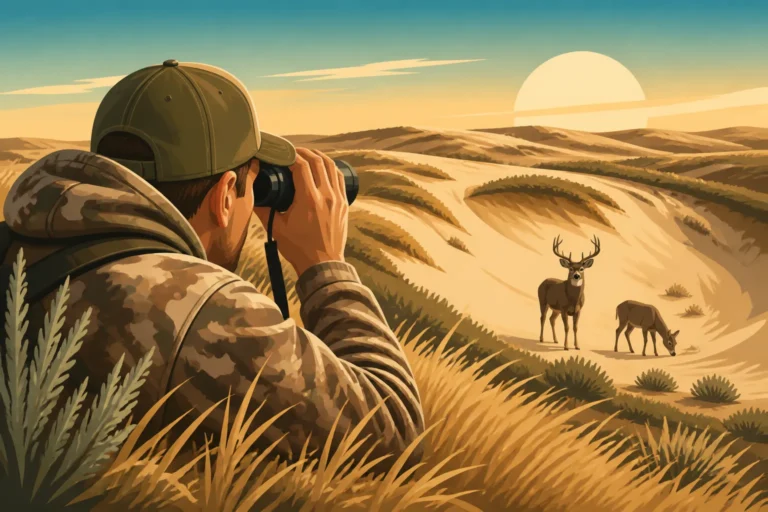
There’s nothing quite like the sight of a magnificent Nebraska whitetail buck, antlers glinting, as he strides through a picked cornfield or slips along a river bottom. But sometimes, despite all your scouting and stand placement, those mature bucks remain elusive, skirting your setup and leaving you scratching your head. This comprehensive guide will walk you through the art and science of decoying a Nebraska whitetail buck, helping you understand how to use this powerful tactic to draw those cautious giants into shooting range.
Understanding Whitetail Behavior for Decoying Success
Decoying isn't just about sticking a plastic deer in a field; it's about understanding the intricate social dynamics and seasonal urges that drive whitetail behavior. When you can anticipate their reactions, your decoy setup becomes a compelling illusion, not just a static target.
The Rut and Aggression Cues
The whitetail rut is, without a doubt, the prime time to deploy a decoy. This is when bucks are at their most vulnerable, driven by the intense biological urge to find does and breed. Their aggression levels are through the roof, especially mature bucks who have earned their dominance and are constantly on the lookout for rivals. You'll notice a significant shift in their behavior from the early season. Instead of simply feeding, they're patrolling, scent-checking, and constantly testing the boundaries of their territory. For a detailed look at this crucial period, understanding When the Whitetail Rut Peaks in Nebraska is absolutely essential for timing your decoy efforts.
During the pre-rut, which often starts in late October, bucks begin to show more aggressive tendencies. They'll start making scrapes and rubs, asserting their presence. This is a great time to start introducing a buck decoy, as younger bucks might be curious, and older bucks might see it as an intrusion. As the rut intensifies into mid-November, the competition becomes fierce. A decoy then becomes less about curiosity and more about a direct challenge. Bucks will react to a perceived rival with a mix of aggression and posturing, often circling downwind to get a scent and visually assess the "intruder."
Reading Body Language and Dominance
When a buck approaches your decoy, his body language tells a story. Understanding this narrative is crucial for knowing when to prepare for a shot or if you need to adjust your strategy. A buck that lowers his head, bristles his hair, and walks stiff-legged towards your decoy is showing aggression and intent to fight. This is the ideal response you're looking for. He's committing, and his focus is entirely on the "rival." On the other hand, if a buck approaches cautiously, head held high, frequently stopping and looking around, he might be more wary or curious rather than aggressive. He's assessing the situation, and any sudden movement from you could spook him.
It’s also important to consider the perceived dominance of your decoy. A large, mature buck decoy (like a full-body 10-point replica) can be incredibly effective at challenging dominant bucks. However, it might intimidate smaller, younger bucks who aren't ready to face a rival of that stature. Conversely, a smaller, younger buck decoy might draw in more curious young bucks, but a dominant monarch might just ignore it, seeing it as no threat. Knowing the kind of buck you're targeting and the general deer population in your area can help you choose the right decoy to project the appropriate level of dominance. Some hunters find value in mapping tools like those from GoHunt to analyze buck-to-doe ratios and general herd health, which can inform these decisions.
Choosing the Right Decoy Setup for Nebraska Whitetails
The world of deer decoys has expanded significantly, offering various options to match different hunting scenarios and buck behaviors. Picking the right one and enhancing it effectively can make all the difference.
Types of Deer Decoys and Their Applications
There are several primary types of deer decoys, each with its own advantages:
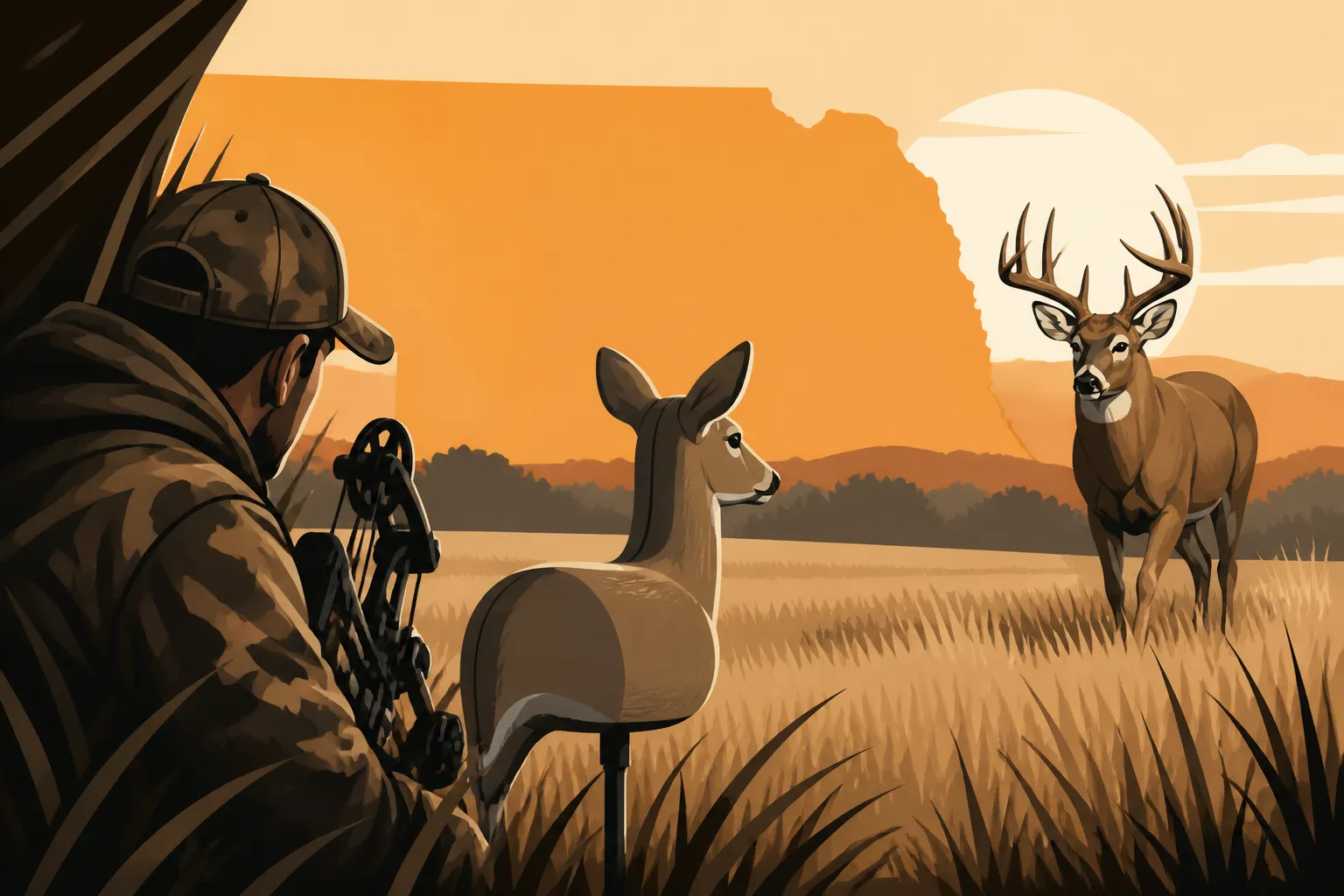
- Full-Body Buck Decoys: These are the most common and often the most effective. They present a realistic profile that challenges dominant bucks. You can choose models with different rack sizes to simulate a young challenger or a mature rival. A standing pose often conveys confidence or challenge, while a posturing or bedding pose can sometimes be more subtle. These are fantastic during the peak rut.
- Doe Decoys: While less common for drawing bucks directly, a doe decoy can be incredibly effective when paired with a buck decoy, creating a breeding scenario. This triggers a buck's primal urge to breed, overriding some of his caution. A doe decoy in a receptive pose (head down, rear elevated) can be particularly enticing.
- Fawn Decoys: Sometimes overlooked, a fawn decoy can appeal to a doe's maternal instincts or a buck's curiosity, particularly outside the peak rut or in areas with high predation. They're not typically used to draw aggressive bucks, but can work as part of a larger, more complex setup.
- 2D or Silhouette Decoys: These are lighter, easier to transport, and generally more affordable. While they lack the realism of a full-body decoy, they can still be effective, especially in lower light conditions or when bucks are already on the move. They rely more on general shape and color.
When deciding, think about your target deer. If you're after that monarch buck, a full-body, dominant buck decoy is often the ticket. If you're on public land where deer might be more pressured, a more subtle approach, perhaps with a smaller buck or a doe, might be better. Consider the specific terrain you'll be hunting, too. A bulky full-body decoy is a pain to carry through thick timber, but it really shines in open fields or on prairie edges.
Scent, Sound, and Motion Enhancements
A static piece of plastic or foam can only do so much. To truly fool a wary Nebraska whitetail, you need to engage more of his senses.
- Scent: This is arguably the most critical enhancement. Bucks rely heavily on their sense of smell. Dousing your doe decoy with estrous doe urine or your buck decoy with buck urine and tarsal gland scent can be a game-changer. Place a scent wick strategically near the decoy or even directly on the decoy itself. Be mindful of scent dispersal and always place your decoy downwind of where you expect the buck to approach, so he smells the decoy before he smells you.
- Sound: Incorporating calls can dramatically increase your decoy's pulling power. Soft grunts, tending grunts, and even rattling can simulate a realistic interaction between deer. When a buck hears what sounds like a confrontation or a receptive doe, and then sees a visual representation, it's incredibly convincing. Many hunters use Rattling and Grunting in Nebraska's Rut to draw attention, and a well-timed grunt call can finalize the commitment. For thick cover, knowing how to use Grunt Calls in Thick River Timber can apply even if your decoy is in a small clearing.
- Motion: A completely static decoy can look unnatural, especially on a calm day. Subtle motion can breathe life into your setup. There are several ways to achieve this:
- Tail Waggers: Battery-operated or wind-activated tails that twitch can mimic a deer's natural movement.
- Head Turners: Some high-end decoys allow for head articulation, letting you pose them in more natural, engaging ways.
- Decoy Bladders/Bags: Inflatable bladders or small air bags can be placed inside foam decoys to create subtle breathing motions, especially effective if you’re positioned close enough to control it.
- Wind: In breezy conditions, even a lightweight full-body decoy can sway gently, creating natural movement.
Remember, the goal is realism. Combine these elements carefully to create a scene that a buck can't resist investigating. Using a comprehensive mapping tool like those offered by GoHunt can help you scout wind patterns and predict approach routes, maximizing your chances of scent and motion reaching the right deer.
Strategic Placement and Approach for Decoying Bucks
Where and how you place your decoy, and how you position yourself relative to it, are absolutely critical for success. Get this wrong, and you might spook more deer than you attract.
Optimal Decoy Positioning and Wind Considerations
This is where the rubber meets the road. Decoy placement needs to be strategic, taking into account visibility, wind direction, and the expected approach of the buck.
- Visibility is Key: Place your decoy where it can be seen from a distance by approaching deer. Field edges, open pockets in timber, or slight rises are excellent locations. However, avoid placing it in the absolute wide open if there's no cover for you. The goal is for deer to see it, commit, and then offer you a shot as they approach.
- Angle of Attack: Position your buck decoy slightly quartering away from where you expect the buck to approach. This presents a confident, challenging posture. If using a doe decoy, position her broadside or slightly quartering away from you, presenting an ideal shot angle for an approaching buck.
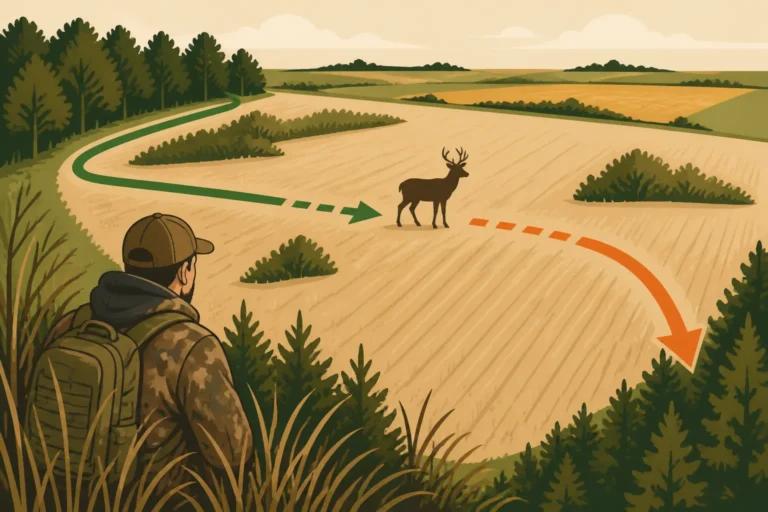
- Wind is Everything: Bucks, especially mature ones, will almost always try to circle downwind to scent-check a perceived rival or a receptive doe. This is an instinctual survival mechanism. You must position your decoy so that the buck, when he circles downwind of the decoy, is still within your shooting lane and, crucially, still upwind of your position. This means you need to be directly downwind of your decoy, or slightly crosswind, so the buck's downwind approach to the decoy brings him past your stand before he smells you. Understanding Wind Direction on Open Nebraska Prairie Stands is fundamental to this strategy. If you anticipate a buck will approach from the north, and the wind is from the west, your decoy should be to your east, so the buck circles to your south, putting him between you and the decoy.
- Distance from Stand: The ideal distance is typically 15-25 yards, offering an ethical bow shot or a comfortable rifle shot. If your decoy is too far, a buck might not fully commit or you might have a shot that's too long. If it's too close, you risk being busted when the buck approaches rapidly.
- Cover for the Decoy: While visibility is important, a little natural cover around the decoy can make it look more natural. A few tall weeds or small bushes can help break up its outline without obscuring it too much.
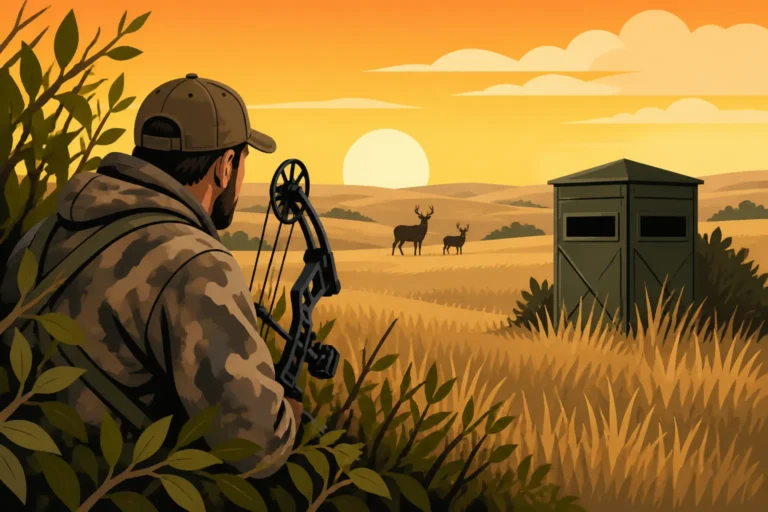
A well-executed plan might involve spending time prior to the season scouting ideal spots for Choosing a Treestand Site on Nebraska Farmland or identifying areas where you could effectively use Ground Blinds in Open Nebraska Country in conjunction with your decoy.
Calling, Patience, and Shot Opportunity
Once your decoy is set, the waiting game begins. This is where patience, combined with judicious calling, comes into play.
- Calling Strategy: Don't call constantly. Less is often more. Start with some soft grunts or tending grunts. If you see a buck at a distance looking your way, give him a soft grunt or a short rattling sequence to grab his attention. Once he commits and starts heading your way, resist the urge to keep calling. Let the visual of the decoy and his natural instincts do the work. Overcalling can sound unnatural and make a wary buck suspicious. However, if he hangs up, a soft, well-timed grunt might be just enough to draw him the rest of the way. Check out tips on Rattling and Grunting in Nebraska's Rut to perfect your timing and technique.
- Patience is a Virtue: Decoying can be incredibly exciting, but bucks can take their sweet time. They might circle, stop, stare, and then circle again. Let them work the situation. Don't fidget, don't move, and don't draw your bow or raise your rifle until the very last moment. Every movement you make should be slow and deliberate.
- Shot Opportunity: As the buck commits and approaches the decoy, he will often focus entirely on the "intruder." This is your window. Wait for him to present a clear, ethical shot. Often, as he squares up to the decoy or begins to circle, he'll give you a perfect broadside or quartering-away shot. Because his attention is diverted, you might have a bit more leeway to draw your bow or shoulder your rifle than you would on an un-distracted buck. However, be ready. These encounters can happen very quickly. Being prepared with good Entry and Exit Routes on Flat Farm Ground can also prevent spooking deer on your way in or out, which impacts future hunts.
Common Challenges and Troubleshooting Your Decoy Strategy
Decoying isn't foolproof, and you'll inevitably encounter situations where bucks don't react as expected. Knowing how to troubleshoot and adapt is crucial.
Dealing with Wary Bucks and Decoy Shyness
Nebraska whitetails, especially those mature bucks that have survived a few hunting seasons, can be incredibly wary. They've seen it all, or at least enough to make them cautious.
- Decoy Shyness: Some bucks, particularly in heavily pressured areas, might become "decoy shy." They've either encountered bad decoy setups before, or they've seen other deer react negatively. If bucks consistently skirt your decoy at a distance, stare intently, and then leave, it might be a sign of shyness. In these cases, consider:
- Changing Decoy Type: Switch from a dominant buck to a smaller buck, or even just a receptive doe. Sometimes a less aggressive posture is more appealing.
- Reduced Visibility: Instead of placing the decoy in the wide open, put it partially hidden behind some brush or a small rise. This makes it less obvious and might encourage a closer investigation.
- Focus on Scent and Sound: If the visual isn't working, lean more heavily on strong scent lures and calls. Sometimes the sound and smell of deer without the immediate visual of a static decoy can be less alarming.
- Go with Just a Rump: In extremely wary situations, some hunters only use the rear half of a doe decoy, simulating a deer that's partially hidden in cover. This provides just enough visual cue without being overtly threatening.
- High-Pressure Areas: On public land or areas with intense hunting pressure, deer are much more sensitive to anything unnatural. In these environments, you need to be even more meticulous with scent control, camouflage, and natural-looking setups. Consider using mapping tools like GoHunt to identify areas with less pressure if available, or scout for overlooked pockets. Also, ensure you follow all regulations for using decoys, especially on public land.
Weather, Terrain, and Public Land Adaptations
Nebraska's diverse landscapes and often unpredictable weather demand adaptability from hunters.
- Weather Conditions:
- Windy Days: While some wind can add natural movement to a decoy, excessive wind can make it sway unnaturally and even blow it over. High winds also make it harder for deer to hear calls and for scent to disperse predictably. On very windy days, consider securing your decoy extra well or focusing on areas with natural windbreaks.
- Rain/Snow: Rain can wash away scent, and heavy snow can obscure your decoy. However, fresh snow can also make deer more visible against the white backdrop and make tracks easier to read. Adapt your scent application, and ensure your decoy isn't buried or plastered with snow.
- Cold Temperatures: Deer are often more focused on feeding during extreme cold. While the rut still drives them, they might be less inclined to engage in long confrontations. Warm, still days during the rut can be fantastic for decoying, as scent travels well and deer are more active.
- Terrain Challenges:
- Open Prairie/Sandhills: In areas like the Sandhills, finding adequate cover for yourself while maintaining visibility for your decoy can be challenging. Ground blinds brushed into the landscape are often the best option. Use the natural contours of the land, like creek beds or slight rises, to your advantage. Tools from GoHunt can show topographical data, helping you pick these subtle features.
- River Bottoms/Timber: In dense river bottoms or thick timber, visibility is limited. Here, focus on small clearings, pinch points, or trail intersections. You might need to place your decoy closer to your stand, as deer won't see it from as far away. This is where those Grunt Calls in Thick River Timber come in handy, drawing deer closer before they even see the decoy.
- Farmland: Cornfields, milo stubble, and soybean fields offer excellent opportunities. Field edges, terraces, or corners are prime spots. Deer often travel along these edges, and a decoy placed just off the edge can be incredibly effective. Make sure your decoy is elevated enough to be seen above crop stubble.
- Public Land Considerations: Decoying on public land comes with its own set of challenges. Increased pressure means deer are warier. Also, you need to be acutely aware of other hunters. Always use caution, wear sufficient blaze orange when required (even when using a decoy, especially during overlapping seasons), and make sure your decoy isn't placed in a way that could confuse another hunter. Never set up where your decoy might draw a buck into another hunter's line of fire. Prioritize safety above all else. Scouting Nebraska Public Ground Before Opening Day can give you a significant advantage in finding less pressured areas suitable for decoying.
Remember, decoying is a dynamic tactic. What works one day or in one spot might not work in another. Be observant, be willing to adapt, and most importantly, enjoy the thrill of watching a majestic Nebraska whitetail buck commit to your setup.
| Decoy Scenario | Ideal Conditions | Decoy Type Recommendation | Calling Strategy | Key Consideration |
|---|---|---|---|---|
| Peak Rut Aggression | Calm to moderate wind, clear visibility | Full-body buck, dominant rack | Aggressive grunts, rattling | Downwind approach of buck to decoy, you downwind of approach |
| Pre-Rut Curiosity | Variable weather, moderate visibility | Smaller buck or doe | Soft grunts, bleats | Buck might circle wider, be patient and subtle |
| Breeding Scene | Good visibility, moderate wind | Doe in receptive pose + buck | Tending grunts, doe bleats | Ensure both decoys look natural together, good scent |
| Wary Deer/High Pressure | Any conditions, limited visibility | Smaller buck, or just doe | Soft, infrequent grunts | Focus on realism, scent, and extreme scent control for yourself |
Disclaimer
Hunting involves inherent risks, and conditions can change rapidly. Always prioritize safety, follow all Nebraska Game and Parks Commission regulations, and hunt ethically. This guide provides general information and should not replace proper training, local knowledge, or professional guidance.