Public Ground in Northeast Nebraska
Finding reliable public hunting ground in the agricultural heartland of Northeast Nebraska can feel like trying to find a needle in a haystack. Most of what you see from the road is private farmland, leaving many hunters frustrated and wondering where they can actually go. This guide aims to pull back the curtain on the accessible public hunting opportunities in this region, helping you locate and successfully hunt the pockets of game-rich land available.
Understanding Northeast Nebraska's Landscape for Public Hunting
Northeast Nebraska is a region of vast contrasts, dominated by fertile agricultural fields, but also blessed with vital river systems and hidden pockets of diverse habitat. Understanding this landscape is the first step to unlocking its public hunting potential.
The Challenge of Private Land Dominance
Let's be real, a significant chunk of Northeast Nebraska is private land, primarily used for row crops like corn and soybeans, or for livestock grazing. This can be incredibly disheartening when you’re driving around, seeing deer in a distant field or pheasants flushing from a shelterbelt, but realizing it’s all behind "No Trespassing" signs. The frustration is palpable, especially for those of us who grew up expecting wide-open public spaces. This reality means that hunters often have to work harder, scout smarter, and be more strategic about where and how they pursue game. You can't just pick a spot on a map and expect easy access; it requires a detailed understanding of the available public land programs and a willingness to explore less obvious options.
This dominance of private land impacts not just where you can hunt, but how you hunt. For instance, deer movement patterns are heavily influenced by crop cycles and human activity on private ground. Learning to read the subtle cues of farm country, like where deer might cross a fenceline or funnel into a small timber patch adjacent to a public easement, becomes paramount. It’s a different game than hunting vast western landscapes, one that demands patience and a keen eye for overlooked details.
Key Geographical Features Offering Public Access
Despite the prevalence of private land, Northeast Nebraska boasts crucial geographical features that provide valuable public hunting access. The region is traversed by significant river systems like the Elkhorn River and its tributaries, and forms part of the mighty Missouri River corridor on its northern and eastern edges. These river bottoms are often the lifeblood of public hunting in the area, offering linear corridors of timber, brush, and marshy cover that defy the surrounding agricultural monoculture.
Beyond the rivers, you'll find various state Wildlife Management Areas (WMAs) and State Recreation Areas (SRAs) that are specifically managed for wildlife and public recreation, including hunting. These might be old oxbow lakes along a river, reclaimed gravel pits, or tracts of restored grassland and wetland habitat. While sometimes smaller in size compared to public lands further west, these areas are vital oases for deer, turkeys, pheasants, quail, and various waterfowl. Identifying these pockets and understanding the habitat they provide is key to successful hunting in this part of the state.
Navigating Public Access Programs and Tools
Finding public hunting ground in Northeast Nebraska isn't always as simple as looking for a national forest sign. It often involves leveraging specific state programs and modern digital tools to uncover hidden opportunities.
The Public Access Atlas and OFW Program
The Nebraska Game and Parks Commission's Nebraska Public Access Atlas is an indispensable tool for any hunter in the state, and especially so in Northeast Nebraska. This atlas, available both in print and digitally, meticulously maps out all public hunting lands, including state wildlife management areas, federal lands, and most importantly for this region, lands enrolled in the Open Fields and Waters (OFW) program. The OFW program is a true game-changer for areas dominated by private land; it's where private landowners voluntarily enroll their property to allow public hunting access, often in exchange for habitat management assistance or financial incentives.
When you're scrutinizing the atlas for Northeast Nebraska, pay close attention to the OFW tracts. These parcels are often small, strategically located patches of timber, wetlands, or grassland that provide crucial habitat and access in an otherwise private landscape. It's important to read the signs carefully at each OFW site, as rules can vary regarding walk-in-only access, permitted activities, and specific season dates. Understanding How Many Acres Are in Open Fields and Waters can give you a sense of the scale of these opportunities. These areas provide invaluable access for a wide range of game, from deer and turkeys in river bottom areas to pheasants and quail in upland cover.
Utilizing Digital Mapping Tools
In today's hunting world, digital mapping tools have become almost as essential as your rifle or bow, particularly when dissecting the patchwork of public and private land in Northeast Nebraska. Apps like onX Hunt are absolute game-changers. They allow you to overlay property lines on satellite imagery, clearly differentiating between public land, OFW tracts, and private holdings. This capability is invaluable for scouting from home, identifying potential access points, and avoiding accidental trespass. You can see precisely where public land ends and private land begins, even in dense cover or where physical signage might be sparse.
Imagine you're looking at a small WMA that backs up to a large cornfield. With onX Hunt, you can see if a sliver of public ground extends further than you thought, or if an OFW tract creates a hidden corridor into an area where deer might be bedding. This level of detail helps you plan your Entry and Exit Routes on Flat Farm Ground meticulously, ensuring you're always on legal ground and maximizing your hunting time. While some platforms like GoHunt offer broader scouting and draw information, for on-the-ground navigation and real-time property line awareness in Nebraska, onX Hunt is particularly robust and widely utilized by hunters seeking to make the most of limited public access.
Specific Public Hunting Areas in Northeast Nebraska
While the region isn't known for sprawling national forests, Northeast Nebraska offers specific areas and types of public access that, when combined, create significant hunting opportunities.
Elkhorn River Valley Access
The Elkhorn River is a ribbon of life flowing through the heart of Northeast Nebraska, providing invaluable habitat and public access. Along its winding course, you'll find numerous WMAs and smaller public easements, often characterized by dense riparian timber, brush, and pockets of marsh. These areas are prime hunting grounds for whitetail deer, especially for those willing to get into the thick stuff. The river corridors act as natural travel routes and bedding areas, making them excellent locations for River-Bottom Whitetail Hunting in Eastern Nebraska.
Beyond deer, the Elkhorn River and its associated public lands offer fantastic turkey hunting. The mature cottonwoods and oaks provide roosting sites, and the diverse undergrowth creates ideal foraging habitat. For waterfowl hunters, segments of the Elkhorn offer jump shooting opportunities, particularly during migration. It's a fantastic place to practice Spring Turkey Calling in Nebraska's River Corridors or try to catch ducks off guard in a hidden bend. Always be prepared for thick cover and potential wet conditions in these riverine environments.
Missouri River and Tributary Access
The majestic Missouri River forms a significant portion of Nebraska's eastern and northern borders, and along its banks lie important public hunting areas. The U.S. Army Corps of Engineers manages extensive tracts of land along the Missouri, which often includes bottomland timber, islands, and scattered fields. These areas are crucial for migratory waterfowl, offering opportunities for duck and goose hunting, especially in cooperation with the vast fields nearby. Additionally, the timbered bluffs and islands of the Missouri provide excellent habitat for whitetail deer and turkeys.
Access to these areas can vary; some require boat access, while others have designated parking and walk-in entry. It's critical to consult the Public Access Atlas for specific access points and regulations, as some areas may have unique rules or closures. Hunting the Missouri River corridor can be physically demanding, with steep terrain and heavy cover in some spots, but the rewards can be substantial, especially for big deer or large flocks of geese. The sheer scale and wildness of portions of the Missouri River make it a unique hunting experience in this part of the state.
Smaller WMAs and State Recreation Areas
Scattered throughout Northeast Nebraska's counties are numerous smaller Wildlife Management Areas and State Recreation Areas that provide essential public hunting opportunities. These might not be as expansive as the river corridors, but they are vital havens for local wildlife and can offer excellent hunting, especially if you're targeting upland birds or resident deer. Think of places like Maskenthine Lake WMA near Stanton, which offers a mix of timber, grassland, and wetland habitat, or Oak Ridge WMA in northern Stanton County.
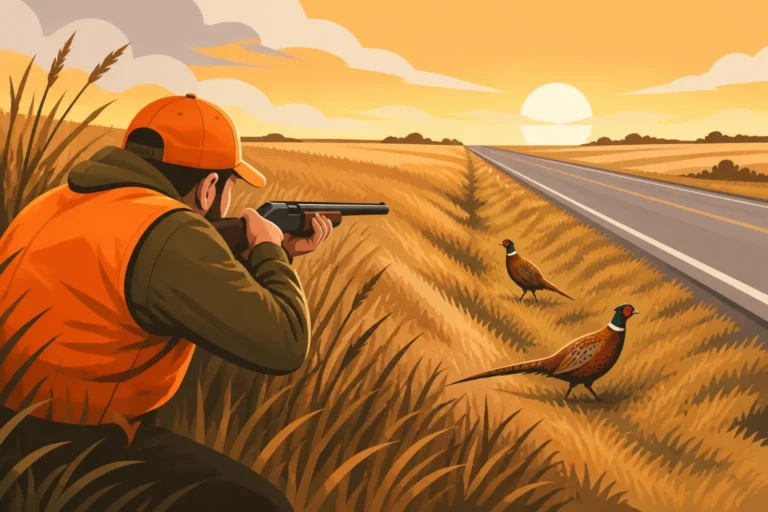
These smaller WMAs often feature diverse habitats such as native grassland, restored wetlands, old fields, and shelterbelts. They are prime locations for Walking Nebraska Pheasant Cover With a Dog or searching for quail coveys. For deer and turkey hunters, these areas can serve as bedding or feeding areas, especially if they are adjacent to private crop fields. It’s always a good idea to check the specific rules and permitted species for each individual WMA, as some may have unique regulations regarding hunting methods or periods. Don't overlook these smaller parcels; they can often be less pressured than larger, more well-known public lands, especially if you're willing to walk a bit further from the parking area.
Here's a quick overview of what you might expect in Northeast Nebraska's public hunting lands:
| Type of Public Access | Common Habitat | Primary Species | Hunting Challenges | Key Tools Needed |
|---|---|---|---|---|
| Open Fields and Waters (OFW) | Grassland, riparian, crop residue, wetlands | Pheasant, Quail, Deer, Turkey, Waterfowl | Check specific rules, often walk-in only, small parcels | Public Access Atlas, onX Hunt, good boots |
| Elkhorn River WMAs/Easements | Dense timber, brush, marsh, oxbows | Whitetail Deer, Turkey, Waterfowl | Thick cover, wet ground, navigating river bends | Waders, GPS/onX, calls |
| Missouri River Public Lands | Bottomland timber, bluffs, islands, wetlands | Deer, Turkey, Waterfowl | Variable access (boat often needed), steep terrain, strong currents | Boat, decoys, sturdy boots, rangefinder |
| Smaller WMAs/SRAs | Grassland, old fields, shelterbelts, wetlands | Pheasant, Quail, Deer, Turkey, Small Game | Potentially high pressure on opening day, small size | Bird dog, blaze orange, mapping app |
Strategies for Hunting Pressured Public Ground
Hunting public land in Northeast Nebraska means you'll likely encounter other hunters, especially during peak seasons. To increase your odds of success, you need a strategy that accounts for this pressure.
Early Morning and Late Evening Approaches
The earliest hours of the morning and the last hours of daylight are often your most productive times on public land, particularly for deer and turkeys. These are the periods when game animals are most active, moving between bedding and feeding areas. Being the first hunter to quietly slip into an area before dawn or waiting until the last legal minute in the evening can give you a significant advantage. Most other hunters will arrive later, leave earlier, or won't venture far from their vehicles in the dark.
This strategy requires discipline and preparation. Know your chosen spot intimately from Scouting Nebraska Public Ground Before Opening Day, understand the wind direction, and have your route planned out to minimize disturbance. For deer, it means setting up well before first light, allowing the woods to settle. For turkeys, it means being in position to call a gobbler off the roost at dawn. These low-light periods are when deer feel safest moving, and the early hunter often reaps the rewards.
Deeper Penetration and Overlooked Pockets
One of the most effective strategies for finding unpressured game on public land is simply to go where other hunters won't. This often means walking further, tackling tougher terrain, or navigating through dense, unpleasant cover. Most hunters will stick to within a quarter-mile of easy access points or well-worn trails. By pushing deeper into a WMA or an OFW tract, even just an extra half-mile, you can dramatically increase your chances of finding undisturbed game.
Use your digital mapping tools like onX Hunt to identify these "overlooked pockets" – small fingers of timber extending into a field, isolated marshy areas, or dense thickets that look unappealing to most. These spots might not show obvious deer sign from the edge, but they can be sanctuaries for animals trying to escape pressure. Sometimes, it's about finding a unique geographic feature, like a small drainage or a Hunting a Creek Crossing in the Sandhills (though this is less common in NE, the principle applies to any natural funnel), that provides cover and acts as a travel corridor. The effort required is a deterrent for many, which makes it an opportunity for you.
Hunting Mid-Week and During Inclement Weather
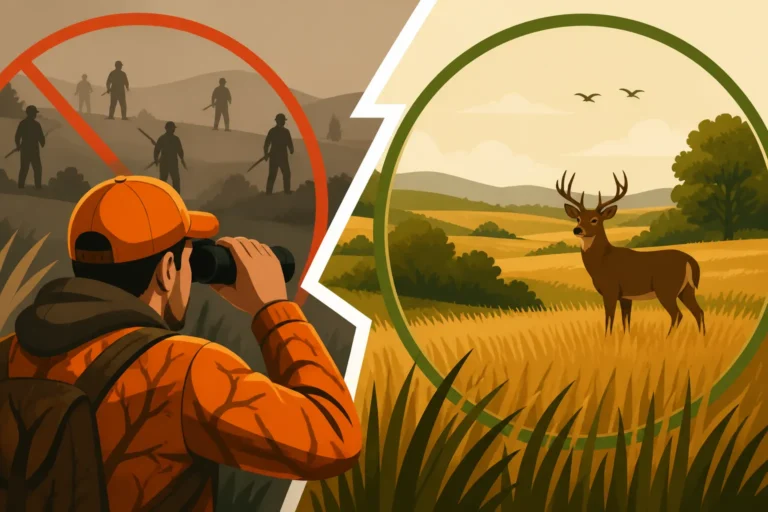
Another excellent way to avoid crowds and increase your success rate on public ground in Northeast Nebraska is to hunt during less popular times. Weekends are always the busiest, so if your schedule allows, take a day off during the week. You'll often find yourself with vast stretches of public land all to yourself. This reduced pressure can make deer more relaxed and pheasants less wary.
Similarly, don't shy away from hunting when the weather isn't perfect. A light rain, a steady drizzle, or even a brisk, blustery day will send many hunters home. For the dedicated hunter, these conditions can be gold. Deer often move more freely during light rain, which also helps muffle your footsteps and wash away your scent. Cold, windy days can push pheasants deeper into cover, making them hold tighter for a pointing dog. While it might be less comfortable, embracing less-than-ideal weather can lead to some of your most memorable and successful hunts. Just make sure you're dressed appropriately with proper Clothing for Nebraska Wind and Cold to stay safe and comfortable.
Disclaimer
This article is for general informational purposes only and does not constitute professional advice. Laws, prices and regulations vary by location and change over time. Consult a qualified professional for guidance on your specific situation.