CRP Loss Since the 1990s Peak
For many of us who cherish hunting in Nebraska, especially for pheasants and other upland birds, there's a recurring conversation: "It's just not like it used to be." A huge part of that sentiment stems from the dramatic reduction in Conservation Reserve Program (CRP) acres since its peak. This guide will dive deep into what CRP is, why its decline impacts our hunting experiences, and what hunters can understand about these profound landscape changes that affect game populations across the state.
The Lifeline of the Prairie: Understanding CRP's Original Promise
To truly grasp the impact of CRP loss, we first need to understand what the Conservation Reserve Program is and why it became such a cornerstone for wildlife, especially in states like Nebraska. Imagine vast stretches of marginal cropland, often susceptible to wind and water erosion, being taken out of intensive production. That's the essence of CRP. It’s a voluntary program established through the U.S. Farm Bill, where landowners receive annual rental payments for enrolling environmentally sensitive land into conservation practices. Instead of planting corn or soybeans on steep slopes or highly erodible fields, they'd plant grasses, legumes, or trees, effectively "retiring" that land from agriculture for a contract period, typically 10 to 15 years.
The beauty of CRP, from a hunter's perspective, was its dual benefit. It served the critical purpose of soil conservation, preventing the precious topsoil from literally blowing away with every strong Nebraska wind or washing into rivers during heavy rains. But it also inadvertently created millions of acres of prime habitat. These perennial grasslands, often undisturbed for years, provided exceptional nesting cover for pheasants and quail, vital winter thermal cover, escape routes for deer, and diverse foraging opportunities for a host of other wildlife. It was, quite simply, a game-changer for upland bird populations, turning once sparse agricultural landscapes into havens for wildlife.
Think about the classic image of a rooster pheasant bursting from thick, waist-high grass – that mental picture was, in many ways, built on the back of CRP. These weren't just random patches; they were often strategically located strips, blocks, and entire fields, knitting together a fragmented agricultural landscape with wildlife-friendly cover. It provided safety from predators during critical nesting periods, protected young birds from the elements, and offered refuge during the harsh Nebraska winters. For hunters, it meant more birds, often in more accessible locations, contributing to some truly banner years in the field.
CRP as a Game Changer for Upland Birds
During the program's peak, CRP transformed the hunting landscape across Nebraska, particularly for ring-necked pheasants. Before widespread CRP, pheasant populations were often tied more closely to remnant pockets of native prairie, riparian corridors, or specific farming practices that left more cover. CRP changed that equation dramatically by bringing extensive, high-quality nesting and brood-rearing cover into areas that were previously dominated by clean-farming practices. This meant that birds had more places to thrive, leading to higher populations and more consistent hunting opportunities year after year.
Hunters saw the difference firsthand. Fields that were once barren after harvest or offered minimal cover suddenly became thick with grass, providing perfect habitat for pheasants to breed and raise their young. This abundance of undisturbed cover led to higher survival rates for chicks and adults alike, fueling a period of robust pheasant populations. It wasn't uncommon for stories of incredible pheasant flushes and generous bag limits to circulate, all thanks in large part to these enrolled acres. The sheer volume of CRP meant birds could disperse more widely, find sanctuary, and rebound even after tough winters or hunting pressure. Nebraska's Ring-Necked Pheasant Story is deeply intertwined with the rise and fall of this program.
The program's success for pheasants was so profound that it became a benchmark against which future habitat initiatives were often measured. For many, CRP wasn't just another government program; it was the reason they had such memorable hunts, the reason their dogs got so many points, and the reason pheasants felt truly abundant in Nebraska. Its presence meant a more resilient wildlife population, less dependent on scattered patches and more able to withstand various environmental pressures, providing a buffer against the challenges that game species inherently face.
From Peak Abundance to Steady Decline: Tracking Nebraska's CRP Story
While CRP brought a golden era for wildlife and hunters, that peak, like many good things, didn't last forever. The program saw its highest enrollment in the late 1980s and early to mid-1990s, with millions of acres across the country dedicated to conservation. In Nebraska, this translated into hundreds of thousands of acres of vital grassland habitat, particularly in key pheasant and quail regions. These were the years when the "good old days" of pheasant hunting were truly forged for many.
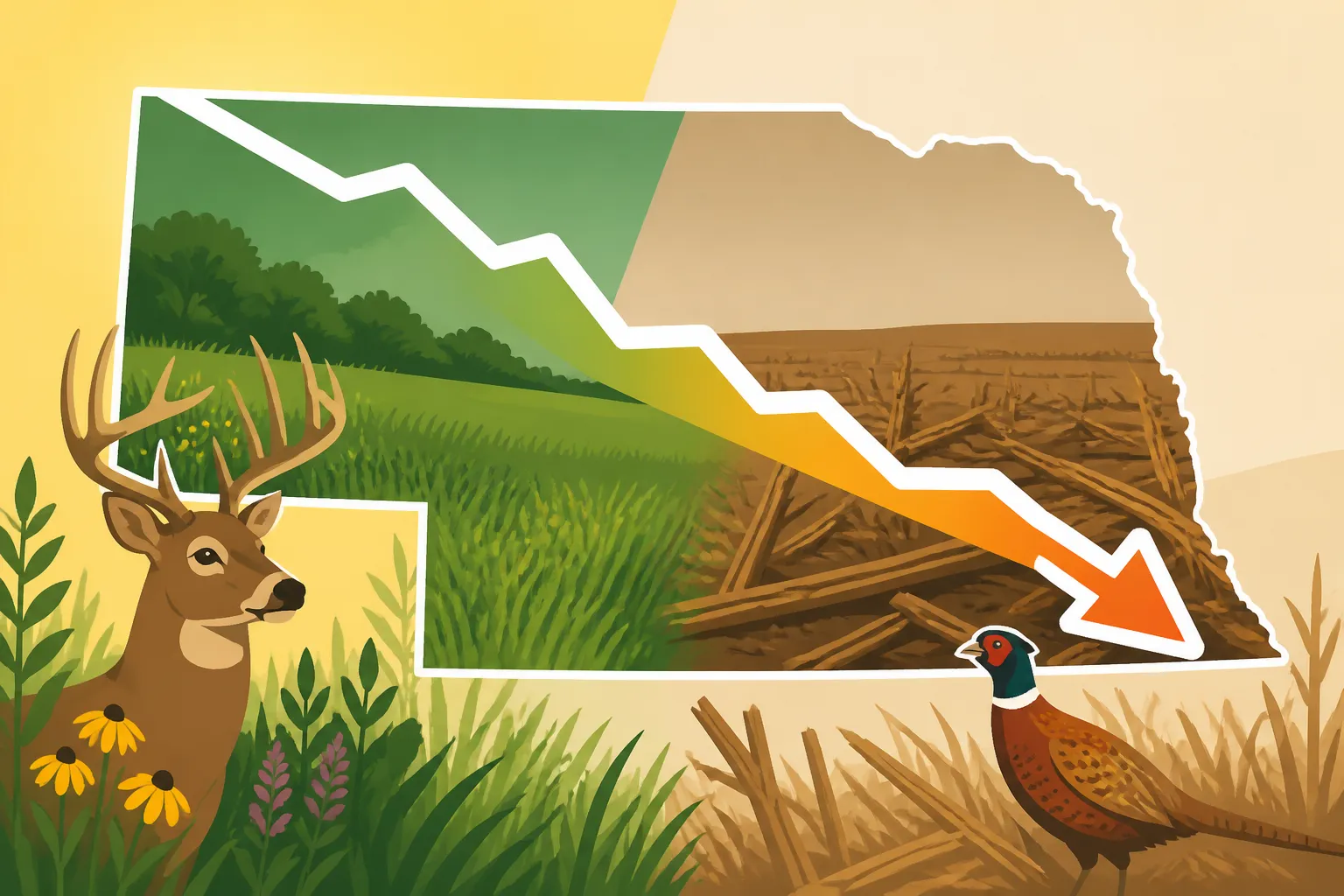
However, since that high point, Nebraska, like many other agricultural states, has experienced a significant and steady decline in its CRP acreage. It wasn't a sudden drop, but a gradual erosion, acre by acre, year by year, as contracts expired and weren't renewed at the same rate. This decline has been driven by a confluence of factors, creating a challenging environment for conservation efforts that rely on voluntary landowner participation. The frustration among hunters is palpable when they see once-thriving pheasant fields now planted in row crops.
The landscape across Nebraska visibly changed. Where once stood tall, waving grass, now there are often vast fields of corn or soybeans. This transformation isn't just an aesthetic one; it fundamentally alters the carrying capacity of the land for game species. Understanding How Much CRP Nebraska Has Lost helps explain why hunting dynamics have shifted so noticeably over the past few decades. It's a stark reminder that habitat isn't static; it's constantly in flux, influenced by policy, economics, and the decisions of individual landowners.
Economic Shifts and Policy Changes Driving the Decline
Several key factors have contributed to the steady decline of CRP acres in Nebraska. Primarily, agricultural economics play a massive role. When commodity prices for crops like corn and soybeans are high, the financial incentives for farmers to plant those crops often outweigh the rental payments offered by the CRP program. For a landowner, the decision to farm every available acre can be a sound business choice, even if it means sacrificing habitat. It’s tough to blame them for making decisions that ensure their livelihood, but the impact on wildlife habitat is undeniable.
Beyond commodity prices, changes in Farm Bill policies and enrollment priorities have also played a part. Sometimes the total acreage cap for CRP is reduced, or the focus shifts to specific types of conservation, making it harder for certain lands to qualify or for landowners to find suitable contracts. The bureaucratic process can also be a deterrent; navigating paperwork and ensuring compliance can be time-consuming for busy farmers. These policy shifts, coupled with the economic pull of farming, create a powerful current against large-scale CRP enrollment, making it difficult to maintain the habitat levels seen in the program's heyday.
The consequence of these economic and policy forces is a landscape with fewer undisturbed grasslands. As contracts expire, if they aren't renewed, those acres revert to agricultural production. This loss is especially keen in regions where agriculture is the dominant land use. The patches of cover that once provided crucial nesting and wintering habitat become smaller, more isolated, and less effective for supporting robust game populations. It's a constant battle between agricultural productivity and the need for robust wildlife habitat, and for many years, the scales have tipped away from conservation.
The Impact of Reduced CRP Acreage on Habitat Connectivity
The decline in CRP acres doesn't just mean "less cover" in a general sense; it also significantly impacts habitat connectivity. Think of a healthy ecosystem for pheasants or deer as a mosaic of different habitat types – nesting cover, food sources, winter cover, and travel corridors. CRP provided many of these pieces and, crucially, linked them together, allowing wildlife to move safely between areas, find mates, and access necessary resources throughout the year. As CRP disappears, these connections are broken.
When large blocks of CRP are replaced by row crops, wildlife populations become isolated in smaller, fragmented pockets of habitat. This fragmentation can lead to several problems: reduced genetic diversity, increased exposure to predators when moving between limited cover, and a struggle to find adequate resources during different seasons. For instance, a pheasant hen might find good nesting cover in a small patch of grass, but if her brood has to cross a half-mile of harvested field to reach a water source or a different food plot, their chances of survival plummet. This issue is particularly relevant to species like the Bobwhite Quail, which rely on nearby woody coverts for survival, and where Bobwhite Quail in Eastern Nebraska populations are often tied to quality, contiguous habitat.
This loss of connectivity also makes game populations more vulnerable to environmental stressors. A harsh winter with deep snow, for example, might be survivable if birds have access to large, interconnected blocks of dense thermal cover. But if that cover is now fragmented into small, isolated islands, many birds will perish from exposure or starvation, unable to reach better sanctuary. Similarly, intense drought can impact scattered populations far more severely than those that can easily move to find better forage or water. The resilience of wildlife populations is directly tied to the health and connectivity of their habitat, and the decline of CRP has chipped away at that essential foundation.
The Ripple Effect: How Less CRP Impacts Nebraska's Game Species
The erosion of CRP acreage isn't an abstract concept for wildlife; it has very real, measurable impacts on game populations. While CRP was designed for soil conservation, its profound positive effect on pheasants and quail was undeniable. As those acres dwindle, so too do the places these birds can effectively nest, rear their young, and survive the winter. It’s a direct correlation that hunters have observed for decades, often with a heavy heart.
For pheasants, the loss of CRP means fewer acres of crucial nesting habitat, leading to lower nest success and fewer birds entering the fall population. Nebraska Pheasant Population Decline is a complex issue, but the reduction in secure nesting cover is undeniably a major contributing factor. It also means less winter cover, leaving birds exposed to blizzards and extreme cold, which can lead to significant die-offs during harsh winters. Similarly, quail, which thrive in a mosaic of grass and brush, find their prime habitat shrinking and becoming more fragmented.
Deer, too, feel the pinch, albeit differently. While not as dependent on expansive grasslands as pheasants, deer use CRP for fawning cover, bedding areas, and travel corridors, especially in agricultural landscapes. Bucks will bed down in taller grasses, and does will seek out thick cover for their newborn fawns. Without these areas, deer might be pushed into less secure cover, making them more visible and vulnerable. The loss of CRP means fewer safe havens and more reliance on other, often less ideal, forms of cover.
Pheasants and the Shrinking Prairie
For anyone who hunts pheasants in Nebraska, the connection between CRP and bird numbers is crystal clear. When CRP acres were at their peak, so too were the opportunities to walk vast, grassy fields and flush coveys of pheasants. These fields provided everything a pheasant needs: dense, undisturbed cover for nesting, a buffet of insects and seeds for growing chicks, and protection from predators and the elements. They were sanctuaries, fostering healthy and expanding populations.
As that CRP habitat has vanished, often replaced by continuous row crops, the challenges for pheasants have escalated. Nesting success suffers greatly when hens are forced to nest in hayfields that are cut too early, or in narrow roadside ditches where they are exposed to increased predation. Winter survival becomes a game of chance, with fewer safe havens to escape bitter winds and deep snow. Hunters now often find themselves walking vast stretches of open ground, searching for increasingly smaller and more scattered patches of cover, often near shelterbelts or cattail sloughs. This makes hunting more challenging and reduces the overall bird harvest.
Conservation efforts like The Berggren Pheasant Plan and its subsequent iterations have aimed to address this habitat deficit, focusing on improving existing cover and encouraging new plantings. However, the sheer scale of the CRP loss means these efforts are often playing catch-up, trying to mitigate the effects of widespread habitat destruction. For hunters, it means adapting to a landscape where every patch of quality cover is precious and understanding how to effectively hunt these remaining pockets is key.
Quail and Deer: Less Obvious, But Still Significant Impacts
While pheasants often get the most attention when discussing CRP, bobwhite quail also suffered significantly from the decline in enrolled acres. Quail thrive in what's known as "edge habitat" – areas where grasslands meet brushy cover, providing both open areas for foraging and dense cover for escape and thermal protection. CRP, especially when combined with existing woody coverts, created ideal conditions for quail coveys. The loss of these grass buffers and connecting cover has made it harder for quail populations to maintain a foothold, particularly in the eastern parts of the state where they are most prevalent.
For deer, the impact is perhaps less dramatic but still important. In agricultural heavy areas, CRP provided vital bedding cover, especially during the middle of the day when deer seek seclusion. Does would use these thick grasslands to hide their fawns, providing a safe nursery away from disturbances. During the rut, these grassy blocks could offer travel corridors and staging areas for bucks seeking does. As these acres convert back to row crops, deer are forced to rely more heavily on smaller woodlots, creek bottoms, and standing crops for cover, which might not offer the same level of security or refuge.
The overall consequence for both quail and deer is a reduction in available, high-quality habitat, leading to potentially lower populations, increased stress, and altered movement patterns. Hunters who used to find deer bedded consistently in a particular CRP field now might have to re-evaluate their strategies, focusing more on Entry and Exit Routes on Flat Farm Ground or deeper timber. For quail, it means fewer coveys and often smaller coveys, making finding them more challenging. It reinforces the idea that all game species, in varying degrees, benefit from diverse and abundant habitat, and the loss of any major component, like CRP, has a cascading effect.
Navigating the New Landscape: Hunting in a Post-CRP Era
So, what does all this mean for the modern Nebraska hunter? It means adapting, being smarter about scouting, and understanding that the game has literally changed. The days of simply driving around and spotting hundreds of CRP fields brimming with birds might be less common. Hunters now need to be more strategic, focusing on remaining habitat, utilizing available public access, and leveraging technology to find those precious spots.
This doesn't mean hunting is impossible or not worthwhile; it just means the challenges are different. It forces us to become better habitat readers and more efficient hunters. It also highlights the importance of supporting conservation efforts that aim to restore or create new habitat, even on a smaller scale. We are looking at a different game plan than our predecessors, and success now relies more on meticulous planning and careful execution.
The silver lining, if there is one, is that this shift has made many hunters incredibly resourceful. It’s about doing your homework, identifying where the habitat still exists, and putting in the boots-on-the-ground effort. This new era requires a deeper understanding of the land, the species you pursue, and how to maximize your chances in a landscape that has undergone significant changes. It's a testament to the resilience of both wildlife and hunters in Nebraska.
| Habitat Type | Role for Game Species | Importance on the Landscape | Challenges of Loss |
|---|---|---|---|
| Established CRP Grass | Nesting, brood-rearing, thermal cover | Critical | Reduced bird populations |
| Row Crops (no CRP) | Limited cover, seasonal food | Dominant in many areas | Exposure, limited sanctuary |
| Woody Coverts | Winter thermal, escape cover | Localized but vital | Over-pressured, fragmented |
| Wetland Edges | Water, insects, escape cover | Pockets of productivity | Vulnerable to drought |
Scouting for Success in Remaining Habitat
With less CRP, scouting becomes absolutely paramount. You can't just assume birds or deer will be in the same old spots. Hunters now need to identify remaining patches of suitable habitat and understand how game uses those areas throughout the season. This often means focusing on smaller, overlooked parcels, public lands that have conservation cover, or seeking permission on private ground that still maintains some form of diverse habitat. Learning to Read a Cedar Draw for Deer Movement or understand how birds utilize a Hunting a Shelterbelt Between Nebraska Fields becomes even more critical.
Successful scouting in a post-CRP landscape involves more than just driving by; it requires getting out and walking, looking for fresh sign, and paying attention to subtle details. Where are the thickest stands of grass? Are there unharvested crop strips nearby? What kind of winter cover is available? These questions guide your efforts. Tools like satellite imagery on platforms such as GoHunt can be incredibly valuable for identifying these remaining habitat pockets from afar, allowing you to narrow down areas to physically scout. You can see where changes have occurred over time and pinpoint potential hotspots.
Furthermore, understanding Late-Season Food Sources in Nebraska becomes essential. As natural cover diminishes, game animals will be drawn to food sources that offer both nutrition and some degree of security. This could be standing corn, small food plots, or even waste grain in fields adjacent to existing cover. Combining observations of existing cover with knowledge of available food sources helps paint a clearer picture of where game will be. The more detailed your understanding of these micro-habitats, the better your chances of success.
Utilizing Public Access and Mapping Tools
In a landscape with reduced private land habitat, publicly accessible hunting areas become even more vital. Nebraska has fantastic programs like the Nebraska Public Access Atlas and the Nebraska's Open Fields and Waters Program which delineate tens of thousands of acres for public hunting. These areas often prioritize habitat, including enrolled CRP or other conservation plantings, making them prime targets for hunters seeking birds and deer. Learning to interpret the Atlas and utilizing its resources is an absolute must.
When using public land, mapping applications (like those offered by GoHunt or similar providers) are indispensable. They allow you to overlay property boundaries, topographic maps, and satellite imagery, helping you identify public access points, track your movements, and find those elusive pockets of cover that might hold game. These tools are critical for navigating large tracts of public ground, understanding where you can legally hunt, and even identifying specific features like drainages, old homesteads, or subtle elevation changes that might concentrate game. The ability to scout digitally before you ever step foot on the ground is a huge advantage in this new era.
Moreover, these platforms can help you plan your approach and exit routes, which is vital for minimizing disturbance on publicly pressured ground. You can analyze terrain, identify strategic setups, and even estimate walking distances – all before leaving home. For non-residents or those exploring new areas, these mapping tools are a game-changer, allowing you to quickly get a lay of the land and make informed decisions about where to spend your valuable hunting time. Even something as simple as using these tools to identify Wind Direction on Open Nebraska Prairie Stands can mean the difference between seeing game and coming up empty-handed.
Disclaimer
This article is for general informational purposes only and does not constitute professional advice. Laws, prices and regulations vary by location and change over time. Consult a qualified professional for guidance on your specific situation.