Reading Sign on a Nebraska Sandhills Two-Track
The vastness of the Nebraska Sandhills can feel overwhelming when you’re trying to find game. With so much open country, it’s easy to feel like you’re just wandering aimlessly. But those subtle two-track roads, often barely more than tire ruts through the grass, are actually critical corridors for wildlife. Knowing how to read the sign on these pathways can transform a frustrating hunt into a successful one. This guide will walk you through deciphering the hidden language of the Sandhills two-tracks, helping you understand game movement and improve your hunting strategy.
Understanding the Sandhills Environment
The Sandhills are a unique and often unforgiving landscape, and the two-track roads that crisscross them are no exception. They’re not your typical gravel roads; they’re a constantly changing canvas where every print and disturbance tells a story, if you know how to look.
The Dynamic Nature of Sand Two-Tracks
Imagine a shallow, sandy riverbed, but instead of water, it’s loose sand and sparse vegetation. That’s often what a Sandhills two-track feels like. These trails are rarely heavily maintained, meaning they’re constantly being reshaped by the elements and the traffic — both human and animal. The sand itself varies from fine, powdery dust in dry conditions to packed, damp soil after a rain, all within a few yards. This variability is key to understanding how sign will appear and how long it might last.
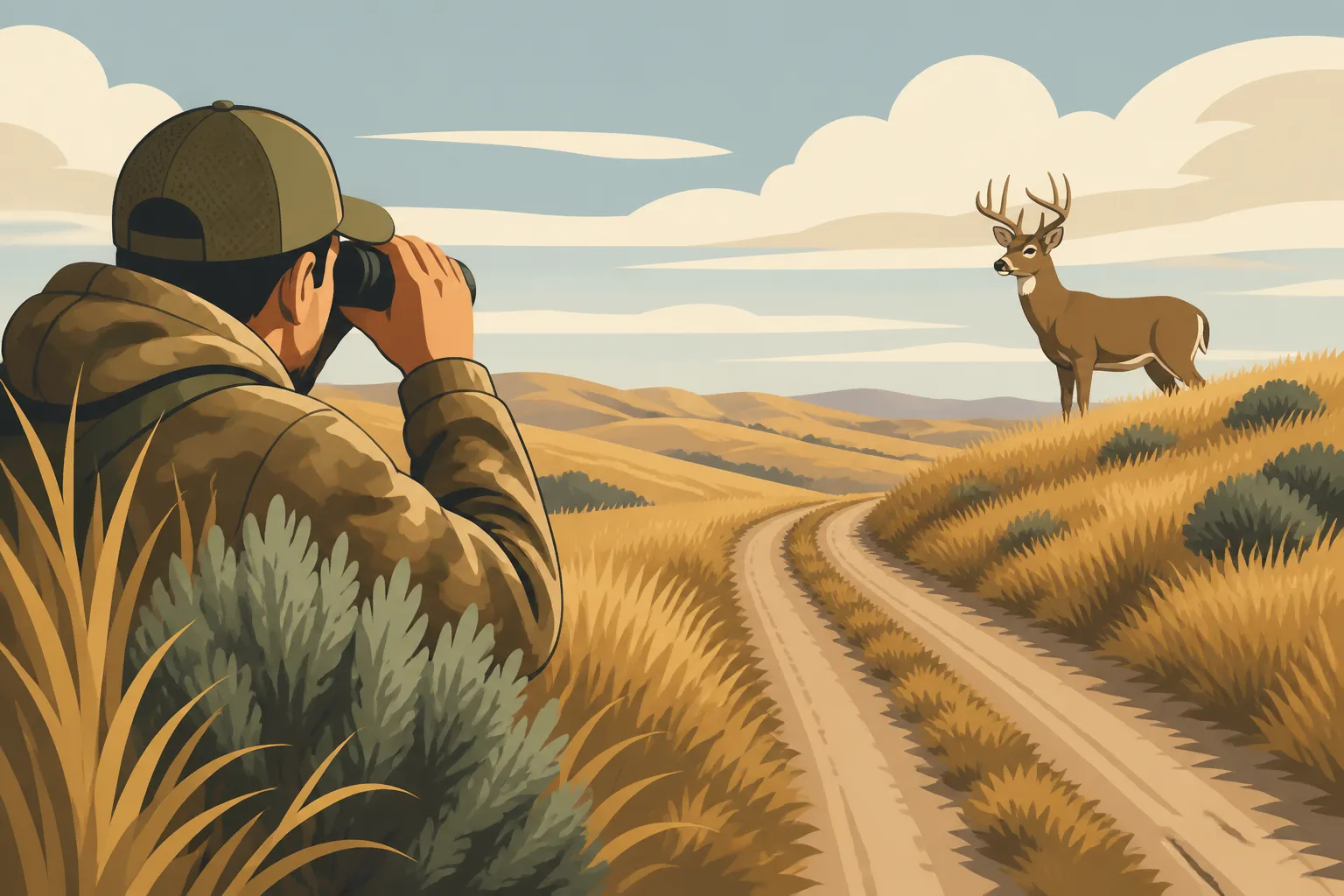
Wildlife, especially deer and antelope, often prefer walking these two-tracks because they offer easier travel than pushing through dense, knee-high prairie grass or navigating the uneven terrain of blowouts and canyons. Think of it as their highway system. You’ll find that deer often follow the path of least resistance, and an old two-track is exactly that. They might not walk right down the center, but often along the edges where the sand meets the grass, providing a slightly firmer footing. This can make Reading Sign on a Nebraska Sandhills Two-Track a masterclass in observation. Over time, recurring game movement can even help define and maintain these subtle trails, making them more pronounced in certain areas, particularly between bedding and feeding areas, or leading to water sources.
How Weather Affects Sign Visibility
Weather is arguably the most significant factor in how well you can read sign on a two-track. A fresh rain can be both a blessing and a curse. On one hand, it washes away old tracks, leaving a pristine surface for new, crisp impressions. On the other hand, a heavy downpour can completely obliterate any recent sign, making it hard to tell what’s passed through since.
In dry conditions, especially during the scorching late summer and early fall, the sand on two-tracks can become incredibly fine and powdery. While fresh tracks might be visible, they often lack the distinct edges needed for accurate identification and aging. A slight breeze can erase them entirely or blur them into an unreadable mess within hours. Morning dew, however, can provide a brief window of opportunity, dampening the surface just enough to capture clear prints that then dry and harden, preserving them for a while.
Wind, a constant companion in the Sandhills, plays a huge role. Strong winds can fill tracks with loose sand, making them appear older than they are, or simply erase smaller prints. When you’re out scouting, pay close attention to the micro-climates along the two-track. Shaded areas, like the north side of a small rise or the lee side of a cedar draw, might hold clearer sign for longer because they are less exposed to sun and wind. This kind of detailed observation is crucial, and mapping tools like GoHunt can help you note these specific features and revisit them. It’s a lot like trying to track human footprints on a windy beach; the conditions dictate what you see and for how long.
Types of Game Sign You'll Encounter
The Sandhills are home to a diverse array of wildlife, and each species leaves its own distinct signature on the landscape. Learning to differentiate these signs is fundamental to understanding what animals are using your chosen two-track.
Deer Sign: Whitetails vs. Mule Deer on Two-Tracks
When you’re walking a Sandhills two-track, deer tracks are often the most exciting find. Nebraska is unique in that both white-tailed deer and mule deer inhabit the Sandhills, and distinguishing their sign can tell you a lot about the local population and what kind of bucks might be present.
-
Whitetail Tracks: Typically, whitetail tracks tend to be more pointed and heart-shaped, with the two front hooves often registering a bit more sharply. In the Sandhills, whitetails are generally found in the thicker cover along creek bottoms, around small pockets of timber, or in the denser vegetation of blowouts. Their tracks on a two-track will often indicate they are moving from one pocket of cover to another. If you find tracks entering or exiting a small cedar stand along the road, chances are good it’s a whitetail. These deer are known for sticking to established pathways and cover, making two-tracks a natural choice for travel. Look for subtle scrapes or rubs on small cedars or yucca plants near the two-track, especially during the rut.
-
Mule Deer Tracks: Mule deer tracks tend to be more rounded and blunt-ended compared to whitetails. Their hooves are also typically larger, reflecting their bigger body size. Mule deer are creatures of the open country, thriving on the vast, rolling grasslands. You'll often find their tracks right down the middle of a two-track, or ranging further out into the open prairie. They aren't as reliant on thick cover, so a mule deer might cross a two-track simply as part of its daily routine of Glassing Sandhills Blowouts for Mule Deer and feeding. If you find larger, more rounded tracks traveling confidently across open areas intersected by a two-track, it's a good indicator of mule deer. Often, they won't hesitate to jump over a low fence line that whitetails might crawl under. You might even find where a mule deer has pawed at the sand, looking for sparse vegetation or minerals.
For both species, look for other signs like droppings – whitetail droppings are typically in small, distinct pellets, while mule deer droppings can sometimes be clumpier or in larger, more varied sizes depending on their diet.
Pronghorn and Other Game Trails
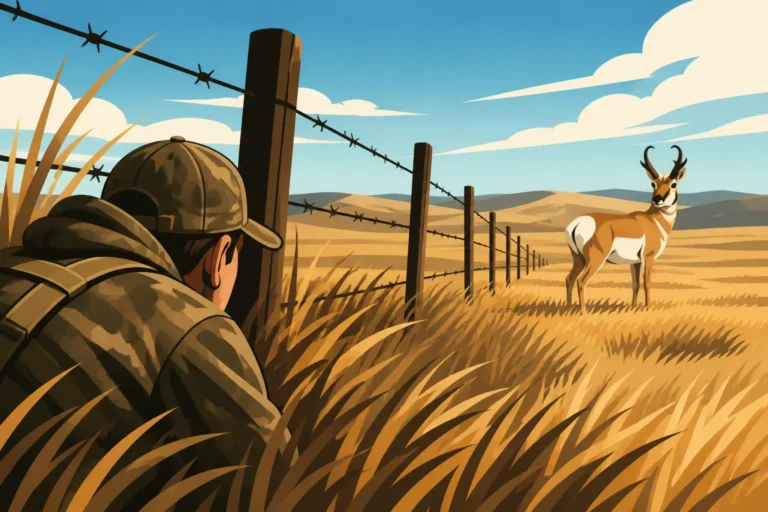
Pronghorn are speed demons of the prairie, and their tracks are distinctive. Their hooves are small, sharp, and very neat, typically leaving a much narrower and more delicate print than deer. Pronghorn are constantly on the move, and they'll use two-tracks as superhighways to cover vast distances quickly. If you see very small, sharply defined tracks, often spaced widely apart indicating a fast walk or trot, it’s likely a pronghorn. They often travel in herds, so you might see multiple sets of these distinctive tracks. You can learn more about Stalking Pronghorn Across Open Nebraska Ground to understand their movement patterns.
Beyond big game, keep an eye out for other valuable signs.
- Turkeys: Wild turkeys leave very clear, three-toed tracks. You might find them scratching in the softer sand on the edges of the two-track, especially if there are any oak or hackberry trees nearby where they might be feeding on mast. Calling Spring Gobblers in Nebraska Timber would be a logical follow-up if you find fresh turkey sign.
- Pheasants and Grouse: In areas where the two-track passes through good upland cover, you might find pheasant or grouse tracks. Pheasants often leave distinct prints as they move through the sparse cover along the road. You might also spot dust bowls – shallow depressions where birds have bathed in the fine, dry sand, ridding themselves of parasites. These indicate active bird populations.
- Rabbits and Small Game: Cottontail rabbits and jackrabbits are common residents, and their tracks, though small, can indicate good general wildlife activity.
Predator Activity and Small Game
Where there’s prey, there are predators. Two-tracks offer predators like coyotes and bobcats an easy travel route, especially when they’re patrolling for food.
- Coyotes: Coyote tracks are very dog-like, but typically more oval and slender, with claws usually visible. You’ll often see them traveling straight down the middle of the two-track, exhibiting a purposeful stride. Coyote scat, often filled with hair and bone fragments, is another tell-tale sign that these opportunistic hunters are in the area. Finding fresh coyote sign suggests there's a food source nearby, which could be anything from rabbits to deer fawns. Coyote Calling on Winter Grassland is a strategy often employed when fresh sign is found.
- Bobcats: Bobcat tracks are more rounded and lack claw marks, similar to a housecat but much larger. They are more elusive, so finding bobcat tracks is a special treat and often indicates an area with good rodent or rabbit populations.
- Badgers: While not predators in the same sense, badgers are excellent excavators, and their diggings can be found along two-tracks. These tell you that the ground holds rodents or insects, which in turn attract other wildlife.
A mix of predator and prey sign generally indicates a healthy ecosystem and active game movement, making that two-track a potentially prime hunting location.
Interpreting Sign for Hunting Success
Finding sign is just the first step. The real art lies in interpreting what that sign means and using it to inform your hunting decisions. This is where experience, patience, and a bit of modern technology come together.
Ageing Tracks and Understanding Movement Patterns
The most crucial aspect of reading sign is determining its age. A track from yesterday is far more valuable than one from last week. Here’s how you can tell:
- Crispness of Edges: Fresh tracks will have sharp, well-defined edges. Older tracks will show signs of erosion – edges will be rounded, softened by wind, sun, or light rain.
- Disturbance of Material: Look at the displaced sand or dirt. Is it still loose and freshly turned? Or has it settled, or even been crusted over by dew or light frost?
- Insects and Debris: A spider web across a track, or leaves and twigs settled into it, indicate it’s been there for a while.
- Moisture: If the track is in damp sand, is the inside of the print still moist, or has it dried out to the same level as the surrounding sand?
- Overlapping Sign: Sometimes you’ll see newer tracks over older ones, helping you establish a timeline of animal movement.
Once you’ve got a handle on the age, you can start deciphering movement patterns. Are the tracks heading in a consistent direction? Are there multiple sets, indicating a group of animals? The spacing between tracks can tell you if the animal was walking, trotting, or running. A widely spaced, consistent track pattern usually means a confident, relaxed animal traveling. Erratic tracks, or those suddenly changing direction, might indicate an animal was spooked or actively browsing.
This information is invaluable for predicting future movement. If fresh tracks consistently lead from a bedding area in a dense cedar patch to a feeding area in a distant pasture, that two-track is a prime travel corridor. You can even use tools like the GoHunt app to mark these observations on a map, adding notes about track age, direction, and species. This helps you build a historical record of activity in specific areas, making future scouting more efficient. For instance, knowing Where Mule Deer Feed at First Light can help you determine if tracks leading that way were made recently.
Using Sign to Plan Your Stalk or Stand Placement
Interpreting game sign directly translates into actionable hunting strategies. If you find fresh tracks from a good buck using a two-track to move between a bedding thicket and a water source, that’s your cue to set up an ambush.
- Stalking: For spot-and-stalk hunting, especially for mule deer or pronghorn in the open Sandhills, fresh tracks can give you a starting point. Knowing the direction of travel, combined with reading the Wind and Thermals in the Sandhills, allows you to plan your approach. You might follow a fresh track until you get a visual, or until the terrain dictates a different route. Remember that closing the last hundred yards on Sandhills terrain requires extreme stealth.
- Stand/Blind Placement: For whitetails, especially when Hunting the Pre-Rut in Late October, fresh sign on a two-track leading into a known bedding area or near a food plot can be an ideal spot for a treestand or a ground blind. Consider prevailing wind directions and sun position when choosing your exact setup. A natural funnel created by topography that forces deer onto a two-track is an even better spot. If you plan to use a blind, ensure you know how to effectively set it up and conceal it, particularly Using a Ground Blind on Nebraska Public Ground where hunting pressure can be higher.
Beyond just individual tracks, look for clusters of sign. A section of two-track where multiple fresh tracks, droppings, and perhaps even some rubs are concentrated indicates a high-traffic area. This is a great place to focus your efforts. Don't forget to mark these spots on your GoHunt mapping application.
Integrating Technology with Traditional Tracking
While traditional tracking skills are irreplaceable, modern technology can significantly enhance your ability to read and interpret sign.
- Mapping Apps: Apps like GoHunt are a game-changer for hunters in the Sandhills. You can mark every piece of sign you find – a fresh deer track, a set of pronghorn prints, a turkey scratch, or coyote scat. Over time, this builds a comprehensive map of animal activity. You can see patterns emerge, identify consistent travel routes, and even track the success of various hunting tactics in specific areas.
- GPS Tracking: Even if you’re just walking, having a GPS tracker on your phone or a dedicated unit can help you trace your path, mark where you found sign, and then analyze those routes later. This is particularly useful in the vastness of the Sandhills where landmarks can be few and far between.
- Trail Cameras: While not directly used on the two-track itself, trail cameras placed strategically near these travel corridors can confirm animal movement patterns and give you a better idea of what specific animals are using the path and at what times. This integrates well with Where Cameras Help on Pressured Ground and validates the sign you're finding.
By combining the timeless art of reading sign with the power of digital tools, you create a dynamic and incredibly effective scouting system. You'll be able to quickly see which two-tracks are actively being used by your target species, and which ones are less productive. This saves you precious hunting time and helps you make more informed decisions when it counts.
Common Tracks on a Sandhills Two-Track
To help you quickly identify some of the most common tracks you'll find, here's a handy table comparing their characteristics:
| Animal | Track Shape | Size (Approx.) | Hoof/Pad Details | Common Behavior on Two-Track |
|---|---|---|---|---|
| White-tailed Deer | Pointed heart-shape | 2-3 inches long | More pointed toes | Often hugs edges, moves between cover; leaves scrapes |
| Mule Deer | Rounded, blunt | 2.5-3.5 inches long | Wider, blunter toes | Walks confidently, often in open; larger stride |
| Pronghorn | Small, sharp, neat | 1.5-2 inches long | Very distinct, sharp | Fast, purposeful travel; often in groups |
| Coyote | Oval, dog-like | 2.5-3.5 inches long | Claw marks visible | Direct, purposeful stride down center; patrols |
| Turkey | Three-toed, distinct | 4-5 inches long | Long, splayed toes | Scratches in soft sand; moves between roosts and feed |
| Pheasant | Three-toed, smaller | 2-3 inches long | Smaller, distinct toes | Often around dusty areas; sometimes with dust bowls |
Understanding these differences is fundamental to knowing what's using the two-tracks you're scouting.
The Nebraska Sandhills, with their subtle two-track roads, offer a unique challenge and opportunity for hunters. By honing your ability to read the signs left on these sandy paths, understanding how weather affects their visibility, and knowing what distinct tracks to look for, you gain a significant advantage. It's a skill that combines observation, patience, and a deep appreciation for the natural world. So next time you're out there, slow down, look closely at those two-tracks, and let the land tell you its story.
Disclaimer
Please remember that hunting regulations, seasons, and access rules can change. Always consult the most current Nebraska Game and Parks Commission regulations before heading afield. It is your responsibility to know and follow all applicable laws.