Setting Up on a Terrace Bench
Those subtle bumps and curves in Nebraska's vast agricultural landscapes might just look like part of a farmer's sophisticated plan to keep soil in place, but to a savvy deer hunter, they represent an incredible opportunity. Many hunters drive right by them, focused on timber blocks or deep draws, missing out on prime travel corridors. Hunting these terrace benches effectively can feel like trying to find a needle in a haystack if you don't know what you're looking for, but with the right approach, they become predictable funnels. This guide will help you decipher deer movement on these overlooked features and set up for success, transforming those seemingly insignificant contours into your next hot spot.
Understanding Terrace Benches and Deer Behavior
Before you can effectively hunt a terrace bench, you really need to understand what it is and, more importantly, why deer use it. It's not just a random line in the field; it's an intentional landform that, for deer, provides both cover and efficient travel.
What Exactly is a Terrace Bench?
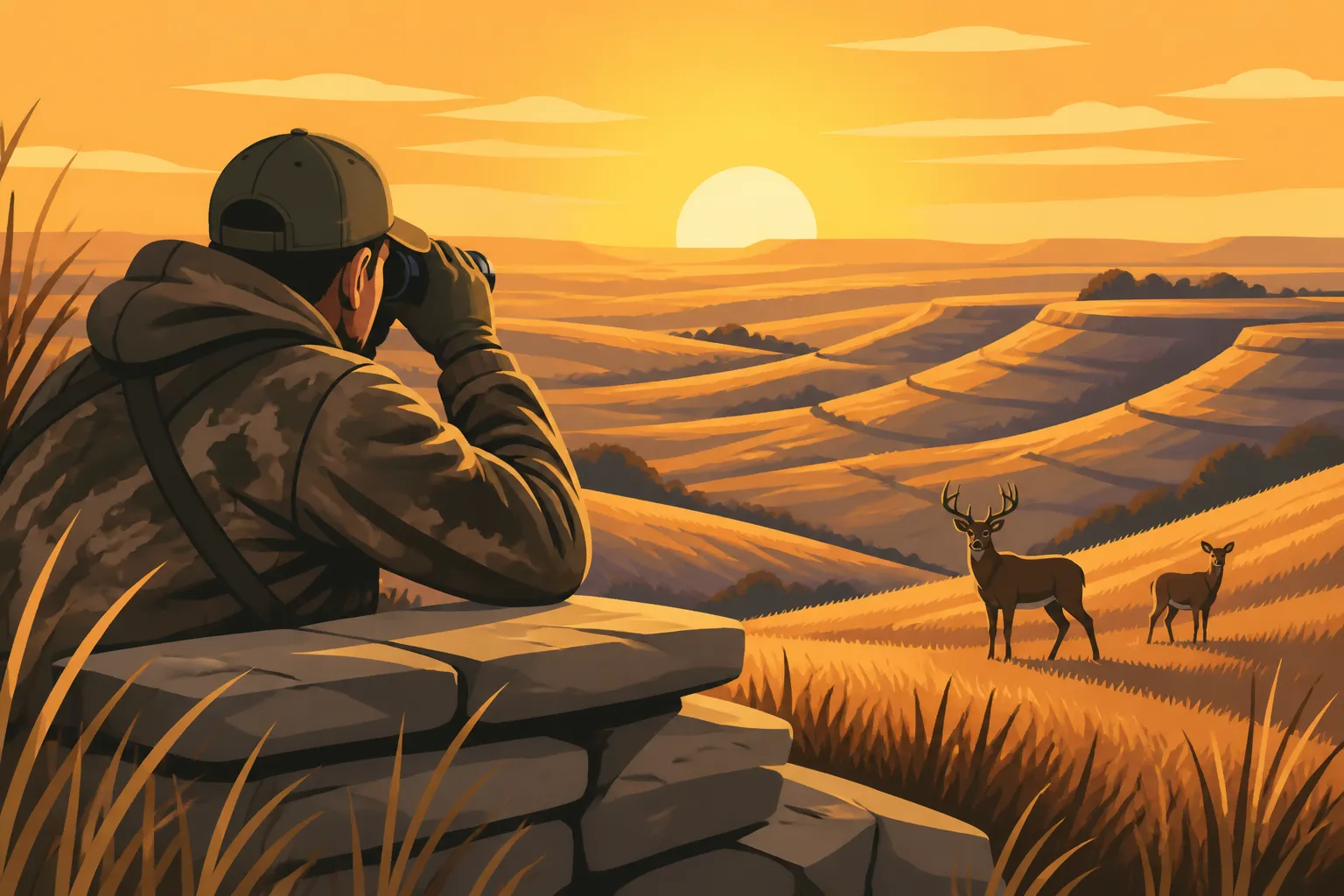
In essence, a terrace bench is a man-made, earthen embankment constructed across a slope to control water erosion. Farmers build them to slow down water runoff, allowing it to soak into the soil rather than washing away valuable topsoil. You'll find them as long, linear ridges, often slightly elevated, that follow the contour of the land. Sometimes they're planted with the same crop as the rest of the field, making them almost invisible from a distance. Other times, especially older terraces, might be grassed over, creating a slightly more defined linear patch of different vegetation.
They can range from just a foot or two high to several feet, with varying widths. What's crucial to understand is that these aren't natural ravines or creek beds. They're designed features, but their impact on deer movement is profoundly natural. They create subtle elevation changes that, in otherwise flat or gently rolling agricultural country, offer the only significant cover for a deer moving across an open area. This slight rise, even just a few feet, can obscure a deer's body from view, making them feel safer.
Why Deer Favor Terraces for Travel and Bedding
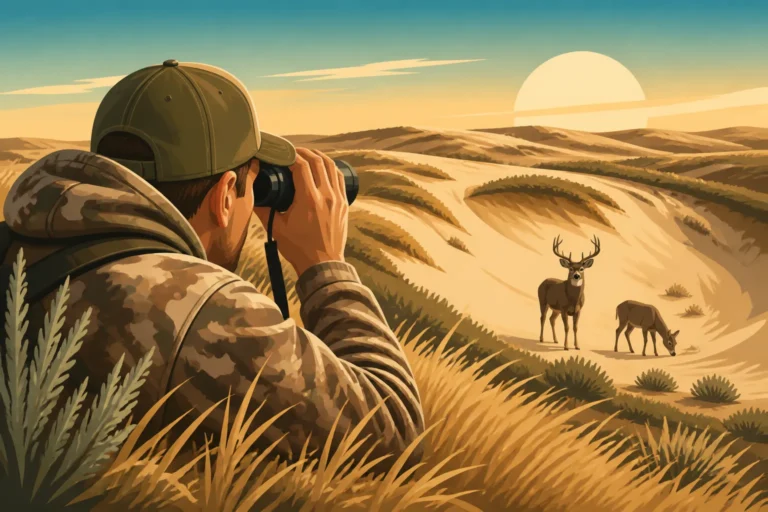
Deer, especially whitetails, are masters of using topography and cover to their advantage. In wide-open Nebraska landscapes, where timber blocks can be few and far between, a terrace bench offers a surprising amount of security. Think about it: if you're a deer trying to cross a massive cornfield or a harvested soybean field in daylight, you want to stay as hidden as possible. Walking along the crest or just below the crest of a terrace allows a deer to keep its body concealed from a hunter positioned a quarter-mile away, while still being able to peek over and survey its surroundings.
These benches create natural travel lanes. It's simply easier for a deer to walk along a relatively flat contour than to constantly traverse up and down slopes, however slight they may be. They act like highways, connecting bedding areas in distant timber or CRP fields to food sources in agricultural fields. Deer will often utilize the "lee" side of a terrace for a quick bedding spot during colder, windier days, getting out of the direct blast of the Nebraska wind. They can also use them to sneak between fields or move towards water sources without exposing themselves in open areas. For more insight into where deer might choose to bed in row-crop environments, check out our article on Where Nebraska Whitetails Bed in Row-Crop Country. These areas are less about traditional thick cover and more about subtle topographic advantages.
Scouting for Productive Terrace Bench Locations
You can't just pick any terrace bench and expect magic. The key to success lies in meticulous scouting, both from your armchair and with your boots on the ground. You're looking for patterns, intersections, and choke points that will tell you where deer are most likely to travel.
Mapping and Aerial Reconnaissance
Your scouting really begins long before you ever set foot in the field, especially when dealing with features as subtle as terrace benches. Start with high-resolution aerial imagery. Tools like Google Earth or specialized hunting apps such as GoHunt are invaluable here. Look for fields, especially those with gentle slopes, that show distinct parallel lines or curves. These are your terraces.
What you're really trying to identify are the intersections and convergences of these terraces. A single, isolated terrace might see some random deer movement, but where multiple terraces meet, merge, or create a bottleneck with other landscape features (like a small patch of timber, a creek bottom, or a fence line), that's where you'll find concentrated activity. Pay close attention to where a terrace runs alongside a woodlot, a CRP field, or a significant drainage. These are natural connection points. Use the measuring tools in your mapping app to gauge distances between cover and potential food sources, helping you predict which benches deer might use to travel between them. For instance, if you spot a terrace running along the edge of a cornfield that leads directly to a known bedding area, you've likely found a prime travel corridor. This method of understanding terrain and cover is similar to how you would approach Reading a Cedar Draw for Deer Movement.
Boots-on-the-Ground Verification
Once you've identified promising terrace benches from your aerial reconnaissance, it's time to hit the field. This is where you confirm your suspicions and get the real story. Walk the length of the terraces you've marked. Look for fresh deer sign: tracks, droppings, rubs, and scrapes. Tracks are your most valuable indicators. Are they fresh? Are there multiple tracks, indicating a well-used trail? Pay attention to the size and direction of the tracks to understand what kind of deer are using the bench and which way they're headed.
Often, deer trails will be slightly worn paths either directly on top of the terrace, or perhaps just below the crest on one side. Identify primary trails – those heavily used paths – versus secondary, less-defined trails. The primary trails are your best bet. Also, examine the vegetation directly on the terrace. Is it browsed? Are there any rubs or fresh scrapes? If the terrace is grassed over, you might find flattened grass where deer have bedded down. Look at how the terrace connects to other features. Does a strong deer trail lead off the end of the terrace directly into a cornfield? Does it funnel deer towards a fence crossing? Understanding these access points and transitions is critical. Remember, thorough pre-season scouting, as discussed in Scouting Nebraska Public Ground Before Opening Day, is paramount for success, even on subtle features like terraces.
Strategic Stand Placement and Approach
After you've done your homework and identified the hottest terrace benches, the next step is crucial: deciding where to set up and how to get there without spooking every deer in the county. On these subtle features, your choice of stand type and your entry/exit strategy are magnified in importance.
Optimal Stand or Blind Placement on a Terrace
When hunting terrace benches, you're often in relatively open country, which means wind direction becomes an even more critical factor. Never, and I mean never, compromise on playing the wind. Deer will pick up your scent long before you see them if you're not careful. For detailed information on this, consider reading Wind Direction on Open Nebraska Prairie Stands. When picking your specific spot on the terrace, you need to consider where the deer are most likely to travel and where you'll have the best shot opportunities.
Treestand vs. Ground Blind:
- Treestand: If there are suitable trees nearby (which is often not the case directly on terraces in open ag country), a treestand can provide an excellent vantage point. You'll be above their primary line of sight and your scent will be carried higher. However, finding trees directly adjacent to a productive terrace can be challenging. If you do find a good one, consider how deer will approach it and place your stand accordingly, ideally slightly off the main trail but with good shooting lanes. For setting up on an edge, similar principles to Hanging a Stand on a Cornfield Edge would apply.
- Ground Blind: More often than not, a ground blind is your best friend when hunting terrace benches. They offer incredible concealment in open environments, especially if brushed in properly. You can set them up directly on the terrace, or just below the crest, using the natural elevation for added cover. A blind allows for more movement, which is a huge advantage during long sits in cold weather. It also means you can often set up closer to the deer's travel lane without being detected. Ensure your blind is well-anchored to withstand Nebraska's often fierce winds. For general ground blind tactics, check out Using a Ground Blind on Nebraska Public Ground.
Key Considerations for Placement:
- Visibility: You need to see the deer coming, but you don't want them seeing you. Often, positioning yourself slightly below the crest of the terrace can work well, allowing you to peek over but remain hidden from distant eyes.
- Shooting Lanes: Clear any small obstacles that might impede an arrow or bullet. Remember, deer on a terrace are often moving parallel to you, so broadside shots can be common.
- Sun Angle: Consider the sun's position throughout the day. You don't want to be staring directly into it, and you don't want it backlighting you, making you a silhouette.
Entry and Exit Routes to Minimize Disturbance
This is perhaps the most overlooked aspect of hunting subtle features like terrace benches. In wide-open country, deer are inherently more alert to human presence. A poorly planned entry or exit can ruin your hunt before it even begins. Your goal is to be a ghost.
Planning Your Approach:
- Use Natural Cover: Whenever possible, use existing terrain features to conceal your approach. This could be a drainage ditch, another terrace further away, a creek bottom, or even the edge of a standing crop or timber block. The goal is to move from your vehicle to your stand or blind without being seen by deer already in the field.
- Walk the "Backside": If the terrace is truly out in the open, try to approach it from the side furthest away from where you expect the deer to be coming from, or use a parallel terrace as cover.
- Time it Right: Always approach and leave your stand in the low light of dawn or dusk. During the middle of the day, deer are much more likely to be bedded down and alert, making undetected movement nearly impossible.
- Wind is King: Your entry and exit routes must also factor in the wind. Never walk through an area where your scent will be blown into a potential bedding or travel zone. This means you might need different entry/exit routes for different wind directions. For comprehensive advice on this, our guide on Entry and Exit Routes on Flat Farm Ground offers excellent insights.
- Minimize Noise: Move slowly and quietly. Every rustle of cornstalks or crunch of gravel is amplified in the quiet of a field.
A well-executed entry and exit will ensure that deer continue to use that productive terrace bench, making your efforts worthwhile.
Maximizing Your Chances on Terrace Benches
Hunting terrace benches isn't just about finding the right spot; it's also about adapting to the dynamic nature of deer behavior and leveraging additional tactics to draw them in. Nebraska's hunting conditions can change quickly, and a successful hunter is one who can adjust on the fly.
Adapting to Changing Conditions
Nebraska's agricultural landscape is constantly evolving, and deer patterns shift with it. What works in early season might be completely different come late fall.
Crop Rotation and Harvest:
- Standing Corn: When corn is still standing, it provides immense cover, and deer can be anywhere within it. Terraces within standing corn might be used, but deer have less need for them for concealment. However, a terrace running along a cornfield edge can still be a prime travel route.
- Harvested Fields: This is where terrace benches truly shine. Once the corn is off, soybeans are cut, or milo is harvested, the landscape opens up dramatically. Now, those subtle terrace lines become critical arteries for deer movement. They offer the only significant relief and concealment in a sea of stubble. Pay close attention to these areas What Changes in Nebraska After the Corn Comes Off as they transition from dense cover to open ground.
- Soybeans/Alfalfa: These fields offer different challenges. Deer might feed directly in them, but when they want to move between them or to bedding cover, terraces will still be their preferred routes for security.
Seasonal Deer Behavior:
- Early Season/Pre-Rut: Deer movement can be more predictable, often moving from bedding to specific food sources. Terraces might be used as direct routes. During Hunting the Pre-Rut in Late October, deer activity starts to pick up, and bucks may begin to cruise these elevated paths looking for does.
- The Rut: This is prime time. Bucks will be covering a lot of ground, often using these efficient travel corridors to check for estrous does. A terrace bench that connects two bedding areas or a bedding area to a known feeding location can become a superhighway. During When the Whitetail Rut Peaks in Nebraska, expect to see increased daytime movement.
- Late Season: After the firearm seasons and with colder weather, deer will focus on high-energy food sources. Terraces connecting these food sources to thick thermal cover become vital. If there's snow, tracks on the terraces will be even more evident, giving you precise insight into their travel habits.
Weather Impacts:
- Wind: As mentioned, wind is always a factor. Deer will often travel on the lee side of a terrace to stay out of a strong breeze.
- Rain/Snow: Wet conditions can make scent control even more critical. Snowfall often simplifies tracking and highlights deer usage of terraces. After a fresh snow, walking a terrace and finding fresh tracks can be exhilarating.
- Temperature: In extreme cold, deer prioritize warmth and energy conservation, potentially using terraces for shelter or more direct routes to prime food.
Calling and Decoy Strategies
In the open environment often associated with terrace bench hunting, adding calling and decoy strategies to your arsenal can be incredibly effective, especially during the rut.
Calling:
- Grunt Calls: A well-timed grunt can stop a cruising buck or pique the interest of one moving parallel to your position. In open country, sound travels further, so start with softer grunts and increase volume only if needed.
- Rattling: During the pre-rut and rut, rattling antlers can mimic bucks fighting, drawing curious bucks from a surprising distance. The slight elevation of a terrace can help carry the sound. Be mindful of the volume; in open country, you don't always need to clang them together like a rockslide. Our article Rattling and Grunting in Nebraska's Rut has excellent tips for these scenarios.
- Doe Bleats: These can be effective for drawing in both does and bucks, especially if you're targeting a specific doe that might be using the terrace.
Decoying:
- Buck Decoys: Deploying a buck decoy can be a game-changer, particularly during the rut when bucks are territorial and looking for a fight. Place your decoy so that any approaching buck will be broadside or quartering away to your stand. Make sure the decoy is visible from a distance along the terrace. A life-sized buck decoy from brands like Montana Decoy or Dave Smith Decoys can really catch a cruising buck's eye across open fields.
- Doe Decoys: A single doe decoy can also be effective, drawing in bucks looking for a receptive female. Combine it with some soft doe bleats for added realism.
- Placement and Wind: Always consider the wind when setting up a decoy. You want the real deer to approach from a direction that puts them within your shooting lane and allows them to smell the decoy (not you). For more on effective decoy placement, consult our guide on Decoying a Nebraska Whitetail Buck.
Using a combination of calling and decoying can turn a casual pass by a deer into a committed approach, giving you the critical shot opportunity you've worked so hard for. Remember, patience is key, but proactive tactics can certainly tip the odds in your favor on these open-country features.
Terrace Hunting Considerations
To help you decide on your setup strategy, here's a quick comparison of using a treestand versus a ground blind specifically when hunting Nebraska's terrace benches.
| Feature / Consideration | Treestand (if applicable) | Ground Blind |
|---|---|---|
| Concealment | Excellent, above deer's line of sight, but limited by tree availability. | Excellent, especially when brushed in; allows movement. |
| Setup Flexibility | Limited to suitable trees on or near the terrace. | Highly flexible; can be placed almost anywhere on the terrace. |
| Wind Advantage | Scent carried higher, reducing detection risk. | Needs careful positioning relative to wind and deer travel. |
| Mobility | Less mobile once hung; repositioning is time-consuming. | Can be moved and set up relatively quickly. |
| Comfort | Can be less comfortable for long, cold sits. | Offers more warmth and protection from elements, allows more movement. |
| Visibility | High vantage point, great for spotting distant deer. | Lower vantage point, potentially limited long-distance view. |
| Detection by Deer | Requires careful entry/exit; can be seen during ascent/descent. | Requires careful entry/exit; minimal movement once inside. |
| Common Use | Rarely primary choice due to lack of trees; best at terrace-timber junctions. | Often the best and most practical choice for open terraces. |
While treestands have their place, especially at junctions where terraces meet woodlots, the flexibility and concealment offered by a well-placed and brushed-in ground blind often make it the superior choice for hunting the subtle contours of Nebraska's terrace benches. The ability to move and stay warm in a ground blind during long watches on the open prairie cannot be overstated.
Disclaimer
Hunting carries inherent risks, including but not limited to injury or death. Always prioritize safety, follow all local, state, and federal hunting regulations, and obtain proper landowner permissions. The information provided in this guide is for educational purposes only and should not be considered a substitute for professional instruction or local regulations. Always be aware of your surroundings, properly identify your target, and know your effective range.