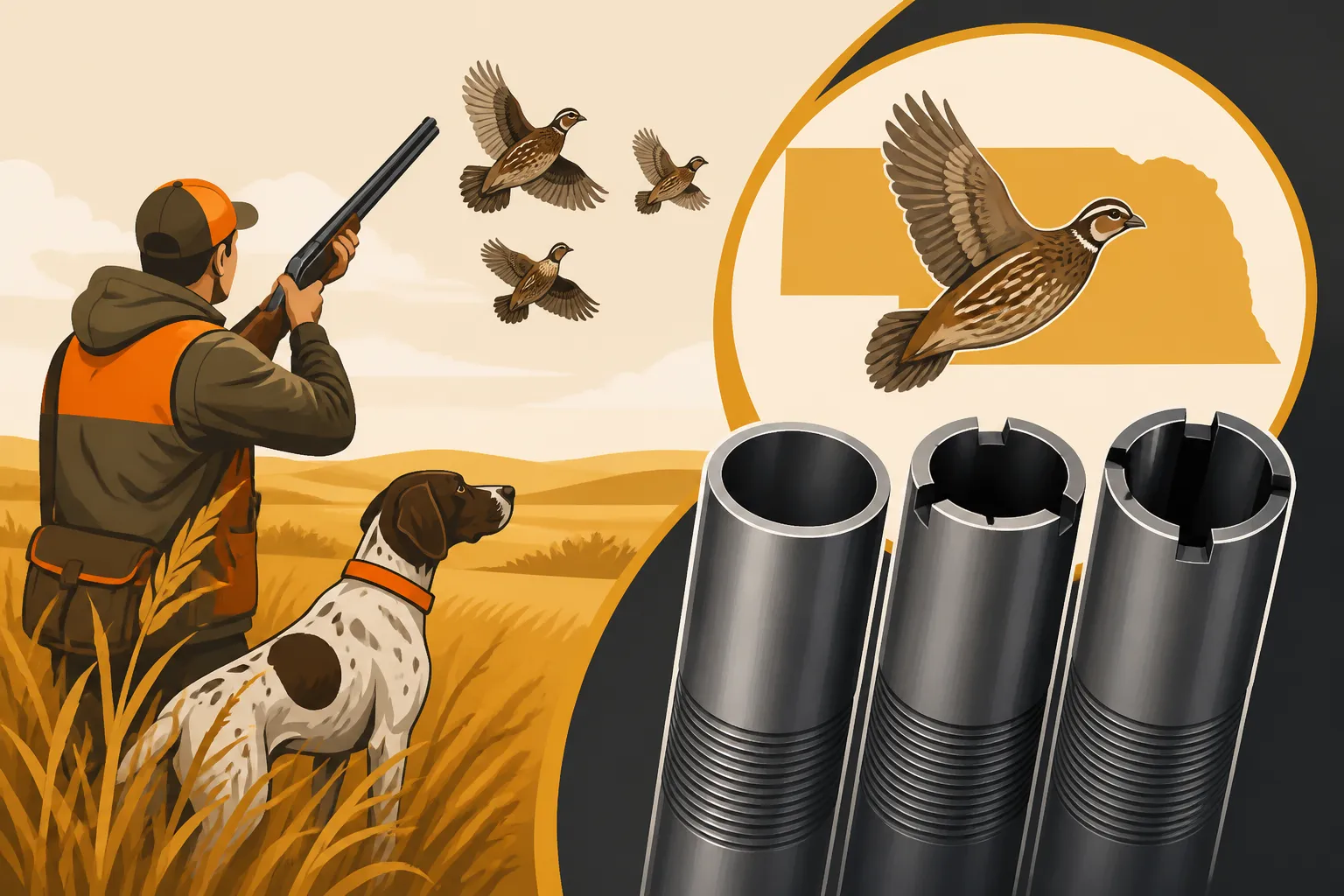
Choke Choice for Walking Birds
Ever been out walking a beautiful Nebraska pheasant field, the adrenaline pumping, a rooster flushes at your feet, and you miss a seemingly easy shot? Or maybe you swung on a distant sharptail and just peppered it, leaving it to sail away into the Sandhills. A lot of hunters wonder if their choke choice made the difference, and it often does. This guide will dive deep into understanding shotgun chokes and how to pick the perfect one for those exhilarating walk-up bird hunts across Nebraska's diverse landscapes.
What Exactly Is a Shotgun Choke and Why Does It Matter?
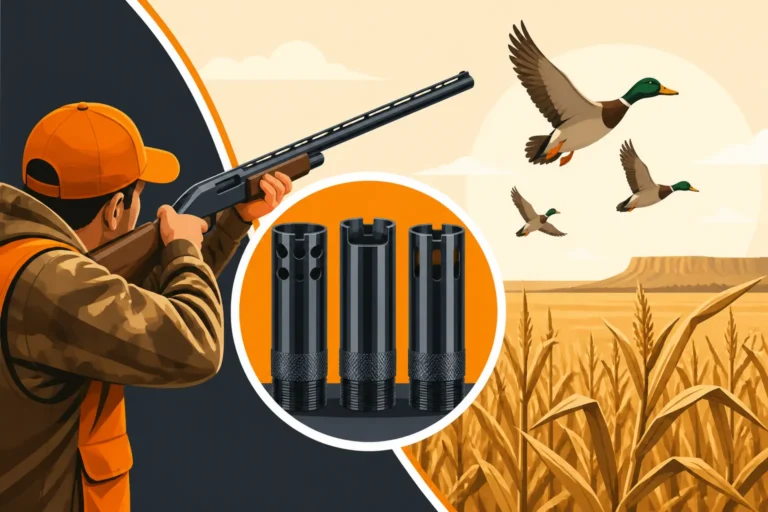
Let's start with the basics, because understanding what a choke is and how it works is the first step to making an informed decision. Simply put, a shotgun choke is a constricted tube at the muzzle end of a shotgun barrel that controls the spread of the shot pattern. Without a choke, your shot would spread out very quickly, becoming ineffective at anything but extremely close ranges. The choke's job is to keep that shot column tighter for a longer distance, essentially dictating how wide or narrow your pellet spread will be at a given yardage.
Think of it like a nozzle on a garden hose. A wide-open nozzle sends water everywhere in a loose spray, good for close-up washing. A more constricted nozzle sends a tighter, more focused stream, allowing you to reach farther or apply more pressure to a smaller area. Shotgun chokes work on the same principle, but with lead (or non-toxic) pellets instead of water. The tighter the constriction, the denser and more compact the shot pattern will be downrange. Conversely, a less constricted choke will allow the shot to spread out more quickly, creating a wider pattern.
This distinction is crucial for walking birds, where shot distances can vary wildly. A pheasant flushing 15 yards away in dense cover needs a different pattern than a high-flying grouse at 40 yards over open prairie. Having the wrong choke can result in either blowing a bird apart at close range with too tight a pattern, or simply peppering it with too wide a pattern, leading to missed opportunities or, worse, wounded game. Getting this right is a key part of responsible and effective hunting, and it means knowing your gear inside and out before you ever step foot on public ground or private land.
The Science Behind Shotgun Patterns
The performance of a choke isn't just about how tight the hole is; it's about how consistently it delivers a usable pattern. When shotgun pellets leave the barrel, they immediately begin to spread due to air resistance, pellet deformation, and the individual pellets bouncing off each other. The choke tries to mitigate this by gently squeezing the shot column just before it exits, aligning the pellets and reducing initial deformation. Different choke designs achieve this with varying degrees of success.
The effectiveness of a choke is measured by the percentage of pellets that land within a 30-inch circle at 40 yards. This is a standard benchmark, though for walking birds, especially in thick cover, you're often looking at much closer distances. A "full" choke, for example, is designed to put about 70-75% of its pellets in that 30-inch circle at 40 yards, while an "improved cylinder" might only deliver 45-55%. This difference is profound when a bird is presenting a quick, fleeting target.
Beyond the choke itself, factors like ammunition type (lead vs. steel, pellet size), shotwad design, and even atmospheric conditions can influence your pattern. That's why patterning your shotgun with your chosen ammunition and chokes is absolutely vital before heading afield. You might find that a certain brand of shells or a particular pellet size performs surprisingly well or poorly through a specific choke in your gun. Knowing this helps you make smart decisions about what you load up with.
Key Factors for Choosing a Choke for Walking Birds
When you're out chasing upland birds in Nebraska, you're rarely sitting in a blind waiting for them to come to you. You're walking, pushing cover, and reacting to flushes. This dynamic style of hunting means your choke choice needs to be adaptable, primarily considering the typical flushing distance, the density of the cover you're hunting, and the species of bird itself. Each of these elements plays a significant role in determining what choke will give you the best chance of a clean, ethical kill.
Ignoring these factors can lead to frustrating days in the field. Imagine trying to shoot pheasants in thick cattails with a full choke – you'd likely blow them to smithereens or miss entirely as the pattern hasn't had time to open. Conversely, using an improved cylinder in wide-open stubble for a sharp-tailed grouse that flushes at 50 yards would result in a thin, ineffective pattern. The best hunters are those who understand the nuances of their environment and adjust their gear accordingly, and choke selection is right at the top of that list. Many seasoned hunters even switch chokes mid-hunt if the cover or strategy changes.
When scouting for a hunt, whether it's on public access land or private permission, using resources like GoHunt can help you visualize the terrain and anticipate the cover density, which in turn informs your choke decision. For instance, if you're planning a trip to a dense River-Bottom Whitetail Hunting in Eastern Nebraska area that also holds turkeys and pheasants, you'd anticipate closer shots than if you were headed to the expansive Oglala National Grassland Hunting in the Panhandle.
Flushing Distance and Cover Density
The distance at which birds typically flush is perhaps the most critical factor. In thick cover—think dense plum thickets, tall cattail sloughs, or heavy shelterbelts in eastern Nebraska—birds often hold tight, flushing within 10 to 25 yards. For these scenarios, you want a choke that provides a wide, forgiving pattern at close range. An open choke allows more margin for error on a fast-flushing bird that suddenly appears, increasing the likelihood of getting enough pellets on target without over-patterning and destroying meat.
As the cover opens up, say, into milo stubble, CRP fields, or native prairie grasses where you're Walking Milo and Corn Stubble for Pheasants, birds tend to flush farther out, often in the 25 to 40-yard range. Here, a tighter choke becomes more advantageous, as it maintains a denser pattern at those extended distances. If you're hunting in particularly sparse cover or very open prairie for birds like sharptails, where long shots are common, you might even consider going a step tighter to maintain pellet energy and density.
A good rule of thumb is to start with a more open choke in dense cover and consider moving to a tighter one as the cover becomes sparser. You're trying to find the sweet spot where your pattern is wide enough to catch a fast-flushing bird but dense enough to deliver a lethal strike at the expected range. It’s a delicate balance, and it often comes down to experience and knowing the specific parcel of land you're hunting.
Bird Species and Resilience
Different bird species have varying sizes and tolerances to shot. A small, delicate bobwhite quail doesn't require the same amount of kinetic energy or pellet count to bring down as a large, tough-feathered rooster pheasant. This distinction also influences your choke choice, in conjunction with the flushing distance.
- Quail: These small, fast-flying birds are usually found in coveys in relatively thick cover like Quail Coveys in Nebraska Shelterbelts in Southeast Nebraska. When they explode from cover, they often do so at very close range. An open choke, like Cylinder or Improved Cylinder, is generally preferred to get a wide pattern for these quick, chaotic flushes without damaging the small birds. Too tight a choke, and you'll miss most of them or turn the ones you hit into a puff of feathers.
- Pheasants: Nebraska is famous for its pheasants, and they can be found in a variety of covers. Early season pheasants often hold tight in dense cover, calling for more open chokes. Later in the season, after they've been pressured, they become much wilder, flushing farther out in Working a Cattail Slough in January or open fields, which might warrant a Modified or even Full choke. Their robust build means you need a good number of pellets for a clean kill, especially at longer ranges.
- Grouse (Sharptails and Prairie Chickens): Greater Prairie-Chicken Numbers in the Sandhills and sharptails are often hunted in open grasslands or rolling sandhills. They tend to flush at longer distances than pheasants, and can be notoriously tough birds. For these, a Modified choke is often a good starting point, and some hunters even opt for a Light Modified or Modified to ensure a dense pattern at the longer ranges these birds can present. Working Sharptails and Prairie Chickens on Foot usually means anticipating those longer shots.
Knowing the typical behavior of the bird you're after and its physical characteristics helps you fine-tune your choke selection, ensuring you're not under-gunned for tougher birds or over-gunned for more delicate ones.
Common Choke Options for Upland Hunting in Nebraska
Now that we understand the principles, let's look at the specific choke options you'll commonly encounter and how they apply to hunting Nebraska's walking birds. Most shotguns today come with interchangeable choke tubes, making it relatively easy to switch them out in the field as conditions or bird behavior changes. This flexibility is a huge advantage for the versatile upland hunter.
It's important to remember that choke names (e.g., "Improved Cylinder") are general guidelines. The actual performance can vary between manufacturers and even individual barrels. Always pattern your specific gun and choke combinations with the ammunition you intend to use. This patterning provides real-world data, showing you exactly how your setup performs at various distances and what kind of density you can expect. Without it, you're just guessing.
A wise hunter takes the time to dial in their gear, and that includes their chokes. Whether you're chasing ringnecks across a vast Nebraska's Open Fields and Waters Program tract or flushing quail from a brushy creek bottom, having the right choke for the situation is paramount. Let's delve into the most popular choices.
Cylinder (CYL) and Skeet (SKT)
These are the most open choke options available, designed to provide the widest possible shot pattern at very close ranges.
- Cylinder (CYL): This choke provides virtually no constriction, allowing the shot to spread out immediately upon exiting the barrel. At 20-25 yards, you'll have a very wide, diffuse pattern. This is ideal for extremely close-quarters flushing birds, like those found in dense cattail sloughs or thick shelterbelts where the birds are almost underfoot. It offers the largest margin of error for pointing and swinging on a fast, erratic target. While less common for pheasants, it's excellent for close-flushing quail or rabbits where the shot distance is minimal.
- Skeet (SKT): Often slightly more constricted than Cylinder, but still very open. Skeet chokes are specifically designed for clay target shooting at very close ranges, offering a wide, uniform pattern. For upland hunting, its application is similar to Cylinder – very close flushing birds in incredibly dense cover where quick, instinctive shots are the norm. If you're hunting tiny pockets of cover or focusing purely on quail, a Skeet choke can be very effective.
Both Cylinder and Skeet chokes are fantastic for teaching new shooters or for scenarios where you expect shots to be consistently within 20 yards. They help ensure a hit on birds that pop up quickly and offer a large pattern to compensate for slight aiming imperfections. The downside, of course, is that their effectiveness drops off rapidly beyond those close ranges, meaning you'll be significantly under-choked for longer shots.
Improved Cylinder (IC)
Improved Cylinder is arguably the most versatile choke for general upland hunting, especially for walking birds in mixed cover. It provides a moderate amount of constriction, creating a pattern that is open enough for close flushes but still dense enough to be effective at slightly longer ranges.
At 25-30 yards, an Improved Cylinder choke typically delivers a solid pattern, making it a fantastic all-around choice for early-season pheasants in decent cover, or for quail and grouse in areas where they might flush a bit farther out. It strikes a good balance, offering a forgiving pattern for those unexpected, close flushes while still having enough punch for a bird that gets out to a respectable distance. This choke is often the go-to for hunters who prefer a single choke for most of their upland pursuits, especially with a good bird dog working relatively close.
If you're unsure what kind of cover you'll encounter on a particular Scouting Nebraska Public Ground Before Opening Day outing, or if you anticipate a mix of tight and open areas, an Improved Cylinder is a very safe and effective starting point. It's often the choke I recommend for someone just starting their upland hunting journey, as it provides a great blend of forgiveness and effectiveness across a wide range of situations in Nebraska's diverse hunting grounds.
Light Modified (LM) and Modified (MOD)
As we move into Light Modified and Modified chokes, we're talking about more constriction, which translates to denser patterns at longer distances. These chokes are excellent choices when you expect birds to flush farther out or when you need more hitting power for tougher birds like pheasants and grouse.
- Light Modified (LM): This choke sits between Improved Cylinder and Modified, offering a slightly tighter pattern than IC but not as tight as a full Modified. It's an excellent choice for a hunter who consistently takes shots in the 25-35 yard range. It provides a little more reach and pattern density than IC, which can be beneficial for wilder birds or when hunting in more open fields where birds might get up a little farther from the dog.
- Modified (MOD): Modified chokes provide noticeable constriction, delivering a fairly dense pattern at 30-40 yards. This is a very popular choke for late-season pheasants, especially in Hunting Standing Corn Before Harvest or after the What Changes in Nebraska After the Corn Comes Off and birds are wilder. It's also an excellent choice for grouse hunting in the Sandhills where longer shots are more common, or for situations where you're blocking the end of a field and expect birds to be pushed out at a distance. If you're shooting a double barrel or over/under, running an IC in the first barrel and a Modified in the second is a classic and very effective setup, allowing for close shots and then longer follow-up shots.
Both Light Modified and Modified chokes demand a bit more precision in your shot placement due to their tighter patterns, but they reward that precision with increased range and pellet density. They are indispensable for hunting conditions where birds are holding looser or when you're targeting larger, tougher birds that require more pellets on target for a clean kill.
Full (F) and Extra Full (XF)
These are the tightest chokes, designed for maximum pattern density at the longest ranges. While they have specific uses, they are generally less common for walking birds due to the typical close-to-medium flushing distances.
- Full (F): A Full choke delivers a very tight pattern, placing the highest percentage of pellets in that 30-inch circle at 40 yards. It's excellent for static targets at long range, like turkeys shot over decoys, or pass-shooting waterfowl. For walking birds, it's typically too tight for anything but very long, specific shots, such as a blocking position at the end of a long field. At close range, it will concentrate pellets so much that it can turn a bird into pulp, or be very easy to miss entirely with a fast-flushing bird.
- Extra Full (XF): Even tighter than Full, Extra Full chokes are specialized for applications like turkey hunting (to maximize head/neck patterns) or shooting steel shot at extremely long distances. For walking upland birds, an Extra Full choke is almost universally too tight and would lead to extreme frustration and missed birds at typical flushing ranges.
While Full and Extra Full chokes have their place in a hunter's arsenal, they are generally not recommended for the vast majority of walking bird scenarios in Nebraska. The risk of blowing apart a close bird or missing it entirely with such a tight pattern outweighs the benefit of extended range, especially given the unpredictable nature of an upland flush.
Here’s a quick overview of common choke constrictions and their general uses for walking birds:
| Choke Constriction | Typical Pattern at 40 Yards | Ideal Range (Walking Birds) | Best For Nebraska Scenarios |
|---|---|---|---|
| Cylinder / Skeet | Very Open (30-45%) | 10-25 yards | Very close flushes, dense plum thickets, thickest cattails, quail in heavy brush. Quail Coveys in Nebraska Shelterbelts |
| Improved Cylinder | Open (45-55%) | 15-30 yards | General upland, mixed cover, early-season pheasants, birds flushing from CRP or moderately dense milo. |
| Light Modified | Moderately Open (55-65%) | 20-35 yards | Transitional range, slightly farther flushing pheasants in lighter stubble, some grouse. |
| Modified | Moderate (60-70%) | 25-40 yards | Longer shots, open fields, later-season wild pheasants, most grouse hunting in open prairie. Working Sharptails and Prairie Chickens on Foot |
| Full / Extra Full | Tight (70-85%+) | 40+ yards | Rarely used for walking birds; specialized long-range or blocking shots in very open terrain for wild birds. |
Matching Chokes to Specific Nebraska Upland Birds
Nebraska offers fantastic hunting for pheasants, quail, and grouse, each presenting unique challenges and requiring thoughtful choke selection. Understanding the typical habitat and behavior of each species is key to making the best choice, and sometimes, it means being prepared to switch chokes as you move between different cover types or even different fields. This adaptability is what separates a good upland hunter from a truly great one.
While many hunters might stick with a single "all-around" choke like Improved Cylinder, those who truly want to optimize their success and ensure clean kills for every situation will tailor their setup. This might mean carrying a few different choke tubes in your vest and being ready to swap them out in a matter of seconds. For example, you might start the day with an Improved Cylinder for pushing a fence line, but if you transition into a dense river bottom, you might screw in a Cylinder, then back to a Modified if you move to a sprawling stubble field.
Many online resources, including those found via GoHunt, often provide detailed maps and habitat information that can help you plan your choke strategy even before you leave home. Knowing what kind of cover you're going into, whether it's dense winter cover or more open early-season fields, is a huge advantage.
Pheasant Hunting Chokes
Nebraska pheasants are the backbone of upland hunting here, and they present a wide array of flushing scenarios.
- Early Season (September-October): In the early part of the season, pheasants often hold tighter in standing crops, thick CRP, or heavy weed patches. For these close-range flushes, an Improved Cylinder choke is an excellent choice. It provides a forgiving pattern that effectively covers a fast-moving target at 20-30 yards, minimizing pellet damage while delivering enough energy for a clean kill. If you're hunting particularly dense cover like heavy cattails or thick shelterbelts, even a Cylinder choke can be very effective, especially if you anticipate shots under 20 yards. Remember that Shot Size for Early-Season Pheasants also plays a role, with smaller shot often being effective in this period.
- Mid-Season (November-December): As the season progresses and birds face more pressure, they become wilder and tend to flush farther out. This is when Modified chokes start to shine. Whether you're hunting cut cornfields, milo stubble, or slightly sparser CRP, a Modified choke will give you the denser pattern needed for those 30-40 yard shots. If you're running a double barrel, an Improved Cylinder/Modified combination is a classic and highly effective pairing: the IC for the first, closer shot, and the Modified for the second, potentially longer shot if the bird gets out. Hunting the Pre-Rut in Late October for deer can sometimes overlap with pheasant hunting, requiring a different approach, but for pure pheasant pursuits, the trend moves towards tighter chokes.
- Late Season (January): By late season, Nebraska pheasants are notoriously wild and often flush at the very limits of shotgun range. Fields are often sparse, and birds have learned to run or flush far ahead of hunters. For these conditions, a Modified or even a Light Modified choke is almost essential to ensure enough pattern density at 35-45 yards. Some hunters, particularly those in blocking positions on large drives, might even opt for a Full choke, but this is less common for "walking" and flushing birds directly. Working a Cattail Slough in January for late-season roosters definitely calls for a tighter pattern to connect with those high-flying birds.
Quail Hunting Chokes
Nebraska's bobwhite quail are small, fast, and often found in dense, brushy cover, particularly in the southeastern part of the state.
- General Quail Hunting: Quail coveys typically explode from cover at very close ranges, often within 10-20 yards. For this reason, an Improved Cylinder or even a Cylinder/Skeet choke is almost always the best choice. A wide, open pattern is crucial to connect with multiple birds in the chaotic flush and to avoid damaging the delicate meat of these small birds. Too tight a choke, and you'll likely miss or only get the edge of the pattern, wounding birds rather than cleanly taking them.
- Shelterbelts and Brushy Draws: When hunting Quail Coveys in Nebraska Shelterbelts or thick draws, the range of engagement is often very close. The sheer speed and erratic flight paths of flushing quail require a generous pattern. An Improved Cylinder is probably the most versatile for these conditions, offering a good balance. If you find yourself consistently in extremely tight quarters, such as thorny plum thickets, consider the Cylinder choke to ensure maximum pattern spread at arm's length.
Grouse (Sharptails and Prairie Chickens) Chokes
Hunting Prairie Grouse Hunting on Nebraska's Open Range is a unique experience, with sharptails and greater prairie-chickens inhabiting the vast Sandhills and open grasslands. These birds tend to flush at longer distances than pheasants or quail, and they are notoriously tough, requiring a good amount of lead to bring down.
- Open Grasslands and Sandhills: In the expansive, open country where grouse thrive, birds typically flush at 30-45 yards. For these longer shots, a Modified choke is generally the most suitable option. It provides the necessary pattern density to cleanly kill these larger, hardier birds at extended ranges. A Light Modified could also be a good compromise if you find birds sometimes holding a bit tighter, but the trend for grouse is definitely towards tighter patterns.
- Post-Flush Shots: Grouse also have a habit of flying long distances once flushed. If you anticipate needing a follow-up shot on a bird that sails far, a Modified choke gives you the best chance of connecting. When Working Sharptails and Prairie Chickens on Foot, you're often covering a lot of ground, and the birds are used to wide-open spaces, making them less likely to hold tight. This means you need gear that can reach out effectively.
Ultimately, choosing the right choke for walking birds in Nebraska is about being prepared for the conditions and the specific game you're after. Patterning your shotgun, understanding your effective range, and being willing to adapt your choke choice will lead to more successful, ethical, and enjoyable hunts.
Disclaimer
This article is for general informational purposes only and does not constitute professional advice. Laws, prices and regulations vary by location and change over time. Consult a qualified professional for guidance on your specific situation.