Ground Blinds That Handle Nebraska Wind
There's nothing quite like settling into your ground blind before first light, brimming with anticipation for the hunt ahead. That peaceful solitude, however, can quickly turn into a frustrating, even dangerous, ordeal when Nebraska's infamous winds decide to unleash their fury. Many a hunter has experienced the disheartening sight of a beloved blind collapsing, flapping uncontrollably, or simply not holding up to the relentless gusts that sweep across our prairies and river bottoms. This guide is here to tackle that exact problem, providing you with practical insights and strategies for choosing, setting up, and maintaining ground blinds that can truly stand up to the challenge of Nebraska's often brutal weather.
Understanding the Nebraska Wind Challenge
Before we even talk about specific blinds, it's crucial to acknowledge why Nebraska wind is such a formidable opponent for hunters. It's not just a gentle breeze; it's often a persistent, powerful force that tests every piece of gear.
The Nature of Nebraska Winds
Our state sits right in the heart of the Great Plains, an expansive region notorious for its open terrain and lack of natural windbreaks. This geographical reality means that when winds start to blow here, they often pick up speed and sustain it for hours, sometimes days, on end. You might experience a steady 20 mph wind, with gusts regularly hitting 30-40 mph, which can turn a calm morning into a wrestling match with your equipment. These aren't just isolated events; strong winds are a common feature of our hunting seasons, from the crisp days of early archery to the frigid depths of late-season muzzleloader hunts.
The sheer unpredictability is another factor. One minute, it might be relatively calm, and the next, a front rolls through, bringing with it a sudden surge of wind that can catch an unprepared blind completely off guard. This constant pressure, combined with occasional violent gusts, puts immense stress on fabric, poles, and anchoring systems. It's a fundamental difference from hunting in heavily timbered regions where tree cover naturally dissipates much of the wind's energy. Here, your blind often takes the full brunt of it.
Common Frustrations with Flimsy Blinds
We’ve all been there. You invest in a new blind, set it up, and feel confident in its ability to conceal you. Then, the wind hits. The fabric flaps loudly, creating a distracting noise that spooks game long before they're in range. The poles bend and groan, making you wonder if the structure will hold. In worst-case scenarios, stakes pull free, the blind collapses, or it simply tears itself apart, leaving you exposed and scrambling. It's not just an inconvenience; it can ruin a hunt, force you to abandon a prime location, or even send you back to the truck with a damaged piece of gear.
Beyond the immediate frustration, there’s the disappointment of a hunt cut short or a promising setup wasted. Imagine you've spent hours Scouting Nebraska Public Ground Before Opening Day, pinpointing the perfect spot along a deer trail or near a food source. You've even considered Wind Direction on Open Nebraska Prairie Stands and set your blind up accordingly. To have that meticulous planning undone by a flimsy blind that can't handle a typical Nebraska breeze is incredibly disheartening. Hunters need reliability, and a ground blind that can't stand strong in the wind simply doesn't deliver.
Essential Features for Wind-Resistant Ground Blinds
When you're shopping for a ground blind with Nebraska's wind in mind, certain features move from "nice-to-have" to "absolutely essential." These are the components that will dictate whether your blind becomes a kite or a fortress.
Robust Frame and Hub Systems
The backbone of any strong ground blind is its frame. In windy conditions, this is where the cheap blinds often fail first. Look for blinds that boast heavy-duty fiberglass poles or, even better, aluminum poles. Fiberglass can be good, but if it’s too thin, it becomes brittle in the cold or can snap under repeated stress from high winds. Quality fiberglass poles will be thicker and have a higher flex rating, allowing them to bend without breaking. Aluminum frames offer superior strength-to-weight ratios and are less prone to shattering.
The hub system where the poles connect is equally critical. Flimsy plastic hubs are a common failure point. Over time, or with repeated force from wind, these can crack or break, rendering the blind useless. Seek out blinds with reinforced metal hubs or those made from high-density, impact-resistant composite materials. These stronger connection points distribute stress more effectively across the entire frame, preventing localized failures when the wind tries to rip your blind apart. When the winds are really howling, you'll be glad for a sturdy frame that stands its ground, preventing the entire structure from collapsing around you.
Durable, Heavy-Duty Fabric
The fabric of your ground blind isn't just about concealment; it's a major defense against the elements. Thin, lightweight polyester fabrics might be easy to carry, but they offer little resistance to the abrasive effects of wind, sand, and flying debris. In Nebraska, where dust and sand can be whipped up by strong winds, this becomes even more important. A cheap fabric will quickly fray, tear, and degrade, especially at stress points like window openings, zippers, and pole sleeves.
Instead, prioritize blinds made from heavier denier fabrics, typically 300D (denier) or higher. These materials are much more tear-resistant and hold up better to constant flapping and buffeting. Look for fabrics that are also treated for UV resistance, as prolonged sun exposure can weaken materials over time. Furthermore, a good DWR (Durable Water Repellent) coating is beneficial not just for rain, but because a wet fabric is heavier and can put more strain on the frame in high winds. A robust fabric minimizes noise from flapping and prevents small tears from escalating into catastrophic failures, keeping you concealed and comfortable.
Abundant and Strong Tie-Down Points
This is where many otherwise decent blinds fall short. It doesn't matter how strong your frame or fabric is if you can't properly anchor it to the ground. Look for blinds that feature multiple, reinforced tie-down loops or grommets around the base and, ideally, at strategic points higher up the blind's structure. These loops should be securely stitched or riveted to the fabric, not just glued on.
The type of stakes included with the blind is also important, though often an afterthought. Many blinds come with flimsy metal tent stakes that offer minimal holding power in soft soil or strong winds. You'll almost certainly want to upgrade these (more on that later). Beyond the stakes, consider blinds that offer internal pockets for sandbags or rocks, providing additional weight and stability. The more points of contact you can establish with the ground, and the stronger those points are, the better your blind will resist being tossed around like a tumbleweed. This is paramount for preventing your blind from becoming a projectile or simply blowing away entirely while you're focused on the hunt.
Choosing the Right Blind Type for Nebraska Conditions
The market offers a variety of ground blind designs, each with its own advantages and disadvantages. For Nebraska's windy environment, some types clearly stand out in terms of stability and durability.
Hub-Style Blinds
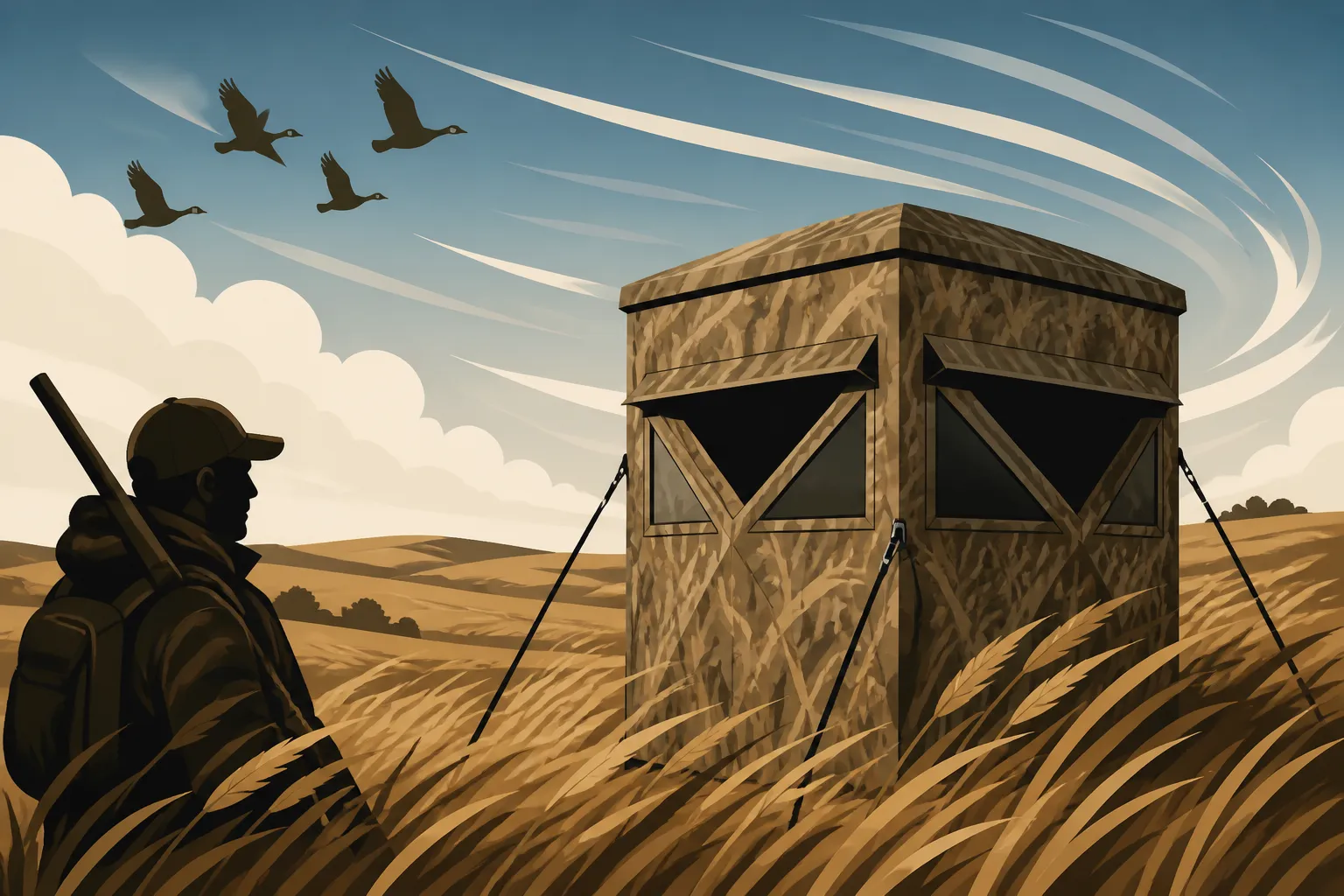
Hub-style blinds are arguably the most popular and often the most suitable choice for windy conditions. Their design features a central hub at each side (or corner) from which rigid poles extend to create the blind's shape. When deployed, these poles create a taut, box-like structure that resists flexing and collapsing much better than traditional pop-up designs that rely more on fabric tension. The rigid frame means less flapping and a more stable profile against the wind.
The key advantage here is the even distribution of tension and stress. When a strong gust hits a hub-style blind, the force is spread across the entire frame and fabric, rather than concentrating on a few weak points. This inherent structural integrity makes them less prone to inward collapse or outward bowing. They are generally quicker to set up than old-school pole blinds, and when anchored properly, they provide a very reliable shelter. Many reputable manufacturers, known for their durable hunting gear, offer excellent hub-style blinds that are designed to endure rough conditions.
Panel Blinds and Custom Setups
While less common as a single, portable unit, panel blinds offer exceptional stability for longer-term setups or scenarios where maximum concealment is paramount. These often consist of multiple, rigid panels that interlock or are hinged together, providing a much heavier and less flexible structure. Think of them as semi-permanent mini-structures rather than portable pop-ups. They are excellent for creating dedicated hunting spots where you might return multiple times throughout the season.
For hunters who are truly dedicated to beating the wind and are willing to invest more time, a custom-built blind is another option. This could involve constructing a wooden or metal frame and then wrapping it with camo fabric or natural materials. While not portable, these offer unparalleled stability and can be tailored precisely to the terrain and prevailing winds of a specific location. They require a significant investment of time and resources but can be the ultimate solution for truly extreme conditions, especially for those looking to set up on private land.
The Role of Portable Blinds
Many hunters rely on portable blinds, whether it's an umbrella-style setup or a simple lightweight cloth draped over stakes. These are fantastic for quick, run-and-gun scenarios, or when you need minimal setup time. However, in sustained Nebraska winds, these typically fall short in terms of stability. An umbrella blind, by its very nature, can act like a sail, catching the wind and easily being tossed aside. Lightweight cloth blinds are prone to excessive flapping, which can be noisy and distracting.
While portability is a huge plus, hunters need to be realistic about the trade-offs in windy environments. If your primary hunting style involves covering a lot of ground quickly, you might accept these limitations for the sake of speed and minimal gear. But for any situation where you plan to sit for extended periods, or if the forecast calls for even moderate wind, a more robust hub-style or custom blind will save you a lot of headaches. It's about matching your gear to the conditions and the specific hunt, and in Nebraska, wind is almost always part of the equation.
| Blind Type | Wind Resistance | Portability | Setup Time | Durability (Frame/Fabric) | Best Use Case |
|---|---|---|---|---|---|
| Hub-Style | High | Medium | Moderate | High | Versatile, frequent use, various conditions |
| Panel Blind | Very High | Low | Longer | Very High | Semi-permanent, long-term setups, extreme wind |
| Pop-Up (Basic) | Moderate | High | Fast | Moderate | Quick setups, mild wind, occasional use |
| Custom-Built | Extreme | Very Low | Very Long | Extreme | Permanent stand, dedicated spots, ultimate protection |
Setup Strategies for Wind-Proofing Your Blind
Having the right blind is only half the battle. How you set it up and anchor it can make all the difference in whether it survives a stiff Nebraska breeze. These strategies are critical for turning your blind into a truly wind-resistant sanctuary.
Proper Anchoring Techniques
This cannot be stressed enough: anchor your blind firmly. The flimsy stakes that often come with blinds are usually inadequate for Nebraska's conditions. Invest in heavy-duty ground stakes specifically designed for holding power. Spiral-style stakes, screw-in auger stakes, or large rebar stakes driven deep into the ground work far better than standard tent pegs.
Use all available tie-down points around the base of your blind. Don't skip any. For added security, run extra lines from the blind's frame (if accessible) or upper fabric points down to additional stakes, creating a wider footprint of stability. In very sandy or loose soil, consider using "deadman" anchors, where you bury a log or rock horizontally and tie your anchor rope to it. Another excellent trick is to fill empty sandbags or sturdy duffel bags with sand, rocks, or even dirt, and place them inside the blind at each corner, tying them to the frame if possible. This adds crucial weight and prevents the blind from lifting. Remember, the goal is to make it as difficult as possible for the wind to get underneath or around your blind and lift it or push it over. For more on optimizing your setup, you might find tips in Ground Blinds in Open Nebraska Country helpful.
Strategic Brushing In and Orientation
Beyond just anchoring, how you position and "brush in" your blind significantly impacts its wind resistance. First, consider the prevailing wind direction. While you typically want the wind in your face for scent control, directly facing a strong, consistent wind can put maximum stress on the blind's front panel. Sometimes, orienting the blind slightly angled to the prevailing wind can reduce the direct impact pressure, allowing the wind to glance off more effectively. However, never compromise your scent control for blind stability; game animals are far more sensitive to smell than sight or sound.
Next, make use of natural windbreaks. Setting your blind against a cedar tree, a dense shelterbelt, a large rock outcrop, or even a slight elevation change like a terrace bench can significantly reduce the wind's force on your blind. Then, take the time to "brush in" your blind extensively. This means piling brush, cornstalks, hay bales, or other natural materials around the exterior of your blind, especially on the windward side. Not only does this enhance concealment, but it also creates a buffer that disrupts airflow and absorbs some of the wind's energy, further stabilizing the structure. Think of it as building a natural, aerodynamic shell around your blind. It also prevents wind from getting underneath and creating lift, which can compromise even the best anchoring job. This attention to detail is just as important as the blind itself.
Maintaining Your Blind for Longevity in Harsh Weather
Even the best ground blind will eventually succumb to the elements if not properly cared for. Regular maintenance ensures your investment lasts season after season in Nebraska's demanding weather.
Post-Hunt Care and Storage
The moment you finish your hunt, resist the urge to simply collapse your blind and toss it in the back of the truck. Before packing it away, especially if it's wet or muddy, take a few minutes to clean it. Mud, leaves, and moisture can lead to mildew, which not only smells terrible but also degrades fabric over time. If possible, set it up at home or in your garage to thoroughly dry. If you have to pack it wet, make sure to air it out as soon as you get home.
When storing, avoid cramming it into a tight space where poles might bend permanently or fabric might crease excessively. Store it in a cool, dry place, away from direct sunlight, which can cause UV degradation of the fabric. Laying it flat or hanging it can help preserve its shape and extend the life of the frame. Inspect the poles, hubs, and fabric for any damage before putting it away for the off-season. This proactive approach to storage will prevent small issues from becoming major repairs when you pull it out next season.
Inspecting for Wear and Tear
Regular inspection is key to catching small problems before they become big ones. Before each season, and periodically throughout if you're a frequent hunter, set up your blind and give it a thorough once-over. Check all the seams for fraying or loose stitching, especially around windows, zippers, and tie-down points. These areas experience a lot of stress from wind and repeated use. Test all zippers to ensure they open and close smoothly; a jammed zipper in the field is a major headache.
Pay close attention to the poles and hub connections. Look for any signs of cracking, bending, or stress fractures in the poles. Inspect the hubs for any hairline cracks or signs of weakness. Replace any damaged components immediately. Many manufacturers offer replacement parts, or you can often find generic repair kits. Don't wait until you're in the field to discover a critical failure. Addressing these issues proactively ensures your blind is always ready to face the wind and provides reliable concealment when you need it most. This kind of care will extend the life of your blind significantly, making your hunts more productive and less stressful.
Brands and Considerations for Nebraska Hunters
When it comes to ground blinds, a few brands have earned a reputation for producing gear that can stand up to tough conditions. While I won't list specific models or prices, focusing on the brand's general approach to quality can guide your decision.
Reputable Blind Manufacturers
When I think about blinds that I've seen endure Nebraska's wind, names like Primos, Ameristep, and Barronett Blinds often come to mind. These companies have been in the hunting game for a long time and generally offer a range of blinds from entry-level to high-end. Higher-end models from these brands typically feature better quality materials: thicker fabrics, stronger poles, and reinforced stitching. They understand that hunters need gear that performs, not just looks good in the store.
For instance, Primos blinds are known for their effective camo patterns and solid construction in their higher-tier offerings. Ameristep often emphasizes speed of setup and portability, but their heavier-duty models can hold their own. Barronett Blinds are particularly known for their large footprints and often robust hub designs. When you're researching blinds, resources like GoHunt can be invaluable for comparing specs and reading user reviews to see how different models actually perform in real-world hunting situations. Many hunters, myself included, use tools like GoHunt to scout areas where a robust ground blind would be essential, especially in wide-open country. Looking at what experienced hunters are saying about durability and wind resistance is far more telling than just reading a sales description.
Weight, Portability, and Concealment
It's a delicate balance, isn't it? You want a blind that's sturdy enough to withstand a gale, but you also need to carry it to your hunting spot, which might be a long walk across an Open Fields and Waters Tracts Best for Deer. A heavier blind often means more robust materials, but also more effort to transport. Consider your typical hunting style: are you setting up a semi-permanent blind for the season, or are you moving it daily?
For those who prioritize portability, seek out lighter hub-style blinds that still utilize strong frame materials and decent fabric. You might compromise slightly on overall thickness, but good design can still offer impressive wind resistance. Always remember that concealment is paramount. Even the most wind-resistant blind is useless if it sticks out like a sore thumb. Pay attention to the camo pattern (does it blend with Nebraska's specific vegetation?), and look for blinds that offer ample shoot-through mesh windows for broad visibility without sacrificing concealment. The best blind for you will strike the ideal balance between stability, ease of transport, and stealth in the field.
Consider a Small Repair Kit
No matter how high-quality your blind is, accidents happen, and wear and tear is inevitable. A small, field-ready repair kit can be a lifesaver. This should include:
- Duct tape or specialized fabric repair tape: For quick fixes of small tears or holes.
- Zip ties: Great for temporarily securing a broken pole, a flapping window, or a loose tie-down loop.
- Extra stakes: Keep a few heavy-duty stakes in your blind bag; you never know when you might need more anchoring power or lose a stake.
- A multi-tool: Handy for everything from tightening screws to cutting cordage.
- Paracord or strong utility rope: Useful for additional tie-downs or creating emergency guylines.
Having these simple items on hand can prevent a minor mishap from turning into a ruined hunt. Imagine a scenario where a sudden gust tears a tie-down loop. A quick zip tie or a piece of tape can reinforce it and keep your hunt going. Investing a few extra dollars in a repair kit is a smart move for any hunter who spends time in the unpredictable Nebraska outdoors.
Disclaimer
This article is for general informational purposes only and does not constitute professional advice. Laws, prices and regulations vary by location and change over time. Consult a qualified professional for guidance on your specific situation.