Muzzleloader Choices for December Cold
The Nebraska December muzzleloader season can be an incredible time to chase whitetails and mule deer, but anyone who's spent hours shivering in a stand knows that cold weather hunting presents its own set of challenges. When temperatures plummet, and the wind whips across the plains, your gear can be the difference between a successful hunt and a frustrating, frozen bust. This guide dives deep into selecting the right muzzleloader for those frigid Nebraska days, ensuring your equipment performs when it truly matters.
The Realities of December Muzzleloader Hunting in Nebraska
Hunting in December in Nebraska isn't for the faint of heart. It's a time when many fair-weather hunters have packed it in, leaving the fields and river bottoms to those dedicated enough to brave the elements. But with that dedication comes the potential for some truly rewarding hunts, often with less competition. However, these conditions demand that your gear, especially your muzzleloader, is up to the task.
The Challenge of Cold and Snow
Imagine this: you've spent hours tucked into a cedar thicket, the mercury hovering around 10 degrees, and a light snow is falling. Suddenly, a mature buck slips into range. You raise your muzzleloader, take aim, and… nothing. Or perhaps a weak, sputtering ignition that leaves you questioning if the shot will even make it to the target. This scenario isn't uncommon. Cold, moisture, and even just the sheer lack of dexterity that comes with frozen fingers can impact your muzzleloader's performance. The powder can absorb moisture, primers can fail, and even the lubricants in your rifle can thicken, affecting trigger pull or moving parts. It's a real frustration when you've done everything else right.
The snow itself adds another layer of complexity. While beautiful, a light dusting can turn into a heavy, wet blanket that finds its way into every nook and cranny of your firearm. Keeping your muzzleloader dry, both internally and externally, becomes a constant battle against the elements. This isn't just about preventing rust; it's about ensuring reliable ignition when a hard-earned opportunity presents itself. You need a system that can shrug off a few snowflakes or a damp breeze without missing a beat.
Understanding the Season's Unique Demands
Nebraska's December muzzleloader season follows the Nebraska's Nine-Day November Firearm Deer Season and often overlaps with the tail end of the archery season, and sometimes even continues into special late antlerless hunts. This means deer have been pressured, and they're often seeking refuge in dense cover or focusing on remaining food sources. Your hunts might involve long periods of stationary sitting, perhaps still-hunting through thick timber, or navigating snow-covered terrain. The type of hunting you plan to do directly influences what features you'll appreciate most in your muzzleloader.
For instance, if you're planning on a lot of still-hunting through brush, a more compact muzzleloader might be desirable. If you anticipate long shots across open fields where deer are hitting Late-Season Food Sources in Nebraska, accuracy at extended ranges will be paramount. Beyond the firearm itself, Cold Weather Sitting Strategy becomes crucial, as does understanding Where Deer Yard Up in a Nebraska Winter. Your choice of muzzleloader needs to complement these tactical considerations, ensuring it's not a hindrance but an extension of your hunting strategy, especially when every single detail matters in freezing conditions.
In-Depth Look at Muzzleloader Types for Winter Conditions
When you're out in the Nebraska winter, your muzzleloader isn't just a tool; it's a partner. Understanding the different types available can help you choose one that stands up to the December chill.
Inline Muzzleloaders: Modern Reliability
Inline muzzleloaders are, without a doubt, the most popular choice for modern hunters, and for good reason, especially when facing Nebraska's winter. Their design typically features a totally enclosed breech and primer system, which is a massive advantage in wet or snowy conditions. This sealed environment helps protect your primer and powder from moisture, drastically increasing ignition reliability compared to more open designs. When it's sleeting and the temperature is barely above zero, knowing your primer is tucked away and dry provides a huge boost of confidence.
Beyond moisture resistance, many inline designs are built with synthetic stocks and stainless steel barrels. These materials are inherently less susceptible to changes due to temperature and humidity than traditional wood and blued steel. A synthetic stock won't swell or warp in the wet, potentially affecting accuracy, and stainless steel resists rust far better, a critical factor when dealing with snow, thawing, and re-freezing cycles. Look for models with easily removable breech plugs, as this makes cleaning and maintenance much simpler, which is vital when you need to dry out your rifle quickly after a hunt in the elements. These modern marvels often excel in terms of accuracy as well, giving you the best chance for a clean harvest on a wary December deer.
Traditional Side-Lock and Flintlock: The Purist's Challenge
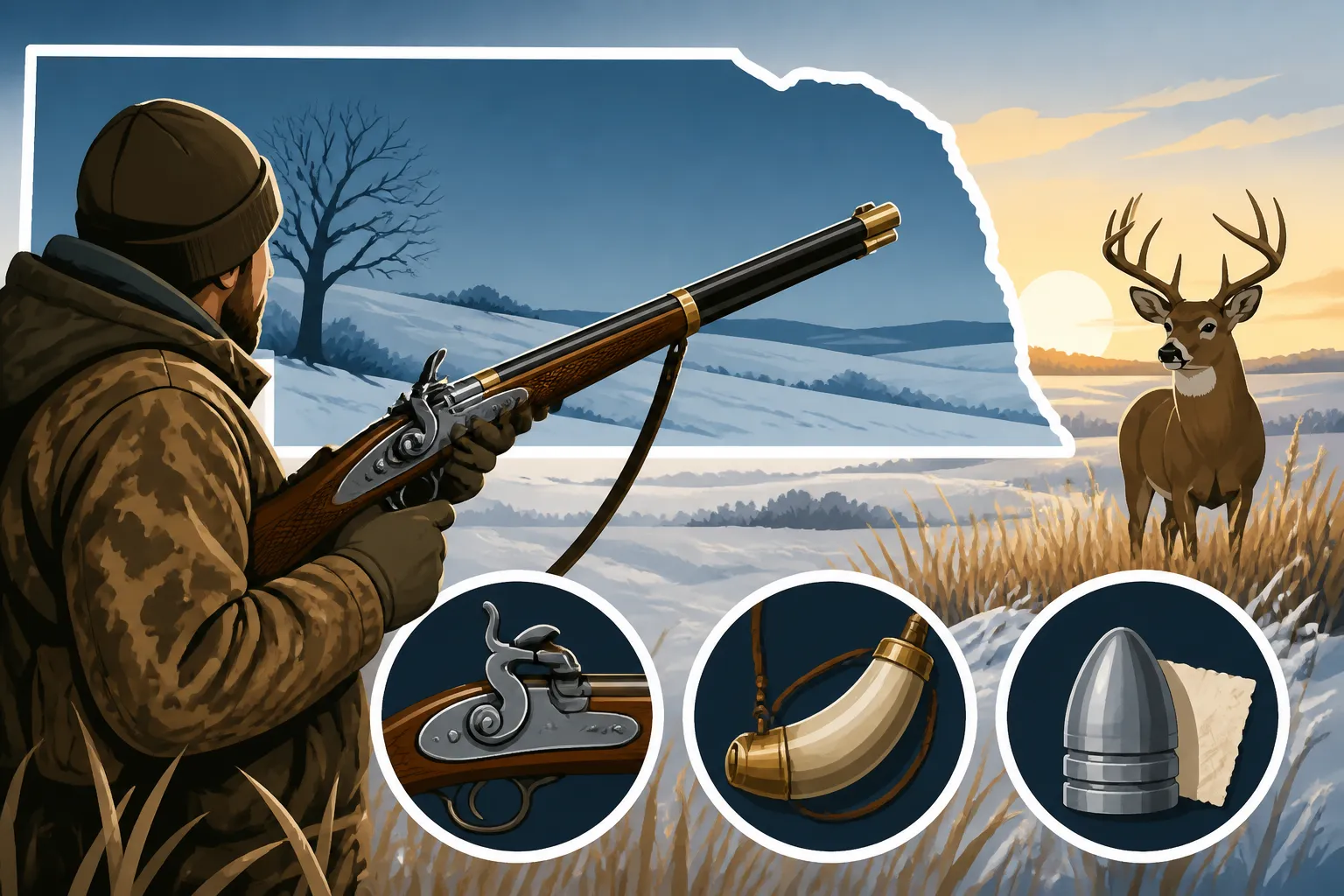
For the traditionalist, there's a certain romantic appeal to hunting with a side-lock percussion or even a flintlock muzzleloader. The experience is undeniably authentic, connecting you to generations of hunters past. However, in the harsh environment of a Nebraska December, these traditional designs present significant challenges, primarily concerning reliable ignition. The exposed percussion cap or the flintlock's open pan is highly vulnerable to moisture. A stray snowflake, a bit of condensation, or even just heavy fog can dampen your priming charge or cap, leading to misfires or hangfires—a hunter's worst nightmare when a deer is in range.
If you choose to go the traditional route in winter, meticulous preparation is non-negotiable. You'll need to carry multiple, dry percussion caps or ensure your flint and frizzen are in perfect working order with fresh, dry powder in the pan. Many traditional hunters will use various covers or even pieces of leather to shield the ignition system from the elements. While the challenge is part of the appeal, be realistic about the increased potential for issues when the weather turns truly nasty. It's a beautiful way to hunt, but it requires an even higher level of dedication to Keeping a Muzzleloader Dry in Snow and keeping it firing.
Break-Action Muzzleloaders: Simplicity and Speed
Break-action muzzleloaders, often inline designs, offer a fantastic blend of modern performance and user-friendly simplicity. Just like a single-shot shotgun, the barrel tips open, allowing for incredibly easy loading directly into the breech. This feature is a real boon when your fingers are stiff with cold or you're wearing heavy gloves. Fumbling with a ramrod in freezing temperatures can be a pain, but the open breech makes it much more manageable. The ability to quickly check the status of your load or clear a misfire is also a significant advantage in the field.
Most break-action muzzleloaders incorporate an enclosed primer system, similar to other inline designs, which provides that crucial protection against moisture. Many also feature synthetic stocks and stainless steel barrels, contributing to their durability and weather resistance. Their straightforward design often translates to fewer moving parts that can freeze up or become sluggish in extreme cold. While some might argue they lack the aesthetic of a classic rifle, their practical advantages in a cold, unforgiving Nebraska December often outweigh any perceived shortcomings. Their ease of use can make the difference between an enjoyable hunt and one marred by frustration.
| Muzzleloader Type | Pros for Cold Weather Hunting | Cons for Cold Weather Hunting |
|---|---|---|
| Inline | Excellent moisture protection for primer/powder; often synthetic/stainless; generally accurate. | Can be pricier; sometimes more complex to disassemble. |
| Traditional | Authentic hunting experience; simple mechanics (less to freeze). | Ignition highly vulnerable to moisture; requires meticulous cover/preparation. |
| Break-Action | Easy and fast loading in cold; good moisture protection; often synthetic/stainless. | Less traditional feel; limited to single shot. |
Key Features to Prioritize for Your December Muzzleloader
When picking a muzzleloader for those brutal December days in Nebraska, it's not just about the type; it's about the specific features that will stand up to the cold. Trust me, the small details matter when your breath is freezing in the air.
Ignition Systems and Cold Sensitivity
The ignition system is the heart of your muzzleloader, and in cold, damp conditions, it's where reliability truly shines or utterly fails. For December hunting, you absolutely want a system that fully encloses the primer. Modern inline muzzleloaders often use 209 shotshell primers, which are powerful and consistent, and crucially, they are sealed away from the elements. Systems that use a full-size breech plug to hold the primer are often the most effective at keeping moisture out. Some older inline designs might have more exposed primer pockets, which are better than traditional caps but still not ideal when snow is blowing sideways.
Think about how you'll handle the primer itself. Can you load it with gloved hands? Some systems have small, fiddly parts that become impossible to manipulate when your fingers are numb. Easy access to remove and replace a primer, especially if you have a misfire, is critical. A system that allows you to easily de-cock and recock without removing the primer is also a safety advantage and a time-saver when you're bundled up. The less exposure to the bitter air and moisture, the more confident you'll be when that big buck finally steps out.
Barrel Materials and Construction
In Nebraska's December, your muzzleloader's barrel takes a beating from the cold, moisture, and potential for corrosion. This is where material choice becomes paramount. Stainless steel barrels are practically non-negotiable for serious cold-weather hunting. Unlike blued carbon steel, which can rust almost before your eyes in damp, freezing conditions, stainless steel offers excellent corrosion resistance. This means less worry about maintaining a perfect finish in the field and more focus on the hunt.
Beyond the material, consider the bore itself. A high-quality, cleanly rifled barrel will provide better accuracy, which is always important, but especially so when deer are wary and opportunities might be at longer ranges in open terrain. Some hunters also prefer fluted barrels, which can shave off a little weight and potentially increase cooling, though in December, cooling isn't usually the issue! What's more important is a robust barrel that can maintain its point of impact even through temperature fluctuations. A good barrel, combined with Muzzleloader Powder Choices for December and appropriate bullets, ensures your shot is true, even when the wind bites.
Stock Design and Handling with Gloves
When you're layered up like a Michelin Man to combat the Nebraska cold, handling your rifle can become surprisingly awkward. This makes stock design a crucial feature. First and foremost, synthetic stocks are king for cold weather. They don't absorb moisture, swell, warp, or conduct cold like wood can. Imagine resting a wooden stock against your cheek in freezing temperatures – it’s not pleasant! Synthetics are much more forgiving.
Next, consider the ergonomics. Can you comfortably grip the forend and pistol grip with thick gloves on? Some stocks are designed with thinner profiles that become difficult to hold securely when your hands are encased in insulation. Look for designs that offer a generous grip area and perhaps some texturing for added purchase. The length of pull might also become an issue if you're wearing a very thick coat; some adjustable stocks can be a real benefit here. Finally, look at the balance. A well-balanced muzzleloader will feel lighter and be easier to hold steady for extended periods, especially when trying to hold a sight on a deer in a stiff December breeze. The less you have to fight your equipment, the more you can focus on making that critical shot.
Ammunition, Propellants, and Primers for Frigid Hunts
The best muzzleloader in the world is useless without reliable ammunition, especially when Nebraska's December cold sets in. Every component plays a vital role in ensuring a consistent shot.
Choosing the Right Powder for Consistency
Powder choice is absolutely paramount for a muzzleloader hunt in freezing temperatures. Black powder substitutes have revolutionized muzzleloading, but not all of them perform equally in the cold. Traditional black powder can be highly susceptible to moisture absorption, which can lead to slow ignitions, hangfires, or even complete misfires. When moisture gets into the powder column, it can significantly degrade its burning properties.
Many modern granular substitutes, like those from Pyrodex or Triple Seven, offer improved performance in cooler, damper conditions compared to true black powder. However, even these can have their quirks. Some hunters find that pelletized powders are more consistent in cold weather because they offer a consistent charge without needing to measure loose powder with numb fingers. When considering Muzzleloader Powder Choices for December, always look for powders specifically formulated for cold-weather reliability. It's often worth doing some pre-season testing on a truly cold day to see how your chosen powder performs in real-world conditions. Nothing beats personal experience for building confidence in your load.
Bullet Selection for Terminal Performance
Just like with a centerfire rifle, bullet selection in a muzzleloader dictates terminal performance. For December hunting in Nebraska, where deer can be robust and opportunities sometimes fleeting, you want a bullet that expands reliably and retains weight for good penetration. Many hunters rely on saboted bullets, which allow the use of smaller, more aerodynamic projectiles designed for modern inline muzzleloaders. These can offer better accuracy at longer distances, which might be a factor if you're hunting more open areas.
Conical bullets, on the other hand, are larger diameter and often made of pure lead, or a lead alloy. They engage the rifling directly without a sabot. While some conical designs are incredibly effective, they generally have a shorter effective range due to their ballistic coefficients. When comparing Sabot Versus Conical for Deer, think about your expected shot distances. Regardless of whether you choose a sabot or a conical, ensure the bullet is designed for controlled expansion at muzzleloader velocities. You want a bullet that will dump its energy quickly and effectively into the deer, especially when chasing a tough animal in the cold that might be seeking dense cover immediately after the shot.
Primers and Their Cold-Weather Reliability
Primers are the linchpin of your muzzleloader's ignition system. In cold conditions, a weak or unreliable primer can spell disaster. For modern inline muzzleloaders, 209 shotshell primers are the industry standard for a reason. They are powerful, providing a hot, consistent spark that ignites the main powder charge even in less-than-ideal conditions. Crucially, their design helps seal off the breach, adding an extra layer of protection against moisture.
However, not all 209 primers are created equal. Some brands are known for being "hotter" than others, meaning they produce a more vigorous spark. While this can be beneficial in cold weather, it's essential to match your primer to your specific powder and muzzleloader. Always ensure your primers are stored in a dry, airtight container until you're ready to use them. Carrying them in your hunting pack in a waterproof case is a smart move. Even with a well-sealed system, moisture can find its way in, and a high-quality, potent primer can sometimes overcome minor dampness in the powder, delivering that critical bang when you need it most.
Essential Field Preparation and Maintenance for Nebraska's Winter
December hunts are often short, cold windows of opportunity. You can't afford to have your muzzleloader fail due to poor preparation or maintenance. It's all about proactive measures to beat the cold.
Keeping Your Muzzleloader Dry and Functioning
The relentless moisture in cold weather is arguably the biggest enemy of a muzzleloader. Even if it's not raining or snowing, the condensation from drastic temperature changes (moving from a warm truck to freezing air, or your body heat warming the gun) can introduce enough moisture to cause problems. My top tip for Keeping a Muzzleloader Dry in Snow is simple: treat your muzzleloader like it's made of sugar. Before you even head out, give the bore a light coating of a good anti-corrosion agent, and ensure all external metal parts are wiped down with a moisture-displacing oil. Pay special attention to the breech plug area.
In the field, use a breech plug protector or electrical tape over the muzzle to prevent snow and debris from entering. Many hunters also carry a small piece of inner tube or electrical tape to wrap around the breech area, further sealing off the primer. If you're caught in a downpour or heavy snow, try to keep the muzzleloader under your jacket or in a waterproof case when not actively hunting. When you get back to your vehicle or camp, immediately wipe down the exterior, remove the breech plug, and swab the bore dry. Don't let moisture sit for even a few hours.
Cleaning Regimens in Cold Conditions
Cleaning a muzzleloader after a cold, wet hunt is not usually a fun task, but it's absolutely crucial. Black powder and its substitutes are corrosive, and leaving residues in the barrel can lead to rapid pitting and rust, especially when combined with moisture. The problem is, cleaning solvents can be sluggish in cold temperatures, and your hands might not want to cooperate.
One trick is to use warm water (if available) mixed with a cleaning solution for the initial cleaning. This helps break down the powder fouling more effectively. You can also use pre-saturated cleaning patches for convenience in the field, but a thorough cleaning with a bore brush and patches is essential once you're back in a warmer environment. After cleaning, ensure every part is completely dry, then apply a protective oil. Don't forget the breech plug, which often gets the most fouling and needs careful attention. Having a dedicated kit with specialized muzzleloader cleaning tools, including a breech plug wrench and bore brush, will make this process much easier when your hands are stiff.
Pre-Season Practice and Familiarity
You wouldn't head into a deer stand in December without knowing your rifle's capabilities, and a muzzleloader is no different. Pre-season practice is important for any firearm, but it's particularly vital for muzzleloaders due to their unique loading and firing characteristics. However, for December hunting, this practice needs to be cold weather specific. Take your muzzleloader out on a genuinely cold day, load it with the powder and bullet combination you intend to hunt with, and see how it performs.
This isn't just about accuracy; it's about familiarity. How does the loading process feel with thick gloves on? Can you manipulate the ramrod, primer, and breech plug easily? Does your powder ignite consistently in freezing temperatures? Sometimes, small adjustments to your technique or load can make a huge difference in reliability. You might find that a particular primer works better with your chosen powder in the cold, or that a slightly different bullet seating depth improves accuracy. The more you practice in conditions that mimic your actual hunting environment, the more confident and proficient you'll be when that trophy buck steps out on a frigid December morning. You can even use resources like GoHunt to scout potential shooting lanes or ranges where you might practice, ensuring you're familiar with the topography and conditions.
Supporting Gear: Optics, Clothing, and Accessories for Success
A muzzleloader is just one piece of the puzzle. To truly be successful and comfortable hunting in a Nebraska December, you need the right supporting cast of gear.
Optics That Can Withstand the Chill
Your muzzleloader's optics are just as susceptible to the cold and moisture as the rifle itself. A fogged or frosted scope can ruin a shot just as effectively as a misfire. When choosing a scope for December hunting, look for models that are purged with inert gases (like nitrogen or argon) and O-ring sealed. This prevents internal fogging due to rapid temperature changes. Also, ensure the external lenses have a hydrophobic coating that repels water and prevents snow from sticking and freezing onto the glass.
Consider the reticle. In low light conditions typical of early morning or late evening hunts in winter, a simple, bold reticle is often easier to see than a fine, complex one. An illuminated reticle can be a game-changer, providing a clear aiming point against a dark background, especially if snow is on the ground. Also, think about the adjustments: can you easily manipulate the turrets with gloves on if you need to make a quick adjustment? Reliable scope caps that can be flipped open quickly are also a must. You won't have time to unscrew a cap when that deer appears.
Layering for Stationary December Hunts
Staying warm is not just about comfort; it's about mental focus and physical dexterity. Base Layers for a Nebraska November are a starting point, but for December, you need to elevate your game. Layering is the key. Start with a moisture-wicking base layer to draw sweat away from your skin. Add insulating mid-layers like fleece or down to trap body heat. For your outer layer, you need something that is both windproof and water-resistant, or ideally, waterproof.
Nebraska's notorious winds can cut through layers like a knife, so Wind-Blocking Shells for the Plains are critical. Look for jackets and pants with Gore-Tex or similar wind-blocking membranes. Don't forget your extremities. A good insulated hat, a neck gaiter, and multi-layer glove system (thin liners under thick, insulated mittens with finger access) are essential. And perhaps most critically, your feet. Invest in high-quality, insulated, waterproof boots and wool socks. There's nothing worse than frozen feet when you're trying to stay still and focused. My advice for Insulated Boots for a Firearm Season Sit is to buy them a half-size larger than normal to accommodate thicker socks and ensure adequate circulation.
The Often-Overlooked Cold Weather Essentials
Beyond the big-ticket items, a few often-overlooked accessories can make a huge difference in your December muzzleloader hunt.
- Hand Warmers: These little packets of warmth are lifesavers. Stick them in your gloves, boots, or even inside your pockets to keep your hands and feet from going numb.
- Waterproof Pack: Even if your muzzleloader is protected, your spare primers, powder, and other essentials need to stay absolutely dry. A good waterproof pack or dry bags within your regular pack are crucial.
- Insulated Seat Pad: Sitting on a cold, frozen surface will quickly sap your body heat. A simple foam or inflatable seat pad can make hours of sitting much more bearable.
- Thermos with Hot Beverage: A warm drink can provide an incredible boost of morale and internal warmth on a bitter day. Coffee, tea, or even hot broth can be a game-changer.
- Field Repair Kit: A small kit with a multi-tool, electrical tape, extra breech plug, and ramrod jag can solve minor issues in the field that would otherwise end your hunt.
- Navigation Tools: In snowy conditions, familiar landmarks can disappear. Ensure you have a reliable GPS or smartphone app like GoHunt with downloaded maps, along with a compass as a backup. Knowing where you are and how to get back to the truck is vital.
- Shooting Sticks or Bipod: When you're shivering, holding a rifle steady can be tough. Shooting sticks or a bipod can provide much-needed stability for an accurate shot.
- Face Mask: Protect your face from windburn and frostbite. A good face mask or balaclava, ideally in blaze orange if applicable during the season, is essential. Remember to check Orange Requirements for Archers in November if you are bowhunting concurrently.
By preparing thoroughly and choosing gear specifically designed for Nebraska's December cold, you can turn a potentially miserable hunt into a comfortable and successful one.
Disclaimer
This article is for general informational purposes only and does not constitute professional advice. Laws, prices and regulations vary by location and change over time. Consult a qualified professional for guidance on your specific situation.