Keeping a Muzzleloader Dry in Snow
There's nothing quite like the crisp silence of a Nebraska December morning, fresh snow blanketing the fields and river bottoms, when you're out muzzleloader hunting. But that beautiful, serene landscape can quickly turn into your worst enemy if you're not prepared, especially when it comes to keeping your black powder rifle dry. A misfire in freezing temperatures, watching that big buck bound away because your powder turned to mush, is a frustration most of us have faced at some point. This guide will walk you through practical, real-world strategies to protect your muzzleloader from snow and moisture, ensuring that when the moment of truth arrives, your shot will be true.
Understanding the Enemy: How Snow and Moisture Affect Muzzleloaders
When you're out chasing deer during Nebraska's December Muzzleloader Deer Season, the elements can be brutal. Snow isn't just a picturesque backdrop; it's a direct threat to the reliability of your muzzleloader. Unlike modern cartridge firearms with sealed ammunition, muzzleloaders expose several critical components to the environment, making them highly susceptible to moisture. Understanding why this is a problem is the first step in effectively combating it.
The Science of Black Powder and Moisture
Let's talk about the heart of your muzzleloader: the powder. Whether you're using traditional black powder or one of its modern substitutes, they all share a common enemy: humidity. Black powder, in particular, is highly hygroscopic, meaning it readily absorbs moisture from the air. Even seemingly dry snow, or just the high humidity that often accompanies it, can compromise your charge.
Think about it this way: your powder charge needs to ignite quickly and burn completely to generate the necessary pressure for an accurate shot. When it absorbs moisture, the chemical structure changes. The ignition becomes sluggish, or worse, completely fails. Instead of a powerful bang, you get a weak "fizz" or nothing at all. This isn't just an inconvenience; it can ruin a hunt and even become a safety concern if you end up with a hang fire. The fine granules can clump together, preventing a consistent burn, leading to a weaker shot or an outright dud. You can practically see your deer running off into the timber while you're left pulling the trigger on a wet charge.
Primers and Percussion Caps: Their Vulnerability
Beyond the main powder charge, your primers or percussion caps are the spark plugs of your muzzleloader, and they are equally, if not more, vulnerable. Modern muzzleloaders typically use 209 shotgun primers, which are fairly weather-resistant, but they're not invincible. The small gap between the primer and the breech plug can still allow moisture to wick in. For traditional percussion caps, the vulnerability is even greater.
A percussion cap, designed to detonate with a sharp strike from the hammer, contains a small amount of impact-sensitive explosive. If this explosive gets damp, it simply won't go off. Imagine sitting in a ground blind, waiting for hours in a gentle snowfall. You finally get a shot opportunity, raise your rifle, aim, and pull the trigger. Click. Nothing. The cap absorbed just enough moisture to render it inert. It's a soul-crushing moment. Protecting these tiny but vital components is paramount to ensuring your muzzleloader fires when you need it most.
Essential Gear for Muzzleloader Weatherproofing
Preparing for a snowy Nebraska hunt with a muzzleloader requires more than just good camouflage and warm layers. You need specific gear designed to create a barrier between your sensitive components and the relentless moisture. This isn't about buying the most expensive gadgets, but rather investing in smart solutions that genuinely protect your investment and your hunting opportunity.
Bore Protection
The bore of your muzzleloader is where the magic happens, and it's also a direct funnel for snow and rain if left exposed. Protecting it is non-negotiable.
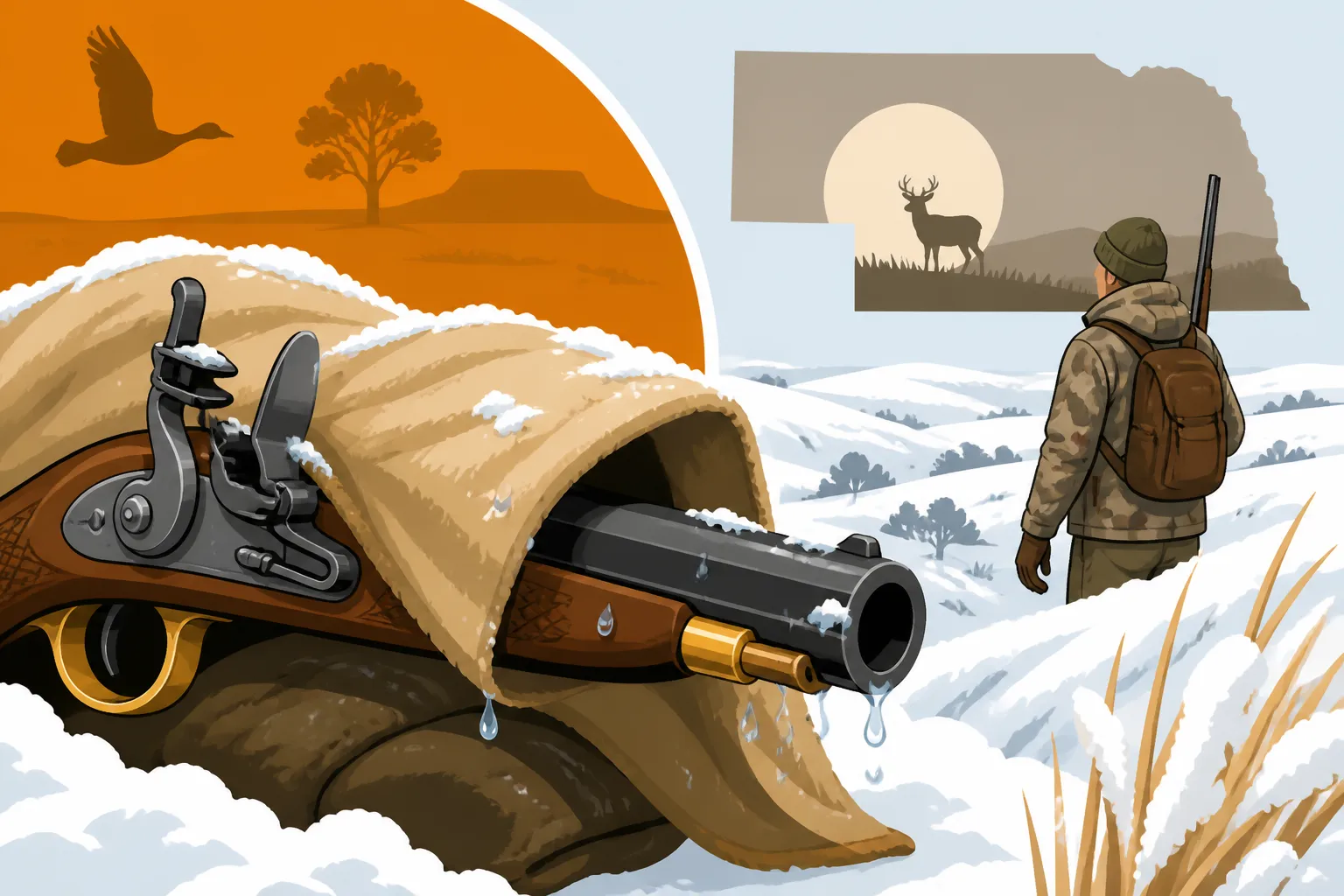
One of the simplest and most effective methods is a piece of electrical tape. After loading your muzzleloader, simply place a small, single strip of electrical tape over the muzzle. Don't wrap it tightly; just a single layer over the end. This creates a waterproof seal that will easily break when the bullet exits, without affecting accuracy or leaving residue. It's cheap, lightweight, and incredibly effective against falling snow, ice, or even a sudden downpour. I've used this trick for years, whether I'm Still-Hunting a Snow-Covered River Bottom or just sitting on a stand. Another option is a balloon or finger cot, stretched over the muzzle. While these also work, they can sometimes look a bit more conspicuous or be prone to tearing if snagged on brush. Some specialized muzzleloader caps are also available, often made of stretchy rubber, designed to fit snugly over the barrel. Whatever you choose, the goal is the same: prevent moisture from entering the bore from the muzzle end. Remember, a wet bore can also lead to pressure inconsistencies and a wildly inaccurate shot, or worse, a dangerous bore obstruction if ice forms.
Action and Primer Shielding
The action of your muzzleloader, especially where the primer or percussion cap is seated, is another critical vulnerability. This area is often exposed to the elements, and moisture can quickly seep into the ignition system.
For muzzleloaders using 209 primers, specialized primer covers or caps are available. These are typically made of flexible rubber or plastic and fit tightly over the breech area, creating a seal around the primer. They're designed to be easily removed with a thumb before shooting or to be blown off by the force of the shot itself. These are particularly useful if you're hunting in heavy snowfall or freezing rain. For traditional percussion caps, the challenge is greater. Some hunters fashion their own covers from pieces of inner tube or leather, creating a flap that sits over the cap and nipple. Others use a strip of electrical tape over the cap, though this needs to be removed before firing, which can be fumbling in the cold. The key is to create a physical barrier. When you're spending hours on a cold December stand, the last thing you want is for a few snowflakes to ruin your shot. Carrying extra, dry percussion caps in a waterproof container is also a must. You never know when you might need to swap out a damp one.
Dry Storage and Transport
It's not just about protecting your muzzleloader while you're hunting; it's about protecting it from the moment you leave the house until you return. Moisture can creep in during transport, during breaks, or even overnight.
When transporting your muzzleloader in your truck or ATV, avoid laying it directly in snow or slush. Use a good quality gun case, ideally one that's water-resistant. Hard cases offer the best protection, but even a soft case can help if it's lined or made of a waterproof material. If you're using an open-air vehicle like an ATV, consider a waterproof soft case or a scabbard that protects the entire gun from road spray and falling snow. Never leave your muzzleloader exposed in the back of a truck bed. If you have to take a break or step into a warm cafe, don't bring your cold rifle inside immediately. The rapid change in temperature can cause condensation to form inside the bore and on exposed metal parts, which is just as bad as direct rain or snow. Leave it in a cool, sheltered spot, or if you must bring it inside, allow it to warm up very slowly in its case. For a long sit in a ground blind or a treestand, consider a waterproof gun cover or even a large, heavy-duty garbage bag you can slip over your rifle during periods of inactivity. Many serious hunters, myself included, use the insights from platforms like GoHunt to understand the subtle nuances of gear selection for specific conditions, ensuring every piece of equipment, down to gun covers, performs optimally in the field.
| Protection Method | Component Protected | Ease of Use | Cost | Effectiveness in Snow | Notes |
|---|---|---|---|---|---|
| Electrical Tape (Muzzle) | Bore | High | Very Low | High | Single layer, easily breaks on firing. |
| Rubber Muzzle Cap | Bore | High | Low | High | Reusable, can be snagged. |
| Primer Cover (209) | Primer/Breech Plug | Medium | Medium | High | Specific to 209 primers, quick removal. |
| Custom Percussion Cover | Percussion Cap | Low-Medium | Low | Medium | Requires fabrication, can be fiddly. |
| Waterproof Gun Case | Entire Muzzleloader | High | Medium-High | High | Essential for transport and storage. |
| Waterproof Gun Sleeve | Entire Muzzleloader | Medium | Low-Medium | Medium-High | Good for field use, quick access. |
Field Tactics for Snow and Wet Conditions
Beyond specific gear, your actions and habits in the field play a huge role in keeping your muzzleloader dry and reliable. It’s about being proactive and mindful of the conditions, not just reactive when something goes wrong. A successful hunt in challenging weather often comes down to meticulous preparation and smart in-the-moment decisions.
Pre-Hunt Preparation
Your weatherproofing efforts start long before you step out the door onto Scouting Nebraska Public Ground Before Opening Day. First, ensure your muzzleloader is meticulously clean, especially the bore and breech plug. Any residue can attract and hold moisture, creating a perfect environment for rust or a failed ignition. Once clean, lightly oil all metal surfaces to create a moisture barrier. A thin coat of gun oil on the exterior can make a big difference.
Next, load your powder and projectile carefully, ensuring no powder spills around the breech plug. Seal the muzzle with electrical tape as discussed earlier. For the primer, if you’re using 209s, ensure it’s seated firmly and then apply a primer cover. If you're using percussion caps, carry them in a small, absolutely waterproof container – a tiny pill bottle or a film canister works great. Pack extra tape, a small rag, and maybe even a few cotton swabs in a ziplock bag in your pack. Before heading out, check the long-range forecast. GoHunt, for example, offers detailed weather insights that can help you anticipate not just temperature and wind, but also humidity and precipitation chances, allowing you to tailor your preparations accordingly. Knowing you'll be facing significant snowfall or freezing rain will inform how much extra protection you build in.
During the Hunt: Active Measures
Once you're actually out there in the elements, actively managing your muzzleloader's exposure is key. If you're still-hunting through timber or walking along a creek crossing in the Sandhills, be mindful of how you carry your rifle. Try to keep the muzzle pointed down or angled away from falling snow. If snow builds up on the action, gently brush it off immediately. Don't let it melt and then refreeze, which can seize up components.
When you're sitting in a treestand or ground blind, utilize a waterproof gun cover or even a simple plastic bag to shield the entire rifle. Only uncover it when you're actively scanning for game or anticipating a shot. If you're carrying a pack, position your muzzleloader so it's not pressing against your back, where body heat can melt snow, creating moisture. If you need to rest your rifle on the ground, place a piece of insulation or a dry mat beneath it, rather than directly on cold, damp earth or snow. During long periods of inactivity, a light coat of silicone spray or water-displacing oil (like WD-40, though be careful not to get it in the bore) on external metal parts can provide an extra layer of protection. This proactive approach ensures that moisture never gets a chance to settle and cause problems.
After the Shot (or Misfire)
So, you've taken a shot, or perhaps experienced the dreaded misfire. What happens next is crucial for both safety and the integrity of your rifle. If you've taken a shot, congratulations! Now, immediately after the recoil, re-tape the muzzle to prevent snow from entering the bore. Even though the powder charge has been expended, moisture can still get into the barrel and cause rust if left unchecked.
If you had a misfire or a hang fire (where the primer fires but the main charge doesn't ignite immediately), treat it as a loaded gun and follow all safety protocols. Wait a full 30-60 seconds after a click before attempting to clear it, as a hang fire can delay ignition. If it still doesn't fire, carefully remove the primer (if applicable) and inspect it for moisture. If it's damp, replace it with a dry one. If that doesn't work, you'll need to carefully unload the rifle. Many experienced muzzleloader hunters carry a CO2 discharger specifically for this purpose in the field, which can safely push the projectile and powder out. Never try to force an obstruction or a misfired charge out with another charge. Once unloaded, inspect the powder and breech plug for moisture. Clean and dry everything thoroughly before reloading or calling it a day. Ignoring a misfire and not properly addressing the root cause will almost certainly lead to repeat problems.
Common Mistakes and How to Avoid Them
Even seasoned hunters can sometimes fall into common traps when it comes to muzzleloader care in snowy conditions. Avoiding these pitfalls can save you a lot of frustration and ensure your December hunt remains productive and enjoyable.
Over-Reliance on Quick Fixes
It’s easy to think a quick piece of tape or a basic gun sleeve is all you need. While these are certainly valuable components of your weatherproofing strategy, relying solely on one "quick fix" is a recipe for disaster. For instance, just taping the muzzle might protect the bore, but it does nothing for an exposed primer or a damp powder charge that absorbed moisture from the air during an overnight cold soak.
A holistic approach is essential. This means combining multiple layers of protection: a clean and oiled rifle, a taped muzzle, a primer cover, appropriate transport and storage, and active management in the field. Think of it like dressing for extreme cold; you wouldn't rely on just one thick coat. You layer up. Similarly, your muzzleloader needs layers of protection. Furthermore, platforms like GoHunt often advocate for a comprehensive understanding of gear systems, not just individual items, which applies perfectly to muzzleloader weatherproofing. By considering all potential points of moisture ingress, you drastically reduce the chance of a catastrophic failure when that big whitetail buck in eastern Nebraska finally steps out.
Neglecting the Small Details
Sometimes, it's the little things we overlook that come back to bite us. Forgetting to re-tape the muzzle after checking the bore, leaving a small gap in your primer cover, or not drying your hands before handling powder or caps can all introduce critical moisture.
Consider the temperature fluctuations. If you're moving from a warm truck or lodge into freezing outdoor temperatures, condensation can form inside your barrel or around your breech plug. This is why it's often better to keep your muzzleloader in a cold but dry environment, rather than constantly moving it between warm and cold. Always carry a small, dry cloth specifically for wiping down your rifle. Even moisture from your breath on a frigid morning can collect on cold metal and eventually cause issues. Pay attention to how you lay your rifle down – avoid direct contact with snow or wet ground. A simple piece of foam or a folded poncho can make a world of difference. These small, consistent habits reinforce your larger weatherproofing efforts and dramatically improve your chances of a successful, uneventful hunt.
Post-Hunt Care in Icy Conditions
The hunt isn't over when you've tagged your deer or headed back to the truck. Post-hunt care, especially after a snowy or icy outing, is critical for the longevity and reliability of your muzzleloader. Neglecting this step can lead to rust, corrosion, and degraded performance in future seasons.
As soon as possible after your hunt, whether you've fired a shot or not, your muzzleloader needs a thorough cleaning. If you've spent the day in snow or freezing rain, even with all your precautions, moisture can still find its way into crevices. First, carefully unload the rifle if it's still loaded. Then, bring it indoors and allow it to warm up slowly to room temperature. Resist the urge to place it next to a roaring fire, as rapid heating can cause stress to the metal and wood components. Once at room temperature, field strip your muzzleloader. Pay particular attention to the bore, breech plug, and all moving parts of the action. Clean out all powder residue, which is notoriously corrosive, especially when mixed with moisture. Use a good quality bore cleaner specifically designed for black powder. After cleaning, dry all components meticulously. Many hunters use compressed air or a hairdryer (on a low, cool setting) to ensure every nook and cranny is moisture-free. Finally, lightly oil all metal parts, both inside and out, with a rust-preventative gun oil. Store your muzzleloader in a breathable gun sock or case in a climate-controlled environment. Properly maintained, your muzzleloader will be ready for many more cold December mornings chasing Late-Season Antlerless Hunting in Nebraska or other game.
Disclaimer
This article is for general informational purposes only and does not constitute professional advice. Laws, prices and regulations vary by location and change over time. Consult a qualified professional for guidance on your specific situation.