Wind-Blocking Shells for the Plains
The relentless wind on the Nebraska plains can be a hunter's greatest adversary, turning a mild autumn day into a shivering endurance test that cuts right through layers and steals your focus. This constant, chilling blast isn't just uncomfortable; it makes every aspect of your hunt harder, from staying warm on a long sit to holding steady for a shot. This guide is all about equipping you with the knowledge to combat that biting wind, specifically by choosing and utilizing wind-blocking shells that will make your time afield significantly more enjoyable and productive.
Understanding the Nebraska Wind and Its Impact on Hunters
If you've spent any time hunting in Nebraska, you know the wind isn't just a weather phenomenon; it's a personality trait of the landscape. It's almost always there, a constant companion, and often, a formidable foe. Understanding why it's such a challenge and how it impacts your hunt is the first step to conquering it.
The Wind Chill Factor – A Hunter's Worst Enemy
You check the forecast, and it says 30 degrees. Sounds chilly, but manageable, right? Then you step outside, and a 20 mph wind hits you, and suddenly it feels like 10 degrees or even colder. This isn't just your imagination; it's the wind chill factor at play. Wind rips away the insulating layer of warm air your body creates around itself. It penetrates even seemingly robust layers, stealing precious body heat and leaving you vulnerable to the cold. The frustration of being bundled up, only to have the wind make you shiver uncontrollably, is a common experience for Nebraska hunters. It drains your energy, makes it hard to concentrate, and can quickly send you back to the truck.
Beyond the physical discomfort, there's a real mental game here. When you're constantly fighting the cold, your focus shifts from the hunt to simply surviving the elements. Your patience dwindles, your awareness lessens, and the likelihood of making a mistake increases. It's not just about being cold; it's about being ineffective because of the cold.
Why the Plains Are So Windy
Nebraska's geography plays a huge role in its notorious wind. We don't have towering mountain ranges to break up the air currents coming off the Rockies or rolling hills to create sheltered valleys. Instead, we have vast, open plains, particularly in regions like the Sandhills and across much of eastern Nebraska's farmland. This flat, unobstructed landscape allows air masses to move freely and pick up considerable speed. There's nothing to slow them down.
Whether you're perched in a treestand along a river bottom or trying to glass mule deer on an open ridge, that wind is going to find you. It’s part of the deal when you hunt here. Even in seemingly protected areas like deep cedar draws, the wind can swirl and find its way in, creating an unpredictable and constant battle. Understanding this inherent characteristic of the landscape helps you appreciate why specialized gear, like wind-blocking shells, isn't just a luxury but a necessity for comfort and success. Don't forget to consider Wind Direction on Open Nebraska Prairie Stands when planning your approach.
Beyond Comfort: How Wind Affects Your Hunt
The wind does more than just make you cold; it actively interferes with your hunting strategy. For one, it carries your scent. A swirling, strong wind can broadcast your presence across a vast area, making it incredibly difficult to approach wary game like deer or antelope undetected. Hunters often spend hours playing the wind, trying to position themselves just right, but a truly effective wind-blocking shell can help minimize scent dispersal directly from your body, even if it won't entirely solve for turbulent air.
Secondly, wind affects sound. The constant rushing or whistling can make it hard to hear subtle sounds—a deer walking through dry leaves, a pheasant flushing, or the soft cluck of a turkey. Conversely, the wind can also mask your own movements, which can be an advantage for stalking. However, the sheer noise pollution can be disorienting and make it difficult to communicate with hunting partners or pinpoint game. Finally, and perhaps most crucially for rifle hunters, wind can significantly impact your shot. Holding a rifle steady in a strong crosswind is a challenge, and even a slight wobble can mean the difference between a clean kill and a missed opportunity or, worse, a wounded animal. Being physically cold and shivering only exacerbates this problem, making a steady aim nearly impossible.
What Makes a Great Wind-Blocking Shell? Key Features and Technologies
When you're out there in the elements, battling the Nebraska wind, your outer shell isn't just a piece of clothing; it's your first line of defense. Knowing what truly makes a shell effective against wind, while still being practical for hunting, is vital. It's about more than just thickness; it's about smart design and advanced materials.
The Science of Wind Protection – Membranes and Fabrics
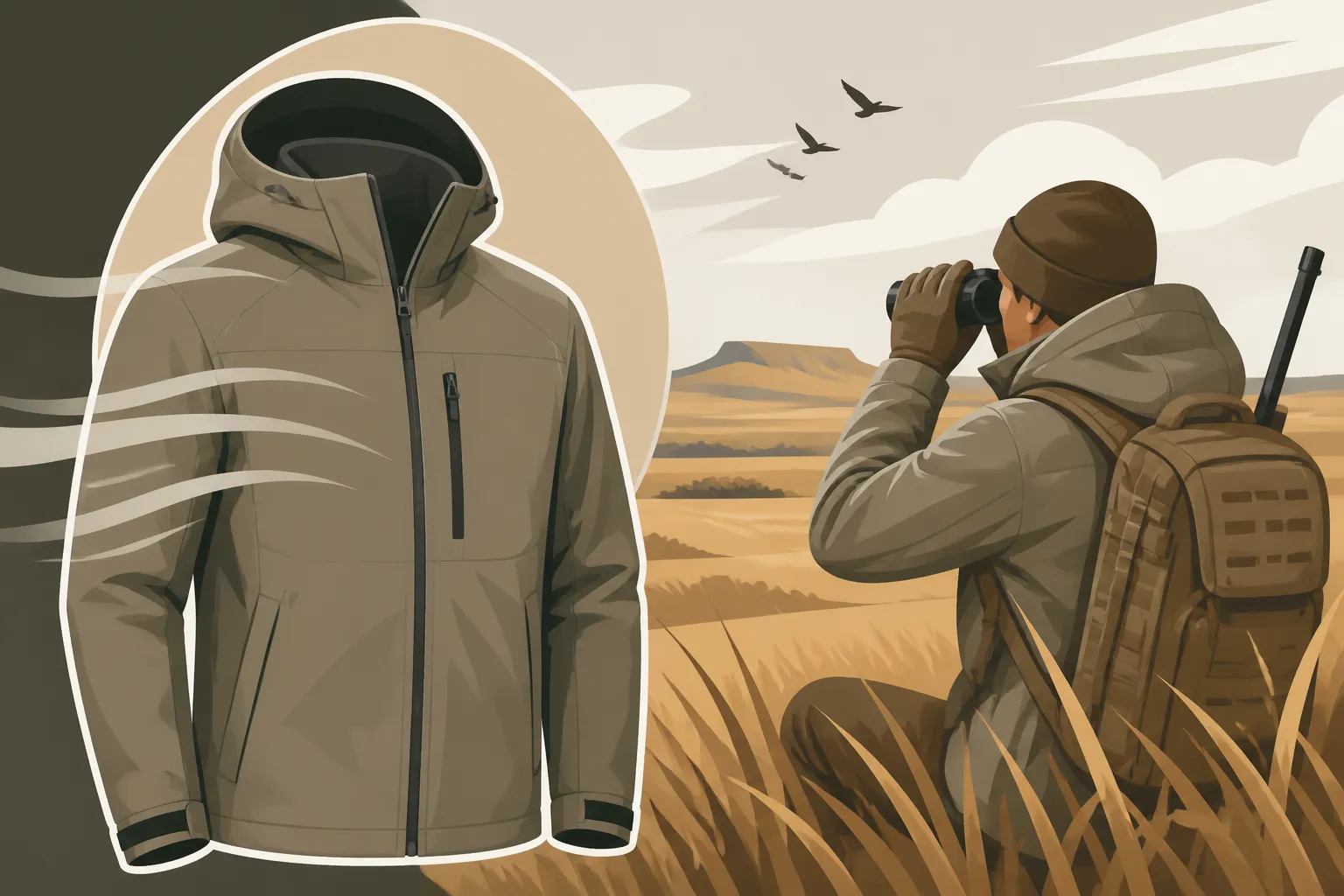
The magic behind effective wind-blocking shells often lies in advanced membrane technology. These aren't just tightly woven fabrics; they feature a specialized layer, often laminated between an outer fabric and an inner liner, that acts as a barrier. This membrane is designed with microscopic pores that are too small for wind molecules to pass through, effectively stopping the wind in its tracks. At the same time, these pores are large enough to allow water vapor (sweat) to escape, which is crucial for preventing you from getting clammy and cold from the inside out.
Common examples of these technologies, widely available in the market, include those from various outdoor apparel brands that offer their proprietary "windproof" or "wind-resistant" membranes. These fabrics achieve their performance by either having an extremely dense weave that physically blocks air movement or by incorporating a dedicated windproof film. When you're looking at a shell, you want to see terms like "windproof," "windstopper," or "highly wind resistant." These indicate that the garment has been specifically engineered to stand up to the kind of consistent gusts we experience across the Nebraska plains. Without this barrier, even heavily insulated garments can become surprisingly cold as the wind pushes through the insulation, compressing it and rendering it less effective.
Fit, Layering, and Mobility: More Than Just Wind Blocking
A wind-blocking shell isn't worn in isolation; it's usually the outermost layer of a carefully constructed system. Therefore, its fit is paramount. You need enough room to wear appropriate Layering for a Nebraska November Sit underneath, such as base layers and insulating fleeces or puffies, without the shell feeling tight or restrictive. A shell that's too small will compress your insulating layers, reducing their effectiveness, and restrict your movement, making it harder to shoulder a rifle or draw a bow.
Conversely, a shell that's too baggy can be noisy, snag on brush, and allow cold air to funnel in. Look for an athletic, but not skin-tight, cut that allows for a full range of motion in your shoulders, arms, and torso. Articulated elbows and gusseted underarms are excellent features that prevent the shell from riding up when you reach or draw. Remember, whether you're climbing into a treestand, crawling through dense cover, or making a long stalk, your gear needs to move with you, not against you. Mobility is key to comfort and effectiveness, especially during active hunts like Spot-and-Stalk Mule Deer in the Nebraska Sandhills.
Essential Features for Nebraska Conditions
Beyond the core windproof fabric, several design features are non-negotiable for a truly effective wind-blocking shell in Nebraska's unpredictable climate.
- Adjustable Cuffs: Cuffs with Velcro closures or elastic and snaps are vital for sealing out drafts. When you raise your arms, you don't want cold air rushing up your sleeves.
- Drawstrings and Hem Adjustments: A bungee cord or drawstring at the bottom hem of the jacket allows you to cinch it tight, preventing wind from blowing up from underneath. This is particularly important when you're sitting or bending over.
- High Collar and Hood Design: A tall collar that can be zipped up around your neck and chin offers crucial protection for exposed skin. A well-designed hood, ideally adjustable and helmet-compatible (even if you're not wearing one), is indispensable. It should move with your head, offer good peripheral vision, and cinch down to block wind without impairing hearing too much. Some hoods are designed to be easily stowed or detached when not needed, which can be a nice feature to reduce bulk.
- Zipper Quality and Storm Flaps: All zippers should be robust and, ideally, water-resistant or protected by internal or external storm flaps. Wind can easily penetrate through exposed zipper teeth, so these features create an additional barrier.
- Pocket Placement: Thoughtfully placed pockets, easily accessible even when wearing a backpack or a harness, are always a plus. Zippered hand-warmer pockets with a soft lining are a godsend on truly cold, windy days.
To help you visualize, here's a quick comparison of common shell types:
| Shell Type | Primary Benefit | Typical Weight | Best For | Key Feature |
|---|---|---|---|---|
| Softshell | Excellent mobility, good breathability, moderate wind/water resistance | Mid-weight | Active hunts, cool/mild conditions, less rain | Stretchy fabric, often DWR treated |
| Hardshell (2L/2.5L) | Fully windproof, fully waterproof, breathable | Light-to-mid | Rainy/snowy conditions, strong wind | Membrane laminated to outer fabric, often packable |
| Hardshell (3L) | Maximum durability, fully windproof, fully waterproof, highly breathable | Mid-to-heavy | Extreme conditions, heavy use, rugged terrain | Three layers laminated together for toughness |
| Insulated Shell | Windproof, waterproof, provides warmth, less layering needed | Heavy | Coldest weather, static hunting | Integrated insulation (down, synthetic) |
For hunters traversing Nebraska's open country, having reliable gear is paramount. GoHunt, a platform known for its detailed unit data and gear reviews, can be an excellent resource when researching various shell options and their performance characteristics against wind and cold. Checking user reviews on such platforms can offer real-world insights into how different brands and models hold up to conditions similar to those found in Nebraska.
Choosing the Right Shell for Different Nebraska Hunts
The "perfect" wind-blocking shell isn't a one-size-fits-all solution. What works wonders for a deer hunter sitting still in December might be cumbersome for a pheasant hunter walking miles in October. Tailoring your shell choice to your specific hunting activity is key to maximizing comfort and performance.
Deer Hunting: Sitting Still in the Cold
When you're deer hunting, especially during the later archery seasons, the muzzleloader season in December, or even the rifle season, you often spend hours in a static position. Whether you're in a ground blind or perched in a treestand, motion is minimal, and the cold, wind-driven chill can quickly seep into your bones. For these scenarios, noise discipline is as crucial as warmth.
You'll want a wind-blocking shell that is incredibly quiet. Many technical fabrics can be stiff and make a swishing sound as you move, which can alert wary deer. Look for shells with a brushed outer fabric, often fleece-lined or with a soft, quiet face fabric, that is specifically designed for stealth. The shell should also be robustly windproof and ideally, at least highly water-resistant, if not fully waterproof, to handle unexpected drizzle or melting snow. Ample room for layering underneath is essential, as you'll likely be wearing significant insulation like a puffy jacket or heavy fleece. Remember, Cold Weather Sitting Strategy is about more than just your outer shell; it's a whole system, but the shell is the linchpin. A good wind-blocking shell will help preserve the warmth generated by all those layers underneath, stopping the wind from penetrating and chilling your core.
Upland Bird Hunting: Staying Mobile and Protected
Upland bird hunting, whether you're walking miles of milo stubble for pheasants or traversing open grasslands for prairie grouse, is a highly active pursuit. You're constantly moving, often pushing through dense cover, and generating a lot of body heat. For these hunts, a lightweight, durable, and highly breathable wind-blocking shell is crucial. You don't want something so heavy it causes you to overheat and sweat excessively, as that moisture will inevitably make you cold once you stop moving.
The shell needs to be tough enough to withstand snags from thorns, barbed wire, and thick brush without tearing. Look for shells made from robust nylon or polyester blends. Good ventilation features, like pit zips, can be a huge advantage for dumping excess heat on the fly. Mobility is also paramount; your shell should allow for unrestricted arm movement when swinging your shotgun. Don't forget that during upland seasons, especially the rifle season overlap, Orange Rules That Apply During Archery Season and Upland Vests and Blaze Orange are critical considerations. Many upland-specific shells or jackets will integrate blaze orange directly into their design, or you'll need to wear a blaze orange vest over your wind-blocking layer. The key is finding that balance between protection, breathability, and freedom of movement.
Waterfowl Hunting: Dealing with Extreme Exposure
Nebraska waterfowl hunting often involves some of the most extreme conditions you'll face: bitter cold, driving winds, and often, wet environments. Whether you're sitting in a Layout Blinds for Nebraska Cut Corn field waiting for geese or tucked into a marsh blind for ducks, you are exposed. For these hunts, your wind-blocking shell must be absolutely impermeable to wind and often fully waterproof. This isn't just about comfort; it's about safety. Hypothermia is a real concern when you're static in freezing temperatures and wet conditions.
Most dedicated waterfowl hunting jackets are essentially insulated, waterproof, and windproof shells all in one. They feature heavy-duty membranes and often significant synthetic insulation. Durability is also a factor, as you might be crawling through mud, setting decoys, or brushing in a blind. Look for shells with reinforced elbow and shoulder areas. A well-designed hood that can be cinched tight to protect your face and neck from driving wind and sleet is non-negotiable. Pockets should be waterproof and easily accessible, even when wearing heavy gloves. While many waterfowl jackets are integrated systems, if you're layering, your outermost shell needs to be the ultimate fortress against the elements.
Maintenance and Longevity: Making Your Shell Last
Investing in a quality wind-blocking shell is a significant decision for any serious Nebraska hunter. These pieces of gear are designed to take a beating from the elements, but even the toughest garments require proper care to maintain their performance and extend their lifespan. Neglecting maintenance can quickly degrade their wind-blocking and water-resistant properties, leaving you exposed when you need protection most.
Proper Care for Technical Fabrics
Modern wind-blocking shells rely on sophisticated technical fabrics and coatings, most notably a Durable Water Repellent (DWR) finish on the outer fabric. This DWR causes water to bead up and roll off, preventing the fabric from "wetting out." Over time, dirt, body oils, and repeated use can degrade the DWR, causing the fabric to absorb water instead of repelling it. This makes the shell feel heavy, reduces breathability, and ultimately compromises its wind-blocking capabilities indirectly, as a damp outer layer transfers cold more readily.
To keep your shell performing its best, follow these steps:
- Wash Regularly, But Correctly: Don't be afraid to wash your shell when it's dirty. Use a technical wash designed for outdoor apparel, rather than conventional detergents, which can leave residues that clog pores and degrade DWR. Always follow the care label instructions, typically cold water on a gentle cycle.
- Reactivate DWR: After washing and air-drying, you can often reactivate the DWR by tumbling the garment in a dryer on a low heat setting for about 20 minutes. The heat helps to redistribute the DWR polymers.
- Reapply DWR When Necessary: If water no longer beads up effectively, even after washing and heat-treating, it's time to reapply a DWR treatment. These are available as spray-on or wash-in products from brands specializing in outdoor gear care. This step is crucial for maintaining the shell's ability to shed moisture, which directly impacts its comfort and insulating properties in windy, wet conditions.
A well-maintained shell not only keeps you comfortable but also contributes to your success afield by allowing you to focus on the hunt, not the weather. If you're looking for guidance on gear care, platforms like GoHunt often have forums or articles where hunters share tips and tricks for maintaining their high-performance hunting apparel.
Field Repairs and Extending Life
Even with the best care, hunting gear is subject to the rigors of the field. Small tears, snags, or zipper issues can happen, especially when you're pushing through thick plum thickets or scrambling over rough terrain. Knowing how to perform basic field repairs can save a hunt or prevent a minor issue from becoming a costly replacement.
- Patching Tears: For small rips or punctures, carrying a few tenacious tape patches or similar adhesive repair patches can be a lifesaver. These sticky, waterproof patches can quickly seal a hole, preventing wind and moisture from getting in. They're lightweight, pack small, and can provide a surprisingly durable temporary or even semi-permanent fix. Always clean the area around the tear as much as possible before applying the patch for the best adhesion.
- Zipper Maintenance: Zippers can be finicky. A small brush can remove dirt and debris that might be causing sticking. For zippers that are tough to move, a specialized zipper lubricant or even a graphite pencil can help. If a zipper slider breaks, a small repair kit with replacement sliders might be able to get you by, though this is a more advanced field repair.
- Protecting High-Wear Areas: Consider adding extra abrasion-resistant patches or coatings to high-wear areas like elbows, shoulders (if carrying a pack frequently), or the seat, especially if your shell isn't designed with these reinforcements. This proactive approach can significantly extend the life of your shell, allowing you to get many more seasons out of your investment.
By being proactive with maintenance and prepared for minor repairs, you ensure your wind-blocking shell remains a reliable ally against the Nebraska plains' relentless winds, year after year.
Disclaimer
This article is for general informational purposes only and does not constitute professional advice. Laws, prices and regulations vary by location and change over time. Consult a qualified professional for guidance on your specific situation.