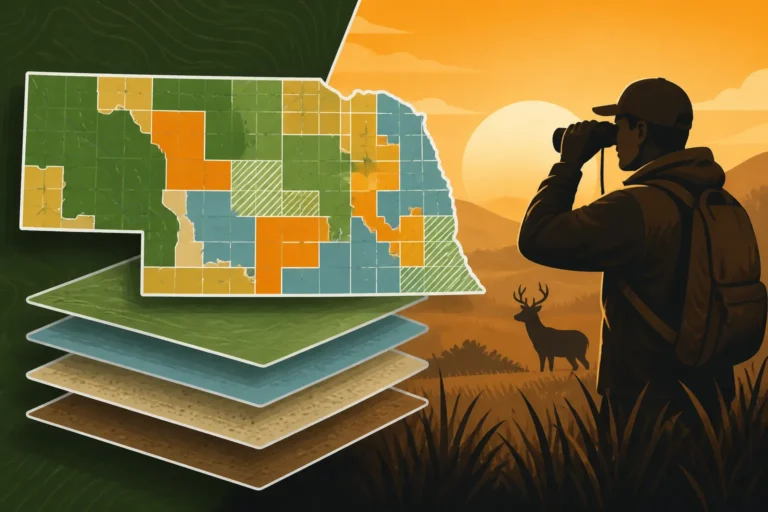
Pine Ridge Public Land in Nebraska
The Pine Ridge region of Nebraska is an absolute gem, a landscape unlike any other in our beautiful state. For hunters, it offers a distinct set of challenges and incredibly rewarding opportunities, but if you're used to the flatlands or even the rolling Sandhills, this rugged terrain can feel like stepping into an entirely different world. Don't let its intimidating beauty deter you; with the right approach and knowledge, you can unlock some truly memorable hunts in this unique corner of Nebraska.
The Unmistakable Landscape of Nebraska's Pine Ridge
The Pine Ridge stands alone in Nebraska, a striking contrast to the rolling Sandhills or the eastern farmlands. This isn't flat ground, and it definitely isn't easy to navigate, but it holds some incredible hunting opportunities for those willing to put in the work. It's a place where you'll find elevation changes, dense Ponderosa pines, and canyon draws that can swallow you whole if you're not careful. Understanding this unique topography is the first step to unlocking its secrets and making your hunt a success.
Geological Formations and Rugged Topography
The Pine Ridge is a geological anomaly in Nebraska, essentially an escarpment formed by ancient erosion. Imagine sharp, sandstone bluffs carved by eons of wind and water, creating deep canyons, steep buttes, and dramatic drainages that break up the prairie. These formations create natural barriers and travel corridors for wildlife, and they dictate how you move through the landscape. Hunters coming from flatter regions might find the elevation changes a real shock to the system, as a "short walk" on the map can quickly turn into a grueling climb up and down steep ravines. This ruggedness means you need to be physically prepared and respect the terrain, or you'll quickly find yourself exhausted and out of position.
When you're out there, pay close attention to the exposed rock faces and the way the land drops away. These aren't gentle slopes; they're often abrupt, making glassing from a vantage point crucial, but also making approaches difficult. The drainages, often dry but sometimes holding springs and seeps, naturally funnel game, and understanding their flow is key to predicting animal movement. This landscape isn't just scenic; it's a dynamic hunting puzzle. Knowing how game uses these features for cover, bedding, and travel will put you miles ahead of someone just walking blindly, hoping to stumble upon something. It's all about reading the contours and anticipating how animals will react to them.
Dominant Vegetation: Ponderosa Pines and Native Grasses
The most iconic feature of the Pine Ridge is, of course, the Ponderosa pine forests. These aren't merely scattered trees; in many areas, they form dense stands that can be incredibly thick, offering excellent thermal and visual cover for deer, turkeys, and other wildlife. Underneath the pines, you'll find a mix of native grasses, forbs, and shrubs that provide essential forage throughout the seasons. The transition zones between the dense pines and the more open grasslands or prairie meadows are often hotspots, as animals can feed in the open and quickly retreat to the safety and shade of the timber.
The contrast between the dark timber and the sun-drenched prairies is a defining characteristic of the region. Deer and turkeys will often spend their days bedded deep in the cool, quiet pines, only venturing out into the more open areas to feed during low light conditions at dawn and dusk. For the hunter, this means being prepared to navigate both dense, quiet forests where visibility is limited and wide-open spaces where you can see for miles, but also be seen. The sheer density of the pines also impacts visibility for both you and the game, making close-quarters hunting, particularly for archery, a very different challenge than hunting in the open Sandhills. Scouting these transition edges for fresh sign, like tracks, droppings, and rubs, becomes paramount to success.
Trophy Opportunities: Game Species of the Pine Ridge
The Pine Ridge offers a diverse hunting experience, primarily known for its deer and turkey populations. While the majestic mule deer often capture the imagination, whitetails are incredibly abundant here, and the area is home to a unique and challenging turkey subspecies. Beyond these main draws, for those seeking additional adventure, opportunities exist for upland birds and various predators, making it a truly versatile hunting destination in a rugged setting.
Mule Deer and Whitetails in the Ridges
The Pine Ridge is one of the few places in Nebraska where you have a legitimate chance at both mule deer and whitetails, and often in the same general area. Mule deer, with their distinctive large ears, black-tipped tails, and bounding gait, prefer the more open, rugged country, often hanging out on the higher bluffs, buttes, and in the more sparse pine stands. They are masters of using the broken terrain to their advantage, disappearing into a small fold in the land with surprising speed and skill. For these magnificent animals, successful hunting often relies on keen glassing from a vantage point and immense patience, followed by a well-executed stalk over challenging ground. They can be incredibly challenging, but the reward of a Pine Ridge mule deer buck is immense and truly hard-earned. For more on finding these animals, check out Mule Deer in the Nebraska Sandhills and Panhandle.
Whitetails, on the other hand, tend to stick to the thicker river bottoms, brushy draws, and the denser pine pockets. They are creatures of heavy cover, often relying on their incredible ability to vanish in dense vegetation and use their sharp senses to avoid detection. Hunting whitetails here often involves still-hunting slowly and quietly through timber, setting up on natural travel corridors, or using elevated stands or well-placed ground blinds overlooking key feeding and bedding areas. Don't underestimate the whitetails of the Pine Ridge; they might not have the wide-open country reputation of their Sandhills cousins, but they grow impressive racks and offer a thrilling, often close-quarters hunt. Learning to differentiate between the two species at a distance is also a crucial skill, especially when hunting units that have antler point restrictions for mule deer. Telling a Mule Deer From a Whitetail at Distance can save you from a mistaken identity.
Merriam's Turkeys: A Unique Nebraska Hunt
Nebraska's Pine Ridge is one of the very few places in the state where you can pursue Merriam's turkeys. These beautiful birds, with their lighter-colored tail feathers, prominent white wing bars, and generally darker overall body plumage, are a stark contrast to the Eastern and Rio Grande subspecies found elsewhere in the state. They thrive in the Ponderosa pine forests, often roosting in the tall trees that offer safety from predators and foraging on the forest floor, in adjacent meadows, and along the edges of open fields. Hunting Merriam's is a truly special experience, combining elements of mountain hunting with classic turkey calling. You'll hear their booming gobble echo through the canyons in a way you won't forget. Hunting Merriam's in the Nebraska Pine Ridge delves deeper into these specific birds.
Their behavior can be a bit different from other turkeys, sometimes being more responsive to calls but also more inclined to "hang up" at a distance if they spot anything amiss in the often sparse timber understory. Getting into position without being seen is critical, as their eyesight is phenomenal and they're quick to spook. Often, success comes from being patient, learning their roosting and travel patterns, and being willing to cover a lot of ground in pursuit. Spring turkey season in the Pine Ridge is an absolute joy, with the crisp air and gobblers echoing through the canyons creating an unforgettable atmosphere. It's a hunt that demands both finesse in calling and physical stamina to navigate the terrain. When that gobbler finally commits, it's an incredible thrill. Calling Spring Gobblers in Nebraska Timber can offer some useful tips.
Other Upland and Predator Opportunities
While deer and turkey are undoubtedly the primary draws for many hunters in the Pine Ridge, the region offers even more to those willing to explore. The unique mix of pines and grasslands creates suitable habitat for sharp-tailed grouse and occasional pheasants in fringe areas, though they aren't as consistently abundant here as in other, more agricultural parts of the state. Quail can also be found in specific brushy draws, cedar thickets, and shelterbelts, particularly in the lower elevations. These upland bird hunts often require covering significant ground and having a good bird dog to sniff out the scattered coveys that often hold tight.
For those interested in predator hunting, coyotes are plentiful throughout the Pine Ridge and respond very well to calling, especially during the colder months when they're actively hunting for food. The broken terrain offers excellent setup opportunities for calling, allowing you to conceal yourself effectively. The chance to combine a deer or turkey hunt with some upland bird action or a coyote stand adds another layer of excitement and opportunity to a Pine Ridge trip. Just be sure to check the specific regulations and seasons for each species you plan to pursue, as they can vary. The solitude and wildness of the Pine Ridge make any hunt here an adventure, and these additional opportunities only enhance the experience, allowing you to immerse yourself in diverse hunting pursuits. Coyote Calling on Winter Grassland can give you an edge.
Unlocking Public Access in the Pine Ridge Region
Finding public hunting land in the Pine Ridge can feel like a treasure hunt, but with the right tools and a little persistence, you'll discover fantastic opportunities. Unlike some other parts of Nebraska that are predominantly private, the Panhandle region, and specifically the Pine Ridge, offers a significant amount of public ground. However, these tracts vary widely in size, accessibility, and the specific rules that apply, so it pays to do your homework beforehand.
Key Public Land Tracts
The most prominent public hunting lands in the Pine Ridge are found within the Nebraska National Forests and Grasslands, specifically portions of the Samuel R. McKelvie National Forest (though primarily Sandhills, its western edge touches the Pine Ridge) and, more significantly, the Oglala National Grassland. The Oglala National Grassland, in particular, offers vast stretches of huntable ground, often interspersed with private land, making careful navigation essential. These federal lands are generally open to hunting with the appropriate state permits, and they provide incredible opportunities for deer, antelope (in the more open areas), and predators. Nebraska National Forest and Grasslands Hunting details some of these areas.
In addition to these federal lands, several Wildlife Management Areas (WMAs) managed by Nebraska Game and Parks Commission offer excellent hunting opportunities. These WMAs are often strategically located in prime habitat and provide designated access points. Examples include Peterson WMA, Gilbert-Baker WMA, and Soldier Creek Wilderness Area (which has specific rules due to its wilderness designation, like no motorized or mechanized access). Remember to consult the Nebraska Public Access Atlas each year, as boundaries and specific regulations, like vehicle access or camping, can change. Using mapping apps like onX Hunt is an absolute game-changer here, as it clearly delineates public and private land boundaries, preventing accidental trespass in complex checkerboard areas and helping you pinpoint where you can legally hunt. You can also explore Hunting Near Chadron and Crawford for local WMA insights.
| Public Land Type | Primary Species | Key Features | Typical Access |
|---|---|---|---|
| Oglala National Grassland | Mule Deer, Pronghorn, Coyote | Vast, open grasslands, scattered pine stands, dramatic buttes | Two-track roads, walk-in |
| Samuel R. McKelvie National Forest | Whitetail/Mule Deer, Turkey, Grouse | Ponderosa pine forest, sandhill pockets, rolling terrain | Forest roads, walk-in |
| Nebraska Wildlife Management Areas | Deer, Turkey, Upland Birds | Diverse habitats, often actively managed for wildlife, specific access points | Designated parking, walk-in |
| Soldier Creek Wilderness | Deer, Turkey | Rugged, dense timber, wilderness rules apply (no motorized/mechanized access) | Walk-in only, parking at edge |
| Wildcat Hills State Recreation Area | Deer (limited), Turkey (limited) | Scenic bluffs, hiking trails, some hunting zones, check specific rules | Designated parking, walk-in |
Accessing Remote Areas and Road Conditions
While public land is available, getting to the prime spots often means navigating rugged and sometimes challenging roads. Many public tracts are crisscrossed by two-track roads, some of which are passable by a standard truck in dry conditions, while others require four-wheel drive, high clearance, or are simply not maintained and become impassable with even a little rain or snow. It's not uncommon to encounter sandy sections, rocky climbs, or muddy ruts that can quickly get you stuck if you're not prepared with recovery gear. Always check local weather conditions and road reports before heading deep into these areas, as a dry path can turn into a nightmare after a storm.
Furthermore, some of the best hunting spots in the Pine Ridge are truly remote, requiring significant hikes from the nearest passable road. This is where your physical fitness and navigational skills really come into play. Investing in a reliable GPS unit or using a mapping app like onX Hunt on your phone (with downloaded offline maps, as cell service is spotty at best) is absolutely essential. Don't rely solely on paper maps, as the convoluted terrain can be incredibly disorienting once you're on foot. Always let someone know your plans, including your intended route and expected return time, especially if you're venturing into the more isolated canyons and draws where help might be a long way off. Trust me, you don't want to be caught unprepared trying to drag out a deer from a deep canyon alone. If you're wondering how to extract game from challenging terrain, looking into methods like Getting a Deer Out of a Nebraska Sandhills Basin can provide helpful insights that apply to other rugged areas.
Effective Hunting Strategies for the Pine Ridge
Hunting the Pine Ridge demands a blend of patience, physical exertion, and adaptability. The unique terrain, diverse vegetation, and often wary behavior of the game animals require specific approaches that might differ significantly from hunting in other parts of Nebraska. Forget flatland tactics; this is a whole new ballgame where traditional methods often need a rugged twist to succeed.
Spot-and-Stalk Techniques
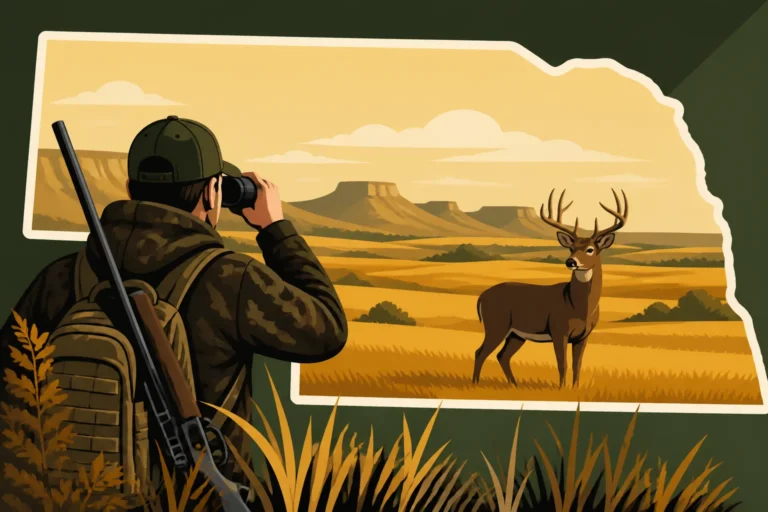
For mule deer and antelope in the more open parts of the Pine Ridge or adjacent grasslands, spot-and-stalk is often the most productive method. This involves finding a high vantage point – a bluff, a butte, or a commanding ridge – and spending considerable time glassing the terrain below. Quality binoculars and a spotting scope are indispensable here; they are truly your most important tools for covering ground visually. You're looking for subtle movement, flicking ears, the glint of an antler, or the slight outline of an animal bedded down against the background. Once an animal is spotted and identified, the real challenge begins: planning your approach. Optics for Glassing the Nebraska Sandhills highlights the importance of good glass.
The broken terrain that provides cover for animals also provides cover for your stalk. Use the contours of the land, the deep draws, and the pine thickets to your advantage, always being mindful of the wind direction and thermals, which can be tricky in hilly country. A successful stalk often means covering a lot of ground, sometimes taking hours, only to find the animal has moved, requiring a new plan. Patience and persistence are key, as is the ability to move silently and stay out of sight. It's a game of chess against incredibly wary animals in their home territory. When you finally get within range, be prepared for a shot that might be steep uphill or downhill, or across a canyon, so practice those angles beforehand. For a deeper dive, check out Spot-and-Stalk Mule Deer in the Nebraska Sandhills.
Ambush Points and Calling Strategies
For whitetails and turkeys, especially in the denser pine forests and brushy draws, ambush hunting and calling strategies become more effective. Scouting for natural funnels – saddles between ridges, creek crossings, or areas where dense cover bottlenecks travel – is crucial for setting up a successful ambush. Deer will often use these established travel routes when moving between bedding and feeding areas, particularly during the rut. Setting up a carefully brushed-in ground blind or a well-placed treestand along these corridors can put you in a prime position to intercept a cruising buck or a feeding doe. For tips on vocalizations, Grunt Calls in Thick River Timber can give you an idea of what works in dense cover.
For turkeys, calling is central to the hunt. Locator calls like owl hoots or crow caws can help you pinpoint roosted birds at dawn, allowing you to set up well in advance of their fly-down. Once you've heard a gobbler, subtle yelps, clucks, and purrs can often entice them to come closer. However, Pine Ridge Merriam's can be notoriously "hangy-up," meaning they might come to a certain point and then refuse to close the distance if they detect anything off or have a bad feeling. Sometimes, a more aggressive "run-and-gun" tactic, moving and calling frequently, can work, especially if the birds are scattered across a wide area. Decoys can also play a role, especially if you're trying to pull a dominant gobbler into range across an open clearing where he can see the setup. Calling a Nebraska Gobbler Off the Roost offers specific advice for these critical morning setups.
Essential Gear and Preparedness for Pine Ridge Hunts
Hunting the Pine Ridge isn't just about strategy; it's also about having the right gear and being physically prepared for the unique demands of the landscape. The weather can change rapidly, the terrain is unforgiving, and help can be far away, making self-sufficiency and proper equipment paramount. Being well-equipped can make the difference between a successful, comfortable hunt and a miserable, potentially dangerous one.
Optics for Elevation Changes and Distance
Given the vast, broken nature of the Pine Ridge, quality optics are not just helpful, they are absolutely non-negotiable. You'll spend a significant amount of time glassing from vantage points, meticulously picking apart distant hillsides, dark timber patches, and deep canyons for signs of game. A good pair of 10x binoculars is a minimum requirement, and many experienced hunters prefer 12x or even 15x power for truly expansive areas, often mounted on a tripod for stability. Investing in a high-quality spotting scope (20-60x or similar) mounted on a stable tripod will allow you to scrutinize distant animals, judge their age and antler size, and confirm whether that dark spot under a pine tree is a mule deer buck or just a shadow.
The ability to sit and glass effectively from a comfortable position will save you miles of unnecessary walking and significantly increase your chances of finding game that would otherwise go unnoticed. Don't forget lens cleaning supplies; the Pine Ridge can be dusty and windy, and clear optics are vital for long hours of glassing. A reliable rangefinder is also crucial, especially when planning a stalk or preparing for a shot across an unknown canyon. Understanding the true distance to your target in broken terrain is critical for accurate shooting and ethical harvest. If you're still on the fence about what to get, Rangefinders in Open Nebraska Country can help you choose.
Footwear and Layering for Varied Conditions
Your feet will be your most important asset in the Pine Ridge, so investing in comfortable, supportive, and durable footwear is paramount. Look for boots with excellent ankle support to prevent twists and sprains on uneven ground, stiff soles to handle rocky terrain and distribute pressure, and reliable waterproofing to contend with dew, rain, or snow. The terrain can be steep, rocky, and often covered in loose scree or thick pine needles, all of which demand a boot that can take a beating and keep you stable. Breaking in your boots well before the hunt is absolutely essential to avoid blisters that can quickly derail your trip and your spirit. For more on this topic, check out Boots for Walking Nebraska Grass and Sand.
Layering your clothing is another critical aspect of preparedness for the variable Pine Ridge weather. Temperatures can swing wildly from chilly mornings to warm afternoons, and a sudden cold front or rain shower is always a possibility. Start with a moisture-wicking base layer to manage sweat, add an insulating mid-layer (fleece or synthetic down) for warmth, and top it with a durable, windproof, and waterproof outer shell. This allows you to adjust your clothing as your activity level changes or as the weather dictates, ensuring you stay comfortable and focused. Remember to pack blaze orange, as it's required during certain seasons and always a good idea for safety on public land, especially during firearm seasons. Clothing for Nebraska Wind and Cold will offer more insights into staying comfortable in tough weather.
Disclaimer
This article is for general informational purposes only and does not constitute professional advice. Laws, prices and regulations vary by location and change over time. Consult a qualified professional for guidance on your specific situation.