Nebraska Panhandle and Pine Ridge Hunting
The Nebraska Panhandle and Pine Ridge region presents a unique set of challenges and incredible opportunities for hunters, often feeling vastly different from the rolling farmlands to the east. If you've ever felt overwhelmed by the sheer scale of the landscape, or wondered where to even begin looking for public access, you're not alone. This comprehensive guide will break down everything you need to know to successfully plan and execute a hunt in this rugged, beautiful corner of the state, from understanding the diverse terrain and target species to mastering the necessary gear and tactics.
Welcome to the Panhandle and Pine Ridge: A Hunter's Paradise
Stepping into the Nebraska Panhandle is like entering a different world compared to much of the state. Gone are the endless corn and soybean fields, replaced by vast grasslands, dramatic buttes, and the iconic Ponderosa pine forests of the Pine Ridge. This distinct geographical transition isn't just scenic; it dictates the types of game you'll find and the hunting strategies you'll employ. Many hunters from eastern Nebraska are accustomed to timbered creek bottoms and dense cover, only to find themselves completely disoriented by the sheer openness and varied topography out west.
Geography and Habitat: What Makes it Special
The Panhandle is characterized by sweeping shortgrass prairies, punctuated by dramatic geological features. The Wildcat Hills to the south offer rugged breaks and canyons, while the Pine Ridge escarpment further north provides a stark contrast with its towering Ponderosa pines, steep canyons, and hidden draws. Even the flat areas here are often broken by sand draws, "blowouts" (areas where the wind has scoured away topsoil), and subtle elevation changes that can hide a surprising number of animals. This diverse habitat creates microclimates and shelter that are crucial for wildlife survival, especially during harsh winters. Understanding these topographical nuances is key to successful hunting, as game often utilizes these features for bedding, feeding, and travel.
The eastern part of the Panhandle still retains some agricultural influence, particularly along river valleys like the North Platte, which funnel whitetail deer and provide important waterfowl habitat. As you move west and north, however, the landscape becomes increasingly wild and untamed. The sheer scale can be daunting; what looks like a small hill on a map can turn into a significant climb or a deep, winding canyon. This is a land where you need good boots, good optics, and a good sense of direction. It's not uncommon to hike for miles and feel like you haven't scratched the surface of a single section of land.
Species You'll Find Here
The varied habitats of the Panhandle and Pine Ridge support a remarkable diversity of game, drawing hunters from across the country. While many parts of Nebraska are renowned for their whitetail deer and pheasants, the western reaches offer unique opportunities for species less common elsewhere in the state. This is truly where the "West" begins for Nebraska hunters, providing a distinct experience.
-
Big Game: The star attractions are often Mule Deer and Pronghorn Antelope. The Pine Ridge is particularly famous for its healthy mule deer population, offering hunters a chance at these magnificent western deer in truly scenic country. Whitetail deer are also present, especially along riparian corridors and agricultural edges, but they often take a backseat to their mule deer cousins in terms of hunter focus. Mule Deer in the Nebraska Sandhills and Panhandle are a prime target here. Beyond deer and antelope, the Panhandle is home to Nebraska's limited Elk herds and the highly sought-after Bighorn Sheep, though these require special, highly competitive permits. You can learn more about Pronghorn Antelope on the Nebraska Plains and Nebraska's Elk Herds and Where They Live in other articles.
-
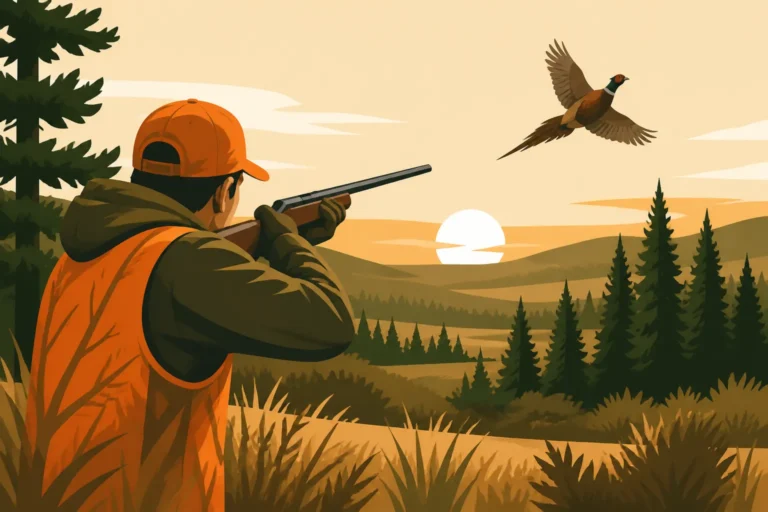
Upland Birds: While pheasant numbers can fluctuate, good habitat pockets exist, particularly where grassland meets agricultural fields or in dense cover along creeks. More unique to the region are Sharp-tailed Grouse and Greater Prairie-Chickens, thriving in the vast grasslands. These birds offer a challenging and rewarding hunting experience, often requiring miles of walking.
-
Small Game and Predators: Cottontail rabbits and coyotes are plentiful throughout the region. Predator calling for coyotes is a popular activity, especially during the colder months when other seasons are closed.
Understanding Public Access in the Panhandle
One of the greatest appeals of hunting in the Nebraska Panhandle and Pine Ridge is the relative abundance of public access compared to the more privately owned agricultural lands to the east. However, "public access" doesn't always mean easy access, and understanding the different types of public land, their rules, and how to navigate them is crucial. It can be a steep learning curve for those used to simply knocking on a farmer's door, but the reward is vast, open spaces.
National Forest and Grasslands: Your Go-To Options
The largest tracts of publicly accessible land in the Panhandle are managed by the U.S. Forest Service. These are often the first places hunters look when planning a trip out west, and for good reason—they offer expansive areas to roam and a truly wild hunting experience.
-
Oglala National Grassland: Located in the far northwest corner of the state, near Harrison, the Oglala National Grassland is a massive expanse of prairie and badlands. This is prime habitat for mule deer and pronghorn, with scattered pockets of upland birds. The terrain can be rugged, featuring dramatic formations like Toadstool Geologic Park (though hunting is restricted near developed areas). Access is generally good, with numerous two-track roads, but these can become impassable in wet weather. Hunters here need to be prepared for long walks, unpredictable weather, and the sheer scale of the landscape. Oglala National Grassland Hunting offers some incredible opportunities.
-
Nebraska National Forest (Pine Ridge Ranger District): Further east, but still in the Panhandle, the Pine Ridge offers a completely different public land experience. These Ponderosa pine forests, broken by steep canyons and draws, are excellent for mule deer and whitetails, as well as turkeys. The hunting here is more about still-hunting or setting up ambushes in key travel corridors, rather than wide-open glassing. The terrain can be physically demanding, with significant elevation changes and dense timber in places. Hunting Mule Deer in the Nebraska Pine Ridge can be a challenging but highly rewarding experience.
State Wildlife Management Areas and Open Fields and Waters
Beyond the federal lands, the Nebraska Game and Parks Commission (NGPC) manages several state areas that provide additional hunting opportunities. These often complement the federal lands, providing diverse habitats and a different scale of hunting.
-
Wildlife Management Areas (WMAs): Scattered throughout the Panhandle are various WMAs, often smaller than federal lands but specifically managed for wildlife. These might be riparian areas along rivers, parcels of mixed grassland and timber, or wetlands. They are typically well-marked and often have specific rules regarding vehicle access, camping, and sometimes even shooting hours. It's always a good idea to check the NGPC website or the Public Access Atlas for details on individual WMAs before you go. While smaller, these areas can be magnets for game, particularly if they offer good cover or a reliable water source.
-
Open Fields and Waters (OFW) Program: This program leases private land for public hunting access, and while more prevalent in the eastern part of the state, there are valuable OFW tracts in the Panhandle. These can be crucial for accessing prime habitat that might otherwise be private. The key to OFW is to always consult the current Public Access Atlas, as enrolled properties can change year to year. Look for tracts that offer good cover, food sources, or access to larger blocks of public land. The beauty of OFW is that it often fills in the gaps, providing access to different types of habitat or linking existing public parcels. Remember to respect all posted rules, as these are private lands generously opened to the public.
Navigating School Trust Lands and Other Scattered Public Parcels
While national forests and grasslands are the major players, there are other, often overlooked, public parcels in the Panhandle that can provide good hunting. These require a bit more legwork and careful map reading to utilize effectively.
-
School Trust Lands: Nebraska has scattered sections of "School Trust Land" across the state, often marked as "School Land" on plat maps. These lands are managed by the Nebraska Board of Educational Lands and Funds (BELF) and are open to public hunting unless specifically posted closed. However, accessing them can sometimes be a challenge if they are landlocked by private property without an easement. This is where tools like onX Layers for Nebraska Land Status become invaluable. You need to be diligent in verifying access and understanding property boundaries, as trespassing to reach a school section is not permissible. Many hunters overlook these, but a little research can reveal some hidden gems, especially if they are adjacent to or near other public ground.
-
County and Municipal Lands: Occasionally, small parcels of county or municipal land might be open to hunting. These are less common for big game but can sometimes offer opportunities for small game or upland birds. Always check with local authorities (county sheriff, city clerk) to confirm rules and access before hunting on such parcels. These are often small, isolated tracts, so don't expect vast wilderness, but they can be a quick spot to hit for an hour or two.
Table: Panhandle Public Land Types at a Glance
| Public Land Type | Key Characteristics | Primary Game Species | Access & Navigation Tips |
|---|---|---|---|
| Oglala National Grassland | Vast, open prairie, badlands, rugged terrain | Mule Deer, Pronghorn, Sharptails, Coyotes | Many two-track roads (check conditions); bring good optics and water; prepare for long walks. |
| Pine Ridge National Forest | Ponderosa pine forests, steep canyons, timbered draws | Mule Deer, Whitetails, Turkey, Grouse | More elevation change, denser cover; focus on draws and ridges; some designated camping. |
| State Wildlife Mgmt Areas | Varied habitats, smaller parcels, specifically managed | Deer, Pheasants, Waterfowl, Turkeys | Well-marked boundaries; check specific WMA rules on NGPC site; generally good infrastructure. |
| Open Fields and Waters (OFW) | Leased private land for public hunting; habitat specific | Deer, Pheasants, Quail, Waterfowl | Consult current Public Access Atlas; respect landowner rules; parking areas often designated. |
| School Trust Lands | Scattered sections; often open unless posted closed | Deer, Pheasants, Small Game | Requires careful map study; verify legal access (no trespassing across private land); check for posting. |
Big Game Hunting in the Panhandle: Deer and Antelope
The Panhandle is synonymous with big game hunting, offering some of Nebraska's most iconic species in truly wild landscapes. Unlike the dense cover hunting found in much of eastern Nebraska, here you'll often be using your eyes more than your feet, at least initially. The vastness demands a different approach, prioritizing long-range glassing and strategic stalks.
Mule Deer: The Trophy of the West
For many, the mule deer is the king of the Panhandle. Their majestic antlers, large ears, and unique bounding gait make them a captivating quarry. The Pine Ridge, in particular, offers some of the best mule deer hunting in the state, with good populations and challenging terrain.
-
Where to Find Them: Mule deer in the Panhandle are typically found in the more rugged, broken country. This includes the canyons and timbered slopes of the Pine Ridge, the badlands and deep draws of the Oglala National Grassland, and the broken hills of the Wildcat Hills. They prefer areas with good cover for bedding, often on north-facing slopes or in dense cedar pockets, and nearby open areas for feeding. Don't overlook the deep, hidden draws even in seemingly flat prairie, as these can hold bucks.
-
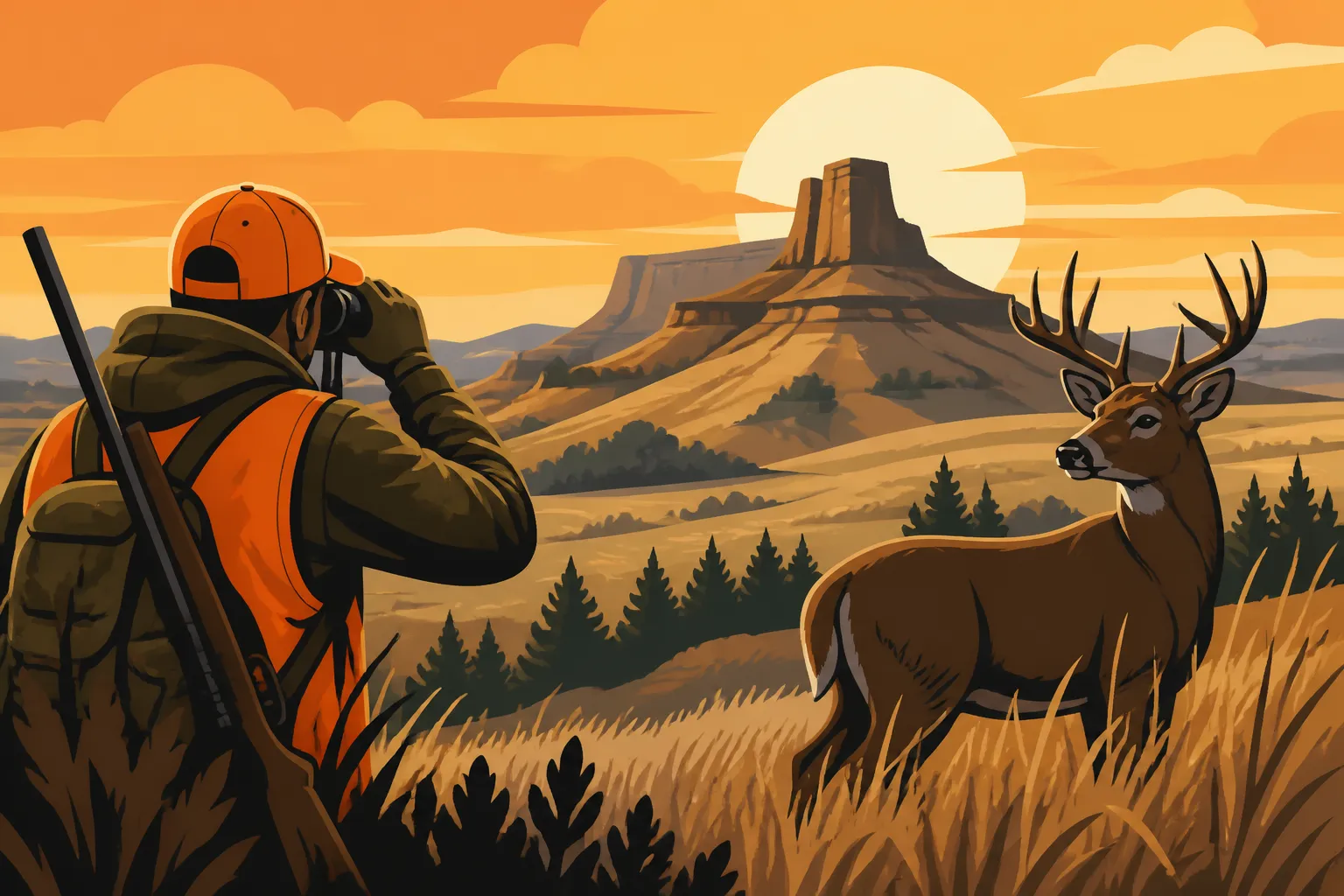
Tactics for Success: Spot-and-stalk is the quintessential mule deer hunting method here. This involves spending a significant amount of time glassing from a high vantage point using quality binoculars and a spotting scope. Look for subtle movements, a flick of an ear, or an antler tine catching the sun. Once a buck is spotted, the challenge shifts to planning an approach that uses the terrain and wind to your advantage, closing the distance for a shot. This can often involve long, arduous stalks, sometimes spanning a mile or more across difficult terrain. Understanding Wind and Thermals in the Sandhills is critical for a successful stalk. During the rut, rattling and grunting can sometimes be effective, especially in more timbered areas.
-
Permit Considerations: Mule deer permits are highly sought after. While some general "Any Deer" permits allow for mule deer harvest, specific mule deer permits or those for units with a higher mule deer concentration are often available through the draw system. Keep an eye on draw odds and permit availability, especially if you're a nonresident.
Whitetail Deer: River Bottoms and Creek Draws
While mule deer often get the spotlight, healthy populations of whitetail deer thrive in the Panhandle, especially in specific habitats. They offer a different kind of hunting challenge, often more akin to hunting strategies used in the eastern parts of the state.
-
Where to Find Them: Whitetails in the Panhandle are much more tied to riparian areas, river bottoms, and creek draws. The North Platte River valley, with its cottonwood stands, willow thickets, and agricultural fields, is a prime example. You'll also find them in the more timbered draws within the Pine Ridge, often overlapping with mule deer habitat but favoring the thicker cover. Any area with dense brush, water, and food sources is likely to hold whitetails.
-
Tactics for Success: Hunting whitetails here often involves traditional stand hunting from a treestand or ground blind along known travel corridors, food sources, or bedding areas. Scouting for rub lines, scrape lines, and well-used trails is essential. During the rut, Rattling and Grunting in Nebraska's Rut can be highly effective in drawing out an aggressive buck. Still-hunting through dense river bottom cover or cedar draws can also produce opportunities, especially during periods of cold weather or light snow. Understanding Telling a Mule Deer From a Whitetail at Distance is crucial in areas where both species coexist.
-
Permit Considerations: General "Any Deer" or "Whitetail Buck" permits are usually sufficient for pursuing whitetails in the Panhandle. Antlerless permits are often more readily available and are an excellent way to fill the freezer or extend your hunt.
Pronghorn Antelope: Speedsters of the Open Plains
Hunting pronghorn, often simply called "antelope" by hunters, is a truly unique Panhandle experience. These animals are built for speed and thrive in the vast, open grasslands, presenting a challenge unlike any other.
-
Where to Find Them: Pronghorn are creatures of the wide-open prairie. You'll find them on the Oglala National Grassland, the vast ranches of the Sandhills that bleed into the Panhandle, and other large tracts of unobstructed rangeland. They rely on their incredible eyesight and speed to avoid predators, so look for them in areas where they can see for miles. They often favor high points where they can scan the horizon. Pronghorn Antelope on the Nebraska Plains are truly a sight to behold.
-
Tactics for Success: Like mule deer, pronghorn hunting is primarily a spot-and-stalk game. However, the extreme openness means that closing the last few hundred yards can be incredibly difficult. Utilizing terrain features like draws, hills, or even subtle depressions becomes critical. A good pair of binoculars and a quality spotting scope are absolutely essential for locating and evaluating bucks from long distances. Decoying can also be a highly effective tactic during the rut, as a dominant buck will often come charging in to confront a perceived rival. For archery hunters, hunting from a blind over water holes can be productive, especially during hot, dry periods. Stalking Pronghorn Across Open Nebraska Ground is an art form.
-
Permit Considerations: Pronghorn permits are allocated through a lottery draw system and can be challenging to obtain, especially for nonresidents. Building preference points can increase your odds over time. Check the Nebraska Antelope Draw Odds for specific units when planning your application.
Upland Bird Hunting: Pheasants, Grouse, and More
While big game might draw many to the Panhandle, the region also offers fantastic upland bird hunting, particularly for those willing to walk. The diverse grasslands and scattered agricultural fields provide habitat for a variety of feathered game, offering a stark contrast to the thick cover hunting found elsewhere.
Pheasants: Where the Ringnecks Hide
Nebraska is famous for its pheasants, and while the densest populations are often found further east, the Panhandle still offers quality opportunities, especially in specific types of cover. Hunting pheasants here often means working larger, more open tracts.
-
Where to Find Them: In the Panhandle, pheasants tend to concentrate in areas where agriculture meets good winter cover. Look for them in irrigation corners, shelterbelts, cattail sloughs, drainage ditches, and grassy waterways adjacent to crop fields. Public areas like WMAs and some OFW tracts that incorporate these habitat types are excellent starting points. Don't overlook the margins of the Pine Ridge, where forest edges transition into grassland and agriculture. Good pheasant hunting here is about finding those pockets of dense, protective cover.
-
Tactics for Success: Walking is key for pheasants. Hunters often work fields in a "block and drive" method, with blockers positioned at the end of a cover strip to catch birds pushed by the drivers. If hunting alone or with one or two partners, systematically walking cover edges and working through smaller pockets of habitat is effective. A good bird dog is invaluable for finding hidden birds and retrieving those that fall in thick cover. Always be ready for a longer flush in more open terrain.
Prairie Grouse: Sharptails and Prairie Chickens
For a truly unique western hunting experience, pursue the prairie grouse. The Panhandle, particularly the Oglala National Grassland and surrounding Sandhills, is prime habitat for Sharp-tailed Grouse and, to a lesser extent, Greater Prairie-Chickens.
-
Where to Find Them: Both sharptails and prairie chickens thrive in expansive, unfragmented grasslands. Sharptails often prefer areas with more brush and shrub cover, while prairie chickens favor taller, denser native prairie. The Oglala National Grassland is an excellent place to find sharptails. The trick is to cover a lot of ground, as these birds can be widely dispersed. Look for subtle changes in elevation, short drainages, and areas with slightly taller grass. They often gather near watering sources in dry conditions.
-
Tactics for Success: Prairie grouse hunting is a walking man's game, often covering many miles in a day. Hunters typically walk wide transects, often uphill into the wind, to push birds. When a covey flushes, mark where they land and try to work them again, as they often hold tighter after the initial flush. A good pointing dog can make a huge difference in locating these elusive birds. Be prepared for covey flushes that erupt with startling speed and spread out over vast distances.
Other Small Game Opportunities
Beyond pheasants and grouse, the Panhandle offers reliable hunting for other small game species, providing opportunities when other seasons are closed or as a way to diversify a trip.
- Cottontail Rabbits: Rabbits are plentiful throughout the region, found in brushy draws, shelterbelts, dense plum thickets, and along riparian corridors. They make for fun, fast-paced hunting with a .22 rifle or a shotgun. Hunting rabbits in winter, especially after a fresh snow, can be a great way to stay active and fill the pot.
- Coyotes: Predator calling for coyotes is extremely popular in the Panhandle due to the vast, open country and healthy coyote populations. Electronic calls or mouth calls can be used to lure coyotes into rifle or shotgun range. This can be an exciting, year-round pursuit, particularly in the winter when coyotes are more active and their pelts are prime.
- Squirrels: While less common than in the heavily timbered areas of eastern Nebraska, squirrels can be found in the cottonwood and hardwood trees along river bottoms and in some of the more mature timbered areas of the Pine Ridge.
Elk and Bighorn Sheep: The Panhandle's Prized Draws
For the most adventurous and fortunate hunters, the Nebraska Panhandle holds the state's limited populations of elk and the highly prized bighorn sheep. These hunts are truly once-in-a-lifetime opportunities, reflecting the wild character of the region.
Hunting Nebraska's Elk Herds
Nebraska's elk herds, primarily found in the Pine Ridge and, to a lesser extent, the Wildcat Hills, represent a remarkable conservation success story. While the populations are small compared to western states, drawing an elk tag in Nebraska is a dream for many.
-
Where They Live: The Pine Ridge is the heart of Nebraska's elk country. These animals thrive in the rugged, timbered canyons and deep draws, utilizing the dense Ponderosa pine cover for bedding and the open meadows and agricultural fields (often private) for feeding. The Wildcat Hills also hold a smaller, resident herd that utilizes similar broken, rugged terrain. Nebraska's Elk Herds and Where They Live is fascinating.
-
Tactics and Challenges: Elk hunting in the Panhandle is incredibly challenging due to the limited number of permits, the elusive nature of the animals, and the rugged terrain. Successful hunters typically spend extensive time scouting, both before the season and during. Locating fresh sign, understanding elk movement patterns, and being prepared for long stalks and heavy pack-outs are essential. Calling can be effective during the rut, but elk in Nebraska are highly pressured and wary. Access to private land, which often holds the highest concentrations of feeding elk, can be a significant factor for public land hunters, requiring diligent networking or careful planning to intercept elk moving between public and private.
-
Permit Scarcity: Elk permits in Nebraska are extremely limited and are only available to residents through a lottery draw system. Odds are very low, making it one of the most coveted tags in the state. Many applicants accumulate preference points for years in hopes of drawing a permit.
The Elusive Bighorn Sheep
Nebraska's bighorn sheep are the ultimate trophy and a testament to dedicated conservation efforts. Their presence in the state is a source of immense pride, and drawing one of the handful of permits is the pinnacle of a Nebraska hunting career.
-
Where They Roam: Bighorn sheep in Nebraska are confined to the most rugged, remote areas of the Pine Ridge, particularly in steep, rocky canyons and badlands terrain. They are highly specialized animals that thrive in vertical environments, relying on their agility and eyesight to evade predators. Bighorn Sheep in the Nebraska Pine Ridge are truly wild animals.
-
The Hunt of a Lifetime: A bighorn sheep hunt in Nebraska is, for all intents and purposes, a guided experience, even for the self-sufficient hunter who draws a tag. The Game and Parks Commission provides assistance and oversight due to the rarity and value of the animals. The hunt itself is physically demanding, requiring extreme endurance and careful navigation of treacherous terrain. Like elk, it involves extensive glassing and careful stalking.
-
Extraordinary Permits: Only a very small number of bighorn sheep permits are issued each year, all to residents through a lottery. Additionally, one permit is typically auctioned off to raise funds for bighorn sheep conservation. Drawing a bighorn tag is a once-in-a-lifetime achievement for a Nebraska hunter.
Essential Gear and Tactics for Panhandle Hunting
The unique environment of the Nebraska Panhandle demands specific gear and strategic approaches. What works well in the dense timber of southeastern Nebraska might leave you exposed or unprepared out west. Investing in quality gear and understanding how to use it effectively in this open, rugged country is paramount.
Optics for Vast Landscapes
In the Panhandle, your eyes are your most important tool, and quality optics are an extension of your vision. You'll be doing a lot of looking, often at great distances, so skimping here is a mistake.
- Binoculars: A good pair of 10x or 12x binoculars is essential for general glassing. They should be clear, bright, and comfortable for extended viewing. You'll use them to scan distant ridges, identify potential bedding areas, and pick apart brushy draws. Optics for Glassing the Nebraska Sandhills details more.
- Spotting Scope: For serious mule deer, antelope, or elk hunting, a spotting scope (20-60x or 25-75x magnification) on a sturdy tripod is almost mandatory. This allows you to differentiate between a doe and a buck at a mile, count antler points, and assess trophy quality without spooking the animal. It's also invaluable for guiding a partner on a stalk.
- Rangefinder: A reliable rangefinder is critical for accurate shot placement in open country where distances can be deceiving. Consider one with angle compensation for shooting up or down steep slopes.
- Tripod: Whether for your spotting scope or even for steadying your binoculars during long glassing sessions, a lightweight, sturdy tripod will save your neck and reduce eye fatigue.
Rifles and Shooting Considerations for Open Country
The open nature of the Panhandle means that longer shots are often the norm, particularly for mule deer and pronghorn. Your rifle setup needs to be capable of ethical, accurate shots at extended ranges.
- Caliber Choice: Popular calibers for deer and antelope here include .270 Winchester, .30-06 Springfield, 7mm Remington Magnum, and 6.5 Creedmoor. For elk, you might consider something with a bit more punch like a .300 Winchester Magnum or .338 Winchester Magnum. The key is a flat-shooting cartridge with good bullet retention. For more on this, check out Rifle Ranges Realistic in Open Country.
- Optics (Rifle Scope): A quality rifle scope with sufficient magnification (e.g., 3-9x, 4-12x, or even 4-16x) and clear glass is crucial. Learn your bullet's trajectory and consider a scope with a ballistic reticle or exposed turrets for dialing in long-range shots.
- Shooting Support: A bipod, shooting sticks, or a sturdy backpack can provide the stable shooting platform necessary for making those longer shots count. Prone is often the most stable position in open country.
- Practice: Practice shooting at varied distances, especially beyond 200 yards, and from different field positions (prone, kneeling with sticks). Knowing your rifle and your limits is vital for an ethical shot.
Clothing and Footwear for Rugged Terrain
The weather in the Panhandle can be unpredictable, and the terrain is unforgiving. Your clothing and footwear need to be up to the task of long walks, sudden temperature drops, and abrasive landscapes.
- Layering System: A versatile layering system is essential. Start with a moisture-wicking base layer, add insulating mid-layers (fleece, down), and finish with a windproof and waterproof outer shell. Clothing for Nebraska Wind and Cold is a must-read. Even on a mild fall day, a strong Panhandle wind can drop the effective temperature significantly.
- Durable Outerwear: Brush pants or chaps are highly recommended, especially when traversing through plum thickets, thorny brush, or abrasive prairie grasses.
- Sturdy Boots: Invest in high-quality, broken-in hunting boots with good ankle support and sturdy soles. You'll be covering many miles over uneven terrain, sand, rocks, and potentially steep slopes. Waterproofing is a huge plus for morning dew or unexpected rain. Boots for Walking Nebraska Grass and Sand are critical for comfort and safety.
- Blaze Orange: Always know and follow Nebraska's blaze orange requirements, especially during firearm seasons. Even during archery seasons that overlap with firearm, wearing orange is often a smart safety practice.
Planning Your Panhandle Hunting Trip
A successful hunt in the Nebraska Panhandle and Pine Ridge requires more than just good gear; it demands careful planning and an understanding of the local regulations and challenges. Being well-prepared can turn a potentially frustrating trip into a memorable adventure.
Scouting and E-Scouting Tools
The vastness of the Panhandle makes in-person scouting challenging, especially for hunters traveling from afar. This is where modern e-scouting tools become invaluable.
- Mapping Apps: Tools like onX Hunt are game-changers for identifying public and private land boundaries, topography, water sources, and potential travel corridors. Use the satellite imagery to identify key features like deep draws, timbered pockets, or areas of dense cover that might not be obvious on a topo map alone. onX Layers for Nebraska Land Status can help you understand land ownership at a glance.
- Topographic Maps: Whether digital or paper, topo maps help you understand the elevation changes and contour lines that dictate how game moves and where you can effectively stalk. Identify potential glassing points and escape routes for game.
- Google Earth/Satellite Imagery: Spend time virtually exploring the area you intend to hunt. Look for faint two-track roads, access points, and features that might concentrate animals. Try to spot potential bottlenecks or pinch points that funnel game.
- GoHunt's Filtering Tool: For permit applications and draw odds, tools like GoHunt provide valuable insights. While not a mapping tool itself, it can help you research specific units and historical success rates, informing your decision on where to focus your efforts.
Permits, Seasons, and Regulations
Navigating Nebraska's hunting regulations is a critical part of planning your trip. Ignorance of the law is never an excuse, and penalties can be severe.
- Permit Acquisition: Understand the process for acquiring permits, whether it's through a lottery draw for species like elk, bighorn, and some antelope/mule deer, or over-the-counter purchases for general deer, turkey, or small game. Pay close attention to application deadlines if you're going the draw route. You'll need to purchase a general annual hunting permit and a habitat stamp, regardless of what you're hunting. Familiarize yourself with Nebraska Habitat Stamp and Hunter Education.
- Season Dates and Units: Verify season dates for your target species and the specific unit you plan to hunt. Season lengths and regulations can vary by game management unit. For example, some units have antler point restrictions for mule deer. The Upland Season Dates and Bag Limits can vary.
- Hunter Education: Ensure you meet Nebraska's hunter education requirements. If you're a nonresident, your home state's hunter education certification is usually accepted.
- Carcass Transport and CWD: Be aware of Chronic Wasting Disease (CWD) regulations, especially regarding carcass transport across state lines or even within Nebraska from certain CWD management zones. Plan for processing your animal if you harvest one.
Respecting Private Land and Minimizing Impact
While the Panhandle offers significant public access, private land still makes up the majority of the landscape. Respecting private property is paramount, and minimizing your impact on public lands ensures they remain high-quality hunting areas for everyone.
- Know Your Boundaries: Use your mapping apps religiously to avoid inadvertently trespassing. If there's any doubt about a boundary, stay out.
- Ask for Permission: Never assume access to private land. If you identify a promising private parcel, attempt to contact the landowner well in advance and respectfully ask for permission. A friendly conversation can go a long way.
- Leave No Trace: Pack out everything you pack in. This includes spent shell casings, food wrappers, and any other trash. On public lands, leave the area cleaner than you found it.
- Vehicle Use: Stick to designated roads and trails on public lands. Off-road vehicle use is typically prohibited and can cause significant environmental damage and lead to citations. Always be prepared for sand roads that can be challenging to drive.
- Camping: If camping on public land, understand the rules. Some WMAs allow primitive camping, while national forests and grasslands often have more relaxed rules (e.g., dispersed camping) but still require good judgment regarding fire safety and waste disposal.
Planning a hunt in the Nebraska Panhandle and Pine Ridge is an exciting endeavor. By understanding the unique challenges and opportunities, equipping yourself with the right gear, and respecting the land and its wildlife, you can enjoy a truly unforgettable hunting experience in this incredible part of the country. A great place to start your deeper dive into planning is the Planning a Hunt From the Public Access Atlas.
Disclaimer
This article is for general informational purposes only and does not constitute professional advice. Laws, prices and regulations vary by location and change over time. Consult a qualified professional for guidance on your specific situation.