Hunting Oglala Grassland for Pronghorn
Hunting pronghorn on the Oglala National Grassland is an experience that truly tests a hunter's patience, vision, and stalking ability. The sheer vastness of this public land, coupled with the incredible eyesight and speed of pronghorn, can make securing a tag feel like an impossible task. This comprehensive guide will walk you through the unique challenges and rewarding strategies for pursuing these magnificent animals in one of Nebraska's most iconic landscapes, helping you prepare for a truly epic adventure on the open prairie.
The Oglala's Unique Pronghorn Habitat
The Oglala National Grassland, nestled in the far northwestern corner of Nebraska, offers an incredible expanse of public hunting ground. But with that openness comes a distinctive set of challenges and opportunities when it comes to pursuing pronghorn. Understanding the subtle nuances of this landscape and the behavior of the antelope that call it home is the first step toward a successful hunt.
Reading the Open Landscape: Subtle Features and Cover
When you first drive through the Oglala, it can feel overwhelmingly flat and featureless. Your eyes might sweep the horizon, see miles of grass, and despair at the apparent lack of cover. However, this seemingly uniform landscape is actually full of subtle dips, rises, blowouts, and drainages that are absolutely critical to a successful pronghorn stalk. What looks like a slight swell from a distance can be enough to hide a crawling hunter or break up a pronghorn's line of sight. Learning to "read" these small topographical changes is paramount.
You'll quickly realize that anything that offers even a few feet of vertical relief is a potential stalking lane or a glassing advantage. Eroded washouts, the gentle curves of a dry creek bed, or even a slight elevation change along a two-track road can become your best friend. Pronghorn will often utilize these same features, not for concealment from predators, but to break the relentless wind or to find slightly different forage. Pay attention to how they move through the landscape; they're masters of using what little cover exists. Spot-and-Stalk on the Oglala National Grassland means understanding these almost imperceptible contours.
Pronghorn Sensory Prowess and Movement Patterns
Pronghorn are often described as having the eyesight of an 8x binocular, and honestly, that doesn't feel like an exaggeration when you're trying to sneak up on them. They can spot movement from incredible distances, making traditional stalking incredibly difficult. Their primary defense is their vision, followed by their blistering speed. They aren't going to hide in a cedar tree; they're going to see you coming from a mile away and simply run to the next county.
Because of this, understanding their general movement patterns is crucial. Pronghorn in the Oglala are constantly on the move, grazing across vast tracts of grassland. They typically feed during the cooler parts of the day, often seeking water sources mid-morning or late afternoon, especially during warmer weather. Observing their travel routes, even if it's just from one feeding area to another, can give you insights into where they'll be and how they might react to pressure. During the rut, however, a buck's focus might narrow significantly, as his primary concern shifts to herding does and fending off rivals, which can sometimes make them a bit less cautious if you play your cards right.
Strategic Scouting and Digital Tools for Success
Hunting pronghorn on the Oglala National Grassland isn't just about showing up; it's about a methodical approach to finding these wary animals in an enormous landscape. Without a proper scouting strategy and the right tools, you'll spend more time driving and less time hunting.
The Art of Glassing: Locating Antelope at Extreme Distances
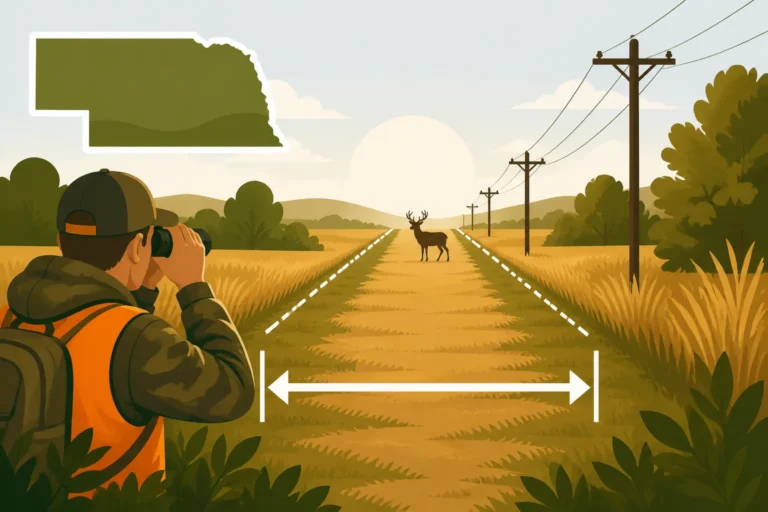
Given the pronghorn's incredible eyesight and the wide-open nature of the Oglala, your binoculars and spotting scope are arguably the most important pieces of gear you'll carry. You simply cannot effectively hunt this country by just driving around hoping to bump into an antelope. The key is to get to a high vantage point – any subtle rise will do – and methodically glass the landscape. Start close, then work your way out, slowly sweeping in grids. Look for anything that doesn't quite look like grass or rocks: a white rump patch, the glint of a horn, or even the slight shimmer of heat off a distant animal.
I can't stress this enough: invest in good optics and a solid tripod. Free-handing binoculars for hours will lead to fatigue and missed details. A quality spotting scope (at least 60x magnification) will allow you to determine if that distant speck is a buck or a doe, and whether it has the horn length you're looking for without having to put miles on your boots. Take your time, be patient, and let your glass do the walking. Often, you'll spot animals several miles away, giving you ample time to plan a Stalking Pronghorn Across Open Nebraska Ground. This is where Binocular Magnification for the Sandhills becomes incredibly important; higher magnification often means better detail at longer ranges.
Leveraging Mapping Technology for Public Access
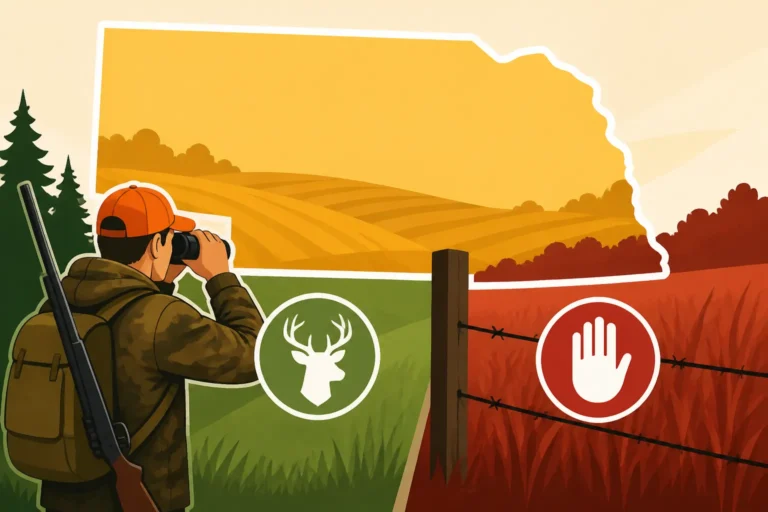
The Oglala National Grassland is massive, but it's not one continuous block of public land. There are private inholdings, state lands, and other boundaries that can easily confuse a hunter, especially if you're not intimately familiar with the area. This is where digital mapping applications become indispensable. Tools like onX Hunt are absolute game-changers for identifying public versus private land boundaries, showing you exactly where you stand and where you can legally walk or stalk. You can scout from home, marking potential glassing points and water sources long before you ever set foot on the prairie.
These apps often have satellite imagery layers that can reveal subtle terrain features you might miss on a topographic map. Imagine seeing a faint drainage or a small cluster of brush on the satellite view that could be just enough cover for your approach. You can drop pins for observed animals, plan your routes to take advantage of terrain, and know definitively if you're on public ground. Another resource, GoHunt, offers a wealth of data that can help you understand permit allocations, draw odds, and general herd dynamics for the region, which can be invaluable for long-term planning, especially for nonresident hunters. Don't leave home without these digital assistants loaded onto your phone. Planning a Hunt From the Public Access Atlas is a good start, but digital maps provide real-time assurance in the field.
Executing the Stalk on Open Prairie
Once you've spotted your pronghorn and confirmed it's a shooter, the real work begins. Stalking in open country is less about stealth in thick cover and more about a masterclass in reading terrain, managing wind, and exercising extreme patience.
The Patience and Persistence of a Close Approach
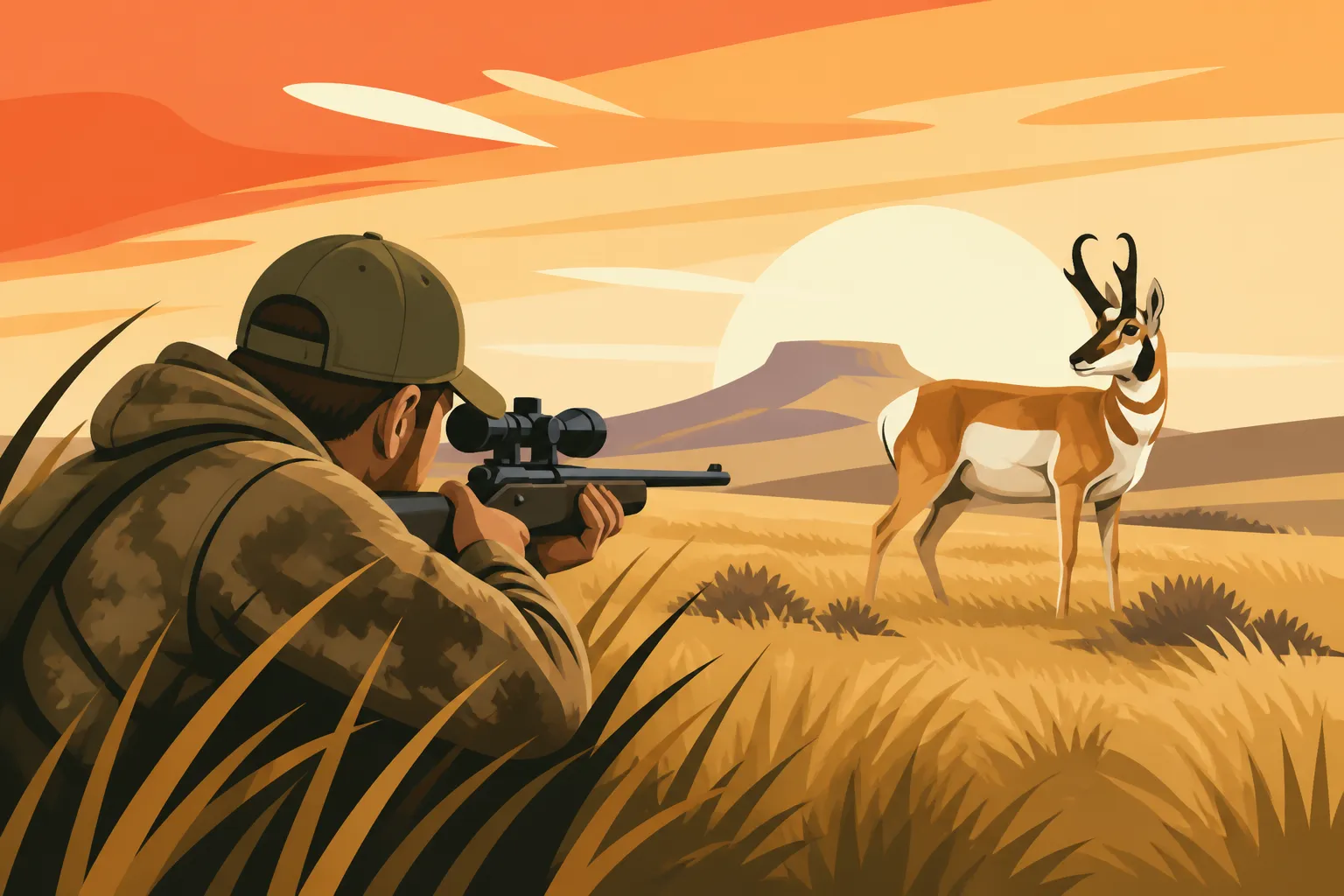
This is where many hunters falter. Seeing an animal two miles away is one thing; closing that distance undetected is quite another. The first rule of thumb is to take advantage of every single fold, dip, and rise in the terrain. Your goal is to stay out of sight as much as possible, using even the smallest changes in elevation to mask your movement. This often means circuitous routes, adding significant distance to your approach. You might have to crawl for hundreds of yards, pushing your rifle ahead of you, with your knees and elbows as your primary propulsion.
Wind direction is absolutely paramount. Pronghorn have an excellent sense of smell, so always try to approach with the wind in your face or quartering toward you. Pay attention to how the wind shifts throughout the day, especially if thermals are at play, which can be a factor even in seemingly flat country. A sudden shift could betray your position in an instant. A good rule of thumb is to plan your approach to stay below the skyline as much as possible. Even if you think you're hidden, if you silhouette yourself against the sky, those keen pronghorn eyes will pick you out. This is a game of inches, and persistence truly pays off when Closing the Last Hundred Yards on Sand.
Decoy Tactics: A Bold Play for Rutting Bucks
While most stalks involve staying out of sight, sometimes a decoy can be a game-changer, particularly during the rut when bucks are more aggressive and territorial. A pronghorn decoy, typically a silhouette of a buck or doe, can sometimes draw in a dominant buck looking for a fight or a new mate. The key is to use it strategically. If you've been busted on a stalk, or if you simply can't find enough cover to close the distance, deploying a decoy might be your last best option.
The typical scenario involves one hunter (the shooter) hiding while another hunter (the decoyer) moves ahead, exposing the decoy briefly to a distant buck. The decoyer then quickly drops back out of sight, letting the decoy do the work. If the buck starts approaching, the shooter needs to be ready. However, this tactic is not without risks. An approaching buck might circle downwind to get a scent, so the wind still needs to be in your favor. And remember, not all bucks will respond, and some might flee if they sense something isn't right. It's a high-risk, high-reward strategy, but it can be incredibly exciting when it works.
Essential Gear and Safety for Oglala Hunts
Hunting the Oglala National Grassland demands more than just skill; it requires proper preparation, the right gear, and a keen awareness of safety in a remote, unforgiving environment.
Optics, Footwear, and Hydration: Prepared for the Plains
We've already talked about optics, but it bears repeating: good binoculars (10×42 or 12×50 are ideal for general viewing) and a powerful spotting scope (20-60x or higher) on a sturdy tripod are non-negotiable. Combine these with a high-quality rangefinder that can perform out to 800+ yards, as shots on pronghorn can often be long. Rangefinder Range on Open Prairie is critical, because what looks like 300 yards can easily be 450 yards on the flat prairie.
Footwear is another crucial consideration. You'll be doing a lot of walking, often through abrasive grass, cactus, and sometimes soft sand. Comfortable, broken-in boots with good ankle support are a must. Lightweight hiking boots are often preferable to heavy hunting boots in this terrain, as long as they offer good protection. Consider gaiters to keep sand, burrs, and cactus out of your boots. For covering miles of ground, refer to Boots for Walking Nebraska Grass and Sand.
Perhaps most overlooked is hydration. The Oglala can be hot and dry, even in early fall. Carry far more water than you think you'll need. Dehydration can quickly lead to fatigue, poor decision-making, and even serious health issues in remote areas. A hydration pack is an excellent option to keep water readily accessible.
Navigating Remote Country Safely
The vastness of the Oglala, while offering incredible hunting opportunities, also presents significant safety challenges. Cell service can be spotty or nonexistent in many areas, meaning your phone might not be reliable for emergency calls or navigation. Always carry a physical map (the Public Access Atlas is great, but a detailed topo map is better) and a compass, and know how to use them. Even better, consider a satellite communication device like a Garmin inReach or a Zoleo for emergency communication and tracking, especially if you're hunting alone.
Vehicle issues are also a real concern. Many of the two-track roads are sandy, and it's incredibly easy to Getting Stuck in Sandhills Sand, especially after a rain or in areas of deep, dry powder. Drive a capable 4×4 vehicle, carry recovery gear (shovel, tow strap, traction boards), and know how to use it. Tell someone exactly where you're going and when you expect to return. The last thing you want is to be stranded miles from pavement with no way to call for help. Being prepared for anything that could go wrong is just as important as being prepared to make a good shot.
| Aspect | Key Considerations | Impact on Pronghorn Hunt |
|---|---|---|
| Terrain | Subtle rises, drainages, blowouts; few tall features. | Requires crawling, long stalks; limited cover for close approaches. |
| Pronghorn Vision | Exceptional eyesight; can spot movement miles away. | Demands superior glassing, minimal exposure, careful movement planning. |
| Pronghorn Speed | Extremely fast; can cover vast distances quickly once spooked. | Need to anticipate escape routes; quick follow-up shots may be necessary. |
| Wind & Thermals | Constant wind, variable thermals in open country. | Always approach into the wind; factor in thermal shifts, especially midday. |
| Public Land Access | Mix of public/private; designated roads/trails. | Use mapping apps (onX Hunt) to confirm boundaries; respect private land. |
| Water Sources | Limited, often critical draw for pronghorn in dry periods. | Potential ambush points if other methods fail, or for scouting. |
| Seasonality | Rutting behavior in late September/early October can influence tactics. | Bucks more vulnerable to decoying; more focused on does. |
Disclaimer
This article is for general informational purposes only and does not constitute professional advice. Laws, prices and regulations vary by location and change over time. Consult a qualified professional for guidance on your specific situation.