Cottonwood Bottoms and Deer Density
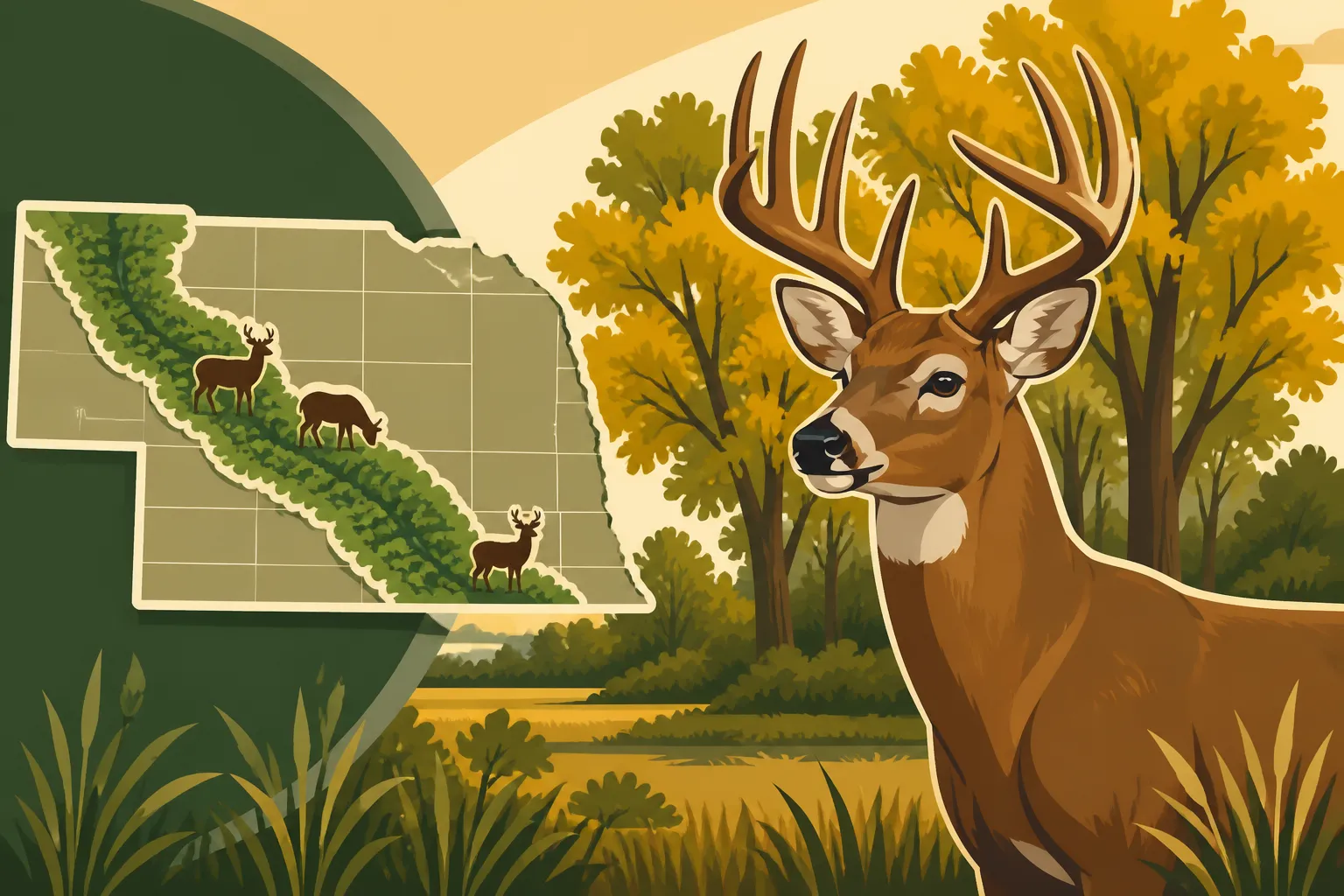
The frustration of scouting for deer, especially in open country, often comes down to trying to understand why deer choose one patch of cover over another. It's not always obvious from a distance, but those river and creek bottom areas choked with cottonwood trees are absolute magnets for white-tailed deer in Nebraska, and knowing how deer density relates to these unique habitats can dramatically change your hunting strategy. This guide will walk you through why these cottonwood bottoms are so vital to deer populations and how you can use that knowledge to your advantage.
The Allure of Cottonwood Bottoms for White-Tailed Deer
Nebraska's landscape, particularly in the central and eastern parts of the state, is often characterized by vast agricultural fields and rolling prairie. This makes pockets of dense timber, especially along waterways, stand out as critical habitat. Cottonwood bottoms, with their towering trees and often thick undergrowth, offer a refuge that deer simply can't resist, providing a unique combination of necessities that are hard to find elsewhere.
Essential Cover and Thermal Protection
Imagine being a deer in Nebraska's often harsh climate. You need somewhere to hide from predators, somewhere to bed down safely, and somewhere to escape the relentless wind or the scorching summer sun. Cottonwood bottoms provide exactly that. The sheer density of trees, combined with often tangled multiflora rose, wild plum thickets, and dogwood, creates an almost impenetrable fortress. This thick cover is invaluable for bedding areas, giving deer visual security from both human and four-legged threats.
Beyond concealment, these dense bottomlands offer crucial thermal protection. In the summer, the dense canopy shades the ground, providing a cooler microclimate. When winter winds howl across the plains, the timber breaks that wind, offering a significant temperature buffer. Deer expend less energy staying warm or cool when they can tuck into these protected areas. This is particularly important for fawn survival and for bucks trying to maintain their body weight through the lean winter months. They don't have to travel far to find safety, which conserves vital energy stores.
Abundant Food and Water Sources
Cottonwood bottoms are typically found along rivers, creeks, and drainages, which means a reliable water source is almost always present. This is a fundamental need for all wildlife, and deer are no exception. But it's not just the water that draws them in. These riparian corridors are biodiversity hotspots, offering a diverse array of forage opportunities that extend beyond what's found in adjacent crop fields or pastures.
While crop fields certainly provide high-energy food, the browse and forbs available in a healthy cottonwood bottom are often more consistent and varied throughout the year. Think about the variety: succulent forbs in spring, tender shoots and leaves through summer, and fallen acorns or other mast crops in the fall. The edges of these bottoms, where they transition to agricultural fields, also create prime feeding areas. Deer can emerge from the safety of the timber, feed in the fields, and quickly retreat to cover. This constant availability of both sustenance and hydration creates a perfect, self-contained ecosystem that supports higher deer densities than more fragmented or less productive habitats.
Understanding Deer Density in Riparian Corridors
Deer density isn't uniform across the state, and even within the same general area, it can vary dramatically based on habitat quality. Cottonwood bottoms often boast some of the highest local deer densities, but understanding the specific factors that influence this can help you pinpoint the most productive hunting spots.
Factors Influencing Density in Cottonwood Bottoms
Several key elements contribute to how many deer can thrive in a given cottonwood bottom. The size and continuity of the timber tract are paramount. A narrow, mile-long strip of trees along a small creek will hold deer, but it won't support the same population as a quarter-mile-wide stretch of timber along a major river like the Platte or Missouri. Larger, wider blocks of timber offer more interior cover, which deer prefer for security, especially mature bucks. These wider areas also allow for more diverse plant life, contributing to a better year-round food supply.
The presence of neighboring agricultural fields is another huge factor. When cottonwood bottoms are bordered by corn, soybeans, alfalfa, or even winter wheat, deer get the best of both worlds: dense cover and abundant, calorie-rich food. These "edge habitats" are incredibly productive. A hunter using a mapping app like GoHunt might notice patterns of where these timbered areas meet fields, indicating potential travel corridors or feeding areas. Finally, hunting pressure plays a significant role. Heavily pressured public land cottonwood bottoms might see deer become more nocturnal or move out of the area during hunting seasons, while private lands with less pressure can hold higher visible densities.
Seasonal Movement and Deer Concentration
Deer density in cottonwood bottoms can also fluctuate seasonally. During the spring and summer, fawns are born, and deer spread out a bit more. However, as fall approaches and hunting seasons open, deer tend to concentrate more heavily in these secure areas. They become the ultimate refuge when pressure builds. In October, as the pre-rut begins, bucks will start to cruise these river corridors, checking for does. During the peak of the whitetail rut in November, these bottoms are bustling with activity as bucks pursue does through the thick cover.
Winter can see further concentration, especially if food sources like waste grain are still available in adjacent fields and the timber provides crucial thermal cover. As deer yard up in a Nebraska winter, the best cottonwood bottoms can hold an incredible number of animals. Conversely, late in the season, after intense pressure, deer might temporarily shift if they find quieter spots, but they'll often return to the familiar security of the bottoms. Understanding these seasonal shifts helps a hunter predict where deer will be found and what their priorities are at different times of the year.
Here's a quick look at how various factors influence deer density in these prime Nebraska habitats:
| Factor | High Deer Density Impact | Low Deer Density Impact |
|---|---|---|
| Timber Size/Width | Extensive, wide tracts with deep cover | Narrow strips, fragmented patches |
| Understory Density | Thick multiflora, plum, dogwood, cedar for bedding | Open, park-like timber with little ground cover |
| Water Access | Consistent river/creek flow, oxbows, sloughs | Intermittent or distant water sources |
| Adjacent Food | Bordered by corn, beans, alfalfa, winter wheat | Surrounded by barren fields or monoculture crops |
| Hunting Pressure | Low pressure, sanctuary areas | High public land pressure, frequent disturbances |
| Browse/Forb Variety | Diverse native vegetation for year-round forage | Limited plant diversity, overbrowsed areas |
Effective Hunting Strategies for Cottonwood Bottoms
Hunting cottonwood bottoms requires a specific approach, as the terrain and deer behavior are different from open rangeland or even upland timber stands. The dense cover that makes these areas so attractive to deer also makes them challenging for hunters.
Scouting and Identifying Key Features
Before you even set foot in the timber, extensive scouting is your best friend. Start with aerial maps, perhaps on a platform like GoHunt, to identify promising stretches of cottonwoods. Look for pinch points where the timber narrows, oxbows in the river that create isolated pockets, and areas where dense cover transitions into agricultural fields. These are often high-traffic zones. Pay close attention to subtle elevation changes within the bottom, as deer will often use slightly higher ground for bedding, especially during wet periods.
Once on the ground, look for classic deer sign: rubs, scrapes, heavily used trails, and bedding areas. Don't be afraid to get deep into the nastiest thickets; that's where the biggest bucks often hide. Identify historical bedding areas, often found on slight rises or in the densest cover. Locate natural funnels created by the terrain or changes in vegetation. Understanding entry and exit routes on flat farm ground is especially critical when approaching these areas without alerting deer that are often bedded just inside the timber line. Look for subtle ways to slip in and out undetected.
Stand Placement and Ground Blind Tactics
Choosing the right stand location in a cottonwood bottom is paramount. Given the dense foliage, shot opportunities can be limited, so identifying primary travel corridors between bedding and feeding areas is key. Look for trails running parallel to the water, especially those connecting to field edges. Consider setting up where trails converge or at choke points created by impenetrable brush. When choosing a treestand site on Nebraska farmland, remember that cottonwood trees often have limbs that start higher up, which can limit options, but also provide excellent concealment.
Ground blinds can be incredibly effective in these environments, especially in areas with significant underbrush where a treestand might not offer a clear shot. A well-brushed-in ground blind can offer excellent concealment and allow for more movement, which is a blessing on those long, cold sits. If you're considering ground blinds in open Nebraska country, the principles of concealment and wind apply equally, if not more so, in these tight quarters. Always be mindful of wind direction; deer will typically approach from downwind, especially mature bucks.
Still-Hunting and Drives in Bottomland Timber
For hunters who prefer to be on the move, still-hunting through a cottonwood bottom can be a highly productive strategy, especially during the rut or in late season. The thick cover allows you to move slowly and deliberately, taking advantage of the noise-dampening qualities of the brush. Focus on staying quiet, pausing frequently to glass ahead, and using the wind to your advantage. This method is particularly effective when still-hunting a snow-covered river bottom, as snow can make tracking easier and quiet your steps.
Small, organized deer drives can also be successful in cottonwood bottoms, particularly on private land or with a trusted group of hunting partners. Because the timber often runs in long, relatively narrow strips, it's easier to set up blockers at one end and push deer toward them. Communication and safety are absolutely critical during drives. This is an active and engaging way to hunt, and it can be especially effective when trying to move deer out of particularly dense bedding areas they're reluctant to leave. Just remember, these are high-pressure scenarios for deer, so consider your impact.
Challenges and Considerations for Hunting Cottonwood Bottoms
While cottonwood bottoms offer incredible hunting potential, they aren't without their unique challenges. Being prepared for these can make or break your hunt.
Navigating the Terrain and Thick Cover
The very features that make cottonwood bottoms so attractive to deer can make them a nightmare for hunters. The terrain is often uneven, with old flood channels, fallen trees, and hidden obstacles. Add to that the dense undergrowth, and moving quietly and efficiently can be a real struggle. This is where a good GPS or mapping app, like one on GoHunt, becomes indispensable. Not only can it help you navigate, but it can also mark trails, stand locations, and potential escape routes for deer.
Blaze orange is also a crucial consideration, especially during Nebraska's November firearm season. Understanding orange requirements for archers in November and general blaze orange square inches is vital for safety, particularly when visibility is limited in thick timber. Expect to move slowly, deliberately, and often quietly through these areas. It’s not uncommon to go only a few hundred yards in an hour, but those slow, methodical movements are what allow you to pick apart the cover and spot a deer before it spots you.
Controlling Scent and Managing Wind
Scent control is always important, but it's amplified in the close quarters of a cottonwood bottom. The swirling winds and pockets of stagnant air can make predicting deer movement based on scent incredibly difficult. Deer have an uncanny ability to circle downwind, even in seemingly unpredictable wind conditions. Therefore, playing the wind as best you can, choosing stand locations that account for thermals, and practicing stringent scent control are non-negotiable.
Often, creek and river bottoms create their own microclimates with unique thermal currents. Mornings might see thermals falling into the bottom, carrying your scent downwards, while evenings might see them rising. Factor this into your approach and exit strategy, especially when hunting close to bedding areas. Even with the best preparation, a slight shift in wind can blow your hunt, which is why having multiple stand locations for varying wind directions is key to success in these diverse habitats.
Public vs. Private Land Access and Pressure
Many prime cottonwood bottoms are found along major rivers that often run through private agricultural land, making access a significant hurdle for many hunters. While Nebraska does have extensive public hunting land, including some excellent riparian areas, these often receive significant pressure. Learning about Nebraska's Open Fields and Waters program or checking the Nebraska Public Access Atlas can reveal hidden gems or newly opened areas that might offer less pressured hunting.
For hunters targeting private land, establishing positive relationships with landowners and getting private land permission in Nebraska is often the best path to consistent success in these high-density areas. Showing respect for their property, offering assistance, and providing updates on deer activity can go a long way. Understanding that deer will likely shift and adapt to pressure, whether on public or private land, is part of the game, and a hunter needs to be adaptable in their tactics. Even on private land, smart deer will quickly learn to avoid areas where they consistently encounter hunters.
Disclaimer
This article is for general informational purposes only and does not constitute professional advice. Laws, prices and regulations vary by location and change over time. Consult a qualified professional for guidance on your specific situation.