Where Nebraska Whitetails Live in Winter
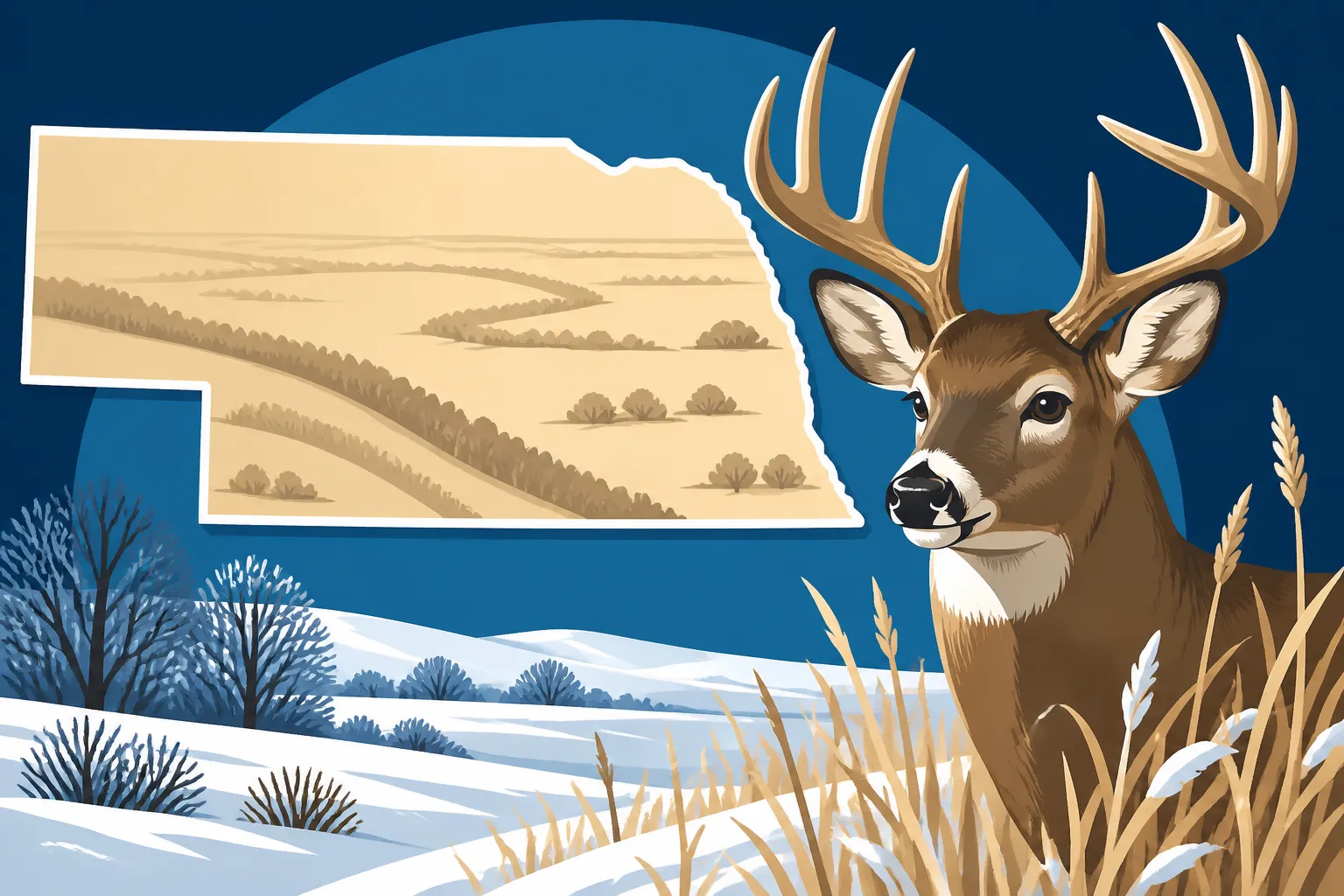
Winter hunting in Nebraska can sometimes feel like the whitetails have simply vanished into thin air. You've scouted all fall, knew where they were hitting the bean fields or traveling along that creek, but as soon as the snow flies and the temperatures plummet, it's like they've gone underground. The truth is, they haven't disappeared; they've simply shifted their focus entirely on survival, prioritizing thermal cover and reliable food sources. This guide is here to help you unravel the mystery of where Nebraska whitetails live in winter, giving you the insights you need to pinpoint their cold-weather hideouts and improve your late-season hunting success.
Understanding Nebraska Whitetail Winter Survival Strategies
When the harsh Nebraska winter truly sets in, everything a whitetail deer does revolves around two critical factors: conserving energy and finding enough calories to survive. Their survival isn't just about avoiding predators; it's about battling the elements – the biting winds, the deep snows, and the relentless cold. Understanding these fundamental drives is the first step to unlocking their winter locations.
The Role of Thermal Cover: What Whitetails Seek and Why
Think about standing out in a frigid Nebraska wind versus finding a sheltered corner. That's exactly what whitetails are doing. Thermal cover isn't just about hiding; it's about blocking the wind and providing insulation. Dense stands of conifers, like eastern red cedars or Ponderosa pines in the western part of the state, are absolute magnets for deer in winter. The thick needles act like a natural blanket, trapping warmer air and breaking the wind. You'll often find them bedded right in the thickest part of these cedar groves, especially on north-facing slopes that might seem counterintuitive but actually offer a break from prevailing southwesterly winds.
Beyond evergreens, any kind of super thick, woody cover can serve this purpose. We're talking about dense dogwood thickets, plum thickets, or incredibly brushy river bottoms where the canopy of deciduous trees might be bare, but the undergrowth is so dense it still cuts the wind. These spots become sanctuaries, offering a thermal advantage that can mean the difference between life and death for a deer during a brutal cold snap. They might only move a few hundred yards from these beds to a food source, so finding these dense pockets is key.
Critical Winter Food Sources: How Hunger Drives Movement
Once a whitetail has found adequate thermal cover, the next priority is food. During the late season, with most crops harvested and natural browse becoming scarce, deer become incredibly efficient. They're not expending unnecessary energy; instead, they're seeking the highest calorie foods closest to their bedding areas. Unharvested crops are absolute gold. A standing cornfield, especially one that wasn't picked clean, becomes a five-star restaurant and a hotel all in one. The corn provides vital energy, and the tall stalks offer additional thermal cover. The same goes for milo fields.
Natural browse still plays a role, but it's often the less palatable, tougher stuff by mid-winter. Look for signs of deer browsing on cedar tips, sumac, dogwood, and even woody stems of plants they'd ignore in the fall. Any remaining mast, like acorns, will have been hoovered up long ago, but if you're in an area with oak timber that had an exceptional mast crop, there might be a few lingering nuts to be found under the snow. Smart hunters often focus on areas where these late-season food sources are directly adjacent to heavy cover, recognizing that deer will minimize travel during daylight hours. Understanding Late-Season Food Sources in Nebraska is crucial for identifying these critical winter hubs.
Key Winter Habitats Across Nebraska's Diverse Landscape
Nebraska might seem flat to the casual observer, but its diverse geography offers a variety of habitats that whitetails utilize differently throughout the year, especially in winter. From the eastern river systems to the western sandhills and pine ridges, understanding these regional preferences will help you narrow down your search.
River Bottoms and Creek Corridors: Eastern Nebraska Strongholds
In the eastern part of the state, where agriculture dominates, the winding river bottoms and creek corridors are the lifeblood of whitetail populations, particularly in winter. Rivers like the Platte, Loup, Niobrara, and the mighty Missouri provide continuous ribbons of timber, dense brush, and sometimes even marshy sloughs. These areas are ecological goldmines, offering abundant cover and often residual food sources.
During the coldest months, deer will pack into these bottoms, seeking the protection of mature cottonwoods, thick willow stands, and dense underbrush that provides excellent windbreaks. The sheer density of cover here allows them to conserve energy. You'll often find heavily used trails running parallel to the water, deep within the thickest parts of the timber. These river systems also act as natural travel corridors, funneling deer movement. If you're looking for deer in Eastern Nebraska, mastering River-Bottom Whitetail Hunting in Eastern Nebraska will prove invaluable, as these areas become even more critical when snow covers the open fields.
Cedar Draws and Pine Ridge Retreats: Western and Central Nebraska
Venturing west, the landscape transforms, and so do the primary winter havens for whitetails. In the Sandhills, the iconic cedar draws and the deep canyons they inhabit become paramount. These draws, often hidden from view until you're right on top of them, offer incredible thermal protection from the relentless prairie winds. The cedars trap heat, and the protected slopes of the draw provide a vital reprieve from the cold. Deer will move into these draws from the surrounding grasslands, especially during periods of heavy snow. Learning how to effectively decipher deer sign in these unique environments, like by Reading a Cedar Draw for Deer Movement, is essential for success.
Further west, in the Pine Ridge, the Ponderosa pine forests and their rocky outcroppings offer similar, if not more extensive, thermal cover. The dense canopy of the pines provides excellent shelter, and the rugged terrain means fewer hunters might be willing to penetrate the deepest sections. These areas can hold significant numbers of deer throughout the winter, particularly during heavy snow events when lower elevations become less hospitable.
Standing Crops and Shelterbelts: Farm Country Sanctuaries
In the vast agricultural heartland of Nebraska, where natural cover can be sparse, whitetails become masters of utilizing man-made features for survival. Standing crops, particularly corn, are not just food sources but crucial winter cover. Even after a partial harvest, leftover corn or milo fields can hold deer, providing both sustenance and a valuable windbreak. Deer will bed down deep within these fields, using the tall stalks for protection against the elements and human intrusion.
Shelterbelts and small timber patches between fields also become critical. These lines of trees, often planted as windbreaks, act as linear oases of cover in an otherwise open landscape. While they might not offer the same extensive thermal protection as a dense cedar draw, they are enough to break the wind and allow deer to conserve energy, especially if there's any thick undergrowth. Hunting around these agricultural features often requires understanding how deer use them for security, and knowing when deer might be Hunting Standing Corn Before Harvest can offer clues to their later winter habits.
Deer Movement Patterns and Hunting Considerations in Winter
Winter hunting isn't just about finding where the deer are; it's about understanding when and why they move. Their entire existence revolves around a finely tuned balance of calorie intake versus calorie expenditure, making their routines predictable but often frustratingly short.
Daily Routines and Energy Conservation: Shortened Movement
During the winter, whitetails are operating on an energy budget. They will limit their movements to the bare minimum required to feed and find water. This means their daily routines become condensed. Deer will often bed down very close to their primary food source, sometimes only a few hundred yards away. Their feeding windows will generally be shorter and more concentrated, often occurring during the warmest parts of the day, particularly mid-morning and late afternoon.
Extreme cold and deep snow can further constrict these patterns. On brutally cold, windy days, deer might not move more than a few steps from their beds, opting to stay hunkered down in the densest cover for hours, sometimes even a full day, to preserve body heat. They'll wait for a break in the weather, a lull in the wind, or a slight warming trend before venturing out. Understanding how Deep Snow and Deer Movement dictates their behavior is vital. This behavior makes scouting for fresh tracks and pinpointing exact bedding-to-feeding routes incredibly important for successful winter hunts.
Impact of Snow and Extreme Cold: Weather as a Hunting Factor
Weather isn't just a nuisance in winter; it's the primary driver of deer behavior. Deep snow, especially wet, heavy snow, can be both a blessing and a curse for hunters. It makes travel difficult for deer, concentrating them to specific travel corridors or breaking trails, which can make their movements more predictable. However, it also makes human travel tougher and quiets the woods, demanding extreme stealth. Snow also highlights tracks, making it easier to identify active areas.
Extreme cold, especially when combined with wind, pushes deer into the most sheltered pockets of cover. South-facing slopes that catch the low winter sun can be prime bedding areas, warming up slightly more than other aspects. Understanding how thermals work in these cold conditions – warm air rising, cold air sinking – becomes even more critical for scent control, as a subtle shift in wind can carry your scent further. Developing a solid Cold Weather Sitting Strategy is paramount, as you might need to endure long hours in frigid conditions for those brief windows of deer activity.
Scouting and Strategy for Winter Whitetails: Finding Their Hideouts
Successful winter whitetail hunting in Nebraska often starts long before you ever carry a weapon into the field. Post-season scouting, immediately after the hunting seasons close and before spring green-up, is arguably the most valuable scouting you can do. With leaves off the trees and snow often on the ground, deer sign is much more apparent. Look for concentrated tracks, browsed vegetation, and rubbed trees indicating past activity. Focus on identifying those thick thermal cover areas and adjacent food sources.
Utilizing tools like the GoHunt app can be a game-changer for identifying potential wintering areas. Its mapping layers can help you spot dense timber, topographical features like draws and creek bottoms, and even crop fields that might provide cover and food. You can mark potential bedding and feeding areas, plan quiet entry and exit routes, and minimize your disturbance once you're in the field. Remember, in winter, a single bump can send deer to another, harder-to-reach sanctuary. Being precise and patient, and knowing where deer are likely to be before you ever step foot on the property, is the ultimate winter strategy. Many hunters find success by combining this detailed scouting with the knowledge of Scouting Nebraska Public Ground Before Opening Day to maximize their chances on pressured ground.
Winter Whitetail Cover and Food Source Comparison
Here's a quick look at common winter whitetail cover and food sources in Nebraska, highlighting their benefits and where you're most likely to find them:
| Cover/Food Source | Benefits | Typical Location | Notes |
|---|---|---|---|
| Cedar Draws | Excellent thermal cover, windbreak | Sandhills, breaks, Western Nebraska | Prime bedding, often near food. |
| River Bottom Timber | Dense cover, diverse browse, windbreak | Platte, Loup, Niobrara, Missouri River corridors | Funnels movement, consistent deer numbers. |
| Pine Forests | Superior thermal cover, concealment | Pine Ridge (Western Nebraska), Halsey National Forest | Essential during severe cold/snow, may hold mule deer too. |
| Standing Corn/Milo | High-calorie food, thermal cover, concealment | Agricultural areas statewide | Deer will bed inside fields, especially unharvested corners. |
| Shelterbelts | Windbreak, minimal cover | Open farm country, divides fields | Often a travel corridor between heavier cover and food. |
| Thick Brush Thickets | Good windbreak, escape cover | Any neglected areas, creek bottoms, edges of timber | Key for breaking up wind, can be hard to penetrate. |
| Browse (Cedars, Sumac) | Consistent but lower-calorie food source | Edges of cedar draws, thickets, timber fringes | Deer will browse on evergreens and woody stems when other food is scarce. |
Hunting Strategies for Nebraska's Winter Whitetails
Once you understand where whitetails are trying to live in winter and why, you can adapt your hunting strategies. It's not about covering miles; it's about being surgical and smart.
Quiet Entry and Patience: The Winter Hunter's Mantra
In winter, the woods are quieter, and deer senses are heightened, especially with less concealing foliage. Your entry and exit routes become paramount. Avoid busting deer out of their beds on the way in. This means taking the long way around, using topographical features to hide your approach, and moving slowly and deliberately. If you're hunting a small timber patch or a cedar draw, consider how your scent will drift with the wind, particularly the swirling thermals that can occur in varied terrain. Paying close attention to Wind Direction on Open Nebraska Prairie Stands will be critical, as the same principles apply in timbered areas, though often complicated by terrain.
Patience is key. Deer movement is compressed, so you might only get a short window of opportunity. Sitting all day, enduring the cold, can be incredibly effective because you're there when they decide to move. A stationary approach often works better than still-hunting or drives, unless conditions are absolutely perfect.
Targeted Still-Hunting or Small Drives: When to Be Aggressive
While patience is often rewarded, there are times when a more aggressive tactic can work in winter, particularly if you know exactly where deer are bedded. Still-hunting, moving incredibly slowly and deliberately through dense thermal cover, can be effective if done carefully. Think of it as stalking, taking one step at a time, pausing to glass and scan, and anticipating where a deer might be bedded or moving. This works best when snow helps muffle your footsteps and reveals fresh tracks.
For smaller timber blocks or isolated cedar draws, a Two-Person Deer Drives on Small Timber can be an effective way to bump deer out of dense cover, especially on private land with limited access or when deer are simply not moving in daylight. One hunter acts as a blocker, positioned at a likely exit point, while the other slowly walks through the cover. Communication and safety are paramount with this tactic, and it requires intimate knowledge of the area and deer escape routes. If you're hunting a river bottom during an especially frigid period, consider the tactics involved in Hunting a Frozen Nebraska River Bottom, where deer might be forced onto the ice, or concentrated on narrow strips of land.
Maximizing Public Land Opportunities in Winter
Nebraska offers excellent Public Hunting Land in Nebraska, and many of these areas, including Wildlife Management Areas, can hold good numbers of whitetails even in winter, especially if they offer the critical thermal cover and food deer need. Areas like Wildlife Management Areas Near Grand Island can provide quality opportunities. However, public ground often means more pressure. To find success, you'll likely need to walk further, deeper into the property, away from easy road access points.
Look for less obvious, harder-to-reach pockets of cover – a small draw that others overlook, a thicket at the end of a long walk, or a section of timber bordered by a creek you need to wade across. Using mapping tools like those offered by GoHunt or the Nebraska Public Access Atlas to identify these overlooked sanctuaries can make all the difference. Remember that even on public land, deer will gravitate to the most sheltered and food-rich areas. Put in the effort, and you'll likely find deer using these winter refuges.
Disclaimer
This article is for general informational purposes only and does not constitute professional advice. Laws, prices and regulations vary by location and change over time. Consult a qualified professional for guidance on your specific situation.