Whooping Cranes on the Platte River
For those of us who spend countless hours in the Nebraska outdoors, especially along the winding Platte River, our focus is often on the deer, ducks, or pheasants we're pursuing. But the Platte is a critical corridor for so much more, including some of North America's most endangered and magnificent birds. This guide will shed light on the elusive Whooping Cranes, why they grace our skies, and how being aware of their presence makes us better stewards of this incredible landscape.
The Unmistakable Presence of Whooping Cranes on the Platte
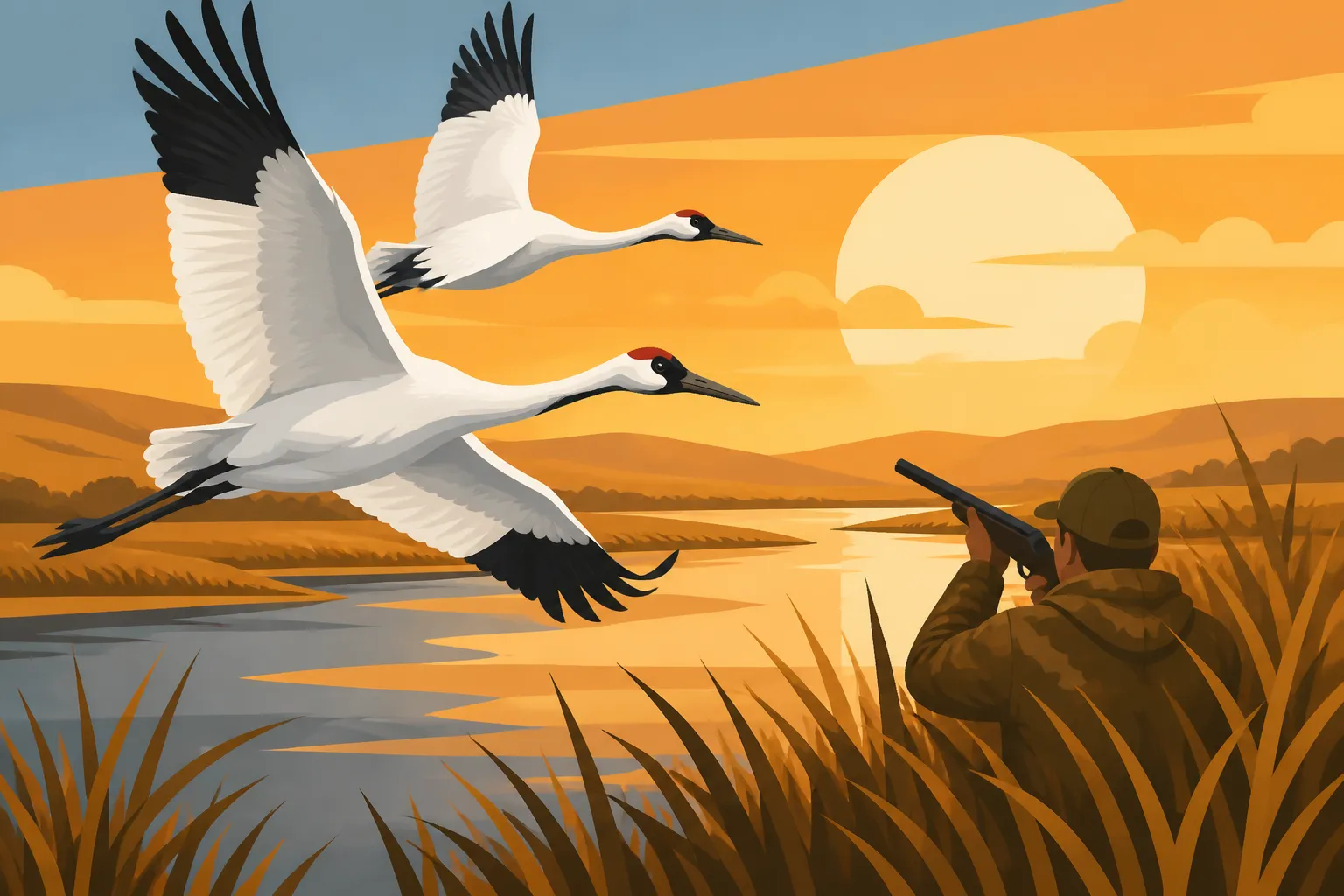
Imagine you're hunkered down in a field blind, the pre-dawn chill biting at your cheeks, waiting for the first geese to stir. Suddenly, a call unlike any you've heard slices through the quiet—a clear, bugling sound that carries for miles. Then, in the emerging light, you spot them: towering white birds, stark against the gray sky, with black wingtips visible in flight. These aren't your typical snow geese or even the abundant Sandhill Cranes. These are Whooping Cranes, and seeing them is an experience that humbles even the most seasoned hunter.
A Rare and Resilient Species
Whooping Cranes are North America's tallest birds, standing nearly five feet tall with an impressive seven-foot wingspan. Their pristine white plumage, accented by black primary feathers (which are stunningly visible when they're soaring overhead) and a distinctive red patch on their crown, makes them truly unmistakable once you know what to look for. What makes their presence on the Platte River even more profound is their incredible rarity. These birds were once pushed to the brink of extinction, with only 15 individuals remaining in the wild in the 1940s. Their comeback, though still precarious, is a testament to dedicated conservation efforts, and the Platte River plays a monumental role in their survival.
When you witness these birds, whether you're out Scouting Nebraska Public Ground Before Opening Day or simply driving near the river, it's a stark reminder that we share these wild spaces with creatures that have battled immense odds. Every sighting is a quiet victory for wildlife conservation. They're a symbol of what can be achieved when we pay attention to the health of our ecosystems, and it's a privilege to share a landscape, however briefly, with such an iconic species.
Why the Platte River Is So Critical for Whoopers
The Platte River, particularly the braided segments in central Nebraska, is not just a flyway; it's a vital pit stop, a fueling station, and a safe haven for Whooping Cranes during their arduous migration. These birds undertake one of the longest migrations of any North American bird, traveling thousands of miles between their breeding grounds in northern Canada and their wintering grounds along the Texas coast. Without the crucial stopover habitat provided by the Platte, their journey would be far more perilous, if not impossible.
The wide, shallow, and braided channels of the Platte offer unique benefits. The cranes prefer to roost in the shallow water, often on sandbars, which provides protection from predators like coyotes. Here, they have unobstructed views in every direction, giving them ample warning of any approaching danger. Beyond safety, the river provides crucial foraging opportunities. They feed on waste grain in agricultural fields bordering the river, as well as various invertebrates and small aquatic life found within the wetlands and shallow waters. This sustained energy intake is essential for them to complete their monumental migratory journey.
Distinguishing Whooping Cranes from Other Birds
For those of us spending time in Nebraska's outdoors, especially in areas where game birds and waterfowl are abundant, it's easy to mistake one large white bird for another. However, knowing the key identifiers for Whooping Cranes is incredibly important, not just for personal satisfaction, but for understanding the sensitive nature of their presence. Being able to correctly identify a Whooper means you're more informed about the habitat you're in and the shared species it supports.
Whooping Cranes vs. Sandhill Cranes
This is the most common confusion, and it’s understandable. Sandhill Cranes are incredibly numerous on the Platte River, especially in spring, and they are also large, gray birds. However, there are distinct differences that, once you learn them, make identification straightforward. Whooping Cranes are significantly larger and almost entirely white, whereas Sandhill Cranes are smaller and gray.
Here’s a quick comparison:
| Feature | Whooping Crane | Sandhill Crane |
|---|---|---|
| Size | Tallest bird in North America (4.5-5 ft) | Large, but smaller than Whooper (3-4 ft) |
| Color | Pure white body; black primary wing feathers | Gray body; rusty brown wash often visible on back |
| Head | Red crown patch, black facial markings | Red crown patch; no black facial markings |
| Call | Loud, clear, trumpet-like bugle | Rolling, guttural "garoooo-a-a-a" |
| Flight | Long, slow, deliberate wing beats | More rapid wing beats; often in large V-formations |
| Legs/Feet | Long, dark legs; often trails legs in flight | Long, dark legs; trails legs in flight |
| Rarity | Extremely rare (endangered) | Abundant (millions migrate through Nebraska) |
Beyond these visual cues, their behavior can also be a giveaway. Whooping Cranes are usually found in much smaller groups—often just a pair or a family unit, sometimes joining a small flock of Sandhills. If you see a massive flock numbering in the hundreds or thousands, it's almost certainly Sandhill Cranes. While you're enjoying the spectacle of Sandhill Cranes on the Platte River, keep an eye out for that singular, brilliant white amidst the grays.
Avoiding Confusion with Snow Geese
Another common mix-up, especially during waterfowl season, is mistaking Whooping Cranes for Snow Geese. Both are largely white, but their differences become very apparent once you observe them for a moment. Snow Geese are much smaller, chunkier, and have shorter necks. Their flight pattern is also different; geese typically fly in more erratic, less organized patterns, and their calls are loud, high-pitched honks.
Whooping Cranes, in contrast, have incredibly long necks and legs, and they carry themselves with a regal posture whether walking or flying. Their flight is more graceful and deliberate, with slow, deep wing beats. A good pair of binoculars, like those you might use for Glassing the Nebraska Sandhills for Mule Deer, can quickly resolve any doubt. If you're using a mapping resource or scouting tool like those you might find on GoHunt, it's always helpful to note potential crane habitat areas, so you're extra vigilant when identifying birds.
Hunter's Role in Whooping Crane Conservation
It might seem counterintuitive to talk about hunting and endangered species in the same breath, but responsible hunters play a crucial role in the broader conservation landscape. Our appreciation for wildlife, our financial contributions through permits and stamps, and our presence in wild places make us natural allies in protecting all species, including Whooping Cranes.
Respecting Habitat and Minimizing Disturbance
The biggest contribution any outdoors enthusiast can make is to simply be aware and respectful. When you're out hunting near the Platte River, you're sharing critical habitat with Whooping Cranes. While it's illegal to hunt Whooping Cranes, accidental harassment or disturbance can still have negative impacts, especially during their energy-intensive migration. This means:
- Know Your Location: Always be mindful of designated refuge areas or special management zones along the Platte River that might be critical for crane roosting. The Nebraska Public Access Atlas is an excellent resource for understanding these boundaries and restrictions.
- Maintain Distance: If you do encounter Whooping Cranes, observe them from a distance. Do not approach them for photos or a closer look. Disturbing them can cause them to expend vital energy, flush from a safe roost, or abandon valuable feeding grounds.
- Responsible Travel: When accessing public lands or crossing private lands with permission, stick to established roads and trails. Avoid driving or walking through sensitive wetland areas unless explicitly permitted and necessary for your hunting activity, which should still be done with extreme caution. This helps protect the fragile ecosystems that both game and non-game species rely on.
Understanding the specific needs of species like Whooping Cranes reinforces the idea that we are all part of a larger ecological picture. Many hunters use advanced tools, like those available through GoHunt, to meticulously plan their outings and understand terrain. Integrating awareness of sensitive wildlife areas into that planning is just another layer of responsible outdoor practice.
Shared Goals: Healthy Wetlands and Waterways
Ultimately, what's good for Whooping Cranes is often good for many other species, including the waterfowl and deer we pursue. Whooping Cranes need healthy, unpolluted, and undisturbed wetland and riverine habitats to survive. These same habitats are essential for migrating ducks and geese, as well as providing cover and water sources for deer.
The efforts to conserve and restore portions of the Platte River, ensure adequate water flows, and protect vital wetlands benefit the entire ecosystem. Hunters, through their purchase of hunting permits and habitat stamps, contribute directly to the funding that supports these conservation programs. This makes us silent partners in the Whooping Crane's struggle for survival. We might not be actively "hunting" them, but our commitment to healthy wildlife populations and thriving ecosystems directly aids their continued presence in Nebraska's skies. Understanding complex issues, like why Nebraska Is the Only Flyway State Without a Crane Season for Sandhill Cranes, helps contextualize the special protections given to Whooping Cranes. It's a testament to how crucial their survival is, and how important it is for all outdoor enthusiasts to be informed and respectful of their presence.
Disclaimer
This article is for general informational purposes only and does not constitute professional advice. Laws, prices and regulations vary by location and change over time. Consult a qualified professional for guidance on your specific situation.