Best Nebraska Units for Mule Deer Bucks
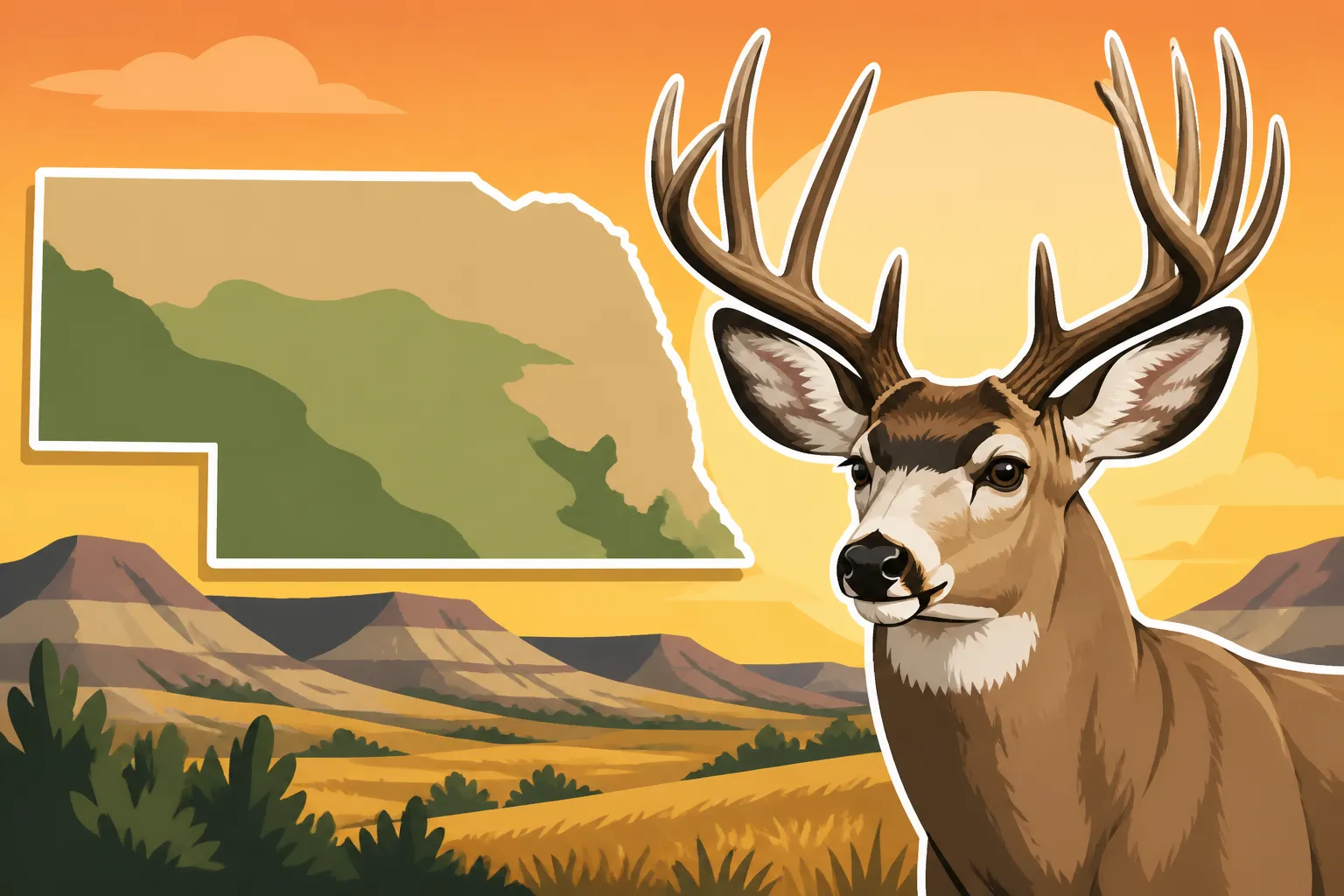
It’s a dream many of us share: spotting that truly magnificent mule deer buck, a monarch of the plains, across the vast expanses of Nebraska. But if you’ve spent any time researching, you know finding consistent, quality mule deer hunting in a state often known more for its whitetails can feel like searching for a needle in a haystack. This guide is here to cut through the noise, helping you understand where to focus your efforts for the best chance at a memorable mule deer hunt, highlighting the units known for producing those trophy-class bucks.
Understanding Nebraska's Mule Deer Landscape
Nebraska might not be the first state that comes to mind when you think of mule deer hunting, especially compared to the Rocky Mountain states. However, what we lack in sheer numbers, we often make up for in the quality of the bucks that call our unique habitats home. The key is understanding where these impressive deer thrive and why those specific areas offer a better chance at success. It's not about finding any mule deer, but about finding the right environment for mature, big-racked animals.
The Sandhills Stronghold
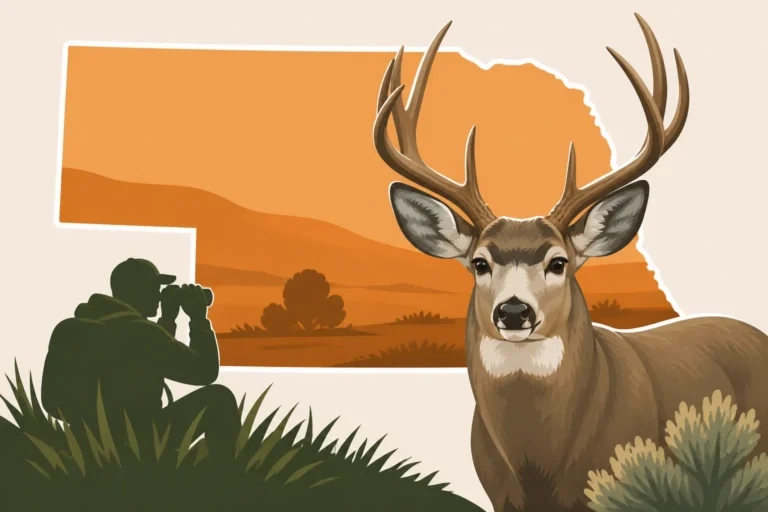
When most folks think about Nebraska mule deer, their minds immediately drift to the Sandhills. And for good reason! This vast, rolling ocean of grass, interspersed with river drainages, subirrigated meadows, and isolated pockets of cedars, is truly the heart of mule deer country in our state. The sheer scale of the Sandhills, often with minimal human disturbance and expansive private ranches managed for wildlife, allows mule deer to grow old and develop impressive headgear.
The terrain here, while seemingly uniform from a distance, is actually quite diverse. You'll find deep, brushy canyons and draws, often with spring-fed creeks, that offer incredible thermal cover and food sources. These natural features create microclimates that protect deer from harsh Nebraska winters and scorching summer sun. The sheer amount of ground a mule deer buck can cover in the Sandhills means they can become ghosts, using the rolling hills to disappear in an instant. This makes hunting them a challenge, but also incredibly rewarding when you finally get one in your sights. It's a landscape perfectly suited for Spot-and-Stalk Mule Deer in the Nebraska Sandhills, where long-range glassing is king.
The Panhandle's Rugged Appeal
Venturing west to the Panhandle, you encounter a completely different, yet equally compelling, mule deer habitat: the Pine Ridge and Wildcat Hills. These aren't the gentle swells of the Sandhills; this is rugged, broken country with ponderosa pine forests, steep canyons, and dramatic rock outcroppings. The terrain is more reminiscent of what you might find in Wyoming or South Dakota, offering dense cover and diverse forage.
The Pine Ridge, in particular, stretches across Sioux, Dawes, and Sheridan counties, providing some of the most scenic hunting in the state. Here, mule deer often share the landscape with whitetails, but they tend to prefer the higher, more open and timbered ridges. The challenges here are different; instead of endlessly rolling hills, you're navigating steep slopes, dense timber, and deep ravines. The Wildcat Hills, further south near Scottsbluff, offer similar broken, rocky habitat, though on a smaller scale. Both areas hold pockets of fantastic mule deer, often requiring a more patient, methodical approach than the typical Sandhills hunt. For those interested in this region, our guide on Hunting Mule Deer in the Nebraska Pine Ridge offers even more specific insights.
Top Units for Mule Deer Bucks
Now, let's get down to the brass tacks: which specific units in Nebraska consistently offer the best opportunity for harvesting a quality mule deer buck? It's important to remember that "best" can mean different things to different hunters – whether you're after sheer numbers, trophy potential, or a specific type of hunting experience. However, based on harvest data, habitat quality, and long-standing reputation, a few units stand out.
Sandhills Unit Analysis
The Sandhills Unit is, without a doubt, the prime destination for mule deer hunters in Nebraska. Spanning much of the core Sandhills region, this unit is vast, encompassing a mosaic of private ranchland and critical public access points. It consistently produces some of the largest mule deer bucks taken in the state, year after year. The expansive habitat allows bucks to reach maturity, and the relatively low hunting pressure (compared to whitetail units) contributes to a healthy age structure.
What makes the Sandhills Unit so special is its sheer size and the quality of its forage. The native grasses, forbs, and occasional brush provide excellent nutrition, which directly translates to antler growth. Furthermore, the topography, while appearing gentle, actually provides endless hiding spots for mature bucks. You'll often find these deer using the bottoms of large, sweeping valleys or the cedar-choked ravines to bed down, emerging to feed in the evenings and mornings. Understanding the patterns of Mule Deer Buck Harvest at a 45-Year Low in past years and how they've How Mule Deer Numbers Have Rebounded can help contextualize your expectations here. Success in the Sandhills Unit often hinges on patience, effective Glassing the Nebraska Sandhills for Mule Deer, and being ready for long shots across open terrain. Many hunters find tools like GoHunt invaluable for breaking down these huge units, identifying public access, and understanding historical draw success.
Pine Ridge and Plains Units
Moving into the Panhandle, the Pine Ridge Unit and the Plains Unit are your next best bets for mule deer. These units offer different challenges and rewards than the Sandhills, but their potential for trophy bucks is undeniable.
The Pine Ridge Unit specifically covers the timbered, rugged terrain in the northwestern corner of the state. Here, bucks often live a more reclusive life within the pine forests and deep canyons. While spotting them across vast distances isn't as common as in the Sandhills, the cover allows bucks to grow old and become truly magnificent. Hunters in the Pine Ridge often employ still-hunting tactics or set up on pinch points between bedding and feeding areas. The draw odds for this unit can be tougher, but the unique hunting experience and trophy potential make it highly sought after. You can often find detailed draw odds for units like these through resources like GoHunt, which can help inform your application strategy. Our specific information on Pine Ridge Any Deer Draw Odds can give you a better idea of what to expect.
The Plains Unit, located generally south and east of the Pine Ridge, is a mix of rangeland, agricultural fields, and more broken, bluffy areas. It's a transitional zone where mule deer are often found in areas less rugged than the Pine Ridge but with more cover than the pure Sandhills. These deer often adapt to using smaller pockets of cover, like shelterbelts, creek bottoms, and CRP fields. While perhaps not as renowned as the Sandhills for giant mule deer, the Plains Unit still produces excellent bucks and can offer a more diverse hunting experience, sometimes with less competition, particularly for those willing to knock on doors for private land access. Looking at Sandhills Unit Mule Deer Harvest data can provide perspective on how these units compare over time.
Calamus West Considerations
While perhaps not as consistently high-ranking as the Sandhills or Pine Ridge for trophy-class mule deer, the Calamus West Unit deserves a mention for its potential. Situated at the eastern edge of the true Sandhills, this unit offers a blend of rolling Sandhills topography, river breaks along the Calamus River, and some agricultural influence. It often provides a more accessible hunting experience for some, with slightly better draw odds than the core Sandhills units for non-residents.
Mule deer here often inhabit the deeper, brushier draws that lead to the river, finding refuge and food. Success in the Calamus West often involves extensive scouting to locate these prime pockets of habitat where bucks feel secure. While the average antler size might be slightly smaller than the behemoths of the central Sandhills, this unit still produces impressive bucks and offers a fantastic hunting experience in a beautiful, wild part of the state. For those exploring this option, our guide on Calamus West Any Deer Draw Odds can provide crucial information for your permit application.
Key Factors Beyond Unit Choice
Selecting the right unit is a crucial first step, but it's only one piece of the puzzle when pursuing Nebraska mule deer bucks. Your success will ultimately depend on a combination of preparation, strategy, and adaptability in the field. Don't underestimate the importance of these elements, as they can make or break your hunt, no matter how good the unit you've drawn.
Scouting and E-Scouting Tools
The vastness of Nebraska's mule deer country makes effective scouting absolutely essential. Driving around blindly hoping to stumble upon a trophy buck is usually a recipe for frustration. Instead, invest time in pre-season scouting, both physically and digitally. Modern e-scouting tools, often found on platforms like GoHunt, provide an incredible advantage. You can analyze satellite imagery, topography, vegetation types, and land ownership from the comfort of your home. Look for isolated pockets of cover, water sources, and distinct travel corridors within the units you're targeting.
Physical scouting, even if it's just a few days before the season, helps you confirm what you saw on the maps. Identify fresh sign, understand current feeding patterns, and get a feel for the wind and thermals in specific draws. For the Sandhills, this often means hours spent driving dirt roads and using powerful Optics for Glassing the Nebraska Sandhills to pick apart distant hillsides. In the Pine Ridge, it might involve walking game trails in dense timber, looking for rubs and scrapes. Knowing where Reading a Nebraska Deer Unit Boundary is critical, especially when adjacent to private land.
Permit Strategy and Draw Odds
Getting a permit in a top mule deer unit can be competitive, especially for non-residents. Nebraska utilizes a lottery system for many of its most desirable deer permits, which means you'll need to understand the application process. Our detailed guides like Nebraska Big Game Permits and How to Get One and Nebraska's June Big Game Draw Explained are excellent resources to navigate this. It’s not uncommon for non-resident permits in units like the Sandhills to have tough draw odds.
Developing a smart permit strategy often involves considering preference points, understanding which units offer better chances, and sometimes being willing to apply for a second-choice unit that still has good mule deer potential. GoHunt can be particularly helpful here, as they often track draw odds and trends, giving you a realistic picture of your chances. Applying strategically is just as important as knowing where to hunt.
Tactics for Open Country Mule Deer
Once you're in your chosen unit with a valid permit, the real work begins. Mule deer hunting in Nebraska, particularly in the Sandhills and Plains units, is predominantly a spot-and-stalk affair. This requires patience, keen observation, and the ability to close distances in open, often windy conditions. Good Rifle Setups for Nebraska's Open Country are essential, as shots can sometimes be long.
In the Pine Ridge, while glassing is still important, you might find yourself doing more still-hunting or setting up ambushes near water or bedding areas. Understanding mule deer behavior, their preferred escape routes, and how they use the terrain to their advantage is paramount. This isn't usually a sit-and-wait game; it's an active hunt that demands effort and adaptability.
It's also worth noting the critical importance of being familiar with Reading a Cedar Draw for Deer Movement, as these dense pockets of cover can be mule deer magnets, especially in colder weather or during the rut.
Here's a quick comparison of these top mule deer units:
| Unit Name | Primary Habitat | Key Hunting Style | Trophy Potential | Draw Difficulty (General) | Notes |
|---|---|---|---|---|---|
| Sandhills | Rolling grasslands, deep draws, cedar pockets | Spot-and-stalk, long-range shots | High | High (especially NR) | Vast, wild, requires significant ground covering; best for optics and patience. |
| Pine Ridge | Ponderosa pine forests, steep canyons, breaks | Still-hunting, ambushes, glassing | High | Moderate-High | Rugged, timbered, more elevation; often requires physical exertion. |
| Plains | Mixed grasslands, agriculture, river breaks | Spot-and-stalk, tactical | Moderate-High | Moderate | Versatile, can offer good opportunities with private land access or on public areas. |
| Calamus West | Eastern Sandhills, river breaks, agriculture | Spot-and-stalk, scouting key areas | Moderate-High | Moderate | Offers a good blend of habitat and potentially better draw odds than central Sandhills. |
While securing a permit in one of these top units is a significant step, remember that effort, ethical hunting practices, and a deep understanding of mule deer behavior are what truly lead to success. Good luck on your hunt for a Nebraska mule deer buck!
Disclaimer
This article is for general informational purposes only and does not constitute professional advice. Laws, prices and regulations vary by location and change over time. Consult a qualified professional for guidance on your specific situation.