Nebraska Mule Deer Population Estimate
It's incredibly common for hunters to obsess over population numbers for their favorite game animals, and mule deer in Nebraska are no exception. We all want to know what's out there, if the herds are growing, shrinking, or holding steady, and frankly, if our chances of success are good. Getting a precise, real-time count of every mule deer in the vast expanses of the Nebraska Sandhills or the rugged Pine Ridge is an impossible task, but wildlife agencies use sophisticated methods to generate estimates that guide management decisions. This guide will delve into how these Nebraska mule deer population estimates are derived, the many factors that influence these majestic animals' numbers, and what these figures mean for you as a hunter.
Understanding How Mule Deer Populations Are Estimated
When we talk about "population estimates," it's crucial to remember that these aren't exact headcounts. Instead, they are scientifically derived approximations, much like taking the temperature of a massive room by testing several spots. The challenge is immense, covering hundreds of thousands of acres of varied terrain, but these estimates are the best tool we have to understand the overall health and trend of the mule deer herds.
The Science Behind the Numbers
Wildlife biologists employ a combination of techniques to arrive at these population figures. One common method involves aerial surveys, where teams fly over specific management units, often in late winter or early spring when deer are more visible against snow or before heavy foliage appears. They count animals in designated transects, then extrapolate those counts across the larger landscape. This provides a baseline understanding of density in certain areas.
Ground counts are also used, sometimes in conjunction with camera surveys, especially in more timbered or broken terrain where aerial visibility is limited. However, these are labor-intensive and often target specific areas rather than entire units. Beyond direct observation, biologists heavily rely on sophisticated population models that incorporate factors like birth rates, fawn survival, natural mortality, and critically, hunter harvest data. These models help predict population changes over time and are constantly refined with new information. It's a complex puzzle, and every piece of data helps build a clearer picture.
The Role of Hunter Harvest Data
As a hunter, your active participation is absolutely vital to the accuracy of these population estimates. Every permit issued, every deer checked in, and every harvest report submitted feeds into the larger data set that biologists use. When you report your harvest, you're not just tagging your deer; you're providing a crucial data point about population density, buck-to-doe ratios, age class, and even health indicators. This information is invaluable for tracking trends and making informed decisions about future permit allocations.
It's completely natural for hunters to feel a disconnect sometimes between what they see in their specific hunting area and the broader population estimates. You might hunt a certain public tract and feel like deer numbers are down, while statewide estimates suggest stability or even growth. This perception gap often comes from localized changes, habitat shifts, or simply differing hunting pressure in specific spots. Wildlife agencies take these anecdotal reports seriously, but their estimates are designed to reflect the health of the herd across an entire management unit, which is a much larger scale than a single hunter's experience.
Key Factors Influencing Nebraska's Mule Deer Numbers
Mule deer populations are incredibly dynamic, constantly fluctuating in response to a myriad of environmental and biological factors. Understanding these influences helps us appreciate the resilience of these animals and the challenges they face in maintaining healthy numbers.
Habitat and Environmental Impacts
For mule deer, their home is everything. In Nebraska, that primarily means the expansive Sandhills and the rugged, tree-studded landscapes of the Pine Ridge. Quality habitat provides the necessary forage—shrubs, forbs, and grasses—along with crucial cover for bedding, fawning, and escaping predators. When this habitat is degraded by intense grazing, invasive species, or development, mule deer numbers can suffer.
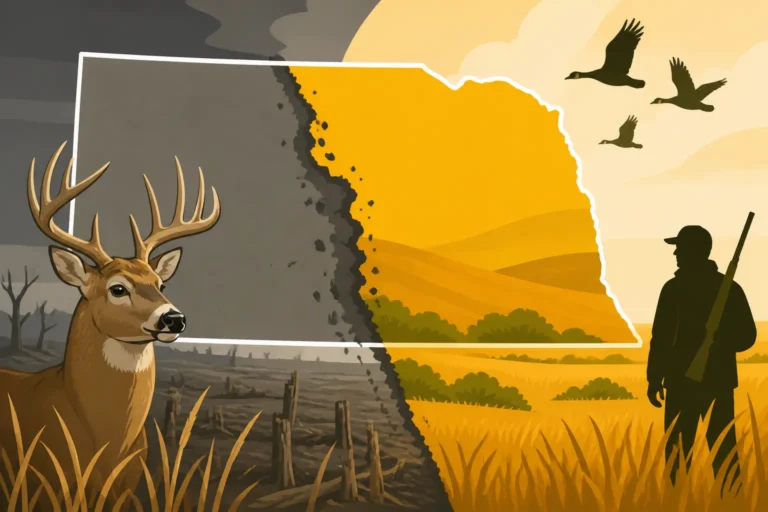
Environmental conditions play an enormous role. Prolonged droughts can severely limit forage and water sources, stressing deer and reducing fawn survival. Conversely, exceptionally harsh winters with deep snow and prolonged cold can lead to significant winter kill, especially among fawns and older animals. These extreme weather events can set back a population's recovery for years. You can often see deer concentrate in areas with more protection from the elements, like deep canyons or shelterbelts, when the weather turns truly nasty.
Disease and Competition
Disease is an ever-present factor that can significantly impact deer populations. Epizootic Hemorrhagic Disease (EHD) is a notorious culprit, causing localized die-offs, particularly along river bottoms and in areas with standing water during late summer and early fall. While EHD outbreaks are often localized, they can hit specific populations hard, and hunters often see the effects directly.
Chronic Wasting Disease (CWD) is another serious concern. While it doesn't cause acute die-offs like EHD, it's a progressive, fatal neurological disease that has been steadily spreading through deer herds across the country, including Nebraska. Wildlife agencies are actively monitoring its prevalence through hunter-submitted samples, and understanding CWD Prevalence by Deer Unit is crucial for both management and hunter awareness.
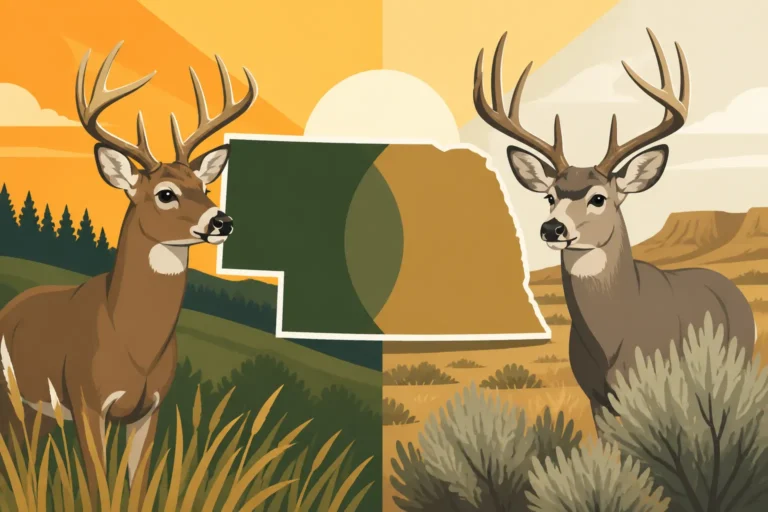
Another significant factor is competition with white-tailed deer. In many areas where their ranges overlap, especially in the transition zones between river bottoms and open rangeland, whitetails often outcompete mule deer. Whitetails are more adaptable to agricultural landscapes and denser cover, pushing mule deer into more open, rugged terrain. This dynamic is a key reason why Where Whitetails and Mule Deer Overlap is often a struggle for mule deer, impacting their distribution and overall numbers.
Hunter Harvest and Management
Hunter harvest is a vital tool in wildlife management. Far from being a primary cause of population decline, regulated hunting helps maintain healthy deer numbers by balancing them with available habitat and reducing the spread of disease. Nebraska Game and Parks uses permit allocation, particularly for buck permits, to carefully manage the harvest and influence population trends.
In areas where mule deer populations are struggling, permit numbers for bucks might be reduced, or specific antler point restrictions might be put in place to protect younger age classes. Conversely, antlerless permits are often used to reduce overall deer numbers in areas of overpopulation or where deer cause significant agricultural damage. By understanding the science and applying adaptive management strategies, wildlife agencies strive to ensure sustainable hunting opportunities for future generations.
Recent Trends and the Current State of Nebraska's Mule Deer
The story of Nebraska's mule deer over the past few decades has been one of challenge, decline, and more recently, cautious recovery in certain areas. Understanding this historical context helps put the current population estimates into perspective.
Historical Declines and Recovery Efforts
For many years, mule deer populations across much of their range, including Nebraska, saw significant declines. Factors like habitat loss, severe winters, and increased competition with whitetails contributed to this trend. We've seen periods, for instance, where Mule Deer Buck Harvest at a 45-Year Low caused considerable concern among hunters and wildlife managers alike. It was a tough pill to swallow for those who remembered the seemingly endless herds of years past.
However, recognizing these challenges, wildlife agencies and conservation groups have invested in various recovery efforts. This includes habitat improvement projects, careful permit management, and research into mule deer ecology. These efforts, combined with favorable environmental conditions in recent years, have contributed to a positive shift, showing signs of Nebraska Mule Deer Harvest Recovery in some regions. It's a slow process, but there's definitely renewed hope.
Where Mule Deer Thrive Today
Today, Nebraska's mule deer strongholds remain primarily in the western part of the state. The vast, unbroken prairie of the Sandhills offers critical habitat, with its rolling dunes and isolated basins providing both forage and escape cover. The rugged canyons and ponderosa pine forests of the Pine Ridge in the far northwest also hold significant mule deer populations. These are the areas where you'll find the best opportunities to hunt mule deer, as detailed in articles like Mule Deer in the Nebraska Sandhills and Panhandle.
Mule deer have adapted remarkably to these unique, often harsh, landscapes. They're built for open country, with their large ears acting like radar dishes to pick up distant sounds, and their characteristic bounding gait, or "stotting," allowing them to cover ground quickly and efficiently. When you're out glassing the Sandhills, these are the adaptive traits you'll be looking for. Tools like GoHunt can provide valuable insights into specific unit statistics and draw odds, helping hunters identify areas with higher mule deer concentrations, which is often a proxy for healthier populations.
What Hunters Are Seeing on the Ground
Hunters are the eyes and ears on the ground, and their observations are incredibly valuable. While scientific estimates provide the broad picture, individual hunters' experiences can sometimes paint a different, more localized story. In areas of strong mule deer populations, hunters might consistently spot good numbers of deer, feeling confident in the health of the herd. In other areas, perhaps due to localized habitat changes or recent disease outbreaks, observations might be sparser.
It's important to differentiate between individual hunting success and overall population health. Even in healthy populations, mule deer can be notoriously difficult to hunt. Their keen senses and preference for open, expansive terrain mean they often detect hunters long before they are seen. So, a challenging hunt doesn't necessarily mean the population is in decline. Instead, it might speak to the animal's natural wariness and the vastness of the landscape. For hunters planning their trips, understanding the broad population trends, and using resources like the Planning a Hunt From the Public Access Atlas to find accessible ground, can greatly enhance your preparation.
Playing Your Part in Mule Deer Conservation
As hunters, we are critical stakeholders in wildlife conservation. Our actions, both in and out of the field, directly contribute to the health and future of Nebraska's mule deer populations.
Responsible Hunting Practices
Ethical and responsible hunting practices are the cornerstone of conservation. This means strictly adhering to all game laws, understanding permit requirements, and ensuring accurate harvest reporting. Your harvest data is a direct contribution to the management efforts that inform population estimates. It’s not just a formality; it's a vital piece of the puzzle. Beyond legal compliance, it's about making ethical choices in the field, like passing on marginal shots and always ensuring a clean, humane harvest. If you're hunting in warm weather, knowing how to properly field dress and cool your game, as covered in Field Dressing and Cooling Game in Warm Weather, is another important aspect of responsible hunting.
Supporting Habitat and Research
One of the most impactful ways to support mule deer populations is by contributing to habitat conservation. The purchase of your Nebraska Habitat Stamp is one direct way you do this, as those funds go directly to projects that improve and secure habitat for wildlife across the state. Supporting conservation organizations that focus on grassland restoration, rangeland management, and critical winter range protection also makes a significant difference.
Participating in research efforts, such as voluntary CWD testing, is another crucial contribution. The more data biologists have, the better they can understand disease prevalence and its impact on herds. By being an engaged and informed hunter, you become an active partner in ensuring that Nebraska's mule deer continue to thrive for generations to come.
Table: Key Factors and Their Influence on Mule Deer Populations
| Factor | Primary Impact on Mule Deer Population | General Trend/Observation in Nebraska (Today) | Hunter's Role/Action |
|---|---|---|---|
| Habitat Quality | Crucial for food, cover, fawning, survival | Stable in core Sandhills/Pine Ridge, localized issues elsewhere | Support habitat initiatives, public land access |
| Severe Weather Events | Winter mortality, drought stress, fawn survival | Intermittent, but can cause significant short-term dips | Understand historical impacts, plan hunts accordingly |
| Disease (EHD, CWD) | Localized die-offs (EHD), long-term health (CWD) | EHD periodic, CWD spreading in prevalence | Report sick deer, participate in CWD testing |
| Whitetail Competition | Can displace mule deer from preferred habitats | Ongoing in areas where ranges overlap | Focus on core mule deer areas, understand habitat types |
| Hunter Harvest | Managed via permit limits to ensure sustainability | Carefully regulated to balance take and population health | Accurate harvest reporting, ethical hunting |
| Predation (Coyotes, etc.) | Primarily affects fawns; less impact on adults | Natural part of ecosystem, usually not a limiting factor | – |
Disclaimer
This article is for general informational purposes only and does not constitute professional advice. Laws, prices and regulations vary by location and change over time. Consult a qualified professional for guidance on your specific situation.