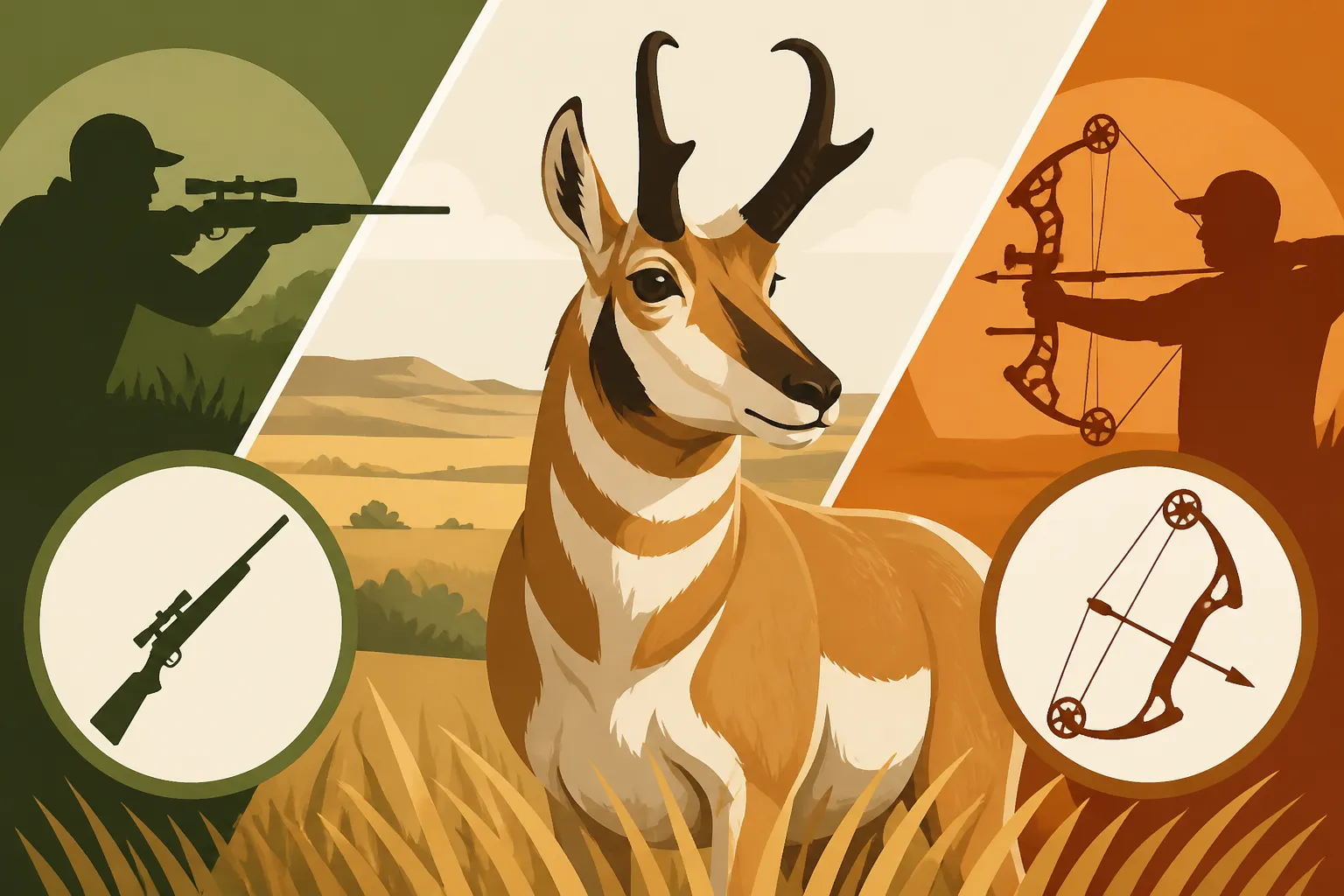
Nebraska Antelope Firearm and Archery Permits
Trying to figure out the ins and outs of Nebraska's antelope permits can feel like navigating a maze, especially with different seasons and application processes. It's easy to get overwhelmed by all the details, from draw odds to specific season dates for both archery and firearms. This comprehensive guide is here to break down everything you need to know about securing and utilizing Nebraska's antelope permits, helping you plan your hunt with confidence and clarity.
The Allure of Nebraska Pronghorn Antelope
There's something incredibly captivating about chasing pronghorn in Nebraska. These magnificent animals, often mistaken for antelope, are North America's fastest land mammals, and their keen eyesight and ability to seemingly appear out of nowhere make for an exhilarating hunt. For many, a successful pronghorn hunt in the vast, open landscapes of the Nebraska Sandhills or Panhandle represents the pinnacle of Western hunting experiences.
Understanding the Unique Challenge of Pronghorns
Pronghorn aren't like deer. Their habitats are wide open, making close approaches incredibly difficult. They can spot you from miles away, and their escape routes are often flat, unobstructed plains where their incredible speed truly shines. This means hunters need a different set of skills and strategies, from long-range glassing to mastering the art of the stalk in minimal cover. It's a game of patience, stealth, and often, a bit of luck with the terrain and the wind.
Pronghorn Populations and Prime Hunting Areas
While Nebraska might not be the first state that comes to mind for pronghorn, the state actually holds a healthy, huntable population, primarily concentrated in the western half. You'll find these swift animals scattered throughout the Sandhills region, with strongholds in the Panhandle counties like Kimball, Banner, and Morrill. These areas offer the expansive, short-grass prairie and sagebrush flats that pronghorn thrive in. Understanding where these animals concentrate is your first step towards a successful hunt, often requiring extensive scouting to locate herds and their preferred feeding and bedding grounds. For more in-depth information on their presence, check out our guide on Where Nebraska Pronghorn Herds Are Largest.
Navigating Nebraska's Antelope Permit System
Getting your hands on an antelope permit in Nebraska isn't as simple as walking into a sporting goods store. The state manages its pronghorn population carefully through a lottery draw system, ensuring sustainable harvest and quality hunting opportunities. It’s a process that requires forethought, understanding of deadlines, and a bit of strategy.
The Annual June Big Game Draw
The primary method for obtaining an antelope permit in Nebraska is through the annual big game draw, which typically opens for applications in early June. This is where most of the firearm and even some archery permits are allocated. It’s a lottery system, meaning your chances depend on the number of applicants and the available permits for specific units. You'll need to submit your application by the stated deadline, usually in the second week of June. Many hunters use tools like GoHunt to analyze past draw odds and strategize their application, which can be a huge advantage. Understanding Nebraska's June Big Game Draw Explained is crucial for anyone hoping to participate.
Preference Points: Playing the Long Game
If you don't draw a permit in the first round, don't despair! Nebraska offers a preference point system for antelope. For a small fee, you can purchase a preference point during the application period without actually applying for a permit. These points increase your odds in future draws. It's a long-term strategy, especially for non-residents or those targeting highly sought-after units. While it might mean waiting a few years, it significantly improves your chances of eventually drawing that coveted tag. Knowing When to Buy a Point Instead of Applying can be a game-changer for your hunting aspirations.
Leftover Permits and Over-the-Counter Opportunities
Sometimes, after the initial draw and subsequent re-draws for returned permits, a limited number of "leftover" permits become available. These are typically offered on a first-come, first-served basis, often starting in late July or early August. While rare for prime firearm tags, you might find archery permits or permits for less popular units. These usually sell out incredibly fast, so you need to be ready and quick on the trigger (figuratively speaking!) when they go on sale. It’s worth checking the Nebraska Game and Parks Commission website regularly after draw results are announced if you're hoping to snag one of these last-minute opportunities.
Archery Antelope Permits: A Challenging Pursuit
Archery hunting for pronghorn is arguably one of the most demanding hunts in North America. The long season, coupled with the inherent difficulties of getting within bow range of these wary animals, tests a hunter's patience, skill, and dedication. But for those who succeed, the reward is immeasurable.
Nebraska's August Archery Opener
Nebraska's archery antelope season typically kicks off in mid-August, coinciding with some of the warmest weather of the year. This early opener offers a unique window before firearm pressure begins, but it also means dealing with scorching temperatures and extremely alert animals. The season usually runs for several weeks, providing ample opportunity. One popular tactic for this early season, especially in the heat, is Archery Antelope Over Water in Nebraska, as pronghorn need to drink regularly.
Strategies for Bowhunting Pronghorn
Success with a bow often hinges on specific tactics:
- Waterhole Ambush: In the arid regions where pronghorn live, water sources are precious. Setting up a blind near a known waterhole can be highly effective, especially during hot, dry periods. You'll need a well-camouflaged ground blind that blends seamlessly into the landscape.
- Decoying: During the rut, typically in late September to early October, a well-executed decoy strategy can be incredibly effective. A buck decoy, especially a silhouette, can sometimes lure an aggressive dominant buck into bow range. It's an exciting, heart-pounding method that requires careful timing and concealment. For tips on attracting a buck, read our article on Decoying a Rutting Pronghorn Buck.
- Spot-and-Stalk: This is the ultimate test of bowhunting skill. It involves extensive glassing to locate animals, followed by a slow, methodical approach using every dip, rise, and patch of cover the terrain offers. The wind is your absolute master here, and even a slight shift can ruin a perfect stalk. This is a tactic that heavily relies on quality optics and keen observation.
Bow Setup and Gear Considerations
For archery antelope, accuracy and speed are key. Most hunters opt for a compound bow set at a comfortable draw weight, capable of shooting accurately out to 40-60 yards, as shots can be longer than typical whitetail scenarios. Fixed-blade broadheads are generally preferred for their reliability, especially when dealing with the pronghorn's tough hide. A good rangefinder is non-negotiable for accurate shot placement in the vast, open terrain where judging distance can be deceiving.
| Season Type | Typical Dates | Permit Availability | Primary Tactics | Key Gear |
|---|---|---|---|---|
| Archery | Mid-Aug to Oct | Draw & limited OTC | Waterhole blind, Decoy, Spot-and-Stalk | Compound bow, Fixed broadheads, Rangefinder, Ground blind |
| Firearm | Early Oct | Draw only | Spot-and-Stalk, Ambush | High-power rifle, Quality optics, Bipod/Shooting sticks |
Firearm Antelope Permits: Precision and Patience
The firearm antelope season in Nebraska is a much shorter, more intense affair. It's often highly sought after, with lower draw odds, but offers a different kind of challenge and opportunity.
When Nebraska's Antelope Rifle Season Opens
The rifle season for pronghorn in Nebraska typically opens in early October, usually just for a few days. This short window means hunters need to be prepared, scouted, and ready to capitalize on opportunities quickly. The weather in October can be more forgiving than August, but it can also bring brisk winds, which are a constant factor in the open plains. For more details on the specific dates, our guide on When Nebraska's Antelope Rifle Season Opens is a great resource.
Draw Odds and Application Strategy
Firearm antelope permits are generally much harder to draw than archery permits, especially for non-residents. Units in the Panhandle, known for their larger populations and trophy potential, often have single-digit draw odds without preference points. This makes a strategic approach to the draw incredibly important. Utilizing historical draw data, such as that provided by GoHunt, can help you decide which units to apply for, whether to go for a first choice directly or accumulate points for a few years. It's a balance of ambition and realism. Our guide on Nebraska Antelope Draw Odds offers further insights.
Rifle and Optics Choices for Open Country
Hunting pronghorn with a rifle demands accuracy at potentially longer ranges. A flat-shooting rifle caliber like a .243, 6.5 Creedmoor, .270, or .308 is ideal. It’s not uncommon for shots to be in the 200-400 yard range, so a rifle you're proficient with at distance is paramount. Paired with this, high-quality optics are essential. A good variable power scope (e.g., 3-9x, 4-12x, or even higher) with clear glass and a reliable turrets system will make all the difference. Rifle Setups for Nebraska's Open Country provides an excellent overview for this kind of hunting. Don't forget a sturdy bipod or shooting sticks, as stable shooting platforms are crucial in the often-windy plains.
Maximizing Your Chances: Planning and Execution
Drawing a permit is just the first step. To truly maximize your chances of harvesting a pronghorn, meticulous planning, thorough scouting, and smart execution in the field are absolutely critical. These animals don't give up easily, and every advantage you can gain will contribute to your success.
Pre-Season Scouting and Digital Tools
Scouting for pronghorn should begin long before the season opens. Use online mapping tools like Google Earth, Gaia GPS, or onX Hunt to identify potential public lands or areas with suitable habitat. Look for water sources, natural funnels, and subtle terrain features that might offer cover for a stalk. Driving the perimeter of these areas, and glassing from a distance with quality binoculars and a spotting scope, can reveal pronghorn numbers and patterns. Pay attention to fence crossings, as pronghorn tend to go under fences rather than jump them, creating natural travel corridors. Tools like GoHunt can also provide valuable insights into public land access and historical hunting pressure.
Application Strategies and Unit Selection
When applying for permits, consider your personal hunting style and expectations. Are you hoping for a trophy, or primarily focused on harvesting an animal? Some units have higher trophy potential but consequently much lower draw odds. Others might offer better chances of drawing a tag, even if the animals are slightly smaller on average. Nonresidents, in particular, should carefully consider Nonresident Antelope Permits in Nebraska and the associated costs and draw complexities. If hunting with a group, coordinating applications or choosing units with higher permit numbers can increase overall success.
In-the-Field Tactics and Persistence
Once you're in the field, persistence is key. Start your days early, using high-magnification binoculars and a spotting scope on a tripod to systematically glass vast expanses of country from elevated positions. When you spot animals, evaluate them carefully. If you decide to make a move, remember the wind and use every piece of cover available, no matter how small it seems. A low profile and slow, deliberate movements are crucial when Stalking Pronghorn Across Open Nebraska Ground. Expect stalks to take hours and often end without a shot. It’s part of the game. Be prepared for multiple attempts.
Key Regulations and Ethical Considerations
Hunting pronghorn in Nebraska, like any big game pursuit, comes with a set of rules and ethical guidelines designed to ensure safety, conservation, and respect for the animals and the land. Being fully informed before you head afield is not just good practice, it's a legal requirement.
Tagging, Reporting, and CWD Testing
Once you've successfully harvested a pronghorn, the regulations require immediate tagging of the animal with your permit. This typically involves attaching the tag to the carcass as specified by the Nebraska Game and Parks Commission. Following this, you'll need to report your harvest online or through designated check stations within a specific timeframe. Additionally, hunters should be aware of Chronic Wasting Disease (CWD) sampling requirements. While not always mandatory for all units, voluntary or mandatory sampling may be requested in certain areas to monitor disease prevalence. Always check current regulations for specific instructions on Nebraska CWD Sampling for Hunters.
Nonresident Rules and Costs
Nebraska welcomes nonresident hunters, but there are often different rules and fee structures compared to residents. Nonresidents will need a nonresident hunting permit in addition to their antelope permit, and the overall Nebraska Antelope Permit Cost will be higher. It's vital for nonresidents to thoroughly review the Nebraska Game and Parks Commission regulations booklet to understand all requirements, including specific draw odds, application periods, and any limitations on the number of permits available to nonresidents.
Ethical Hunting and Respect for the Animal
Beyond the legal requirements, ethical hunting practices are paramount. This includes knowing your effective shooting range and sticking to it, only taking clean, humane shots. It also means having a plan for retrieving your animal, especially in warm weather, and ensuring the meat is cared for properly. Recovering an animal in the vastness of the Sandhills can be challenging, so thinking ahead about how you'll get it out of the field is crucial. Always respect private property boundaries and obtain permission if you need to retrieve an animal from private land.
Disclaimer
Please remember that hunting regulations, season dates, and permit requirements can change from year to year. While this guide provides comprehensive information, always consult the most current Nebraska Game and Parks Commission regulations or official website before planning any hunting trip. Your safety and compliance with all laws are your responsibility.