Why Pronghorn Go Under Fences
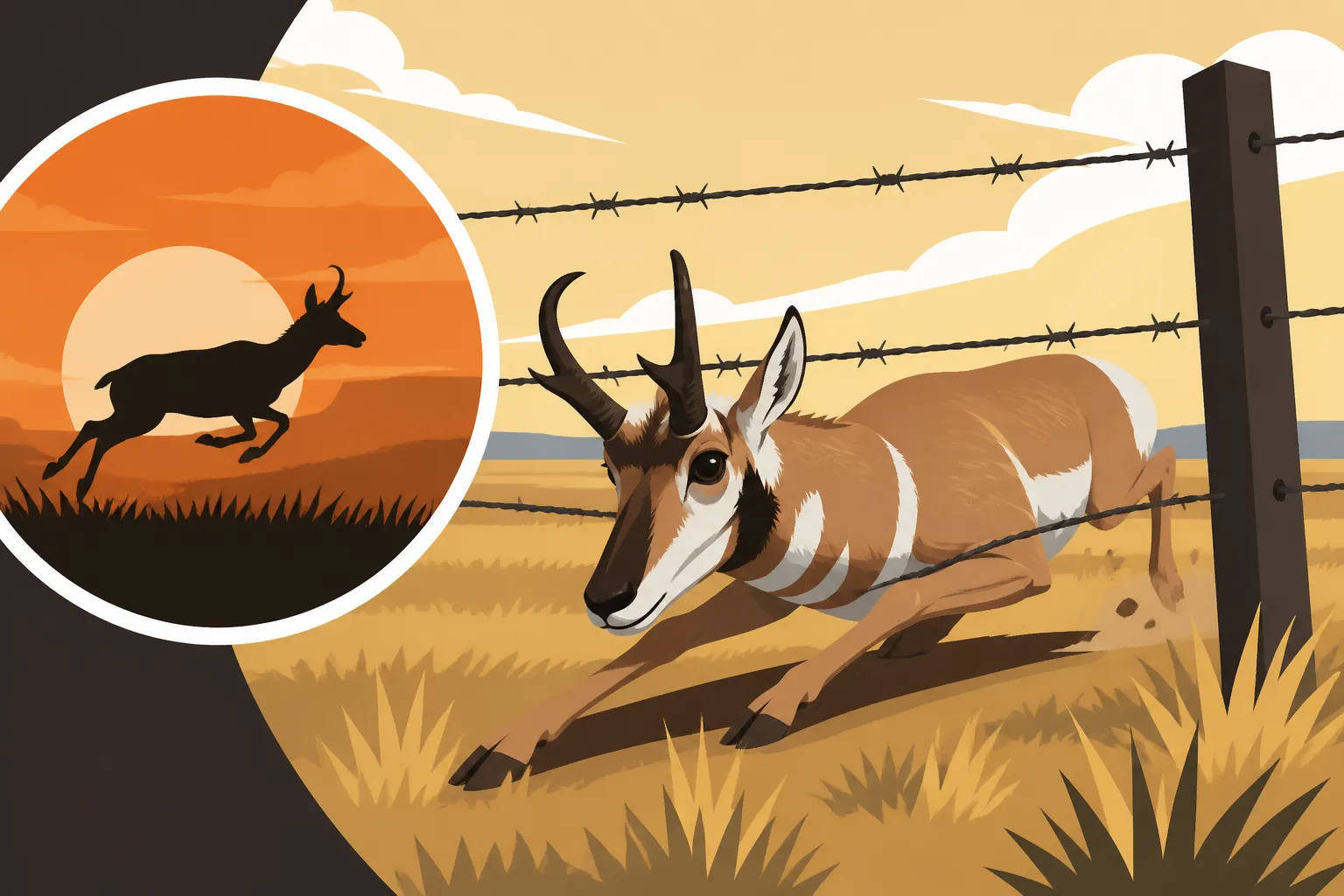
Anyone who's spent time observing pronghorn across the vast, open landscapes of Nebraska knows a peculiar truth: these speed demons of the prairie, built for covering miles at a gallop, often choose to duck under a fence rather than jump over it. It's a behavior that can be baffling, frustrating for hunters, and a real challenge for land managers. This guide dives deep into the fascinating reasons behind this unique tendency and offers insights into how to better understand and manage pronghorn movement in a fenced world.
The Evolutionary Instinct to Go Under
It might seem counterintuitive for an animal renowned for its blistering speed and agility to struggle with a simple fence jump. You'd think a creature that can outrun almost anything on the prairie would just bound over obstacles. But the truth is, the pronghorn's physical adaptations and ingrained behaviors developed long before barbed wire stretched across the landscape. Their instincts are a direct reflection of an evolutionary history shaped by wide-open spaces and predators they simply outran.
Built for Speed, Not for Jumping
Pronghorn are truly marvels of evolution, designed for incredible bursts of speed and sustained high-speed travel across flat or gently rolling terrain. Their powerful hindquarters, long legs, and large lung capacity make them the fastest land mammal in North America, reaching speeds up to 60 miles per hour. This unparalleled speed was their primary defense mechanism against ancient predators like cheetahs and dire wolves. The strategy was simple: run, and keep running, until the threat was left in the dust.
However, this specialization comes with trade-offs. Unlike deer or elk, which evolved in more varied, often timbered terrain with numerous obstacles, pronghorn rarely encountered features requiring significant vertical clearance. Their skeletal and muscular structure is optimized for horizontal propulsion, not for launching their bodies high into the air. They have a relatively stiff spine and lack the powerful flex and recoil in their hocks that allows deer to spring over barriers with ease. Attempting a high jump puts immense strain on their joints and could lead to injury, especially when clearing an unknown obstacle. When considering How Fast a Pronghorn Runs, it becomes clear that their physical prowess is geared towards ground-level movement.
The Original Landscape and Predator Avoidance
Imagine the Nebraska Sandhills or the High Plains hundreds of years ago, before European settlement. It was an endless expanse of grass and rolling hills, broken only by shallow creek beds or perhaps small stands of trees in river bottoms. There were no vertical barriers to speak of. A pronghorn's world was flat. Their primary predators were wolves, coyotes, and mountain lions – all of which were largely ground-based pursuers. If a threat appeared, the pronghorn's best bet was to simply turn on the jets and outpace it.
Therefore, the safest, most energy-efficient, and instinctual reaction to any obstacle was to find a path around or under it. This behavior is deeply ingrained. Even a small dip or opening on the ground level offers a familiar escape route, whereas an artificial vertical barrier is an unknown quantity. This is why even a low fence, which a deer would clear without a second thought, becomes a mental and physical challenge for a pronghorn. Their aversion to jumping is a survival mechanism honed over millennia, not a lack of physical capability to potentially clear a hurdle.
How Fences Create Barriers and Impact Movement
While pronghorn evolved to traverse open plains, modern landscapes are crisscrossed with fences. These man-made structures, essential for ranching and agriculture, pose significant challenges to pronghorn populations, often disrupting their natural movement patterns and even contributing to population declines. Understanding this interaction is crucial for both hunters and conservationists.
Disrupting Migration and Seasonal Ranges
Pronghorn, like many large herbivores, have traditional migration routes and seasonal ranges they utilize throughout the year. They might move to different areas for breeding, fawning, or to access critical forage during harsh winters. Historically, these movements were unimpeded, allowing them to follow food and water sources as environmental conditions changed. However, fences—especially those built with multiple strands of barbed wire close to the ground—act as impermeable barriers, fragmenting their habitat.
A prime example is the extensive ranchland in the Nebraska Panhandle, where cattle operations necessitate miles of fencing. If these fences aren't "pronghorn friendly," they can block access to essential winter forage, leading to increased stress, malnutrition, and even localized die-offs, particularly during severe weather events. This is especially true when considering Pronghorn Winter Kill in the Panhandle. Imagine a herd trying to reach a sheltered valley with standing grass during a blizzard, only to be turned back by miles of wire they can't cross. This leads to them expending critical energy trying to navigate, or worse, getting tangled in the wire. Resources like GoHunt often provide mapping tools that can highlight public and private land boundaries, giving hunters a better sense of where these fence lines might impact game movement.
Entanglement and Mortality Risks
Perhaps the most devastating impact of non-pronghorn-friendly fences is the risk of entanglement and subsequent mortality. When faced with a fence they cannot easily go under, and unwilling to jump, pronghorn may try to force their way through tight spots or become desperate. This often results in them getting caught in the barbed wire, leading to severe injuries like lacerations, broken legs, or even strangulation.
Fawns are particularly vulnerable. Their smaller size might allow them to squeeze through some openings, but if the bottom wire is too low, they can get stuck trying to follow their mothers. Even adults, in a panic, can become hopelessly ensnared. These incidents not only reduce the overall Nebraska Pronghorn Population Estimate but also cause immense suffering for individual animals. It’s a sad sight to come across a magnificent animal that has perished simply because of a man-made barrier it was not designed to navigate. The cumulative effect of these mortalities can be significant for local herds, especially in areas with high fence densities.
Behavioral Changes and Stress
Beyond the physical barriers, fences also impose considerable stress and behavioral changes on pronghorn. Constant encounters with fences force them to alter their daily routines, energy expenditure, and even their social dynamics. Instead of direct routes, they must now travel longer, more circuitous paths to find breaks in the fencing, locate water, or access mating grounds. This increases their energy output, making them more susceptible to disease, predation, and the challenges of harsh weather.
For hunters, understanding these patterns is vital. A fence line might not just be a boundary; it could be a funnel point where pronghorn are forced to congregate, or a barrier that prevents them from reaching a preferred feeding area. Using tools like the GoHunt app or detailed topographic maps can help visualize these natural and artificial choke points. Recognizing areas where pronghorn are consistently pushed up against fences can also offer insights into their typical crossing points, which can be useful when Stalking Pronghorn on Nebraska Grassland. They might be less wary at a known crawl-under spot than at an arbitrary point along a long, unyielding stretch of wire.
Practical Solutions and Considerations for Pronghorn-Friendly Fencing
Given the challenges posed by traditional fences, it's clear that thoughtful modifications can make a significant difference for pronghorn populations while still serving the needs of ranchers and landowners. Implementing pronghorn-friendly fencing is a win-win for wildlife and land management.
Modifying Existing Fences
The good news is that many existing barbed wire fences can be made more permeable for pronghorn with relatively simple modifications. The key is to raise the bottom strand and, ideally, replace the barbed wire with smooth wire in key areas.
Here’s a breakdown of common modifications:
- Raise the Bottom Wire: This is the single most impactful change. The general recommendation is to have the bottom wire at least 18 inches off the ground. For pronghorn, 18-20 inches is ideal. This allows them enough space to easily duck under without snagging their backs or horns. In areas with significant snow accumulation, even higher clearance might be beneficial to allow passage over packed snow.
- Replace Barbed Wire with Smooth Wire: The bottom one or two strands of barbed wire are the most dangerous for pronghorn, as this is where they attempt to crawl through. Replacing these with smooth, high-tensile wire drastically reduces the risk of injury. While barbed wire is important for containing livestock, smooth wire at the bottom prevents cuts and entanglements for wildlife.
- Add a "Lay-Down" Section or Gate: In critical migration corridors or areas with high pronghorn traffic, consider installing specific sections of fence that can be easily laid down or have a gate. This provides a clear, low-stress passage during seasonal movements. Ranchers can install simple clips or hinges that allow a section of fence to be unlatched and dropped to the ground, then re-secured when livestock movement requires it.
- Mark Fences with Visibility Devices: In some areas, particularly along roadsides or where fences are less visible, adding white flagging, reflective tape, or even PVC pipe to the top wire can increase visibility for all wildlife, including pronghorn, reducing the risk of collisions. This is less about going under and more about preventing accidental impacts.
These modifications, while requiring some labor and material costs, are often supported by conservation programs and can significantly improve wildlife passage without compromising the integrity of the fence for livestock.
Designing New Pronghorn-Friendly Fences
When building new fences, incorporating pronghorn-friendly design principles from the outset is the most effective approach. This proactive strategy can save future modification efforts and ensure optimal wildlife movement.
Key design elements include:
- Four-Strand Fences: A four-strand fence is often sufficient for livestock while providing better clearance than five-strand fences.
- Top Wire: 40-42 inches (barbed or smooth).
- Second Wire: 30-32 inches (barbed or smooth).
- Third Wire: 20-22 inches (smooth wire recommended).
- Bottom Wire: 16-18 inches (smooth wire, at least 18 inches off the ground is ideal for pronghorn).
- Wider Post Spacing: While not directly related to going under, wider post spacing can reduce the overall density of the fence line, making it less imposing.
- Strategic Placement: Consider natural topography and known wildlife movement corridors. Avoid building fences directly across traditional migration routes if possible. If a fence must cross a known route, ensure it's built with ample clearance or includes frequent pass-through options. The GoHunt mapping platform can be invaluable for identifying these historical movement patterns and planning fence placement accordingly.
| Fence Type | Bottom Wire Height (Target) | Bottom Wire Material | Pros for Pronghorn | Cons |
|---|---|---|---|---|
| Traditional 5-Strand | 10-14 inches | Barbed | Strong for livestock | Major barrier, high entanglement risk |
| Modified 5-Strand | 18-20 inches | Smooth | Allows safe passage under | Still 4 wires above |
| New 4-Strand (Pronghorn-Friendly) | 18-20 inches | Smooth | Optimal passage, reduced total wire | May not contain all livestock types (e.g., sheep/goats) |
| "Let-Down" Fence Section | Adjustable | Barbed/Smooth | Excellent for seasonal migration | Requires management, not continuous |
Collaboration with Landowners and Conservation Initiatives
Implementing pronghorn-friendly fencing often requires collaboration between landowners, state wildlife agencies like Nebraska Game and Parks, and conservation organizations. Programs exist to provide technical assistance, financial incentives, or even volunteer labor to help modify fences. Groups such as the National Wildlife Federation and Pheasants Forever often engage in habitat improvement projects that include fence modifications.
Hunters, too, can play a role. When seeking permission to hunt private land, engaging landowners in conversations about wildlife-friendly practices can build rapport and lead to positive changes. Respecting landowner wishes and offering to help with projects, if appropriate, can foster relationships that benefit both the land and the game. Learning about the Nebraska Antelope Draw Odds can also highlight units where these initiatives might be most critical due to higher pronghorn populations.
Understanding Pronghorn Behavior for Better Management
Effectively managing pronghorn populations and their interactions with human infrastructure hinges on a deeper understanding of their nuanced behavior, particularly how they react to different environmental cues and pressures. This insight helps shape more successful hunting strategies and conservation efforts.
How Different Types of Fences Affect Them
Not all fences are created equal in the eyes of a pronghorn. A typical five-strand barbed wire fence with the bottom strand just a few inches off the ground is an almost impenetrable wall for them. They'll often walk parallel to it for miles, searching for a wider gap or a broken section, expending valuable energy and potentially exposing themselves to predators.
In contrast, a well-maintained "let-down" fence or one with a bottom smooth wire at 18-20 inches acts as a gateway. Pronghorn quickly learn where these safe passage points are located. They'll confidently duck under, often in single file, without hesitation. This distinction is crucial for hunters who are trying to anticipate pronghorn movement. A fence that appears daunting to us might be perceived differently by a pronghorn if it has a known, easy-to-use crossing point. When Using a Fence Line to Close on Antelope, knowing the characteristics of that particular fence line can significantly impact your approach. Are they more likely to go under and funnel, or will they balk and run a long parallel course?
Even subtle differences in fence construction, like the tautness of the wire or the presence of a deep ditch on one side, can influence whether a pronghorn attempts to cross or turns away. High-tensile smooth wire, while designed to be tight, can be less forgiving if a pronghorn does attempt to push through it compared to older, looser barbed wire.
The Role of Topography and Landscape Features
Pronghorn don't just randomly wander; their movements are heavily influenced by the natural contours of the land. They are creatures of open vistas, often preferring to stick to high ground where they can spot threats from a distance. However, they'll also utilize draws, coulees, and river breaks for cover, especially during extreme weather or when seeking relief from the sun.
When a fence line intersects with a topographic feature like a deep creek bed or a ridge, it creates a natural funnel or barrier. Pronghorn are more likely to seek passage under a fence where it crosses a low-lying area, such as a dry wash or a shallow dip, because the ground already presents a 'go-under' opportunity. Conversely, a fence running along a high ridge top might be more challenging for them to navigate, potentially forcing them down into areas they might otherwise avoid.
For hunters Hunting Oglala Grassland for Pronghorn, understanding these interactions is paramount. By studying topographic maps and using scouting tools, you can identify areas where natural landscape features combine with fence lines to create predictable movement patterns. This knowledge can help you anticipate where pronghorn will travel, bed, or feed, increasing your chances of a successful stalk or setup. GoHunt’s mapping features often allow overlaying topo maps with land ownership, providing a powerful combination for pre-hunt scouting.
Human Presence and Pressure
Like all wild animals, pronghorn react strongly to human presence and hunting pressure. In areas with high hunting activity, pronghorn can become more wary of open spaces and might seek refuge in more secluded, broken terrain, even if it's not their preferred habitat. They will also be more cautious around fence lines, especially if previous encounters have been negative.
A pronghorn that has been pressured might be less willing to use a known fence-crossing point if it's near a road or a commonly accessed hunting area. They might opt for a less obvious, more difficult crossing simply to avoid human contact. This adaptive behavior means that what works one season or in one area might not work in another, particularly on public lands where hunting pressure can be higher. Therefore, understanding the general hunting pressure in a given unit, along with specific public access points and typical hunter movement, is crucial. This helps predict not only where pronghorn might be, but also how they will behave when encountered near fence lines.
The bottom line is that pronghorn are incredibly adaptable creatures, but their core instincts are rooted in a landscape free of vertical barriers. By understanding their evolutionary history, physical limitations, and how they interact with man-made obstacles, we can become more effective hunters and more responsible stewards of this iconic Nebraska species.
Disclaimer
The information provided in this guide is for general educational purposes only and is not a substitute for official regulations. Hunting laws and regulations in Nebraska can change frequently. Always consult the most current Nebraska Game and Parks Commission regulations and obtain the necessary permits and licenses before engaging in any hunting activities. Adherence to all local, state, and federal laws is the responsibility of the individual.