Two-Way Radios on a Bird Drive
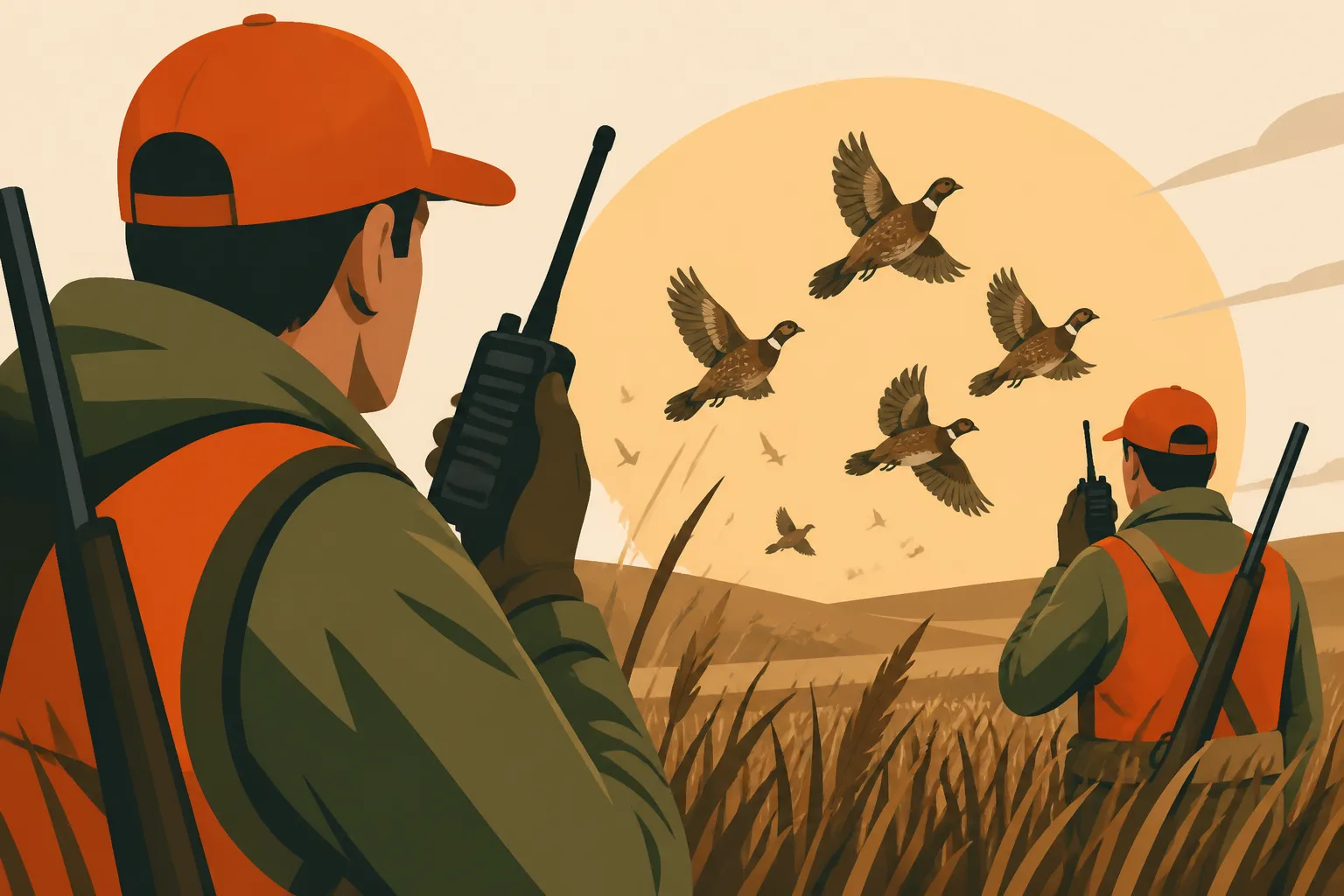
There's nothing quite like the rush of a well-executed bird drive on a crisp Nebraska morning. You've got your crew, you've scouted the cover, and you're ready to put pheasants or grouse in the air. But all too often, that perfect plan unravels when communication breaks down. Someone gets ahead, someone lags behind, a block isn't held, and suddenly, birds are flushing wild and the whole effort feels disorganized. This guide is all about cutting through that chaos, showing you how two-way radios can be your secret weapon for seamless coordination, increased safety, and ultimately, more successful bird drives across Nebraska's diverse landscapes.
Why Communication is King on a Bird Drive
Bird drives, whether you're working a milo field, a cattail slough, or a shelterbelt, are inherently team efforts. They rely on synchronized movement, precise blocking, and timely flushing. Without clear, consistent communication, even the best-laid plans can fall apart, leading to frustration and missed opportunities.
The Frustration of Miscommunication
Imagine a scenario: you've got three blockers set at the end of a long, narrow strip of CRP grass, while two walkers push through. The wind is whipping, the birds are antsy, and the cover is thicker than expected. One of the walkers spots a rooster running hard towards the end and tries to yell a warning, but the wind carries his voice away. The blockers, unaware, shift slightly, creating a small gap. That wily old rooster, sensing an escape, bolts right through it, leaving everyone scratching their heads and muttering about "the one that got away." Or perhaps, one walker moves too fast, pushing birds out of range of the other, or worse, flushing them behind the block too early. These aren't just minor inconveniences; they directly impact your success and can sour the whole experience. Losing contact with your hunting partners, especially in dense cover or large fields, is not only frustrating but also inefficient. Blocking and Driving a Nebraska Field depends heavily on this kind of tight coordination, where a simple "bird running left!" or "hold your line!" can make all the difference.
Safety First: Enhancing Group Awareness
Beyond just putting birds in the bag, safety is paramount whenever you're out hunting with a group. This is especially true on a bird drive where hunters are moving through cover, sometimes out of sight of one another, and often carrying loaded firearms. The ability to instantly communicate enhances safety in several critical ways. You can easily call out "hunter to my left!" to prevent someone from swinging on a bird in an unsafe direction. If someone trips, gets tangled in thick brush, or has an issue with their firearm, a quick radio call can alert the entire group immediately, ensuring prompt assistance. On expansive public lands, or even large private tracts, knowing where everyone is and being able to speak to them without shouting across hundreds of yards of cover is incredibly reassuring. It prevents accidental injury and ensures that everyone maintains awareness of their surroundings and their partners' locations. This is particularly important when considering How Many Hunters a Nebraska Quarter Section Holds and ensuring everyone has enough space to operate safely.
Choosing the Right Two-Way Radio for Nebraska Bird Drives
Not all two-way radios are created equal, and picking the right one for your Nebraska bird drives can make a significant difference in their effectiveness and your overall experience. You need a tool that stands up to the elements and provides clear, reliable communication when it matters most.
Key Features to Look For
When you're shopping for two-way radios for hunting, consider these critical features:
- Range: Nebraska's terrain can be a mixed bag – from flat, open fields to rolling hills and dense river bottoms. While radio packaging might boast "30-mile range," understand that this is almost always under ideal, line-of-sight conditions. In real-world hunting scenarios, with obstructions like trees, hills, and buildings, that range drops dramatically. Look for radios that offer a strong signal, especially those with higher wattage (though legal limits apply, which we'll discuss). A good rule of thumb is to expect a practical range of 1-3 miles in moderately obstructed terrain, which is usually more than enough for a typical bird drive covering a quarter or half section.
- Battery Life: There's nothing worse than a dead radio in the middle of a drive. Look for radios with long-lasting rechargeable batteries, or consider models that can also use standard AA/AAA batteries as a backup. Some radios even come with charging docks that can be powered by a vehicle's 12V outlet, which is a lifesaver on multi-day hunts. An often-overlooked aspect is cold weather performance; batteries drain faster in the chill, so robust battery life is crucial for those late-season hunts.
- Durability and Weather Resistance: Nebraska weather is unpredictable. You could start the day in sunshine and end it in a drizzling rain or even a surprise snow shower. Your radios need to be able to handle it. Look for terms like "IPX-rated" which indicates water and dust resistance. A rugged casing that can withstand a drop or two is also a major plus when you're moving through brush and fields. Brands often offer models specifically designed for outdoor or sporting use, which tend to be more robust.
- Privacy Codes/Channels: When you're on public land, especially during opening weekend, you don't want to be constantly listening to other hunters' chatter, nor do you want them listening to yours. Most modern two-way radios offer privacy codes (sometimes called sub-channels or CTCSS/DCS tones) that filter out transmissions from radios not using the same code. This doesn't make your conversation completely private, as anyone on the same main channel can still listen if they don't have a code set, but it significantly reduces unwanted interference and ensures your group hears only each other.
- Hands-Free Operation (VOX): When you're carrying a shotgun, managing a dog, and pushing through thick cover, you don't always have a free hand to press a "push-to-talk" button. VOX (Voice Activated Exchange) allows the radio to transmit when it detects your voice, which can be incredibly useful. Just be aware that wind noise or heavy breathing can sometimes trigger it inadvertently, so test this feature thoroughly before relying on it in the field.
FRS vs. GMRS Radios
The two most common types of consumer-grade two-way radios you'll encounter are FRS (Family Radio Service) and GMRS (General Mobile Radio Service). Understanding the difference is crucial for hunters.
| Feature | FRS (Family Radio Service) | GMRS (General Mobile Radio Service) |
|---|---|---|
| License Required? | No | Yes (FCC license required for GMRS channels) |
| Power Output | Limited to 0.5-2 watts (varies by channel) | Up to 50 watts (handhelds typically 1-5 watts) |
| Channels | 22 channels (shared with GMRS) | 22 channels (shared with FRS) + 8 repeater channels |
| Antenna | Fixed (non-removable) | Can have removable/upgradable antennas (on some higher-end units) |
| Range (Typical) | Shorter, 0.5-2 miles in real-world conditions | Longer, 1-5+ miles in real-world conditions (with higher power) |
| Cost | Generally less expensive | Can be more expensive, plus license fee |
| Primary Use | Short-range, casual communication, family outings | Longer-range, more robust communication, outdoor recreation, hunting |
FRS Radios: These are the most common and cheapest option. They don't require a license, making them super convenient for casual use. However, their power output is limited, which means their effective range is shorter, especially in challenging terrain like thick cover or rolling hills. They're great for small groups in relatively open fields or for very close-quarters communication, but you might find their range insufficient for larger drives or extensive properties.
GMRS Radios: These offer higher power output, which translates to significantly better range and penetration through obstructions. Many GMRS radios can operate at 5 watts, compared to FRS's typical 0.5-2 watts. The catch? You need an FCC license to operate on GMRS channels. This isn't a difficult or expensive license to get (it covers your entire family for a period of years), but it is a requirement. For hunters who rely on reliable communication across larger areas or in tougher conditions, the GMRS license is a small investment for a big payoff in performance. Some radios are dual-service, meaning they can operate on both FRS and GMRS channels, providing flexibility. For serious bird drives, especially if you're working through Walking Milo and Corn Stubble for Pheasants where dense cover can eat signal, the increased power of GMRS can be a game-changer.
Practical Tips for Using Radios Effectively in the Field
Having the right radios is only half the battle; knowing how to use them effectively is what truly maximizes their potential on a Nebraska bird drive.
Pre-Hunt Planning and Channel Management
Before you ever step foot into the field, some crucial planning with your radios can prevent headaches later on.
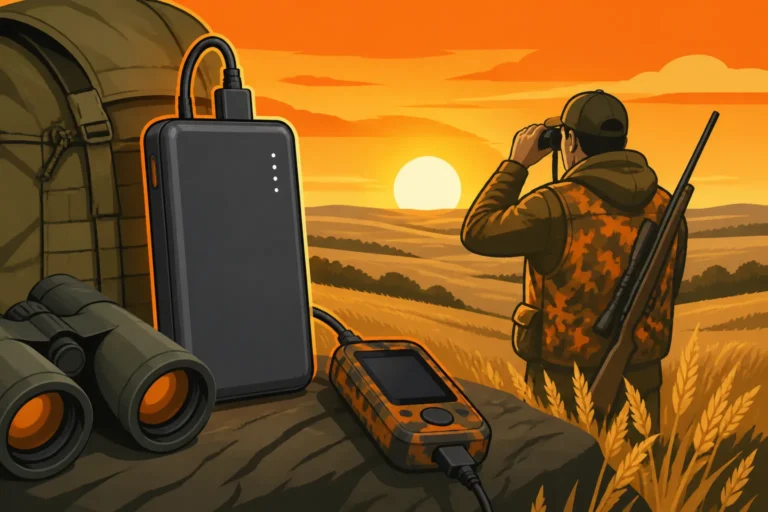
- Charge Batteries: This sounds obvious, but it's easily overlooked. Fully charge all radio batteries the night before your hunt. Consider bringing spare batteries or a portable power bank, especially for longer outings or colder weather where batteries drain faster.
- Assign Channels and Privacy Codes: Designate a primary channel and privacy code for your group. If you're hunting with multiple groups in the same general area, you might even agree on a secondary channel in case of interference. Communicate this clearly to everyone. For instance, "We'll be on Channel 7, Code 22."
- Test Radios: Before leaving home, do a quick range test with your hunting partners. See how far apart you can get and still maintain clear communication. This gives you a realistic expectation of what the radios can do in the field and helps you understand their limitations in different types of terrain. This is also a good time to adjust VOX sensitivity if you plan to use it.
- Assign Roles (Optional but Recommended): In larger drives, consider assigning someone as a "lead communicator" or "drive coordinator." This person can be responsible for giving general directions, confirming positions, and managing the flow of information, preventing everyone from talking over each other.
Best Practices for Clear Communication
Radios are fantastic tools, but they work best with a bit of discipline and clear communication habits.
- Keep Messages Short and Clear: Avoid rambling. Get straight to the point. Instead of "Hey, I think I see a bird, it's kinda running off to my right, towards that fence line, can you check it out?", try "Rooster, running right, heading towards the fence line, just past my position." The shorter and clearer your message, the less airtime you use, and the more efficiently information flows.
- Use Proper Etiquette: Don't talk over other people. Wait for a pause. Use call signs if you have them, or at least identify yourself. For example, "John to Mike, copy that," or "Mike, this is John, I'm holding." If you need to make an urgent call, you can say "Break, break" to indicate urgency. This discipline prevents confusion and ensures critical information isn't missed. Think of it like a polite conversation, just compressed for radio.
- Speak Clearly and Consistently: Hold the radio a consistent distance from your mouth and speak in a normal voice. Don't shout, as it can distort your message. Be aware of wind noise; sometimes turning your back to the wind or cupping your hand around the microphone can improve clarity.
- Confirm Receipt: It's good practice to acknowledge messages. A simple "copy that," "roger," or "understood" lets the sender know their message was received. This is crucial for coordinating movements, such as when you're Deer Drives on Small Nebraska Timber or trying to pinpoint a downed bird.
Overcoming Nebraska's Terrain Challenges
Nebraska offers diverse hunting landscapes, from wide-open grasslands to dense river bottoms. These different environments can significantly impact radio performance.
- Open Plains and Sandhills: In the vast, relatively flat expanses of the Sandhills or eastern Nebraska's open prairie, radio range is often at its best. Line-of-sight is plentiful, allowing signals to travel farther. However, rolling hills, large sand blowouts, or even dense stands of yucca can create dead zones. Be aware that subtle elevation changes can block signals more than you'd expect. Wind Direction on Open Nebraska Prairie Stands can also make it harder to hear audible signals if your radio isn't against your ear.
- Heavy Cover (Corn, Milo, Cattails, Timber): This is where radios truly shine but also face their biggest challenges. Dense vegetation absorbs and blocks radio waves. In tall corn, milo, or thick cattail sloughs, your effective range will shrink considerably. You might find you need to be much closer to your partners than in open country. The same goes for river-bottom timber, like the cottonwood stands along the Platte or Missouri. Tall trees and dense brush are notorious signal blockers. For drives through cover like Hunting Cattail Sloughs Late in the Season, a GMRS radio with higher power will offer a distinct advantage over lower-powered FRS units. Sometimes, simply holding the radio higher, above your head, can extend your range slightly.
- Water Bodies: Large water bodies, such as reservoirs or wide rivers, generally don't impede radio signals in the same way solid objects do. In fact, radio waves can sometimes skip across water, potentially extending range. However, deep ravines or river banks that drop sharply can create signal shadows.
- Using Repeaters (GMRS only): Some higher-end GMRS radios have the capability to use repeaters. While rare for typical bird drives, in very large areas or mountainous terrain (like parts of the Pine Ridge), a repeater can significantly extend range by re-transmitting your signal from a high vantage point. This is usually more applicable to large-scale operations or emergency services, but it's a capability of GMRS worth noting.
Integrating Radios with Other Scouting Tools
Two-way radios are excellent on their own, but their effectiveness is amplified when combined with other modern hunting tools, creating a truly coordinated effort.
Pairing Radios with Digital Mapping
Modern digital mapping applications and platforms have revolutionized how we scout and navigate. When combined with two-way radios, they become an incredibly powerful duo for bird drives. Imagine your team is spread out over a large Open Fields and Waters tract, and you're trying to communicate positions. A hunter can say, "I'm at the northwest corner of the patch, right where that old cedar tree is marked on the map." Another can respond, "Copy, I'm moving east along the fenceline towards that bend in the creek, also marked on GoHunt." This combination allows for precise location sharing and coordinated movement that traditional shouting or hand signals simply can't match. Apps like those offered by GoHunt allow you to drop pins, mark cover changes, and even track your group's movement in real-time on your phone. When someone calls out a bird flush or a change in direction over the radio, you can instantly reference that on your digital map to understand their position relative to yours and adjust your line. This is especially useful for understanding Reading a Nebraska Deer Unit Boundary or tracking your progress across complex terrain.
Furthermore, these digital tools, when used for Scouting Nebraska Public Ground Before Opening Day, allow you to pre-plan your drive routes and blocking positions with incredible detail. You can share these planned routes with your team before the hunt, so everyone knows the strategy. During the drive, radio communication confirms everyone is adhering to the plan or allows for quick adjustments if birds are behaving differently than expected. For instance, if you planned to walk to a specific pivot corner, and your radio partner communicates that the birds are holding tighter than expected in a certain section, you can quickly adjust your pace or direction, visible to all on your GoHunt map.
Beyond the Drive: Other Uses for Radios in Hunting
While we're focusing on bird drives, the utility of two-way radios extends far beyond. They are an invaluable piece of gear for almost any group hunting scenario in Nebraska.
- Deer Hunting: Imagine still-hunting a river bottom with a partner, or trying a small deer drive on a timber patch. Radios allow you to communicate quietly and effectively. You can alert a partner to an approaching deer, coordinate a subtle shift in position, or simply check in without spooking game. When executing Two-Person Deer Drives on Small Timber, radios are almost essential for safety and success. They can also be crucial for coordinating blood trailing efforts after a shot, especially if the track leads into dense cover or across property lines where one hunter needs to stay on the track while another coordinates permission.
- Predator Calling: When predator calling with a partner, radios allow you to coordinate setup, approach, and shooting positions. One caller can be on the stand while the other is positioned as a lookout or shooter, communicating quietly to optimize the setup. This is particularly effective for Coyote Calling on Winter Grassland where silent coordination is critical.
- Safety and Emergencies: Beyond just hunting success, two-way radios are a vital safety tool. If someone in your party becomes injured, lost, or encounters a dangerous situation, a radio allows for immediate communication. While cell service can be spotty in many of Nebraska's more remote hunting areas, a line-of-sight radio signal might still be possible, especially between hunters within a reasonable range. Having a reliable means to communicate in an emergency is worth its weight in gold. Even if you don't use them for every step of your hunt, having them for "just in case" situations provides immense peace of mind.
Ultimately, two-way radios are an investment in communication, safety, and efficiency. They bridge the gap between hunters in the field, turning a collection of individuals into a cohesive, effective team. For anyone regularly conducting bird drives or hunting in groups across Nebraska, they are a piece of gear that pays dividends season after season.
Disclaimer
This article is for general informational purposes only and does not constitute professional advice. Laws, prices and regulations vary by location and change over time. Consult a qualified professional for guidance on your specific situation.