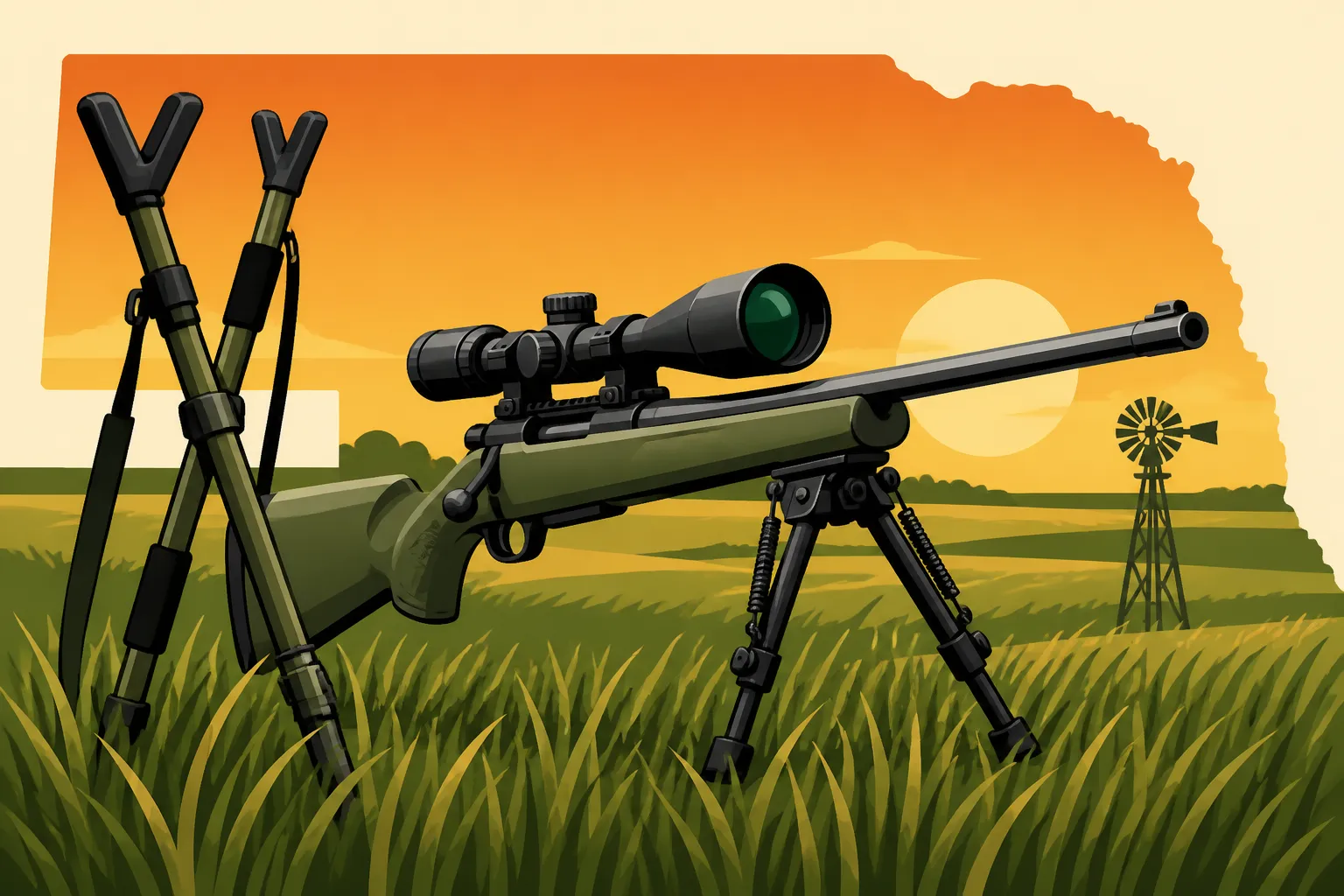
Shooting Sticks and Bipods on Grass
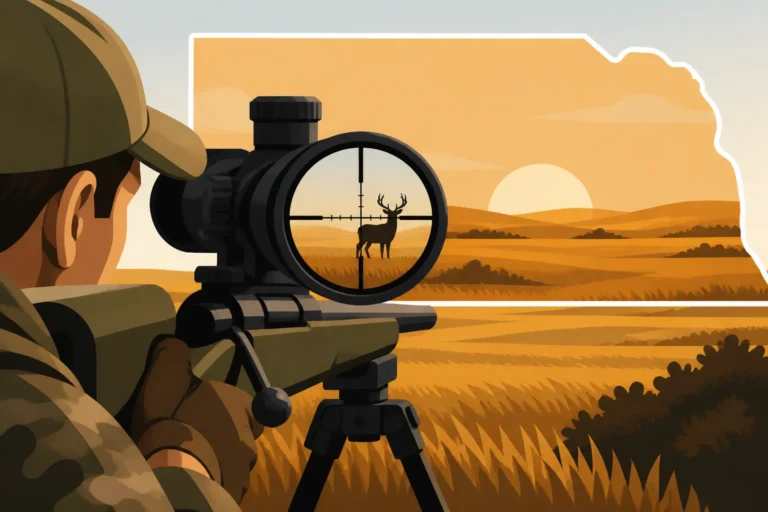
One of the biggest frustrations for hunters in Nebraska, especially when you're out in the vast, open country, is finding a solid, stable rest when that moment of truth finally arrives. You've scouted, you've glassed, maybe you've even stalked for what feels like miles, only to find yourself facing a long shot across a windswept prairie with nothing but swaying grass and thin air to brace your rifle. This guide is all about tackling that exact problem, exploring how shooting sticks and bipods can transform your stability and confidence for those critical shots on Nebraska's diverse landscape.
The Ubiquitous Challenge of Stability on Nebraska Grasslands
Let's be honest, Nebraska isn't exactly known for its dense forests and convenient tree stands (though we certainly have those in parts of the state!). Much of our iconic hunting, especially for big game like mule deer and antelope, happens out in the wide-open, often on rolling grasslands or cultivated fields that stretch to the horizon. This terrain presents a unique and frustrating challenge when it comes to getting a steady shot.
Why Grass Presents a Unique Problem for Shooters
When you're out chasing a Sandhills muley or trying to intercept a pronghorn on the plains, you quickly realize that the ground itself often offers very little in the way of natural support. You might find yourself on a gentle rise, a subtle depression, or trying to peer over chest-high bluestem. The ground is rarely flat, and what appears level can hide dips and bumps that throw off your balance the moment you try to settle in. Tall grasses, while providing cover, can also obscure your view of a low-lying target, forcing you to shoot from a higher position than you might prefer. And unlike timber country where you might lean against a sturdy oak or pine, the prairie offers no such luxury. It's just you, your rifle, and the seemingly endless expanse of waving grass. This environment truly tests your ability to adapt and improvise, which is why having dedicated support becomes so crucial.
The Limitations of Freehand and Backpack Rests
We’ve all been there. You spot that buck of a lifetime, or a coyote slipping through a draw, and the adrenaline spikes. In that moment, you might instinctively try to shoot freehand, or hastily throw your backpack on the ground for a makeshift rest. And sometimes, you get lucky, especially at closer ranges. But let's be realistic: shooting freehand, especially with the gusty winds we often experience on the Nebraska plains, is a recipe for inconsistency beyond very short distances. Even seasoned marksmen struggle to maintain pinpoint accuracy without support when factors like buck fever and wind are added to the mix.
A backpack can be better, certainly, but it’s still far from ideal. It might be too low, forcing you into an awkward prone position where the grass obstructs your view. It might be too soft or uneven, allowing your rifle to wobble. You might have to frantically dig through your pack to find something solid, wasting precious seconds. For anything but a close, calm shot, relying on these improvised methods introduces too many variables that can lead to a missed opportunity or, worse, a poorly placed shot. When that trophy animal steps out at 200 or 300 yards, a solid rest isn't a luxury; it's a necessity for ethical, precise shooting. This is especially true when you’ve spent a great deal of effort during Spot-and-Stalk Mule Deer in the Nebraska Sandhills and you need that final shot to count.
Breaking Down Shooting Sticks: Versatility for Varying Terrain
Shooting sticks are essentially portable, adjustable tripods or bipods designed to give you a stable shooting platform in the field. They come in various configurations, each offering a different balance of stability, portability, and quick deployment. They are particularly popular among hunters who need to adapt to rapidly changing situations and varied terrain.
Single-Point Shooting Sticks: Quick and Nimble
These are the simplest form of shooting sticks, typically a single monopod that extends to various heights.
Pros:
- Lightweight: They are usually the lightest option, making them easy to carry on long walks across the Sandhills or when Working Sharptails and Prairie Chickens on Foot.
- Fast Deployment: A single stick can be deployed almost instantly. You simply extend it, plant the foot, and rest your rifle. This is fantastic for quick target acquisition when a shot opportunity arises unexpectedly.
- Good for Slight Support: If you're a steady shooter but just need a little extra help to take the wobble out of a standing or kneeling shot, a monopod can be perfect. It helps reduce vertical movement, even if you still provide the lateral stability.
Cons:
- Least Stable: As the name implies, with only one point of contact with the ground, they offer the least amount of stability compared to bipods or tripods. You still need to provide significant support with your body.
- Requires Hunter Input: You're still actively holding and stabilizing the rifle, rather than letting the sticks do all the work. It's more of a bracing tool than a free-standing rest.
Scenario: Imagine you're Stalking Pronghorn Across Open Nebraska Ground, slowly closing the distance. A buck suddenly stops at 150 yards, quartering away. You quickly extend your monopod, plant it firmly, and brace your rifle for a fast, ethical shot. The monopod provides just enough stability to make the shot count without fumbling with a bulkier setup.
Bi-Pod Shooting Sticks: Enhanced Stability for Sitting or Kneeling
Bi-pod shooting sticks feature two legs that spread apart, providing a much more stable platform than a single stick. They often have adjustable heights, making them versatile for different shooting positions.
Pros:
- Enhanced Stability: With two points of contact, they significantly reduce wobble, offering a much more consistent rest for most hunters.
- Adjustable Height: Most bi-pod sticks can be adjusted to allow for comfortable sitting or kneeling shots, which is often a practical position in moderately tall grass or uneven terrain. This adaptability is key when hunting diverse Nebraska landscapes.
- Good for Moderate Ranges: For shots out to 200-300 yards, a good set of bi-pod sticks can provide ample stability for most hunters.
Cons:
- Bulkier than Monopods: They are heavier and take up more space when folded, which can be a consideration if you're minimalist in your gear.
- Might Still Be Short for Standing: While adjustable, many bi-pod sticks are designed primarily for sitting or kneeling positions. If you need to shoot standing up over tall cover, they might not extend high enough.
Scenario: You’ve set up for Coyote Calling on Winter Grassland, hunkered down in a low sagebrush. The coyote responds, coming in from across a shallow draw. You're kneeling, and the bi-pod sticks extend to the perfect height, giving you a rock-solid rest for a precise shot on the incoming predator.
Tri-Pod Shooting Sticks: The Pinnacle of Field Stability
Tri-pod shooting sticks offer three points of contact with the ground, making them the most stable option among portable sticks. They are often designed to be robust and highly adjustable, capable of supporting a rifle for standing shots or even doubling as a rest for optics.
Pros:
- Ultimate Stability: This is where you get near bench-rest levels of stability in the field. Three points on the ground eliminate almost all wobble, crucial for very long-range shots or precise placement.
- Great for Long-Range: When you need to make a careful, deliberate shot at extended distances, a tri-pod stick gives you the confidence to do so. This is particularly valuable in the wide-open spaces of western Nebraska.
- Height Adjustable for Standing: Many tri-pod designs extend tall enough for comfortable standing shots, allowing you to see over significant terrain features or tall grass that would obscure a lower shot.
- Versatile: High-quality tri-pods can also be used as a stable platform for Tripods and Glassing From a Vehicle or on the ground, making them a multi-functional tool for your hunt. Brands like GoHunt often highlight high-quality shooting sticks that also excel as bino rests.
Cons:
- Heaviest and Bulkiest: They are generally the heaviest and most cumbersome to carry, which can be a deterrent for highly mobile hunters.
- Slowest to Deploy: Setting up three legs and adjusting them can take more time than a monopod or bipod, potentially costing you precious seconds on a fast-breaking shot opportunity.
Scenario: You're Glassing the Nebraska Sandhills for Mule Deer from a high vantage point. After spotting a great buck bedded a long way off, you plan a stalk. But then, as you're preparing, the buck suddenly stands and begins to feed, offering a shot at 400 yards. You quickly set up your tri-pod sticks, adjust the height for a standing shot over a small rise, and take a steady, confident shot.
Understanding Bipods: Integrated Stability for Prone or Bench
Unlike shooting sticks that are separate pieces of gear, bipods are typically attached directly to the rifle. They are designed for quick deployment, usually by folding down from under the forend of the rifle, and are most often used for prone or bench shooting positions.
Fixed and Swivel Bipods: On-Gun Reliability
Bipods are a classic accessory for hunters and target shooters, providing a stable front rest that’s always with the gun.
Pros:
- Always with the Rifle: No fumbling for separate sticks; the bipod is always attached and ready. This ensures you never leave it behind or miss a shot because you couldn't grab your rest in time.
- Quick to Deploy: With a simple flick or spring-loaded release, the legs extend, allowing you to quickly get into a stable prone or low-sitting position. This speed is invaluable for opportunistic shots.
- Solid Foundation: Once deployed, bipods provide an extremely stable platform for prone shooting, which is often the most accurate field position, especially for Rifle Ranges Realistic in Open Country.
- Fixed vs. Swivel: Fixed bipods are simple and sturdy. Swivel bipods (often called cant or pan models) allow you to level your rifle on uneven terrain and track moving targets without lifting the legs. This cant feature is incredibly useful on the rolling prairies.
Cons:
- Limits Height Options: Bipods are primarily designed for prone or very low sitting positions. They generally don't offer the height needed for standing shots over tall grass or small hills, which can be a significant limitation in some Nebraska hunting scenarios.
- Can Catch on Vegetation: When carrying your rifle, the folded bipod legs can snag on brush or tall grass, which can be annoying or even make noise.
- Adds Weight to Rifle: While often not significant, it does add permanent weight to your firearm, which might be a consideration for hunters covering long distances on foot.
Scenario: You're hunting the open plains for antelope, and after a long crawl, you're finally within range of a good buck at 250 yards. You drop to a prone position, quickly extend your bipod legs, and settle in for a steady shot. The bipod allows you to quickly achieve a stable shooting position, perfect for the low profile required for Stalking Pronghorn Across Open Nebraska Ground.
Height and Leg Adjustments: Adapting to Nebraska's Contours
Bipods come with various features to help you adapt to the field. Most have adjustable legs, often with notched settings or quick-lock levers, allowing you to fine-tune your height. Some high-end models feature independent leg adjustments, so you can set one leg longer than the other to level your rifle on a sidehill.
The ability to cant (tilt left or right) is another critical feature, especially when shooting from uneven ground. Without it, you'd have to physically hold your rifle level, which introduces muscle fatigue and wobble. A good cant mechanism allows your rifle to freely level itself, creating a far more natural and stable shooting position. Some bipods also feature a pan function, letting you pivot the rifle horizontally without moving the bipod's feet, which is excellent for tracking a moving target or scanning a wide area from a fixed position.
Considering Nebraska's varied terrain, from the rolling Sandhills to flat crop fields, these adjustments are not just niceties; they are necessities. Being able to quickly adjust your bipod to get level and stable on a slight incline or in a hidden depression can be the difference between a clean shot and a miss. Remember, the goal is always to maximize stability so you can focus entirely on the sight picture and trigger squeeze, even when shooting at longer distances in open country.
Practical Application and Choosing the Right Tool
So, you're probably asking yourself: "Which one is right for me? Sticks or a bipod?" The answer, like most things in hunting, often depends on your specific hunting style, the game you're after, and the terrain you'll be navigating. Sometimes, it's even a combination of both.
When to Choose Sticks Versus a Bipod
Let's break down the typical scenarios where one might shine over the other:
Choose Shooting Sticks (especially tri-pods) when:
- Versatility is Key: You anticipate needing to shoot from various heights – standing over tall grass, kneeling behind a small rise, or sitting on a steep slope. Sticks are generally more adaptable to these changing positions than a fixed bipod.
- Mobile Hunting is Your Style: If you're constantly on the move, covering vast distances during a Walking Nebraska Sandhills Meadows for Sharptails or still-hunting draws, sticks can be quicker to deploy and reposition for those fleeting shot opportunities. They don't add weight to your rifle itself, keeping the gun lighter in hand.
- You Need an Optics Rest: Many tri-pod shooting sticks are robust enough to double as a stable platform for your binoculars or spotting scope, which is incredibly useful for Glassing Sandhills Blowouts for Mule Deer over long periods. This dual functionality can save you from carrying an extra tripod just for your optics. Many hunters find the ability to transition from glassing to shooting with the same stable platform invaluable, and companies like GoHunt often showcase models designed for this versatility.
Choose a Bipod (attached to your rifle) when:
- Prone or Low-Sitting is Preferred: Your primary shooting position will be prone or very low to the ground, such as when Hunting Antelope After a Wet Summer from a field edge or setting up for varmints. Bipods excel in these positions, offering unparalleled stability quickly.
- Minimal Movement is Anticipated: If you plan to set up in one spot and wait, like hunting a specific watering hole or field crossing, a bipod ensures a stable rest is always ready.
- Extreme Portability is Not the Highest Priority: While they add weight to your rifle, you don't have a separate item to carry or worry about leaving behind. It's an integrated solution.
It's also worth considering that some hunters use both. They might have a bipod on their rifle for quick prone shots, and carry a set of lightweight tri-pod sticks for when they need to shoot standing or kneeling over taller cover. This hybrid approach offers maximum adaptability for all the unpredictable situations Nebraska hunting throws at you. For example, you might use your bipod for a long shot in a specific unit and then switch to sticks for a quick follow-up or a different animal where a higher stance is needed.
Practicing with Your Chosen Support System
Having the right gear is only half the battle; knowing how to use it effectively under pressure is the other. It's absolutely crucial to practice extensively with your shooting sticks or bipod before opening day. Don't wait until that trophy buck steps out to figure out how to deploy them quickly and get stable.
Here’s how to make your practice sessions count:
- Quick Deployment Drills: Time yourself. Can you get your sticks or bipod deployed and your rifle settled in under 5-10 seconds? Practice doing this from various starting positions: slung over your shoulder, carried in hand, etc. The faster and smoother you can get stable, the less likely you are to miss an opportunity.
- Shoot from Various Positions: Don't just practice prone. Practice standing, kneeling, and sitting with your chosen support. Mimic real-world scenarios you expect to encounter in Nebraska. Can you shoot over a simulated cedar bush? How about over a roll of hay? What about from a steep sidehill? Zeroing a Rifle for Open Country should always involve practicing with your support system from various field positions, not just a bench rest.
- Integrate Rangefinders: In the open country, knowing your exact distance is paramount. Practice ranging a target, then quickly deploying your support and getting on target. This integrates all the critical steps of a field shot.
- Simulate Wind: While you can't control the wind, understanding its effect is vital. Practice reading wind flags (even improvised ones) and compensating for drift, especially when using your support for those longer shots. This ties into understanding Reading Wind on the Nebraska Plains. The more stable your platform, the more accurately you can apply your windage adjustments.
- Rehearse Under Pressure: While it’s hard to replicate true hunting pressure, try to induce some stress. Have a friend call out targets or distances unexpectedly. This helps you build muscle memory and confidence.
Remember, the goal is not just to hit the target, but to hit it ethically and consistently. Your shooting sticks or bipod are extensions of your marksmanship, designed to eliminate variables and maximize your chances of a clean harvest. Invest in quality gear, but more importantly, invest the time to master it.
| Feature / Type | Shooting Sticks (Tri-Pod) | Bipod (Attached) |
|---|---|---|
| Stability | Excellent (3 points of contact) | Excellent (2 points of contact) |
| Deployment Speed | Moderate (can be slower to set up all legs) | Very Fast (flick of a wrist for prone) |
| Height Versatility | High (standing, kneeling, sitting) | Low (primarily prone, low sitting) |
| Portability | Separate item, can be bulky/heavy | Always on rifle, adds rifle weight |
| Field of View | Can shoot over tall grass from standing position | Often limited by ground cover in prone |
| Other Uses | Excellent optics rest (binos, spotting scopes) | No other utility beyond rifle support |
| Best Use Cases | Spot-and-stalk, varied terrain, glassing, long-range standing shots | Prone hunting, static setups, precise long-range prone shots |
Ultimately, whether you choose shooting sticks or a bipod, or even a combination of both, the objective remains the same: to provide a rock-solid foundation for your rifle when that critical shot presents itself. The vast, open landscapes of Nebraska demand this level of preparation, and by incorporating one of these tools into your kit, you'll dramatically improve your chances of a clean, ethical harvest. Don't leave your shot to chance—get stable, and shoot with confidence.
Disclaimer
This article is for general informational purposes only and does not constitute professional advice. Laws, prices and regulations vary by location and change over time. Consult a qualified professional for guidance on your specific situation.