Rear Bags for Prone Prairie Shooting
There’s nothing quite like the rush of spotting a magnificent mule deer buck or a pronghorn antelope across the vast, open expanse of the Nebraska prairie. But let's be honest, getting into a stable shooting position on uneven ground, often with the wind trying to wrestle your rifle, is a challenge we've all faced. This guide is all about mastering the prone position using a humble yet incredibly effective tool: the rear bag, helping you make those crucial shots when they matter most.
Why a Rear Bag is Essential for Prone Prairie Shooting in Nebraska
Picture this: you've glassed up a great buck feeding in a Sandhills blowout a good distance away, or a pronghorn has finally stopped after a long stalk, but you're now laying prone on a slight incline, with tall grass and maybe a few prickly pear cacti beneath you. Your bipod is out front, but the rifle's buttstock feels… unanchored. This is precisely where a rear bag becomes not just helpful, but absolutely essential for achieving true stability and accuracy in Nebraska's unique hunting environment.
The Instability of Natural Terrain
Nebraska's hunting grounds are rarely a flat, perfectly manicured shooting range. Whether you're in the rolling rangeland of the Sandhills, traversing a harvested milo or cornfield, or settling into a CRP field edge, the ground beneath you is almost always uneven, lumpy, or full of subtle undulations. Trying to brace your rifle's buttstock directly on the ground or, worse, cupping it with your off-hand can introduce significant wobble and inconsistency. Your hand might fatigue, or the natural tremors of your body can easily translate into small but critical movements at the muzzle, especially when you're pushing shots out to longer prairie distances. A rear bag acts as a stable, adjustable foundation, isolating your rifle from the ground's imperfections and allowing for fine-tuned adjustments.
Mitigating the Nebraska Wind
If there's one constant across the Nebraska landscape, it's the wind. It's a hunter's perpetual companion and often, a formidable adversary. When you're trying to hold a steady aim for a precise shot, even a gentle breeze can cause your rifle to shift slightly if it’s not properly supported. While a solid bipod handles the front, the rear of the rifle needs equal attention. A rear bag, especially one with a good amount of heft and a non-slip exterior, adds a crucial layer of stability, helping to absorb those subtle gusts that try to push your rifle off target. This allows you to focus more on reading the wind's effect on your bullet's trajectory and less on battling its influence on your rifle. This is particularly important when you've finally closed the last hundred yards on sand and you know that big buck isn't going to stand there forever.
Fine-Tuning Your Elevation for Precise Shots
The magic of a rear bag truly shines when it comes to making precise elevation adjustments without having to lift your entire body or rifle. Once you're settled into your prone position with your bipod deployed, you can place the rear bag under your buttstock. By simply squeezing or relaxing your grip on the bag, you can subtly raise or lower the rifle's point of impact. This is far more precise and less disruptive than adjusting your bipod legs (which often requires breaking position) or trying to stack rocks or clumps of dirt. For those critical shots where you've estimated the range, perhaps with a rangefinder, and know you need to hold just a hair high or low, this micro-adjustment capability can be the difference between a clean harvest and a frustrating miss. When you're looking at Rifle Ranges Realistic on the Nebraska Prairie, every bit of control helps.
Different Types of Rear Bags and Their Features
Just like there isn't a single "best" rifle for every hunting scenario, there isn't one universal rear bag that fits every hunter's need. The market is full of options, each with different materials, fills, shapes, and sizes designed for various applications. Understanding these differences will help you choose the right companion for your Nebraska hunting adventures. Many hunters, myself included, will pore over gear lists from resources like GoHunt to see what's new and what's proven in the field.
Fill Materials and Their Characteristics
The interior filling of a rear bag is arguably its most critical component, directly influencing its weight, feel, and stability.
- Sand or Heavy Pellets: Traditional choices for a reason, sand (or fine heavy pellets) provides exceptional stability and conforms very well to the shape of your rifle's stock. It's dense, doesn't shift much, and absorbs recoil effectively. The downside? It's heavy. If you're hiking miles across the Sandhills for Spot-and-Stalk Mule Deer in the Nebraska Sandhills, every ounce matters. These are often best for static positions or hunting from a fixed blind.
- Plastic Pellets or Beads: Lighter than sand, plastic pellets still offer decent conformability and stability. They're a good compromise if you need to carry your bag a fair distance but still want good support. They won't absorb water like some organic fills might, which is a plus for unpredictable Nebraska weather.
- Lightweight or Ultralight Fills (e.g., polymer beads, expanded foam): These fills prioritize weight savings above all else. They are fantastic for mobile hunters who prioritize ounces, making them ideal if your hunt involves significant walking, such as pursuing Prairie Grouse Hunting on Nebraska's Open Range. While they offer less inherent "dead weight" stability than sand, their light weight means you'll actually carry them, providing more stability than no bag at all. They might require a bit more deliberate squeezing to achieve the same level of firmness.
- Rice, Corn, or Other Organic Fills: Often found in DIY bags, these are economical and conform well. However, they can absorb moisture, leading to mildew or sprouting, and can attract pests. While functional in a pinch, they're generally not recommended for long-term field use where exposure to elements is common.
Outer Shell Materials and Durability
The exterior fabric of your rear bag needs to stand up to the rigors of the field.
- Cordura Nylon: A very popular choice, Cordura is incredibly durable, resistant to abrasion, tears, and moisture. It's tough enough to handle being dragged across rocks, stubble, and thorny brush, making it an excellent choice for hunting bags. It also provides a good grip against synthetic rifle stocks.
- Leather: Classic and aesthetically pleasing, leather offers excellent grip and molds well over time. It's durable but can be heavier than Cordura and might require more care, especially if it gets wet.
- Rubberized or Non-Slip Fabrics: Some bags incorporate rubberized panels or non-slip textures to prevent the bag from sliding on slick surfaces or the rifle stock from slipping off the bag. This can be a real advantage when you're shooting from an awkward angle or on uneven, frozen ground during a late-season hunt.
Shapes and Sizes for Different Needs
Rear bags come in a variety of shapes and sizes, each designed to offer different levels of support and versatility.
- Wedge Bags: These are triangular or wedge-shaped, offering a good range of height adjustment by simply rotating the bag. They're versatile and can provide a solid, repeatable rest.
- Bun Bag / Squeeze Bag: Often smaller and cylindrical or rectangular, these are designed to be easily squeezed to fine-tune elevation. They are highly portable and excel at quick, precise adjustments. Many come with straps or carabiners to attach to your pack, a great feature when you're using a Packs for a Day on Public Ground.
- Heavy Bench Rest Bags: These are typically much larger and heavier, designed for maximum stability on a shooting bench. While excellent for sighting in your rifle, they are generally too bulky and heavy for practical field hunting, unless you're strictly hunting from a permanent, static blind.
- Pint-Sized Bags: Tiny, lightweight bags that are minimalist, often just enough to give your rifle's toe a consistent perch. Great for those ultralight setups, especially when you're primarily relying on a bipod but need that little extra boost.
| Feature | Sand-Filled Rear Bag | Lightweight Pellet Bag | Wedge Bag (Medium Fill) | Pint-Sized Squeeze Bag |
|---|---|---|---|---|
| Weight | Heavy | Moderate | Moderate to Heavy | Very Light |
| Stability | Excellent (dead weight) | Good (conforms well) | Very Good (versatile height) | Fair (minimalist support) |
| Adjustability | Good (squeezing) | Good (squeezing) | Excellent (rotate for height) | Good (precise squeeze) |
| Portability | Low (best for static hunts) | Moderate (good for walking) | Moderate (can be bulky) | High (easily packable) |
| Durability | High (if shell is strong) | High (if shell is strong) | High (if shell is strong) | High (if shell is strong) |
| Best Use Case | Bench, fixed blind, static positions | General field use, moderate walking | Versatile field use, varied terrain | Ultralight setups, quick shots |
How to Effectively Use a Rear Bag in Prone Positions
Having a rear bag is one thing; knowing how to use it to maximize your stability and accuracy is another. It's not just about tossing it under your stock; there's a technique to it that, once mastered, will transform your prone shooting experience in the field. When you're Zeroing a Rifle for Open Country, practice these techniques to build muscle memory.
Getting into a Stable Prone Position
Before the rear bag even comes into play, you need a fundamentally sound prone position. Lay down so your body is angled slightly behind your rifle, not directly in line with it. This allows your recoil to travel more naturally. Your non-shooting hand (typically your left hand for right-handed shooters) is critical here. It's not just holding the bag; it's supporting the rifle and providing those micro-adjustments. Ensure your shooting shoulder is "squared" behind the rifle, and your cheek weld is consistent. Your bipod should be dug in or pre-loaded, creating forward pressure against the ground, which is key for stability. A good prone position is the bedrock, and the rear bag is the capstone.
Positioning and Adjusting the Rear Bag
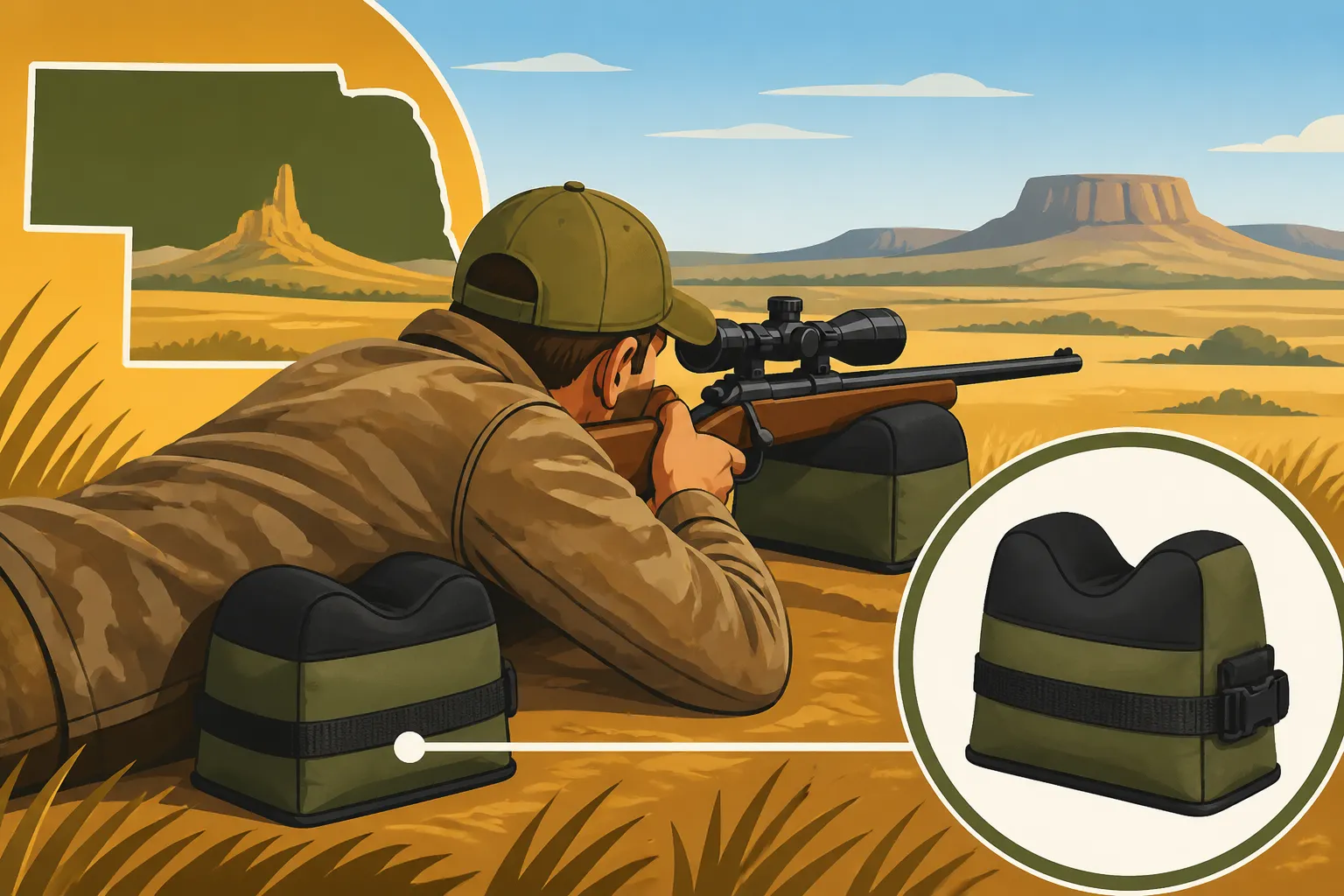
Once you're down and stable with your bipod, bring the rear bag into play. Place it under the toe of your rifle's buttstock, allowing the stock to settle naturally into the bag. Your non-shooting hand should then cup the bag, not just loosely rest on it. This is where the magic happens. To raise your point of aim, gently squeeze the bag with your non-shooting hand. To lower it, relax your grip slightly. This controlled squeeze-and-relax method provides incredibly precise elevation adjustments without shifting your entire body or rifle. This is invaluable when you are dealing with subtle changes in ground contour or needing to account for a target that isn't perfectly level with you. Remember, the goal is consistent, repeatable support.
Utilizing the Rear Bag with a Bipod
A common misconception is that a rear bag replaces a bipod. In reality, they work in tandem to create a rock-solid shooting platform. The bipod provides primary elevation and front-end stability, anchoring the barrel end of your rifle. The rear bag, then, takes care of the buttstock, preventing vertical movement and allowing for fine-tuning. When using a bipod, you should try to "load" it slightly, meaning applying a bit of forward pressure onto the bipod legs into the ground. This takes any slack out of the system and helps manage recoil. With the bipod loaded and the rear bag under the buttstock, your rifle should feel like it's locked into place, almost like it's in a vise. This combination dramatically reduces wobble and allows for incredible precision, critical when you're aiming for a vital zone on an animal that might be hundreds of yards away. This setup far surpasses what can be achieved with Shooting Sticks and Bipods on Grass alone.
Choosing the Right Rear Bag for Nebraska's Diverse Hunting Scenarios
Nebraska offers a variety of hunting landscapes, from the rolling grasslands of the Sandhills to the dense river bottoms of eastern Nebraska, and the flat, open farm fields. The "best" rear bag for you will depend heavily on the specific type of hunting you plan to do and how much mobility your hunt requires. Consider your primary game, the terrain, and how far you're willing to carry extra weight.
Mobile Hunting in the Sandhills or Open Plains
If you're planning a Stalking Pronghorn Across Open Nebraska Ground hunt or chasing mule deer through the vast expanses of the Sandhills, you'll likely be covering many miles on foot. In these scenarios, weight is a major consideration. A heavy, sand-filled bag might offer maximum stability, but it will quickly become a burden in your pack.
- Recommendation: Opt for a lightweight rear bag filled with plastic pellets or an ultralight polymer. A compact squeeze bag or a small wedge bag (like those designed by Armageddon Gear or WieBad – often featured in GoHunt's gear reviews) would be ideal. Look for durable Cordura exteriors that can withstand abrasive sand and the occasional run-in with yucca plants or sharp stubble. The trade-off in absolute dead-weight stability is worth the increased mobility and the fact that you'll actually carry and use it. You'll want something that can quickly be deployed and packed away as you move from one glassing position to the next.
Static Hunting from Blinds or Fixed Positions
Perhaps your strategy involves sitting in a ground blind on Setting Up on a Nebraska Cornfield Edge for whitetails, or you've found a perfect vantage point on a hillside overlooking a canyon in the Pine Ridge. In these more static scenarios, portability becomes less of a concern, and maximum stability takes precedence.
- Recommendation: A heavier, sand-filled rear bag or one with dense plastic pellets will provide superior stability. A larger wedge bag or even a medium-sized bench-rest style bag can be comfortable and incredibly solid. The added weight helps dampen movement and recoil, allowing for consistent, precise shots over longer periods. The durability of the outer shell is still important here, as even a blind can have abrasive surfaces. This is where you can really lock in for those long shots, especially when accounting for Wind and Thermals in the Sandhills.
Versatile All-Around Hunting
For the hunter who tackles a bit of everything – some walking, some sitting, some varying terrain – a versatile rear bag is key. This is often the most common scenario for Nebraska hunters who might transition from walking a field edge for deer to settling in for an antelope watch.
- Recommendation: A medium-sized bag with a durable Cordura exterior and a plastic pellet fill offers a good balance of weight and stability. A versatile "game changer" style bag (a popular type often seen in reviews and forums that GoHunt monitors) or a mid-sized wedge bag can be manipulated to provide various heights and levels of support. These bags are generally robust enough to handle different ground conditions and are still manageable to carry in a hunting pack without feeling like a brick. They offer enough adjustability for those quick setup changes in the field, whether you're trying to get level on a terrace bench or adapt to a slight incline in a creek crossing.
Ultimately, the best way to choose your rear bag is to try a few out. Lay down with your rifle, set up your bipod, and see how different bags feel under your buttstock. Practice squeezing and relaxing to get a feel for the elevation adjustments. The right rear bag will disappear into your setup, allowing you to focus solely on the animal in your scope and making a clean, ethical shot.
Disclaimer
This article is for general informational purposes only and does not constitute professional advice. Laws, prices and regulations vary by location and change over time. Consult a qualified professional for guidance on your specific situation.