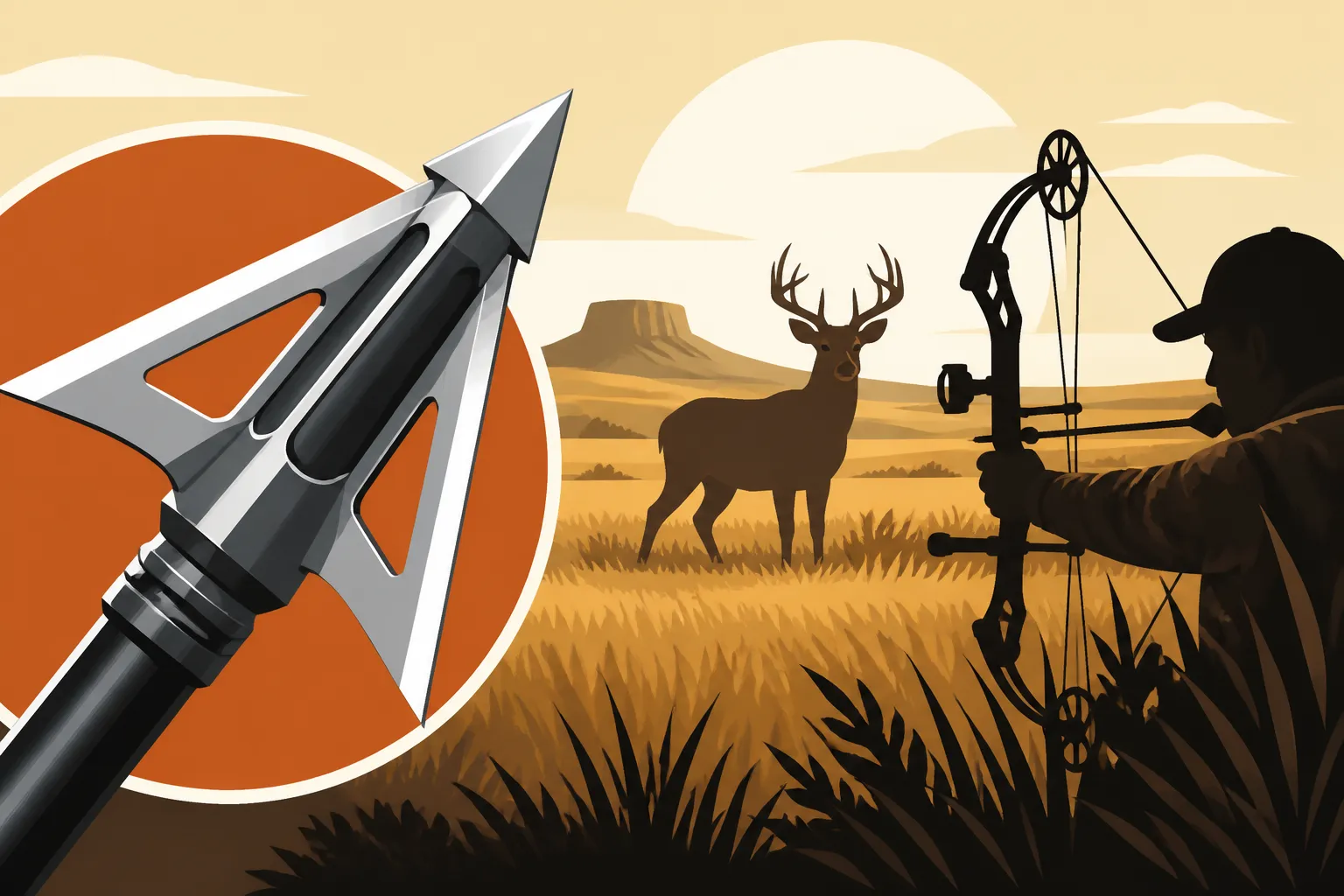
Broadheads for Open Country Shots
Choosing the right broadhead for your archery setup in Nebraska's wide-open spaces can feel like a daunting task, full of trade-offs and endless debates. Many bowhunters spend countless hours meticulously tuning their bows, only to have a poor broadhead choice undermine their accuracy when it matters most, especially with the notorious Nebraska winds playing havoc on arrow flight or when faced with a longer shot than anticipated on a big Sandhills mule deer. This guide will walk you through the critical factors to consider, helping you select a broadhead that flies true and performs ethically in the unique challenges of open-country hunting.
Understanding the Unique Demands of Open Country Shots
Hunting in Nebraska, especially west of Highway 81, often means dealing with vast, unobstructed views, persistent winds, and the potential for longer shot opportunities. These factors place specific demands on your broadhead choice that you might not encounter in the thick river bottoms of eastern Nebraska. It's not just about what looks cool or what your buddy uses; it's about what performs consistently in these conditions.
The Impact of Wind on Arrow Flight
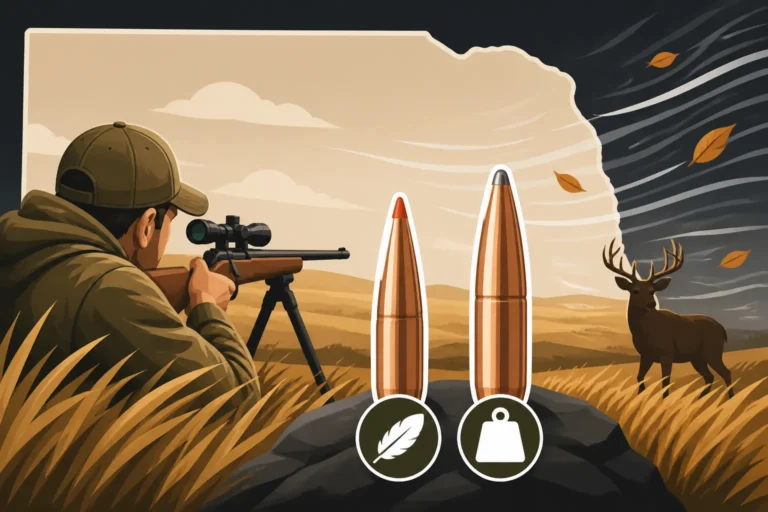
If you've spent any time on the Nebraska plains, you know the wind is a constant companion. What might feel like a gentle breeze on your face can be enough to significantly alter your arrow's trajectory, especially over longer distances. A broadhead, by its very design, acts like a small sail, catching the wind and pushing your arrow off course. This "planing" effect is one of the most frustrating challenges bowhunters face in open country.
Imagine you've been working all morning to close the distance on a pronghorn buck feeding out on the Oglala National Grassland. You've crept within 50 yards, drawn back, and released a perfect shot, only for a sudden gust of wind to catch your arrow mid-flight, turning what should have been a clean kill into a gut shot or a complete miss. This isn't just a hypothetical; it's a common, heartbreaking reality. Broadheads with a larger profile or less aerodynamic design are far more susceptible to wind drift, making a low-profile, stable broadhead a critical consideration for those blustery days. Proper understanding of Wind Direction on Open Nebraska Prairie Stands can help mitigate some of these issues, but your equipment needs to be up to the task too.
Longer Shot Distances on the Plains
Unlike dense timber where 20-30 yard shots are the norm, open country hunting in Nebraska, especially when Spot-and-Stalk Mule Deer in the Nebraska Sandhills or pronghorn are your target, often presents opportunities at 40, 50, or even 60 yards. While ethical shot distance is highly personal and dependent on practice, the reality is that open terrain naturally lends itself to longer engagements. At these distances, even a minute inconsistency in your arrow and broadhead combination is magnified, resulting in significant errors downrange.
This isn't about promoting unethical long-range shooting, but acknowledging the environment. If your broadhead causes your arrow to plane even slightly at 30 yards, that small deviation becomes a huge miss at 60. You need a broadhead that behaves as close to your field points as possible, giving you the confidence that your arrow will hit exactly where you aim, even when stretching the range a bit. The margin for error shrinks dramatically with every yard you add, making accuracy paramount.
Penetration Needs for Big Game in Open Terrain
A broadhead's primary job, beyond flying accurately, is to penetrate effectively and create a wound channel that leads to a quick, humane kill. In open country, where game can cover vast distances quickly, the importance of a decisive, lethal shot is amplified. You might not have the luxury of tracking a wounded animal through dense cover, and an extensive blood trail becomes crucial for recovery across expansive grasslands.
Consider a mature mule deer buck, known for its tough hide and dense bone structure. If your shot isn't perfectly broadside or encounters a rib bone, you need a broadhead capable of driving through to vital organs. A marginal hit, which might be recoverable in a smaller, wooded area, could result in a lost animal on the vast prairie. Therefore, evaluating a broadhead's ability to maintain structural integrity and drive deep, even on quartering shots or bone impacts, is absolutely essential for ethical hunting in Nebraska's wide-open landscapes. Understanding your Bow Draw Weight for Nebraska Whitetails is part of this equation, as higher kinetic energy can aid penetration with any broadhead.
Fixed-Blade Broadheads: The Tried and True Choice
Fixed-blade broadheads have been around since the dawn of archery, and for good reason. They are generally known for their robust construction and consistent performance, particularly when it comes to penetration. For many open-country hunters, they remain the preferred choice.
Aerodynamic Stability and Durability
The unchanging profile of a fixed-blade broadhead is its greatest asset in windy conditions. Since the blades are rigid and don't move, they offer a consistent, predictable surface area to the wind. While any broadhead will be affected by a strong crosswind, a well-designed fixed blade will typically "plane" less than a mechanical broadhead with larger, less stable blades. This consistent flight means less deviation over distance, which is gold when you're aiming at a pronghorn over a vast expanse of short-grass prairie.
Beyond flight, fixed blades are inherently durable. They are typically machined from a single piece of steel or have blades securely attached to a ferrule. This robust construction means they can withstand impacts with bone without breaking or bending, maintaining their cutting integrity. Imagine hitting a shoulder blade on a wary buck while Hunting a Creek Crossing in the Sandhills; a durable fixed blade is more likely to push through or at least hold together, offering a better chance at penetration and recovery.
Penetration and Tissue Damage
Fixed-blade broadheads excel at creating a consistent wound channel. Their sharp, unmoving blades cut on impact, starting the hemorrhage immediately. Whether you choose a two-blade, three-blade, or four-blade design, the goal is always deep penetration and effective tissue damage. Two-blade designs, like a classic Snuffer or Zwickey, often boast the best penetration due to less surface area and resistance, making them a favorite for bowhunters seeking maximum pass-through potential. Three or four-blade designs, such as Montecs or Strikers, sacrifice a tiny bit of penetration for a larger cutting diameter and more tissue damage, leading to potentially quicker incapacitation and better blood trails.
The key with any fixed blade, however, is sharpness. A dull blade pushes tissue aside, causing less damage and requiring more energy to penetrate. Always ensure your fixed blades are razor-sharp before heading afield; this is the ethical responsibility of every bowhunter. The cleaner the cut, the more efficient the penetration, and the more effective the blood trail for recovery in the wide-open spaces of Nebraska, like when Tracking a Deer in Sandhills Grass.
Potential Flight Tuning Challenges
Now, let's talk about the elephant in the room when it comes to fixed-blade broadheads: tuning. Unlike field points, which are perfectly aerodynamic, fixed blades present an additional aerodynamic surface. This means your bow, arrow, and broadhead combination must be perfectly tuned for the broadheads to fly exactly like your field points. Many hunters, especially those new to fixed blades, get frustrated when their broadheads hit differently than their practice points.
This frustration is completely valid. It requires meticulous attention to nock point, fletching, arrow spine, and broadhead alignment. You'll likely spend time paper tuning, walk-back tuning, and even shooting at distance to ensure your fixed blades hit the same spot as your field points. However, once you achieve this "broadhead tune," the confidence it instills is unmatched. Tools and resources, like those you might find on GoHunt's forums or gear reviews, can be incredibly helpful in guiding you through the tuning process. It's an investment of time, but for the consistency and reliability fixed blades offer in a place like Nebraska, many find it well worth the effort.
Mechanical Broadheads: Expanding Your Options
Mechanical broadheads, also known as expandable broadheads, have surged in popularity over the last few decades. They offer distinct advantages, particularly in terms of flight characteristics, but also come with considerations, especially for open-country hunting.
Field Point Accuracy and Ease of Tuning
The biggest selling point of mechanical broadheads is their reputation for flying exactly like field points. Because the blades are folded or retracted during flight, the broadhead presents a much smaller, more aerodynamic profile, mimicking a field point. This means that for many hunters, the extensive tuning process often required for fixed blades is significantly reduced, if not eliminated. You can often sight in your bow with field points and expect your mechanical broadheads to hit the same spot.
This ease of tuning can be a massive confidence booster. For hunters who struggle with the complexities of fixed-blade tuning or simply want to maximize their practice time without constant adjustments, mechanicals offer a straightforward solution. Imagine spending less time tweaking and more time actually practicing your shot sequences, practicing in various scenarios like Hanging a Stand on a Cornfield Edge (even if it's hypothetical for broadheads) or simply honing your form. This perceived accuracy helps reduce anxiety about broadhead flight, allowing you to focus purely on shot execution when a trophy buck steps out.
Massive Cutting Diameters and Wound Channels
Once deployed, mechanical broadheads are designed to create significantly larger cutting diameters than most fixed blades. Some expand to cut 2 inches or more, which translates to a much larger wound channel. This expansive cut leads to more rapid blood loss and tissue damage, often resulting in quicker incapacitation and a more pronounced blood trail. For open-country hunting, where tracking can be challenging across vast, sometimes featureless terrain, a massive blood trail can be the difference between recovering your animal and losing it.
The concept is simple: a bigger hole means more blood. This can be especially beneficial if your shot isn't absolutely perfect. While a perfectly placed shot with any sharp broadhead will result in a quick kill, mechanicals offer a wider margin of error for tissue damage, potentially turning a marginal hit into a recoverable one. Many hunters feel this gives them an ethical advantage in ensuring a swift demise for the animal, even with the inherent variables of a hunt.
Concerns for Open Country: Blade Deployment and Energy Transfer
Despite their advantages, mechanical broadheads aren't without their concerns, especially when considering the robust nature of Nebraska's big game and the potential for longer, less ideal shots. The primary concern revolves around blade deployment and energy transfer. If a mechanical broadhead fails to deploy properly or if the blades break upon impact with bone, its effectiveness is severely compromised. In open country, where a wounded animal can cover miles, a reliable broadhead is non-negotiable.
Secondly, the act of deploying the blades consumes kinetic energy. While modern mechanicals are incredibly efficient, there's still a certain amount of energy expended in overcoming the deployment mechanism and opening the blades. This means less energy is available for penetration, especially on bone impacts. For bows with lower kinetic energy or when facing a tough shoulder, a robust fixed blade might offer more consistent penetration. It’s vital to choose mechanical broadheads known for their reliability and stout construction, especially those designed for high-kinetic-energy setups and larger game. Researching reviews on platforms like GoHunt can provide insights into specific broadhead models' real-world performance and deployment reliability.
Hybrid Broadheads: Bridging the Gap
Recognizing the strengths and weaknesses of both fixed and mechanical designs, manufacturers began developing hybrid broadheads. These aim to combine the best features of both, offering a compelling option for hunters seeking a balance between flight accuracy and devastating wound channels.
The Best of Both Worlds?
The core idea behind a hybrid broadhead is to provide the reliable flight characteristics of a small fixed blade while still offering the expansive cutting diameter of an expandable. Typically, hybrid broadheads feature a small, fixed leading edge, often two blades, that are always exposed. Behind these fixed blades, larger expandable blades are tucked away, deploying upon impact. This design aims to achieve field-point-like accuracy during flight due to the minimal drag of the fixed blades, and then deliver a wide wound channel once the expandable blades deploy.
For a Nebraska hunter who wants the confidence of fixed-blade flight in the wind but also desires a larger cutting diameter for better blood trails on sprawling public lands, a hybrid can be an excellent compromise. It attempts to alleviate the primary tuning headaches of traditional fixed blades while addressing some of the deployment concerns associated with pure mechanicals. It’s an innovative approach to an age-old archery dilemma.
Design Variations and Performance
Hybrid broadheads come in various designs, each with its own nuances in how the fixed and expandable components interact. Some feature fixed blades that are minimal, primarily serving as pilot points for the expandables, while others have more substantial fixed blades that contribute significantly to the initial wound channel. The deployment mechanism for the expandable blades also varies – some are front-deploying, others rear-deploying, and some even use a "slip-cam" style. Each variation affects flight, penetration, and deployment reliability.
Evaluating the performance of hybrid broadheads requires careful research. You need to consider how robust the fixed blades are, how reliably the expandable blades deploy, and how much energy is conserved for penetration. Some hybrids truly deliver on their promise, offering excellent flight and devastating wound channels. Others might lean more heavily towards one aspect over the other. Pay attention to blade thickness, ferrule strength, and how the blades lock into place upon deployment. Reading detailed reviews and watching independent tests can help you discern which specific models best suit your bow setup and the game you pursue, particularly for hunts like Bowhunting Nebraska's Four-Month Archery Season.
Choosing the Right Broadhead for Your Hunt
Ultimately, the "best" broadhead is the one that you have the most confidence in, that flies consistently from your bow, and that you trust to perform ethically on game. It's a personal decision, but there are some objective criteria that can guide you, especially with Nebraska's unique hunting environment in mind.
Matching Broadhead to Bow Setup and Game
Your broadhead choice should always be harmonious with your entire bow setup and the type of game you're pursuing. A hunter with a high-poundage, fast bow might have more flexibility in broadhead choice, as they have more kinetic energy to drive any broadhead through bone. Conversely, a hunter with a lower draw weight or shorter draw length might need to prioritize broadheads known for maximum penetration, like two-blade fixed designs or mechanicals with a more efficient deployment mechanism that conserves energy. Consider also the overall Arrow Weight for Windy Conditions and how that interacts with your chosen broadhead.
The game itself also plays a role. A tough-hided mule deer requires a broadhead designed for serious penetration, whereas a turkey, while requiring a large cutting diameter for quick incapacitation, doesn't need the same bone-crushing power. Think about the ethical shot distances you are comfortable with in open country. If you know you'll be taking 40-60 yard shots, absolute flight stability is critical, pushing you towards well-tuned fixed blades or highly accurate mechanicals.
Here's a quick comparison of broadhead types for Nebraska's open country:
| Feature | Fixed-Blade Broadheads | Mechanical Broadheads | Hybrid Broadheads |
|---|---|---|---|
| Flight in Wind | Generally Most Stable | Can be Affected by Crosswinds | Good (due to fixed leading edge) |
| Accuracy | Excellent (after proper tuning) | Often Field Point Accurate | Very Good |
| Penetration | Excellent (consistent wound) | Good (energy loss on deployment) | Good (balanced approach) |
| Wound Channel | Moderate to Large | Very Large (wide cutting diameter) | Large |
| Durability | Very High (simple, robust design) | Varies (complex moving parts) | High (fixed blades provide strength) |
| Tuning Ease | Can be Challenging | Generally Easy | Moderate |
| Reliability | Extremely High | Good (potential for deployment issues) | Good (less prone to failure than pure mechanical) |
| Ideal For | All game, long shots, windy days | Larger cutting diameter priority | Hunters wanting a balance |
Practice, Practice, Practice
No matter which broadhead you choose, its effectiveness is only as good as your ability to shoot it accurately and consistently. This means dedicated practice with your hunting broadheads, not just field points. Shoot them regularly, at varying distances, and from different positions you might encounter while hunting. Do not save your broadheads for opening day; they need to become an extension of your setup.
Even more critically for Nebraska, practice in windy conditions. Go out on a moderately breezy day and shoot. Pay attention to how your arrows drift and adjust your aiming point accordingly. This will not only build confidence in your equipment but also enhance your ability to make an ethical shot when the wind inevitably picks up on your hunt. Scouting Nebraska Public Ground Before Opening Day should include scouting for potential shooting lanes and practicing those specific angles with your broadheads.
Ethics and Recovery in Open Country
The vastness of Nebraska's hunting grounds means that every shot carries an immense ethical responsibility. A wounded animal that runs off into endless public lands or vast private agricultural fields can be incredibly difficult, if not impossible, to recover. Your broadhead choice is a direct extension of your commitment to a quick, humane harvest and an efficient recovery.
Choose a broadhead that gives you the highest confidence in achieving a pass-through and creating a significant blood trail. In open country, where sign can be sparse and blood difficult to see on dry grass, a strong, consistent blood trail is your best friend. This commitment ensures you do everything in your power to recover the animal you've pursued so diligently, respecting the animal and the privilege of hunting in Nebraska. Always have your Meat Care Gear for Warm Nebraska Openers ready, because a quick recovery means quicker cooling and better meat.
Disclaimer
This article is for general informational purposes only and does not constitute professional advice. Laws, prices and regulations vary by location and change over time. Consult a qualified professional for guidance on your specific situation.