Flooding and Access on Nebraska Rivers
There’s nothing quite like the allure of Nebraska's river bottoms, especially when you're dreaming of chasing whitetails, ducks, or turkeys. But if you’ve spent any time hunting these fertile corridors, you know that the rivers here have a mind of their own. One minute, your favorite creek crossing is a trickle; the next, it’s a raging torrent, completely reshaping the landscape and, more importantly, your hunting plans. This guide is all about navigating that unpredictable reality – the joys and absolute frustrations of flooding and access on Nebraska's rivers, and how you can still find success when the water rises.
The Inevitable Reality of Nebraska River Flooding
Let's face it, hunting along Nebraska's rivers means you're signing up for a dynamic, ever-changing environment. It's not a matter of if the water will rise, but when and how much. This isn't some placid pond; these are living, breathing river systems that react dramatically to rainfall, snowmelt, and upstream dam releases.
Understanding Nebraska's Dynamic River Systems
Nebraska's major rivers – think the Platte, Niobrara, Loup, Elkhorn, and the mighty Missouri – are complex beasts. They drain vast areas, and what happens hundreds of miles away in a different state can absolutely impact your local hunting spot here. A heavy snowpack in the Rockies, combined with a quick warm-up and spring rains, can turn a calm Platte River into a sprawling inland sea in a matter of days. The same goes for local deluges that swell smaller tributaries like the Big Blue or Republican. This isn't just about water covering the ground; it’s about the force and current of that water, which can scour banks, create new channels, and move massive amounts of debris. It’s a force of nature that commands respect, and ignoring it can put you in real danger.
Historical Patterns and Unpredictable Spikes
While we often talk about "100-year floods" or "500-year floods," the truth is, severe flooding feels like it's becoming a more regular occurrence. Many of us remember recent years when entire towns were submerged and vast tracts of river bottom became impassable for months. These aren't just isolated incidents; they're stark reminders of the power of these rivers. Even a "normal" rain event can cause a localized flash flood on a smaller creek, cutting off access to timber blocks or sloughs that were perfectly dry just hours before. The key takeaway here is that while there are general patterns (spring snowmelt, late spring/early summer rains), you can't assume anything. You have to stay informed, pay attention to weather forecasts, and, most importantly, monitor river gauge data religiously. That small foot bridge you rely on for access might literally not be there after a significant rise.
Impact on Game Movement and Habitat
When the water comes up, deer, turkeys, pheasants, and all other critters that call the river bottoms home have to adapt quickly. Whitetails, especially, will often move to higher ground, sometimes surprising hunters by appearing in areas they rarely frequent during normal conditions. This can mean public access areas bordering agricultural fields suddenly hold a concentration of deer pushed out of the flooded timber. For waterfowl hunters, rising water can sometimes be a blessing, opening up new sheet water areas in fields that were previously dry. However, it can also disperse birds, making them harder to pattern. Turkeys might abandon roosts on flooded islands, seeking new trees on the mainland. Understanding these behavioral shifts is crucial. Game animals are experts at survival, and they will move to find safe, dry ground and accessible food sources. This often creates new, temporary hunting opportunities for those willing to adapt. Hunting a Frozen Nebraska River Bottom is a different challenge, but also shows how deer react to changes in their habitat.
How Flooding Directly Impacts Hunter Access
The most immediate and frustrating consequence of river flooding for hunters is, of course, the loss of access. It's one thing to know the animals will move; it's another entirely when you can't even get to where you planned to hunt.
Navigating Road Closures and Submerged Entry Points
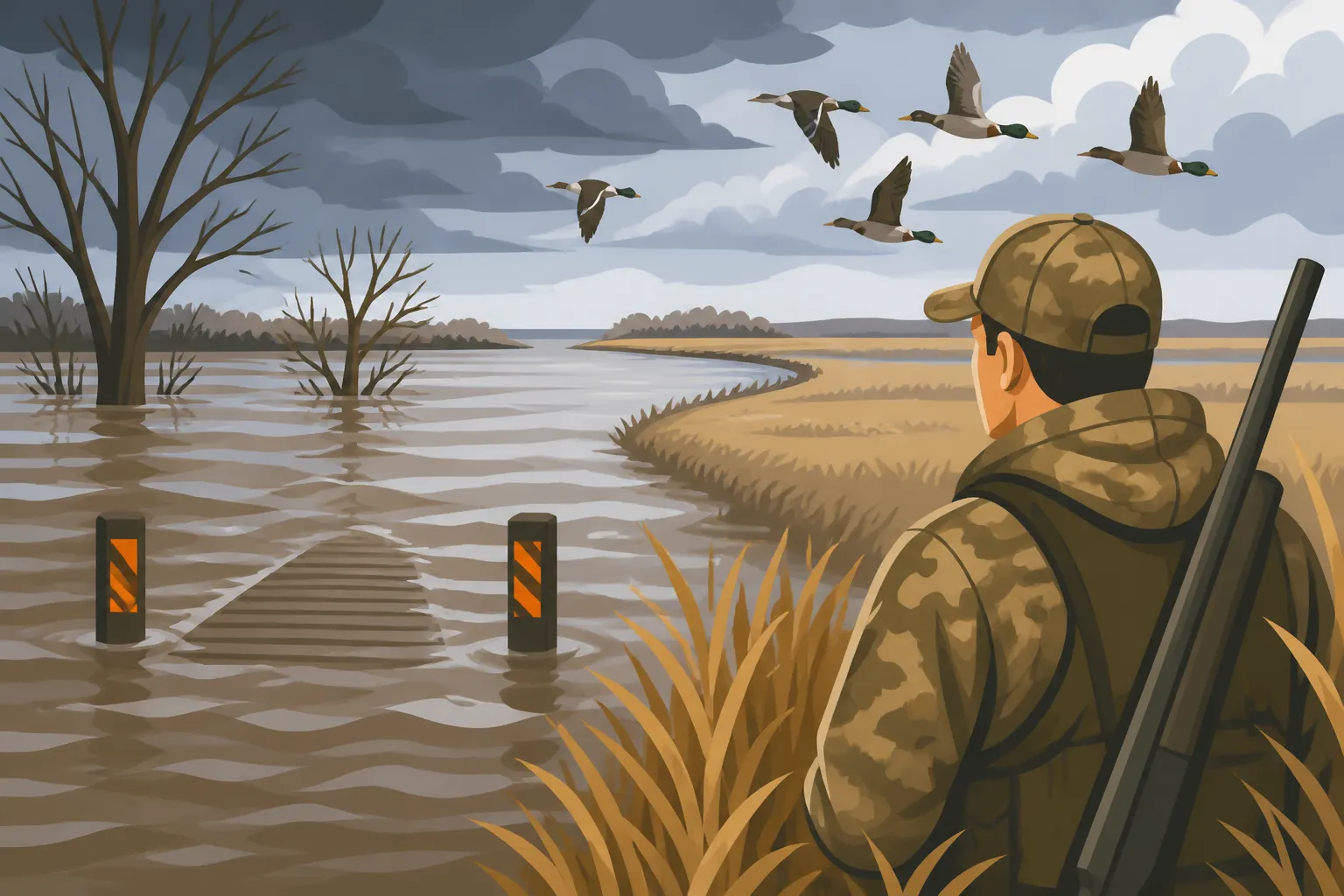
Public access points along Nebraska rivers, particularly at Wildlife Management Areas (WMAs) or Open Fields and Waters (OFW) tracts, are often the first things affected by high water. Roads, gravel or dirt, that lead into river bottom timber can become submerged and impassable. Gate access roads might turn into muddy quagmires that even a 4×4 can't handle without getting hopelessly stuck. Imagine driving an hour to your spot, only to find the access road is under three feet of water, or worse, has been washed out entirely. It's a gut punch, and it happens.
Local authorities will usually post road closures, but sometimes, by the time the signs go up, you’re already there. This is where planning ahead becomes vital. Check county road department websites, or even better, use mapping apps like onX Hunt, which often incorporate recent satellite imagery or community notes that might give you a heads-up on current conditions. Don't assume a road is open just because it was last week. Rivers are powerful, and they don't care about your hunting schedule. Vehicle Rules on Nebraska WMAs also dictate what you can and can't do even when roads are open, so always be mindful.
The Challenge of Boat Launches and Watercraft Safety
For waterfowl hunters, or anyone relying on a boat to reach islands or remote sections of river, flooding presents a whole new set of challenges. Public boat ramps can be completely submerged or, conversely, left high and dry if the water level drops too rapidly after a flood event, leaving you unable to launch or retrieve.
Beyond the launch, watercraft safety becomes paramount. Elevated river currents can be incredibly dangerous, sweeping boats downstream, creating hazardous eddies, and concealing submerged debris like logs, fences, or even entire trees. These can easily capsize a small craft or damage a motor. Navigating flooded timber in a boat, while sometimes necessary, requires extreme caution and a keen eye for submerged obstacles. Always wear your life vest, let someone know your float plan, and if in doubt, stay on shore. No duck hunt is worth risking your life. Jump Shooting Nebraska River Ducks highlights common tactics but assumes navigable water.
Private Land Access: Communication is Key
Even if you have permission to hunt private land, flooding can complicate things immensely. A landowner might grant you access, but if their fields are underwater or the private road to the river is impassable, that permission doesn’t do you much good. Furthermore, landowners themselves might be dealing with significant damage to fences, crops, or infrastructure, making hunting a secondary concern.
Open, honest communication with the landowner is crucial during flood events. Ask them directly about current access conditions. They're on the ground, they see what's happening, and they'll appreciate you checking in rather than showing up unexpectedly and potentially causing further issues on their property. Sometimes, a private access road that you usually use might be completely washed out, or they might prefer you avoid certain areas due to standing water or damage. Respect their wishes and their property – it's the foundation of maintaining good landowner relations for future hunting opportunities.
Strategies for Scouting and Hunting During High Water
So, the water's up. Do you just throw in the towel? Not necessarily! With the right preparation and a willingness to adapt, you can still have a productive hunt. It's all about playing detective and thinking outside the box.
Utilizing Technology to Monitor Water Levels and Access
In today’s age, we have incredible tools at our fingertips to monitor river conditions. Before you even think about loading your truck, jump online. The National Weather Service (NWS) river gauges provide real-time water levels and forecasts for many Nebraska rivers and their tributaries. Learn to read them and understand what different levels mean for your specific hunting spots. A "minor flood stage" might make some areas wet, but a "moderate" or "major" flood stage often means widespread inundation and impassable roads.
Beyond NWS, mapping apps are your best friend. onX Hunt, for example, offers satellite imagery that can be surprisingly current, sometimes even showing flooded areas. You can use it to identify higher ground, potential alternative access points, and even map out escape routes if water levels rise faster than expected. It's also invaluable for marking property lines and identifying public access points that might still be viable. GoHunt is another great resource for planning, especially when considering different units and their geographical features that might be more or less prone to flooding. Use these tools not just for navigation, but for pre-scouting from your couch. Downloading Nebraska Public Land Maps and Using the Atlas App Without Service are essential skills.
Alternative Access Points and Higher Ground Tactics
When your usual spot is underwater, it's time to get creative. Start looking at the fringes of the flooded area. Deer, turkeys, and even pheasants pushed out of their normal habitat will gravitate towards the nearest dry ground. This could be a small knoll, a railroad embankment, or the edge of an agricultural field adjacent to the river bottom.
Consider approaching from a completely different direction. Instead of using the usual river-side access, can you approach from a field side, perhaps asking permission from a different landowner if it's private, or checking the Public Access Atlas for a WMA that sits on slightly higher ground? You might find deer funneling through unpressured pinch points they wouldn't normally use. For waterfowl, a newly flooded cornfield or low-lying pasture might suddenly become a hotspot, even if it's far from the main river channel. Remember, game animals are looking for refuge, and you should be looking for where that refuge is. Entry and Exit Routes on Flat Farm Ground can be especially tricky with high water, requiring extra care.
Safety First: Essential Gear and Precautions
Hunting near flooded rivers is inherently more dangerous. Prioritize safety above all else.
- Tell someone your plan: Always let a friend or family member know exactly where you’re going, your planned route, and when you expect to be back.
- Wear a life vest: If you're using a boat or wading in strong currents, a life vest is non-negotiable. Even shallow water can be treacherous with a strong current.
- Waders and waterproof gear: Good waders are essential, but know their limits. Don't wade into water that's too deep or has a current you can't handle. Quality rain gear will keep you dry if you get caught in a sudden downpour that further exacerbates conditions.
- Communication device: A fully charged phone is a must. Consider a satellite messenger for truly remote areas where cell service might be spotty.
- Extra food and water: If you get stuck or stranded, you'll be glad to have these.
- First aid kit: Always carry a well-stocked first aid kit.
- Map and compass/GPS: Don't rely solely on your phone. A physical map and compass, or a dedicated GPS unit, can be a lifesaver if your phone dies or gets wet. Use your onX Hunt app to mark your truck and key points.
- Check the weather: Sudden storms can quickly turn manageable conditions into dangerous ones. Keep an eye on the forecast, not just for rain, but for wind, which can make boating on swollen rivers even more perilous.
- Never hunt alone: If conditions are iffy, bring a hunting partner. There's safety in numbers.
Here's a quick reference for assessing flood impact on access:
| Flood Stage | Typical River Bottom Impact | Access Challenges | Recommended Hunter Action |
|---|---|---|---|
| Action Stage | Low-lying areas, old oxbows, ditches begin to fill | Minor inconvenience, some muddy spots, wet fields | Proceed with caution, check minor crossings |
| Minor Flood Stage | Floodplain inundation, some timber flooded, fields may have standing water | Some access roads submerged, boat launches difficult, some private land inaccessible | Verify all access points, seek higher ground, use mapping apps |
| Moderate Flood Stage | Significant flooding of timber, widespread field inundation, islands submerged | Many main access roads closed, public land islands inaccessible, boat travel dangerous | Focus on peripheral high ground, secure landowner permission on non-river properties |
| Major Flood Stage | Widespread catastrophic flooding, main channels spill far beyond banks | Nearly all river bottom access impossible, road closures miles from river | Postpone or relocate hunts, prioritize safety, monitor long-term recovery |
Post-Flood Scenarios: New Opportunities and Lingering Challenges
The water eventually recedes, but the river bottom is rarely the same. Flooding leaves a lasting mark, creating both new challenges and, surprisingly, new opportunities for the astute hunter.
Changes in River Bottom Structure and Game Trails
A significant flood can completely rearrange a river bottom. Sandbars might disappear, new ones might form, and dense logjams can appear where there once was clear passage. The powerful currents can scour out new deep holes in the riverbed or deposit layers of silt in old sloughs. Existing game trails might be washed away, only to be replaced by new, higher-and-drier routes as animals adapt.
This means post-flood scouting is absolutely critical. What you knew about a spot before the flood might no longer apply. Walk the edges of the newly exposed land, look for fresh tracks and sign on the new high-water marks. You might find deer trails running along newly formed terraces or through slightly elevated patches of timber that were once just part of the general floodplain. These shifts can concentrate animals into smaller, more predictable areas, offering excellent hunting opportunities if you're willing to do the legwork to find them. Remember to check out Reading a Cedar Draw for Deer Movement for how deer use different forms of cover.
Recovering Blinds and Stands After a Flood
If you had ground blinds or treestands set up in the river bottom, a flood can be heartbreaking. Ground blinds can be completely washed away, filled with silt, or become unrecoverable if they're snagged on debris. Treestands might be submerged for days or weeks, potentially weakening straps, cables, and even the stand's structure due to prolonged exposure to water and debris impact.
Always prioritize safety when trying to recover equipment. If your stand was submerged, inspect it thoroughly before trusting it again. Look for rusted components, frayed straps, or cracks in the metal. It might be better to simply replace it than risk a fall. For ground blinds, be prepared for a muddy, messy recovery, and accept that some might be a total loss. This is the cost of hunting in dynamic river environments, but it also reminds us of the temporary nature of our setups. When setting up in such areas, consider how you might anchor or secure your blinds to withstand potential high water, even if it's just for a temporary situation. Ground Blinds in Open Nebraska Country offers good general advice, but river bottoms present unique challenges.
Long-Term Habitat Shifts and Their Influence on Future Hunts
Beyond immediate changes, significant floods can have long-term impacts on habitat. Sediment deposition can smother vegetation, while erosion can wipe out entire stands of trees. Conversely, floods can also deposit nutrient-rich soil, leading to new growth in subsequent seasons. This often means a shift in food sources and cover over time.
For instance, a flood that devastates a patch of mature timber might open up new areas for early successional growth, which can be fantastic for young deer and pheasants a few years down the line. It might also change the flow of a slough, creating better waterfowl habitat. As a hunter, it's vital to observe these changes year after year. The river's constant reshaping means that what was once a prime spot for River-Bottom Whitetail Hunting in Eastern Nebraska might become a less productive area, while a new gem emerges elsewhere. It’s a perpetual dance with nature, requiring ongoing scouting, adaptability, and a deep understanding of the landscape you choose to hunt.
In the end, hunting Nebraska’s rivers is a unique adventure. The threat of flooding is a real and ever-present factor, but it doesn't have to spell the end of your season. With smart planning, vigilant monitoring, responsible safety practices, and a healthy dose of adaptability, you can not only survive but thrive in the face of Mother Nature's powerful waterways.
Disclaimer
This article is for general informational purposes only and does not constitute professional advice. Laws, prices and regulations vary by location and change over time. Consult a qualified professional for guidance on your specific situation.