Getting a Deer Out of a Nebraska Sandhills Basin
Dropping a deer in one of Nebraska's vast Sandhills basins can be an incredible thrill, but the euphoria often quickly gives way to the daunting reality of getting that animal out. The unique, unforgiving terrain poses significant challenges for even the most experienced hunter, transforming a successful harvest into a serious logistical puzzle. This guide will walk you through practical strategies, essential gear, and crucial safety tips to help you successfully recover your deer from these remote, sandy landscapes.
Understanding the Sandhills Terrain and Its Challenges
The Nebraska Sandhills are an incredible, beautiful, and often misleadingly gentle-looking landscape. Beneath the rolling grass-covered dunes lie basins and blowouts that can swallow a hunter and their quarry whole, making deer recovery a true test of grit and planning.
The Unique Topography of Basins and Blowouts
Imagine chasing a mature whitetail or mule deer through what appears to be gently rolling hills, only for it to vanish into a steep-sided depression – a basin. These are often much deeper and wider than they appear from the ridge lines, carved by wind and water over millennia. Their sides can be surprisingly steep, composed of loose, unconsolidated sand that offers little stable footing. Adding to the challenge, these basins are often choked with dense vegetation like plum thickets, yucca, or even patches of cedar, making dragging a heavy animal an absolute nightmare.
Then there are the blowouts – stark, barren depressions where the wind has scoured away all vegetation, leaving nothing but soft, shifting sand. While these might seem easier to navigate due to a lack of brush, the sheer instability of the ground can be just as problematic. Every step, especially when burdened with a deer, feels like walking through quicksand. The isolation of these features means that once you're in a basin or blowout, you're often out of sight and sound of any potential assistance, amplifying the physical and mental strain of recovery.
Factors Complicating Deer Extraction
Beyond the challenging terrain itself, several other factors contribute to the difficulty of deer extraction in the Sandhills. Firstly, the sheer weight of a mature deer – a large Sandhills mule deer or whitetail buck can easily weigh 200 pounds or more dressed – makes even a short drag incredibly strenuous. Factor in the loose sand, and that weight feels exponentially heavier.
Weather conditions play a critical role. An early season hunt might mean warm temperatures, pushing you to recover the animal quickly to prevent spoilage. This urgency can lead to rushing and mistakes. On the other hand, rain can turn sandy trails into a heavy, sticky mess, making every step a monumental effort. Cold weather brings its own set of challenges, from numb fingers to frozen ground, though it does help with meat preservation. The distance from any established road or vehicle access point is almost always substantial. You might be miles from the nearest two-track, and those two-tracks themselves can be sandy and impassable for anything less than a four-wheel-drive vehicle. This means planning for a long haul, often over uneven ground with no stable footing, demanding a high level of physical fitness and preparation.
Essential Gear for Deer Recovery in the Sandhills
Having the right tools can significantly reduce the physical toll and increase your efficiency when faced with the arduous task of getting a deer out of a Sandhills basin. This isn't just about making it easier; it's about making it possible without compromising the meat or your safety.
Packing the Right Tools
When you're heading into the Sandhills, especially if you plan to venture far from vehicle access, your pack should contain more than just your hunting essentials. For deer recovery, a few specific items are non-negotiable.
First, game bags are paramount. High-quality, breathable game bags—like those from Argali or Kuiu, for example—are crucial for protecting the meat from dirt, insects, and drying out, particularly if you plan on quartering your animal. These bags allow air circulation, which is vital for cooling. For larger pieces of meat, a good set of at least four large bags is recommended.
Next, consider a heavy-duty tarp or deer sled. While a deer sled might be cumbersome to carry in, a sturdy tarp (even a simple blue poly tarp) can make dragging a whole or gutted carcass significantly easier on sand. It creates a smooth surface to slide over, preventing the carcass from digging in. For a comprehensive look at how to maintain your harvest, check out our guide on Meat Care Gear for Warm Nebraska Openers.
You'll also need a sharp knife (or two) and a bone saw. A good fixed-blade knife is essential for field dressing and quartering. A compact, lightweight bone saw, often foldable, makes quick work of pelvis or brisket bones if you opt for traditional gutting, or for splitting the spine if you're taking the animal out in two halves. Don't forget a small sharpening stone or field sharpener; nothing is more frustrating than a dull blade mid-task.
Finally, water and a robust first-aid kit are critical. You'll be exerting a tremendous amount of energy, and dehydration is a real risk. A comprehensive first-aid kit, including blister treatment, pain relievers, and trauma supplies, is a must for any remote hunting. For navigation, a reliable GPS unit or a smartphone with a robust mapping app like GoHunt is indispensable for marking your kill site, navigating to and from your vehicle, and finding the easiest path out. Consider a power bank to keep your devices charged, especially if you rely on a phone app for navigation.
Clothing and Footwear Considerations
Your choice of clothing and footwear can make or break a Sandhills deer recovery mission. The terrain is demanding, and comfort and protection are key.
Boots are arguably the most important piece of recovery gear. You need footwear with excellent ankle support to prevent twists and turns on uneven, sandy ground. Look for boots with aggressive traction patterns that can grip loose sand and grass, reducing slips and wasted energy. Waterproofing is also a huge plus, as you might encounter dew-soaked grass or cross small wet areas. A good pair of well-broken-in hiking boots, rather than just everyday hunting boots, often performs best in this environment. To understand what kind of footwear will serve you best, dive into our article on Boots for Walking Nebraska Grass and Sand.
Layering your clothing is always a smart strategy in Nebraska, where weather can shift rapidly. Start with a moisture-wicking base layer, add an insulating mid-layer, and finish with a wind-blocking and water-resistant outer shell. This allows you to adjust to the exertion of the recovery effort and protect yourself from the often-relentless Sandhills wind and sun. Even on a cool day, the physical exertion of dragging a deer will quickly make you hot, so having layers you can shed easily is vital.
Lastly, gloves are often overlooked but highly valuable. Durable work gloves or even good quality hunting gloves will protect your hands from rope burn, sharp bones, thorns, and general abrasions during field dressing and dragging. They provide a better grip and keep your hands cleaner, reducing the risk of infection.
Strategic Approaches to Deer Extraction
Once you've made the shot and located your deer in a Sandhills basin, the real work begins. Your approach to extraction will depend on several factors: the size of the deer, the distance to your vehicle, the terrain, and how much help you have. Thinking strategically before you start pulling can save you hours of grueling labor and ensure your meat is recovered in prime condition.
The Gutless Method for Lighter Loads
When you're deep in a Sandhills basin, miles from a road, attempting to drag a whole deer, even gutted, can be an exercise in futility. This is where the gutless method shines as a superior alternative. It's a field-processing technique that allows you to break down the animal into manageable, packable pieces without ever opening the body cavity. This means less mess, less weight, and less exposure of the internal organs to dirt and insects, which is particularly beneficial when you're managing Field Dressing and Cooling Game in Warm Weather.
Here’s a simplified breakdown of the process:
- Position the Animal: Lay the deer on one side.
- Skin One Side: Make an incision along the backbone from neck to tail. Then, make another incision around the neck and behind the front and back legs. Carefully peel the hide back down to the sternum and groin area, exposing one entire side of meat.
- Remove Quarters: Working from the exposed side, carefully detach the front and rear quarters at the joints. The front quarter simply needs to be detached from the rib cage; there's no bone-to-bone joint to cut through. The rear quarter is detached at the hip joint.
- Remove Backstraps and Tenderloins: Cut out the backstraps running along the spine. If you can reach, carefully extract the tenderloins from inside the body cavity from this side.
- Flip and Repeat: Roll the carcass over and repeat steps 2-4 on the other side.
- Debone Neck and Rib Meat (Optional): If you're looking to maximize meat recovery, you can carefully debone the neck meat and strip the meat from the ribs.
Pros of the Gutless Method:
- Significantly Reduces Weight: By leaving the guts, head (if not caping for a mount), and most of the bone behind, you drastically lighten your load.
- Cleaner Process: No gut pile to deal with, reducing mess and attraction for scavengers near your kill site.
- Faster Cooling: Quartering the meat allows it to cool down much faster, crucial for preserving quality, especially during warmer early season hunts.
- Easier Packing: Meat fits neatly into game bags and internal frame packs, making long hauls more efficient.
Cons of the Gutless Method:
- Requires Skill: It takes practice to execute efficiently. Watch videos and practice on smaller game if possible.
- Less Ideal for Trophy Photos: If you want classic grip-and-grin photos with a whole deer, this method might not be for you, unless you snap your pictures quickly before breaking it down.
- More Field Time: The actual processing takes more time initially than a simple gutting, but saves time and effort on the pack-out.
Carcass Dragging and Sledding Techniques
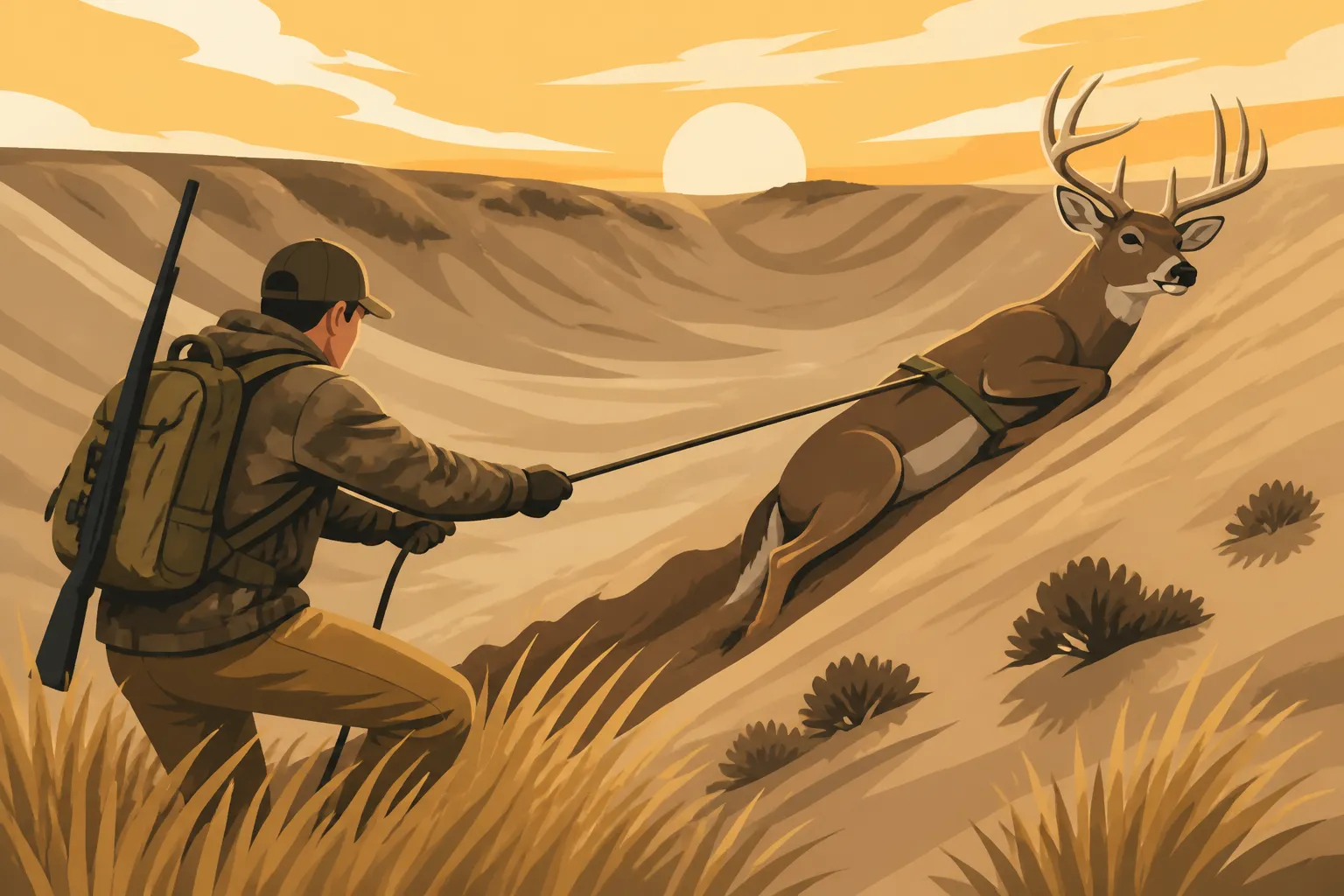
Sometimes, due to proximity to a vehicle or personal preference, dragging the entire animal (gutted or ungutted) is still the chosen method. In the Sandhills, this requires specific techniques to avoid exhaustion and maximize efficiency.
If you choose to drag, a deer sled or heavy tarp is your best friend. A robust plastic sled, though bulky, can slide surprisingly well over sand and grass, distributing the deer's weight and reducing friction. If you don't have a sled, a heavy-duty tarp can serve a similar purpose. Place the deer on the tarp, wrap it up like a burrito, and tie it securely. This protects the hide and meat from abrasion and keeps dirt out.
Best practices for dragging:
- Use a Harness: Never try to drag a heavy deer by hand for long distances. A quality deer dragging harness that attaches to your waist or shoulders distributes the load much more effectively, sparing your arms and back.
- Buddy System: If you have a hunting partner, dragging becomes infinitely easier. Work together, pulling in unison. A two-person drag, especially with a sled, can tackle much tougher terrain.
- Route Planning: Before you start pulling, take a few minutes to scout the easiest route out. Avoid the steepest inclines and deepest sand if possible. Look for natural contours, game trails, or areas with firmer ground. Sometimes, a slightly longer route on easier terrain is far less exhausting than a shorter, direct path through heavy cover or deep sand. Pay attention to how the Wind Direction on Open Nebraska Prairie Stands might have created drifts or cleared paths.
- Take Breaks: Don't try to be a hero. Take frequent, short breaks to rest your muscles and rehydrate. Pushing yourself to exhaustion increases the risk of injury.
The Art of Breaking Down a Deer for Backpacking
For true wilderness recovery from the heart of the Sandhills, especially for large animals, quartering the deer and packing it out in an internal frame pack is often the most sensible and least physically taxing option. This method, often combined with the gutless technique, ensures you can navigate difficult terrain with manageable loads.
Once your deer is quartered and the meat is in game bags, you'll need a good internal frame backpack designed for hauling heavy loads. These packs transfer the weight efficiently to your hips, protecting your shoulders and back.
Key considerations for backpacking meat:
- Load Distribution: Pack the heaviest items (meat) closest to your back and high in the pack. This helps maintain your balance. Use smaller items to fill voids and prevent shifting. For more insights on carrying capacity, refer to our article on Packs for a Day on Public Ground.
- Secure the Load: Cinch down all compression straps to prevent the meat from shifting. A shifting load can throw you off balance and quickly become uncomfortable or dangerous.
- Cooling the Meat: If temperatures are warm, ensuring the meat cools quickly is paramount. Get the quarters into game bags and out of the sun as soon as possible. Air circulation is vital. If possible, hang the meat in a shady, breezy spot for a short period before packing it, though this is often not practical in open Sandhills country. Carry a cooler full of ice in your vehicle and get the meat there as fast as you safely can. Learn more about optimal cooling in Coolers for a Warm Nebraska Opener.
- Multiple Trips: Don't feel pressured to carry everything out in one heroic trip. If the distance or weight is too much, plan for two or even three trips. Your safety and the quality of your meat are more important than bragging rights. Cache the remaining meat in a cool, shady spot, well-protected from scavengers, and clearly mark its location on your GPS.
Safety and Logistics in Sandhills Deer Recovery
Recovering a deer from a Sandhills basin isn't just a physical challenge; it's a logistical and safety concern. Being prepared for unexpected situations is just as important as having the right tools for the job.
Navigating and Communication
The Sandhills can be disorienting. The rolling, repetitive landscape of dunes and basins often lacks distinct landmarks, making it easy to get turned around, especially when you're focused on dragging a heavy load.
Reliable navigation is your first line of defense against getting lost. A dedicated GPS unit is always recommended due to its robust battery life and durability. However, many hunters now rely heavily on smartphone apps. The GoHunt app, for example, offers excellent satellite imagery and topo maps that can be downloaded for offline use, crucial in areas with no cell service – which is common in many Sandhills hunting areas. Use your GPS or app to mark your vehicle, your kill site, and any natural landmarks or fence lines you cross. Regularly check your position and direction of travel. For a comparison of your navigation options, explore GPS Units Versus Phone Apps. It's also wise to carry a physical map and compass as a backup, and know how to use them.
Communication is equally vital, particularly if you're hunting alone. Always tell someone reliable (a family member, friend, or camp partner) your hunting plan, including your expected area, route, and estimated return time. If you venture into truly remote areas without cell service, consider investing in a satellite messenger device like a Garmin inReach or Zoleo. These devices allow you to send text messages and, more importantly, trigger an SOS call to emergency services, even when far beyond cellular range. This could be a literal lifesaver if you suffer an injury or become stranded during a difficult recovery.
Dealing with Environmental Factors
The Sandhills are a land of extremes, and these environmental factors can significantly impact your recovery efforts. Being prepared for them is key to staying safe and ensuring your meat doesn't spoil.
Hydration and Sun Protection: Open Sandhills country offers little shade, making sun exposure a constant concern. Wear a wide-brimmed hat, sunglasses, and use sunscreen to protect yourself from the harsh Nebraska sun. Carry ample water, far more than you think you'll need, and start hydrating well before your hunt. The physical exertion of deer recovery will rapidly deplete your fluids.
Managing Heat in Early Season: If you're hunting during an early archery season opener, temperatures can still be quite warm, sometimes pushing into the 80s or even 90s. This heat is a major enemy of venison quality. You need to work quickly and efficiently. The gutless method, by allowing faster cooling of individual quarters, is a huge advantage here. Get the meat into game bags immediately, keep it out of direct sunlight, and get it to a cooler with ice as fast as humanly possible. Don't let your prize turn into a loss due to heat.
Addressing Cold and Wind in Late Season: Conversely, late-season hunts can bring bitter cold and relentless Sandhills winds. Dress in warm layers, focusing on wind-blocking outer shells. Keeping warm is crucial for maintaining dexterity and focus during processing and dragging. While the cold helps preserve meat, exposure to extreme wind can cause the meat to dry out quickly, a phenomenon known as "wind burn." Keep meat in game bags and out of direct wind whenever possible. Furthermore, understanding Wind and Thermals in the Sandhills is critical, not just for hunting, but for managing your energy and exposure during recovery. A brutal headwind during a long drag can be utterly exhausting.
By anticipating these challenges and equipping yourself with the right gear and knowledge, you can transform the daunting task of recovering a deer from a Sandhills basin into a manageable and successful part of your hunting adventure.
Deer Extraction Methods Comparison
To help you decide the best approach for your Sandhills deer recovery, here's a quick comparison of the common methods:
| Method | Weight Reduction | Effort Required (Drag/Carry) | Time Commitment (Field) | Sandhills Advantage (+) / Disadvantage (-) |
|---|---|---|---|---|
| Whole Carcass Drag | None (ungutted) / ~20-30% (gutted) | Very High | Low (initial) | (-) Extremely difficult on loose sand and steep inclines; (+) Quick initial action |
| Gutless Method | ~50-60% (leaving guts, some bone, head) | Moderate (carrying quarters) | Moderate (processing time) | (+) Excellent for long distances, warm weather, and difficult terrain; (-) Requires skill |
| Quartering (Traditional) | ~50-60% (leaving guts, some bone, head) | Moderate (carrying quarters) | Moderate (processing time) | (+) Good for packing out; often more familiar to hunters; (-) Opens cavity, more mess |
Disclaimer
Hunting is an inherently dangerous activity. This guide provides general information and recommendations for deer recovery in the Nebraska Sandhills. Always prioritize safety, adhere to all local hunting regulations, and be prepared for changing weather and challenging terrain. The author and publisher are not responsible for any incidents or injuries that may occur while following these suggestions. It is the individual hunter's responsibility to ensure their own safety and make sound judgments in the field.