Closing the Last Hundred Yards on Sand
Few things are more disheartening in the world of hunting than spotting that dream buck or antelope, executing a flawless approach for hundreds of yards, only to have them bust you in the last critical hundred. In the vast, open expanses of Nebraska's Sandhills and Panhandle, where cover is sparse and game animals possess eyesight that rivals a hawk's, those final moments of a stalk are often the most challenging. This guide is all about equipping you with the tactics, mindset, and knowledge to conquer that crucial last hundred yards on sandy terrain, turning near misses into successful harvests.
The Unique Challenge of Sandhills Terrain
Hunting in Nebraska's Sandhills is unlike hunting dense timber or agricultural fields. The landscape itself presents a formidable opponent, requiring a completely different approach to stalking and concealment. Understanding these nuances is the first step toward getting within range of your target.
Understanding the Landscape and Its Cover
The Sandhills are a breathtaking tapestry of rolling dunes, vast grasslands, and the occasional blowout or plum thicket. What might look like decent cover from a mile away often reveals itself as nothing more than a few wisps of grass or a shallow dip once you're actually on it. This creates a significant mental hurdle: your perception of cover might not match reality. You'll find yucca plants, clumps of bluestem, and occasional cedar trees in pockets, but vertical cover in the open country is extremely limited. The ground itself is often loose sand, which can be surprisingly noisy underfoot, especially when dry. Every step can be an audible crunch, broadcasting your presence to animals with keen hearing. Furthermore, sound carries incredibly far across these open plains, meaning a small mistake in foot placement can alert game from much further than you'd expect. Spotting a trophy animal in a deep blowout, a natural depression carved by wind and water, might seem like a gift from the hunting gods, offering fantastic concealment. However, getting into and out of those features quietly and with a consistent wind can be a chess match in itself. The very nature of this terrain, with its subtle rises and falls, means that what offers cover one moment might leave you completely exposed the next.
The Hyper-Alert Nature of Sandhills Game
The animals that call the Nebraska Sandhills home are survivors. They've evolved in an environment where danger can approach from any direction across vast distances. Mule deer, with their enormous ears constantly swiveling, and pronghorn, possessing some of the best eyesight in the animal kingdom, are perpetually on high alert. Their lives depend on it. They are less accustomed to dense vertical cover, so their defenses are honed for detecting movement and anomalies in the horizontal plane. A slight shift in your silhouette against the horizon, even at considerable distance, can trigger an alarm. Unlike whitetails in river bottoms who might rely on scent and hearing in thick cover, a Sandhills mule deer or antelope is constantly scanning its surroundings. This means that any part of your stalk, from the moment you begin to move to the final shot, must be executed with an unwavering commitment to stealth and minimizing your presence. They’re not just looking for a hunter; they’re looking for anything out of place in their familiar, wide-open world. This heightened awareness is precisely why those last hundred yards feel like walking on eggshells – because, in a way, you are.
Mastering the Art of the Sandhill Stalk
Bringing home a buck or a pronghorn from the Sandhills often comes down to one thing: how effectively you can navigate those final, treacherous yards. It's a delicate dance of reading the landscape, controlling your movements, and embracing extreme patience.
Utilizing Natural Contours and Undulations
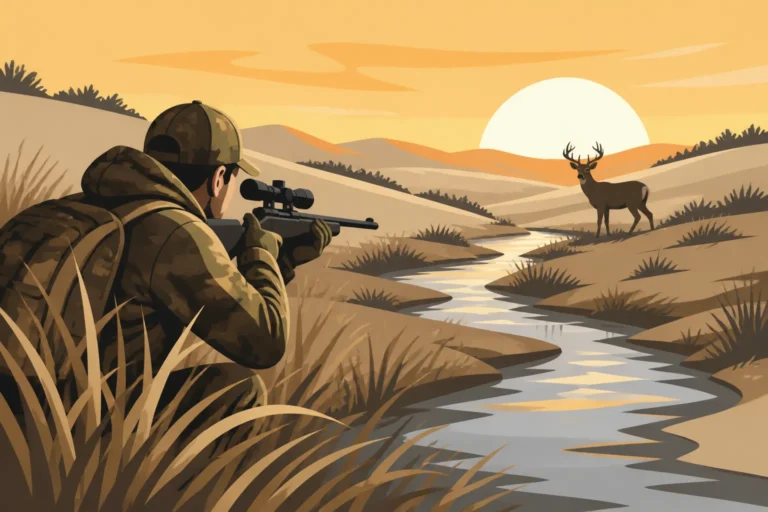
The key to a successful Sandhills stalk lies in your ability to "read" the land. Forget the thick timber; here, your cover is the subtle rise and fall of the terrain. Every dip, every crest, every blowout, and even features like old fencelines or small plum thickets become potential pathways to concealment. Before you even take your first step on the stalk, use your binoculars or spotting scope, perhaps aided by detailed mapping from a tool like GoHunt, to plan your route. Look for linear features, even if they're only a few feet deep, that lead toward your target. A deep washout or a winding creek bottom, for example, can offer surprising amounts of protection from prying eyes. Sometimes, a series of low, rolling hills can be strung together, allowing you to stay just below the horizon as you inch closer. It's often a zigzagging path, not a direct line, that gets you there. When you get close, you might even find yourself crawling on your belly through a shallow depression or behind a clump of yucca for dozens of yards. This might not be glamorous, but it keeps you out of sight and reduces your profile dramatically against the wide-open sky. Remember, even a small rise in the ground can conceal your entire body if you stay low.
Minimizing Noise and Movement
Once you've plotted your route, the execution requires supreme discipline. Moving slowly and deliberately is paramount. Those loose, sandy soils that define much of the Sandhills can be exceptionally noisy. Instead of a heavy heel-strike, try a smooth, heel-to-toe roll with each step, gently placing your weight down. Listen to the ground beneath you; some areas might be firmer and quieter, while others will crunch like walking on dry cereal. Adjust your pace and foot placement accordingly. It's often better to take one slow, silent step every ten seconds than to rush three steps that make noise. Pay attention to any loose rocks or dry sticks that might be present in patches, as these will amplify sound. Clothing choice also plays a role here; avoid noisy fabrics that rustle with every movement. A strong wind, as described in Wind and Thermals in the Sandhills, can actually be your friend, masking the subtle sounds of your approach. Use it to your advantage, but be mindful of how it shifts. Beyond noise, control your movement. Animals in open country are masters at detecting even slight, unnatural motions. Move only when their heads are down feeding, or when they're looking away. When they look up, freeze. Become a statue. Even if you're not fully concealed, a stationary object is much harder to pick out than a moving one. Breaking up your silhouette is also crucial. Never skylight yourself on a ridge line; always stay just below the crest or move through a saddle.
Patience and Precision in the Final Approach
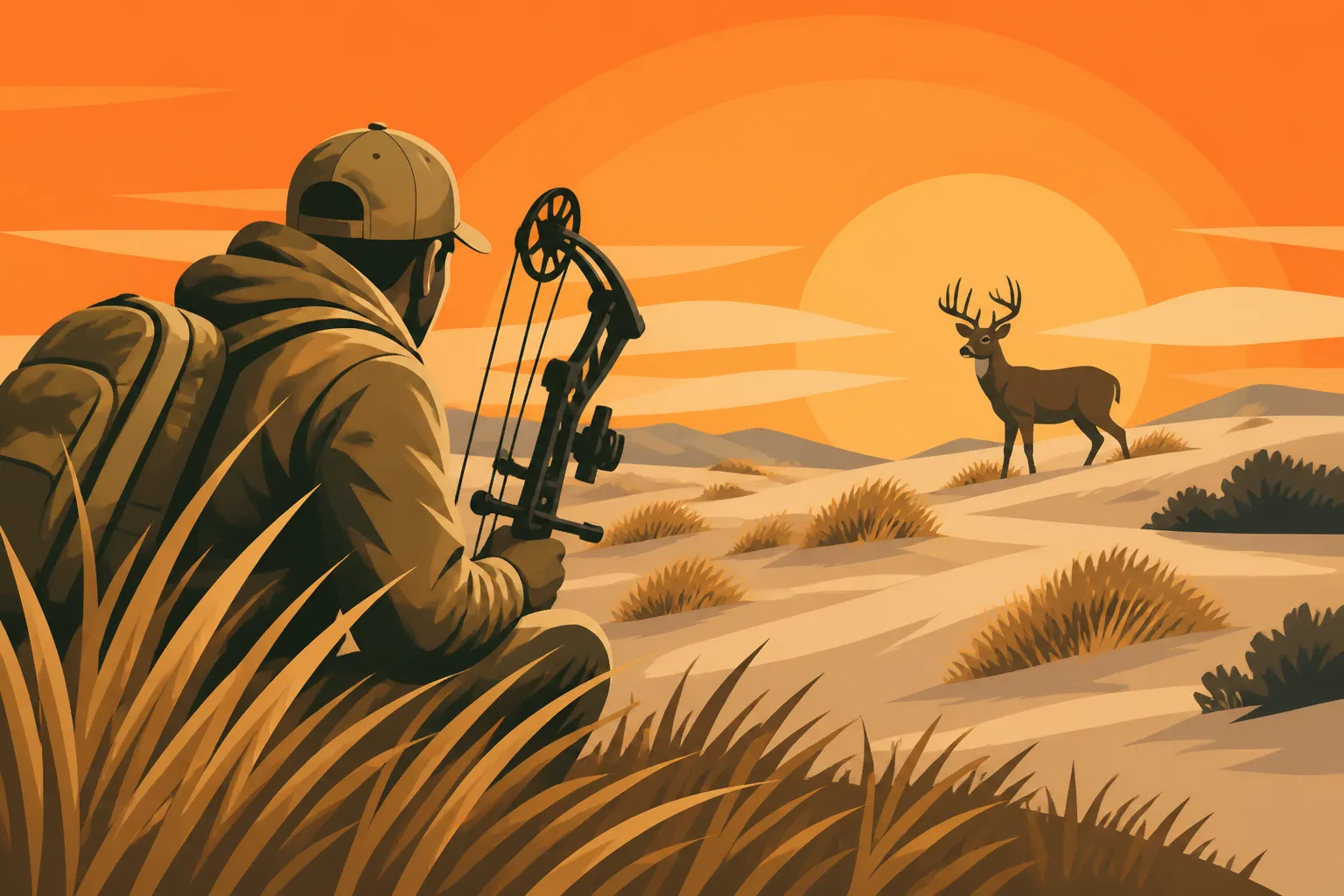
The final hundred yards are a test of nerve and patience. This is where many stalks unravel. You've gotten close, but now every twitch, every rustle, every glance in the wrong direction can blow your carefully executed plan. As you get into the final shooting lane, pause frequently. Take the time to observe the animal's behavior. Are they feeding calmly? Are they alert and nervous? When do they lift their heads to scan? Use these moments to advance. If you're bowhunting, this is especially critical, as you might need to wait for a specific quartering-away shot opportunity. If you're rifle hunting, you still need to get into a stable shooting position, which might mean a prone crawl or setting up shooting sticks. Don't rush the shot. Take a deep breath, control your heartbeat, and focus on the fundamentals. Often, a mule deer or antelope will feed for a few steps, then lift its head for a quick scan before dropping it again. Use these head-down moments to make your move. If you get within range, but the animal is in a precarious position or facing directly at you, wait it out. Sometimes, the best move is no move at all. Remember the sheer difficulty of Stalking Pronghorn Across Open Nebraska Ground – they are perhaps the ultimate test of patience in the open country. Your precision in shot placement, once you finally get the opportunity, is also paramount, especially for animals like mule deer, where precise shot angles are key to a clean harvest.
Essential Gear and Preparation for Sandy Approaches
A successful Sandhills stalk isn't just about technique; it's also about having the right tools and knowing how to use them. Your gear choices, from your boots to your optics, can make or break your attempt to close that final distance.
Footwear and Clothing for Stealth
When you're trying to move silently across sandy ground, your footwear is critical. Hard-soled hiking boots, while great for rugged mountain terrain, can be loud and clunky on the prairie. Instead, consider boots with softer, more flexible soles that allow you to feel the ground and move quietly. Some hunters even opt for lightweight, soft-sided hunting boots or approach shoes that prioritize stealth over heavy-duty support. The goal is to minimize noise and maximize your ability to sense what you're stepping on. Refer to Boots for Walking Nebraska Sandhills Walking for specific recommendations. For clothing, quiet fabrics are non-negotiable. Fleece, wool, or soft-shell materials are excellent choices that won't rustle or swish as you move. Avoid anything with a slick or stiff exterior. Layering is also important, as temperatures in the Sandhills can fluctuate wildly, from chilly mornings to warm afternoons. You want to be able to shed or add layers quietly without exposing yourself. Camouflage patterns that blend with the dry prairie grasses and sparse vegetation are ideal for breaking up your outline. Earth tones, tans, and faded greens will serve you well.
Optics for Spotting and Ranging
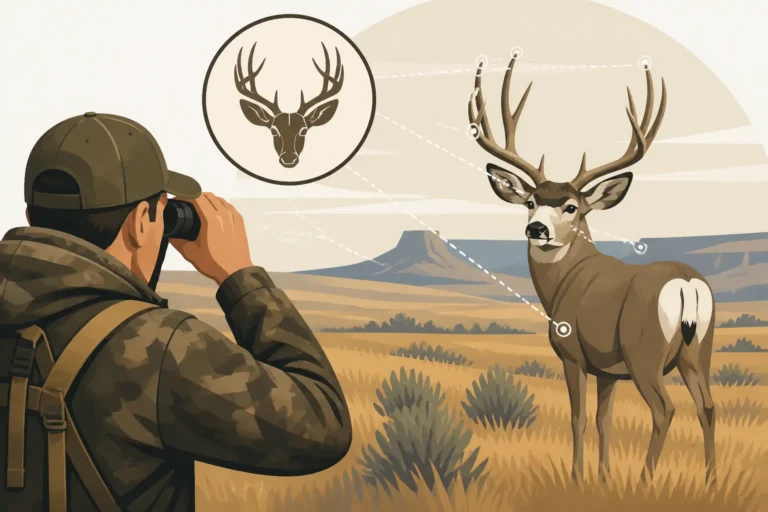
Before you can stalk, you have to find your animal. This is where high-quality optics truly shine in the open country of Nebraska. A good pair of 10×42 or 12×50 binoculars are indispensable for glassing distant ridges, blowouts, and plum thickets. When you're trying to locate a bedded mule deer in a vast basin, every detail matters. Once you've spotted your target, a powerful spotting scope (20-60x or higher) becomes your best friend. It allows you to confirm the animal's sex, size, and most importantly, its exact position and any potential obstacles or cover that might exist on your chosen stalk route. Tools like GoHunt can further enhance your scouting by providing detailed topographical maps that you can study before you even step foot in the field, helping you identify potential vantage points and approach corridors from afar.
A laser rangefinder is another non-negotiable piece of gear. In the open, deceptive landscape of the Sandhills, judging distance by eye is notoriously difficult. A slight rise or fall in the terrain can make an animal appear closer or further than it actually is. Knowing the exact range to your target, and to various landmarks along your stalking path, is crucial for planning your final approach and ensuring a precise shot. Modern rangefinders often include inclinometers and ballistic calculations, which can be helpful for shots on uneven ground. When you're assessing Rifle Ranges Realistic on the Nebraska Prairie, a rangefinder is the tool that makes those distances actionable.
Backpack Essentials for the Stalker
Because you'll be covering potentially long distances and often operating in remote areas, a well-stocked but minimalist backpack is essential. You want enough gear to be safe and effective, but not so much that it becomes cumbersome or noisy.
- Water: Dehydration is a serious concern in the Sandhills, especially during early seasons. Carry more water than you think you'll need.
- Snacks: High-energy snacks like granola bars, nuts, or jerky will keep you fueled.
- First-Aid Kit: A basic kit with bandages, antiseptic wipes, pain relievers, and moleskin for blisters is a must.
- Headlamp: Even if you plan to be back before dark, things can go wrong. A headlamp ensures you can field dress your animal or navigate back to your vehicle safely.
- Wind Checker: A small bottle of powder or an electronic wind checker is crucial for constantly monitoring the fickle winds of the plains.
- GPS/Map App: Even if you've studied the GoHunt maps, a GPS device or a robust mapping app on your phone (with offline capabilities) will help you stay oriented and track your progress. Knowing how to use these tools for Finding Nebraska Property Lines can save you from trespassing issues.
- Game Bags: If you're successful, quality game bags are vital for protecting your meat from flies and dirt, especially during warmer weather. Consider the advice in Meat Care Gear for Warm Nebraska Openers.
The key is to keep your pack light and organized to minimize noise and snagging on vegetation. A minimalist approach allows you to focus on the stalk itself.
Reading Wind and Thermals Like a Pro
Understanding how wind and thermals behave in the Sandhills is arguably as important as understanding the terrain itself. These invisible forces dictate your approach, influencing scent dispersal and even sound. Ignoring them is a recipe for failure.
The Shifting Winds of the Plains
Nebraska is renowned for its wind, and the Sandhills are no exception. What makes wind a particular challenge here is its tendency to swirl and shift, especially when interacting with the rolling hills and deep blowouts. You might have a steady crosswind on top of a ridge, only to find it swirling unpredictably down in a basin. A constant wind check is absolutely essential. Carry a small bottle of unscented powder or an electronic wind checker and use it every few minutes, especially as you get closer to your target. Throw a puff of powder into the air, observe its drift, and confirm your approach path. Always try to approach from downwind or crosswind. Never, ever, try to stalk an animal with the wind blowing directly from you to them, even if it seems like the perfect path. Their nose is their primary defense against unseen danger, and an educated mule deer or antelope will pick up your scent long before you get within range. The importance of this cannot be overstated; it's why topics like Wind and Thermals in the Sandhills are so critical for success. Learn to anticipate how the wind will behave as you move into different terrain features and adjust your stalk accordingly, even if it means taking a much longer, more circuitous route.
Understanding Thermal Drifts in Sandhill Basins
Beyond the overarching wind patterns, thermals play a significant role, particularly in the morning and evening. Thermals are localized air currents caused by temperature changes. As the sun rises and warms the land, air in lower elevations (like creek bottoms, blowouts, and depressions) begins to rise. This creates an upward thermal drift. Conversely, as the sun sets and the air cools, these thermals will fall, carrying scent downwards into low-lying areas. This phenomenon is especially pronounced in the varied topography of the Sandhills.
Imagine you're stalking a mule deer bedded in a deep blowout early in the morning. If you approach from above, your scent could be carried downwards by a rising thermal, alerting the animal before you even get close. In the evening, the opposite might be true; if you're below the animal, your scent could be carried down to it by falling thermals. Combining your knowledge of wind direction with an understanding of thermals is crucial. When approaching an animal in a drainage or basin, try to stay above them in the morning to avoid rising thermals carrying your scent up, and below them in the evening to avoid falling thermals carrying your scent down. This isn't always possible, but being aware of these subtle air movements gives you a distinct advantage. Sometimes, a strong prevailing wind will override thermals, but in calm conditions, thermals become the dominant factor. Learning to assess these conditions will greatly increase your odds of closing those crucial last hundred yards undetected.
Stalking Considerations for Nebraska's Open Country
Here's a quick summary of key factors to consider when stalking game in the unique, sandy terrain of Nebraska.
| Factor | Sandhills Challenge | Stalking Tactic |
|---|---|---|
| Cover | Sparse, low-lying, rolling hills, blowouts | Use elevation changes, low crawls, distant vantage points |
| Noise | Sand can be noisy, crunchy; dry grass | Slow, deliberate steps; soft-soled boots; use wind to mask sound |
| Visibility | Extremely open, long sightlines for game | Stay low, break silhouette, freeze when eyes are up |
| Wind/Scent | Often swirling, unpredictable in broken terrain | Constant wind checking, approach from downwind/crosswind |
| Movement | Game is accustomed to seeing distant movement | Slow, fluid movements; avoid sudden changes; use vegetation as screen |
With these strategies in your arsenal, those last hundred yards on sand become less of an insurmountable barrier and more of a thrilling challenge. Remember, patience, precision, and an intimate understanding of the Nebraska landscape are your greatest assets.
Disclaimer
Hunting involves inherent risks, including but not limited to those associated with firearms, archery equipment, and outdoor conditions. Always prioritize safety, follow all local, state, and federal hunting regulations, and obtain proper licenses and permits. The information provided in this guide is for informational purposes only and should not be considered a substitute for professional instruction or personal experience. Always be aware of your surroundings and hunt ethically and responsibly.