Tracking a Deer in Sandhills Grass
Few things are as disheartening as making a good shot on a deer in Nebraska's vast Sandhills, only to have it disappear into the sea of tall, waving grass with seemingly no trace. The unique environment of this region can turn what should be a straightforward recovery into a heart-pounding, back-breaking ordeal. This guide is dedicated to equipping you with the strategies and mindset needed to confidently track and recover your deer, even when the prairie seems to swallow every sign.
Understanding the Unique Challenges of Sandhills Tracking
Hunting in the Nebraska Sandhills offers incredible opportunities, but it also presents a recovery challenge unlike almost anywhere else. The very landscape that makes it so beautiful and wild can conspire against you when a deer decides to disappear.
The Nature of Sandhills Terrain and Vegetation
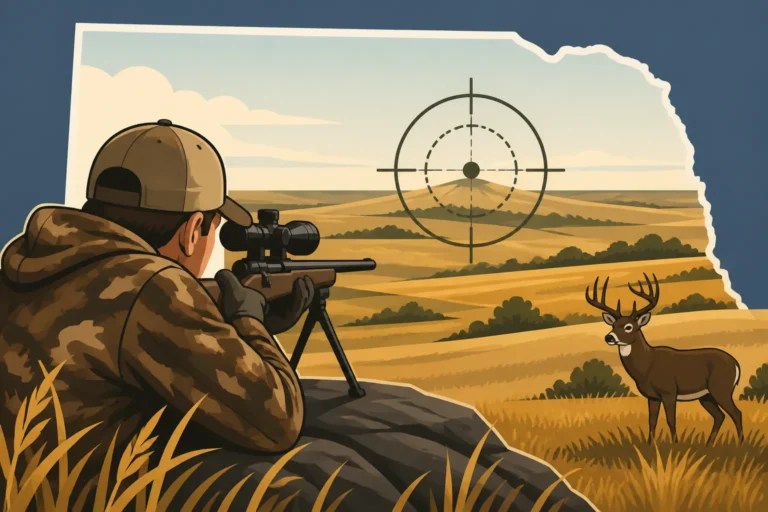
Imagine miles of rolling, grass-covered dunes, often punctuated by "choppies" – abrupt, steep rises and falls – or sandy blowouts. The soil itself is predominantly loose sand, which can be a blessing for finding tracks but a curse for stability. What truly defines the Sandhills for a tracker, however, is the vegetation. Think big bluestem, switchgrass, Indiangrass, and other native prairie species, often growing shoulder-high or taller. This dense, resilient grass creates an almost impenetrable curtain, easily obscuring a deer that's gone down just yards away.
When a deer is hit, especially one that bolts, it can easily plow through this tall grass, creating very little lasting disruption, or conversely, leaving a tangled mess that's hard to interpret. A deer that drops quickly will often be completely swallowed by the vegetation, leaving no visible sign from a distance. The rolling topography further complicates things; a deer cresting a small dune can vanish, even if you had a clear line of sight moments before. You might think you've marked the spot, only to find yourself disoriented by the seemingly endless waves of grass once you start walking.
Why Traditional Blood Trailing Methods Fall Short Here
Most hunters are familiar with the concept of following a clear blood trail – a series of drops, splashes, or smears that lead directly to their animal. In many environments, like river bottom timber or crop fields after harvest, this is a viable strategy. But in the Sandhills? That expectation will lead to frustration more often than not.
The tall, thick grass acts like a natural sponge. Even a deer bleeding profusely might not leave a consistent, visible trail on the ground. Blood can cling to the grass blades, drying quickly or being absorbed, rather than dripping to the sandy soil below. A small amount of blood, which would be obvious on bare dirt, can be completely hidden by the sheer volume of vegetation. Furthermore, the constant wind that sweeps across the Sandhills can quickly flatten disturbed grass, further erasing any subtle hints a deer might have left. This means you need to be prepared to look for far more than just blood; you need to become a detective of disturbed ground, broken vegetation, and minute signs. It's a mental shift that's crucial for success in this unique hunting ground.
Pre-Shot Preparation and Immediate Aftermath Strategies
Successfully recovering a deer in the Sandhills often begins not after the shot, but before you even pull the trigger. The immediate actions you take, or fail to take, in the moments surrounding the shot are absolutely critical.
Pre-Hunting Visual Cues and Landmarks
Before you even raise your weapon, take a moment to absorb your surroundings. The Sandhills can look monotonous at first glance, but there are always subtle landmarks. Identify a specific cedar tree on a distant ridge, a unique rock formation in a blowout, a particularly tall clump of yucca, or even a fence post far off. Don't just pick one; try to triangulate potential points. If you're using a quality mapping app, like those offered by GoHunt, mark your stand location or current position. Use your rangefinder not just for the deer, but for these landmarks and potential escape routes. Knowing that the deer is running towards "that cluster of willows 250 yards to the northeast" is infinitely more helpful than just "running that way." This spatial awareness is your secret weapon against the vastness.
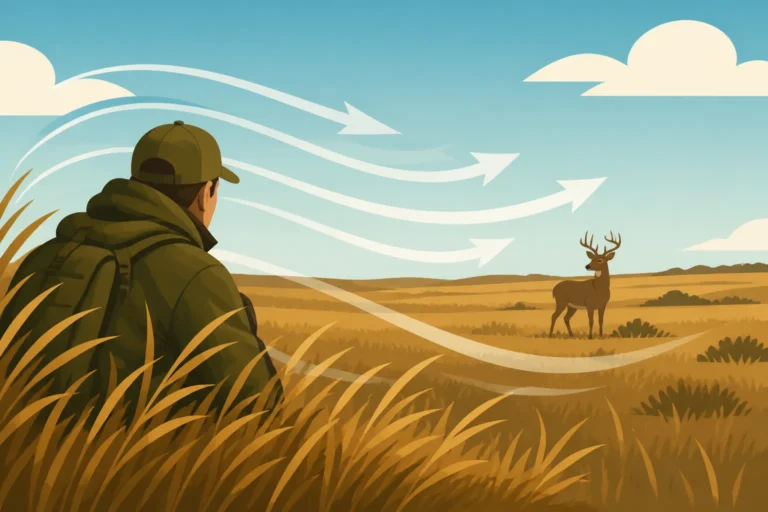
If you're hunting near a creek or a specific geological feature, orient yourself to it. Even knowing the general "Wind Direction on Open Nebraska Prairie Stands" can give you a clue as to how a deer might move or where it might naturally seek cover after a shot. This mental mapping, augmented by technology, will save you precious time and reduce panic later.
Mark the Shot Location and Last Seen Point Immediately
This cannot be stressed enough: the moment you shoot, do not move from your position until you have precisely marked two things. First, the exact spot where the deer was standing when you shot it. Find a landmark near it – a specific grass clump, a small bush, a rise in the terrain. Second, and perhaps even more critically, mark the exact spot where the deer disappeared from your sight. Did it drop into a low spot? Did it crest a dune? Did it enter a thick stand of plum bushes?
Once you leave your stand or shooting position, things will look completely different. Use physical markers: throw your hat, a roll of toilet paper, or a piece of flagging tape at these two points as you walk to them. Simultaneously, use your GPS device or smartphone app to drop a waypoint at both the shot location and the last seen location. Many hunters use onX Layers for Nebraska Land Status, which also allows for dropping pins and measuring distances. These digital breadcrumbs, combined with your physical markers, provide an invaluable starting point for your track. Without these precise marks, you'll waste precious time trying to reorient yourself and potentially miss the initial, often most evident, signs.
The Critical Waiting Period
After a deer has been shot, especially in the Sandhills, patience is not just a virtue, it's a non-negotiable requirement. Your immediate instinct might be to rush after it, but this is one of the biggest mistakes you can make. A deer that feels pursued will often run much further, making a difficult track almost impossible.
The general rule of thumb varies based on the perceived hit. For a solid lung or heart shot, waiting 30-60 minutes is often sufficient, though an hour is safer. For a liver shot, you're looking at 4-6 hours, if not longer. For a gut shot, the wait extends to a minimum of 6-8 hours, often overnight. In warm weather, this wait can be agonizing, creating a dilemma between allowing the deer to expire and preventing spoilage, which is why having a plan for "Field Dressing and Cooling Game in Warm Weather" is so important for the Sandhills.
During this waiting period, resist the urge to peek or push. Stay still, listen, and compose yourself. Review your shot placement, mentally retrace the deer's escape route, and strategize your initial tracking path. This downtime is also an excellent opportunity to drop more waypoints on your mapping app from your elevated position, marking any other features you noticed in the deer's direction of travel. When you do start, approach the last seen location cautiously and quietly, ready to pick up the first subtle signs.
Systematic Tracking Techniques for Sandhills Grass
Once you've waited and are ready to begin, the Sandhills demands a systematic, almost forensic approach. Forget the casual stroll; this is a meticulous grid search.
Grid Searching and "Reading" the Environment
In the dense Sandhills grass, a clear blood trail is often a luxury. Therefore, you need to expand your search beyond just red drops. Start at the exact point of last sight and expand your search in concentric circles or, better yet, a grid pattern. If you have hunting partners, spread out, maintaining visual contact and walking parallel lines. Mark the perimeter of your search with flagging tape every 20-30 yards to ensure you cover ground thoroughly and don't re-track the same area.
What are you looking for?
- Disturbed Grass: Look for bent, broken, or scraped blades of grass, especially those with small specks of blood or stomach contents. A deer moving quickly will leave a more pronounced "lane" through tall grass.
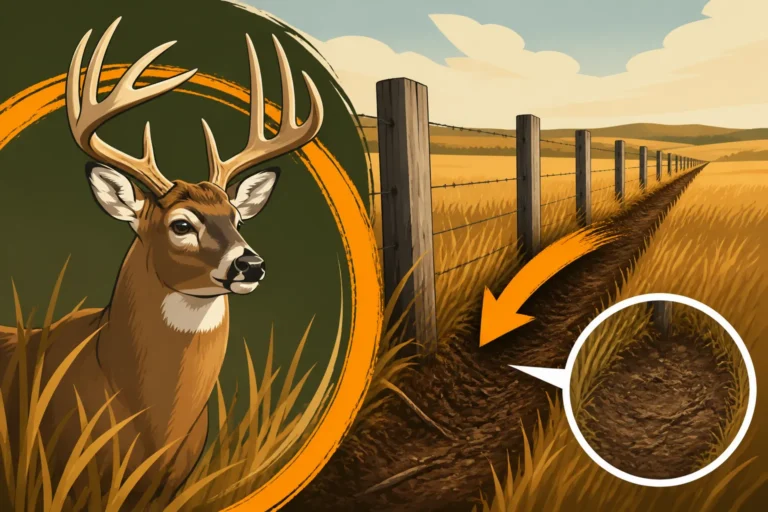
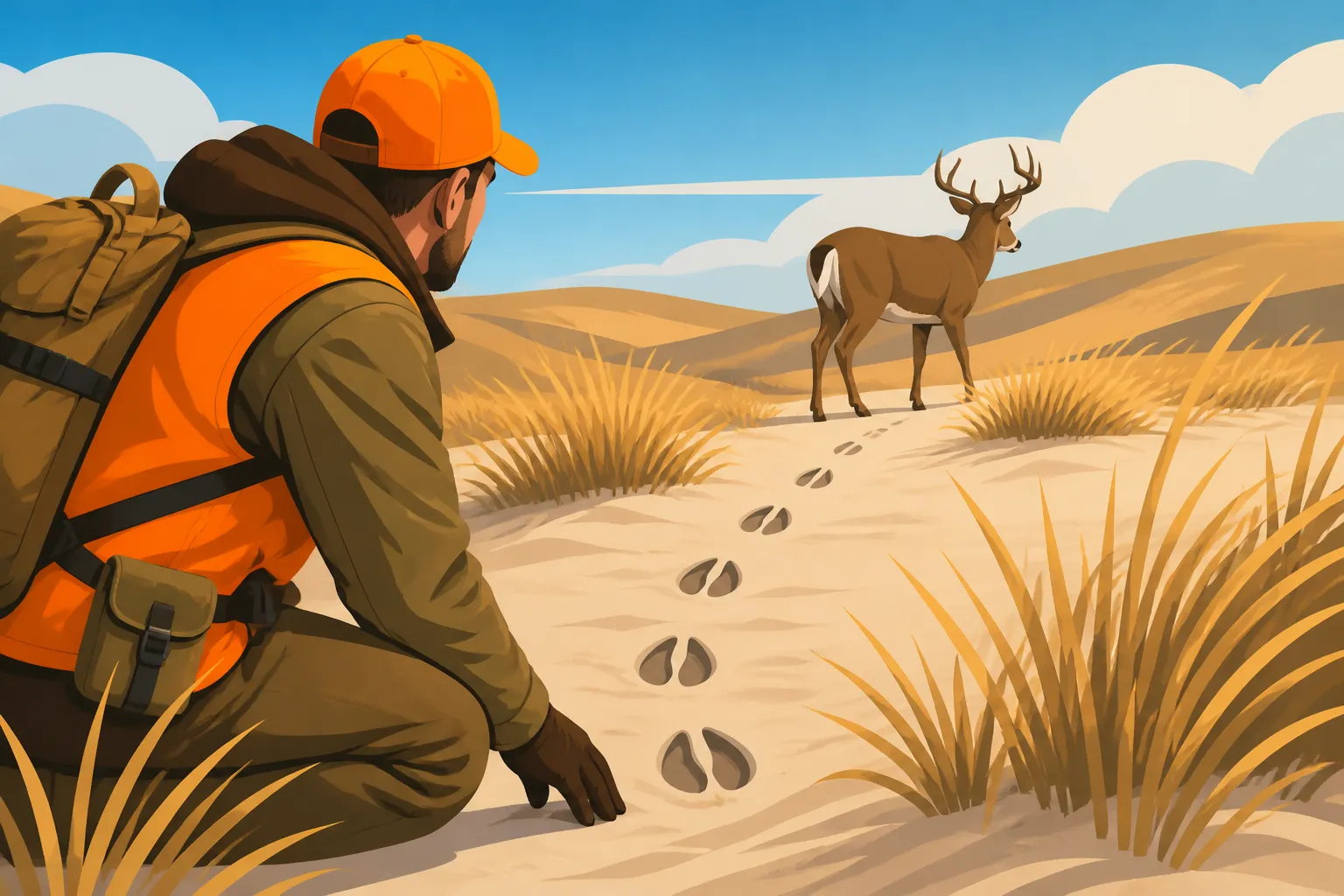
- Tracks in Sand: If the deer crossed a patch of bare sand or a "blowout," this can be gold. Deer tracks in Sandhills sand can be very clear, but they can also be subtle. Look for scuffed areas, displaced sand, or even the drag mark of a leg. Understanding how to differentiate between a healthy deer's tracks and a wounded one's (e.g., staggering, dragging feet) is vital. Knowing "Reading Sign on a Nebraska Sandhills Two-Track" can help you identify if the deer crossed a road and what to look for there.
- Broken Twigs or Branches: If the deer went through thicker cover, like plum thickets or small stands of cottonwoods in a creek bottom, look for freshly broken branches.
- Deer Hair: Especially if the deer was hit high or grazed, look for clumps of hair. Note the color and length; this can sometimes indicate the part of the body hit.
- Other bodily fluids: Urine, feces, or stomach contents are strong indicators. Green or brown stomach matter signifies a gut shot, confirming your need for a long wait.
- Visual Movement: Occasionally, you might catch a flicker of movement or the glint of an antler if the deer is bedded.
Walk slowly, often on your hands and knees, parting the grass with a stick or your hand. Don't just look down; look ahead 10-20 yards for areas of disturbance. If the trail seems to vanish, circle the last known sign in ever-widening loops. It's often easier to pick up a cold trail by finding a more obvious sign further along than by painstakingly searching every inch of a sparse trail.
Utilizing Technology and Canine Assistance
While good old-fashioned grit and observation are primary, technology can be a powerful ally. Your GoHunt app or GPS device can be used to map your search grid, drop new waypoints every time you find a sign, and track your own path so you know what ground you've covered. If the track extends into low light conditions, a good headlamp is indispensable. Some hunters even employ thermal optics (though usually not legal for actual hunting, they can sometimes be used to locate a downed animal after the shot, depending on specific state regulations, always check Nebraska's current rules). These devices can help spot a warm body in tall grass, particularly on cooler evenings.
One of the most effective, yet often underutilized, tools is a trained tracking dog. In Nebraska, the use of leashed tracking dogs for wounded game is legal, but it’s crucial to verify the most current regulations with Nebraska Game and Parks. A well-trained tracking dog, often a bloodhound or a similar breed, can follow a scent trail that is completely imperceptible to human senses, cutting through hours of agonizing searching. If your trail goes cold after a thorough search, having a local contact for a professional tracking dog service can be a game-changer. These dogs don't just follow blood; they follow the unique scent of a wounded animal, making them incredibly effective in environments like the Sandhills.
Overcoming Psychological Fatigue and Maintaining Focus
Tracking a deer in the Sandhills can be an emotionally and physically draining experience. The vastness, the repetitive nature of the grass, the lack of landmarks, and the dwindling hope can lead to psychological fatigue. This is where mental toughness comes in.
- Break it Down: Don't think about finding the deer that's "miles away." Focus on finding the next sign. Break the search into 20-yard increments.
- Take Breaks: Step away from the immediate search area, sit down, have a drink of water, and scan the horizon. A fresh perspective after a short break can reveal something you missed.
- Rotate Leaders: If you're with partners, rotate who is the lead tracker every 15-20 minutes. The person in front is doing the most intense looking, and their eyes will tire.
- Stay Positive: Discouragement is the enemy. Remind yourself that even a sparse trail eventually leads somewhere. Many deer are found because the hunter simply refused to quit.
- Trust Your Gut: Sometimes, an inexplicable feeling or a faint, non-visual cue can point you in the right direction. Don't dismiss these instincts entirely, but always try to verify them with tangible sign.
- Keep Your Eyes Peeled: Even when taking a break, keep glassing the landscape, especially the edges of cover like a "Hunting a Creek Crossing in the Sandhills" or a dense plum thicket, for any anomaly.
When to Call for Help and What to Do Next
Even with the best preparation and diligent tracking, there are times when the Sandhills can simply win. Knowing when to call for help, and what steps to take next, can be crucial for a successful recovery or, at the very least, peace of mind.
Recognizing When the Trail Goes Cold
A cold trail isn't just when you stop seeing blood. It's when you've exhausted your systematic search efforts in a particular area, using all the techniques at your disposal, and have found no new signs after a significant amount of time. In the Sandhills, this often means you've covered hundreds of yards without a single new speck of blood, disturbed grass, or track. This is the moment to pause and reassess. Don't push blindly forward, hoping to stumble upon it.
This is also when you should refer back to your initial shot analysis and the deer's last known direction. If you were "Glassing Sandhills Blowouts for Mule Deer" and saw the deer head towards a specific area, refocus your efforts there. Perhaps the deer made a sharp turn that you didn't perceive from your original vantage point. If the trail is genuinely cold and you've spent hours without success, it might be time to bring in fresh eyes or more specialized help.
Contacting Local Resources and Law Enforcement
If your deer has crossed onto private land where you don't have permission, or if you suspect it has, immediately stop tracking and contact the landowner. It is vital to respect "Nebraska Trespass and Permission Law" to maintain a good relationship with landowners and ensure future access. Never pursue an animal onto private property without explicit permission.
If you're unable to find your deer after an exhaustive search, or if it's wounded and you need assistance, consider contacting the Nebraska Game and Parks Commission. While they can't always track an animal for you, they can offer guidance on local regulations, connect you with authorized tracking dog handlers, or advise on specific protocols, especially if the animal is still alive and suffering. If you've been "Hunting the Nebraska Sandhills Without Permission" and only using public ground like the "Oglala National Grassland Hunting", then your challenge is solely one of finding the animal within those boundaries.
Field Dressing and Cooling Considerations in Remote Sandhills
Once you've finally recovered your deer, the work isn't over, especially in the remote and often warm conditions of the Sandhills. Prompt and thorough field dressing is paramount to preserve the meat. The sandy environment means you'll need to be extra careful to keep sand out of the cavity while you're working.
After field dressing, the most critical step is cooling the carcass. If it's a warm early season hunt, you'll need to get that deer cooled down as quickly as possible. This might involve packing the cavity with ice, if available, or simply propping the deer open and getting it into the shade. If you've managed to recover the deer in a particularly challenging spot, you'll immediately face the dilemma of "Getting a Deer Out of a Nebraska Sandhills Basin" or across miles of undulating terrain. Have a plan for extraction, whether that's a game cart, ATV, or simply breaking the animal down into manageable pieces for a pack-out. The Sandhills can be unforgiving on both hunter and harvest if you're not prepared for the full recovery process.
| Sign Type | Description in Sandhills Grass | Potential Interpretation |
|---|---|---|
| Blood Spots | Small, sparse drops on grass blades or disturbed sand | Direct hit, but grass absorbs/hides; follow every speck |
| Scuffed Sand | Subtle displacement of loose sand, faint hoof prints | Good for direction, but can be wind-erased; look for consistent pattern |
| Bent/Broken Grass | Flattened, bent, or snapped tall grass stems | Path of travel, especially if running fast. Look for direction of bend |
| Hair Tufts | Small clumps of deer hair caught on grass or bushes | Indicates initial impact zone or where deer rubbed; note color/length |
| Stomach Contents | Green or brownish material on ground or grass | Gut shot confirmed; indicates need for long waiting period |
| Urine/Feces | Dark, moist patches (urine) or soft, loose pellets (feces) | Strong indicator of deer's presence, especially if fresh and irregular |
| Body Impressions | Flattened circle in tall grass where deer bedded down (if fresh) | Deer may have bedded here; indicates a pause in movement |
| Antler/Branch Rubs | Fresh scuffs or broken bark on small bushes/trees | If hit, deer may struggle through thick cover, leaving rubs |
Disclaimer
The information provided in this guide is for informational purposes only and is not intended as legal advice. Hunting regulations, permits, and laws can change frequently. Always consult the most current Nebraska Game and Parks Commission regulations and obtain all necessary permits before engaging in any hunting activities. Adhere to all landowner permissions and ethical hunting practices.