Still-Hunting a Snow-Covered River Bottom
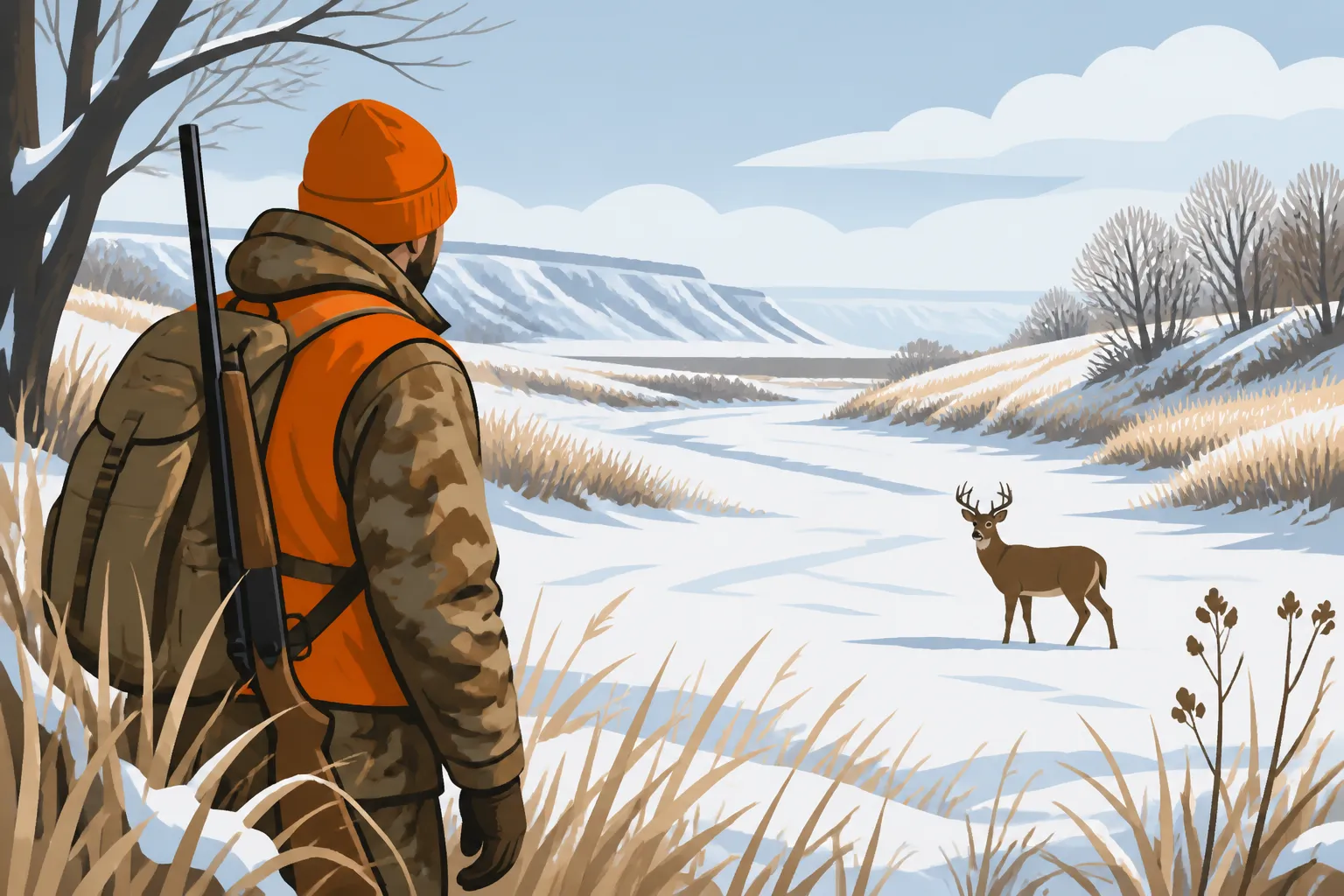
There’s nothing quite like the silence of a snow-covered landscape, especially when you’re slipping through a Nebraska river bottom, hoping to catch a whitetail off guard. It’s a magical, yet incredibly challenging, way to hunt. The cold bites, the snow can be noisy, and deer are on hyper-alert. This guide is dedicated to helping you master the art of still-hunting these frosty river corridors, turning those quiet winter days into successful hunts.
Understanding Deer Behavior in Winter Snow
Hunting after a fresh snowfall fundamentally changes the game. Deer, especially whitetails in a Nebraska river bottom, adapt their behavior to conserve energy and find sustenance in harsh conditions. If you can understand these changes, you’re already several steps ahead. It’s not just about looking for deer; it’s about understanding their winter mindset.
How Snow Impacts Deer Movement and Bedding
When a significant blanket of snow covers the ground, deer movement often becomes more restricted and predictable. They're trying to minimize energy expenditure, which means they'll choose the path of least resistance and prioritize efficient routes between bedding and feeding areas. River bottoms, with their natural depressions, dense thermal cover, and often more sheltered environments, become critical wintering grounds. You'll notice deer often "yard up" in these areas, concentrating in numbers they might not during warmer months.
Deep snow makes travel harder, forcing deer to use existing trails more heavily, or create new, easily visible ones. These trails, especially when running along benches, terraces, or through thickets, become prime still-hunting routes. They'll bed down in the densest cover they can find – think thick cedar groves, tangles of multiflora rose, or clusters of honeysuckle – often on south-facing slopes or in sheltered pockets that catch the most sunlight. This thermal cover helps them stay warm and out of the biting winter wind. During really cold snaps, they might not move much at all during daylight hours, waiting for twilight to venture out, but a still-hunter moving slowly can sometimes bump them from their beds. Understanding that deer in these conditions are seeking shelter and conserving energy is paramount. This deep dive into Deep Snow and Deer Movement can give you an even clearer picture of what drives them in winter.
Key Winter Food Sources in River Bottoms
While deer are masters of adapting, they still need to eat, and winter food sources become extremely limited. In a snow-covered river bottom, their options drastically shrink. They'll browse on woody stems and persistent forbs that might still be accessible above the snow line. Think about the tips of dogwood, sumac, honeysuckle, and young cedar saplings. If there are agricultural fields nearby, especially corn or milo stubble that still holds some waste grain, those will be absolute magnets. Deer will often brave exposed areas to reach these calorie-rich fields, then retreat quickly back into the security of the river bottom for bedding.
Identifying these food sources is crucial for planning your still-hunt. Look for areas where the river bottom meets the edge of a harvested field, or where there are natural clearings allowing sunlight to hit winter browse. Even in heavy snow, you’ll often find deer pawing through the white stuff to reach acorns or other hard mast if they're still available underfoot. The tracks and sign leading to these specific feeding zones will be your roadmap. This pursuit of dwindling calories is what drives much of their activity, making Late-Season Food Sources in Nebraska an incredibly important area to understand for any winter hunter.
Essential Gear and Preparations for Snow Hunting
Still-hunting in a snow-covered river bottom is physically demanding and often brutally cold. Your gear isn't just about comfort; it's about staying safe, quiet, and effective. The right preparations can make the difference between an early retreat to the truck and a successful hunt.
Layering for Cold and Staying Quiet
When you’re still-hunting, you’re constantly managing your body temperature. You might be sweating during periods of movement, then quickly chilling as you stop to glass or listen. Effective layering is critical. Start with a good base layer that wicks moisture away from your skin – synthetics or merino wool are excellent choices. Avoid cotton at all costs; once it gets wet, it stays wet and will chill you to the bone. Next, add a mid-layer for insulation, like a fleece jacket or a puffy vest. Finally, your outer shell needs to be windproof and water-resistant, but crucially, it must be quiet. A rustling jacket will give you away long before you see the deer.
The trick is to dress in a way that allows you to shed or add layers easily without making a lot of noise. When you’re moving, you might open zippers or even temporarily remove a mid-layer to prevent overheating and sweating. Once you stop, quickly add that layer back. This constant adjustment keeps you from getting clammy and then freezing. Don't forget a warm hat and gloves. You lose a significant amount of heat through your head, and cold fingers are useless for shooting. Many hunters opt for thin, sensitive gloves for dexterity, with an outer, heavier mitten that can be pulled off quickly. For those long periods of inactivity, you might even consider a hand muff with chemical warmers to maintain finger sensitivity. This strategic approach to dressing for the elements is a core part of any Cold Weather Sitting Strategy.
Optics and Footwear for Stealth in Snow
Your footwear is arguably one of the most critical pieces of gear for still-hunting in snow. You need insulated, waterproof boots with good traction. Walking miles in snow, especially through varied river bottom terrain with potential for ice, slick mud, and deep drifts, will quickly expose the weaknesses of subpar boots. Look for boots designed for extreme cold, often rated for -20°F or colder, with enough room to wear thick wool socks without constricting your circulation. The sole pattern should be aggressive enough to bite into snow and mud, but not so clunky that it makes you trip or limits your stealth. Many experienced hunters find success with specialized winter hunting boots from brands like Kenetrek or Lacrosse, providing both warmth and support for long days afield. Investing in quality Insulated Boots for a Firearm Season Sit can prevent misery and keep you hunting longer.
Beyond your boots, good optics are non-negotiable. Snow-covered landscapes can be incredibly bright, but thick river bottom cover often creates deep shadows, making it difficult to discern deer. A quality pair of binoculars (10×42 or 10×50 are great choices) will help you pick apart cover, identify subtle movements, and locate deer before they see you. In these challenging conditions, you'll want crisp, clear glass that performs well in low light, as deer are often most active during the first and last hours of the day. A rangefinder is also essential for confirming distances, especially in open snow where distances can be deceiving. Having a reliable mapping app, like GoHunt, on your phone can be invaluable for navigation, marking sign, and understanding terrain features even when the ground is completely hidden by snow.
Mastering the Still-Hunting Technique in River Bottoms
Still-hunting isn't just walking slowly; it's an art form that blends patience, observation, and an intimate understanding of your quarry and the terrain. When you add snow to the mix, it becomes a chess match where every move counts.
Reading Sign and Tracking in Snow
Snow is a still-hunter's best friend and worst enemy. It reveals everything, but it can also mask sounds. Fresh snow is a canvas for deer sign. You'll want to look for tracks, droppings, browse marks, and rubs. Fresh tracks are paramount. Pay attention to the depth of the tracks, the crispness of the edges, and whether any snow has fallen into them since they were made. This will tell you how recent the activity is. Deeper tracks indicate a heavier deer or one that’s moving quickly, possibly even running.
Follow the freshest, largest tracks. Look for where the deer were headed, how they moved around obstacles, and where they stopped to browse. This tells a story. A small cluster of fresh droppings or a fresh rub on a sapling can tell you a buck was just through. GoHunt's mapping features can help you mark these signs and visualize potential travel corridors as you go. Remember to move slowly, pausing often to scan ahead, listen, and let your eyes adjust. Often, you'll pick up the subtle outline of a deer, an ear flick, or a slight twitch that blends perfectly with the snowy, brushy background. If you’re not stopping for a minimum of five minutes every 50-100 yards, you’re moving too fast. Mastering the nuances of Tracking a Deer in Sandhills Grass (and applying those principles to snow) is a skill that will serve you well in any environment.
| Sign Type | What to Look For | Indication |
|---|---|---|
| Tracks | Depth, crispness, size, stride length | Freshness, deer size, speed/behavior |
| Droppings | Quantity, freshness (wet/dry, dark/light) | Recent presence, dietary habits, number of deer |
| Browse Marks | Torn ends of twigs, height, freshness (sap oozing) | Feeding activity, preferred food sources, deer height |
| Rubs/Scrapes | Fresh bark removal, ground disturbance, overhead licking branches | Buck activity, territorial marking, rutting behavior (even late season) |
| Beds | Depressions in snow, often with melted snow, hair | Deer bedding location, recent use |
Using Wind and Terrain to Your Advantage
Wind is king in still-hunting. Always, always, always hunt into the wind or with a crosswind. Deer rely heavily on their nose, and still-hunting means you’re often getting very close to them. If your scent is blowing towards them, they will bust you every single time. Pay attention to swirling winds in river bottoms, which are often caused by terrain features like bluffs, deep cuts, or changes in vegetation density. A little bit of talcum powder or a commercial wind checker can be invaluable for constantly monitoring wind direction, especially as it changes with elevation and cover.
River bottoms offer fantastic terrain features for still-hunting. Use the contours of the land – small rises, creek banks, even old logging roads – as cover. Stay low, move through ditches, and use standing timber or brush lines to break up your outline. Often, deer will bed on the leeward side of a ridge or in a thicket protected from the prevailing wind. Knowing where to expect them, based on wind direction and available cover, allows you to plan your approach with maximum stealth. This careful navigation, especially on public ground, can be made much easier with mapping tools. GoHunt's satellite and topo maps are excellent for identifying terrain features and planning your route to keep the wind in your favor. Combine this with smart layering, like a good Wind-Blocking Shells for the Plains, and you'll be much more comfortable and effective.
Overcoming Challenges and Maximizing Success
Still-hunting in a snow-covered Nebraska river bottom is not without its difficulties. From dealing with other hunters to ensuring ethical shots, being prepared for every scenario will bolster your success.
Dealing with Hunting Pressure and Other Hunters
Nebraska’s public lands, particularly river bottoms known for deer, can see significant hunting pressure, especially during the firearm season or even late-season antlerless hunts. This pressure changes deer behavior, making them even warier and more nocturnal. When still-hunting pressured ground, you need to think differently. Often, other hunters will push deer towards you, or deer will learn to hold tight in the densest cover, only moving after dark. Your ability to move slowly and quietly into these thick, overlooked pockets can pay dividends.
If you encounter other hunters, be respectful. Acknowledge them, and if possible, communicate your plans to avoid spoiling each other’s hunts or, worse, creating a dangerous situation. Sometimes, seeing other hunters can actually be a good thing, as their movements might push deer out of heavy cover and into a position where you can intercept them. The key is to be aware of your surroundings, listen for distant shots or voices, and use your GoHunt app to see potential access points where other hunters might be coming from. Plan your approach to get away from these easily accessible areas. Sometimes, simply walking an extra half-mile further than anyone else will get you into undisturbed pockets where deer feel safe.
Ethical Shot Placement and Tracking Wounded Game in Snow
The culmination of a still-hunt is often a sudden encounter, demanding a quick, ethical shot. In snowy conditions, it's even more crucial to ensure a clean hit. A wounded deer can be incredibly difficult to track, especially if the snow is actively falling or melts quickly. Always aim for the vital organs – the heart and lungs – which offer the largest kill zone and the highest chance of a quick, humane harvest. Take your time, get steady, and only shoot if you have a clear, ethical shot. If the deer is quartering away slightly, aim for the opposite shoulder to ensure the bullet passes through the vitals.
If you do make a shot and the deer doesn't drop immediately, observe its reaction carefully. Watch where it runs, how it carries its tail, and listen for any sounds of it crashing. Mark the spot of the shot immediately. Even if you're sure of a good hit, wait at least 30-60 minutes before beginning to track, especially if it’s a gut shot, to allow the animal to expire. The blood trail in snow can be excellent, but it can also be misleading or disappear quickly if it's light snow. Look for splashes, dark clotted blood (indicating arterial damage), or bright, frothy blood (indicating a lung hit). If you lose the trail, spread out and grid search, or circle ahead in the direction of travel. If darkness is approaching, consider backing out and returning at first light. This is where Blood Trailing After Dark in Nebraska becomes critical knowledge, though trying to recover during daylight is always preferable. Be prepared with a good headlamp, a reliable knife, and a plan for Getting a Deer Out of a Nebraska Sandhills Basin (which can apply equally to a river bottom), as snowy, rugged terrain can make extraction challenging.
Disclaimer
Hunting is an inherently dangerous activity. Always prioritize safety, follow all Nebraska Game and Parks Commission regulations, and obtain proper landowner permission. The information provided in this guide is for educational purposes and should not replace professional instruction or local regulations. Ensure you have the necessary permits and stamps, including a Nebraska Habitat Stamp, before heading afield.