Boots for Walking Nebraska Grass and Sand
There's nothing quite like the feeling of anticipation before a hunt in Nebraska, whether you're chasing pheasants across a vast milo field or glassing for mule deer in the Sandhills. But that excitement can quickly turn into misery if your feet aren't happy. A blister, a cold soak, or simply aching arches can ruin a day afield faster than anything. This guide is all about helping you pick the right footwear to conquer Nebraska's diverse landscapes, keeping you comfortable and effective from the early archery opener to the late-season goose hunt.
The Unique Challenges of Nebraska's Footwear Needs
Nebraska might seem flat to some, but don't let that fool you. Our state boasts an incredible variety of terrain, each with its own demands on your footwear. From the rolling dunes of the Sandhills to the dense river bottoms, and the unforgiving stubble of harvested fields, your boots need to be versatile, tough, and supremely comfortable. Ignoring these distinct characteristics is a surefire way to find yourself limping back to the truck with sore feet and a bad attitude.
Sandhills: A Test of Stability and Traction
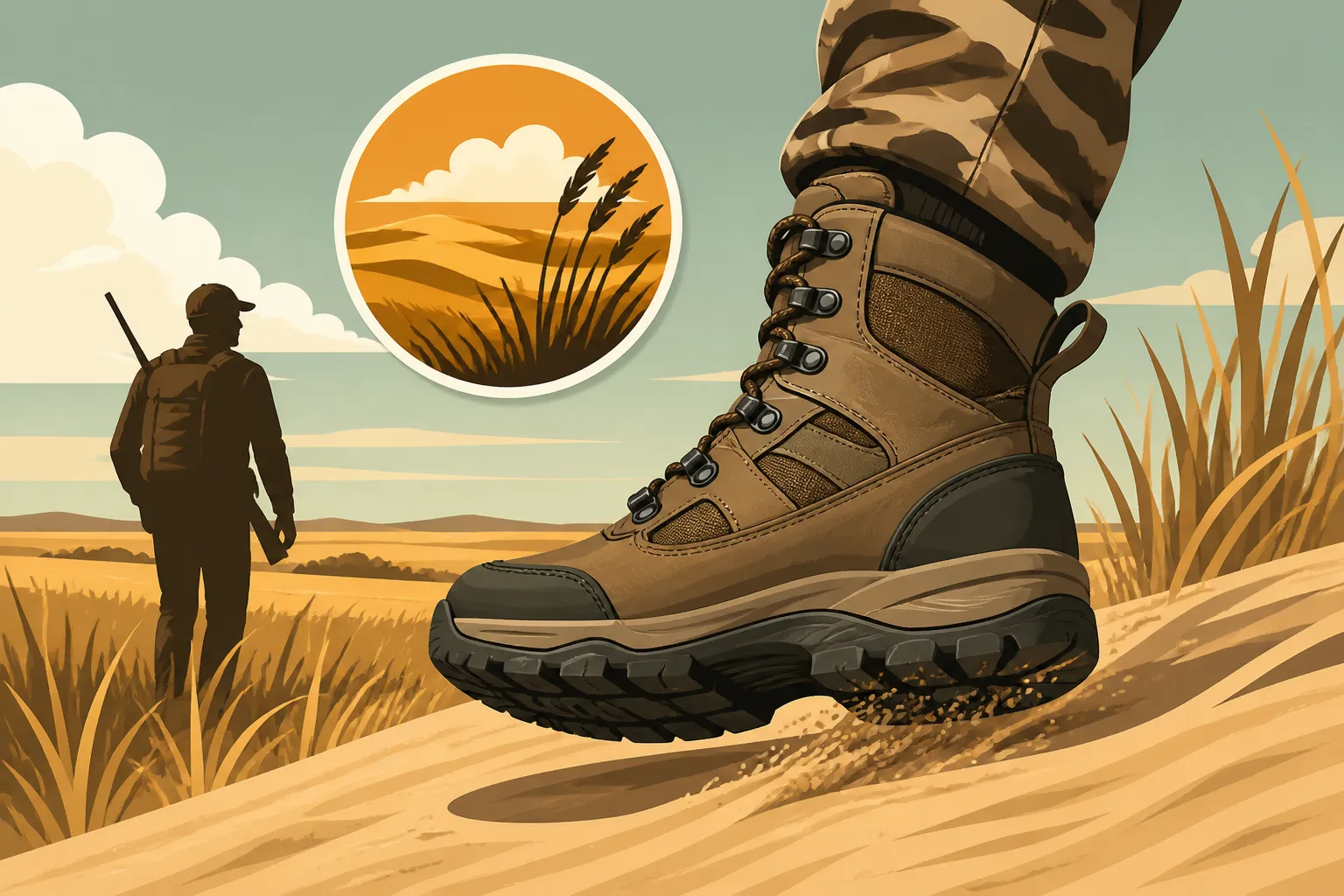
Ah, the Sandhills. Miles upon miles of rolling, grass-covered dunes, often interspersed with "blowouts" – areas of exposed, soft sand. Walking here is like a perpetual uphill climb, and then a slippery downhill slide, all on an unstable surface. Your ankles will be working overtime. I can tell you from personal experience, trying to chase a long-legged mule deer up and down those hills in flimsy boots is a recipe for twisted ankles and sand-filled socks. You need boots that provide exceptional ankle support to prevent rolls, and a solid, aggressive outsole that can grip both the loose sand and the often-slippery prairie grasses. Traction here isn't just about preventing falls; it's about efficient movement, saving precious energy when you're covering vast distances. Consider how much energy is expended when your foot slides a little with every step; good traction minimizes that wasted effort. When you're Hunting the Nebraska Sandhills for hours on end, every bit of efficiency counts.
Grasslands: Endless Miles and Hidden Obstacles
Beyond the Sandhills, Nebraska has expansive stretches of native prairie and cultivated grasslands. While not as overtly challenging as the dunes, these areas present their own set of footwear hurdles. Think about walking through CRP fields or vast pastures: the grass can be knee-high, hiding everything from gopher holes and badger mounds to irrigation ruts. One wrong step, and you're suddenly stumbling. Boots for these areas need good torsional rigidity – meaning they resist twisting – to protect your feet from unseen obstacles. They also need to be breathable, as you'll often be covering a lot of ground, building up heat, especially during early season upland hunts. The sheer mileage you can put on in a day, especially when Walking Nebraska Sandhills Meadows for Sharptails or pheasants, demands a boot that feels like an extension of your foot, not a clunky weight dragging you down.
River Bottoms and Wetlands: When Waterproofing is Non-Negotiable
Eastern Nebraska, in particular, is crisscrossed with river systems, creeks, and the infamous Rainwater Basin wetlands. If your hunt takes you anywhere near these areas – think whitetail hunting along the Platte or waterfowl in a marsh – waterproofing isn't a luxury; it's an absolute necessity. Even on seemingly dry days, morning dew in tall grass can quickly saturate non-waterproof boots, leading to cold, prune-like feet and potentially blisters. For those truly wet environments, like jump-shooting ducks or setting decoys, you'll need serious rubber boots or robust waders. But even for dry-land hunts that just border on wet, a reliable waterproof membrane in your boots can save your day. There’s nothing quite as demoralizing as wet socks in the first hour of a hunt, trust me on that one.
Essential Features for Nebraska Hunting Boots
When you're shelling out your hard-earned money for hunting boots, you're not just buying a pair of shoes; you're investing in comfort, safety, and ultimately, your success in the field. Skimping on features that are critical for Nebraska's terrain is a mistake many new hunters make, only to regret it deeply a few miles into their first hunt. Let's dig into what truly matters.
Ankle Support and Stability for Uneven Ground
As we touched on with the Sandhills, ankle support is paramount. Nebraska's terrain, even on seemingly flat ground, can be deceptively uneven. Old furrows in a harvested field, hidden gopher holes in grass, or crumbling creek banks all pose a risk. Boots with a high, stiff ankle collar provide that crucial support, helping to stabilize your ankle and prevent rolls or sprains. Look for models with a sturdy lacing system that allows you to cinch them down securely around your ankle, providing a snug, supportive fit. This isn't just about preventing injuries; it's also about reducing fatigue. When your ankles aren't constantly fighting to stabilize your foot, the muscles in your lower legs work less, allowing you to stay in the field longer and feel better at the end of the day. A good boot helps you maintain an upright posture and reduces strain on your entire kinetic chain.
Waterproofing: Battling Dew, Rain, and Slush
Waterproofing is often marketed as a high-end feature, but in Nebraska, it's pretty much standard for any serious hunting boot. The combination of early morning dew, unexpected rain showers, and potential slush or mud during late seasons makes a waterproof barrier essential. Most quality hunting boots use a breathable waterproof membrane, like Gore-Tex or similar proprietary technologies, sandwiched between the boot's outer material and its lining. This allows sweat vapor to escape (breathability) while preventing external water from getting in. However, remember that "waterproof" doesn't mean "invincible." Over time, these membranes can wear out, and repeated exposure to harsh conditions will test their limits. Regular cleaning and re-treatment of the outer materials can extend the life of your boot's waterproofing. Don't forget that seams are often the first point of failure; well-constructed boots will have sealed seams.
Insulation: From Scorching September to Frigid December
Nebraska's hunting seasons span a wide range of temperatures, often with dramatic swings even within a single day. This means you likely won't find one "perfect" boot for every single hunt. Insulation is measured in grams, with higher numbers indicating more warmth. For early archery season (September), minimal to no insulation is usually best to prevent overheating, especially when you're exerting yourself walking to a stand or Spot-and-Stalk Mule Deer in the Nebraska Sandhills. You want maximum breathability. As you move into the firearms season in November or the Muzzleloader Deer Hunting in Nebraska in December, you'll want boots with 400 to 800 grams of insulation. For truly frigid late-season hunts where you might be sitting stationary for hours, perhaps calling coyotes on a frozen prairie or Cold Weather Sitting Strategy in a deer blind, boots with 1000 grams or more might be necessary. It’s a balancing act: too much insulation and your feet sweat, which can actually make them colder when you stop moving. Too little, and you're just plain cold.
Durability and Materials: A Boot Built to Last
Hunting boots take a beating. They're scraped on rocks, poked by thorns, dragged through mud, and exposed to extreme temperatures. Investing in a durable pair made from quality materials will save you money in the long run and prevent failures in the field. Full-grain leather is a classic choice, known for its longevity, ability to mold to your foot over time, and resistance to abrasion. Many modern boots combine leather with synthetic materials like Cordura nylon, which can reduce weight and increase breathability while maintaining toughness. The outsole, or sole, is another critical component. Look for thick, aggressive lugs made from a durable rubber compound. These provide grip and stand up to wear and tear. The rand – a rubber or synthetic strip around the base of the boot – is also a key durability feature, protecting the upper from scuffs and cuts, especially useful when navigating sharp corn stubble or rocky terrain. When I'm checking out new gear, I often consult resources like GoHunt to see what other hunters are saying about the long-term durability of different boot models.
Choosing the Right Boot for the Season and Quarry
Nebraska's hunting calendar stretches from late summer into the depths of winter, presenting a huge range of environmental conditions. What works for an August archery antelope hunt will leave you shivering in a December muzzleloader blind. Matching your footwear to the specific season and type of hunting you'll be doing is paramount for comfort and success.
Early Archery Season: Breathability in the Heat
The early part of Nebraska's archery season, especially in September and early October, can still be surprisingly warm, even hot. Daytime temperatures often hover in the 70s and 80s, and sometimes higher. You'll be walking to your stand, tracking, or even Archery Antelope From a Water Blind in open country, generating a lot of body heat. For these conditions, breathability is king. Uninsulated or lightly insulated (200 grams or less) boots are ideal. Look for boots that prioritize ventilation, perhaps with mesh panels or highly breathable waterproof membranes. Heavy, insulated boots will quickly lead to sweaty feet, which can cause blisters and discomfort, and when that sweat cools, it can actually make you colder when temperatures drop at dusk. Keeping your feet dry from the inside out is just as important as keeping water out from the outside. Lightweight hiking boots designed for aggressive terrain can often pull double duty here, provided they have sufficient ankle support. Remember, if you're experiencing Water and Heat Risk for Bird Dogs, you're likely feeling it too, and your feet are no exception.
Peak Rut and Firearm Season: Balancing Warmth and Mobility
Mid-October through the November firearm season brings cooler, but often still variable, temperatures. This is prime time for deer hunters, whether you're still-hunting in river bottoms, waiting in a treestand, or participating in small deer drives. For this period, you need a versatile boot that offers a balance of warmth and mobility. Boots with 400 to 800 grams of insulation are usually a good bet. They're warm enough for sitting in a stand for a few hours in chilly temperatures, but not so heavy or hot that they become a hindrance when you're actively moving. Look for a boot that maintains flexibility, allowing for quiet stalking and comfortable walking. The terrain can be everything from muddy field edges to dry timber, so a solid all-around performer with good waterproofing and ample support is crucial. This is where many hunters gravitate towards a robust, well-made hiking-style hunting boot that can handle diverse conditions.
Late-Season Upland and Deer: Extreme Cold and Wet
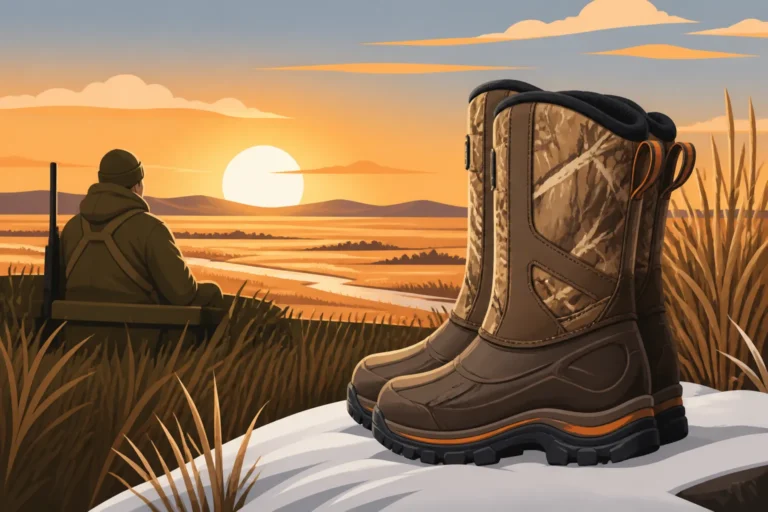
When December rolls around and into January, Nebraska transforms. We're talking freezing temperatures, snow, ice, and often biting winds. This is when your footwear really earns its keep, whether you're Hunting Antlerless Deer in Nebraska in January, Working a Cattail Slough in January for pheasants, or tackling a Nebraska Muzzleloader Deer Tactics in December hunt. For these frigid conditions, maximum insulation (800+ grams, often 1000 or 1200 grams) is a must, especially if you plan on being stationary for extended periods. Combine this with guaranteed waterproofing, as melting snow and icy puddles are common. Rubber boots, often insulated, become a strong contender here for their complete waterproof barrier. They might not offer the same level of ankle support as a traditional leather boot, but for sitting in a blind or walking through slushy fields, they excel at keeping your feet dry and warm. Layering your socks also becomes critically important in these conditions, as even the best boots can struggle if your sock system isn't dialed in.
The Importance of Proper Fit and Comfort
I cannot stress this enough: fit is everything. You can buy the most expensive, feature-packed boots on the market, but if they don't fit your feet properly, they're useless. In fact, they're worse than useless – they're a liability that will cause pain, blisters, and ultimately, force you out of the field prematurely. A comfortable boot that fits well will go unnoticed; an ill-fitting one will be all you can think about.
Sizing for Success: Accommodating Thick Socks and Swelling Feet
When trying on hunting boots, always wear the type of socks you'd typically wear while hunting. For colder seasons, this means thick wool or synthetic blends. Your feet also tend to swell slightly throughout the day, so it's often recommended to try on boots in the afternoon when your feet are at their largest. You want enough room in the toe box to wiggle your toes freely, preventing cramping and allowing for good circulation, which is crucial for warmth. However, you don't want so much room that your foot slides around inside the boot, as this is a primary cause of blisters. The heel should feel secure, with minimal lift when you walk. If your heel is constantly rubbing, that's a blister waiting to happen. Don't be afraid to spend an hour or more in the store, trying on different sizes and brands, walking around, and even trying them on an incline if possible. Many hunters, myself included, find that going up half a size from their regular shoe size often works best for hunting boots to accommodate thicker socks.
Breaking Them In: A Non-Negotiable Step
New boots, especially those made from stiff leather, need to be broken in. This isn't a suggestion; it's a command. Wearing brand-new boots straight out of the box for an all-day hunt is a rookie mistake that guarantees pain. Start by wearing them around the house for an hour or two each day. Then, gradually increase the duration and intensity, taking them for short walks, then longer ones on varied terrain. This process allows the boot materials to soften and mold to the unique contours of your foot. It also helps you identify any potential hot spots or rubbing areas before you're miles from the truck with a heavy pack. Some modern boots claim to require no break-in, and while they might be more flexible out of the box, a gradual introduction is still advisable. It's an investment in your comfort down the line.
Socks: The Unsung Hero of Foot Comfort
Often overlooked, socks play a monumental role in foot comfort and boot performance. The right pair of socks can wick away moisture, provide cushioning, and add insulation, working in conjunction with your boots. Cotton socks are a definite no-go for hunting; they absorb moisture and hold it against your skin, leading to cold, clammy feet and blisters. Instead, opt for wool or synthetic blends. Merino wool is an excellent choice as it's soft, warm (even when wet), and naturally odor-resistant. Synthetic socks (polyester, nylon, spandex) are also great at wicking moisture and are very durable. Consider a layering system: a thin liner sock made of synthetic material can wick moisture away from your skin, while a thicker outer sock provides cushioning and insulation. Experiment with different thicknesses and materials to find what works best for you and your chosen boots across various seasons. A quick tip: always pack an extra pair of socks in your day pack; there's nothing quite like a fresh, dry pair to boost morale.
Specific Boot Types and Their Applications
The market is flooded with hunting boot options, and it can be overwhelming to decide. Understanding the primary types and what they're best suited for can help narrow your focus. Each has its strengths and weaknesses, making certain styles better for particular hunting scenarios in Nebraska.
Traditional Leather Boots: Timeless Durability
When you think of a classic hunting boot, you're likely picturing a traditional full-grain leather boot. These boots are renowned for their durability, long lifespan, and ability to conform to your foot over time, creating a custom fit. They often provide excellent ankle support due to their stiff construction and height. Many high-quality leather boots come with waterproof membranes and varying levels of insulation, making them incredibly versatile. The downsides can include a longer break-in period, heavier weight, and sometimes higher cost. However, a well-maintained pair of leather boots can last for decades. They are fantastic for demanding terrain like the Sandhills, extensive walking in grasslands, or navigating brushy timber. With proper care, including cleaning and conditioning, these boots will serve you faithfully for many seasons. GoHunt often features reviews of these tried-and-true models, giving hunters real-world insights into their performance.
Rubber Boots: The Go-To for Waterfowl and Mud
For seriously wet and muddy conditions, nothing beats a good pair of rubber boots. Whether you're slogging through a Rainwater Basin wetland for geese, jump-shooting ducks on a creek, or navigating a saturated river bottom after a heavy rain, rubber boots offer 100% waterproof protection up to their height. They are also excellent for scent control when deer hunting, as rubber doesn't absorb and retain human odors like fabric or leather can. Many models come insulated, making them suitable for cold-weather waterfowl or late-season deer hunts where standing water or slush is prevalent. The primary drawbacks are usually breathability and ankle support. Your feet can get sweaty in warmer weather, and the flexible rubber offers less structural support than a traditional boot. However, for their specific niche – conquering wet, mucky environments – they are unparalleled. When Setting a Goose Spread in Harvested Corn after a thaw, these are the only boots you'll want on your feet.
Hybrid Boots: Blending the Best of Both Worlds
In recent years, many manufacturers have introduced "hybrid" boots that attempt to combine the best features of leather and rubber. These often feature a durable, waterproof rubber lower section that extends up over the ankle, with a lighter, more breathable synthetic or leather upper. This design offers enhanced waterproofing in the critical foot area while reducing weight and increasing breathability compared to full rubber boots. They often provide better ankle support than full rubber boots, making them a solid compromise for hunters who face varied conditions, such as walking through wet fields to a deer stand that's near a creek, or upland hunting where you might encounter both dry grass and marshy ditches. These boots are becoming increasingly popular for their versatility and ability to handle a wider range of Nebraska's hunting environments without having to switch footwear for every change in conditions. They aim to be the "one boot" solution for many, though no boot is truly perfect for every situation.
| Boot Type | Best Use Cases in Nebraska | Key Advantages | Key Disadvantages |
|---|---|---|---|
| Traditional Leather | Sandhills mule deer, long walks, timber deer | Durability, support, custom fit | Heavier, longer break-in |
| Insulated Rubber | Waterfowl, late-season mud/snow, scent control | 100% waterproof, warm, scent control | Less support, less breathable |
| Uninsulated Leather/Synthetic | Early archery, warm weather upland, scouting | Breathable, lightweight, good support | Not for cold/wet extremes |
| Hybrid (Rubber/Fabric) | Versatile, mixed terrain, moderate wet/cold | Good waterproof, decent support, lighter | Can be a compromise in extremes |
Maintaining Your Boots for Longevity and Performance
You've invested time and money into finding the perfect pair of boots for your Nebraska hunts. Now, protect that investment! Proper care and maintenance aren't just about extending the life of your boots; they're about ensuring they perform their best, season after season. Neglecting your boots will lead to premature wear, loss of waterproofing, and ultimately, cold, wet feet when you least expect it.
Cleaning and Drying After Each Hunt
This is the most fundamental step. As soon as you get back from a hunt, take a few minutes to clean your boots. Use a stiff brush and water to remove all dirt, mud, and debris from the outside, paying special attention to the lugs on the sole. Caked-on mud can dry and crack leather, and seeds or burrs can damage fabrics. Once clean, the most crucial part is drying them properly. Never put wet boots directly next to a heat source like a campfire or a radiator. High heat can dry out leather, making it stiff and brittle, and can delaminate waterproof membranes or glue. Instead, remove the insoles (if removable) and open the laces wide to allow maximum airflow. Stuff them loosely with newspaper or paper towels to absorb internal moisture, changing the paper every few hours until dry. A boot dryer, which uses gentle heat and circulating air, is an excellent investment if you hunt frequently.
Conditioning and Waterproofing Treatments
For leather boots, regular conditioning is essential to keep the leather supple and prevent it from drying out and cracking. Use a leather conditioner or wax specifically designed for outdoor footwear. This should be done a few times a season, or whenever the leather starts to look dry. For boots with waterproof membranes (like Gore-Tex), it's also important to periodically reapply a durable water repellent (DWR) treatment to the outer fabric. While the internal membrane keeps water out, a DWR coating on the outside causes water to bead up and roll off, preventing the outer layer from becoming saturated. This helps the boot's breathability function properly, as a wet outer layer hinders moisture vapor from escaping. Rubber boots require less maintenance but should still be cleaned and dried, and occasionally treated with a rubber protectant to prevent cracking. Make sure you read the manufacturer's instructions for any specific care recommendations for your particular boot model.
Storage for the Off-Season
When the hunting seasons wind down, proper off-season storage will ensure your boots are ready for action next year. First, give them a thorough cleaning and conditioning. Ensure they are completely dry, inside and out, before storing them. Store them in a cool, dry place, away from direct sunlight and extreme temperatures, which can degrade materials over time. Avoid stuffing them into a cramped box or bag where they can get crushed or lose their shape. If possible, use boot trees or stuff them loosely with newspaper to help them retain their form. This prevents creases and cracks in the leather or rubber. By taking these simple steps, you'll not only extend the life of your expensive hunting boots but also ensure that when opening day rolls around again, you can hit the field with confidence, knowing your feet will be comfortable and protected.
Disclaimer
This article is for general informational purposes only and does not constitute professional advice. Laws, prices and regulations vary by location and change over time. Consult a qualified professional for guidance on your specific situation.